



 C2-H5-OH (Ethyl Alcohol)
 Depressant drug-slows mind
 Alcoholic Beverages


 Alcohol Production
  includes
  -Fermentation
  -Brewing
  -Distillation
 It has been a big industry in India and all over the World.
In South East Asia, India is the largest producer and importer
of Liquor.
 Curiosity
 Peer pressure
 Socialize
 Family Tradition
 After That to celebrate, relieve stress , relax and
  escape the problems and the real world.
 Then the drinker starts to like the taste and the after
  effects of getting “high”.
 Easy access (often at home) and Absence of religious
  attachment can turn a man into an addict.
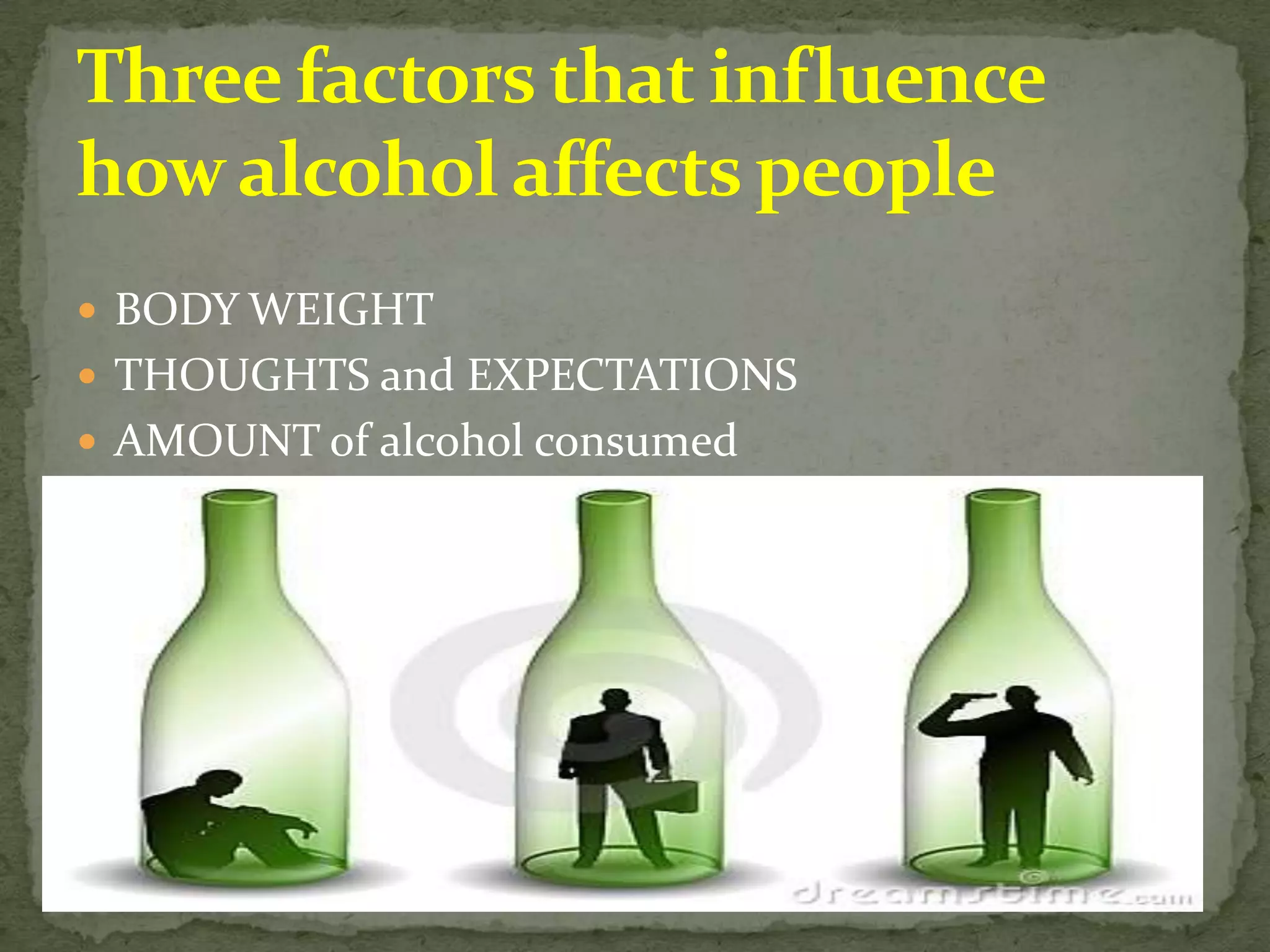
 BODY WEIGHT
 THOUGHTS and EXPECTATIONS
 AMOUNT of alcohol consumed
 Alcoholism (alcohol dependence) -
    means compulsive and uncontrolled consumption
    of alcohol, usually to the detriment of the drinker's
    health, personal relationships, and social standing.
    People suffering from alcoholism are often called
    "alcoholics“.
   WHO estimates that there are 140 million people
    with alcoholism worldwide.
   “Dual disease“-Biological and mental.
   Biological causes unknown & Mental include Social
    environment, stress, mental health, family history etc.
 Alcohol abuse is a psychiatric diagnosis of
  Alcoholism.
 Binge drinking(more than 5 drinks) is another form
  of alcohol abuse
 It is the heavy episodic drinking popular in college
  campuses nowadays.
 Abuses of alcohol include violence,
  injuries, unprotected sexual activities ,one night
  stands, social and financial crisis.
An alcohol abuser is
different from an alcoholic
An alcohol abuser still has
some ability to set a limit
on their drinking. However,
an alcohol abuser tend to
be self-destructive and
sometimes led to home
violence or crimes due to
the use of alcohol.
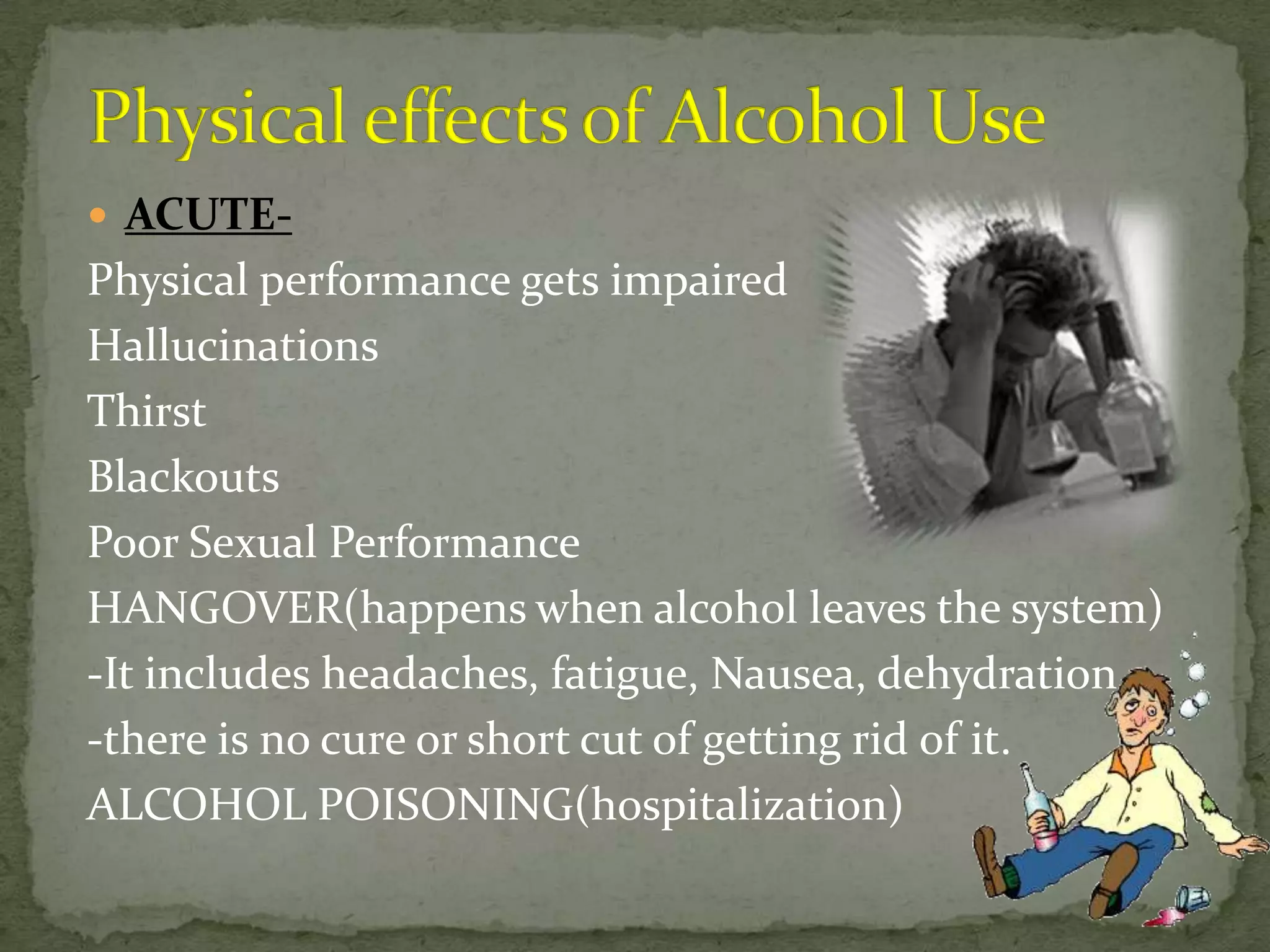
 ACUTE-
Physical performance gets impaired
Hallucinations
Thirst
Blackouts
Poor Sexual Performance
HANGOVER(happens when alcohol leaves the system)
-It includes headaches, fatigue, Nausea, dehydration
-there is no cure or short cut of getting rid of it.
ALCOHOL POISONING(hospitalization)
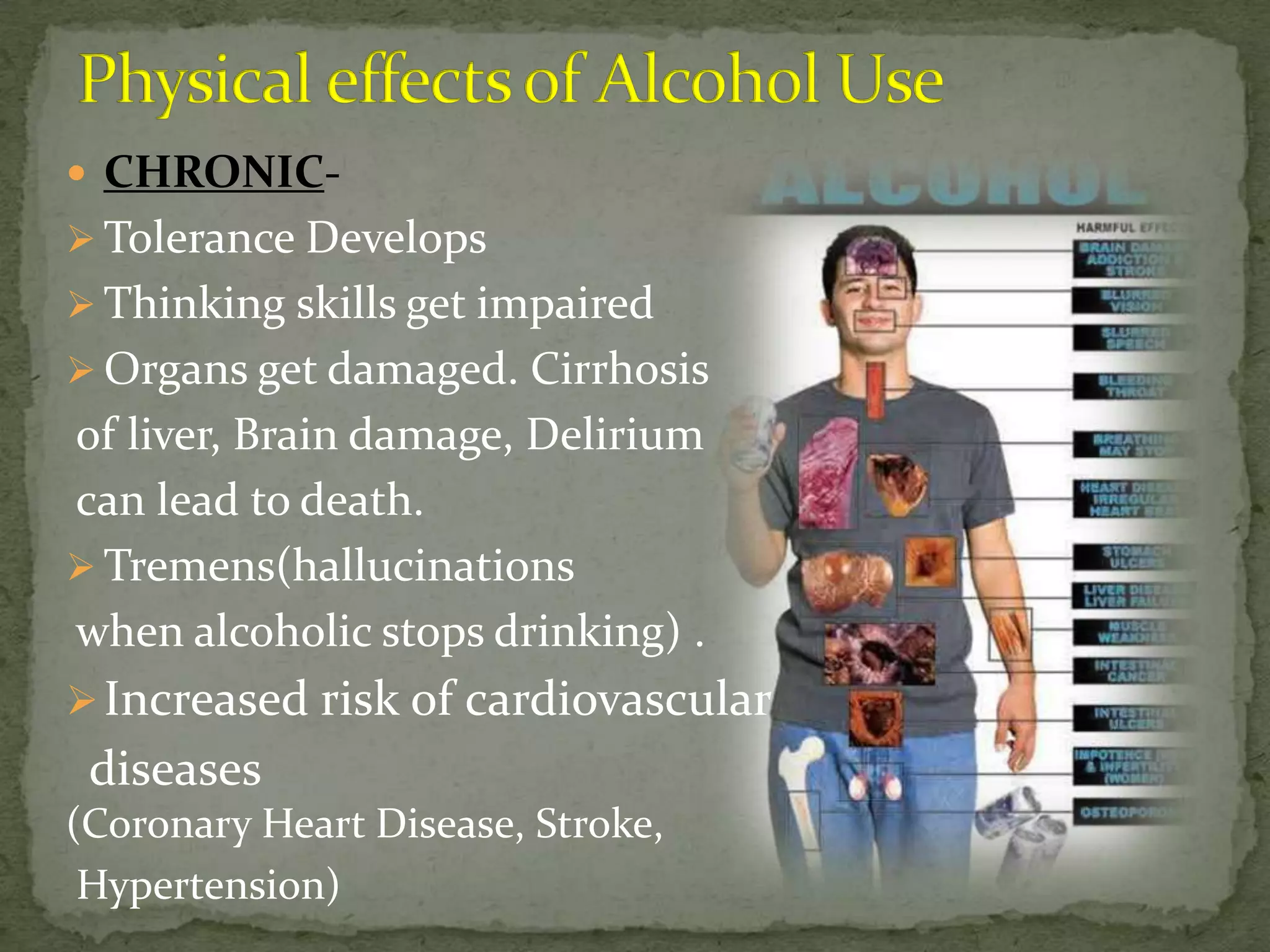
 CHRONIC-
 Tolerance Develops
 Thinking skills get impaired
 Organs get damaged. Cirrhosis
of liver, Brain damage, Delirium
can lead to death.
 Tremens(hallucinations
when alcoholic stops drinking) .
 Increased risk of cardiovascular
 diseases
(Coronary Heart Disease, Stroke,
 Hypertension)
 Increased risk of cancer:
  (liver, stomach, colon,
  pancreas, breast, mouth, throat)
 Reproductive problems
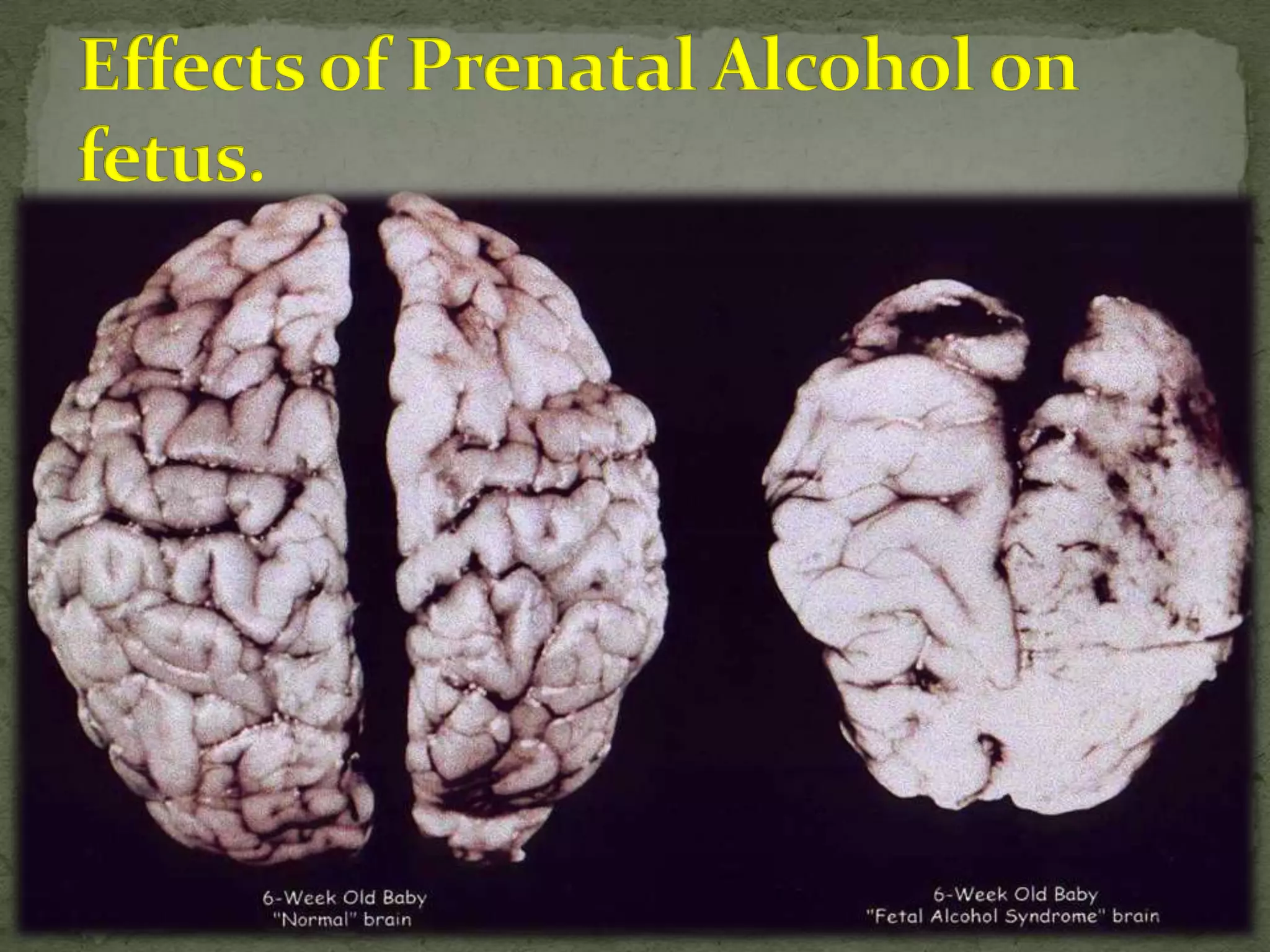
 Fetal Alcohol Syndrome (FAS)
 Growth retardation
 Facial malformations
 Small head
 Greatly reduce intelligence
Behavioral Consequences
    of Alcohol Use
   Contributes to 50% of all
    motor vehicle fatalities
   Contributes to unsafe sex
    and increased risk of
    AIDS
   Contributes to risky
    behavior
    and accidental death
   Domestic Violence
 Alcohol permanently destroys brain cells.
TRUE it happens every time you drink.

 Teens have more effect of alcohol on them
TRUE,
   They have a smaller body and less body mass.
   Less psychological Tolerance
   Teens nowadays are under a lot of stress(both academic
    and relationship wise)
   Liver is not mature enough to oxidise alcohol quickly
 Patterns of consumption
  vary.
 Kerala, Punjab, Andhra
  Pradesh Chhattisgarh , Goa
  and the North-Eastern States
  have a much higher proportion
  of alcohol consumption.
 Women tend to drink more in
  Assam, Arunachal Pradesh,
  Sikkim (the North-east)
  Madhya Pradesh,
  Chhattisgarh, Orissa and
  Andhra Pradesh than their
  counterparts in the rest of the
  country
 62.5 million alcohol users estimated in India
 Per capita consumption of alcohol increased by 106.7%
  over the 15-year period from 1970 to 1996.
 About 80% of alcohol consumption is in the form of
  hard liquor or distilled spirits(High Conc. Drinks).
 The mean age of initiation of alcohol use has
  decreased from 23.36 years in 1950 to 1960 to 19.45 year
in 1980 to 1990.
 India has been identified as the potentially third
  largest market for alcoholic beverages in the world.
 Studies by Alcohol   & Drug Information Centre
  (ADIC) show
 alarming increase in alcohol consumption among
  adolescents and youth during the last 20 years.
 The average age of initiation to alcohol in Kerala
  which was 19 years in 1986 has come down to 14 years
  in 2006.
 The study of National Institute of Mental Health
  and Neurosciences shows that 20 per cent of women
  reported domestic violence due to husband’s drinking
  habits.
 Another study by ADIC(India) reveals that 40% of the
  Road accidents were alcohol related.
 Indian Alcohol Policy Alliance (IAPA) is a
 registered NGO started in 2004 to prevent alcohol
 related harm through policy intervention, advocacy
 and capacity building.

 Development of alcohol policy that addresses issues
 related to alcohol taxation, rules on age restrictions,
 drinking and driving laws and advertising

 Public awareness, costs of alcohol use and advocacy
 efforts to reduce harmful impact of alcohol.
 The ideal approach to treatment is to help the
 person realize how much their alcohol use is
 harming their life and those around them.

 Alcohol recovery or support programs can help
 you stop drinking completely. These programs
 usually offer: Counselling and therapy , Mental
 health support and Medical care.

 Support Groups are available to help people who
 are dealing with alcoholism and offer emotional
 support.
 The American Medical Association(AMA) stated that
  alcoholism is a chronic, life-long disease, such as diabetes.
 Genes play a large role in the development of alcoholism.
  However not necessary to develop alcoholism. Similarly,
  not everyone with a genetic predisposition develops
  Alcoholism.
 Current evidence indicates that in both men and women,
  alcoholism is 50-60% genetically determined, leaving 40-
  50% for environmental and other influences.
 Some critics of the disease model argue alcoholism as a
  choice, not a disease. The disease concept gives the
  substance abuser an excuse. A disease cannot be cured by
  force of will but alcoholism cab be.
 The National Institute on Alcohol Abuse and
 Alcoholism recommends:

 Women should not drink more than 1 drink per day


 Men should not drink more than 2 drinks per day
One drink is defined as 12 ounces of beer, 5 ounces of
wine, or 1½ ounces of spirits.
 Limit number of drinks
 Drink less than 1 per 90 min.
 Sip slowly
 Eat lots of protein/starch
 Avoid carbonated drinks
 Measure drinks carefully
 Don't drive if intoxicated
 Don’t drink if pregnant
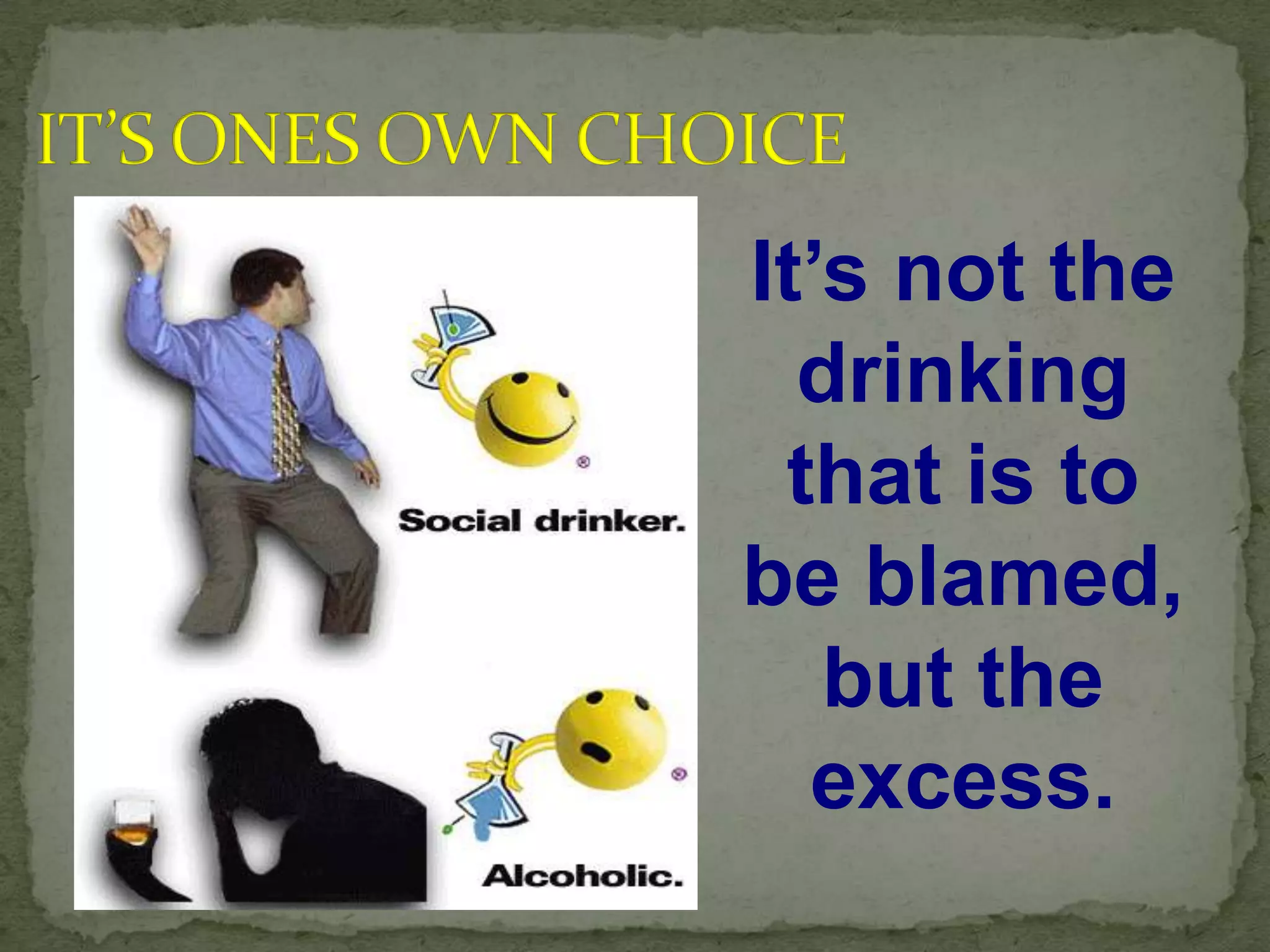
It’s not the
  drinking
 that is to
be blamed,
   but the
  excess.
Alcoholism-SOC 473

Alcoholism-SOC 473

  • 1.
  • 3.
     C2-H5-OH (EthylAlcohol)  Depressant drug-slows mind  Alcoholic Beverages  Alcohol Production includes -Fermentation -Brewing -Distillation  It has been a big industry in India and all over the World. In South East Asia, India is the largest producer and importer of Liquor.
  • 4.
     Curiosity  Peerpressure  Socialize  Family Tradition  After That to celebrate, relieve stress , relax and escape the problems and the real world.  Then the drinker starts to like the taste and the after effects of getting “high”.  Easy access (often at home) and Absence of religious attachment can turn a man into an addict.
  • 5.
     BODY WEIGHT THOUGHTS and EXPECTATIONS  AMOUNT of alcohol consumed
  • 6.
     Alcoholism (alcoholdependence) - means compulsive and uncontrolled consumption of alcohol, usually to the detriment of the drinker's health, personal relationships, and social standing.  People suffering from alcoholism are often called "alcoholics“.  WHO estimates that there are 140 million people with alcoholism worldwide.  “Dual disease“-Biological and mental.  Biological causes unknown & Mental include Social environment, stress, mental health, family history etc.
  • 7.
     Alcohol abuseis a psychiatric diagnosis of Alcoholism.  Binge drinking(more than 5 drinks) is another form of alcohol abuse  It is the heavy episodic drinking popular in college campuses nowadays.  Abuses of alcohol include violence, injuries, unprotected sexual activities ,one night stands, social and financial crisis.
  • 8.
    An alcohol abuseris different from an alcoholic An alcohol abuser still has some ability to set a limit on their drinking. However, an alcohol abuser tend to be self-destructive and sometimes led to home violence or crimes due to the use of alcohol.
  • 10.
     ACUTE- Physical performancegets impaired Hallucinations Thirst Blackouts Poor Sexual Performance HANGOVER(happens when alcohol leaves the system) -It includes headaches, fatigue, Nausea, dehydration -there is no cure or short cut of getting rid of it. ALCOHOL POISONING(hospitalization)
  • 11.
     CHRONIC-  ToleranceDevelops  Thinking skills get impaired  Organs get damaged. Cirrhosis of liver, Brain damage, Delirium can lead to death.  Tremens(hallucinations when alcoholic stops drinking) .  Increased risk of cardiovascular diseases (Coronary Heart Disease, Stroke, Hypertension)
  • 12.
     Increased riskof cancer: (liver, stomach, colon, pancreas, breast, mouth, throat)  Reproductive problems  Fetal Alcohol Syndrome (FAS) Growth retardation Facial malformations Small head Greatly reduce intelligence
  • 15.
    Behavioral Consequences of Alcohol Use  Contributes to 50% of all motor vehicle fatalities  Contributes to unsafe sex and increased risk of AIDS  Contributes to risky behavior and accidental death  Domestic Violence
  • 16.
     Alcohol permanentlydestroys brain cells. TRUE it happens every time you drink.  Teens have more effect of alcohol on them TRUE,  They have a smaller body and less body mass.  Less psychological Tolerance  Teens nowadays are under a lot of stress(both academic and relationship wise)  Liver is not mature enough to oxidise alcohol quickly
  • 17.
     Patterns ofconsumption vary.  Kerala, Punjab, Andhra Pradesh Chhattisgarh , Goa and the North-Eastern States have a much higher proportion of alcohol consumption.  Women tend to drink more in Assam, Arunachal Pradesh, Sikkim (the North-east) Madhya Pradesh, Chhattisgarh, Orissa and Andhra Pradesh than their counterparts in the rest of the country
  • 19.
     62.5 millionalcohol users estimated in India  Per capita consumption of alcohol increased by 106.7% over the 15-year period from 1970 to 1996.  About 80% of alcohol consumption is in the form of hard liquor or distilled spirits(High Conc. Drinks).  The mean age of initiation of alcohol use has decreased from 23.36 years in 1950 to 1960 to 19.45 year in 1980 to 1990.  India has been identified as the potentially third largest market for alcoholic beverages in the world.
  • 20.
     Studies byAlcohol & Drug Information Centre (ADIC) show  alarming increase in alcohol consumption among adolescents and youth during the last 20 years.  The average age of initiation to alcohol in Kerala which was 19 years in 1986 has come down to 14 years in 2006.  The study of National Institute of Mental Health and Neurosciences shows that 20 per cent of women reported domestic violence due to husband’s drinking habits.  Another study by ADIC(India) reveals that 40% of the Road accidents were alcohol related.
  • 21.
     Indian AlcoholPolicy Alliance (IAPA) is a registered NGO started in 2004 to prevent alcohol related harm through policy intervention, advocacy and capacity building.  Development of alcohol policy that addresses issues related to alcohol taxation, rules on age restrictions, drinking and driving laws and advertising  Public awareness, costs of alcohol use and advocacy efforts to reduce harmful impact of alcohol.
  • 22.
     The idealapproach to treatment is to help the person realize how much their alcohol use is harming their life and those around them.  Alcohol recovery or support programs can help you stop drinking completely. These programs usually offer: Counselling and therapy , Mental health support and Medical care.  Support Groups are available to help people who are dealing with alcoholism and offer emotional support.
  • 23.
     The AmericanMedical Association(AMA) stated that alcoholism is a chronic, life-long disease, such as diabetes.  Genes play a large role in the development of alcoholism. However not necessary to develop alcoholism. Similarly, not everyone with a genetic predisposition develops Alcoholism.  Current evidence indicates that in both men and women, alcoholism is 50-60% genetically determined, leaving 40- 50% for environmental and other influences.  Some critics of the disease model argue alcoholism as a choice, not a disease. The disease concept gives the substance abuser an excuse. A disease cannot be cured by force of will but alcoholism cab be.
  • 24.
     The NationalInstitute on Alcohol Abuse and Alcoholism recommends:  Women should not drink more than 1 drink per day  Men should not drink more than 2 drinks per day One drink is defined as 12 ounces of beer, 5 ounces of wine, or 1½ ounces of spirits.
  • 25.
     Limit numberof drinks  Drink less than 1 per 90 min.  Sip slowly  Eat lots of protein/starch  Avoid carbonated drinks  Measure drinks carefully  Don't drive if intoxicated  Don’t drink if pregnant
  • 26.
    It’s not the drinking that is to be blamed, but the excess.