1
CHAPTER – I
INTRODUCTION
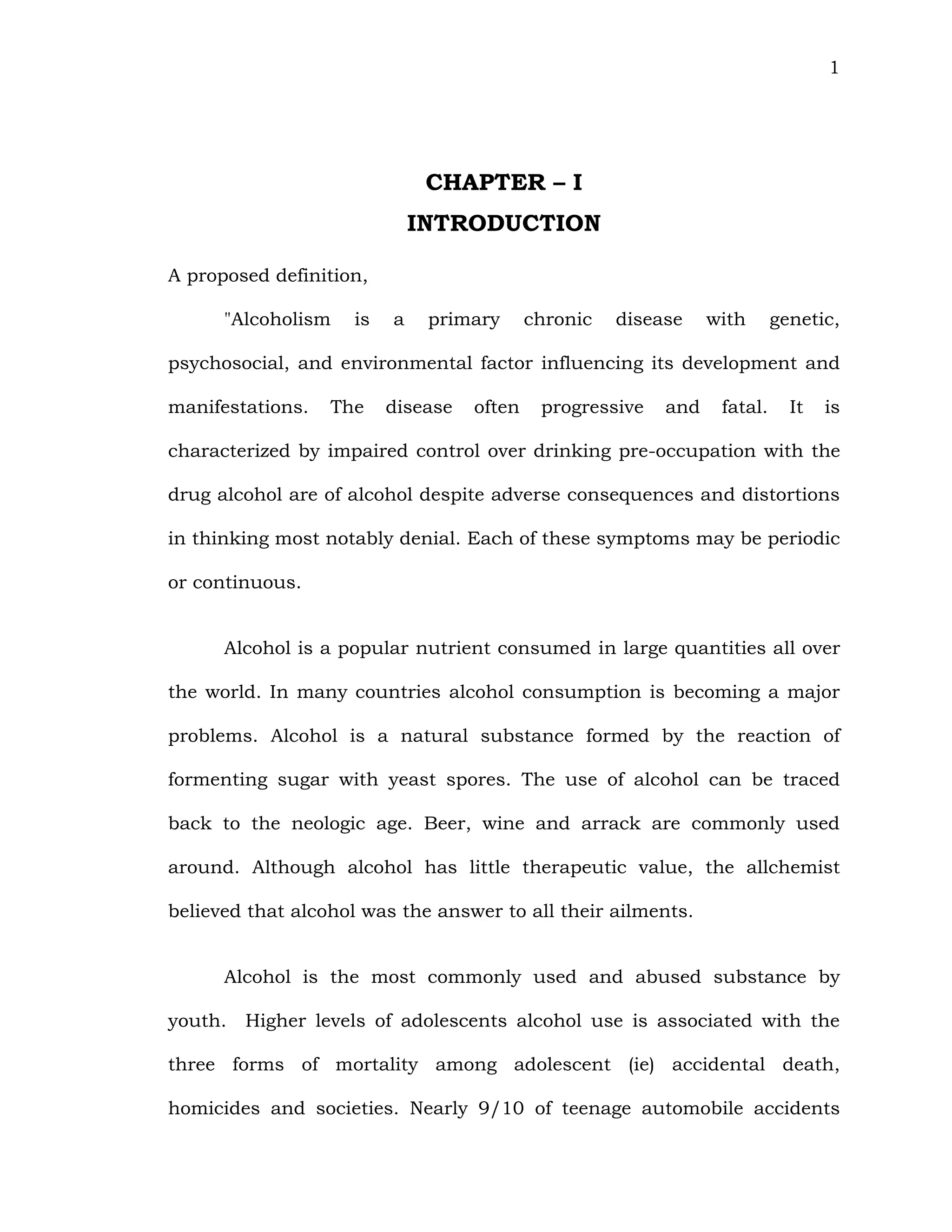
A proposed definition,
"Alcoholism is a primary chronic disease with genetic,
psychosocial, and environmental factor influencing its development and
manifestations. The disease often progressive and fatal. It is
characterized by impaired control over drinking pre-occupation with the
drug alcohol are of alcohol despite adverse consequences and distortions
in thinking most notably denial. Each of these symptoms may be periodic
or continuous.
Alcohol is a popular nutrient consumed in large quantities all over
the world. In many countries alcohol consumption is becoming a major
problems. Alcohol is a natural substance formed by the reaction of
formenting sugar with yeast spores. The use of alcohol can be traced
back to the neologic age. Beer, wine and arrack are commonly used
around. Although alcohol has little therapeutic value, the allchemist
believed that alcohol was the answer to all their ailments.
Alcohol is the most commonly used and abused substance by
youth. Higher levels of adolescents alcohol use is associated with the
three forms of mortality among adolescent (ie) accidental death,
homicides and societies. Nearly 9/10 of teenage automobile accidents
2
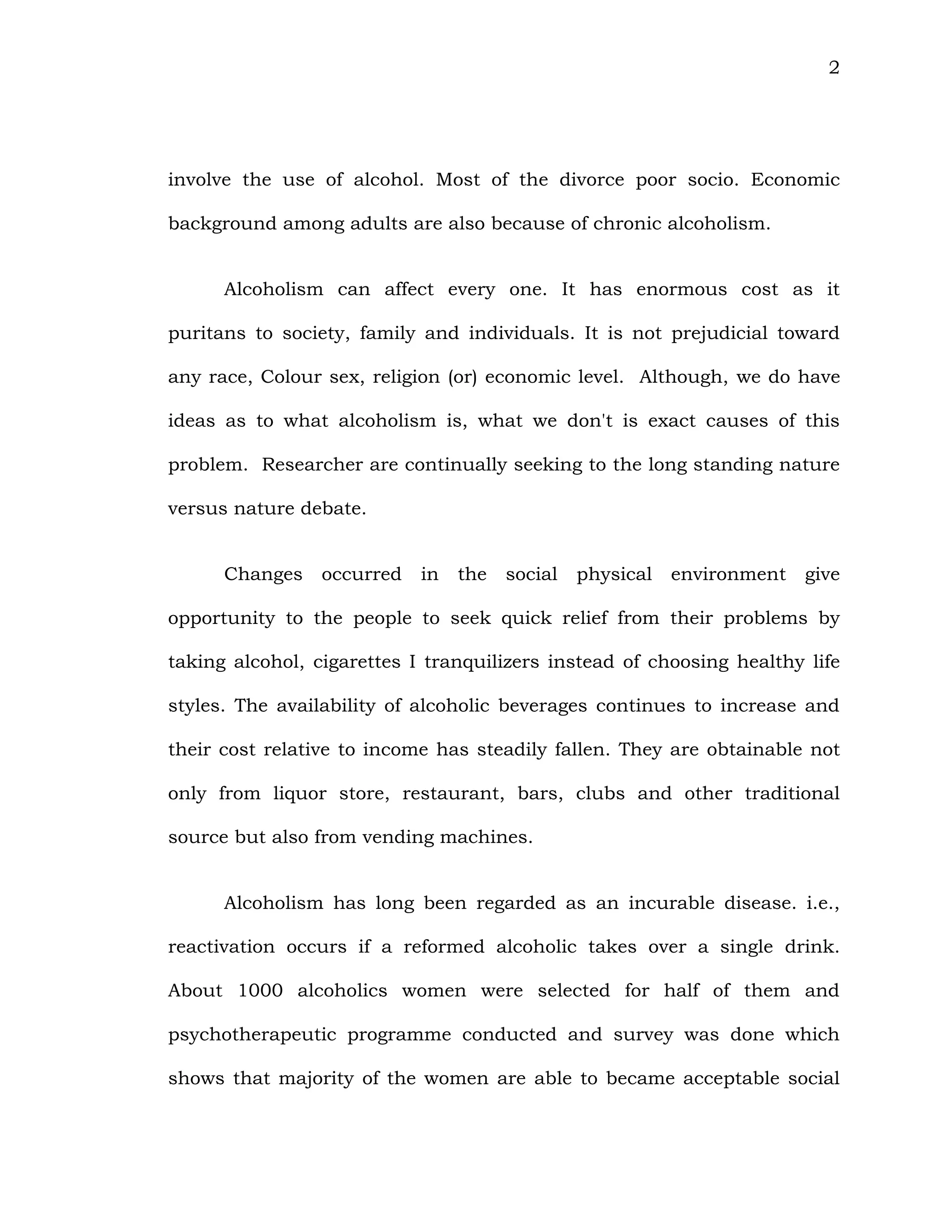
involve the use of alcohol. Most of the divorce poor socio. Economic
background among adults are also because of chronic alcoholism.
Alcoholism can affect every one. It has enormous cost as it
puritans to society, family and individuals. It is not prejudicial toward
any race, Colour sex, religion (or) economic level. Although, we do have
ideas as to what alcoholism is, what we don't is exact causes of this
problem. Researcher are continually seeking to the long standing nature
versus nature debate.
Changes occurred in the social physical environment give
opportunity to the people to seek quick relief from their problems by
taking alcohol, cigarettes I tranquilizers instead of choosing healthy life
styles. The availability of alcoholic beverages continues to increase and
their cost relative to income has steadily fallen. They are obtainable not
only from liquor store, restaurant, bars, clubs and other traditional
source but also from vending machines.
Alcoholism has long been regarded as an incurable disease. i.e.,
reactivation occurs if a reformed alcoholic takes over a single drink.
About 1000 alcoholics women were selected for half of them and
psychotherapeutic programme conducted and survey was done which
shows that majority of the women are able to became acceptable social
3
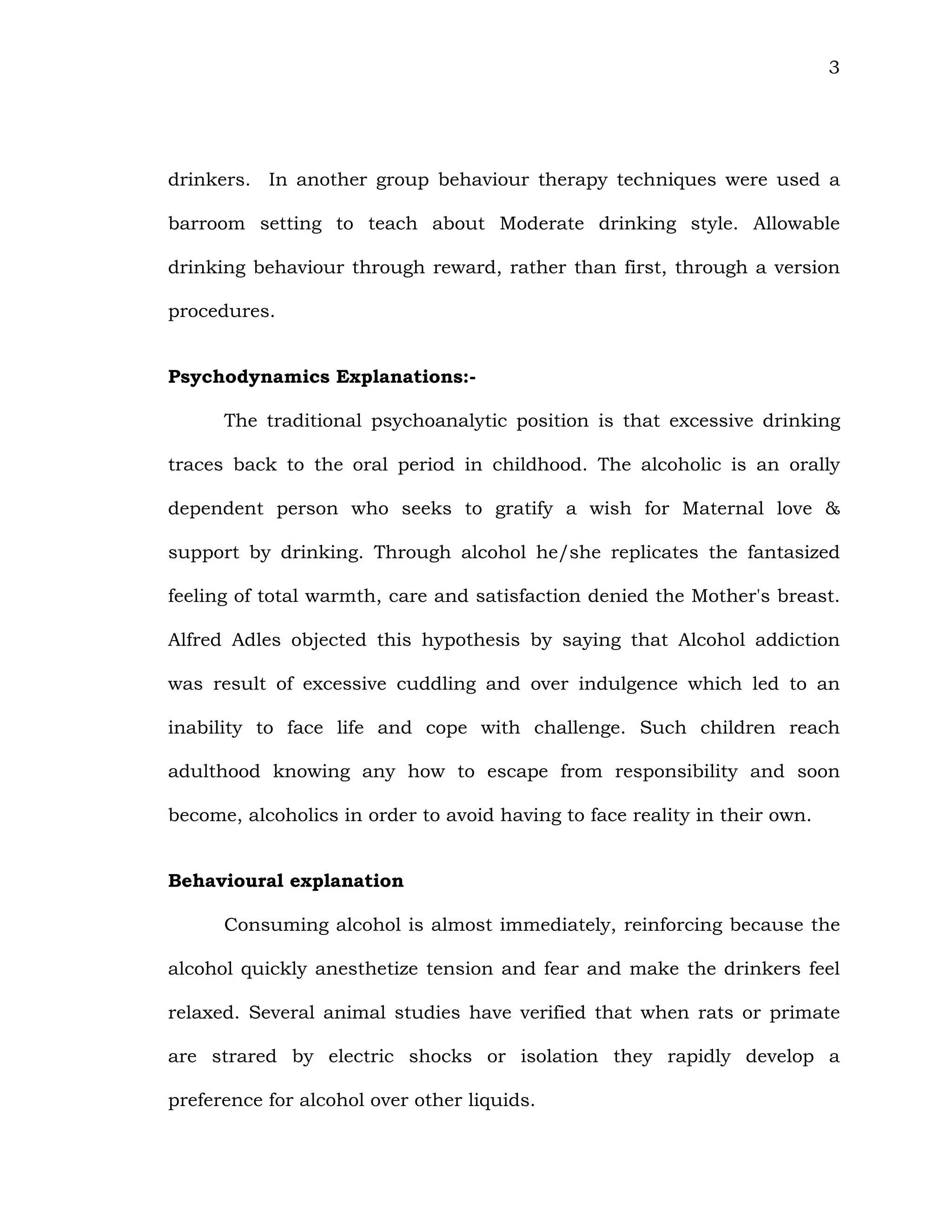
drinkers. In another group behaviour therapy techniques were used a
barroom setting to teach about Moderate drinking style. Allowable
drinking behaviour through reward, rather than first, through a version
procedures.
Psychodynamics Explanations:-
The traditional psychoanalytic position is that excessive drinking
traces back to the oral period in childhood. The alcoholic is an orally
dependent person who seeks to gratify a wish for Maternal love &
support by drinking. Through alcohol he/she replicates the fantasized
feeling of total warmth, care and satisfaction denied the Mother's breast.
Alfred Adles objected this hypothesis by saying that Alcohol addiction
was result of excessive cuddling and over indulgence which led to an
inability to face life and cope with challenge. Such children reach
adulthood knowing any how to escape from responsibility and soon
become, alcoholics in order to avoid having to face reality in their own.
Behavioural explanation
Consuming alcohol is almost immediately, reinforcing because the
alcohol quickly anesthetize tension and fear and make the drinkers feel
relaxed. Several animal studies have verified that when rats or primate
are strared by electric shocks or isolation they rapidly develop a
preference for alcohol over other liquids.
4
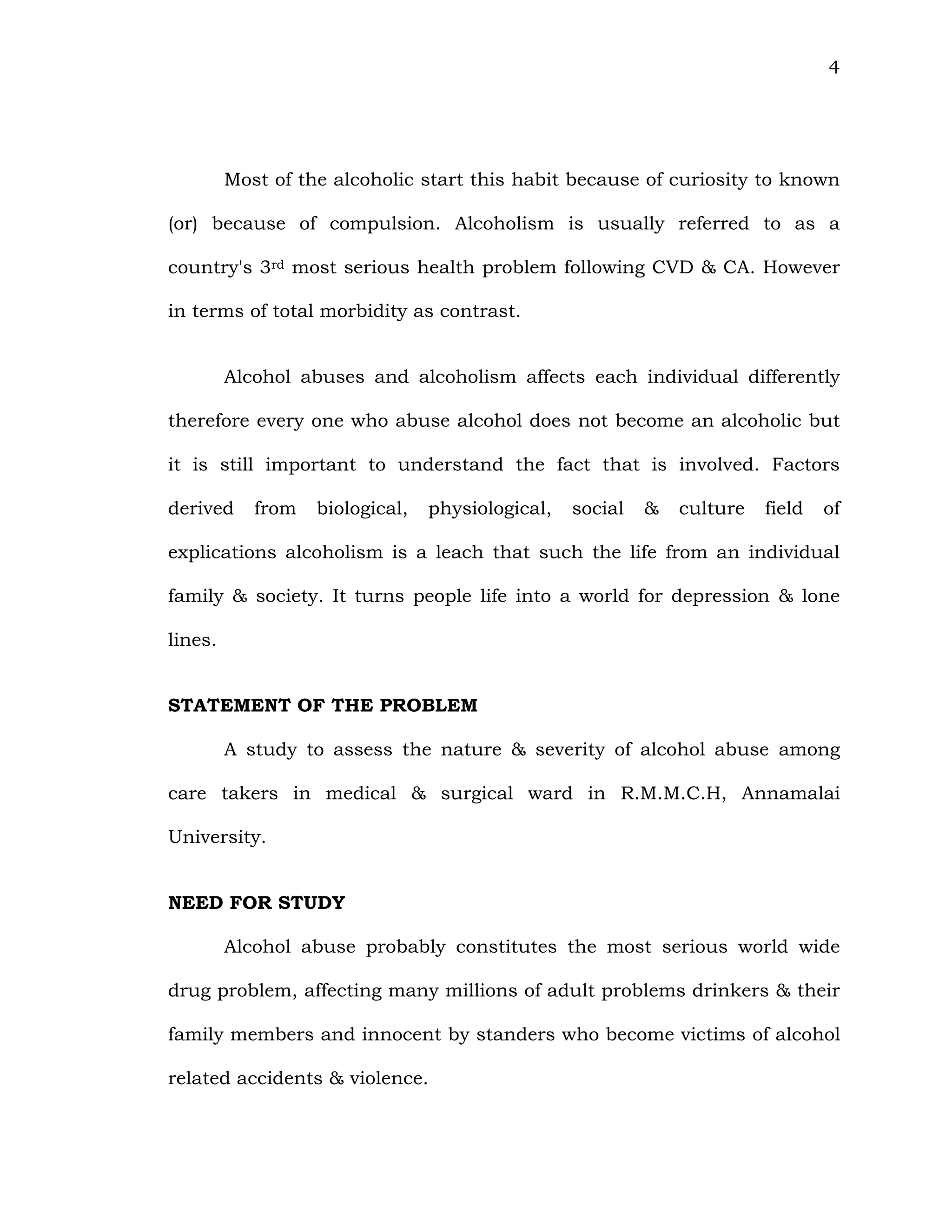
Most of the alcoholic start this habit because of curiosity to known
(or) because of compulsion. Alcoholism is usually referred to as a
country's 3rd most serious health problem following CVD & CA. However
in terms of total morbidity as contrast.
Alcohol abuses and alcoholism affects each individual differently
therefore every one who abuse alcohol does not become an alcoholic but
it is still important to understand the fact that is involved. Factors
derived from biological, physiological, social & culture field of
explications alcoholism is a leach that such the life from an individual
family & society. It turns people life into a world for depression & lone
lines.
STATEMENT OF THE PROBLEM
A study to assess the nature & severity of alcohol abuse among
care takers in medical & surgical ward in R.M.M.C.H, Annamalai
University.
NEED FOR STUDY
Alcohol abuse probably constitutes the most serious world wide
drug problem, affecting many millions of adult problems drinkers & their
family members and innocent by standers who become victims of alcohol
related accidents & violence.
5
India has an estimated 62.5 million consumers of alcohol from
1970, per capita, consumption is increased by 106.7%. 10-15%
consumers develop alcoholism.
The Hindu reported that
"The mean age of first exposure to alcohol is down from 24 years to
19 yrs in the last four decade. It is a disturbing aspect in the emergence
of drinking as a public health problem in the country.
According to mortality rate data from the national centre for health
statistics about 34.7023 were due to alcoholic liver cirrhosis.
Alcoholic abuse & alcoholic dependence are not only adult problem
there also a significant number of adolescents and young adults between
the age of 12 yr-20, even though drinking under the age of 21 yrs is
illegal in every state.
There are an estimated 62.5 million consumers of alcohol in India-
the third largest market in the world for alcohol. This can be seen against
a decreasing trend of consumption of distilled spirits in developed
countries.
Over a 15-year period from 1970, the per capita consumption of
alcohol increased by 106.7 percent & the consumption of hard liquor
6
dominated (80 per cent) all other intoxicant beverages. Sale of alcohol
has been growing steadily at between 6 to 8 percent annually. It is
estimated that 10 to 15 per cent consumers develop alcoholism, Ms.
Thimmagal said while interacting with Journalist of the Hindu on
Monday. Alcoholism is a leading cause of mortality & Morbidity
developed & developing countries. It contribute to suicide, homicide &
accidental death. In multiple studies, alcoholism has been found to be
associated with approximately 25% of the deaths by suicide.
Approximately 1 in 5 male admission to medical wards are directly
(or) indirectly due to alcohol. Between 30-40% of accident & emergency
attendance have blood alcohol concentration. People with serious
drinking problem have a 2 (or) 3 times increased risk of dying compared
to members of the general population of the same age & sex.
It has been estimated that 10% of adult men who drinks and 3% of
adult women drinker are abusers of alcohol. The misuse of alcohol
institute 10% of death in most of the countries and is the main cause of
violence & family disruption. Children of alcoholics are at highest risk of
developing alcoholism & are prone to learning disabilities, eating disorder
& stress related medical problems. Now a days the number of alcohol
abusers are increasing because of financial problem, occupational
problem and weak bonding with the family members.
7
Heavy drinking is an important factor in the damage of brain, liver
& some cancer. As with smoking, alcohol use in pregnance lead to
damage of the fetus. The major ill effects of alcoholism are peripheral
neuropathy, alcoholic cardiomyopathy, pancreatitis, cirrhosis of liver,
wernicke’s encephalopathy hepatic encephalopathy & sexual dysfunction.
Alcoholism may disturb the normal psychology of an individual
leads to slurred speech, impaired judgement, aggressiveness, impartial
attention, irritability, euphoria, depression, in coordination and
emotional liability.
It is important for the nurses to remember that not all people
progress through all the stages of substance abuse (curiosity
experimentation, regular use, psychological or physical dependency,
using drugs to feel normal) but younger the user, the greater the risk of
chemical dependency. In the year 2004 out of 200 subjects, 48.5%
scored 8 or more & 22.5% scored 16 or more on the audit.
OBJECTIVES
 To assess the status of the patient as a alcoholic or not
 To identify nature & severity of alcohol abuse by using Michael's
alcoholism screening test.
8
 To correlate the socio demographic variable with i.e. the behaviour
of alcoholism (alcoholic factors).
OPERATIONAL DEFINITION
Alcohol abuse:
Patient’s relatives who are taking excess amount of liquor
belonging to the age group of 20-45 yrs.
Care taker:
Care taker can be defined as those who are providing care to the
patients admitted in the medical & surgical ward.
ASSUMPTION
 The patient relatives does not know about the seriousness of the
alcohol consumption.
 Due to alcohol consumption the morbidity & mortality rate
increases.
LIMITATIONS
Data collection procedure was done by interview method. Privacy
was maintained during data collection procedure. The time limitation for
data collection among care takers, was between 4.30-6.30PM. The
sample of the study was restricted up to 75 members among care takers
in medical & surgical ward in R.M.M.C.H (Annamalai University).
9
CHAPTER – II
REVIEW OF LITERATURE
A proposed definition of alcoholism is:
A primary chronic disease with genetic, psychosocial, and
environmental factors influencing its development and manifestations.
The disease is often progressive and fatal. It is characterized by impaired
control over drinking, preoccupation with the drug alcohol, use of alcohol
despite adverse consequences, and distortions in thinking, most notably
denial. Each of these symptoms may be periodic or continuous.
Ivan Diamond Cheryl A Jay (2001). conducted study on
Alcoholism and alcohol abuse.
Definitions
Alcoholism is characterized by addiction to ethanol. In contrast to
behavioural and socioeconomic definitions of alcoholism, in a medical
setting alcoholism is a chronic disease in which the alcoholic craves and
consumes ethanol uncontrollably, becomes tolerant to its intoxicating
effects with repetitive drinking, and has symptoms and signs of alcohol
withdrawal (physical dependence) when drinking is stopped.
10
Etiology
Genetic susceptibility and environmental factors interact to
produce alcoholism, often in families. Twin studies show that a
monozygotic twin. Children of an alcoholic parents who were adopted
early in life by non-alcoholic parents are over three times are likely to
become alcoholics than are control adoptees.
Epidemiology
Nearly two thirds of Americans older than 14 years drink alcoholic
beverages. Their per capita consumption is the equivalent of 9.7 gallons
of whiskey, 89 gallons of beer, or 31 gallons if wine per year. Heavy
drinkers account for half of the alcohol consumed and nearly all of the
socioeconomic and medical complications of alcoholism and alcohol
abuse. The annual cost of these problems to American society is about
$100 billion, a figure that includes costs to treat alcoholism and related
medical complications and lost productivity. Excessive alcohol
consumption ranks as the third leading preventable cause if death,
behind cigarette smoking and obesity, and accounts for 5% of the total
U.S. mortality, or about 100,000 deaths annually.
11
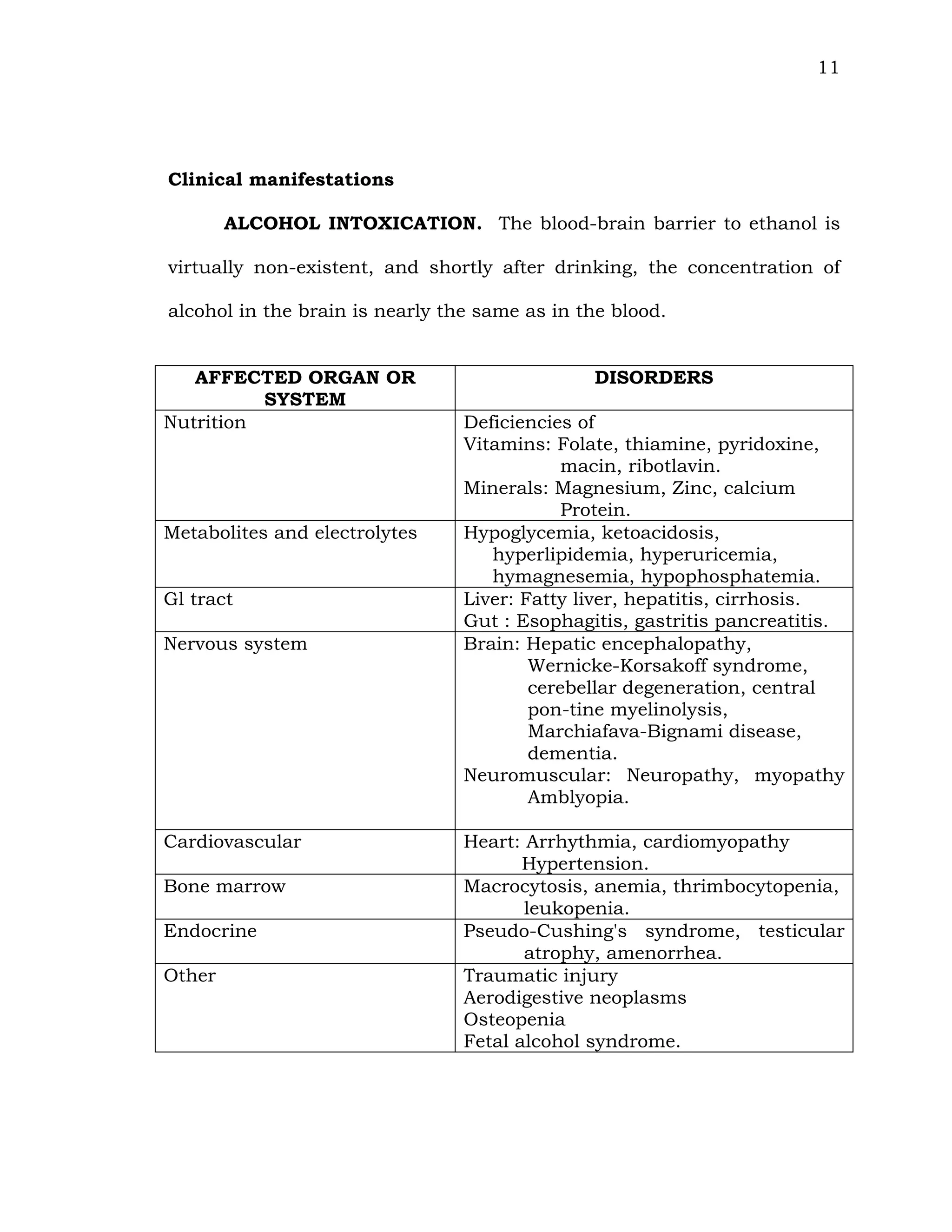
Clinical manifestations
ALCOHOL INTOXICATION. The blood-brain barrier to ethanol is
virtually non-existent, and shortly after drinking, the concentration of
alcohol in the brain is nearly the same as in the blood.
AFFECTED ORGAN OR
SYSTEM
DISORDERS
Nutrition Deficiencies of
Vitamins: Folate, thiamine, pyridoxine,
macin, ribotlavin.
Minerals: Magnesium, Zinc, calcium
Protein.
Metabolites and electrolytes Hypoglycemia, ketoacidosis,
hyperlipidemia, hyperuricemia,
hymagnesemia, hypophosphatemia.
Gl tract Liver: Fatty liver, hepatitis, cirrhosis.
Gut : Esophagitis, gastritis pancreatitis.
Nervous system Brain: Hepatic encephalopathy,
Wernicke-Korsakoff syndrome,
cerebellar degeneration, central
pon-tine myelinolysis,
Marchiafava-Bignami disease,
dementia.
Neuromuscular: Neuropathy, myopathy
Amblyopia.
Cardiovascular Heart: Arrhythmia, cardiomyopathy
Hypertension.
Bone marrow Macrocytosis, anemia, thrimbocytopenia,
leukopenia.
Endocrine Pseudo-Cushing's syndrome, testicular
atrophy, amenorrhea.
Other Traumatic injury
Aerodigestive neoplasms
Osteopenia
Fetal alcohol syndrome.
12
Neurologic signs of intoxication include impaired cognition, slurred
speech, incoordination, mild truncal ataxia, and show or irregular eye
movements. Signs of increased sympathetic activity include mydriasis,
tachycardia, and skin flushing. Cerebellar and vestibular function
deteriorates at higher blood alcohol levels, and drunkenness is
characterized by dysarthria, more severe ataxia, nystagmus, and
diplopia. Patients may become lethargic with bradycardia, reduced blood
pressure, and diminished respirations, sometimes complicated by
vomiting and pulmonary aspiration. In non-tolerant individuals, stupor
and coma.
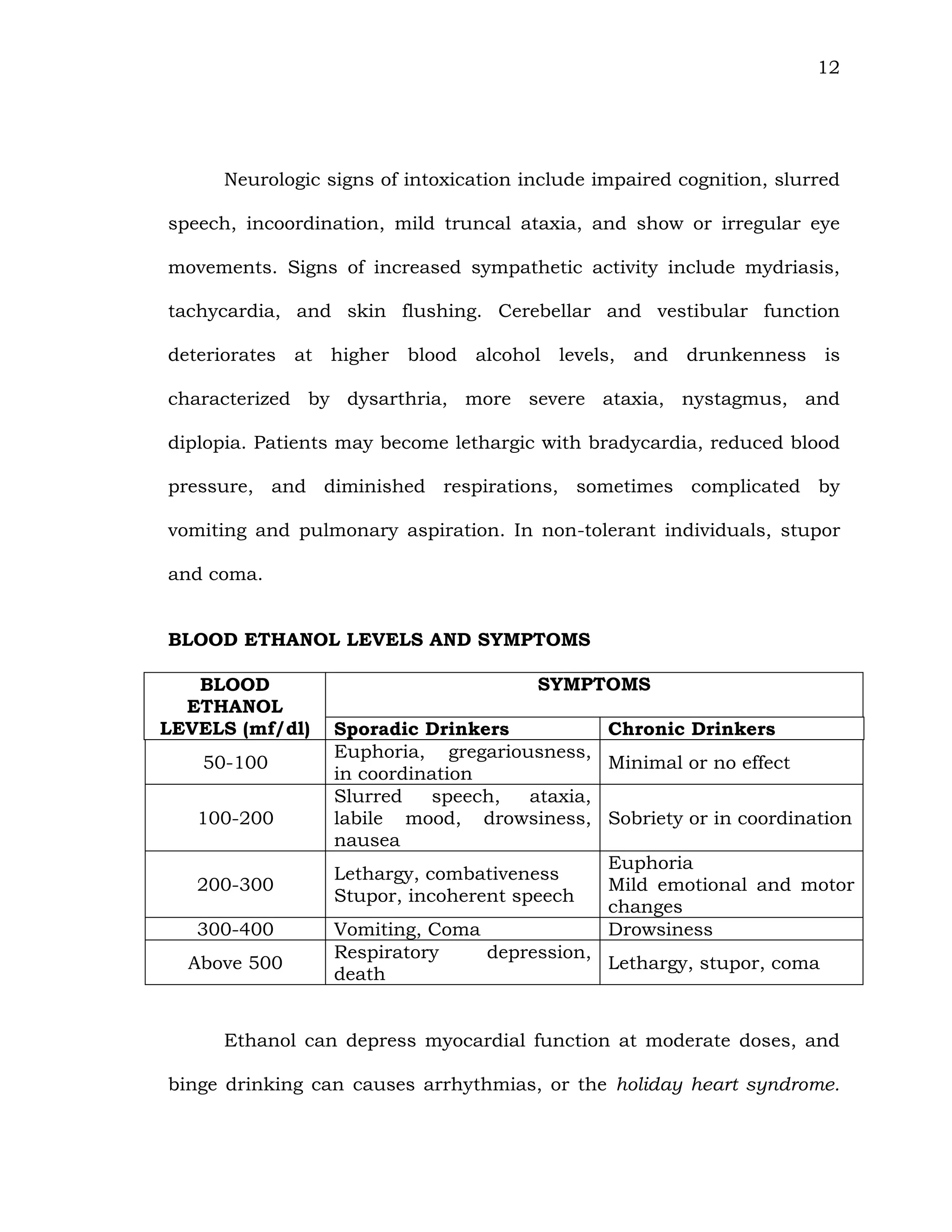
BLOOD ETHANOL LEVELS AND SYMPTOMS
BLOOD
ETHANOL
LEVELS (mf/dl)
SYMPTOMS
Sporadic Drinkers Chronic Drinkers
50-100
Euphoria, gregariousness,
in coordination
Minimal or no effect
100-200
Slurred speech, ataxia,
labile mood, drowsiness,
nausea
Sobriety or in coordination
200-300
Lethargy, combativeness
Stupor, incoherent speech
Euphoria
Mild emotional and motor
changes
300-400 Vomiting, Coma Drowsiness
Above 500
Respiratory depression,
death
Lethargy, stupor, coma
Ethanol can depress myocardial function at moderate doses, and
binge drinking can causes arrhythmias, or the holiday heart syndrome.
13
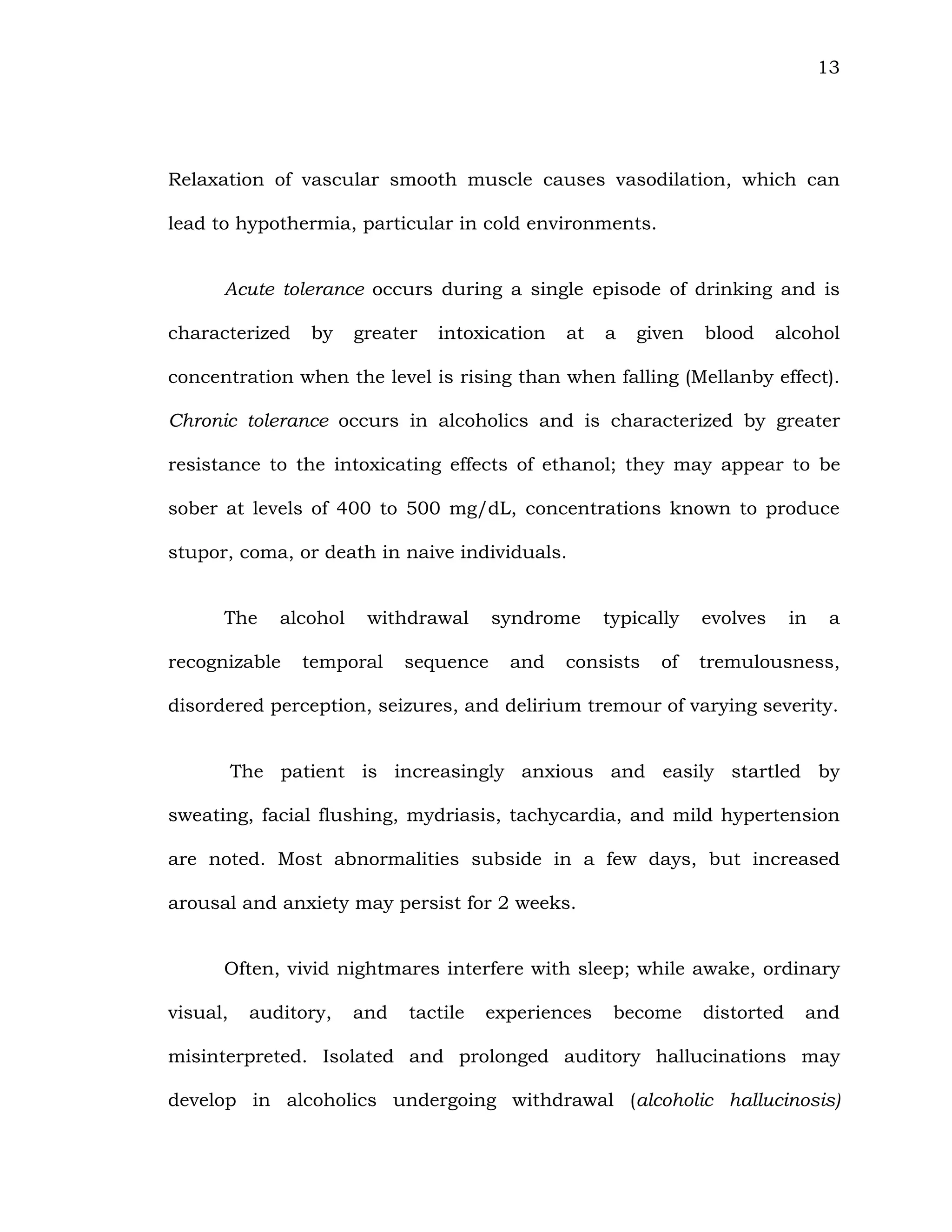
Relaxation of vascular smooth muscle causes vasodilation, which can
lead to hypothermia, particular in cold environments.
Acute tolerance occurs during a single episode of drinking and is
characterized by greater intoxication at a given blood alcohol
concentration when the level is rising than when falling (Mellanby effect).
Chronic tolerance occurs in alcoholics and is characterized by greater
resistance to the intoxicating effects of ethanol; they may appear to be
sober at levels of 400 to 500 mg/dL, concentrations known to produce
stupor, coma, or death in naive individuals.
The alcohol withdrawal syndrome typically evolves in a
recognizable temporal sequence and consists of tremulousness,
disordered perception, seizures, and delirium tremour of varying severity.
The patient is increasingly anxious and easily startled by
sweating, facial flushing, mydriasis, tachycardia, and mild hypertension
are noted. Most abnormalities subside in a few days, but increased
arousal and anxiety may persist for 2 weeks.
Often, vivid nightmares interfere with sleep; while awake, ordinary
visual, auditory, and tactile experiences become distorted and
misinterpreted. Isolated and prolonged auditory hallucinations may
develop in alcoholics undergoing withdrawal (alcoholic hallucinosis)
14
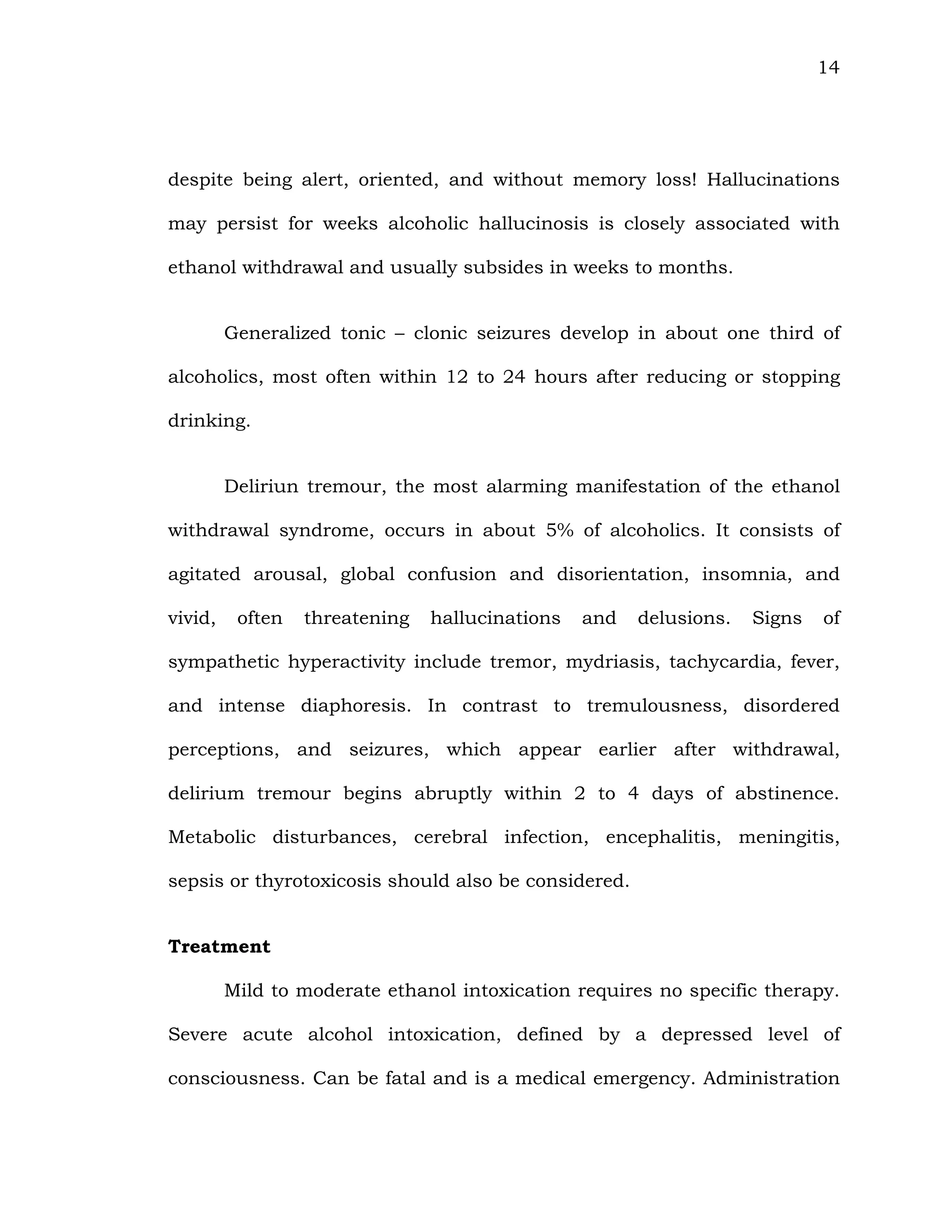
despite being alert, oriented, and without memory loss! Hallucinations
may persist for weeks alcoholic hallucinosis is closely associated with
ethanol withdrawal and usually subsides in weeks to months.
Generalized tonic – clonic seizures develop in about one third of
alcoholics, most often within 12 to 24 hours after reducing or stopping
drinking.
Deliriun tremour, the most alarming manifestation of the ethanol
withdrawal syndrome, occurs in about 5% of alcoholics. It consists of
agitated arousal, global confusion and disorientation, insomnia, and
vivid, often threatening hallucinations and delusions. Signs of
sympathetic hyperactivity include tremor, mydriasis, tachycardia, fever,
and intense diaphoresis. In contrast to tremulousness, disordered
perceptions, and seizures, which appear earlier after withdrawal,
delirium tremour begins abruptly within 2 to 4 days of abstinence.
Metabolic disturbances, cerebral infection, encephalitis, meningitis,
sepsis or thyrotoxicosis should also be considered.
Treatment
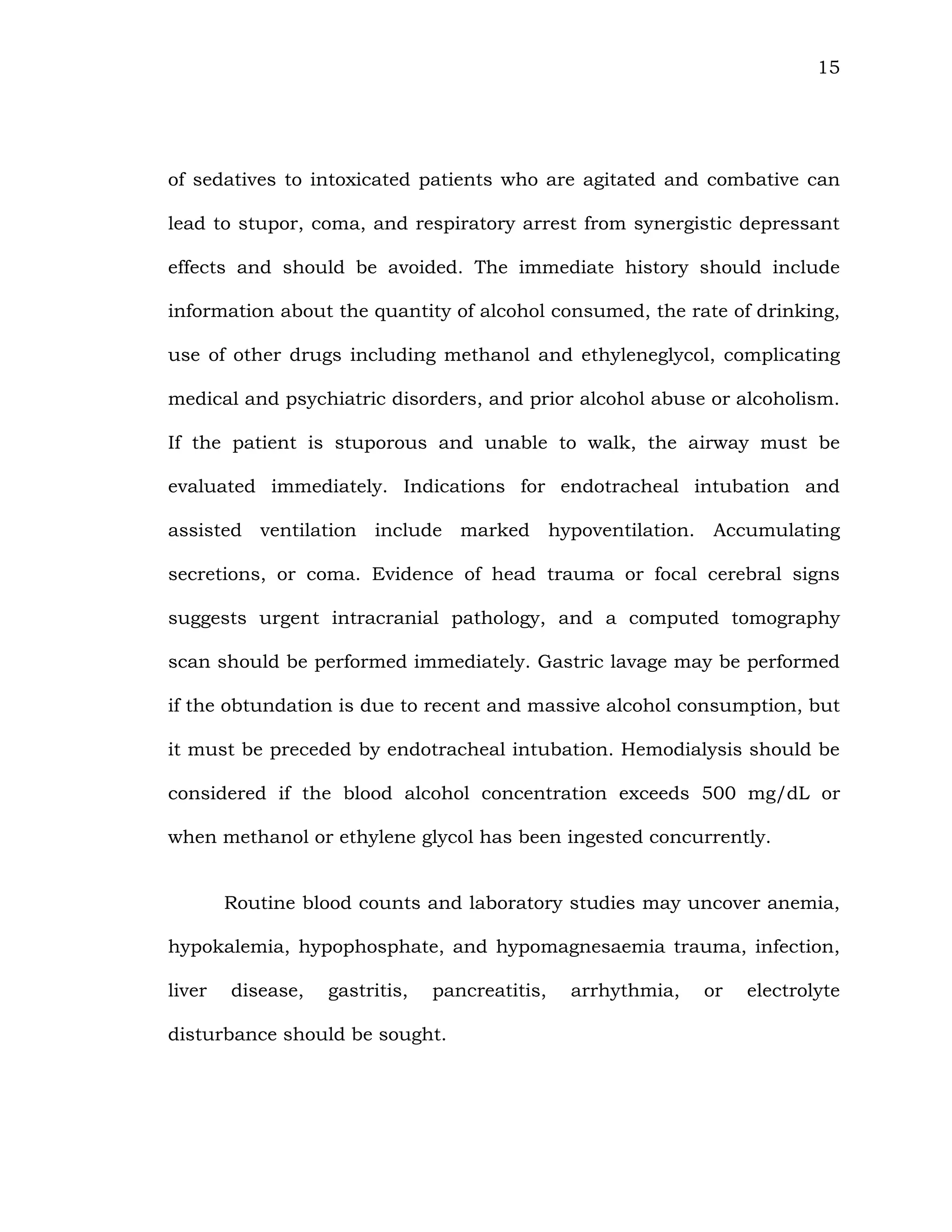
Mild to moderate ethanol intoxication requires no specific therapy.
Severe acute alcohol intoxication, defined by a depressed level of
consciousness. Can be fatal and is a medical emergency. Administration
15
of sedatives to intoxicated patients who are agitated and combative can
lead to stupor, coma, and respiratory arrest from synergistic depressant
effects and should be avoided. The immediate history should include
information about the quantity of alcohol consumed, the rate of drinking,
use of other drugs including methanol and ethyleneglycol, complicating
medical and psychiatric disorders, and prior alcohol abuse or alcoholism.
If the patient is stuporous and unable to walk, the airway must be
evaluated immediately. Indications for endotracheal intubation and
assisted ventilation include marked hypoventilation. Accumulating
secretions, or coma. Evidence of head trauma or focal cerebral signs
suggests urgent intracranial pathology, and a computed tomography
scan should be performed immediately. Gastric lavage may be performed
if the obtundation is due to recent and massive alcohol consumption, but
it must be preceded by endotracheal intubation. Hemodialysis should be
considered if the blood alcohol concentration exceeds 500 mg/dL or
when methanol or ethylene glycol has been ingested concurrently.
Routine blood counts and laboratory studies may uncover anemia,
hypokalemia, hypophosphate, and hypomagnesaemia trauma, infection,
liver disease, gastritis, pancreatitis, arrhythmia, or electrolyte
disturbance should be sought.
16
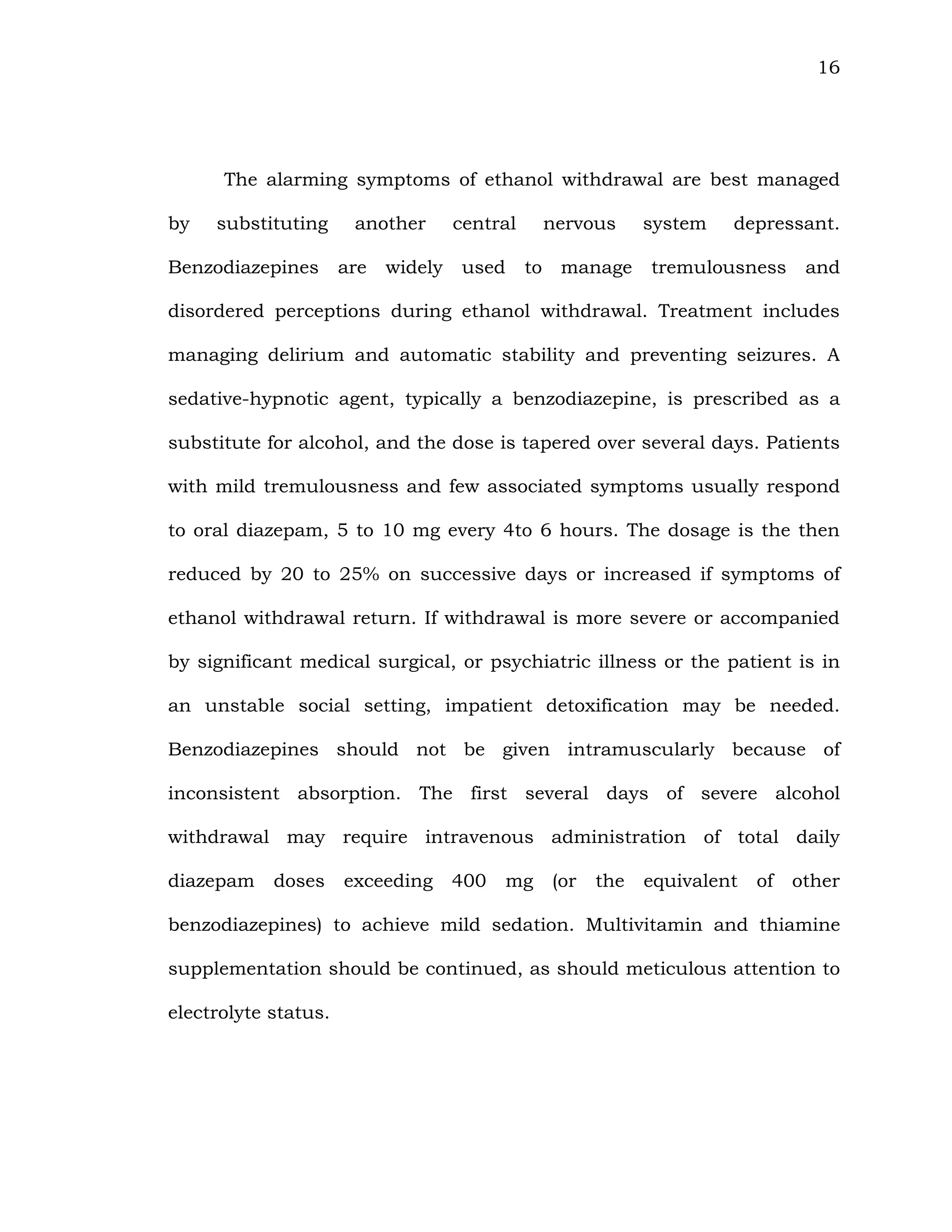
The alarming symptoms of ethanol withdrawal are best managed
by substituting another central nervous system depressant.
Benzodiazepines are widely used to manage tremulousness and
disordered perceptions during ethanol withdrawal. Treatment includes
managing delirium and automatic stability and preventing seizures. A
sedative-hypnotic agent, typically a benzodiazepine, is prescribed as a
substitute for alcohol, and the dose is tapered over several days. Patients
with mild tremulousness and few associated symptoms usually respond
to oral diazepam, 5 to 10 mg every 4to 6 hours. The dosage is the then
reduced by 20 to 25% on successive days or increased if symptoms of
ethanol withdrawal return. If withdrawal is more severe or accompanied
by significant medical surgical, or psychiatric illness or the patient is in
an unstable social setting, impatient detoxification may be needed.
Benzodiazepines should not be given intramuscularly because of
inconsistent absorption. The first several days of severe alcohol
withdrawal may require intravenous administration of total daily
diazepam doses exceeding 400 mg (or the equivalent of other
benzodiazepines) to achieve mild sedation. Multivitamin and thiamine
supplementation should be continued, as should meticulous attention to
electrolyte status.
17
Alcohol withdrawal seizures can often be managed with
intravenous benzodiazepines such as diazepam or lorazepam. Phenytoin
does not prevent seizures during withdrawal. Long – term anticonvulsant
therapy is not indicated for typical alcohol withdrawal seizures.
Delirium tremours requires hospitalization and vigorous
management in an intensive care setting. Mortality has reached 15% in
the past, primarily because of injuries or associated medical disorders
complicated by hyperthermia and dehydration.
Five to 10 mg or more of diazepam is given intravenously every 5 to
15 minutes until the patient is calm, and maintenance therapy is
continued every 1 to 4 hours, as needed. Initially, as much as 200 mg of
diazepam may be required before the agitation subsides. Coexisting
hepatic and cardiac disease may complicate fluid management,
Alcoholics and alcohol abusers come to medical attention because
of alcohol-related medical or psychiatric conditions, by referral from
social service or criminal justice agencies, or through screening in
clinical practice. Family members provide valuable collateral history.
18
Patrick j. McGrath, MD, Edward V. Nunes, MD, and Frederic
M.Quitkin, MD (2002) evaluated that the Current Concepts in the
Treatment of Depression in Alcohol-Dependent Patients
RELATIONSHIP BETWEEN ALCOHOLISM AND DEPRESSION
Alcoholic individuals commonly experience depressive symptoms,
clinicians and researchers postulate a relationship between the two
disorders; people might drink because they are depressed, using alcohol
to medicate underling depression. This is called the self-medication
hypothesis.
POSSIBLE EXPLANATIONS FOR COMORBIDITY
Competing theories explain the comorbidity of alcoholism and
depression, data support the "self-medication" and toxicity hypotheses.
The "self-medication" hypothesis proposes that depressed patients drink
to alleviate the dysphoric affect of depression or anxiety, which suggests
that a subset of depressed patients of depressed patients become
secondarily alcoholic and that treatment of the antecedent depression
might improve outcome.
Many of the studies in this area have used clinical samples, which
are unreliable in the assessment of comorbidity because comorbid
patients are more likely to seek treatment and therefore are over-
19
represented (i.e., Berkson's bias). This bias may cause an overestimate of
the incidence of comorbid cases in the population and also distort the
comorbid associations as they relate to treatment outcome and other
variables. Only epidemiologic samples fully address this issue and
provide reliable data on the prevalence of comorbidity and its correlates.
Genetics
Reviews of family studies suggest that alcoholism and depression
are not manifestations of the same underlying disorder and are mainly
independently transmitted in families. Also, bipolar depression may be
more commonly antecedent to alcoholism, and unipolar depression may
be more commonly a consequence of alcoholism.
TREATMENT
In a pilot study, the authors showed that 58% of patients with
primary depression had significant improvement in alcoholism and
depression when treated with an open-labeled regimen of imipramine
therapy plus counseling. The study included 69 actively alcoholic out
patrolled who received weekly individual relapse-prevention counseling in
addition to pharmacotherapy. The study demonstrated a clear
antidepressant effect, but no independent effect of imipramine on
drinking occurred. Patients whose depression improved with imipramine
therapy, however, showed statistically and clinically significant
20
improvements in their heavy drinking. These studies support the idea
that subjects with primary depression, as determined by history rather
than by observing protracted depression during abstinence, responds to
antidepressant medication.
Subject were selected of primary depression, defined as depression
which antedated the onset of alcohol-use disorder or continued during 6
months of abstinence. Preliminary analyses of the data have shown on
advantage of fluoxetine therapy over placebo in treating depression.
The controlled studies indicate that antidepressant medications,
including the SSRIs, have no utility in nondepressed alcoholic patients.
Although the mechanism of the relationship between alcoholism
disorders to the regulation of the endogenous opiate system. This
possible relationship, although intriguing, is highly speculative and
requires considerably more research.
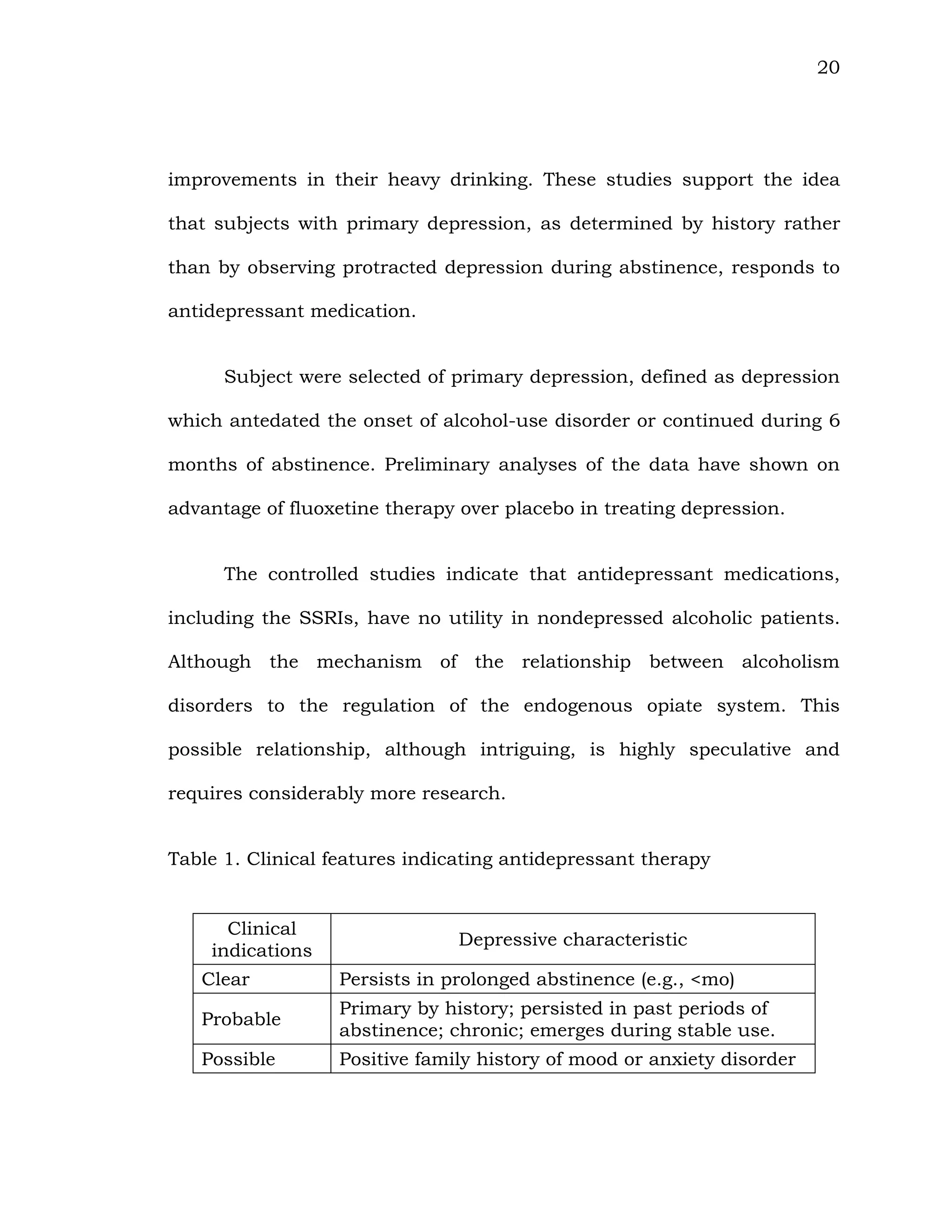
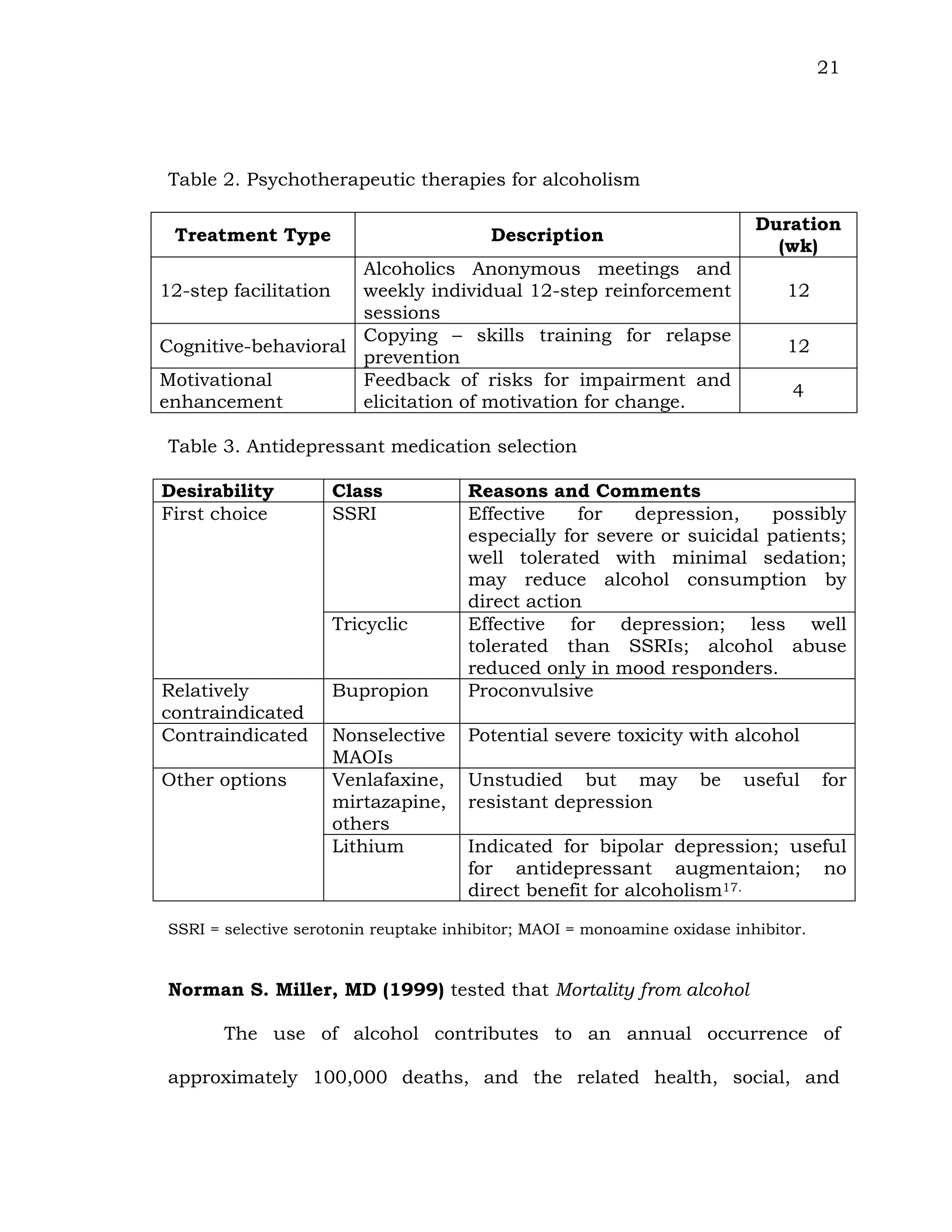
Table 1. Clinical features indicating antidepressant therapy
Clinical
indications
Depressive characteristic
Clear Persists in prolonged abstinence (e.g., <mo)
Probable
Primary by history; persisted in past periods of
abstinence; chronic; emerges during stable use.
Possible Positive family history of mood or anxiety disorder
21
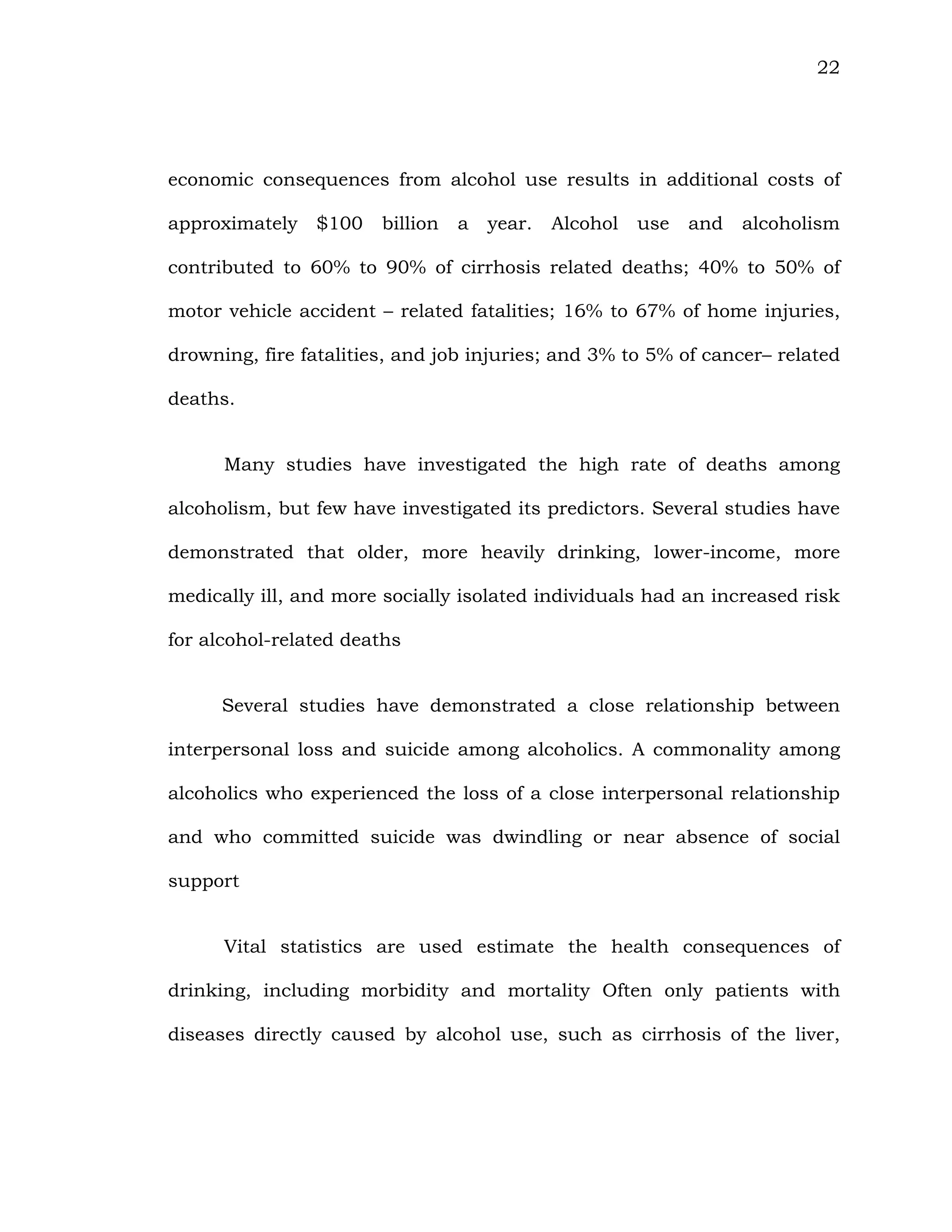
Table 2. Psychotherapeutic therapies for alcoholism
Treatment Type Description
Duration
(wk)
12-step facilitation
Alcoholics Anonymous meetings and
weekly individual 12-step reinforcement
sessions
12
Cognitive-behavioral
Copying – skills training for relapse
prevention
12
Motivational
enhancement
Feedback of risks for impairment and
elicitation of motivation for change.
4
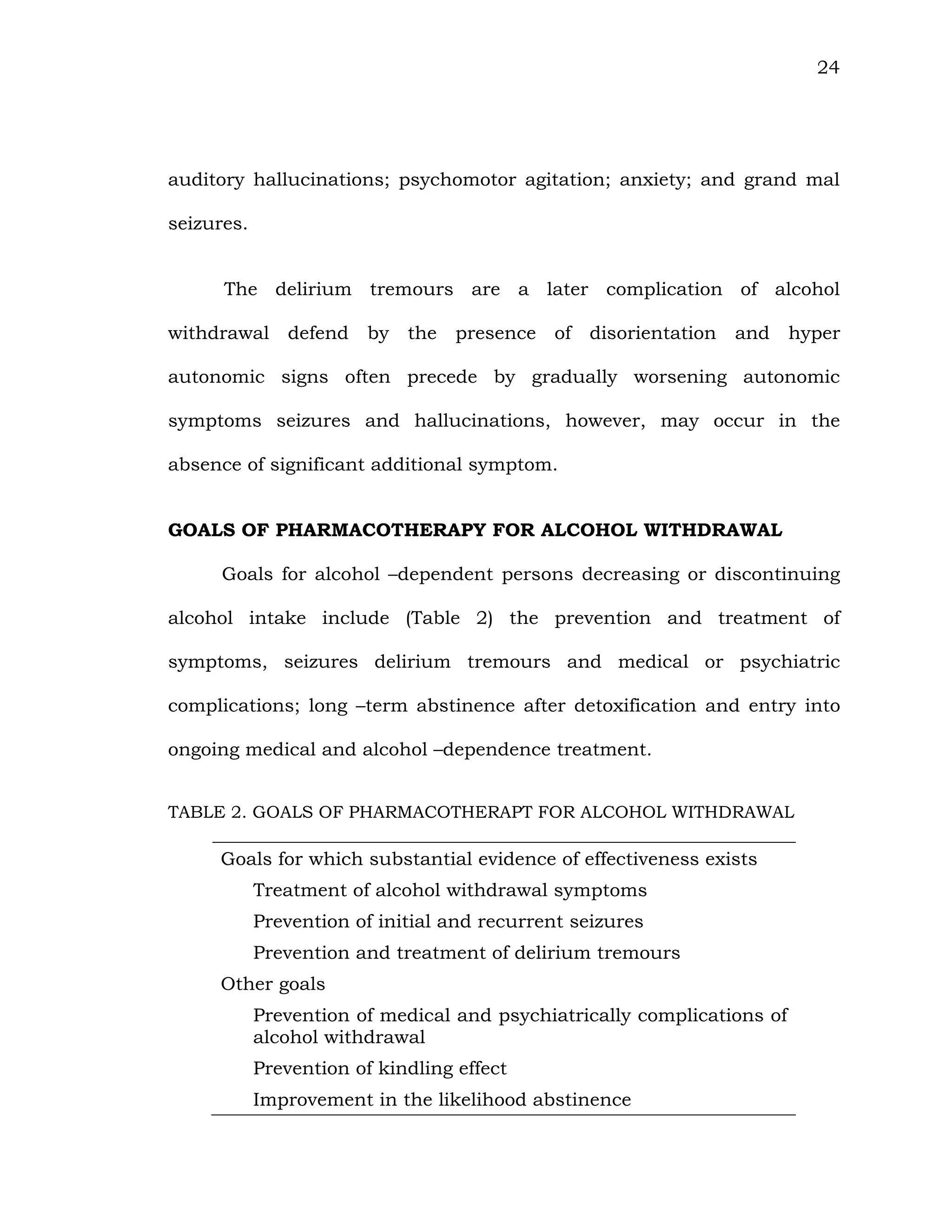
Table 3. Antidepressant medication selection
Desirability Class Reasons and Comments
First choice SSRI Effective for depression, possibly
especially for severe or suicidal patients;
well tolerated with minimal sedation;
may reduce alcohol consumption by
direct action
Tricyclic Effective for depression; less well
tolerated than SSRIs; alcohol abuse
reduced only in mood responders.
Relatively
contraindicated
Bupropion Proconvulsive
Contraindicated Nonselective
MAOIs
Potential severe toxicity with alcohol
Other options Venlafaxine,
mirtazapine,
others
Unstudied but may be useful for
resistant depression
Lithium Indicated for bipolar depression; useful
for antidepressant augmentaion; no
direct benefit for alcoholism17.
SSRI = selective serotonin reuptake inhibitor; MAOI = monoamine oxidase inhibitor.
Norman S. Miller, MD (1999) tested that Mortality from alcohol
The use of alcohol contributes to an annual occurrence of
approximately 100,000 deaths, and the related health, social, and
22
economic consequences from alcohol use results in additional costs of
approximately $100 billion a year. Alcohol use and alcoholism
contributed to 60% to 90% of cirrhosis related deaths; 40% to 50% of
motor vehicle accident – related fatalities; 16% to 67% of home injuries,
drowning, fire fatalities, and job injuries; and 3% to 5% of cancer– related
deaths.
Many studies have investigated the high rate of deaths among
alcoholism, but few have investigated its predictors. Several studies have
demonstrated that older, more heavily drinking, lower-income, more
medically ill, and more socially isolated individuals had an increased risk
for alcohol-related deaths
Several studies have demonstrated a close relationship between
interpersonal loss and suicide among alcoholics. A commonality among
alcoholics who experienced the loss of a close interpersonal relationship
and who committed suicide was dwindling or near absence of social
support
Vital statistics are used estimate the health consequences of
drinking, including morbidity and mortality Often only patients with
diseases directly caused by alcohol use, such as cirrhosis of the liver,
23
alcohol psychosis alcohol dependence and nondependent alcohol abuse
are reported in surveys
The mortality rate from alcoholism and related co morbidities is
high studies show multiple causes of premature death from alcoholism.
Several studies showed that abstinence had a positive effective on the
overall survival of alcoholics.
Pat Nile J.Mccraths, MD et al, (1997) conducted a study on
Pharmacologic effects and goals of Pharmcotherapy
They concluded that the alcohol produces intoxication, and with
repeated use tolerance and dependence develop although alcohol at high
does results in cell membrane alterations that may be respiratory
depression many of the effects of alcohol intoxication seen clinically are
likely to be explained by more specific mechanisms.
The central nervous system adapts to the overall inhibitory effects
of long term alcohol exposure on inhibitory GABA A- type and excitatory
NMDA- type glutamate receptor transmission by adjustments in receptor
number and function. When alcohol ids no longer present these
adaptations result in greater central nervous system excitability.
Autonomic hyperactivity (sweating or tachycardia); increased hand
tremor; insomnia; nausea or vomiting; transient tactile, visual or
24
auditory hallucinations; psychomotor agitation; anxiety; and grand mal
seizures.
The delirium tremours are a later complication of alcohol
withdrawal defend by the presence of disorientation and hyper
autonomic signs often precede by gradually worsening autonomic
symptoms seizures and hallucinations, however, may occur in the
absence of significant additional symptom.
GOALS OF PHARMACOTHERAPY FOR ALCOHOL WITHDRAWAL
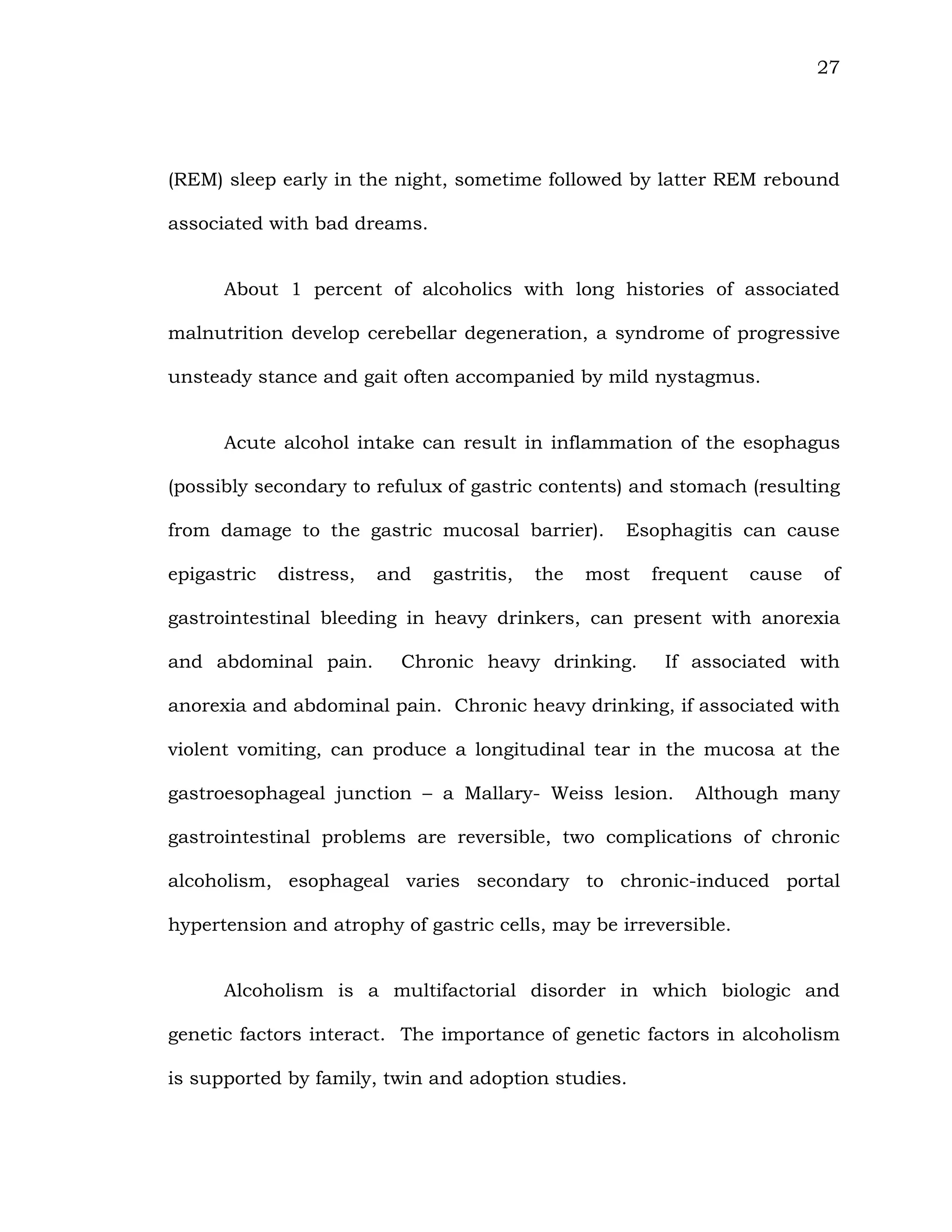
Goals for alcohol –dependent persons decreasing or discontinuing
alcohol intake include (Table 2) the prevention and treatment of
symptoms, seizures delirium tremours and medical or psychiatric
complications; long –term abstinence after detoxification and entry into
ongoing medical and alcohol –dependence treatment.
TABLE 2. GOALS OF PHARMACOTHERAPT FOR ALCOHOL WITHDRAWAL
Goals for which substantial evidence of effectiveness exists
Treatment of alcohol withdrawal symptoms
Prevention of initial and recurrent seizures
Prevention and treatment of delirium tremours
Other goals
Prevention of medical and psychiatrically complications of
alcohol withdrawal
Prevention of kindling effect
Improvement in the likelihood abstinence
25
Minimization of adverse drug effects
Entry into ongoing medical and addictions treatment
Cost –effective treatment
Table 3. Tuskfz Factors For More Severe Alcohol Withdrawal Symptoms
Seizures, And Delirium Tremens
Concomitant medical or surgical illness
Moderate –to –severe withdrawal at baseline
Older age
Prior delirium tremours
Prior detoxification(s)
Prior seizures
Time since last drink
Severity of alcohol dependence
Elevated aspartame aminotransferase
Greater quantity and frequency of alcohol intake
High blood or breath alcohol
Longer duration of alcoholism
More symptoms of alcohol dependence
Presence of alcohol –associated gastrointestinal illness
Dr. Praveen Kumar & Dr. Michael Clark (2002) assessed about Effects
of excess alcohol consumption
Excess consumption of alcohol leads to two major problems, both
of which can be present in the same patients.
 alcohol dependence syndrome (p.1256)
 physical damage to various tissues.
26
The amount of alcohol that produce damage variety and not
everyone who drinks heavily will suffered physical damage. For example,
only 20% of people who drink heavily develop cirrhosis of the liver. The
effect of alcohol on different organs of the body is not the same some
patients the liver is affected, in others the brain muscle. The differences
may be genetically determined.
Wilson & Nactin (1998) refered Alcoholism and drug dependency
The usual alcoholic has a family and a job; only about 5 percent
live on "skid row." Even light drinking may adversely interact with other
medications; temporary heavier drinking can exacerbate most medical
illnesses; and alcoholism can masquerade as many different medical
disorders and psychiatric syndromes.
In addition to acute behavioral effects, an evening of heavy
drinking can result in an alcoholic blackout, i.e., an episode of forgetting
all or part of what occurred during drinking. This problem is experienced
by 30 to 40 percent of men in their late teens and early 20s, most of
whom do not go on to develop more serious and pervasive alcohol-related
problems. Even after only a few drinks, alcohol acutely decreases sleep
latency (helping people to fall asleep) and depresses rapid eye movement
27
(REM) sleep early in the night, sometime followed by latter REM rebound
associated with bad dreams.
About 1 percent of alcoholics with long histories of associated
malnutrition develop cerebellar degeneration, a syndrome of progressive
unsteady stance and gait often accompanied by mild nystagmus.
Acute alcohol intake can result in inflammation of the esophagus
(possibly secondary to refulux of gastric contents) and stomach (resulting
from damage to the gastric mucosal barrier). Esophagitis can cause
epigastric distress, and gastritis, the most frequent cause of
gastrointestinal bleeding in heavy drinkers, can present with anorexia
and abdominal pain. Chronic heavy drinking. If associated with
anorexia and abdominal pain. Chronic heavy drinking, if associated with
violent vomiting, can produce a longitudinal tear in the mucosa at the
gastroesophageal junction – a Mallary- Weiss lesion. Although many
gastrointestinal problems are reversible, two complications of chronic
alcoholism, esophageal varies secondary to chronic-induced portal
hypertension and atrophy of gastric cells, may be irreversible.
Alcoholism is a multifactorial disorder in which biologic and
genetic factors interact. The importance of genetic factors in alcoholism
is supported by family, twin and adoption studies.
28
For the "average" alcoholic, the ages of first drink and first minor
problems (e.g., an argument with a friend while drunk or an alcoholic
blackout) are similar to those in the general population.
R.Alugappan (2002), refered. Risk Factor For Alcoholic Liver Disease
Drinking Pattern
The average intake of alcohol of male cirrhotics was 160 gm/day/8
years. For most individuals, the dangerous dose is more than 80 gm of
alcohol/day. Continuous alcohol drinking is more dangerous than
intermittent consumption.
Genetics
 The patient with HLA-B8, is more susceptible to alcoholic hepatitis.
 The heterozygotes for the ADH gene 2 have impaired metabolism of
acetaldehyde.
 Hepatitis B and C act as a cofactor for alcoholic liver disease.
Nutrition
 Liver function dose not improve with alcohol abstinence especially
when dietary protein remains low.
 Alcohol increases the Daily requirement of choline, folic acid and
other nutrients.
 Protein deficiency promotes the toxic of alcohol.
29
Metabolism of Alcohol
Alcohol is metabolised by
a. Microsomal ethanol oxidising system (MEOS)
b. Alcohol dehydrogenase
The MEOS is inducible by alcohol and microsomal P450 increases
after alcohol.
Alcohol is metabolised by oxidation., converted to acetaldehydes by
catabolising enzymes (ADH) and further converted to acetate by enzyme
acetaldehydes dehydrogenase.
Consumption of alcohol results in gain of empty calories
(nutritionally valueless). 1gm of alcohol = 7 kilocalories. Alcohol is
excreted through the lungs and also by body secretions (urine and
sweat).
Effect of Alcohol on Liver
Mechanism Of Liver Injury
1. Direct toxic effect of alcohol.
2. Acetaldehyde.
Other Mechanisms of Liver Injury by Alcohol Include
3. Changes in the intracellular redix potential
4. Mitochondrial swelling
30
5. Liver cell water and protein retention
6. Hypermetabolic state
7. Increased liver fat
8. Immunological liver damage
9. Cytokine mediated injury.
Clinical syndromes
Fatty Liver
a. The patients are usually asynotic, the diagnosis being made when an
enlarged, smooth, firm liver is present.
b. Nausea and vomiting with perumbilical, epigastric or right upper
quadrant pain with jaundice are present in severe fatty liver.
Lab Features
a. Hyperbilirubinemia
b. AST/ALT>2 in 80% of the cases (high ratio is due to pyridoxine
deficiency)
c. Alkaline phosphatase is elevated (less than 300 IU/dl) in the absence
of cholestasis.
d. GGT/Alkaline phosphatase ratio is 5 or higher in 50% cases.
31
Acute Alcohol Hepatitis
a. The usual symptoms are anorexia, nausea, malaise. Weakness, vague
abdominal pain, icterus, weight loss, or fever.
b. The physical signs are Hepatomegaly (95%)
Hepatic tenderness (50-60%)
Signs of portal hypertension (40-70%)
Stigmata of chronic liver disease and alcoholism (30-60%)
Jaundice (55%)
Fever (50%)
Upper GI bleeding (30%) and evidence for hepatic
encephalopathy.
Lab Features
a. Hyperbilirubinemia
b. Transaminases (AST, ALT) are elevated
c. Prothrombin time is prolonged.
Alcohol and Central Nervous System (CNS)
Acid Intoxication
Ethanol is a CNS depressant. It directly and indirectly interferes
with gamma aminobutyric acid receptor function and predominantly
affects frontal cortical control.
32
CNS symptoms and Levels of ethanol in Blood
1. Euphoria (25-50 mg/dl)
2. In-coordination (50-100 mg/dl)
3. Ataxia (100-200 mg/dl)
4. Stupor (200-400 mg/dl)
5. Coma (400-900 mg/dl).
Alcoholic Coma
It is a serious disorder and occurs in 5% of hospital admission.
The inhalation of the vomitus is frequently fatal due to anoxaemia from
acute distress (Mendelson’s syndrome).
Withdrawal Syndrome
The features are anxiousness, tremulousness and irritability,
shakes or jitters, nausea, vomiting and more specifically nightmares,
nightterrors or blackouts. It also causes alcohol withdrawal fits (rum
fits), Alcohol Dementia
It is due to excessive alcohol intake. The clinical feature is mild to
diffuse global dementia due to atrophy of the cerebral cortex and
enlargement of the ventricles. The other features are antisocial
behaviour, dysarthric speech, tremor, ataxic gait and preipheral
neuropathy. It is not due to thiamine deficiency.
33
Treatment
a. Withdrawal of alcohol
b. Multivitamin replacement.
Cerebrovascular Disease
Consumption of large quantity of alcohol is the most common
cause of stroke in the young. It also increases the list of stroke in people
of all ages. CVA is much more likely to occur after a binge of alcohol
consumption. The possible consequences of high alcohol consumption
are intracerebral hemorrhage, cerebral infarction, or subarachnoid
haemarhage.
Peripheral Neuropathy
It is due to predominant axonal neuropathy of the dying back type
affecting the somatic and autonomic nervous system.
The clinical features are distal paresthesia (in the feet and hands),
weakness and wasting of the distal muscles (legs and arms) and loss of
DTR. The ANS features are abnormal papillary reaction, tachycardia and
orthostatic hypotension.
Alcoholic Myopathy
It is characterised by severe muscle pain and tenderness,
myoglobinuria and renal damage with hyperkalemia. It is characterized
34
by sudden or subacute bilateral visual failure with bilateral centrocaecal
scotomas.
Nutritional Deficiency Syndrome
a. Wernicke-Korsakoff syndrome
(Confabulation Psychosis)
The other clinical features are lethargy, inattentiveness,
disorientation (to place, person and time) and loss of recent memory and
altered consciousness.
It is due to inadequate intake of thiamine. The pathological
changes are hyperemia with multiple small hemorrhages in the upper
brainstem, hypothalamus, thalamus adjacent to third ventricle and the
mamillary bodies.
Alcohol and Malignancy
1. Carcinoma of liver
2. Carcinoma of oral cavity
3. Carcinoma of pharynx
4. Carcinoma of larynx
5. Carcinoma of oesphagus
6. Carcinoma of pancreas
7. Carcinoma of breast.
35
Alcohol and Lymphatic System
There is lower risk of developing lymphoma in alcoholics.
Alcohol consumption may cause pain at site of lymph mode or
extra lymphatic involvement in patients with Hodgkin’s lymphoma.
Psychological
1. Anxiety
2. Depression
3. Personality change
4. Misuse of other durgs
5. Cognitive impairment.
Irene I. Elluns, Matt McGue et al, (2004) conducted a study on The
effect of parental alcohol and drug disorders on adolescent personality.
The relationship of parental alcohol or drug diagnosis to offspring
personality was examined in a population-cased sample of 17- year-old
twins [568 girls and 479 boys] participating in the Minnesota twin family
study. Whether offspring-personality characteristics 1) are specific to the
type of substance use disorder in parents (alcohol versus drug) and 2)
are found in high-risk offspring without substance use disorders was
investigated.
36
Personality was assessed with the multidimensional personality
questionnaire, substance use disorders were assessed in person tough
diagnostic interviews.
In both male and female offspring parental history of alcohol
dependence was associated with greater negative emotionality,
aggression, stress reaction, and alienation but lower will being, parental
history of drug disorders was associated with lower constraint, Contwl,
horm avoidance and traditionalism but higher social potency. Excluding
offspring with a substance use disorder had no effect on the statistical
significance of these findings.
In contrast to findings in some adult samples, personality
characteristics associated with a family history of substance use
disorders are found even in adolescent offspring who have not yet
developed these disorders themselves, suggesting that personality might
be one indicator of familial risk for substance use disorders during this
developmental stage personality profiles of offspring of parents with
substance use disorders also show some diagnostic specificity. With
constraint associated with parental drug abuse and negative emotionality
with parental alcoholism.
37
Annie McCloud, Ben Barnaby, et al., (2004) investigated that the
Relationship between alcohol use disorders and suicidality in a psychiatric
population.
Objective: Studied Background Alcohol misuse is a risk factor in suicide
and parasuicide.
Aims To measure the prevalence of alcohol use disorders in a cohort of
alcohol use disorders in a cohort of psychiatric admission using the
Alcohol use disorders identification Test (AUDIT), and the relationship
between the AUDIT score and suicidality.
Method Consecutive psychiatric admissions were interviewed with a
lifestyle survey that included that AUDIT, and admission case notes were
reviewed.
Results Out 20 subjects, 48.5% scored 8 or more (indicating hazardous
or harmful alcohol use) and 22.5% scored 16 or more (indicating
significant alcohol dependence) on the AUDIT. There were no significant
gender differences. Alcohol misuse was strongly associated with
suicidality.
Conclusions The AUDIT questionnaire should be incorporated into
psychiatric assessments when risk of self-harm is being evaluated.
Further research is warranted to examine the impact of interventions for
38
alcohol use disorders in psychiatric setting on self-harm and suicidal
ideation.
Rosa M. Crum, M.D., M.H.S. Carla L. Storr, Sc.D. et al., (2004)
Ya-Fen Chan, M.S.N. Daniel E. Ford, M.D., M.P.H. tested the Risk of
Alcohol related problems among individuals with self reported sleep
disturbances
Objective: Using prospective data, the authors assessed the risk of
alcohol related problems among individuals with self-reported sleep
disturbances because of worry.
Method: As part of the Epidemiologic Catchment Area programme, a
probability sample of Baltimore residents selected by census tracts and
households completed a baseline interview in 1981. Between 1993 and
1996, the original Baltimore cohort was traced. Of the 2,633 survivors, a
total of 73% were reinterviewed. After excluding individuals with alcohol-
related problems or a current or prior history of alcohol abuse and/or
dependence at the time of the 1981 interview, the authors identified a
cohort of 1,537 individuals who were at risk for problem drinking at the
time of the follow-up interview, a median of 12.6 years after the baseline
interview. Logistic regression was used to assess the association between
sleep disturbance because of worry and the risk for incident reports of
alcohol problems.
39
Results: Survey respondents with sleep disturbances because of worry at
the time of the baseline interview had a twofold higher risk for developing
an alcohol-re-lated problem, relative to those without these sleep
disturbances (odds ratio=2.32, 95% confidence interval [C1]=(1.31-4.09),
with adjustment for selected demographic and clinical variables. Sleep
disturbance because of worry predicted the development of alcohol
problems among respondents with lifetime anxiety disorders and lifetime
dysphoria (odds ratio = 3.82, 95% Cl=1.56-9.38, and odd ratio = 2.71,
95% Cl=1.25-5.91, respectively), but not among those without a history
of anxiety disorders or dysphoria.
Conclusions: Sleep disturbances because of worry may increase risk for
alcohol-related problems. Risk is highest for those with sleep disturbance
and co-occurring anxiety disorders or dysphoria.
Marc A. Suhuckit, M.D., Tom L. Smith, Ph.D., et al (1998) in
experimented about the Clinical relevance of the Distinction Between
Alcohol Dependence With and Without a Physiological Component.
Objective: DSM-IV indicates that diagnoses of substance dependence
should be further characterized with regard to the presence of a
physiological component, defined by tolerance or withdrawal. This study
evaluated the possible meaning of this distinction in alcohol-dependent
men and women.
40
Method: As part of the Collaborative Study on the Genetics of
Alcoholism, structured interviews were carried out with 3,395 DSM-III-R-
defined alcohol-dependent individual divided into 2,949 subjects (86.9%)
with evidence of tolerance and/or withdrawal (group 1), 51.3% of whom
evidenced withdrawal symptoms, and 446 subjects (13.1%) without a
physiological component (group 2). Data were evaluated to determine
differences between the two groups.
Results: Group 1 reported greater severity of alcohol dependence as
demonstrated by a larger maximum number of drinks in 24 hours, more
persons reporting binges, more alcohol-related life problems, more
relevant DSM-III-R criteria endorsed, more physiological complications,
and more alcohol-related emotional/psychiatric symptoms such as
depression and anxiety. Each of these severity indicators for problems in
group 1 was significant in the presence of the others in as logistic
regression, and similar items remained significant when tolerance alone,
withdrawal alone, or their combination was used as the criterion for
group 1 membership; however, for withdrawal a larger proportion of the
variance was explained by the predictor variables. The regression results
were independent of gender, proband status, and history of antisocial
personality disorder.
41
Conclusion: The results support the clinical relevance of distinguishing
between alcohol-dependent patients with and without a physiological
component. The data indicate a potential advantage to limiting that
definition to withdrawal only.
Lutz G. Schmidt, M.D., Helmut Harms, Ph.D., M.D. et al.,
Assessed about the Modification of Alcohol Withdrawal by the A9 Allele of
the Dopamine Transporter Gene.
Objective: Determinants of individual vulnerability to alcohol withdrawal
symptoms are largely unknown. Because of the substantial role of
monoaminergic transporters in limiting time and space effects of synaptic
neurotransmission, the dopamine transporter gene (DATI; locus symbols;
SLC6A3) was studied as a candidate gene possibly related to symptoms
of uncomplicated alcohol withdrawal.
Method: In 48 chronically intoxicated alcoholics (diagnosed according to
ICD-10), withdrawal symptoms were examined and the presence of a
variable-number tandem repeat in the 3' untranslated region of the DATI
gene was determined.
Results: Withdrawal syndromes were more pronounced in the 22
patients carrying the nine-copy repeat than in the 26 patient without this
variant. Multiple regression analysis revealed that 4% of the variance of
withdrawal was explained by this genotype, whereas 16% was due to the
42
amount of alcohol the patients reported having consumed in the month
before detoxification.
Conclusion: The A9 allele of the dopamine transporter gene is associated
with more severe effects of alcohol withdrawal, possibly because of
modification of the brain's capacity to compensate for long-term effects of
ethanol on cerebral function.
Guochuan E. Tsai, M.D., Ph.D., et al., evaluated that the
Increased Glutamatergic Neurotransmission and Oxidative Stress After
alcohol withdrawal.
Objective: Neurophysiological and pathological effects of ethanol may be
mediated, to an important extent, via the glutamatergic system. Animal
studies indicate the acute effect of ethanol disrupt glutamatergic
neruotransmission by inhibiting the response of the N-methyl-d-asparate
(NMDA) receptor. Persistent attenuation of glutamatergic
neurotransmission by chronic ethanol exposure results in the
compensatory up-regulation of NMDA receptors. Whether glutamatergic
neurotransmission and oxidative stress are enhanced during ethanol
withdrawal in humans is unknown.
Method: CSF was obtained from 18 matched comparison subjects and
from 18 patients with alcohol dependence 1 week and 1 month after
43
cessation of ethanol ingestion. CSF samples were analyzed for excitatory
neurotransmitters, -aminobutyric acid (GABA), and markers for
oxidative stress.
Results: The alcohol-dependent patients' CSF levels of aspartate, glycine,
and N-acetylaspartyglutamate were all higher than those of the
comparison subjects, and their concentration of GABA was lower. In
addition, there were significant correlations between excitatory
neurotransmitters and oxidative stress markers, which suggest that the
two mechanisms may play an interactive role in neurotoxicity mediated
by ethanol withdrawal.
Conclusions: The data suggest that augmentation of excitatory
neurotransmission may lead to enhanced oxidative stress, which in
concert with reduced inhibitory neurotransmission, may lead to
enhanced oxidative stress, which, in concert with reduced inhibitory
neurotransmission, may contribute to the symptoms of ethanol
withdrawal and associated neurotoxicity in humans. Whether these
abnormalities represent a trait- or state-dependent marker of ethanol
dependence remains to be resolved.
44
Susumu Higuchi, M.D., Ph.D., Sachio Matsushita, M.D., et al.
conducted a study on Alcohol and Aldehyde dehydrogenase
polymorphisms and the risk for alcoholism.
Objective: the authors studied a large number of Japanese alcoholic
patients and comparison subjects to establish the genotype (requencies
of alcohol dehydrogenase-2 (ALDH2) and to quantify the relative risk for
alcoholism from the results.
Method: The subjects were 655 alcoholic patients and 461 comparison
subjects. ADH2 and ALDH2 were genotyped by the combination of
polymerase chain reaction and hybridization methods.
Results: Active and usual ADH2 were significantly more frequent in the
alcoholic patients. Inactive ALDH2 was not always associated with a low
risk of alcoholism, and active ALDH2 was not always associated with
high risk. In individuals with heterozygous inactive ALDH2 and usual
ADH2, the odds ratio for alcoholism was high.
Conclusions: The risk for alcoholism in Japanese has been accurately
estimated on the basis of the genotype frequencies of ADH2 and ALDH2.
Many Japanese may be protected from alcoholism by inactive ALDH2
and by higher frequencies of atypical ADH2.
45
Joseph R. Volpicelli, M.D., Ph.D., Nathan T. Watson, B.A., et al.
investigated that the Effect of Naltrexone on Alcohol "High" in Alcoholics.
Objective: Subjective effects of alcohol in alcoholics treated with
naltrexone or placebo were compared.
Method: In a previously reported ouble-blind clinical trial of 50 mg/day
of naltrexone of placebo for treatment of alcoholism, 36 to 70 detoxified
male veterans deviated from abstinence. Of these 36, 29 subsequently
reported on the subjective effects of drinking during the trial.
Result: A larger proportion of naltrexone-treated subjects (seven of
12)than placebo-treated subjects (two of 17) reported that the "high"
produced by alcohol during the study was significantly less than usual.
The naltrexone-treated subjects also drankless alcohol than the placebo-
treated subjects during the first drinking episode. There was no
difference between groups in reported intoxication, carving, memory, or
loss of temper,
Conclusion: The lower alcohol consumption by the naltrexone-treated
subjects may have resulted from naltrexone's blockage of the pleasure
produced by alcohol.
46
Michael Dettling, M.D., Andreas Heinz, et al. experimented on
Dopaminergic Responsivity in alcoholism: Trait, state, or residual marker?
Objective: In order to classify neuroendocrine abnormalities in alcohol-
dependent patients as trait, state or residual markers, growth hormone
(GH) secretion was assessed longitudinally.
Method: GH secretion, stimulated by the dopaminergic agonist
apomorphine, was evaluated in 21 alcohol-dependent patients (16 men,
five women) and 10 healthy comparison subjects (eight men, two
women). The patients were tested during early withdrawal, after 8 days of
abstinence, and after 3 months.
Results: Patients who relapsed within 3 months (N=8) showed
significantly less GH secretion in all neuroendorine tests than did either
the patients who abstained from ethanol consumption for 6 months
(N=13) or the healthy comparison subjects. The relapsers and abstainers
did not differ significantly in any of their clinical or pathophysiological
data, in the severity of their withdrawal sumptoms, or in antecedent of
concomitant illnesses associated with alcoholism.
Conclusion:
GH blunting appears to be a residual marker of clinical relevance
in alcoholism.
47
Raul C. Schiavi, M.D., Barbara B. Stimmel, Ph.D., et al.
assessed about the Chronic alcoholism and Male Sexual Function.
Objective: The relation between chronic alcohol abuse and male
sexuality remains uncertain. This study assessed the effect of chronic
alcoholism on sexual function, marital adjustment, sleep-related
erections, sleep disorders, and hormone levels during abstinence from
alcohol.
Method: Twenty chronically alcoholic men, aged 28-59 years, without
evidence of severe hepatic disease and free from unrelated medical
illnesses, were assessed 2-36 months after achieving they had been
compared to a group of 20 nonalcoholic volunteers. Each subject and his
sexual partner underwent semistructured interviews and completed
several questionnaires; the men had medical and psychiatric evaluations
and polygraphic assessment of sleep parameters and nocturnal penile
tumescence during 4 nights, with the last night devoted to sequential
blood sampling for evaluation of hormone levels.
Results: The alcoholic men did not differ from the comparison group in
any sexual dimension or in the prevalence of sexual problems despite the
significant marital dissatisfaction reported by their sexual partners. In
addition, there were no differences between groups in sleep and
48
nocturnal penile tumescence measures. The alcoholic group had a
greater prevalence of periodic leg movement disorders but no respiratory
abnormalities during sleep. Except for a significant overnight increase in
plasma luteinizing hormone in the alcoholic men, there were no
difference between groups in total and bioavailable testosterone,
dihydrotestosterone, and prolactin or in the nocturnal circardian
changes in testosterone, dihydrotestosterone, and prolactin or in the
nocturnal circadian changes in testosterone and prolactin level.
Conclusion : These findings suggest that prolonged and severe alcohol
abuse in men is compatible with normal sexual function during sobriety
in the absence of substantial hepatic or gonadal failure.
Sexual disorders in chronically alcoholic men have been frequently
reported, with prevalence estimates ranging from 8% to 58% (1).
49
CHAPTER – III
METHODOLOGY
The descriptive design was used to assess the nature and severity
of the Alcoholism on men who are all visiting the patient (caretaker) in
the Raja Muthiah Medical college & Hospital, Annamalai university
Chidambaram – 608 002.
Research design:
The research design of this study was descriptive in nature.
Setting:
The study was conducted at Raja Muthiah Medical college &
hospital Annamalai University, Chidambaram which is well established
with 1050 bedded Hospital Situated in area of about 100 areas.
The hospital has well equipped facility various specialties such as
emergency ward, medical surgical, orthopedic, pediatric, intensive care
units etc & opd such as paediatric OPD, skin OPD, psychiatric OPD,
orthopaedic OPD etc. There are about 400 nurses working in this
hospital.
50
Population:
In our hospital, during visiting hours (morning 6-7.30 A.M,
afternoon 1-2 PM, evening 4.30-6.30 PM) we have collected the data
among visitors who are visiting the patients in medical & surgical ward
No 5,6,7,8,18,19,21,24
Sample:
The sample consisted of 75 men visitor who are known alcoholic
those who are visiting the patient in medical surgical ward and it is
confirmed by enquiring with the patient.
Sample size:
First 75 men who are visiting the patients in Medical & surgical
ward & full filled the criteria were taken as samples.
Criteria for selection of samples:
1. Inclusion criteria:
1. Men visitors who were all known alcoholic
2. Alcoholists who were above the age of 20-45 yrs.
3. Visitors who were willing to participate in the study.
2. Exclusion criteria:
1. Men visitors who were all not taking alcohol.
2. Alcoholists who were all below the age of 20 years.
51
3. Visitors who were not willing to participate in the study.
4. Women visitors, who were visiting the patient.
Sampling technique:
Non-Randomized convenient sampling techniques was chosen.
Reliability and validity:
The investigator used the objective method which is a standardized
tool used for conducting this study.
Data collection procedure:
As described in the sample selection procedure, a simple random
sampling was followed to select the samples from care taker in medical &
surgical ward. The data collection period from (4.30PM – 6.30PM)
The care takers who were known alcoholic who came to medical &
surgical ward. Data collection was done systematically by interviewing
the care taker who were known alcholic by using questionnaire method.
Data analysis:
Data analysis was done utilizing descriptive analysis such as
percentages & Inferential analysis was done & co-relation was done.
52
CHAPTER – IV
ANALYSIS AND FINDINGS
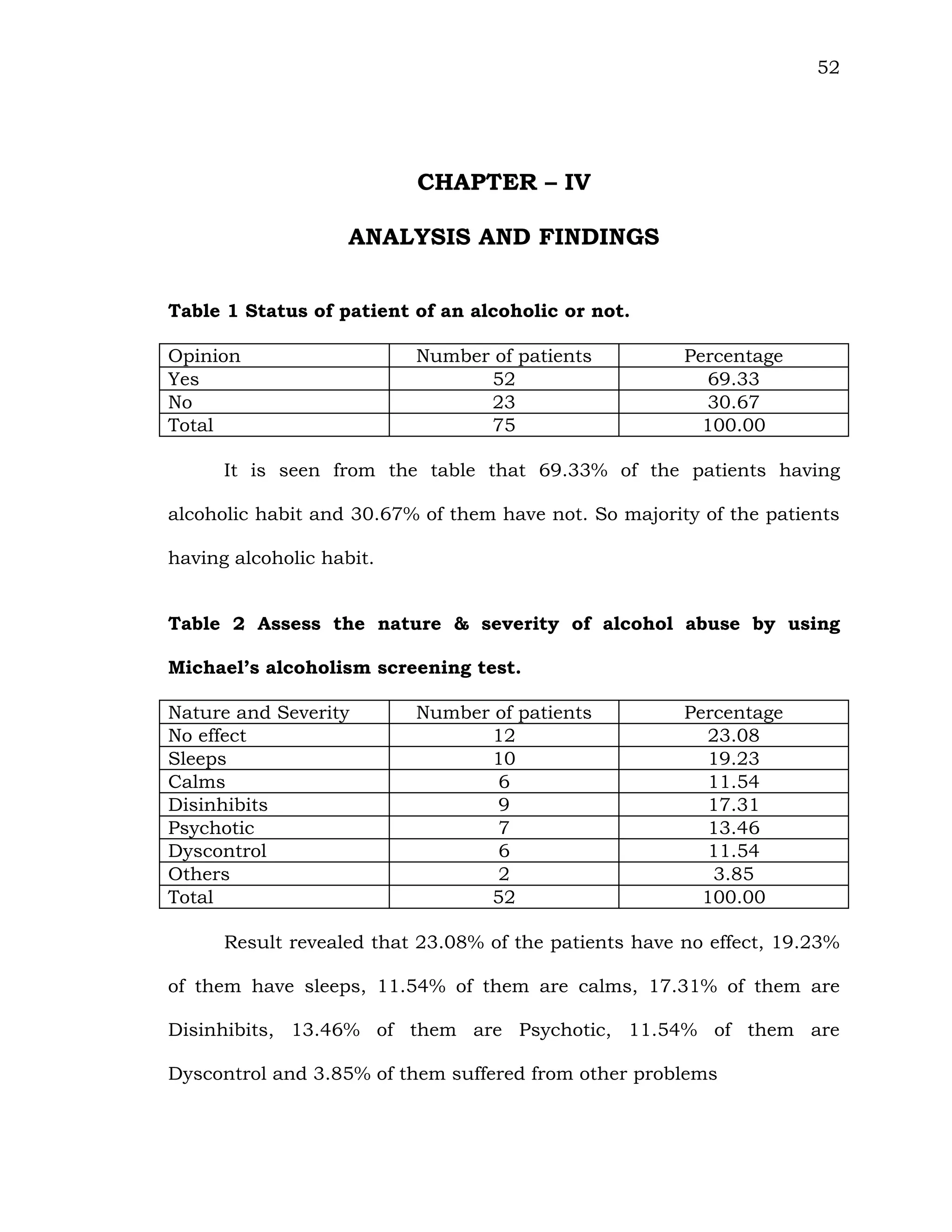
Table 1 Status of patient of an alcoholic or not.
Opinion Number of patients Percentage
Yes 52 69.33
No 23 30.67
Total 75 100.00
It is seen from the table that 69.33% of the patients having
alcoholic habit and 30.67% of them have not. So majority of the patients
having alcoholic habit.
Table 2 Assess the nature & severity of alcohol abuse by using
Michael’s alcoholism screening test.
Nature and Severity Number of patients Percentage
No effect 12 23.08
Sleeps 10 19.23
Calms 6 11.54
Disinhibits 9 17.31
Psychotic 7 13.46
Dyscontrol 6 11.54
Others 2 3.85
Total 52 100.00
Result revealed that 23.08% of the patients have no effect, 19.23%
of them have sleeps, 11.54% of them are calms, 17.31% of them are
Disinhibits, 13.46% of them are Psychotic, 11.54% of them are
Dyscontrol and 3.85% of them suffered from other problems
53
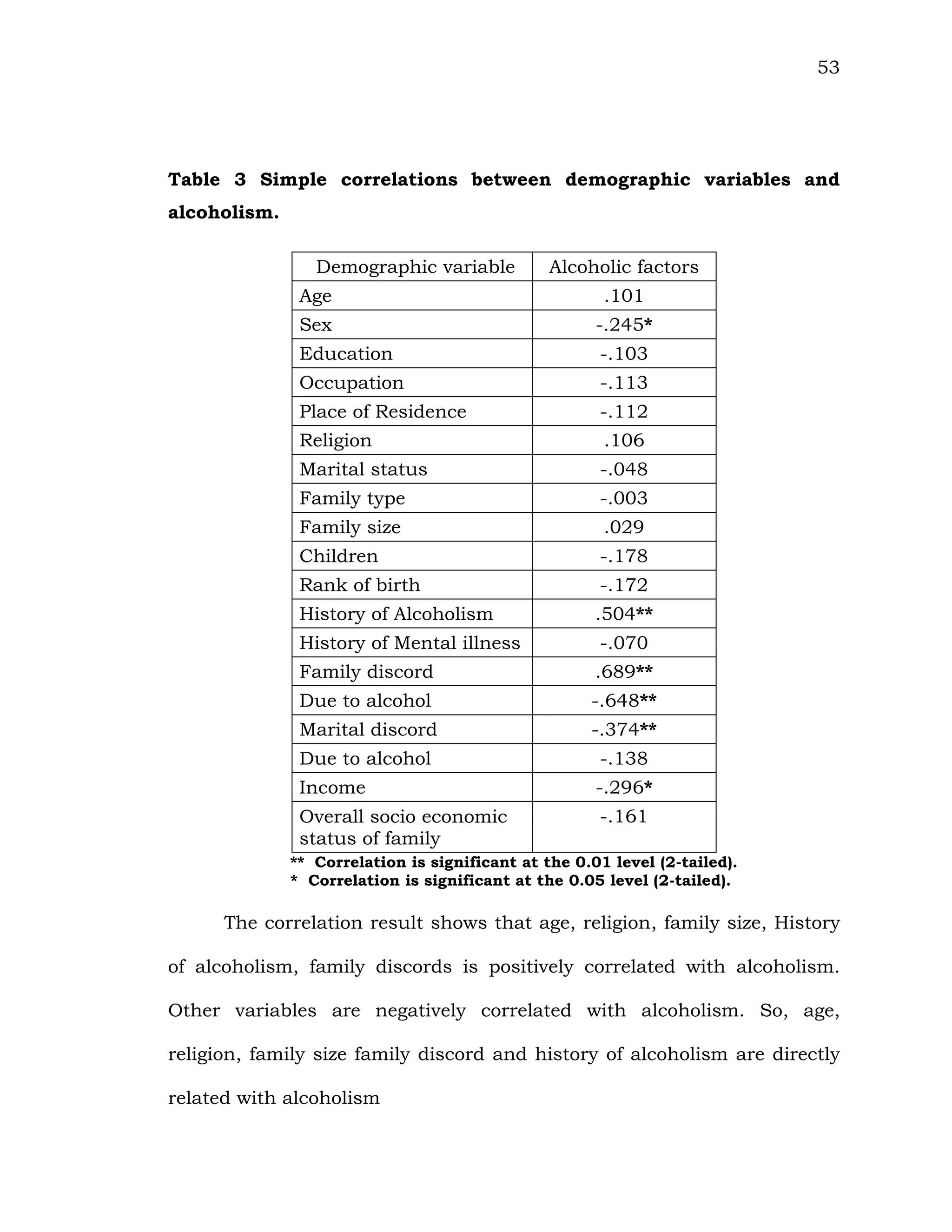
Table 3 Simple correlations between demographic variables and
alcoholism.
Demographic variable Alcoholic factors
Age .101
Sex -.245*
Education -.103
Occupation -.113
Place of Residence -.112
Religion .106
Marital status -.048
Family type -.003
Family size .029
Children -.178
Rank of birth -.172
History of Alcoholism .504**
History of Mental illness -.070
Family discord .689**
Due to alcohol -.648**
Marital discord -.374**
Due to alcohol -.138
Income -.296*
Overall socio economic
status of family
-.161
** Correlation is significant at the 0.01 level (2-tailed).
* Correlation is significant at the 0.05 level (2-tailed).
The correlation result shows that age, religion, family size, History
of alcoholism, family discords is positively correlated with alcoholism.
Other variables are negatively correlated with alcoholism. So, age,
religion, family size family discord and history of alcoholism are directly
related with alcoholism
54
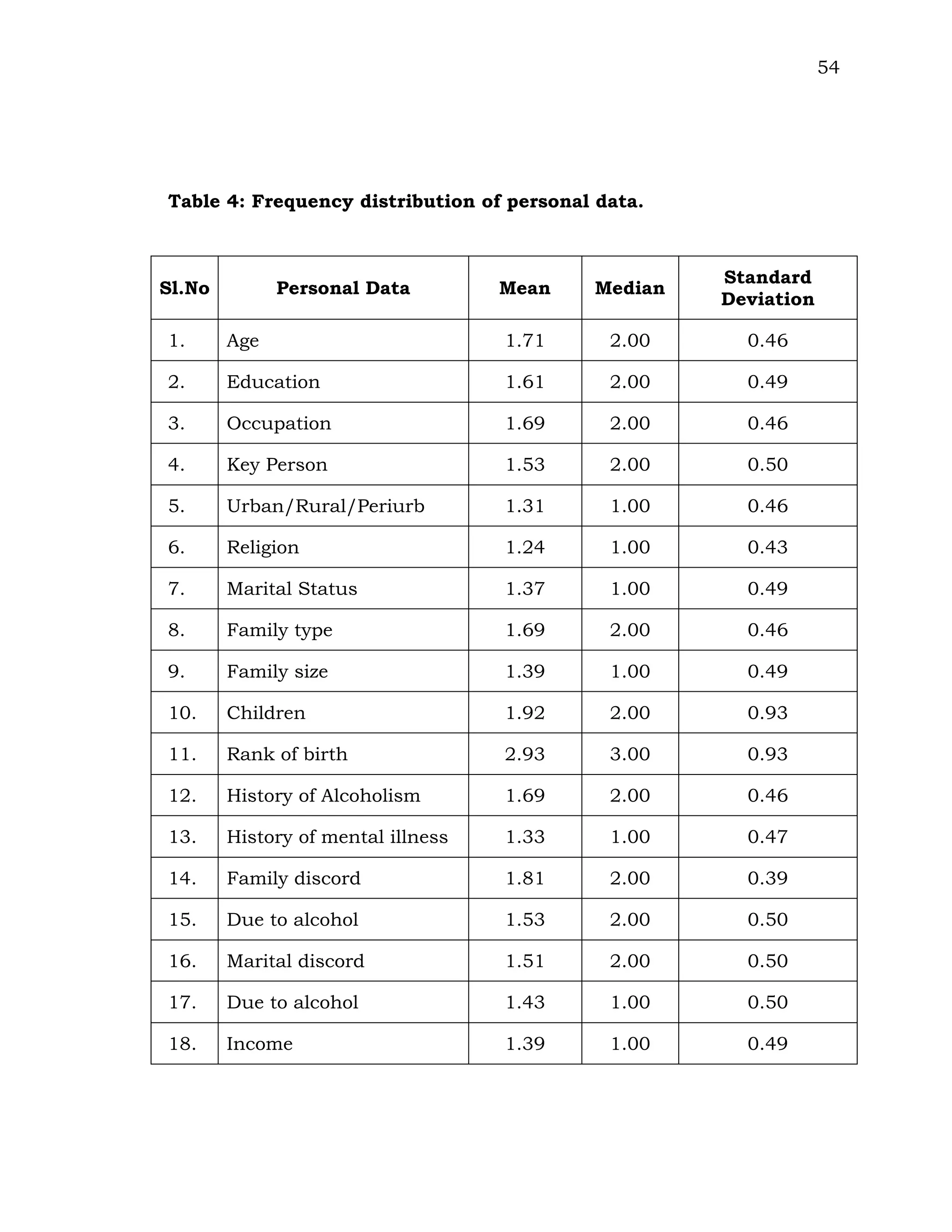
Table 4: Frequency distribution of personal data.
Sl.No Personal Data Mean Median
Standard
Deviation
1. Age 1.71 2.00 0.46
2. Education 1.61 2.00 0.49
3. Occupation 1.69 2.00 0.46
4. Key Person 1.53 2.00 0.50
5. Urban/Rural/Periurb 1.31 1.00 0.46
6. Religion 1.24 1.00 0.43
7. Marital Status 1.37 1.00 0.49
8. Family type 1.69 2.00 0.46
9. Family size 1.39 1.00 0.49
10. Children 1.92 2.00 0.93
11. Rank of birth 2.93 3.00 0.93
12. History of Alcoholism 1.69 2.00 0.46
13. History of mental illness 1.33 1.00 0.47
14. Family discord 1.81 2.00 0.39
15. Due to alcohol 1.53 2.00 0.50
16. Marital discord 1.51 2.00 0.50
17. Due to alcohol 1.43 1.00 0.50
18. Income 1.39 1.00 0.49
55
The above table shows the frequency distribution of personal data.
The mean value of age is 1.71 and the mean value of education is 1.61.
Among all the personal variables, Religion personal variable scores the
minimum mean value (1.24). Comparing all personal variables, Rank of
birth scores the maximum mean value (2.93). The mean value of martial
status, family type, family size, children are 1.37, 1.69, 1.39, 1.92
respectively. Rank of birth scores the maximum mean value (2.93).
56
Table 5: The mean, median and standard deviation of Alcohol
history
Sl.No Alcohol History Mean Median
Standard
Deviation
19. Age at first drink 1.41 1.00 .50
20. Reason for first drink 2.51 3.00 .50
21. Types of drinks taken so
far
7.24 7.00 1.27
22. Time of drinking now 2.64 3.00 .48
23. Drinks during working
hours
1.40 1.00 .49
24. Morning drinks on
holidays
1.59 2.00 .50
25. Regular morning drinks 1.51 2.00 .50
26. Daily expense on drinks 1.44 1.00 .50
27. Now drinks alone 1.49 1.00 .50
28. Drinks with others 1.64 2.00 .48
29. Drinks at home 1.77 2.00 .42
30. Drinks out 1.36 1.00 .48
31. Other family members
share
1.69 2.00 .46
32. Takes other
drugs/substances
1.48 1.00 .50
33. Take other substance
along with alcohol
1.49 1.00 .50
34. Binge drinking 1.47 1.00 .50
35. Current effect of drinks 1.79 2.00 .41
36. Income 1.39 1.00 0.49
57
As per table, result reveal that Drinks out scores the minimum
mean value (1.36). The mean value for Age at First drink is 1.41. Among
all categories, Type of drinks taken so far scores the high mean value
(7.24). The mean value of morning drink on holidays is 1.59. The mean
value of drinks at home, drinks with other, daily expense on drinks are
1.77, 1.64 and 1.44 respectively. Thus types of drinks taken so far scores
the high mean value (7.24) than other categories.
58
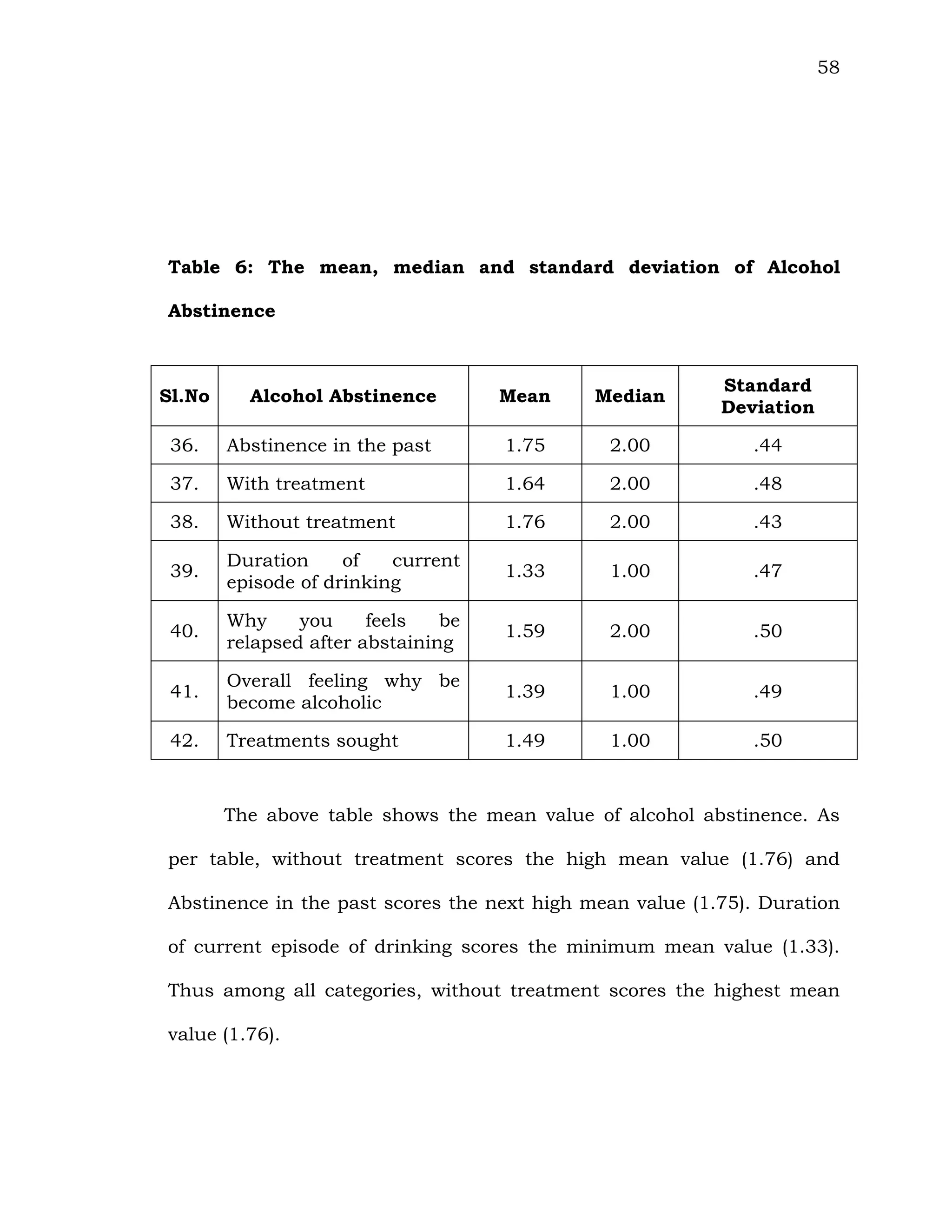
Table 6: The mean, median and standard deviation of Alcohol
Abstinence
Sl.No Alcohol Abstinence Mean Median
Standard
Deviation
36. Abstinence in the past 1.75 2.00 .44
37. With treatment 1.64 2.00 .48
38. Without treatment 1.76 2.00 .43
39.
Duration of current
episode of drinking
1.33 1.00 .47
40.
Why you feels be
relapsed after abstaining
1.59 2.00 .50
41.
Overall feeling why be
become alcoholic
1.39 1.00 .49
42. Treatments sought 1.49 1.00 .50
The above table shows the mean value of alcohol abstinence. As
per table, without treatment scores the high mean value (1.76) and
Abstinence in the past scores the next high mean value (1.75). Duration
of current episode of drinking scores the minimum mean value (1.33).
Thus among all categories, without treatment scores the highest mean
value (1.76).
59
CHAPTER - V
SUMMARY AND CONCLUSION
SUMMARY
This study was undertaken to assess the nature and severity of
alcohol abuse among care takers in medical and surgical ward in
RMMCH. The objectives of the study were (i) To assess the status of the
patient as an alcoholic or not. (ii) To identify nature and severity of
alcohol abuse by using Michael's alcoholism screening test. (iii) To
correlate the socio demographic variable with the behaviour of alcoholism
(alcoholic factors).
Review of related literature helped the investigator to have insight
into the area of study. It also helped to develop the methodology for the
study literature review was primarily directed at studies on nature and
severity of alcoholic abuse.
In order to achieve the objectives of the study, Interview method
was used. The study was conducted in medical and surgical ward is
RMMCH (Annamalai University).
The sample consisted of 75 men visitor who are known alcoholic
those who are visiting the patient in medical surgical ward and it is
confirmed by enquiring with the patient.
60
CONCLUSION
In our findings by analysis and interpretation of the data we
concluded that (i) 69.33% of the patients having alcoholic habit and
30.67% of them have not, so majority of the patients having alcoholic
habit. (ii) 23.08% of the patients have no effect, 19.23% of them have
sleeps disfunbure 11.54% of them are calms, 17.31% of them are
disinhibits, 13.46% of them are psychotic, 11.54% of them suffered from
other problems. (iii) The correlation result shows that age, religion, family
size, history of alcoholism, fancily discords is positively correlated with
alcoholism other variables are negatively correlated with alcoholism. So
age, religion, family size, family discord and history of alcoholism are
directly related with alcoholism.
61
BIBLIOGRAPHY
BOOK REFERENCE
1. R.Alagappan (2002), Text book of manual of practical medicine, 2nd
edition, Jaypee brothers medical publisher(p) Ltd, New Delhi, 557-
561.
2. Dr.Praveen Kumar & Dr. Michael Clark (2002). Text book of
clinical medicine 5th edition, W.B Saunders Animprint of elsevier
science limited Philadelphia; 250-251.
3. Lee Goldaman & J. Caluda Bennett (2001) text book of medicine,
volume I. 21st edition, Harcour Asia Private LTD & W.B Sauders
company. Philadelphia, 49-54
4. Wilson & Nactin (1998) Text book of Harrison’s principles of
internal medicine volume – II. 14th edition International Edition in
Singapore 2503-2508.
5. John B. Schorling MD, screening for alcohol and drug abuse,
volume 81, number 4 page No: 845.
6. Patricle J. Mcgraths, MD et al, the psychiatric clinics of north
America. New york state psychiatric institute, page: 695-707.
7. Particle J. McGrath, MD et al, the psychiatric clinics of north
America, New york state psychiatric institute, page: 882 – 891.
8. Norman S. Miller MD, the psychiatric clinics of North America,
Michigan state university, Volume 22 Page 371-374.
62
JOURNAL’S REFERENCE
1. Inepe J.Elkins.Ph.D. MATT MCGUE. Ph.D. et al “ The effect of
parental Alcohol and Drug Disorders on Adolescent Personality”.
American J.Psychiatry 161:4. April 2004.
2. Annie Mccloud. Ben Barpady et al “Relationship between alcohol
use disorders and suicidal in a psychiatric population”. British
journal of psychiatry 184, 2004
3. Nathan T.Watson.C.King Ph.D. “Effect of Naltrexone on alcohol
“High” in Alcoholics” ame J.Psychiatry 152:4. April 1995.
4. Rosa M.Crum, MD, M.H.S Carla L.Storr Sc.D. “Sleep disturbance
and risk for alcohol related problems. Ame I psychiatry 161:7 July
2004.
5. Susumu Higuchi MD. Motoi Hayashida MD. Sc.D. et al “ Alcohol
and Aldehyde dehydrogenase polymorphisms and the risk for
alcoholism” Ame I psychiatry 152:8, August 1995.
6. Mase A.Schuckit, MD. M.Hesselfrock, Ph.D et al “clinical reference
of the distinction between alcohol dependence with and without a
Physiological component”. Ame I psychiatry June 1998.
7. Helmut Harms, Ph.D, silke kuhn, MA et al “ Modification of
Alcohol with drawal by the Allele of the dopamine transporter
gene” Ame I psychiatry 155:4 April 1998.
63
8. Peter defeu M.A. Sahmidt M.D et al “Dopaminergic Responsively in
alcoholism; Trait state, (or) Residual marker? Ame I psychiatry
152:9 September 1995.
9. paul Ragan M.D T. Coyle MD et al “Increased glutaminergic
neurotransmission and oxidative stress after alcohol with drawal”
Ame I psychiatry 155:6 June 1998.
10. Raul C.Schiavi stimmel Ph.D “Chronic alcoholism and male sexual
function” Ame I Psychiatry 152:7 July 1995.
64
"A STUDY TO ASSESS THE NATURE AND SEVERITY OF
ALCOHOL ABUSE AMONG CARE TAKERS IN MEDICAL
& SURGICAL WARD IN RMMCH,
ANNAMALAI UNIVERSITY,
Submitted to.
Mrs. JayaLakshmi
Lecturer in Nursing.
Submitted By.
T. Anu rekha J. Irudayamary
Anu I. Paul M. Kayalvizhi
B. Balameenakshi J. Mariyahelan
D. Devi G. Rajaselvi
G. Ezhilarasi A. Rajasri
S. Gayathri K. Savitha
S. Geetha T. Senthil Vadivu
V. Jayasudha P. Sharmila devi
T. Jayasudha A. Vadivazhagi
T. Jothimani T. AnnaLakshmi
Linu John G. Anitha
U. Maheswari T. Ilamathi
P. Muthamizhselvi A.K. Deepa Lakshmi
K. Sangeetha S. Raji
R. Sathya V. Gunavathi
S. Sathiya Bama R.Jayanthi
V. Sathiyakala M. Suguna
R. Elavarasi S. Selva Umash
K. Ilambharath Manjuma devi
RANI MEYYAMMAI COLLEGE OF NURSING
ANNAMALAI UNIVERSITY
ANNAMALAI NAGAR
(2005-2006)
65
CONTENTS
Page
No
Chapter – I INTRODUCTION 1
Statement of the Problem
Need for the study
Objectives
Operational definitions
Assumptions
Limitations
Chapter – II REVIEW OF LITERATURE 9
Chapter –III METHODOLOGY 49
Research design
Setting
Population
Sample
Sample size
Criteria for Sample Selection
Sampling Technique
Reliability – Validity
Data Collection Procedures
Data analysis
Chapter – IV ANALYSIS AND FINDINGS 52
Chapter – V SUMMARY & CONCLUSION 59
BIBLIOGRAPHY 61
APPENDIX
66

Sharmila Devi B.Sc. Nursing.doc

  • 1.
    1 CHAPTER – I INTRODUCTION Aproposed definition, "Alcoholism is a primary chronic disease with genetic, psychosocial, and environmental factor influencing its development and manifestations. The disease often progressive and fatal. It is characterized by impaired control over drinking pre-occupation with the drug alcohol are of alcohol despite adverse consequences and distortions in thinking most notably denial. Each of these symptoms may be periodic or continuous. Alcohol is a popular nutrient consumed in large quantities all over the world. In many countries alcohol consumption is becoming a major problems. Alcohol is a natural substance formed by the reaction of formenting sugar with yeast spores. The use of alcohol can be traced back to the neologic age. Beer, wine and arrack are commonly used around. Although alcohol has little therapeutic value, the allchemist believed that alcohol was the answer to all their ailments. Alcohol is the most commonly used and abused substance by youth. Higher levels of adolescents alcohol use is associated with the three forms of mortality among adolescent (ie) accidental death, homicides and societies. Nearly 9/10 of teenage automobile accidents
  • 2.
    2 involve the useof alcohol. Most of the divorce poor socio. Economic background among adults are also because of chronic alcoholism. Alcoholism can affect every one. It has enormous cost as it puritans to society, family and individuals. It is not prejudicial toward any race, Colour sex, religion (or) economic level. Although, we do have ideas as to what alcoholism is, what we don't is exact causes of this problem. Researcher are continually seeking to the long standing nature versus nature debate. Changes occurred in the social physical environment give opportunity to the people to seek quick relief from their problems by taking alcohol, cigarettes I tranquilizers instead of choosing healthy life styles. The availability of alcoholic beverages continues to increase and their cost relative to income has steadily fallen. They are obtainable not only from liquor store, restaurant, bars, clubs and other traditional source but also from vending machines. Alcoholism has long been regarded as an incurable disease. i.e., reactivation occurs if a reformed alcoholic takes over a single drink. About 1000 alcoholics women were selected for half of them and psychotherapeutic programme conducted and survey was done which shows that majority of the women are able to became acceptable social
  • 3.
    3 drinkers. In anothergroup behaviour therapy techniques were used a barroom setting to teach about Moderate drinking style. Allowable drinking behaviour through reward, rather than first, through a version procedures. Psychodynamics Explanations:- The traditional psychoanalytic position is that excessive drinking traces back to the oral period in childhood. The alcoholic is an orally dependent person who seeks to gratify a wish for Maternal love & support by drinking. Through alcohol he/she replicates the fantasized feeling of total warmth, care and satisfaction denied the Mother's breast. Alfred Adles objected this hypothesis by saying that Alcohol addiction was result of excessive cuddling and over indulgence which led to an inability to face life and cope with challenge. Such children reach adulthood knowing any how to escape from responsibility and soon become, alcoholics in order to avoid having to face reality in their own. Behavioural explanation Consuming alcohol is almost immediately, reinforcing because the alcohol quickly anesthetize tension and fear and make the drinkers feel relaxed. Several animal studies have verified that when rats or primate are strared by electric shocks or isolation they rapidly develop a preference for alcohol over other liquids.
  • 4.
    4 Most of thealcoholic start this habit because of curiosity to known (or) because of compulsion. Alcoholism is usually referred to as a country's 3rd most serious health problem following CVD & CA. However in terms of total morbidity as contrast. Alcohol abuses and alcoholism affects each individual differently therefore every one who abuse alcohol does not become an alcoholic but it is still important to understand the fact that is involved. Factors derived from biological, physiological, social & culture field of explications alcoholism is a leach that such the life from an individual family & society. It turns people life into a world for depression & lone lines. STATEMENT OF THE PROBLEM A study to assess the nature & severity of alcohol abuse among care takers in medical & surgical ward in R.M.M.C.H, Annamalai University. NEED FOR STUDY Alcohol abuse probably constitutes the most serious world wide drug problem, affecting many millions of adult problems drinkers & their family members and innocent by standers who become victims of alcohol related accidents & violence.
  • 5.
    5 India has anestimated 62.5 million consumers of alcohol from 1970, per capita, consumption is increased by 106.7%. 10-15% consumers develop alcoholism. The Hindu reported that "The mean age of first exposure to alcohol is down from 24 years to 19 yrs in the last four decade. It is a disturbing aspect in the emergence of drinking as a public health problem in the country. According to mortality rate data from the national centre for health statistics about 34.7023 were due to alcoholic liver cirrhosis. Alcoholic abuse & alcoholic dependence are not only adult problem there also a significant number of adolescents and young adults between the age of 12 yr-20, even though drinking under the age of 21 yrs is illegal in every state. There are an estimated 62.5 million consumers of alcohol in India- the third largest market in the world for alcohol. This can be seen against a decreasing trend of consumption of distilled spirits in developed countries. Over a 15-year period from 1970, the per capita consumption of alcohol increased by 106.7 percent & the consumption of hard liquor
  • 6.
    6 dominated (80 percent) all other intoxicant beverages. Sale of alcohol has been growing steadily at between 6 to 8 percent annually. It is estimated that 10 to 15 per cent consumers develop alcoholism, Ms. Thimmagal said while interacting with Journalist of the Hindu on Monday. Alcoholism is a leading cause of mortality & Morbidity developed & developing countries. It contribute to suicide, homicide & accidental death. In multiple studies, alcoholism has been found to be associated with approximately 25% of the deaths by suicide. Approximately 1 in 5 male admission to medical wards are directly (or) indirectly due to alcohol. Between 30-40% of accident & emergency attendance have blood alcohol concentration. People with serious drinking problem have a 2 (or) 3 times increased risk of dying compared to members of the general population of the same age & sex. It has been estimated that 10% of adult men who drinks and 3% of adult women drinker are abusers of alcohol. The misuse of alcohol institute 10% of death in most of the countries and is the main cause of violence & family disruption. Children of alcoholics are at highest risk of developing alcoholism & are prone to learning disabilities, eating disorder & stress related medical problems. Now a days the number of alcohol abusers are increasing because of financial problem, occupational problem and weak bonding with the family members.
  • 7.
    7 Heavy drinking isan important factor in the damage of brain, liver & some cancer. As with smoking, alcohol use in pregnance lead to damage of the fetus. The major ill effects of alcoholism are peripheral neuropathy, alcoholic cardiomyopathy, pancreatitis, cirrhosis of liver, wernicke’s encephalopathy hepatic encephalopathy & sexual dysfunction. Alcoholism may disturb the normal psychology of an individual leads to slurred speech, impaired judgement, aggressiveness, impartial attention, irritability, euphoria, depression, in coordination and emotional liability. It is important for the nurses to remember that not all people progress through all the stages of substance abuse (curiosity experimentation, regular use, psychological or physical dependency, using drugs to feel normal) but younger the user, the greater the risk of chemical dependency. In the year 2004 out of 200 subjects, 48.5% scored 8 or more & 22.5% scored 16 or more on the audit. OBJECTIVES  To assess the status of the patient as a alcoholic or not  To identify nature & severity of alcohol abuse by using Michael's alcoholism screening test.
  • 8.
    8  To correlatethe socio demographic variable with i.e. the behaviour of alcoholism (alcoholic factors). OPERATIONAL DEFINITION Alcohol abuse: Patient’s relatives who are taking excess amount of liquor belonging to the age group of 20-45 yrs. Care taker: Care taker can be defined as those who are providing care to the patients admitted in the medical & surgical ward. ASSUMPTION  The patient relatives does not know about the seriousness of the alcohol consumption.  Due to alcohol consumption the morbidity & mortality rate increases. LIMITATIONS Data collection procedure was done by interview method. Privacy was maintained during data collection procedure. The time limitation for data collection among care takers, was between 4.30-6.30PM. The sample of the study was restricted up to 75 members among care takers in medical & surgical ward in R.M.M.C.H (Annamalai University).
  • 9.
    9 CHAPTER – II REVIEWOF LITERATURE A proposed definition of alcoholism is: A primary chronic disease with genetic, psychosocial, and environmental factors influencing its development and manifestations. The disease is often progressive and fatal. It is characterized by impaired control over drinking, preoccupation with the drug alcohol, use of alcohol despite adverse consequences, and distortions in thinking, most notably denial. Each of these symptoms may be periodic or continuous. Ivan Diamond Cheryl A Jay (2001). conducted study on Alcoholism and alcohol abuse. Definitions Alcoholism is characterized by addiction to ethanol. In contrast to behavioural and socioeconomic definitions of alcoholism, in a medical setting alcoholism is a chronic disease in which the alcoholic craves and consumes ethanol uncontrollably, becomes tolerant to its intoxicating effects with repetitive drinking, and has symptoms and signs of alcohol withdrawal (physical dependence) when drinking is stopped.
  • 10.
    10 Etiology Genetic susceptibility andenvironmental factors interact to produce alcoholism, often in families. Twin studies show that a monozygotic twin. Children of an alcoholic parents who were adopted early in life by non-alcoholic parents are over three times are likely to become alcoholics than are control adoptees. Epidemiology Nearly two thirds of Americans older than 14 years drink alcoholic beverages. Their per capita consumption is the equivalent of 9.7 gallons of whiskey, 89 gallons of beer, or 31 gallons if wine per year. Heavy drinkers account for half of the alcohol consumed and nearly all of the socioeconomic and medical complications of alcoholism and alcohol abuse. The annual cost of these problems to American society is about $100 billion, a figure that includes costs to treat alcoholism and related medical complications and lost productivity. Excessive alcohol consumption ranks as the third leading preventable cause if death, behind cigarette smoking and obesity, and accounts for 5% of the total U.S. mortality, or about 100,000 deaths annually.
  • 11.
    11 Clinical manifestations ALCOHOL INTOXICATION.The blood-brain barrier to ethanol is virtually non-existent, and shortly after drinking, the concentration of alcohol in the brain is nearly the same as in the blood. AFFECTED ORGAN OR SYSTEM DISORDERS Nutrition Deficiencies of Vitamins: Folate, thiamine, pyridoxine, macin, ribotlavin. Minerals: Magnesium, Zinc, calcium Protein. Metabolites and electrolytes Hypoglycemia, ketoacidosis, hyperlipidemia, hyperuricemia, hymagnesemia, hypophosphatemia. Gl tract Liver: Fatty liver, hepatitis, cirrhosis. Gut : Esophagitis, gastritis pancreatitis. Nervous system Brain: Hepatic encephalopathy, Wernicke-Korsakoff syndrome, cerebellar degeneration, central pon-tine myelinolysis, Marchiafava-Bignami disease, dementia. Neuromuscular: Neuropathy, myopathy Amblyopia. Cardiovascular Heart: Arrhythmia, cardiomyopathy Hypertension. Bone marrow Macrocytosis, anemia, thrimbocytopenia, leukopenia. Endocrine Pseudo-Cushing's syndrome, testicular atrophy, amenorrhea. Other Traumatic injury Aerodigestive neoplasms Osteopenia Fetal alcohol syndrome.
  • 12.
    12 Neurologic signs ofintoxication include impaired cognition, slurred speech, incoordination, mild truncal ataxia, and show or irregular eye movements. Signs of increased sympathetic activity include mydriasis, tachycardia, and skin flushing. Cerebellar and vestibular function deteriorates at higher blood alcohol levels, and drunkenness is characterized by dysarthria, more severe ataxia, nystagmus, and diplopia. Patients may become lethargic with bradycardia, reduced blood pressure, and diminished respirations, sometimes complicated by vomiting and pulmonary aspiration. In non-tolerant individuals, stupor and coma. BLOOD ETHANOL LEVELS AND SYMPTOMS BLOOD ETHANOL LEVELS (mf/dl) SYMPTOMS Sporadic Drinkers Chronic Drinkers 50-100 Euphoria, gregariousness, in coordination Minimal or no effect 100-200 Slurred speech, ataxia, labile mood, drowsiness, nausea Sobriety or in coordination 200-300 Lethargy, combativeness Stupor, incoherent speech Euphoria Mild emotional and motor changes 300-400 Vomiting, Coma Drowsiness Above 500 Respiratory depression, death Lethargy, stupor, coma Ethanol can depress myocardial function at moderate doses, and binge drinking can causes arrhythmias, or the holiday heart syndrome.
  • 13.
    13 Relaxation of vascularsmooth muscle causes vasodilation, which can lead to hypothermia, particular in cold environments. Acute tolerance occurs during a single episode of drinking and is characterized by greater intoxication at a given blood alcohol concentration when the level is rising than when falling (Mellanby effect). Chronic tolerance occurs in alcoholics and is characterized by greater resistance to the intoxicating effects of ethanol; they may appear to be sober at levels of 400 to 500 mg/dL, concentrations known to produce stupor, coma, or death in naive individuals. The alcohol withdrawal syndrome typically evolves in a recognizable temporal sequence and consists of tremulousness, disordered perception, seizures, and delirium tremour of varying severity. The patient is increasingly anxious and easily startled by sweating, facial flushing, mydriasis, tachycardia, and mild hypertension are noted. Most abnormalities subside in a few days, but increased arousal and anxiety may persist for 2 weeks. Often, vivid nightmares interfere with sleep; while awake, ordinary visual, auditory, and tactile experiences become distorted and misinterpreted. Isolated and prolonged auditory hallucinations may develop in alcoholics undergoing withdrawal (alcoholic hallucinosis)
  • 14.
    14 despite being alert,oriented, and without memory loss! Hallucinations may persist for weeks alcoholic hallucinosis is closely associated with ethanol withdrawal and usually subsides in weeks to months. Generalized tonic – clonic seizures develop in about one third of alcoholics, most often within 12 to 24 hours after reducing or stopping drinking. Deliriun tremour, the most alarming manifestation of the ethanol withdrawal syndrome, occurs in about 5% of alcoholics. It consists of agitated arousal, global confusion and disorientation, insomnia, and vivid, often threatening hallucinations and delusions. Signs of sympathetic hyperactivity include tremor, mydriasis, tachycardia, fever, and intense diaphoresis. In contrast to tremulousness, disordered perceptions, and seizures, which appear earlier after withdrawal, delirium tremour begins abruptly within 2 to 4 days of abstinence. Metabolic disturbances, cerebral infection, encephalitis, meningitis, sepsis or thyrotoxicosis should also be considered. Treatment Mild to moderate ethanol intoxication requires no specific therapy. Severe acute alcohol intoxication, defined by a depressed level of consciousness. Can be fatal and is a medical emergency. Administration
  • 15.
    15 of sedatives tointoxicated patients who are agitated and combative can lead to stupor, coma, and respiratory arrest from synergistic depressant effects and should be avoided. The immediate history should include information about the quantity of alcohol consumed, the rate of drinking, use of other drugs including methanol and ethyleneglycol, complicating medical and psychiatric disorders, and prior alcohol abuse or alcoholism. If the patient is stuporous and unable to walk, the airway must be evaluated immediately. Indications for endotracheal intubation and assisted ventilation include marked hypoventilation. Accumulating secretions, or coma. Evidence of head trauma or focal cerebral signs suggests urgent intracranial pathology, and a computed tomography scan should be performed immediately. Gastric lavage may be performed if the obtundation is due to recent and massive alcohol consumption, but it must be preceded by endotracheal intubation. Hemodialysis should be considered if the blood alcohol concentration exceeds 500 mg/dL or when methanol or ethylene glycol has been ingested concurrently. Routine blood counts and laboratory studies may uncover anemia, hypokalemia, hypophosphate, and hypomagnesaemia trauma, infection, liver disease, gastritis, pancreatitis, arrhythmia, or electrolyte disturbance should be sought.
  • 16.
    16 The alarming symptomsof ethanol withdrawal are best managed by substituting another central nervous system depressant. Benzodiazepines are widely used to manage tremulousness and disordered perceptions during ethanol withdrawal. Treatment includes managing delirium and automatic stability and preventing seizures. A sedative-hypnotic agent, typically a benzodiazepine, is prescribed as a substitute for alcohol, and the dose is tapered over several days. Patients with mild tremulousness and few associated symptoms usually respond to oral diazepam, 5 to 10 mg every 4to 6 hours. The dosage is the then reduced by 20 to 25% on successive days or increased if symptoms of ethanol withdrawal return. If withdrawal is more severe or accompanied by significant medical surgical, or psychiatric illness or the patient is in an unstable social setting, impatient detoxification may be needed. Benzodiazepines should not be given intramuscularly because of inconsistent absorption. The first several days of severe alcohol withdrawal may require intravenous administration of total daily diazepam doses exceeding 400 mg (or the equivalent of other benzodiazepines) to achieve mild sedation. Multivitamin and thiamine supplementation should be continued, as should meticulous attention to electrolyte status.
  • 17.
    17 Alcohol withdrawal seizurescan often be managed with intravenous benzodiazepines such as diazepam or lorazepam. Phenytoin does not prevent seizures during withdrawal. Long – term anticonvulsant therapy is not indicated for typical alcohol withdrawal seizures. Delirium tremours requires hospitalization and vigorous management in an intensive care setting. Mortality has reached 15% in the past, primarily because of injuries or associated medical disorders complicated by hyperthermia and dehydration. Five to 10 mg or more of diazepam is given intravenously every 5 to 15 minutes until the patient is calm, and maintenance therapy is continued every 1 to 4 hours, as needed. Initially, as much as 200 mg of diazepam may be required before the agitation subsides. Coexisting hepatic and cardiac disease may complicate fluid management, Alcoholics and alcohol abusers come to medical attention because of alcohol-related medical or psychiatric conditions, by referral from social service or criminal justice agencies, or through screening in clinical practice. Family members provide valuable collateral history.
  • 18.
    18 Patrick j. McGrath,MD, Edward V. Nunes, MD, and Frederic M.Quitkin, MD (2002) evaluated that the Current Concepts in the Treatment of Depression in Alcohol-Dependent Patients RELATIONSHIP BETWEEN ALCOHOLISM AND DEPRESSION Alcoholic individuals commonly experience depressive symptoms, clinicians and researchers postulate a relationship between the two disorders; people might drink because they are depressed, using alcohol to medicate underling depression. This is called the self-medication hypothesis. POSSIBLE EXPLANATIONS FOR COMORBIDITY Competing theories explain the comorbidity of alcoholism and depression, data support the "self-medication" and toxicity hypotheses. The "self-medication" hypothesis proposes that depressed patients drink to alleviate the dysphoric affect of depression or anxiety, which suggests that a subset of depressed patients of depressed patients become secondarily alcoholic and that treatment of the antecedent depression might improve outcome. Many of the studies in this area have used clinical samples, which are unreliable in the assessment of comorbidity because comorbid patients are more likely to seek treatment and therefore are over-
  • 19.
    19 represented (i.e., Berkson'sbias). This bias may cause an overestimate of the incidence of comorbid cases in the population and also distort the comorbid associations as they relate to treatment outcome and other variables. Only epidemiologic samples fully address this issue and provide reliable data on the prevalence of comorbidity and its correlates. Genetics Reviews of family studies suggest that alcoholism and depression are not manifestations of the same underlying disorder and are mainly independently transmitted in families. Also, bipolar depression may be more commonly antecedent to alcoholism, and unipolar depression may be more commonly a consequence of alcoholism. TREATMENT In a pilot study, the authors showed that 58% of patients with primary depression had significant improvement in alcoholism and depression when treated with an open-labeled regimen of imipramine therapy plus counseling. The study included 69 actively alcoholic out patrolled who received weekly individual relapse-prevention counseling in addition to pharmacotherapy. The study demonstrated a clear antidepressant effect, but no independent effect of imipramine on drinking occurred. Patients whose depression improved with imipramine therapy, however, showed statistically and clinically significant
  • 20.
    20 improvements in theirheavy drinking. These studies support the idea that subjects with primary depression, as determined by history rather than by observing protracted depression during abstinence, responds to antidepressant medication. Subject were selected of primary depression, defined as depression which antedated the onset of alcohol-use disorder or continued during 6 months of abstinence. Preliminary analyses of the data have shown on advantage of fluoxetine therapy over placebo in treating depression. The controlled studies indicate that antidepressant medications, including the SSRIs, have no utility in nondepressed alcoholic patients. Although the mechanism of the relationship between alcoholism disorders to the regulation of the endogenous opiate system. This possible relationship, although intriguing, is highly speculative and requires considerably more research. Table 1. Clinical features indicating antidepressant therapy Clinical indications Depressive characteristic Clear Persists in prolonged abstinence (e.g., <mo) Probable Primary by history; persisted in past periods of abstinence; chronic; emerges during stable use. Possible Positive family history of mood or anxiety disorder
  • 21.
    21 Table 2. Psychotherapeutictherapies for alcoholism Treatment Type Description Duration (wk) 12-step facilitation Alcoholics Anonymous meetings and weekly individual 12-step reinforcement sessions 12 Cognitive-behavioral Copying – skills training for relapse prevention 12 Motivational enhancement Feedback of risks for impairment and elicitation of motivation for change. 4 Table 3. Antidepressant medication selection Desirability Class Reasons and Comments First choice SSRI Effective for depression, possibly especially for severe or suicidal patients; well tolerated with minimal sedation; may reduce alcohol consumption by direct action Tricyclic Effective for depression; less well tolerated than SSRIs; alcohol abuse reduced only in mood responders. Relatively contraindicated Bupropion Proconvulsive Contraindicated Nonselective MAOIs Potential severe toxicity with alcohol Other options Venlafaxine, mirtazapine, others Unstudied but may be useful for resistant depression Lithium Indicated for bipolar depression; useful for antidepressant augmentaion; no direct benefit for alcoholism17. SSRI = selective serotonin reuptake inhibitor; MAOI = monoamine oxidase inhibitor. Norman S. Miller, MD (1999) tested that Mortality from alcohol The use of alcohol contributes to an annual occurrence of approximately 100,000 deaths, and the related health, social, and
  • 22.
    22 economic consequences fromalcohol use results in additional costs of approximately $100 billion a year. Alcohol use and alcoholism contributed to 60% to 90% of cirrhosis related deaths; 40% to 50% of motor vehicle accident – related fatalities; 16% to 67% of home injuries, drowning, fire fatalities, and job injuries; and 3% to 5% of cancer– related deaths. Many studies have investigated the high rate of deaths among alcoholism, but few have investigated its predictors. Several studies have demonstrated that older, more heavily drinking, lower-income, more medically ill, and more socially isolated individuals had an increased risk for alcohol-related deaths Several studies have demonstrated a close relationship between interpersonal loss and suicide among alcoholics. A commonality among alcoholics who experienced the loss of a close interpersonal relationship and who committed suicide was dwindling or near absence of social support Vital statistics are used estimate the health consequences of drinking, including morbidity and mortality Often only patients with diseases directly caused by alcohol use, such as cirrhosis of the liver,
  • 23.
    23 alcohol psychosis alcoholdependence and nondependent alcohol abuse are reported in surveys The mortality rate from alcoholism and related co morbidities is high studies show multiple causes of premature death from alcoholism. Several studies showed that abstinence had a positive effective on the overall survival of alcoholics. Pat Nile J.Mccraths, MD et al, (1997) conducted a study on Pharmacologic effects and goals of Pharmcotherapy They concluded that the alcohol produces intoxication, and with repeated use tolerance and dependence develop although alcohol at high does results in cell membrane alterations that may be respiratory depression many of the effects of alcohol intoxication seen clinically are likely to be explained by more specific mechanisms. The central nervous system adapts to the overall inhibitory effects of long term alcohol exposure on inhibitory GABA A- type and excitatory NMDA- type glutamate receptor transmission by adjustments in receptor number and function. When alcohol ids no longer present these adaptations result in greater central nervous system excitability. Autonomic hyperactivity (sweating or tachycardia); increased hand tremor; insomnia; nausea or vomiting; transient tactile, visual or
  • 24.
    24 auditory hallucinations; psychomotoragitation; anxiety; and grand mal seizures. The delirium tremours are a later complication of alcohol withdrawal defend by the presence of disorientation and hyper autonomic signs often precede by gradually worsening autonomic symptoms seizures and hallucinations, however, may occur in the absence of significant additional symptom. GOALS OF PHARMACOTHERAPY FOR ALCOHOL WITHDRAWAL Goals for alcohol –dependent persons decreasing or discontinuing alcohol intake include (Table 2) the prevention and treatment of symptoms, seizures delirium tremours and medical or psychiatric complications; long –term abstinence after detoxification and entry into ongoing medical and alcohol –dependence treatment. TABLE 2. GOALS OF PHARMACOTHERAPT FOR ALCOHOL WITHDRAWAL Goals for which substantial evidence of effectiveness exists Treatment of alcohol withdrawal symptoms Prevention of initial and recurrent seizures Prevention and treatment of delirium tremours Other goals Prevention of medical and psychiatrically complications of alcohol withdrawal Prevention of kindling effect Improvement in the likelihood abstinence
  • 25.
    25 Minimization of adversedrug effects Entry into ongoing medical and addictions treatment Cost –effective treatment Table 3. Tuskfz Factors For More Severe Alcohol Withdrawal Symptoms Seizures, And Delirium Tremens Concomitant medical or surgical illness Moderate –to –severe withdrawal at baseline Older age Prior delirium tremours Prior detoxification(s) Prior seizures Time since last drink Severity of alcohol dependence Elevated aspartame aminotransferase Greater quantity and frequency of alcohol intake High blood or breath alcohol Longer duration of alcoholism More symptoms of alcohol dependence Presence of alcohol –associated gastrointestinal illness Dr. Praveen Kumar & Dr. Michael Clark (2002) assessed about Effects of excess alcohol consumption Excess consumption of alcohol leads to two major problems, both of which can be present in the same patients.  alcohol dependence syndrome (p.1256)  physical damage to various tissues.
  • 26.
    26 The amount ofalcohol that produce damage variety and not everyone who drinks heavily will suffered physical damage. For example, only 20% of people who drink heavily develop cirrhosis of the liver. The effect of alcohol on different organs of the body is not the same some patients the liver is affected, in others the brain muscle. The differences may be genetically determined. Wilson & Nactin (1998) refered Alcoholism and drug dependency The usual alcoholic has a family and a job; only about 5 percent live on "skid row." Even light drinking may adversely interact with other medications; temporary heavier drinking can exacerbate most medical illnesses; and alcoholism can masquerade as many different medical disorders and psychiatric syndromes. In addition to acute behavioral effects, an evening of heavy drinking can result in an alcoholic blackout, i.e., an episode of forgetting all or part of what occurred during drinking. This problem is experienced by 30 to 40 percent of men in their late teens and early 20s, most of whom do not go on to develop more serious and pervasive alcohol-related problems. Even after only a few drinks, alcohol acutely decreases sleep latency (helping people to fall asleep) and depresses rapid eye movement
  • 27.
    27 (REM) sleep earlyin the night, sometime followed by latter REM rebound associated with bad dreams. About 1 percent of alcoholics with long histories of associated malnutrition develop cerebellar degeneration, a syndrome of progressive unsteady stance and gait often accompanied by mild nystagmus. Acute alcohol intake can result in inflammation of the esophagus (possibly secondary to refulux of gastric contents) and stomach (resulting from damage to the gastric mucosal barrier). Esophagitis can cause epigastric distress, and gastritis, the most frequent cause of gastrointestinal bleeding in heavy drinkers, can present with anorexia and abdominal pain. Chronic heavy drinking. If associated with anorexia and abdominal pain. Chronic heavy drinking, if associated with violent vomiting, can produce a longitudinal tear in the mucosa at the gastroesophageal junction – a Mallary- Weiss lesion. Although many gastrointestinal problems are reversible, two complications of chronic alcoholism, esophageal varies secondary to chronic-induced portal hypertension and atrophy of gastric cells, may be irreversible. Alcoholism is a multifactorial disorder in which biologic and genetic factors interact. The importance of genetic factors in alcoholism is supported by family, twin and adoption studies.
  • 28.
    28 For the "average"alcoholic, the ages of first drink and first minor problems (e.g., an argument with a friend while drunk or an alcoholic blackout) are similar to those in the general population. R.Alugappan (2002), refered. Risk Factor For Alcoholic Liver Disease Drinking Pattern The average intake of alcohol of male cirrhotics was 160 gm/day/8 years. For most individuals, the dangerous dose is more than 80 gm of alcohol/day. Continuous alcohol drinking is more dangerous than intermittent consumption. Genetics  The patient with HLA-B8, is more susceptible to alcoholic hepatitis.  The heterozygotes for the ADH gene 2 have impaired metabolism of acetaldehyde.  Hepatitis B and C act as a cofactor for alcoholic liver disease. Nutrition  Liver function dose not improve with alcohol abstinence especially when dietary protein remains low.  Alcohol increases the Daily requirement of choline, folic acid and other nutrients.  Protein deficiency promotes the toxic of alcohol.
  • 29.
    29 Metabolism of Alcohol Alcoholis metabolised by a. Microsomal ethanol oxidising system (MEOS) b. Alcohol dehydrogenase The MEOS is inducible by alcohol and microsomal P450 increases after alcohol. Alcohol is metabolised by oxidation., converted to acetaldehydes by catabolising enzymes (ADH) and further converted to acetate by enzyme acetaldehydes dehydrogenase. Consumption of alcohol results in gain of empty calories (nutritionally valueless). 1gm of alcohol = 7 kilocalories. Alcohol is excreted through the lungs and also by body secretions (urine and sweat). Effect of Alcohol on Liver Mechanism Of Liver Injury 1. Direct toxic effect of alcohol. 2. Acetaldehyde. Other Mechanisms of Liver Injury by Alcohol Include 3. Changes in the intracellular redix potential 4. Mitochondrial swelling
  • 30.
    30 5. Liver cellwater and protein retention 6. Hypermetabolic state 7. Increased liver fat 8. Immunological liver damage 9. Cytokine mediated injury. Clinical syndromes Fatty Liver a. The patients are usually asynotic, the diagnosis being made when an enlarged, smooth, firm liver is present. b. Nausea and vomiting with perumbilical, epigastric or right upper quadrant pain with jaundice are present in severe fatty liver. Lab Features a. Hyperbilirubinemia b. AST/ALT>2 in 80% of the cases (high ratio is due to pyridoxine deficiency) c. Alkaline phosphatase is elevated (less than 300 IU/dl) in the absence of cholestasis. d. GGT/Alkaline phosphatase ratio is 5 or higher in 50% cases.
  • 31.
    31 Acute Alcohol Hepatitis a.The usual symptoms are anorexia, nausea, malaise. Weakness, vague abdominal pain, icterus, weight loss, or fever. b. The physical signs are Hepatomegaly (95%) Hepatic tenderness (50-60%) Signs of portal hypertension (40-70%) Stigmata of chronic liver disease and alcoholism (30-60%) Jaundice (55%) Fever (50%) Upper GI bleeding (30%) and evidence for hepatic encephalopathy. Lab Features a. Hyperbilirubinemia b. Transaminases (AST, ALT) are elevated c. Prothrombin time is prolonged. Alcohol and Central Nervous System (CNS) Acid Intoxication Ethanol is a CNS depressant. It directly and indirectly interferes with gamma aminobutyric acid receptor function and predominantly affects frontal cortical control.
  • 32.
    32 CNS symptoms andLevels of ethanol in Blood 1. Euphoria (25-50 mg/dl) 2. In-coordination (50-100 mg/dl) 3. Ataxia (100-200 mg/dl) 4. Stupor (200-400 mg/dl) 5. Coma (400-900 mg/dl). Alcoholic Coma It is a serious disorder and occurs in 5% of hospital admission. The inhalation of the vomitus is frequently fatal due to anoxaemia from acute distress (Mendelson’s syndrome). Withdrawal Syndrome The features are anxiousness, tremulousness and irritability, shakes or jitters, nausea, vomiting and more specifically nightmares, nightterrors or blackouts. It also causes alcohol withdrawal fits (rum fits), Alcohol Dementia It is due to excessive alcohol intake. The clinical feature is mild to diffuse global dementia due to atrophy of the cerebral cortex and enlargement of the ventricles. The other features are antisocial behaviour, dysarthric speech, tremor, ataxic gait and preipheral neuropathy. It is not due to thiamine deficiency.
  • 33.
    33 Treatment a. Withdrawal ofalcohol b. Multivitamin replacement. Cerebrovascular Disease Consumption of large quantity of alcohol is the most common cause of stroke in the young. It also increases the list of stroke in people of all ages. CVA is much more likely to occur after a binge of alcohol consumption. The possible consequences of high alcohol consumption are intracerebral hemorrhage, cerebral infarction, or subarachnoid haemarhage. Peripheral Neuropathy It is due to predominant axonal neuropathy of the dying back type affecting the somatic and autonomic nervous system. The clinical features are distal paresthesia (in the feet and hands), weakness and wasting of the distal muscles (legs and arms) and loss of DTR. The ANS features are abnormal papillary reaction, tachycardia and orthostatic hypotension. Alcoholic Myopathy It is characterised by severe muscle pain and tenderness, myoglobinuria and renal damage with hyperkalemia. It is characterized
  • 34.
    34 by sudden orsubacute bilateral visual failure with bilateral centrocaecal scotomas. Nutritional Deficiency Syndrome a. Wernicke-Korsakoff syndrome (Confabulation Psychosis) The other clinical features are lethargy, inattentiveness, disorientation (to place, person and time) and loss of recent memory and altered consciousness. It is due to inadequate intake of thiamine. The pathological changes are hyperemia with multiple small hemorrhages in the upper brainstem, hypothalamus, thalamus adjacent to third ventricle and the mamillary bodies. Alcohol and Malignancy 1. Carcinoma of liver 2. Carcinoma of oral cavity 3. Carcinoma of pharynx 4. Carcinoma of larynx 5. Carcinoma of oesphagus 6. Carcinoma of pancreas 7. Carcinoma of breast.
  • 35.
    35 Alcohol and LymphaticSystem There is lower risk of developing lymphoma in alcoholics. Alcohol consumption may cause pain at site of lymph mode or extra lymphatic involvement in patients with Hodgkin’s lymphoma. Psychological 1. Anxiety 2. Depression 3. Personality change 4. Misuse of other durgs 5. Cognitive impairment. Irene I. Elluns, Matt McGue et al, (2004) conducted a study on The effect of parental alcohol and drug disorders on adolescent personality. The relationship of parental alcohol or drug diagnosis to offspring personality was examined in a population-cased sample of 17- year-old twins [568 girls and 479 boys] participating in the Minnesota twin family study. Whether offspring-personality characteristics 1) are specific to the type of substance use disorder in parents (alcohol versus drug) and 2) are found in high-risk offspring without substance use disorders was investigated.
  • 36.
    36 Personality was assessedwith the multidimensional personality questionnaire, substance use disorders were assessed in person tough diagnostic interviews. In both male and female offspring parental history of alcohol dependence was associated with greater negative emotionality, aggression, stress reaction, and alienation but lower will being, parental history of drug disorders was associated with lower constraint, Contwl, horm avoidance and traditionalism but higher social potency. Excluding offspring with a substance use disorder had no effect on the statistical significance of these findings. In contrast to findings in some adult samples, personality characteristics associated with a family history of substance use disorders are found even in adolescent offspring who have not yet developed these disorders themselves, suggesting that personality might be one indicator of familial risk for substance use disorders during this developmental stage personality profiles of offspring of parents with substance use disorders also show some diagnostic specificity. With constraint associated with parental drug abuse and negative emotionality with parental alcoholism.
  • 37.
    37 Annie McCloud, BenBarnaby, et al., (2004) investigated that the Relationship between alcohol use disorders and suicidality in a psychiatric population. Objective: Studied Background Alcohol misuse is a risk factor in suicide and parasuicide. Aims To measure the prevalence of alcohol use disorders in a cohort of alcohol use disorders in a cohort of psychiatric admission using the Alcohol use disorders identification Test (AUDIT), and the relationship between the AUDIT score and suicidality. Method Consecutive psychiatric admissions were interviewed with a lifestyle survey that included that AUDIT, and admission case notes were reviewed. Results Out 20 subjects, 48.5% scored 8 or more (indicating hazardous or harmful alcohol use) and 22.5% scored 16 or more (indicating significant alcohol dependence) on the AUDIT. There were no significant gender differences. Alcohol misuse was strongly associated with suicidality. Conclusions The AUDIT questionnaire should be incorporated into psychiatric assessments when risk of self-harm is being evaluated. Further research is warranted to examine the impact of interventions for
  • 38.
    38 alcohol use disordersin psychiatric setting on self-harm and suicidal ideation. Rosa M. Crum, M.D., M.H.S. Carla L. Storr, Sc.D. et al., (2004) Ya-Fen Chan, M.S.N. Daniel E. Ford, M.D., M.P.H. tested the Risk of Alcohol related problems among individuals with self reported sleep disturbances Objective: Using prospective data, the authors assessed the risk of alcohol related problems among individuals with self-reported sleep disturbances because of worry. Method: As part of the Epidemiologic Catchment Area programme, a probability sample of Baltimore residents selected by census tracts and households completed a baseline interview in 1981. Between 1993 and 1996, the original Baltimore cohort was traced. Of the 2,633 survivors, a total of 73% were reinterviewed. After excluding individuals with alcohol- related problems or a current or prior history of alcohol abuse and/or dependence at the time of the 1981 interview, the authors identified a cohort of 1,537 individuals who were at risk for problem drinking at the time of the follow-up interview, a median of 12.6 years after the baseline interview. Logistic regression was used to assess the association between sleep disturbance because of worry and the risk for incident reports of alcohol problems.
  • 39.
    39 Results: Survey respondentswith sleep disturbances because of worry at the time of the baseline interview had a twofold higher risk for developing an alcohol-re-lated problem, relative to those without these sleep disturbances (odds ratio=2.32, 95% confidence interval [C1]=(1.31-4.09), with adjustment for selected demographic and clinical variables. Sleep disturbance because of worry predicted the development of alcohol problems among respondents with lifetime anxiety disorders and lifetime dysphoria (odds ratio = 3.82, 95% Cl=1.56-9.38, and odd ratio = 2.71, 95% Cl=1.25-5.91, respectively), but not among those without a history of anxiety disorders or dysphoria. Conclusions: Sleep disturbances because of worry may increase risk for alcohol-related problems. Risk is highest for those with sleep disturbance and co-occurring anxiety disorders or dysphoria. Marc A. Suhuckit, M.D., Tom L. Smith, Ph.D., et al (1998) in experimented about the Clinical relevance of the Distinction Between Alcohol Dependence With and Without a Physiological Component. Objective: DSM-IV indicates that diagnoses of substance dependence should be further characterized with regard to the presence of a physiological component, defined by tolerance or withdrawal. This study evaluated the possible meaning of this distinction in alcohol-dependent men and women.
  • 40.
    40 Method: As partof the Collaborative Study on the Genetics of Alcoholism, structured interviews were carried out with 3,395 DSM-III-R- defined alcohol-dependent individual divided into 2,949 subjects (86.9%) with evidence of tolerance and/or withdrawal (group 1), 51.3% of whom evidenced withdrawal symptoms, and 446 subjects (13.1%) without a physiological component (group 2). Data were evaluated to determine differences between the two groups. Results: Group 1 reported greater severity of alcohol dependence as demonstrated by a larger maximum number of drinks in 24 hours, more persons reporting binges, more alcohol-related life problems, more relevant DSM-III-R criteria endorsed, more physiological complications, and more alcohol-related emotional/psychiatric symptoms such as depression and anxiety. Each of these severity indicators for problems in group 1 was significant in the presence of the others in as logistic regression, and similar items remained significant when tolerance alone, withdrawal alone, or their combination was used as the criterion for group 1 membership; however, for withdrawal a larger proportion of the variance was explained by the predictor variables. The regression results were independent of gender, proband status, and history of antisocial personality disorder.
  • 41.
    41 Conclusion: The resultssupport the clinical relevance of distinguishing between alcohol-dependent patients with and without a physiological component. The data indicate a potential advantage to limiting that definition to withdrawal only. Lutz G. Schmidt, M.D., Helmut Harms, Ph.D., M.D. et al., Assessed about the Modification of Alcohol Withdrawal by the A9 Allele of the Dopamine Transporter Gene. Objective: Determinants of individual vulnerability to alcohol withdrawal symptoms are largely unknown. Because of the substantial role of monoaminergic transporters in limiting time and space effects of synaptic neurotransmission, the dopamine transporter gene (DATI; locus symbols; SLC6A3) was studied as a candidate gene possibly related to symptoms of uncomplicated alcohol withdrawal. Method: In 48 chronically intoxicated alcoholics (diagnosed according to ICD-10), withdrawal symptoms were examined and the presence of a variable-number tandem repeat in the 3' untranslated region of the DATI gene was determined. Results: Withdrawal syndromes were more pronounced in the 22 patients carrying the nine-copy repeat than in the 26 patient without this variant. Multiple regression analysis revealed that 4% of the variance of withdrawal was explained by this genotype, whereas 16% was due to the
  • 42.
    42 amount of alcoholthe patients reported having consumed in the month before detoxification. Conclusion: The A9 allele of the dopamine transporter gene is associated with more severe effects of alcohol withdrawal, possibly because of modification of the brain's capacity to compensate for long-term effects of ethanol on cerebral function. Guochuan E. Tsai, M.D., Ph.D., et al., evaluated that the Increased Glutamatergic Neurotransmission and Oxidative Stress After alcohol withdrawal. Objective: Neurophysiological and pathological effects of ethanol may be mediated, to an important extent, via the glutamatergic system. Animal studies indicate the acute effect of ethanol disrupt glutamatergic neruotransmission by inhibiting the response of the N-methyl-d-asparate (NMDA) receptor. Persistent attenuation of glutamatergic neurotransmission by chronic ethanol exposure results in the compensatory up-regulation of NMDA receptors. Whether glutamatergic neurotransmission and oxidative stress are enhanced during ethanol withdrawal in humans is unknown. Method: CSF was obtained from 18 matched comparison subjects and from 18 patients with alcohol dependence 1 week and 1 month after
  • 43.
    43 cessation of ethanolingestion. CSF samples were analyzed for excitatory neurotransmitters, -aminobutyric acid (GABA), and markers for oxidative stress. Results: The alcohol-dependent patients' CSF levels of aspartate, glycine, and N-acetylaspartyglutamate were all higher than those of the comparison subjects, and their concentration of GABA was lower. In addition, there were significant correlations between excitatory neurotransmitters and oxidative stress markers, which suggest that the two mechanisms may play an interactive role in neurotoxicity mediated by ethanol withdrawal. Conclusions: The data suggest that augmentation of excitatory neurotransmission may lead to enhanced oxidative stress, which in concert with reduced inhibitory neurotransmission, may lead to enhanced oxidative stress, which, in concert with reduced inhibitory neurotransmission, may contribute to the symptoms of ethanol withdrawal and associated neurotoxicity in humans. Whether these abnormalities represent a trait- or state-dependent marker of ethanol dependence remains to be resolved.
  • 44.
    44 Susumu Higuchi, M.D.,Ph.D., Sachio Matsushita, M.D., et al. conducted a study on Alcohol and Aldehyde dehydrogenase polymorphisms and the risk for alcoholism. Objective: the authors studied a large number of Japanese alcoholic patients and comparison subjects to establish the genotype (requencies of alcohol dehydrogenase-2 (ALDH2) and to quantify the relative risk for alcoholism from the results. Method: The subjects were 655 alcoholic patients and 461 comparison subjects. ADH2 and ALDH2 were genotyped by the combination of polymerase chain reaction and hybridization methods. Results: Active and usual ADH2 were significantly more frequent in the alcoholic patients. Inactive ALDH2 was not always associated with a low risk of alcoholism, and active ALDH2 was not always associated with high risk. In individuals with heterozygous inactive ALDH2 and usual ADH2, the odds ratio for alcoholism was high. Conclusions: The risk for alcoholism in Japanese has been accurately estimated on the basis of the genotype frequencies of ADH2 and ALDH2. Many Japanese may be protected from alcoholism by inactive ALDH2 and by higher frequencies of atypical ADH2.
  • 45.
    45 Joseph R. Volpicelli,M.D., Ph.D., Nathan T. Watson, B.A., et al. investigated that the Effect of Naltrexone on Alcohol "High" in Alcoholics. Objective: Subjective effects of alcohol in alcoholics treated with naltrexone or placebo were compared. Method: In a previously reported ouble-blind clinical trial of 50 mg/day of naltrexone of placebo for treatment of alcoholism, 36 to 70 detoxified male veterans deviated from abstinence. Of these 36, 29 subsequently reported on the subjective effects of drinking during the trial. Result: A larger proportion of naltrexone-treated subjects (seven of 12)than placebo-treated subjects (two of 17) reported that the "high" produced by alcohol during the study was significantly less than usual. The naltrexone-treated subjects also drankless alcohol than the placebo- treated subjects during the first drinking episode. There was no difference between groups in reported intoxication, carving, memory, or loss of temper, Conclusion: The lower alcohol consumption by the naltrexone-treated subjects may have resulted from naltrexone's blockage of the pleasure produced by alcohol.
  • 46.
    46 Michael Dettling, M.D.,Andreas Heinz, et al. experimented on Dopaminergic Responsivity in alcoholism: Trait, state, or residual marker? Objective: In order to classify neuroendocrine abnormalities in alcohol- dependent patients as trait, state or residual markers, growth hormone (GH) secretion was assessed longitudinally. Method: GH secretion, stimulated by the dopaminergic agonist apomorphine, was evaluated in 21 alcohol-dependent patients (16 men, five women) and 10 healthy comparison subjects (eight men, two women). The patients were tested during early withdrawal, after 8 days of abstinence, and after 3 months. Results: Patients who relapsed within 3 months (N=8) showed significantly less GH secretion in all neuroendorine tests than did either the patients who abstained from ethanol consumption for 6 months (N=13) or the healthy comparison subjects. The relapsers and abstainers did not differ significantly in any of their clinical or pathophysiological data, in the severity of their withdrawal sumptoms, or in antecedent of concomitant illnesses associated with alcoholism. Conclusion: GH blunting appears to be a residual marker of clinical relevance in alcoholism.
  • 47.
    47 Raul C. Schiavi,M.D., Barbara B. Stimmel, Ph.D., et al. assessed about the Chronic alcoholism and Male Sexual Function. Objective: The relation between chronic alcohol abuse and male sexuality remains uncertain. This study assessed the effect of chronic alcoholism on sexual function, marital adjustment, sleep-related erections, sleep disorders, and hormone levels during abstinence from alcohol. Method: Twenty chronically alcoholic men, aged 28-59 years, without evidence of severe hepatic disease and free from unrelated medical illnesses, were assessed 2-36 months after achieving they had been compared to a group of 20 nonalcoholic volunteers. Each subject and his sexual partner underwent semistructured interviews and completed several questionnaires; the men had medical and psychiatric evaluations and polygraphic assessment of sleep parameters and nocturnal penile tumescence during 4 nights, with the last night devoted to sequential blood sampling for evaluation of hormone levels. Results: The alcoholic men did not differ from the comparison group in any sexual dimension or in the prevalence of sexual problems despite the significant marital dissatisfaction reported by their sexual partners. In addition, there were no differences between groups in sleep and
  • 48.
    48 nocturnal penile tumescencemeasures. The alcoholic group had a greater prevalence of periodic leg movement disorders but no respiratory abnormalities during sleep. Except for a significant overnight increase in plasma luteinizing hormone in the alcoholic men, there were no difference between groups in total and bioavailable testosterone, dihydrotestosterone, and prolactin or in the nocturnal circardian changes in testosterone, dihydrotestosterone, and prolactin or in the nocturnal circadian changes in testosterone and prolactin level. Conclusion : These findings suggest that prolonged and severe alcohol abuse in men is compatible with normal sexual function during sobriety in the absence of substantial hepatic or gonadal failure. Sexual disorders in chronically alcoholic men have been frequently reported, with prevalence estimates ranging from 8% to 58% (1).
  • 49.
    49 CHAPTER – III METHODOLOGY Thedescriptive design was used to assess the nature and severity of the Alcoholism on men who are all visiting the patient (caretaker) in the Raja Muthiah Medical college & Hospital, Annamalai university Chidambaram – 608 002. Research design: The research design of this study was descriptive in nature. Setting: The study was conducted at Raja Muthiah Medical college & hospital Annamalai University, Chidambaram which is well established with 1050 bedded Hospital Situated in area of about 100 areas. The hospital has well equipped facility various specialties such as emergency ward, medical surgical, orthopedic, pediatric, intensive care units etc & opd such as paediatric OPD, skin OPD, psychiatric OPD, orthopaedic OPD etc. There are about 400 nurses working in this hospital.
  • 50.
    50 Population: In our hospital,during visiting hours (morning 6-7.30 A.M, afternoon 1-2 PM, evening 4.30-6.30 PM) we have collected the data among visitors who are visiting the patients in medical & surgical ward No 5,6,7,8,18,19,21,24 Sample: The sample consisted of 75 men visitor who are known alcoholic those who are visiting the patient in medical surgical ward and it is confirmed by enquiring with the patient. Sample size: First 75 men who are visiting the patients in Medical & surgical ward & full filled the criteria were taken as samples. Criteria for selection of samples: 1. Inclusion criteria: 1. Men visitors who were all known alcoholic 2. Alcoholists who were above the age of 20-45 yrs. 3. Visitors who were willing to participate in the study. 2. Exclusion criteria: 1. Men visitors who were all not taking alcohol. 2. Alcoholists who were all below the age of 20 years.
  • 51.
    51 3. Visitors whowere not willing to participate in the study. 4. Women visitors, who were visiting the patient. Sampling technique: Non-Randomized convenient sampling techniques was chosen. Reliability and validity: The investigator used the objective method which is a standardized tool used for conducting this study. Data collection procedure: As described in the sample selection procedure, a simple random sampling was followed to select the samples from care taker in medical & surgical ward. The data collection period from (4.30PM – 6.30PM) The care takers who were known alcoholic who came to medical & surgical ward. Data collection was done systematically by interviewing the care taker who were known alcholic by using questionnaire method. Data analysis: Data analysis was done utilizing descriptive analysis such as percentages & Inferential analysis was done & co-relation was done.
  • 52.
    52 CHAPTER – IV ANALYSISAND FINDINGS Table 1 Status of patient of an alcoholic or not. Opinion Number of patients Percentage Yes 52 69.33 No 23 30.67 Total 75 100.00 It is seen from the table that 69.33% of the patients having alcoholic habit and 30.67% of them have not. So majority of the patients having alcoholic habit. Table 2 Assess the nature & severity of alcohol abuse by using Michael’s alcoholism screening test. Nature and Severity Number of patients Percentage No effect 12 23.08 Sleeps 10 19.23 Calms 6 11.54 Disinhibits 9 17.31 Psychotic 7 13.46 Dyscontrol 6 11.54 Others 2 3.85 Total 52 100.00 Result revealed that 23.08% of the patients have no effect, 19.23% of them have sleeps, 11.54% of them are calms, 17.31% of them are Disinhibits, 13.46% of them are Psychotic, 11.54% of them are Dyscontrol and 3.85% of them suffered from other problems
  • 53.
    53 Table 3 Simplecorrelations between demographic variables and alcoholism. Demographic variable Alcoholic factors Age .101 Sex -.245* Education -.103 Occupation -.113 Place of Residence -.112 Religion .106 Marital status -.048 Family type -.003 Family size .029 Children -.178 Rank of birth -.172 History of Alcoholism .504** History of Mental illness -.070 Family discord .689** Due to alcohol -.648** Marital discord -.374** Due to alcohol -.138 Income -.296* Overall socio economic status of family -.161 ** Correlation is significant at the 0.01 level (2-tailed). * Correlation is significant at the 0.05 level (2-tailed). The correlation result shows that age, religion, family size, History of alcoholism, family discords is positively correlated with alcoholism. Other variables are negatively correlated with alcoholism. So, age, religion, family size family discord and history of alcoholism are directly related with alcoholism
  • 54.
    54 Table 4: Frequencydistribution of personal data. Sl.No Personal Data Mean Median Standard Deviation 1. Age 1.71 2.00 0.46 2. Education 1.61 2.00 0.49 3. Occupation 1.69 2.00 0.46 4. Key Person 1.53 2.00 0.50 5. Urban/Rural/Periurb 1.31 1.00 0.46 6. Religion 1.24 1.00 0.43 7. Marital Status 1.37 1.00 0.49 8. Family type 1.69 2.00 0.46 9. Family size 1.39 1.00 0.49 10. Children 1.92 2.00 0.93 11. Rank of birth 2.93 3.00 0.93 12. History of Alcoholism 1.69 2.00 0.46 13. History of mental illness 1.33 1.00 0.47 14. Family discord 1.81 2.00 0.39 15. Due to alcohol 1.53 2.00 0.50 16. Marital discord 1.51 2.00 0.50 17. Due to alcohol 1.43 1.00 0.50 18. Income 1.39 1.00 0.49
  • 55.
    55 The above tableshows the frequency distribution of personal data. The mean value of age is 1.71 and the mean value of education is 1.61. Among all the personal variables, Religion personal variable scores the minimum mean value (1.24). Comparing all personal variables, Rank of birth scores the maximum mean value (2.93). The mean value of martial status, family type, family size, children are 1.37, 1.69, 1.39, 1.92 respectively. Rank of birth scores the maximum mean value (2.93).
  • 56.
    56 Table 5: Themean, median and standard deviation of Alcohol history Sl.No Alcohol History Mean Median Standard Deviation 19. Age at first drink 1.41 1.00 .50 20. Reason for first drink 2.51 3.00 .50 21. Types of drinks taken so far 7.24 7.00 1.27 22. Time of drinking now 2.64 3.00 .48 23. Drinks during working hours 1.40 1.00 .49 24. Morning drinks on holidays 1.59 2.00 .50 25. Regular morning drinks 1.51 2.00 .50 26. Daily expense on drinks 1.44 1.00 .50 27. Now drinks alone 1.49 1.00 .50 28. Drinks with others 1.64 2.00 .48 29. Drinks at home 1.77 2.00 .42 30. Drinks out 1.36 1.00 .48 31. Other family members share 1.69 2.00 .46 32. Takes other drugs/substances 1.48 1.00 .50 33. Take other substance along with alcohol 1.49 1.00 .50 34. Binge drinking 1.47 1.00 .50 35. Current effect of drinks 1.79 2.00 .41 36. Income 1.39 1.00 0.49
  • 57.
    57 As per table,result reveal that Drinks out scores the minimum mean value (1.36). The mean value for Age at First drink is 1.41. Among all categories, Type of drinks taken so far scores the high mean value (7.24). The mean value of morning drink on holidays is 1.59. The mean value of drinks at home, drinks with other, daily expense on drinks are 1.77, 1.64 and 1.44 respectively. Thus types of drinks taken so far scores the high mean value (7.24) than other categories.
  • 58.
    58 Table 6: Themean, median and standard deviation of Alcohol Abstinence Sl.No Alcohol Abstinence Mean Median Standard Deviation 36. Abstinence in the past 1.75 2.00 .44 37. With treatment 1.64 2.00 .48 38. Without treatment 1.76 2.00 .43 39. Duration of current episode of drinking 1.33 1.00 .47 40. Why you feels be relapsed after abstaining 1.59 2.00 .50 41. Overall feeling why be become alcoholic 1.39 1.00 .49 42. Treatments sought 1.49 1.00 .50 The above table shows the mean value of alcohol abstinence. As per table, without treatment scores the high mean value (1.76) and Abstinence in the past scores the next high mean value (1.75). Duration of current episode of drinking scores the minimum mean value (1.33). Thus among all categories, without treatment scores the highest mean value (1.76).
  • 59.
    59 CHAPTER - V SUMMARYAND CONCLUSION SUMMARY This study was undertaken to assess the nature and severity of alcohol abuse among care takers in medical and surgical ward in RMMCH. The objectives of the study were (i) To assess the status of the patient as an alcoholic or not. (ii) To identify nature and severity of alcohol abuse by using Michael's alcoholism screening test. (iii) To correlate the socio demographic variable with the behaviour of alcoholism (alcoholic factors). Review of related literature helped the investigator to have insight into the area of study. It also helped to develop the methodology for the study literature review was primarily directed at studies on nature and severity of alcoholic abuse. In order to achieve the objectives of the study, Interview method was used. The study was conducted in medical and surgical ward is RMMCH (Annamalai University). The sample consisted of 75 men visitor who are known alcoholic those who are visiting the patient in medical surgical ward and it is confirmed by enquiring with the patient.
  • 60.
    60 CONCLUSION In our findingsby analysis and interpretation of the data we concluded that (i) 69.33% of the patients having alcoholic habit and 30.67% of them have not, so majority of the patients having alcoholic habit. (ii) 23.08% of the patients have no effect, 19.23% of them have sleeps disfunbure 11.54% of them are calms, 17.31% of them are disinhibits, 13.46% of them are psychotic, 11.54% of them suffered from other problems. (iii) The correlation result shows that age, religion, family size, history of alcoholism, fancily discords is positively correlated with alcoholism other variables are negatively correlated with alcoholism. So age, religion, family size, family discord and history of alcoholism are directly related with alcoholism.
  • 61.
    61 BIBLIOGRAPHY BOOK REFERENCE 1. R.Alagappan(2002), Text book of manual of practical medicine, 2nd edition, Jaypee brothers medical publisher(p) Ltd, New Delhi, 557- 561. 2. Dr.Praveen Kumar & Dr. Michael Clark (2002). Text book of clinical medicine 5th edition, W.B Saunders Animprint of elsevier science limited Philadelphia; 250-251. 3. Lee Goldaman & J. Caluda Bennett (2001) text book of medicine, volume I. 21st edition, Harcour Asia Private LTD & W.B Sauders company. Philadelphia, 49-54 4. Wilson & Nactin (1998) Text book of Harrison’s principles of internal medicine volume – II. 14th edition International Edition in Singapore 2503-2508. 5. John B. Schorling MD, screening for alcohol and drug abuse, volume 81, number 4 page No: 845. 6. Patricle J. Mcgraths, MD et al, the psychiatric clinics of north America. New york state psychiatric institute, page: 695-707. 7. Particle J. McGrath, MD et al, the psychiatric clinics of north America, New york state psychiatric institute, page: 882 – 891. 8. Norman S. Miller MD, the psychiatric clinics of North America, Michigan state university, Volume 22 Page 371-374.
  • 62.
    62 JOURNAL’S REFERENCE 1. InepeJ.Elkins.Ph.D. MATT MCGUE. Ph.D. et al “ The effect of parental Alcohol and Drug Disorders on Adolescent Personality”. American J.Psychiatry 161:4. April 2004. 2. Annie Mccloud. Ben Barpady et al “Relationship between alcohol use disorders and suicidal in a psychiatric population”. British journal of psychiatry 184, 2004 3. Nathan T.Watson.C.King Ph.D. “Effect of Naltrexone on alcohol “High” in Alcoholics” ame J.Psychiatry 152:4. April 1995. 4. Rosa M.Crum, MD, M.H.S Carla L.Storr Sc.D. “Sleep disturbance and risk for alcohol related problems. Ame I psychiatry 161:7 July 2004. 5. Susumu Higuchi MD. Motoi Hayashida MD. Sc.D. et al “ Alcohol and Aldehyde dehydrogenase polymorphisms and the risk for alcoholism” Ame I psychiatry 152:8, August 1995. 6. Mase A.Schuckit, MD. M.Hesselfrock, Ph.D et al “clinical reference of the distinction between alcohol dependence with and without a Physiological component”. Ame I psychiatry June 1998. 7. Helmut Harms, Ph.D, silke kuhn, MA et al “ Modification of Alcohol with drawal by the Allele of the dopamine transporter gene” Ame I psychiatry 155:4 April 1998.
  • 63.
    63 8. Peter defeuM.A. Sahmidt M.D et al “Dopaminergic Responsively in alcoholism; Trait state, (or) Residual marker? Ame I psychiatry 152:9 September 1995. 9. paul Ragan M.D T. Coyle MD et al “Increased glutaminergic neurotransmission and oxidative stress after alcohol with drawal” Ame I psychiatry 155:6 June 1998. 10. Raul C.Schiavi stimmel Ph.D “Chronic alcoholism and male sexual function” Ame I Psychiatry 152:7 July 1995.
  • 64.
    64 "A STUDY TOASSESS THE NATURE AND SEVERITY OF ALCOHOL ABUSE AMONG CARE TAKERS IN MEDICAL & SURGICAL WARD IN RMMCH, ANNAMALAI UNIVERSITY, Submitted to. Mrs. JayaLakshmi Lecturer in Nursing. Submitted By. T. Anu rekha J. Irudayamary Anu I. Paul M. Kayalvizhi B. Balameenakshi J. Mariyahelan D. Devi G. Rajaselvi G. Ezhilarasi A. Rajasri S. Gayathri K. Savitha S. Geetha T. Senthil Vadivu V. Jayasudha P. Sharmila devi T. Jayasudha A. Vadivazhagi T. Jothimani T. AnnaLakshmi Linu John G. Anitha U. Maheswari T. Ilamathi P. Muthamizhselvi A.K. Deepa Lakshmi K. Sangeetha S. Raji R. Sathya V. Gunavathi S. Sathiya Bama R.Jayanthi V. Sathiyakala M. Suguna R. Elavarasi S. Selva Umash K. Ilambharath Manjuma devi RANI MEYYAMMAI COLLEGE OF NURSING ANNAMALAI UNIVERSITY ANNAMALAI UNIVERSITY ANNAMALAI NAGAR (2005-2006)
  • 65.
    65 CONTENTS Page No Chapter – IINTRODUCTION 1 Statement of the Problem Need for the study Objectives Operational definitions Assumptions Limitations Chapter – II REVIEW OF LITERATURE 9 Chapter –III METHODOLOGY 49 Research design Setting Population Sample Sample size Criteria for Sample Selection Sampling Technique Reliability – Validity Data Collection Procedures Data analysis Chapter – IV ANALYSIS AND FINDINGS 52 Chapter – V SUMMARY & CONCLUSION 59 BIBLIOGRAPHY 61 APPENDIX
  • 66.