Alang Ship Breaking Yard
  Business Ethics and Corporate Governance
              SIBM – Bangalore


            Harbinder Singh

            Deepak Sharma

            Ashwin Shankar
Ship Breaking

Ship breaking is a type of ship disposal process involving the breaking
up of ships for scrap recycling


Most ships have a lifespan of a few decades before there is so much
wear that refitting and repair becomes uneconomical


Ship breaking allows materials from the ship, especially steel, to be
reused


Equipment on board the vessel can also be reused
Ship Breaking Industry

Until the late 20th century, ship breaking took place in port cities
of industrialized countries such as the UK and the US

Today, most ship breaking yards are in developing countries, with the
largest yards at Gadani in Pakistan, Alang in India, Chittagong in
Bangladesh and Aliagain Turkey

This is due to lower labor costs and less stringent environmental
regulations dealing with the disposal of lead paint and other toxic
substances

China used to be an important player in the 1990s. It is now trying to
reposition itself in more environmentally friendly industries
Alang Ship Breaking Industry

            Background

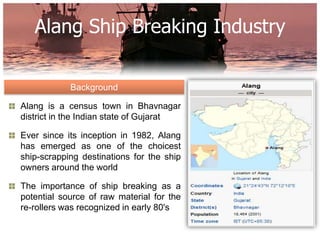
Alang is a census town in Bhavnagar
district in the Indian state of Gujarat

Ever since its inception in 1982, Alang
has emerged as one of the choicest
ship-scrapping destinations for the ship
owners around the world

The importance of ship breaking as a
potential source of raw material for the
re-rollers was recognized in early 80's
Alang – A Lucrative Option

The beaching method depends on skilful harnessing of zero cost tidal
energy at sheltered coastal locations and warrants the least capital
investment

Considering the favorable parameters for beaching method like high tidal
range, firm seabed, gentle seaward slope etc., it was decided to set-up a
ship breaking yard on the western coast of Gulf of Cambay near Alang
village

The first vessel - MV KOTA TENJONG was beached at Alang on 13th
Feb. 1983

Since then, the yard has witnessed spectacular growth and has emerged
as a leading ship Breaking Yard in the world
Ship Breaking Industry Concern
              Areas
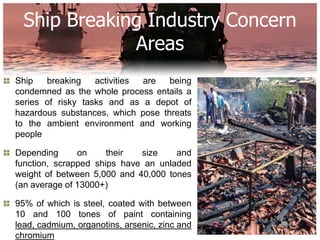
Ship   breaking    activities are  being
condemned as the whole process entails a
series of risky tasks and as a depot of
hazardous substances, which pose threats
to the ambient environment and working
people

Depending      on     their  size    and
function, scrapped ships have an unladed
weight of between 5,000 and 40,000 tones
(an average of 13000+)

95% of which is steel, coated with between
10 and 100 tones of paint containing
lead, cadmium, organotins, arsenic, zinc and
chromium
Alang Ship Breaking Concern Areas


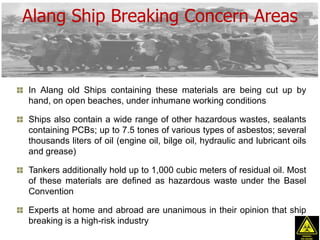
In Alang old Ships containing these materials are being cut up by
hand, on open beaches, under inhumane working conditions

Ships also contain a wide range of other hazardous wastes, sealants
containing PCBs; up to 7.5 tones of various types of asbestos; several
thousands liters of oil (engine oil, bilge oil, hydraulic and lubricant oils
and grease)

Tankers additionally hold up to 1,000 cubic meters of residual oil. Most
of these materials are defined as hazardous waste under the Basel
Convention

Experts at home and abroad are unanimous in their opinion that ship
breaking is a high-risk industry
Hazards of Ship Breaking Industry
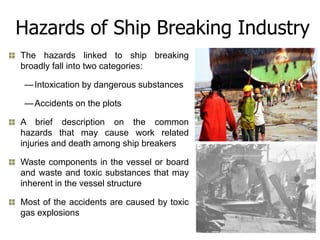
The hazards linked to ship breaking
broadly fall into two categories:

 — Intoxication by dangerous substances

 — Accidents on the plots

A brief description on the common
hazards that may cause work related
injuries and death among ship breakers

Waste components in the vessel or board
and waste and toxic substances that may
inherent in the vessel structure

Most of the accidents are caused by toxic
gas explosions
Alang Ship Breaking Hazards

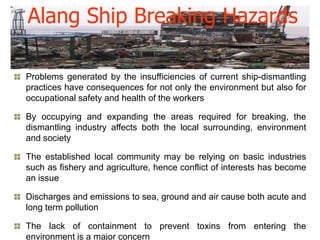
Problems generated by the insufficiencies of current ship-dismantling
practices have consequences for not only the environment but also for
occupational safety and health of the workers

By occupying and expanding the areas required for breaking, the
dismantling industry affects both the local surrounding, environment
and society

The established local community may be relying on basic industries
such as fishery and agriculture, hence conflict of interests has become
an issue

Discharges and emissions to sea, ground and air cause both acute and
long term pollution

The lack of containment to prevent toxins from entering the
environment is a major concern
THANK YOU

Alang ship breaking yard

  • 1.
    Alang Ship BreakingYard Business Ethics and Corporate Governance SIBM – Bangalore Harbinder Singh Deepak Sharma Ashwin Shankar
  • 2.
    Ship Breaking Ship breakingis a type of ship disposal process involving the breaking up of ships for scrap recycling Most ships have a lifespan of a few decades before there is so much wear that refitting and repair becomes uneconomical Ship breaking allows materials from the ship, especially steel, to be reused Equipment on board the vessel can also be reused
  • 3.
    Ship Breaking Industry Untilthe late 20th century, ship breaking took place in port cities of industrialized countries such as the UK and the US Today, most ship breaking yards are in developing countries, with the largest yards at Gadani in Pakistan, Alang in India, Chittagong in Bangladesh and Aliagain Turkey This is due to lower labor costs and less stringent environmental regulations dealing with the disposal of lead paint and other toxic substances China used to be an important player in the 1990s. It is now trying to reposition itself in more environmentally friendly industries
  • 4.
    Alang Ship BreakingIndustry Background Alang is a census town in Bhavnagar district in the Indian state of Gujarat Ever since its inception in 1982, Alang has emerged as one of the choicest ship-scrapping destinations for the ship owners around the world The importance of ship breaking as a potential source of raw material for the re-rollers was recognized in early 80's
  • 5.
    Alang – ALucrative Option The beaching method depends on skilful harnessing of zero cost tidal energy at sheltered coastal locations and warrants the least capital investment Considering the favorable parameters for beaching method like high tidal range, firm seabed, gentle seaward slope etc., it was decided to set-up a ship breaking yard on the western coast of Gulf of Cambay near Alang village The first vessel - MV KOTA TENJONG was beached at Alang on 13th Feb. 1983 Since then, the yard has witnessed spectacular growth and has emerged as a leading ship Breaking Yard in the world
  • 6.
    Ship Breaking IndustryConcern Areas Ship breaking activities are being condemned as the whole process entails a series of risky tasks and as a depot of hazardous substances, which pose threats to the ambient environment and working people Depending on their size and function, scrapped ships have an unladed weight of between 5,000 and 40,000 tones (an average of 13000+) 95% of which is steel, coated with between 10 and 100 tones of paint containing lead, cadmium, organotins, arsenic, zinc and chromium
  • 7.
    Alang Ship BreakingConcern Areas In Alang old Ships containing these materials are being cut up by hand, on open beaches, under inhumane working conditions Ships also contain a wide range of other hazardous wastes, sealants containing PCBs; up to 7.5 tones of various types of asbestos; several thousands liters of oil (engine oil, bilge oil, hydraulic and lubricant oils and grease) Tankers additionally hold up to 1,000 cubic meters of residual oil. Most of these materials are defined as hazardous waste under the Basel Convention Experts at home and abroad are unanimous in their opinion that ship breaking is a high-risk industry
  • 8.
    Hazards of ShipBreaking Industry The hazards linked to ship breaking broadly fall into two categories: — Intoxication by dangerous substances — Accidents on the plots A brief description on the common hazards that may cause work related injuries and death among ship breakers Waste components in the vessel or board and waste and toxic substances that may inherent in the vessel structure Most of the accidents are caused by toxic gas explosions
  • 9.
    Alang Ship BreakingHazards Problems generated by the insufficiencies of current ship-dismantling practices have consequences for not only the environment but also for occupational safety and health of the workers By occupying and expanding the areas required for breaking, the dismantling industry affects both the local surrounding, environment and society The established local community may be relying on basic industries such as fishery and agriculture, hence conflict of interests has become an issue Discharges and emissions to sea, ground and air cause both acute and long term pollution The lack of containment to prevent toxins from entering the environment is a major concern
  • 11.