Downloaded 44 times
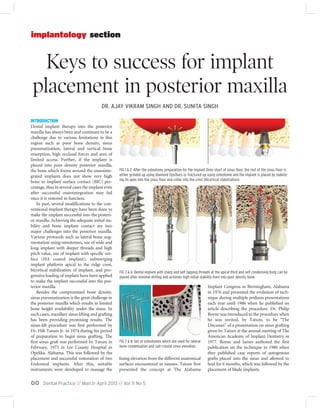


This document discusses keys to success for dental implant placement in the posterior maxilla. The posterior maxilla presents several challenges for implants due to poor bone quality and limited bone height from sinus pneumatization. A case report describes using the crestal approach for sinus elevation and placing an implant bicortically stabilized between the crest and sinus floor. This provides high initial stability and allows placement of longer implants. The author found this technique resulted in higher success rates compared to conventional protocols. Bicortical stabilization of implants is an effective approach but requires expertise to avoid membrane perforation.


![sinuslift-170526161805.pptxcgfgyuiopkljnmkl;']\](https://cdn.slidesharecdn.com/ss_thumbnails/sinuslift-170526161805-251205045410-d67ed8f9-thumbnail.jpg?width=640&height=640&fit=bounds)


