Our Values
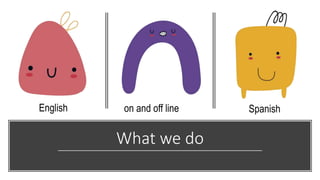
What we do
English on and off line Spanish
Why we do it
At AirCamp we have a simple
belief – we want to help young
people understand each other
through language learning. We
want to build global communities
of respect and tolerance through
linguistic and cultural
appreciation.
We will achieve this by creating
excellent programmes, both on-
line and face to face, using the
right technology and in the most
resource efficient way.
We will break down barriers -
personal, institutional and
cultural. We will celebrate our
shared humanity..
How we do it – our values
We are curious
We are empathetic
We build bonds and
communities
We break down barriers
We open windows to the world
We deconstruct prejudice and
stereotypes
We make things better
Our values are not
about what we do
but how we do it
Our values are not
words but actions
Our values are not
for display but
experience
Our values are what
we value in each
other
Our values are what
we see every day in
everything we do –
do – they are not
posters on a wall
We are curious
• We ask questions and are not afraid to do so
• We want to know why
• We want to know why so we can understand
• We ask because we want to learn
• We expect to answer questions and be prepared to
do so
• We can explain what we are trying to do and what
we are NOT trying to do
We are curious – how?
Some examples
• We use genuine questions in classes and we teach
students how to do the same
• Ask what a colleague is doing and why
• Teach yourself something new – all the time
• Gather knowledge and share it with colleagues,
students and parents
• Learn more about other parts of the company
We are empathetic
• We actively try to look through the eyes of others
• We are open to the feelings and thoughts of others
• We want to see others develop
• We want to understand and help with the needs of
others
• We care about the needs of others
We are empathetic –
how?
Some examples
• We actively teach kids empathetic skills and manage
classrooms thus
• Spending time with others with whom you do not
usually work
• Making sure our students and parents are more than
just heard but understood
• Setting up cross-disciplinary working groups
• Team leaders being open to the views and feelings
of their teams
We build bonds and communities
• We are not insular and self-regarding
• We actively help to put people together
• We spend time learning about others and
how we can work together
• We celebrate bonds as strengths
• We don’t tolerate selfishness
We build bonds and communities
– how?
Some examples
• Classes become a ‘hot-bed’ of interaction
• We join and follow charities that display
similar values and objectives
• We work together with our affiliates and
partner institutions in a strong and
purposeful way
• We do things together – not just in the work
place and not just in our regular teams
• We use our teaching material to encourage
bonds to be made – AirCamp buddies
We break down barriers
• We learn where barriers exist
• We plan to remove them
• We do no operate in silos
• We talk and listen
• We are open to input from anywhere and
anyone
We break down barriers – how?
Some examples
• We constantly review our processes and see how
they could block sales/ deter clients
• We structure classes to actively deal with barrier
issues
• We communicate freely and openly both internally
and externally
• We celebrate the removal of barriers anywhere – we
do that in our social media and stories
• We usual cross –cultural awareness training in
classes
• We add digital literacy to our curriculum
We open windows
• We are open about what we do not only with our
colleagues but with our customers
• We encourage questions
• We give people the tools to open their own windows
• We actively encourage each other to open those
windows
We open windows –
how?
Some examples
• Our teaching material shows how language learning
is a window to other cultures
• We regularly survey, question and ask our customers
– and show them the nuts and bolts of how we work
• We have a scheme of peer observations
• We encourage job sharing and shadowing
We deconstruct prejudice and
stereotypes
• We recognise and call out prejudice and stereotypes
• We operate zero tolerance
• We dispel lazy and tired un-thinking
• We actively seek to promote fairness, equality and
understanding
We deconstruct prejudice and
stereotypes – how?
• We use social media to do this – taking special care
to images and language used
• We audit teaching material
• We don’t accept that they way something is, is
simply the way something is
• We strive for truly international mixes in our classes
• When recruiting team members we aim for the
diverse, interesting and open
We make things better
• We work with the principle of constant
improvement
• We never settle for the easier option if it is not
the best option
• We encourage and push
• We expect others to embrace betterment
• We look to see how we can improve ourselves
• We inspire others to do better and be better
We make things better – how?
• We support and develop teachers
• Students are helped to create their own
improvement path
• Time is set aside for team members to learn
and share their learning
• We will hire people who show that they want to
develop themselves
• We look for IT that is going to help us work
smarter
Getting and keeping team
members
We look for
 the intellectually curious
 have an interesting hinterland
 want to learn and keep on learning
 problem solvers
 those who regard the status quo with
suspicion
 those who want to do something different
with their lives
Getting and keeping team
members
We keep
 those who make things better regularly
 those who can show real empathy
 self-motivated learners
 the question takers and the solution makers
 the helpers
 those who can work across teams with no
political nonsense
A great workplace
is great colleagues, who thrive on
excellence, honesty and change
Output is more
important than input
No prizes for effort that leads to below
par performance
No prizes for working excessive hours
to produce a poor result
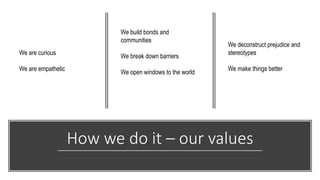
How we do it – our values
We are curious
We are empathetic
We build bonds and
communities
We break down barriers
We open windows to the world
We deconstruct prejudice and
stereotypes
We make things better
Guided by our
values we will
change
children’s
worlds

AirCamp Values Deck

  • 1.
  • 2.
    What we do Englishon and off line Spanish
  • 3.
    Why we doit At AirCamp we have a simple belief – we want to help young people understand each other through language learning. We want to build global communities of respect and tolerance through linguistic and cultural appreciation. We will achieve this by creating excellent programmes, both on- line and face to face, using the right technology and in the most resource efficient way. We will break down barriers - personal, institutional and cultural. We will celebrate our shared humanity..
  • 4.
    How we doit – our values We are curious We are empathetic We build bonds and communities We break down barriers We open windows to the world We deconstruct prejudice and stereotypes We make things better
  • 5.
    Our values arenot about what we do but how we do it
  • 6.
    Our values arenot words but actions
  • 7.
    Our values arenot for display but experience
  • 8.
    Our values arewhat we value in each other
  • 9.
    Our values arewhat we see every day in everything we do – do – they are not posters on a wall
  • 10.
    We are curious •We ask questions and are not afraid to do so • We want to know why • We want to know why so we can understand • We ask because we want to learn • We expect to answer questions and be prepared to do so • We can explain what we are trying to do and what we are NOT trying to do
  • 11.
    We are curious– how? Some examples • We use genuine questions in classes and we teach students how to do the same • Ask what a colleague is doing and why • Teach yourself something new – all the time • Gather knowledge and share it with colleagues, students and parents • Learn more about other parts of the company
  • 12.
    We are empathetic •We actively try to look through the eyes of others • We are open to the feelings and thoughts of others • We want to see others develop • We want to understand and help with the needs of others • We care about the needs of others
  • 13.
    We are empathetic– how? Some examples • We actively teach kids empathetic skills and manage classrooms thus • Spending time with others with whom you do not usually work • Making sure our students and parents are more than just heard but understood • Setting up cross-disciplinary working groups • Team leaders being open to the views and feelings of their teams
  • 14.
    We build bondsand communities • We are not insular and self-regarding • We actively help to put people together • We spend time learning about others and how we can work together • We celebrate bonds as strengths • We don’t tolerate selfishness
  • 15.
    We build bondsand communities – how? Some examples • Classes become a ‘hot-bed’ of interaction • We join and follow charities that display similar values and objectives • We work together with our affiliates and partner institutions in a strong and purposeful way • We do things together – not just in the work place and not just in our regular teams • We use our teaching material to encourage bonds to be made – AirCamp buddies
  • 16.
    We break downbarriers • We learn where barriers exist • We plan to remove them • We do no operate in silos • We talk and listen • We are open to input from anywhere and anyone
  • 17.
    We break downbarriers – how? Some examples • We constantly review our processes and see how they could block sales/ deter clients • We structure classes to actively deal with barrier issues • We communicate freely and openly both internally and externally • We celebrate the removal of barriers anywhere – we do that in our social media and stories • We usual cross –cultural awareness training in classes • We add digital literacy to our curriculum
  • 18.
    We open windows •We are open about what we do not only with our colleagues but with our customers • We encourage questions • We give people the tools to open their own windows • We actively encourage each other to open those windows
  • 19.
    We open windows– how? Some examples • Our teaching material shows how language learning is a window to other cultures • We regularly survey, question and ask our customers – and show them the nuts and bolts of how we work • We have a scheme of peer observations • We encourage job sharing and shadowing
  • 20.
    We deconstruct prejudiceand stereotypes • We recognise and call out prejudice and stereotypes • We operate zero tolerance • We dispel lazy and tired un-thinking • We actively seek to promote fairness, equality and understanding
  • 21.
    We deconstruct prejudiceand stereotypes – how? • We use social media to do this – taking special care to images and language used • We audit teaching material • We don’t accept that they way something is, is simply the way something is • We strive for truly international mixes in our classes • When recruiting team members we aim for the diverse, interesting and open
  • 22.
    We make thingsbetter • We work with the principle of constant improvement • We never settle for the easier option if it is not the best option • We encourage and push • We expect others to embrace betterment • We look to see how we can improve ourselves • We inspire others to do better and be better
  • 23.
    We make thingsbetter – how? • We support and develop teachers • Students are helped to create their own improvement path • Time is set aside for team members to learn and share their learning • We will hire people who show that they want to develop themselves • We look for IT that is going to help us work smarter
  • 24.
    Getting and keepingteam members We look for  the intellectually curious  have an interesting hinterland  want to learn and keep on learning  problem solvers  those who regard the status quo with suspicion  those who want to do something different with their lives
  • 25.
    Getting and keepingteam members We keep  those who make things better regularly  those who can show real empathy  self-motivated learners  the question takers and the solution makers  the helpers  those who can work across teams with no political nonsense
  • 26.
    A great workplace isgreat colleagues, who thrive on excellence, honesty and change
  • 27.
    Output is more importantthan input No prizes for effort that leads to below par performance No prizes for working excessive hours to produce a poor result
  • 28.
    How we doit – our values We are curious We are empathetic We build bonds and communities We break down barriers We open windows to the world We deconstruct prejudice and stereotypes We make things better
  • 29.
    Guided by our valueswe will change children’s worlds