From Monolith to Microservices:
@MELANIECEBULA / SEPT 2017 / FUTURESTACK
How to Scale Your Architecture
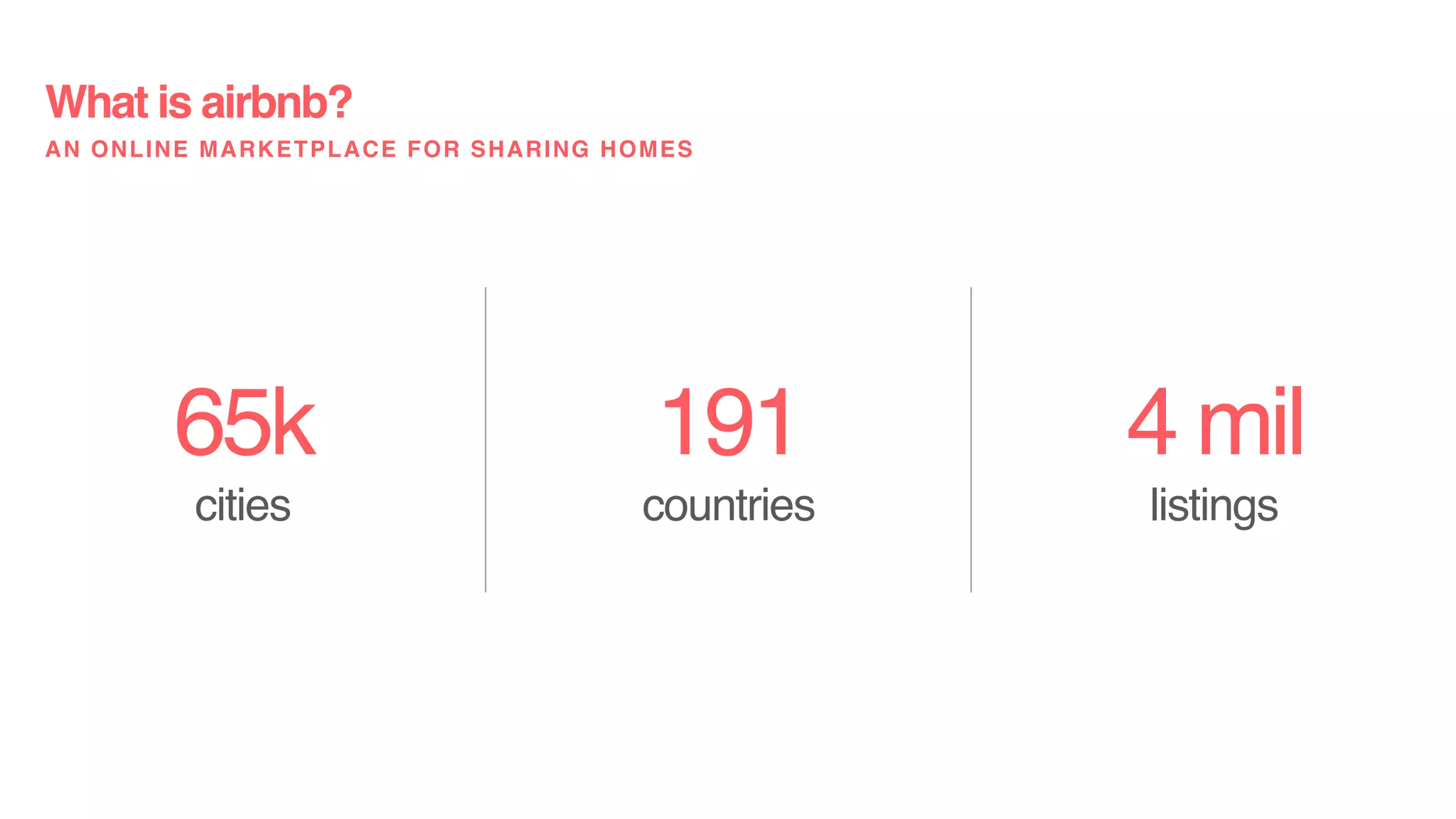
65k 191 4 mil
countriescities listings
What is airbnb?
AN ONLINE MARKETPLACE FOR SHARING HOMES
Who am I?
100%
Availability
100%
Productivity
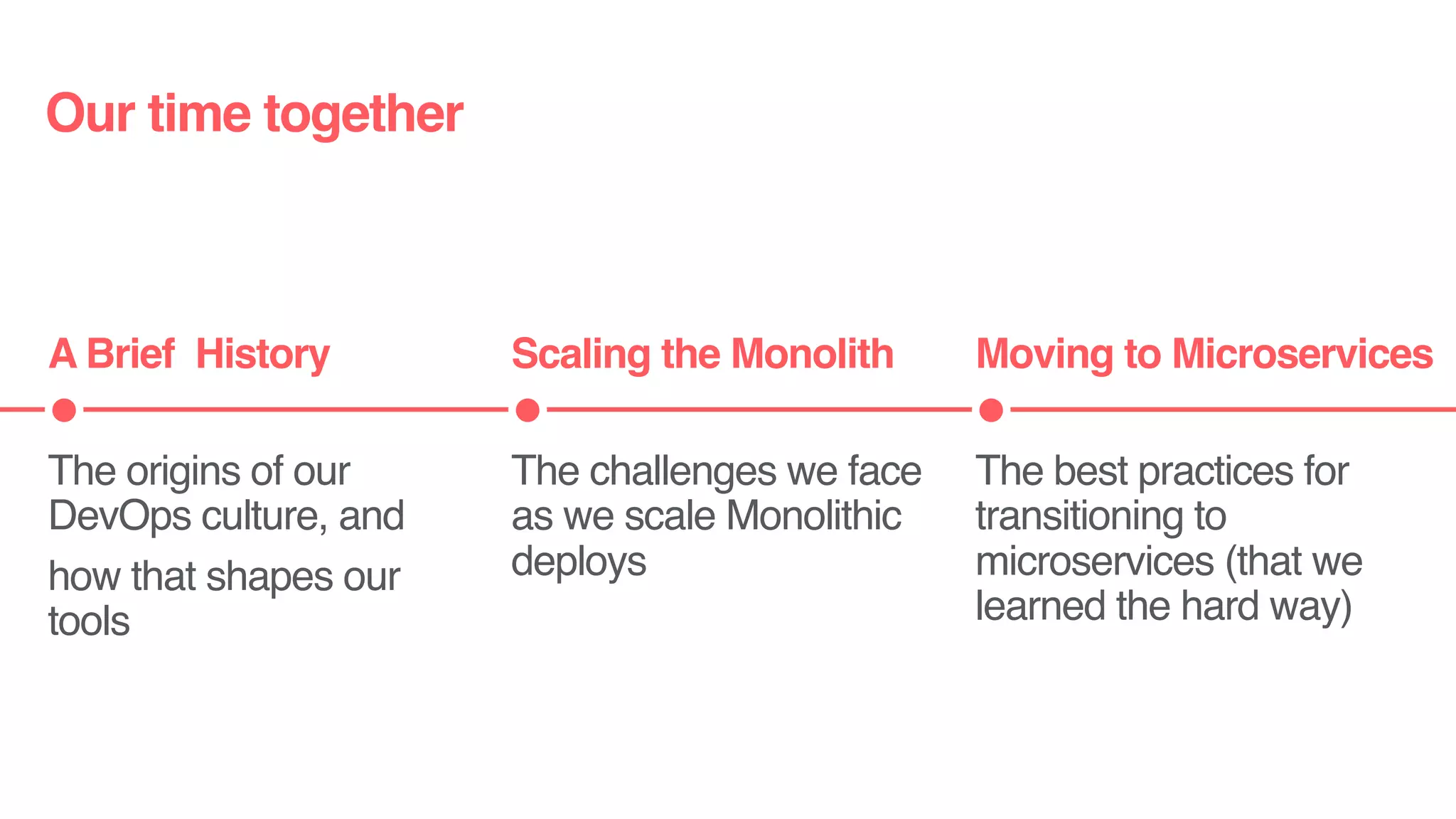
Our time together
Moving to MicroservicesScaling the MonolithA Brief History
The origins of our
DevOps culture, and
how that shapes our
tools
The challenges we face
as we scale Monolithic
deploys
The best practices for
transitioning to
microservices (that we
learned the hard way)
A BRIEF HISTORY
1 GitHub repo 1 SRE Sysops
“Monorail”
OUR MONOLITHIC RUBY ON RAILS APPLICATION
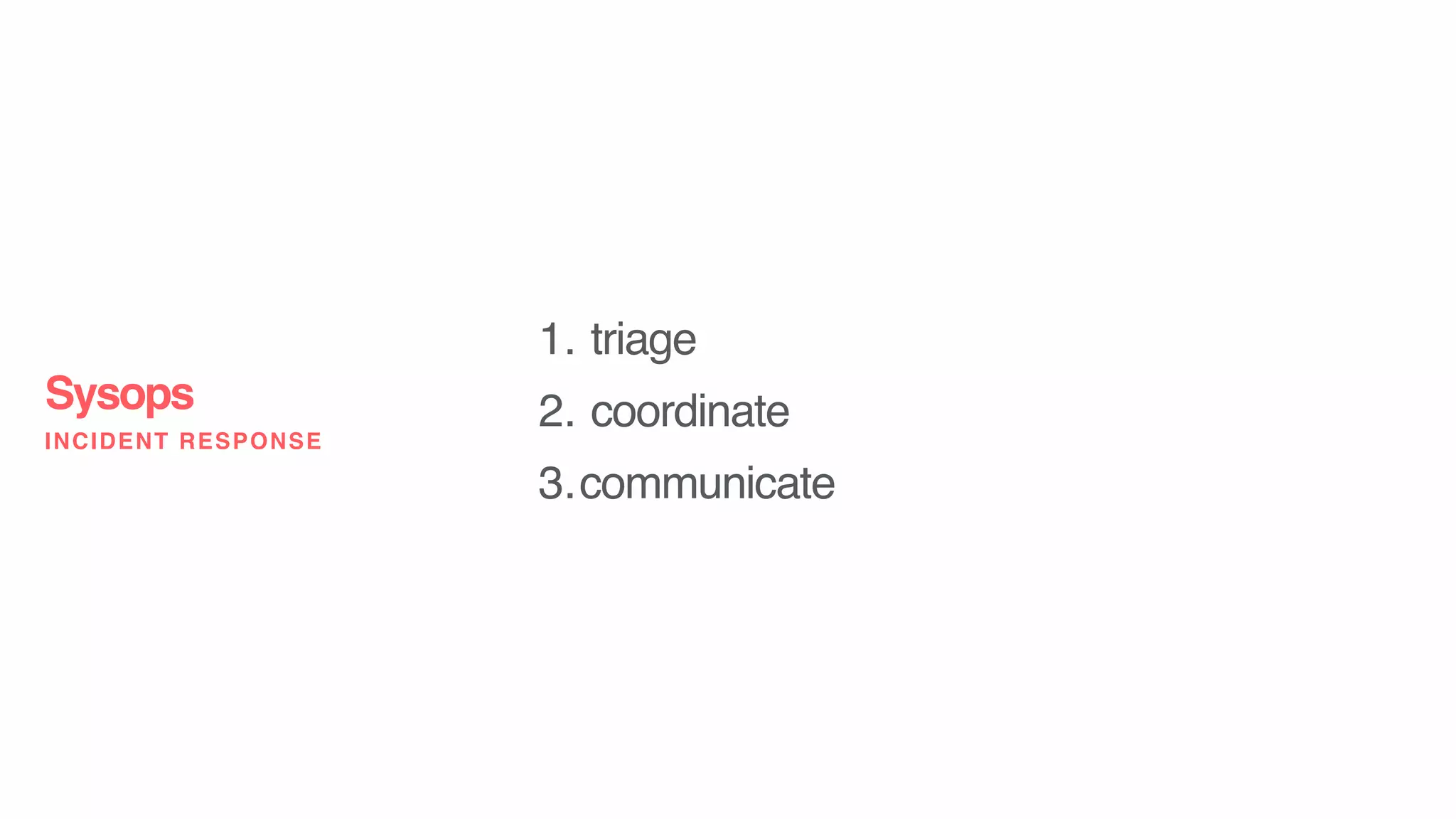
1. triage
2. coordinate
3.communicate
Sysops
INCIDENT RESPONSE
DEVOPS CULTURE
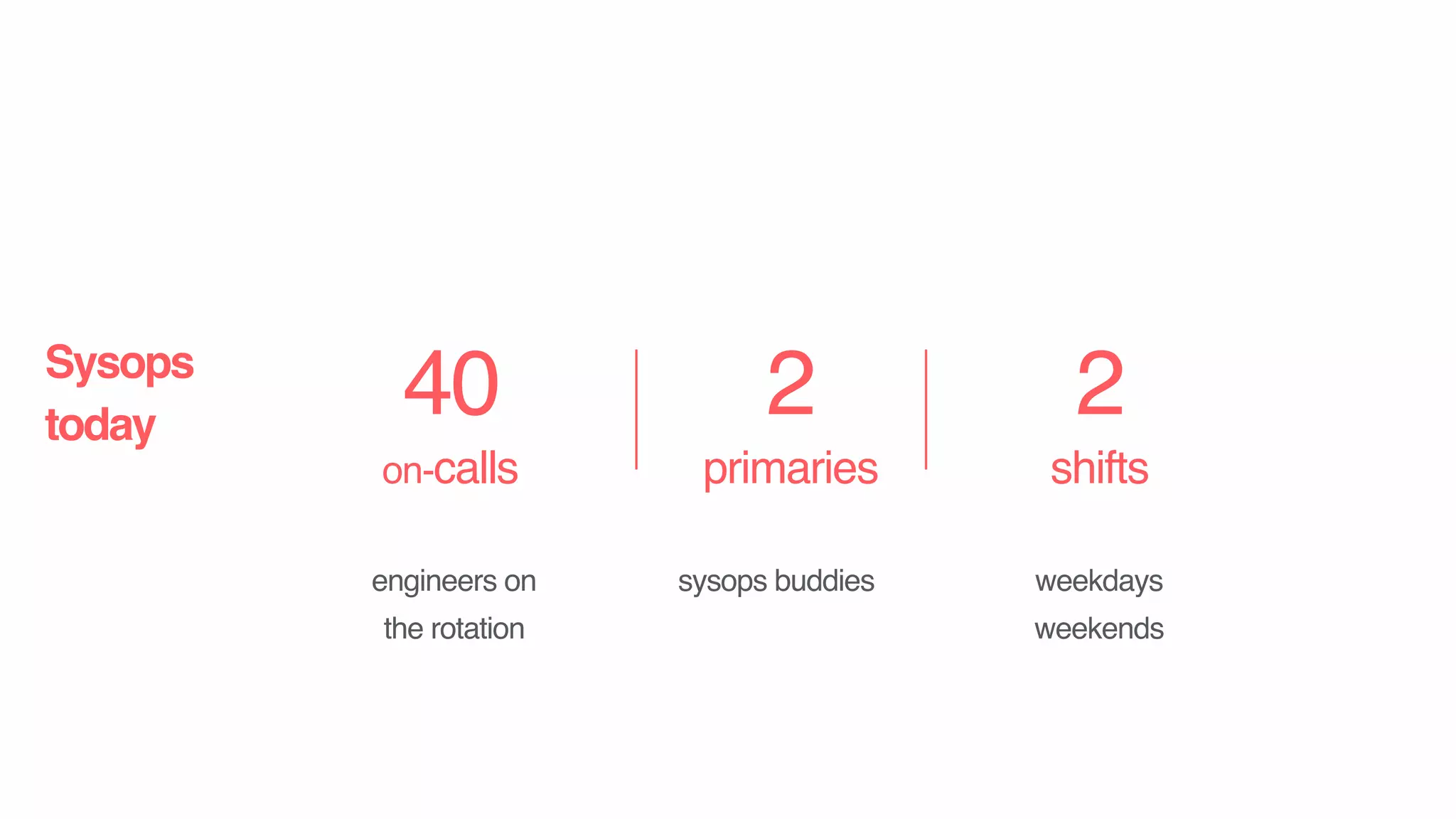
Sysops
today
40
on-calls
2
primaries
2
shifts
engineers on
the rotation
sysops buddies weekdays
weekends
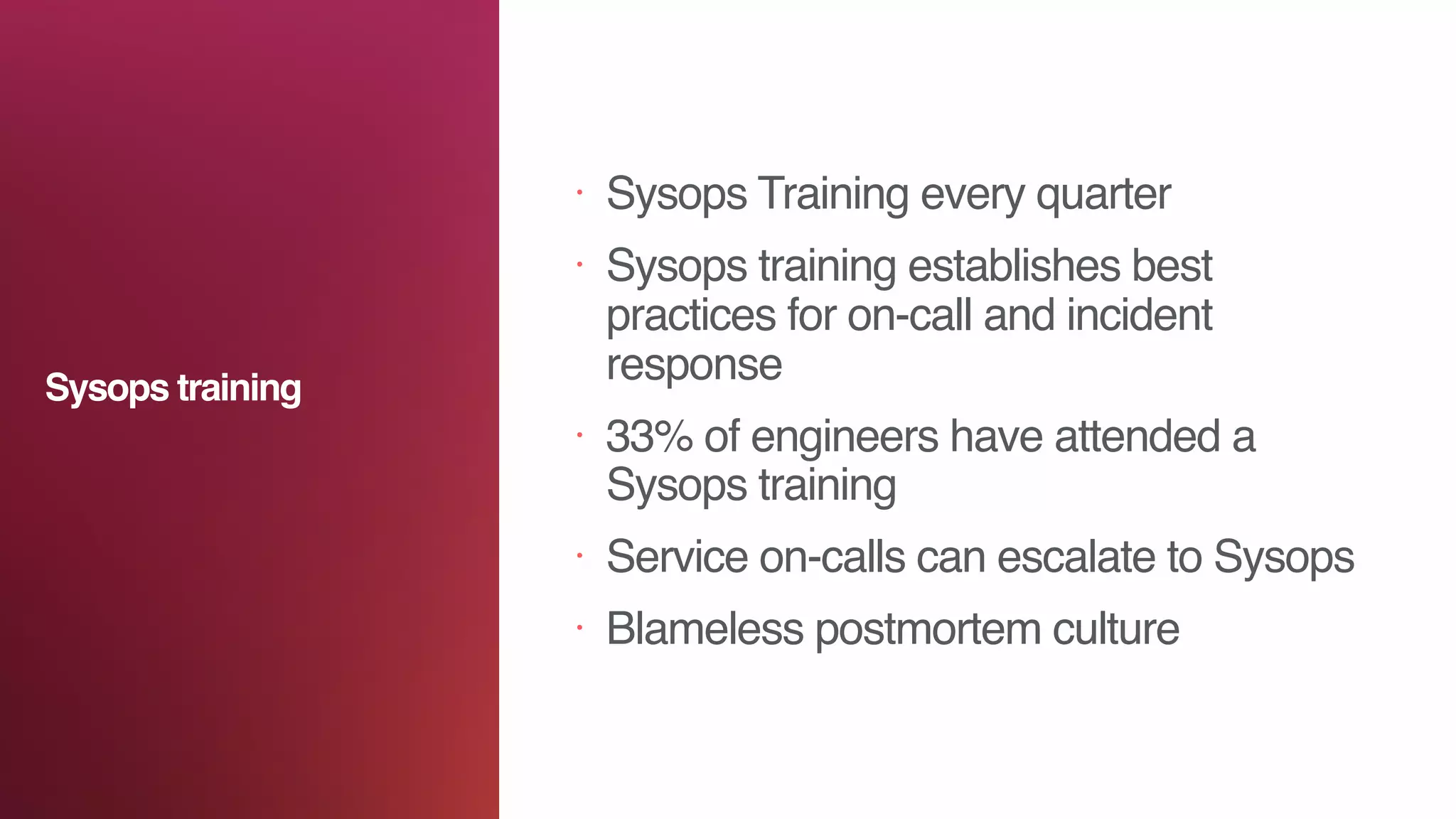
• Sysops Training every quarter
• Sysops training establishes best
practices for on-call and incident
response
• 33% of engineers have attended a
Sysops training
• Service on-calls can escalate to Sysops
• Blameless postmortem culture
Sysops training
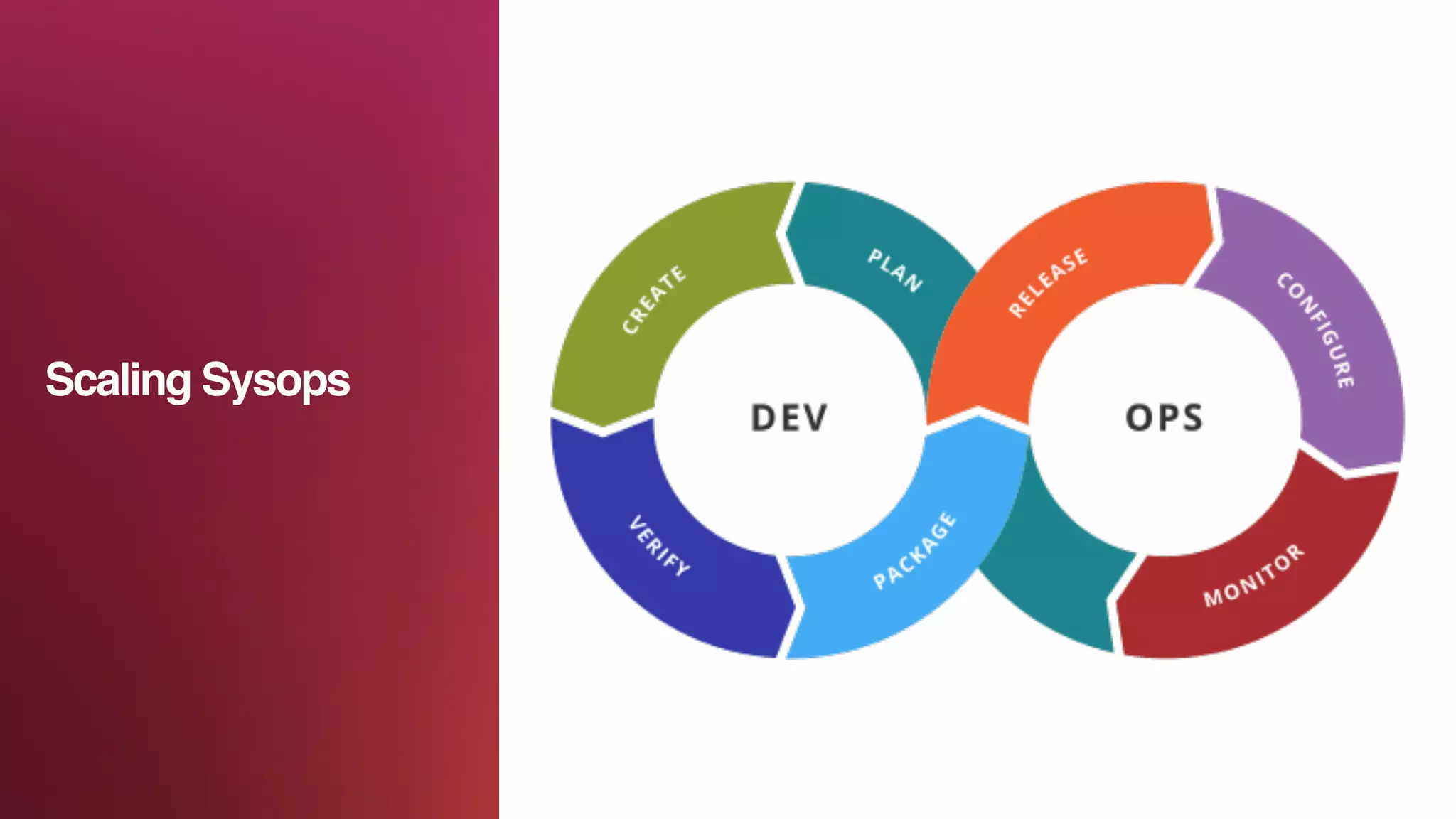
Scaling Sysops
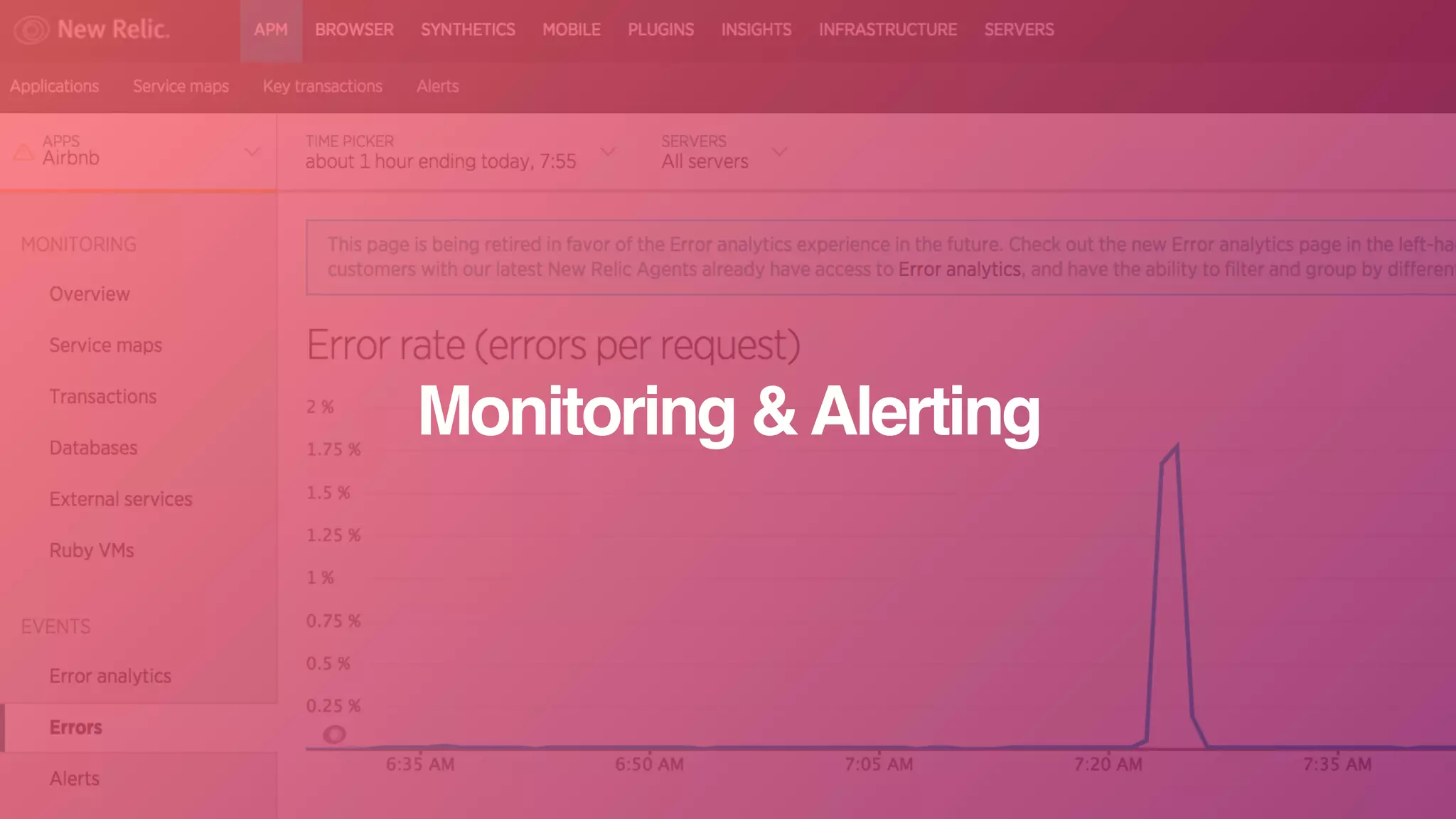
Monitoring &Alerting
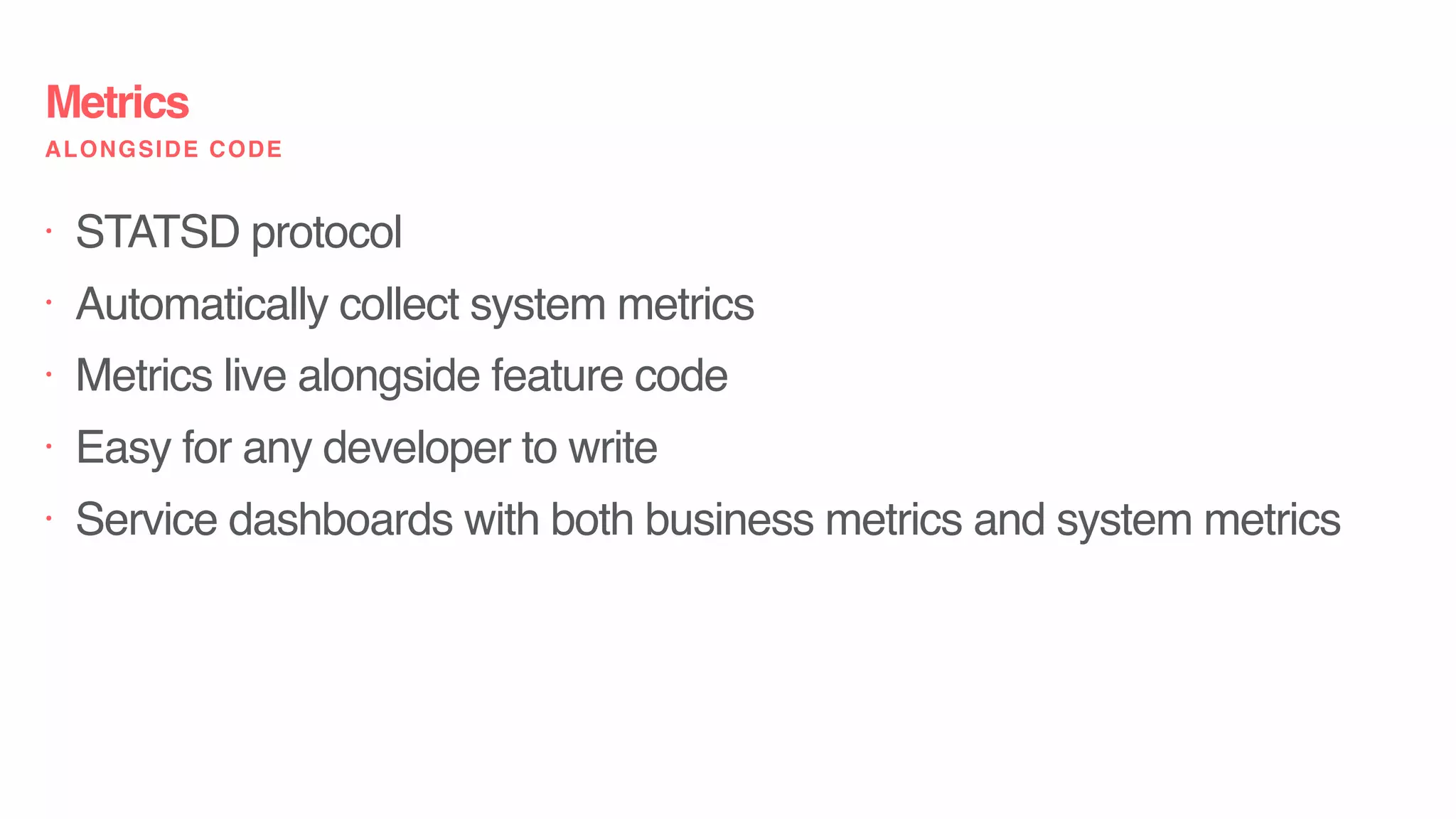
• STATSD protocol
• Automatically collect system metrics
• Metrics live alongside feature code
• Easy for any developer to write
• Service dashboards with both business metrics and system metrics
Metrics
ALONGSIDE CODE
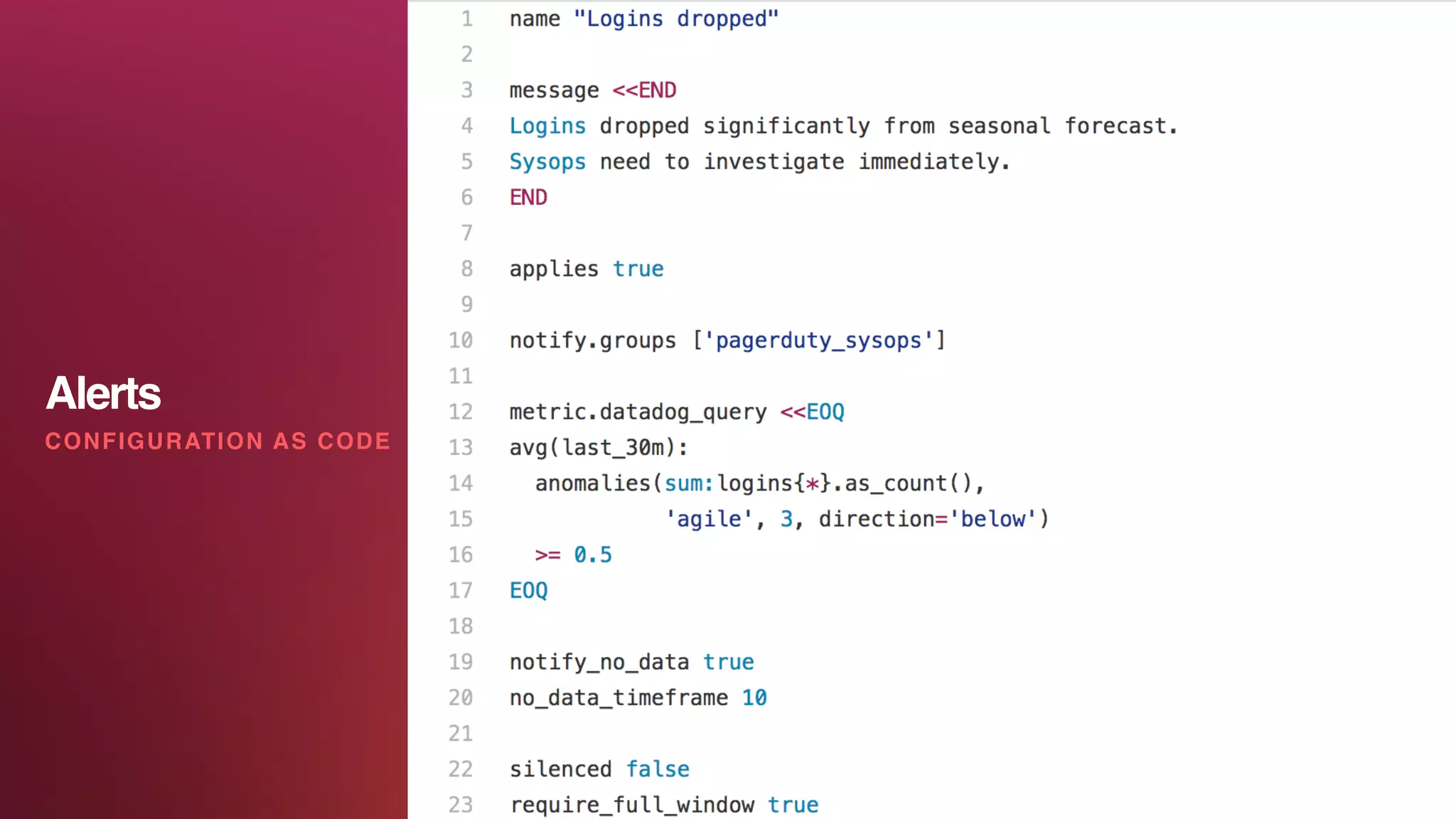
Alerts
CONFIGURATION AS CODE
SCALING MONORAIL DEPLOYS
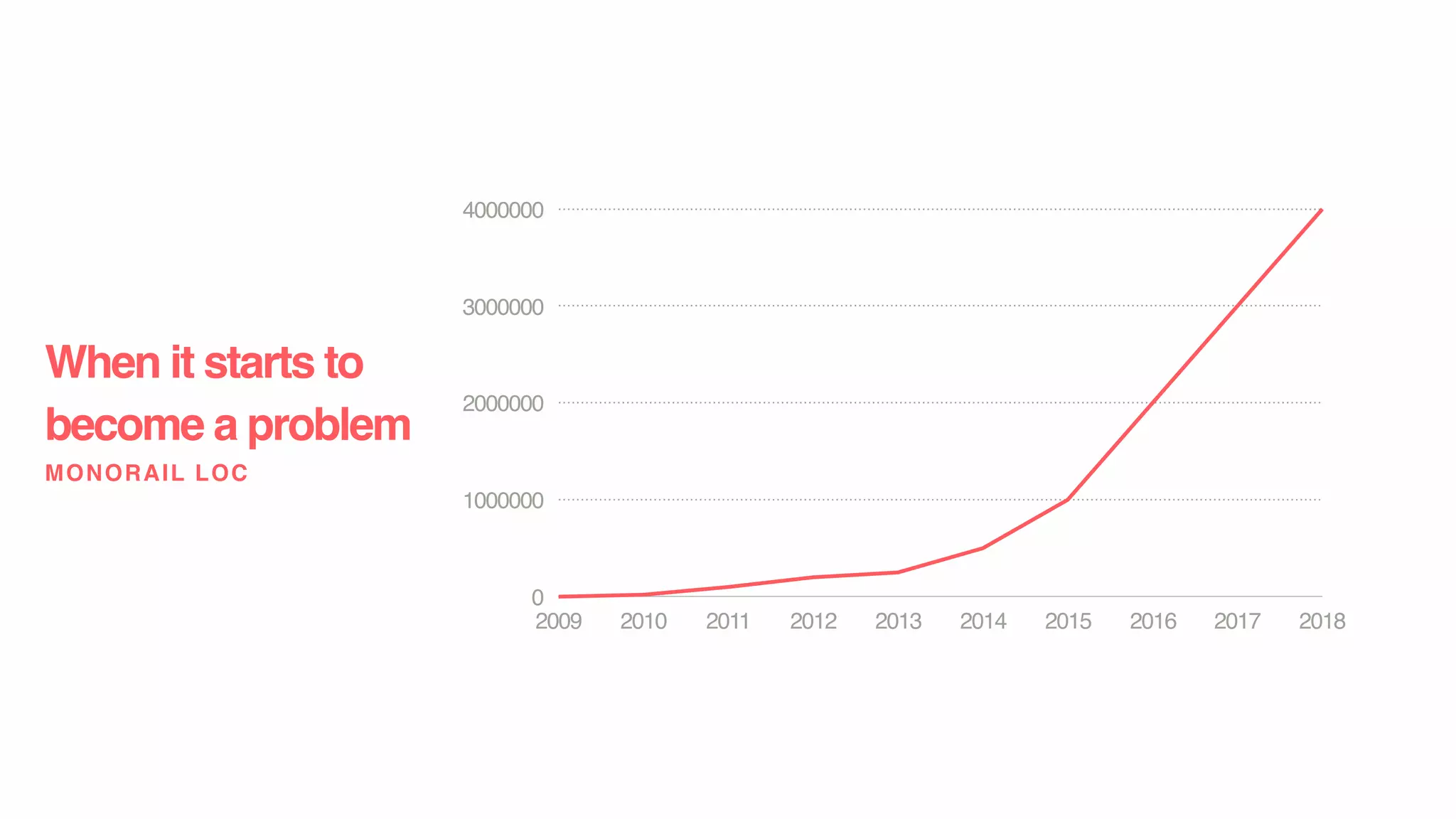
When it starts to
become a problem
MONORAIL LOC
0
1000000
2000000
3000000
4000000
2009 2010 2011 2012 2013 2014 2015 2016 2017 2018
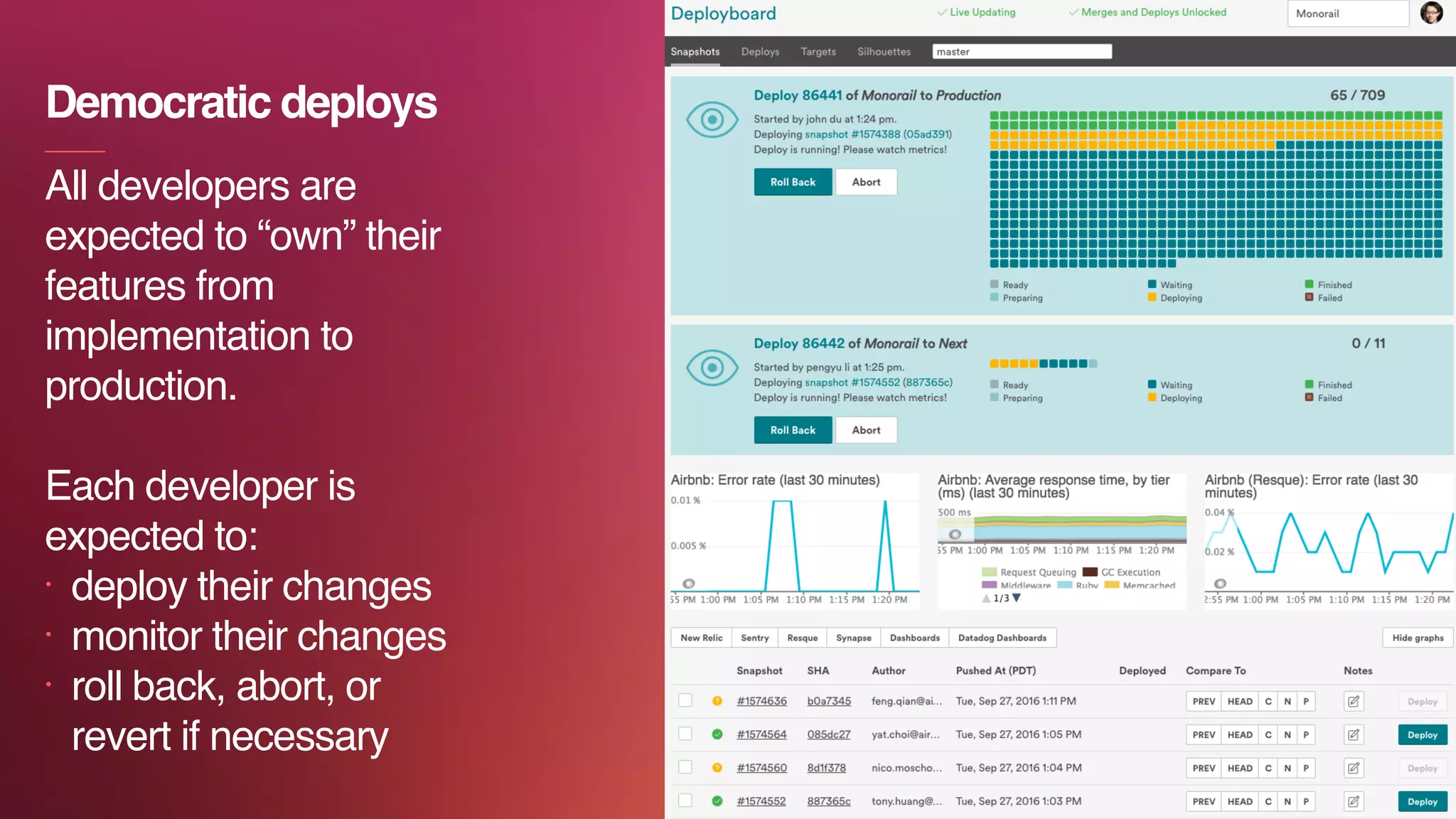
All developers are
expected to “own” their
features from
implementation to
production.
Each developer is
expected to:
• deploy their changes
• monitor their changes
• roll back, abort, or
revert if necessary
Democratic deploys
• everything merged into master is
deployable to production
• frequent deploys (with smaller batches)
• automate as much as possible
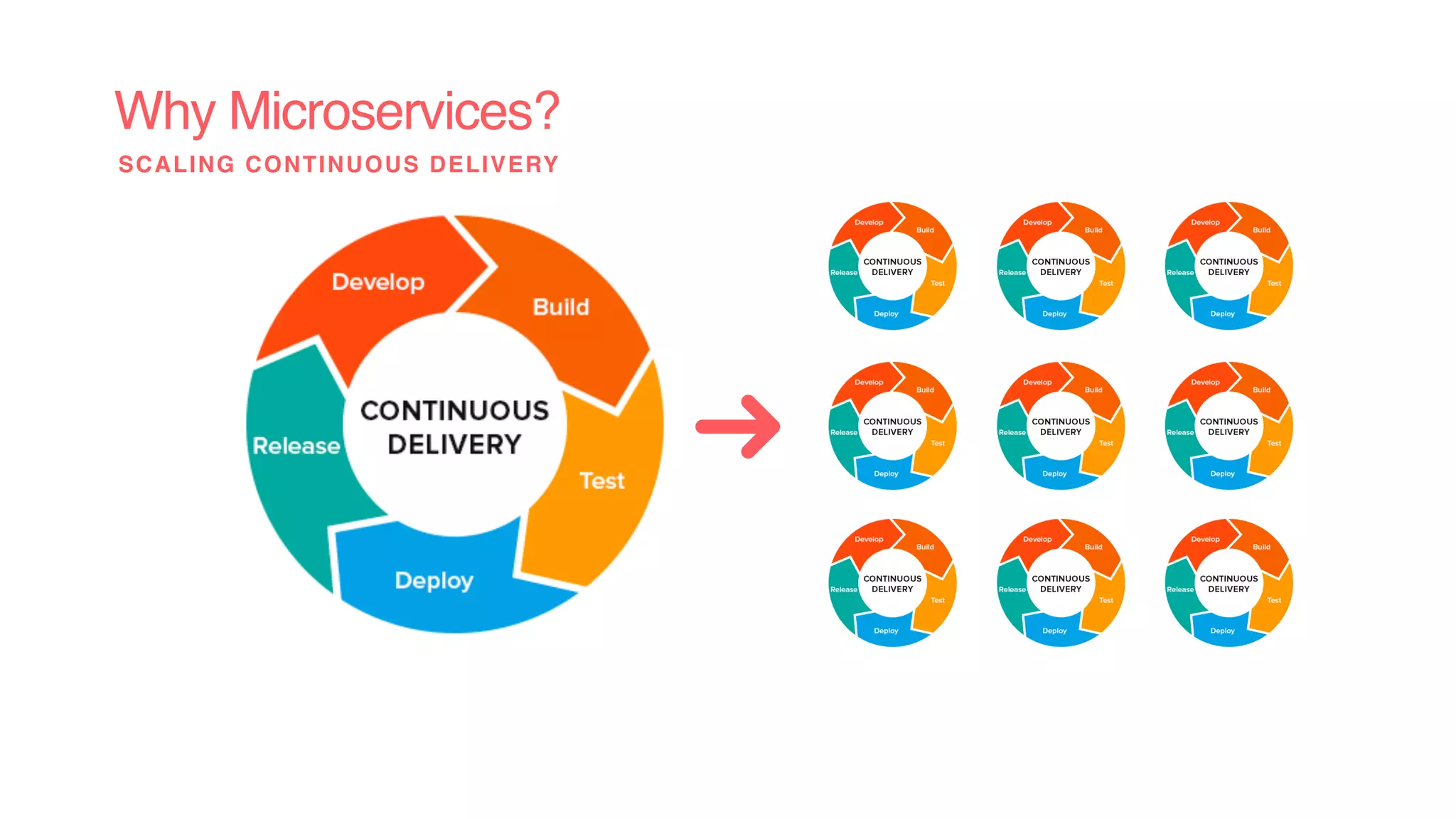
Continuous Delivery
Scaling Deploy Process
• builds, tests, and deploys must be fast
and reliable
• ping authors when they need to take
action
• automatic (and fast) reverts
• merge queue
• automatic rollbacks for new exceptions
THE MOVE TO
MICROSERVICES
“Essentially, a microservices architecture is a method of
developing software applications as a suite of independently
deployable, small, modular services in which each service
runs a unique process and communicates through a well-
defined, lightweight mechanism to serve a business goal.”
— someone on the internet
What is a microservices architecture?
Why Not Microservices?
• Distributed systems
are hard!
• Naming things is
hard!
• Having to support
different languages /
frameworks
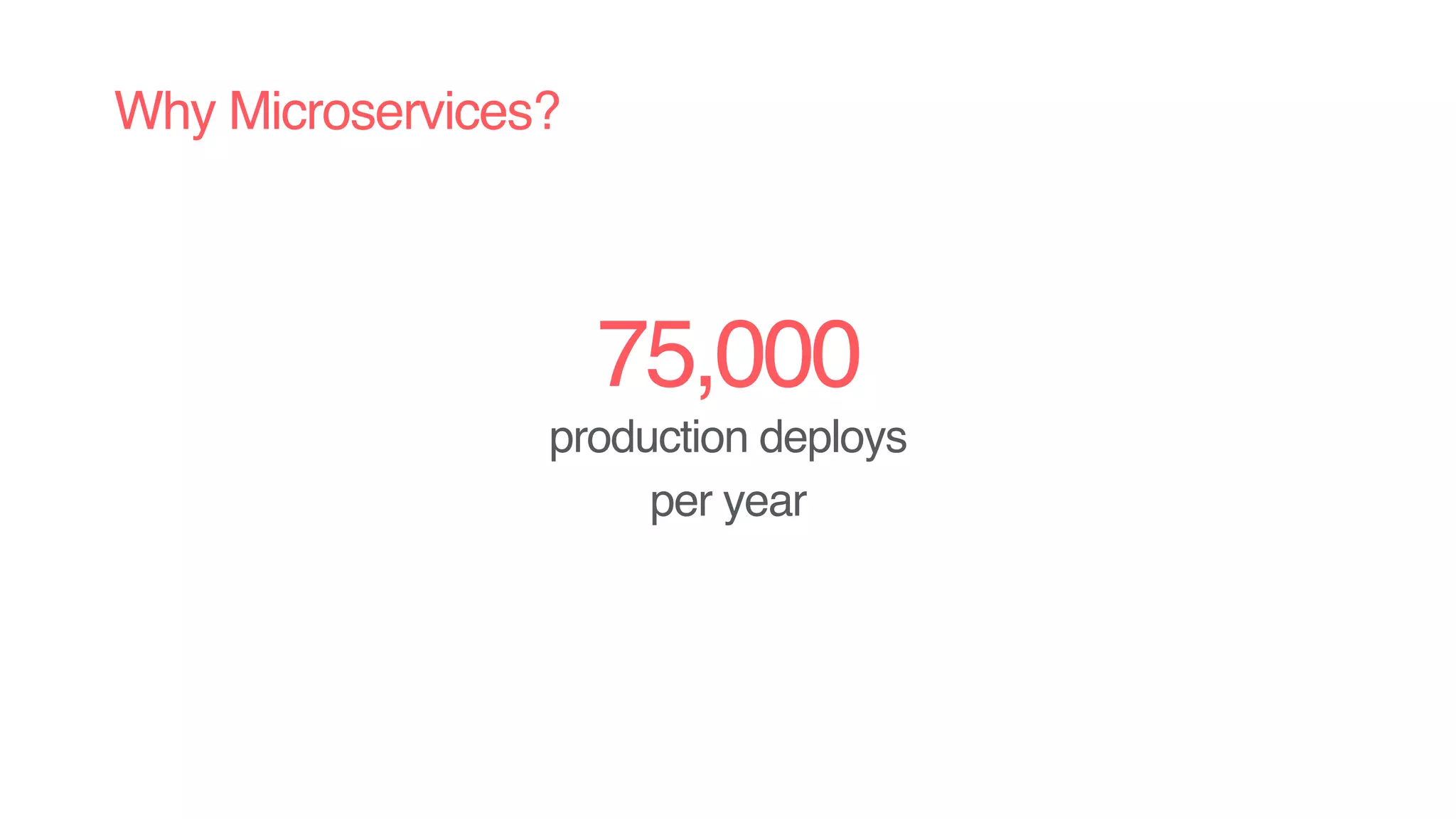
Why Microservices?
• Independent
deployment
• Modular structure /
Ownership
• Secure / Performant
• Upgrading
dependencies
Why Microservices?
SCALING CONTINUOUS DELIVERY
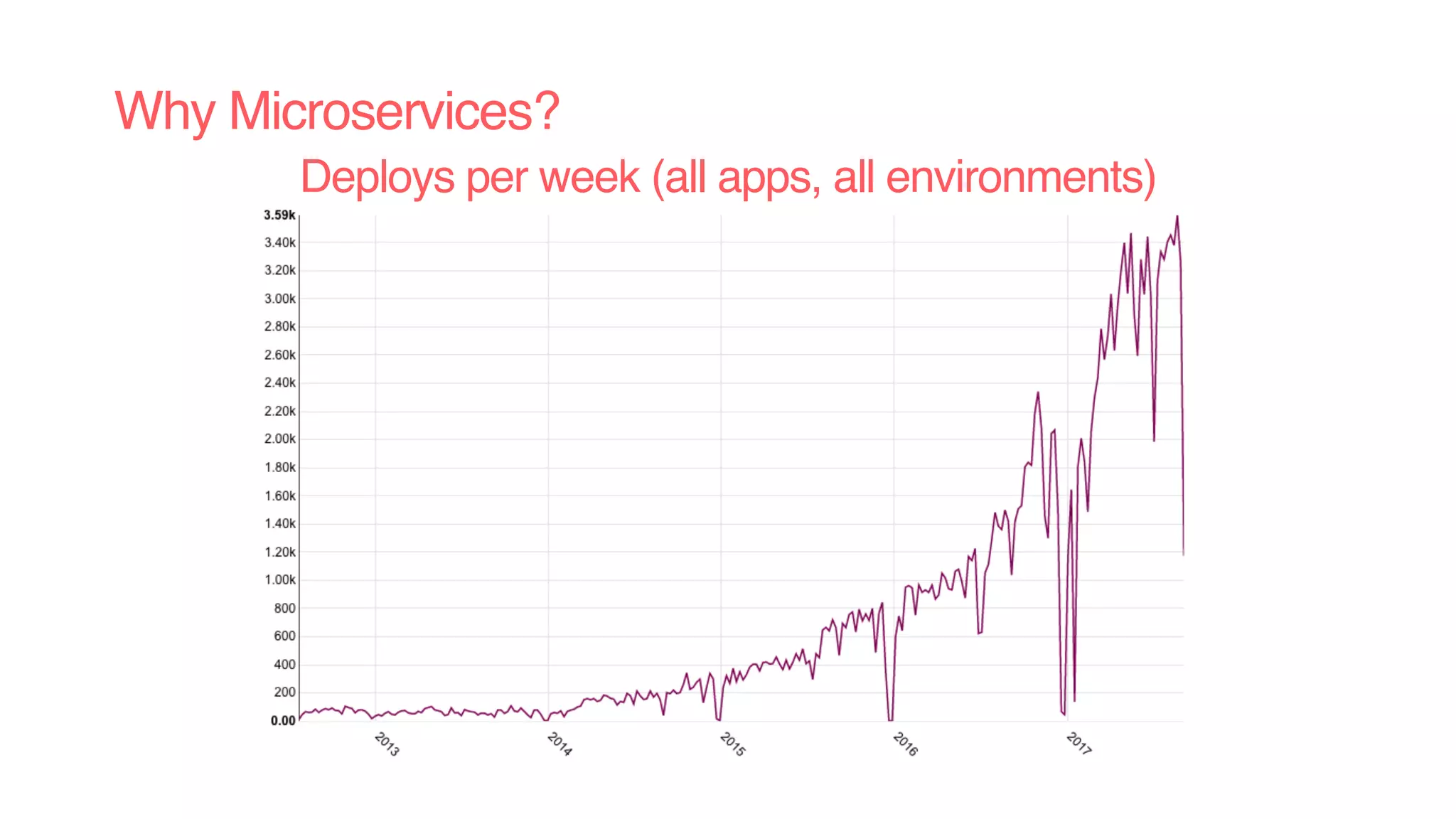
Why Microservices?
Deploys per week (all apps, all environments)
Why Microservices?
75,000
production deploys
per year
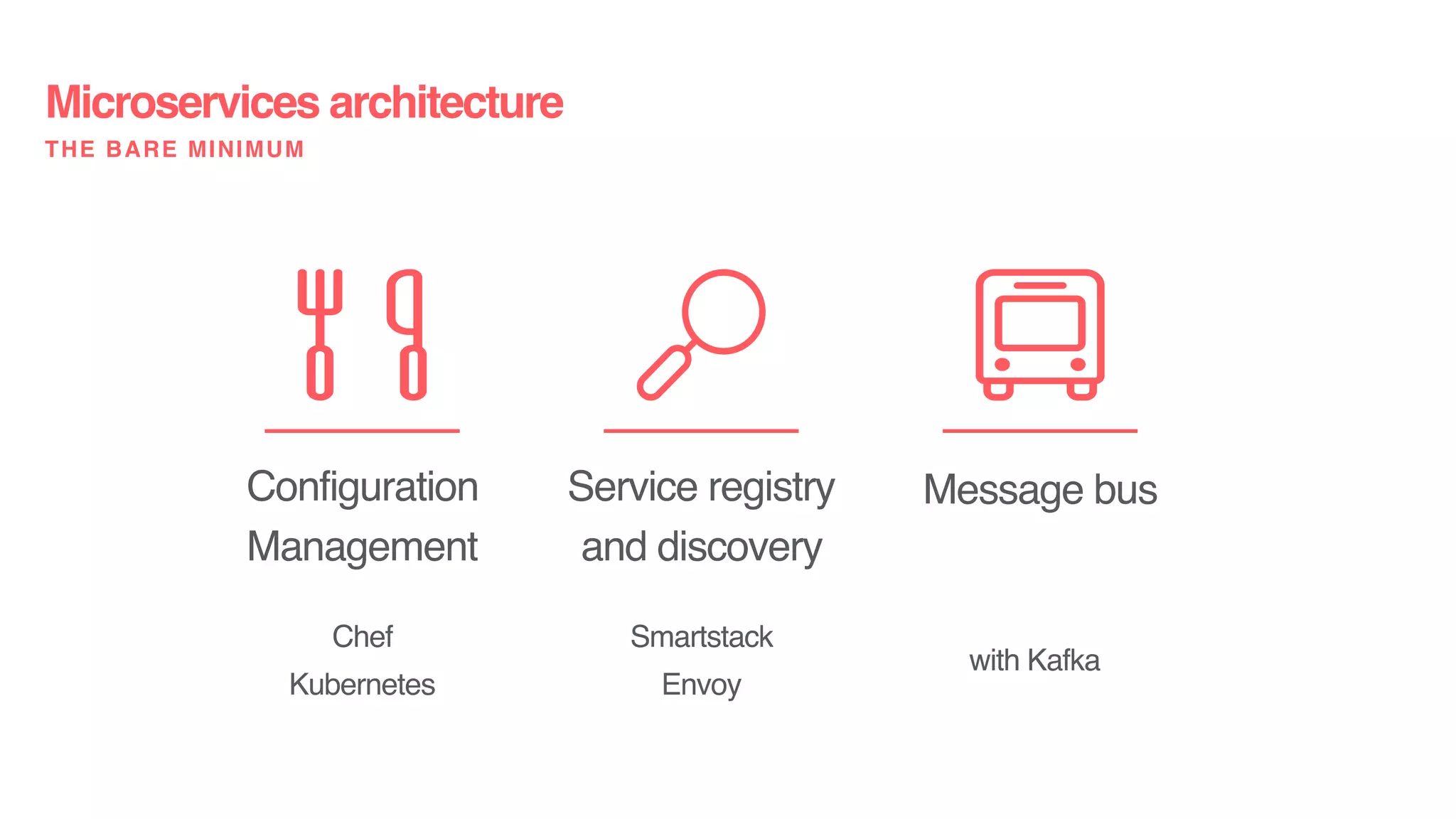
Service registry
and discovery
Message busConfiguration
Management
Microservices architecture
THE BARE MINIMUM
Chef
Kubernetes
Smartstack
Envoy
with Kafka
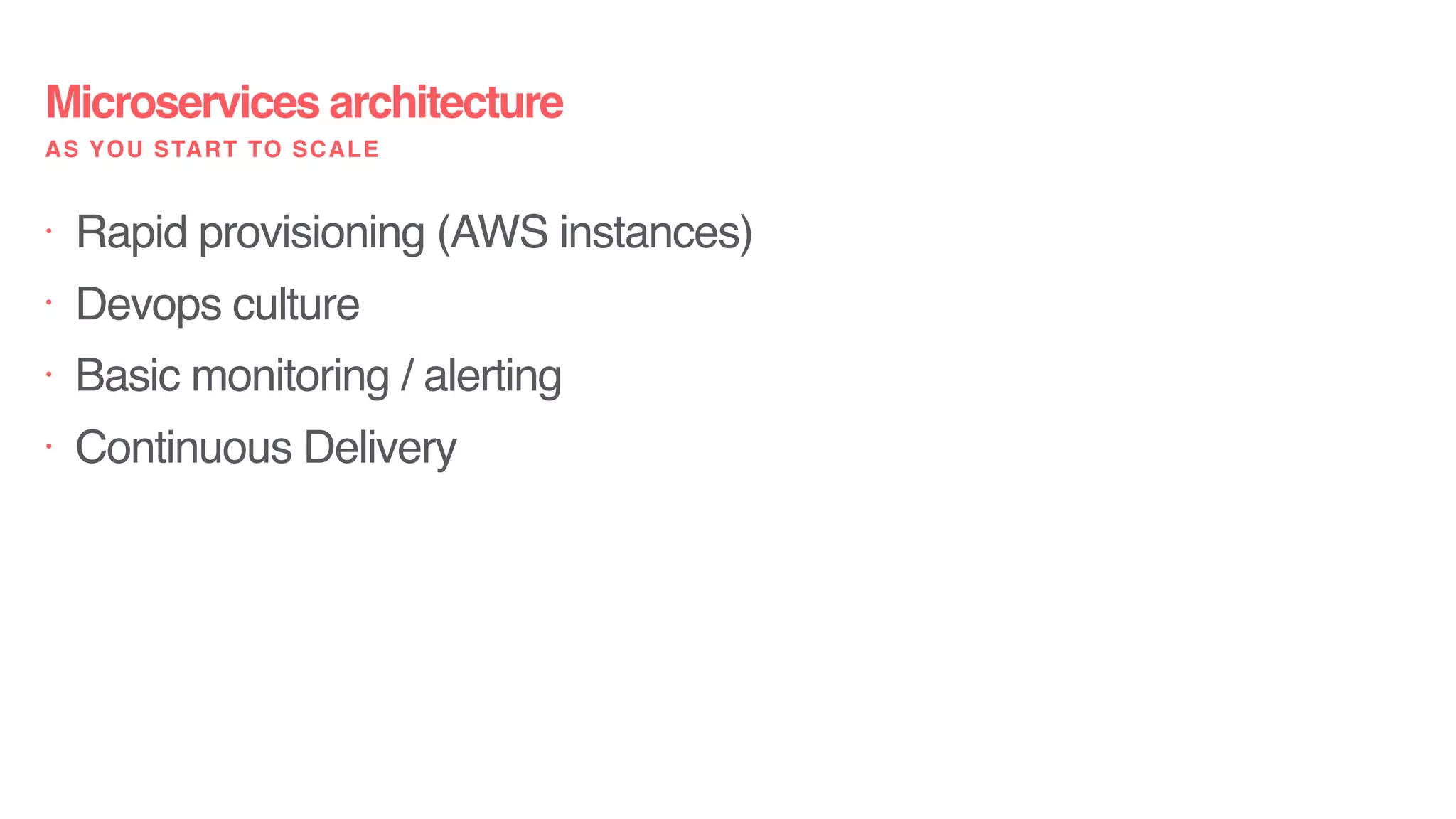
Microservices architecture
AS YOU START TO SCALE
• Rapid provisioning (AWS instances)
• Devops culture
• Basic monitoring / alerting
• Continuous Delivery
Moment of Truth
Are we committed to microservices?
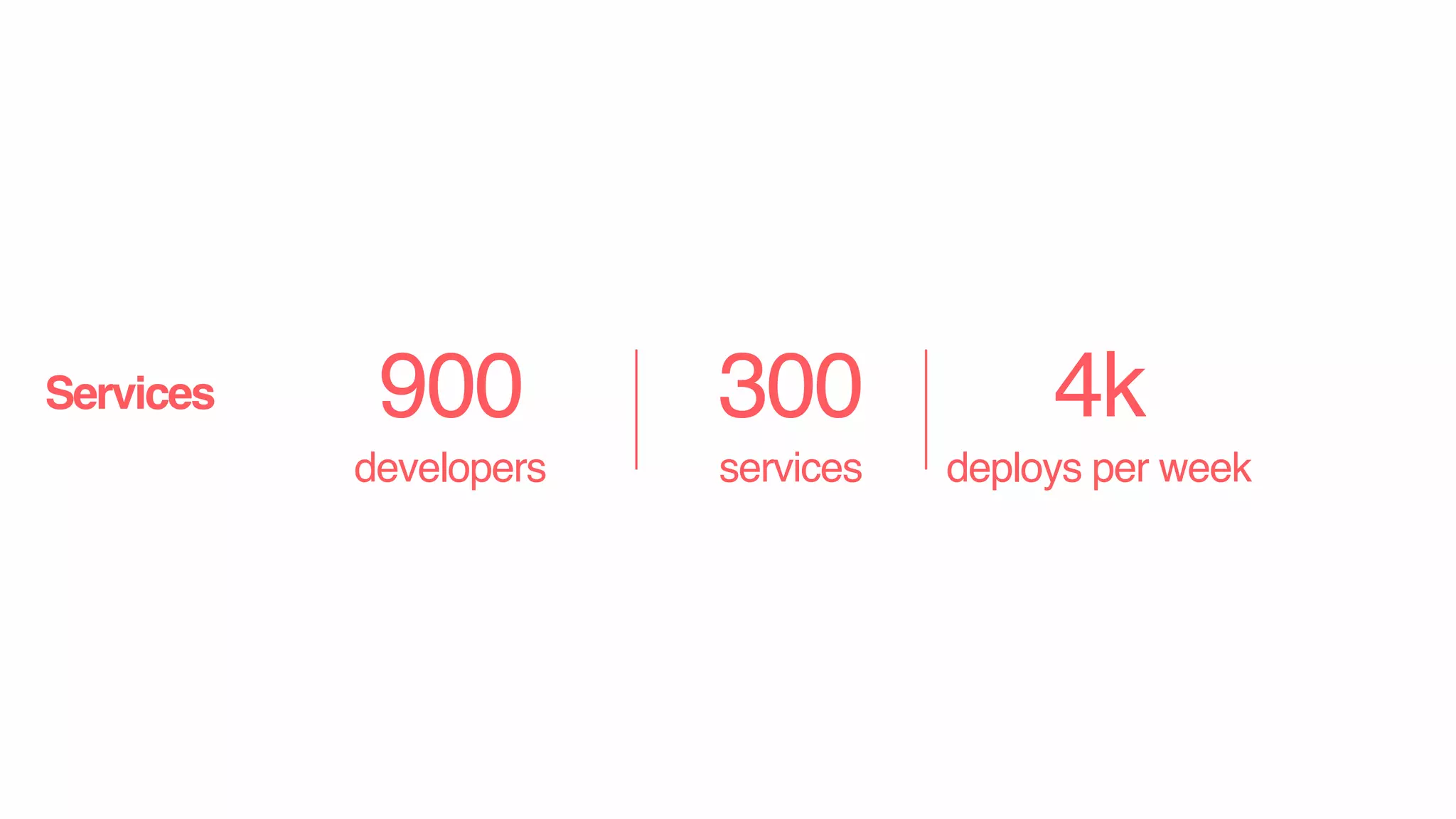
Services 900
developers
300
services
4k
deploys per week
Service Creation Challenges
• Supporting different languages / frameworks
• Services own their own data
• Standardized configuration
• Monitoring with microservices
• Splitting the Monolith into services
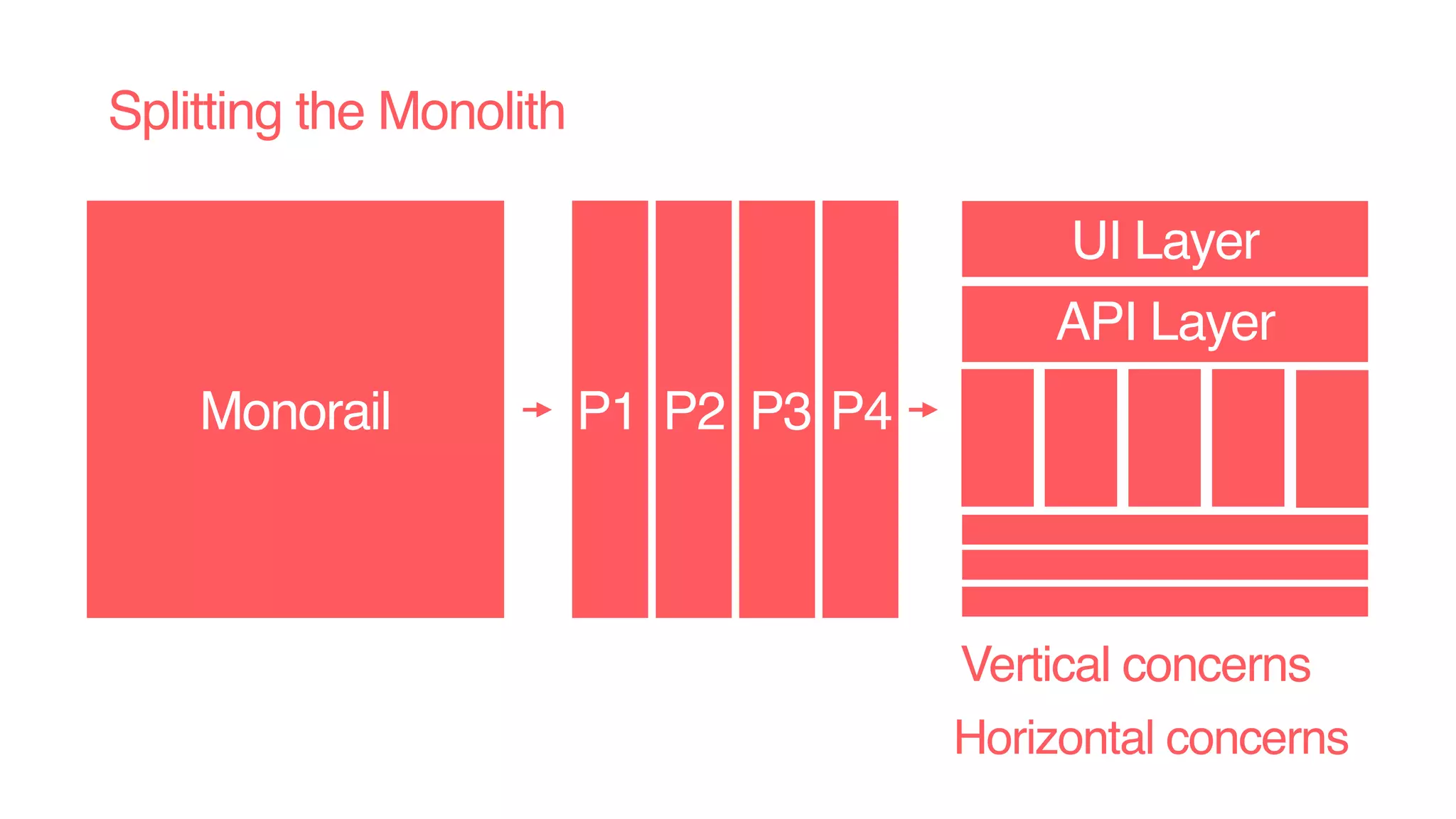
Monorail P1 P2 P3 P4
UI Layer
API Layer
Splitting the Monolith
Vertical concerns
Horizontal concerns
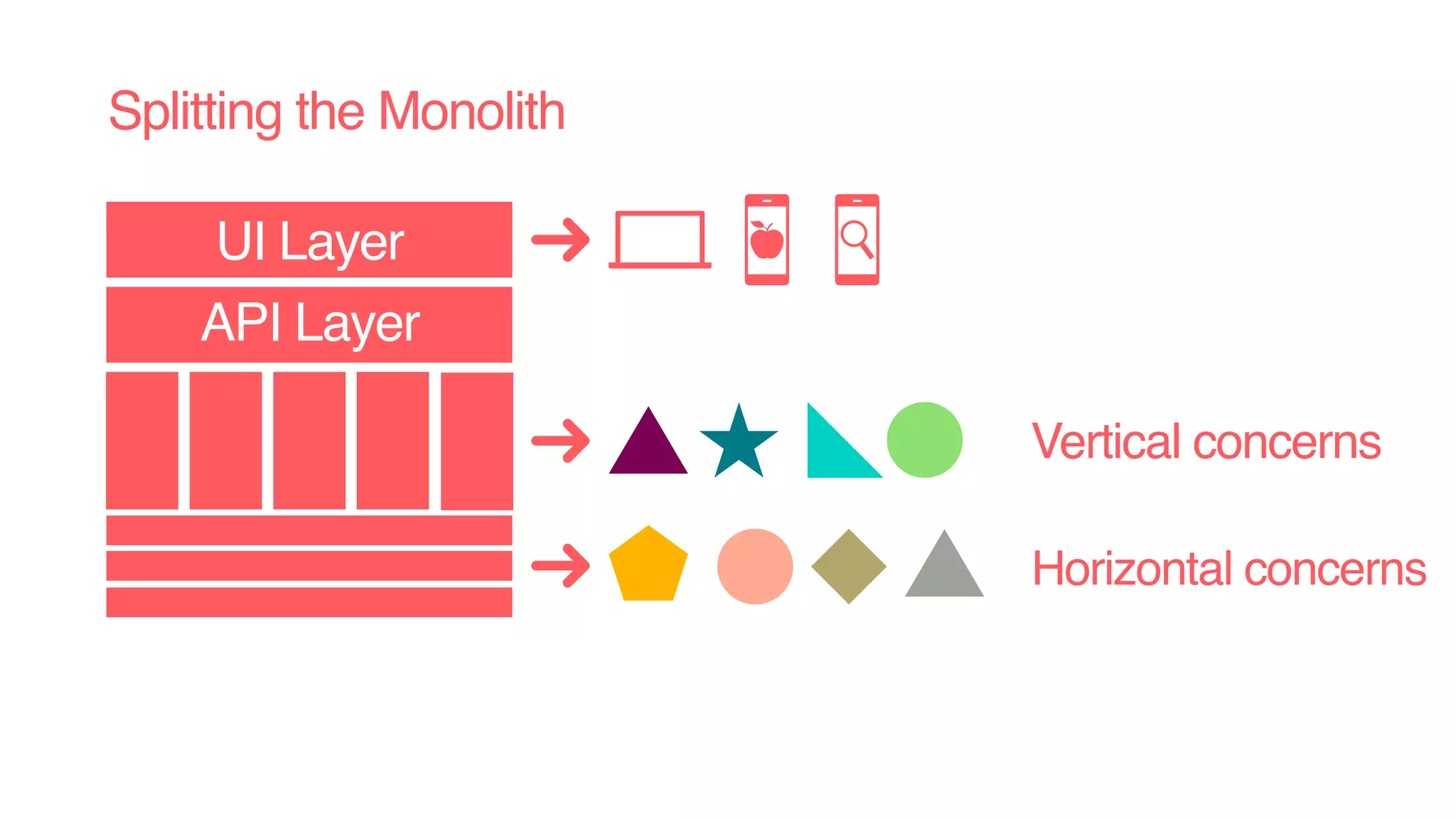
UI Layer
API Layer
Splitting the Monolith
Vertical concerns
Horizontal concerns
Standardize Service Creation
NO SNOWFLAKES
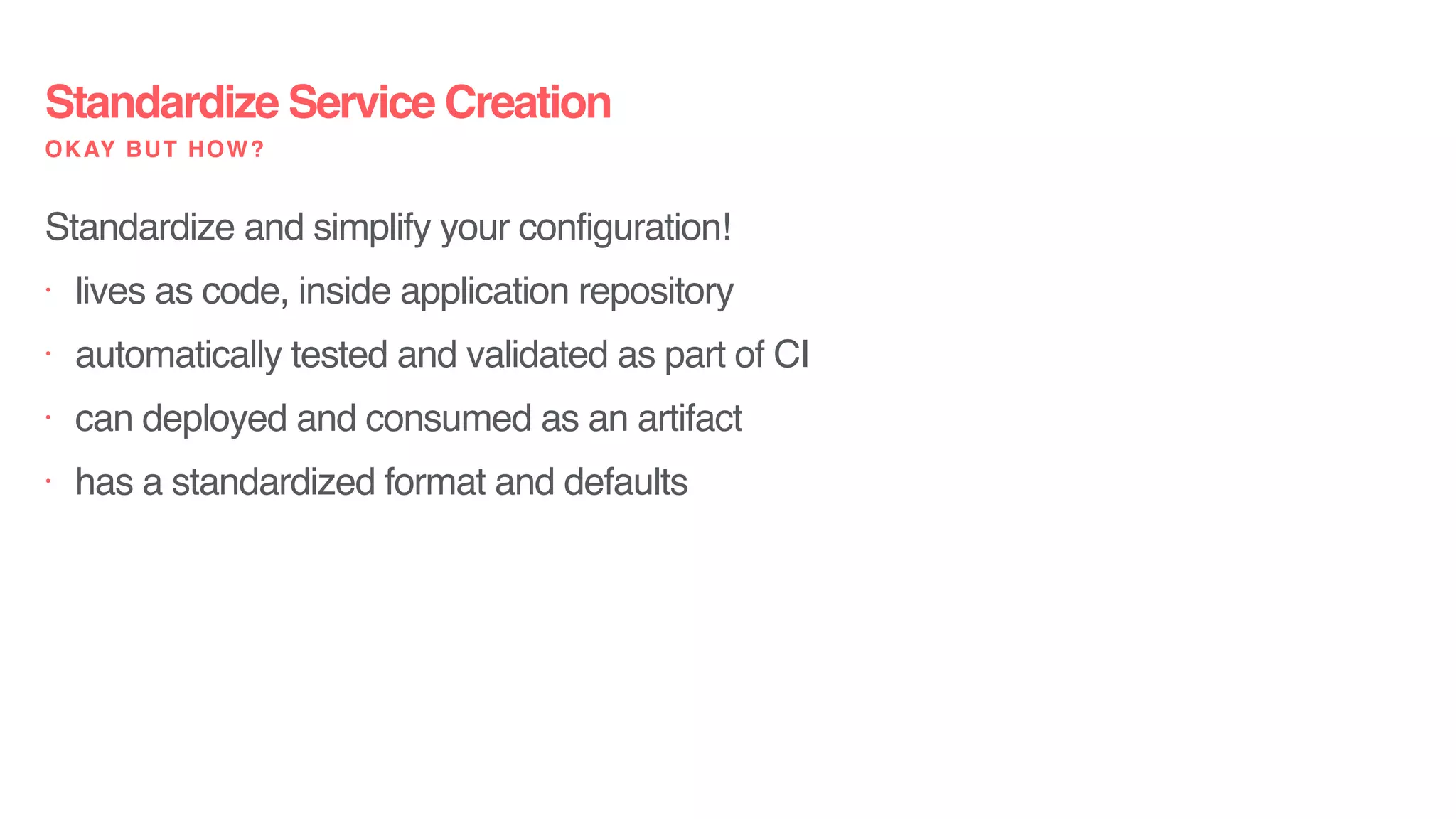
Standardize Service Creation
OKAY BUT HOW?
Standardize and simplify your configuration!
• lives as code, inside application repository
• automatically tested and validated as part of CI
• can deployed and consumed as an artifact
• has a standardized format and defaults
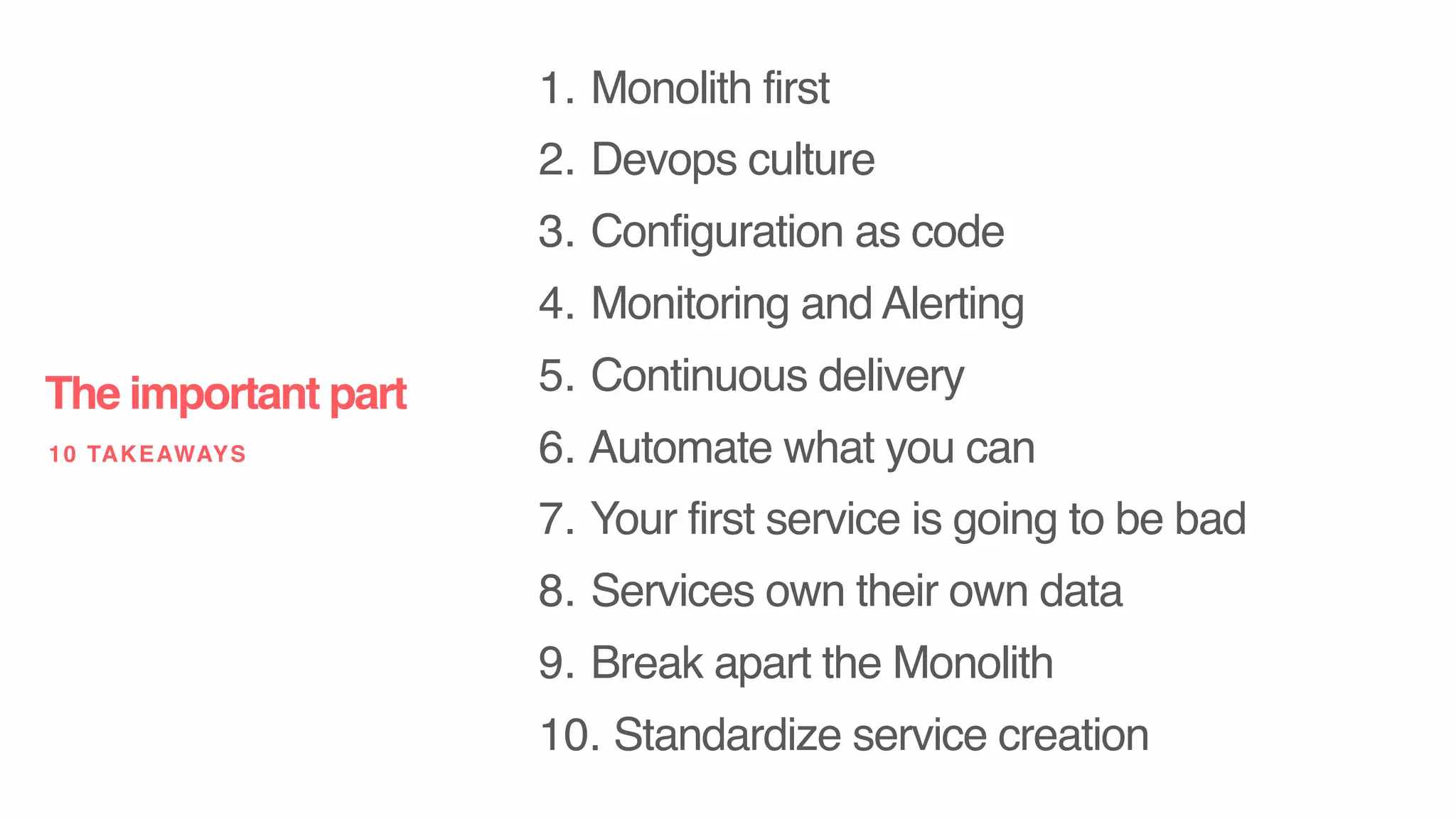
1. Monolith first
2. Devops culture
3. Configuration as code
4. Monitoring and Alerting
5. Continuous delivery
6. Automate what you can
7. Your first service is going to be bad
8. Services own their own data
9. Break apart the Monolith
10. Standardize service creation
The important part
10 TAKEAWAYS
Airbnb, From Monolith to Microservices: How to Scale Your Architecture, FutureStack17

Airbnb, From Monolith to Microservices: How to Scale Your Architecture, FutureStack17