ANCIENT AEGEAN
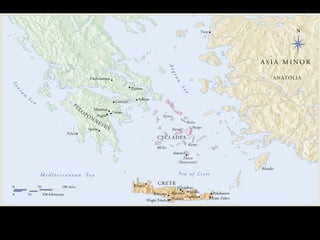
Where are the Cycladic, Minoan, and Mycenaean cultures geographically
located?
What are the main styles of art of each?
What cultures did they influence in later years?
What happened to each of these cultures?
TERMINOLOGY:
Buon Fresco
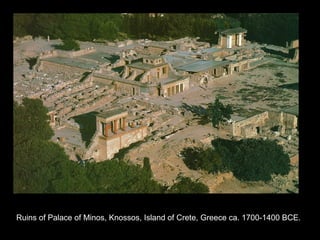
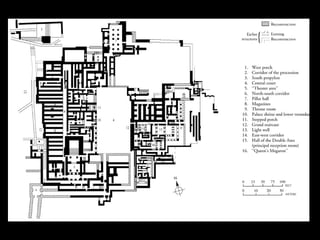
Knossos
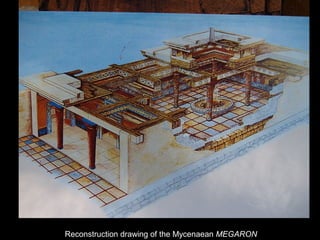
Megaron
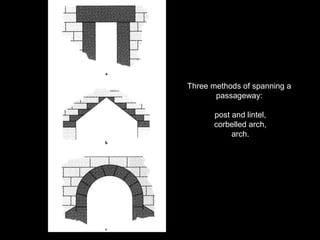
Corbelling
Courses
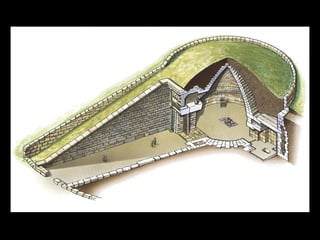
Tholos
Repoussse'
Cycladic: 3000-1600 BC on islands in the Aegean Sea
Minoan: 2000-1200 BC on the island of Crete
Mycenaean: 1400-1100 BC on peninsula of Greece
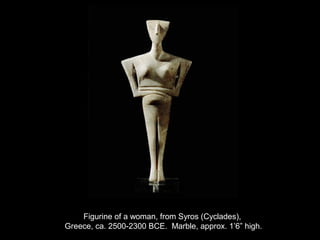
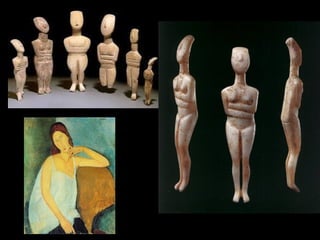
Figurine of a woman, from Syros (Cyclades),
Greece, ca. 2500-2300 BCE. Marble, approx. 1’6” high.
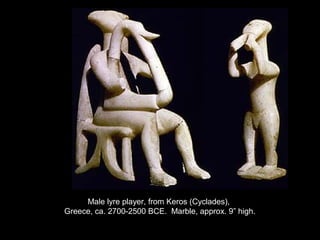
Male lyre player, from Keros (Cyclades),
Greece, ca. 2700-2500 BCE. Marble, approx. 9” high.
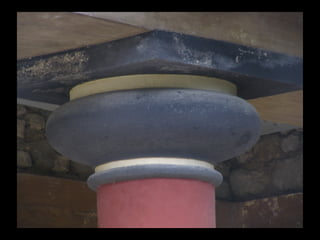
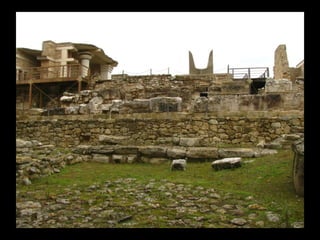
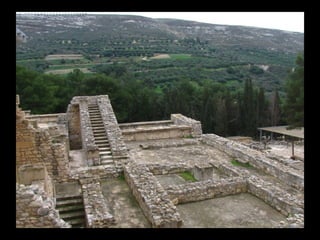
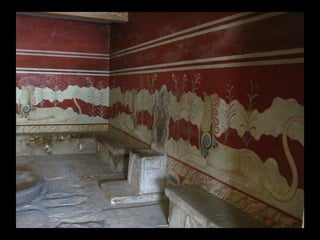
Ruins of Palace of Minos, Knossos, Island of Crete, Greece ca. 1700-1400 BCE.
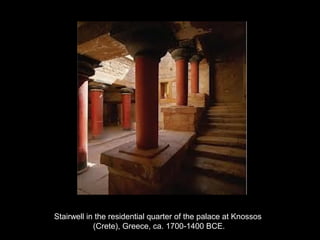
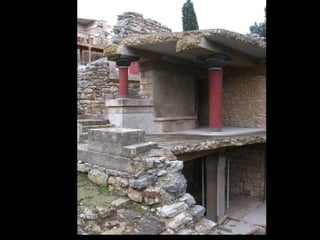
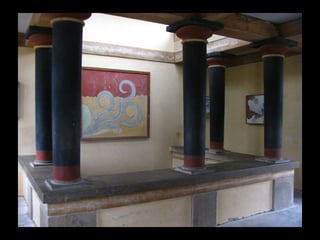
Stairwell in the residential quarter of the palace at Knossos
(Crete), Greece, ca. 1700-1400 BCE.
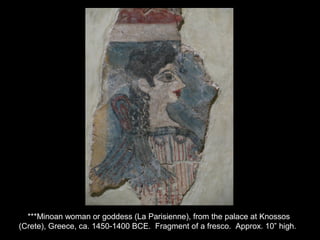
***Minoan woman or goddess (La Parisienne), from the palace at Knossos
(Crete), Greece, ca. 1450-1400 BCE. Fragment of a fresco. Approx. 10” high.
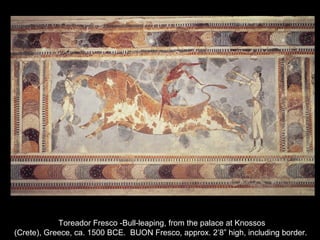
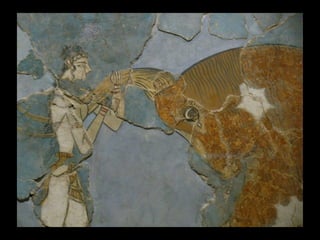
Toreador Fresco -Bull-leaping, from the palace at Knossos
(Crete), Greece, ca. 1500 BCE. BUON Fresco, approx. 2’8” high, including border.
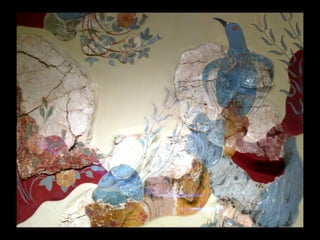
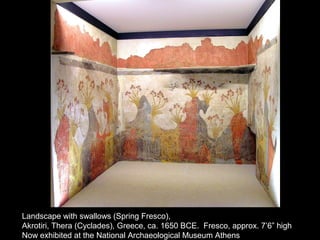
Landscape with swallows (Spring Fresco),
Akrotiri, Thera (Cyclades), Greece, ca. 1650 BCE. Fresco, approx. 7’6” high
Now exhibited at the National Archaeological Museum Athens
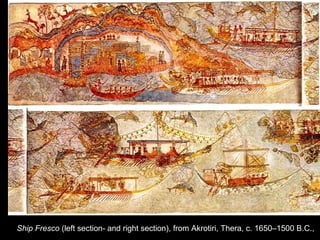
Ship Fresco (left section- and right section), from Akrotiri, Thera, c. 1650–1500 B.C.,
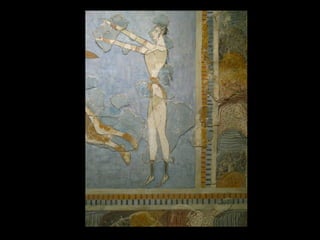
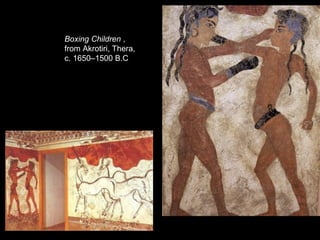
Boxing Children ,
from Akrotiri, Thera,
c. 1650–1500 B.C
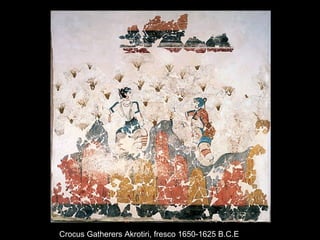
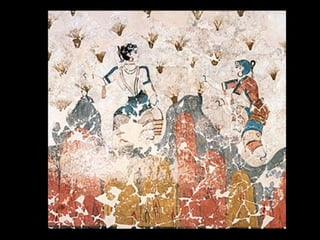
Crocus Gatherers Akrotiri, fresco 1650-1625 B.C.E
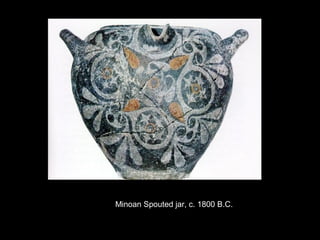
Minoan Spouted jar, c. 1800 B.C.
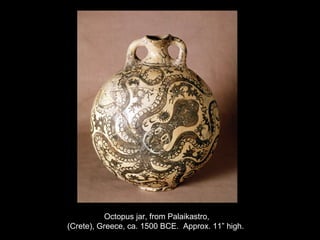
Octopus jar, from Palaikastro,
(Crete), Greece, ca. 1500 BCE. Approx. 11” high.
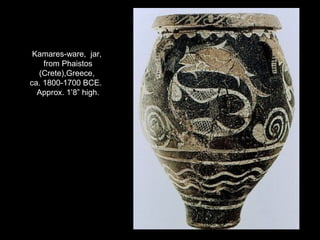
Kamares-ware, jar,
from Phaistos
(Crete),Greece,
ca. 1800-1700 BCE.
Approx. 1’8” high.
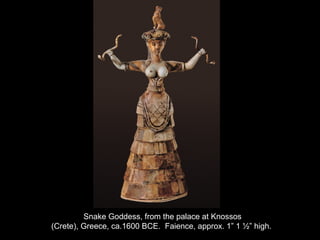
Snake Goddess, from the palace at Knossos
(Crete), Greece, ca.1600 BCE. Faience, approx. 1” 1 ½” high.
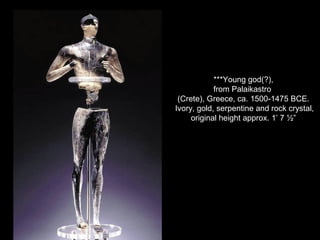
***Young god(?),
from Palaikastro
(Crete), Greece, ca. 1500-1475 BCE.
Ivory, gold, serpentine and rock crystal,
original height approx. 1’ 7 ½”
Reconstruction drawing of the Mycenaean MEGARON
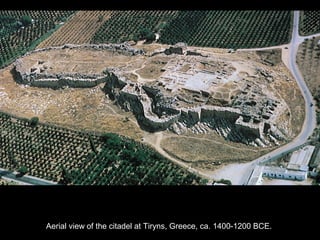
Aerial view of the citadel at Tiryns, Greece, ca. 1400-1200 BCE.
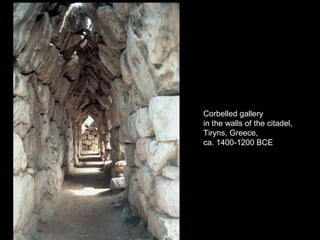
Corbelled gallery
in the walls of the citadel,
Tiryns, Greece,
ca. 1400-1200 BCE
Three methods of spanning a
passageway:
post and lintel,
corbelled arch,
arch.
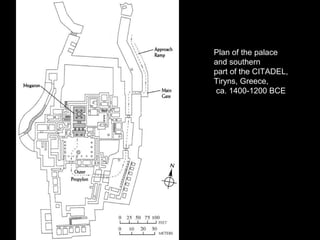
Plan of the palace
and southern
part of the CITADEL,
Tiryns, Greece,
ca. 1400-1200 BCE
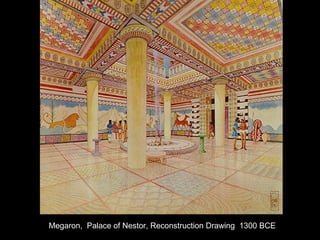
Megaron, Palace of Nestor, Reconstruction Drawing 1300 BCE
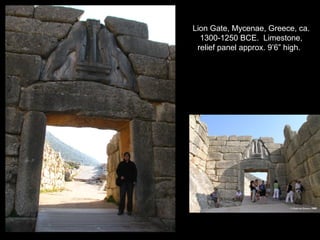
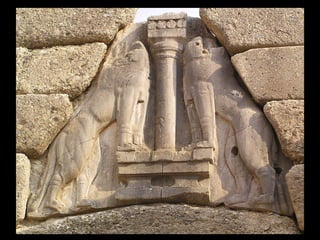
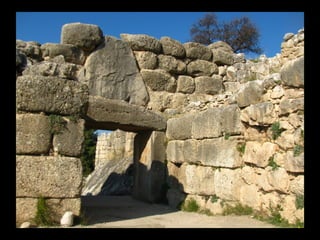
Lion Gate, Mycenae, Greece, ca.
1300-1250 BCE. Limestone,
relief panel approx. 9’6” high.
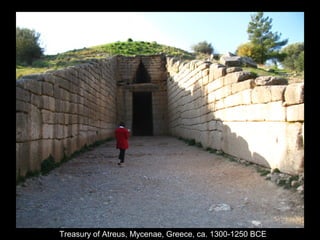
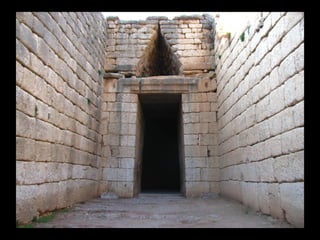
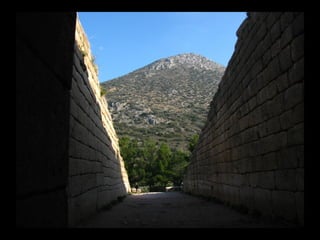
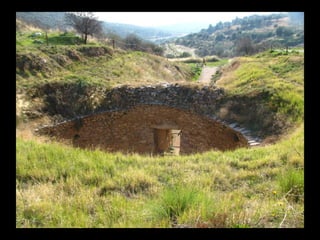
Treasury of Atreus, Mycenae, Greece, ca. 1300-1250 BCE
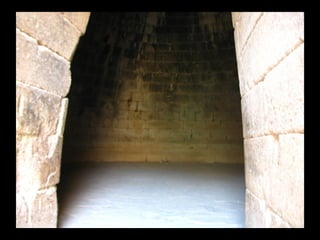
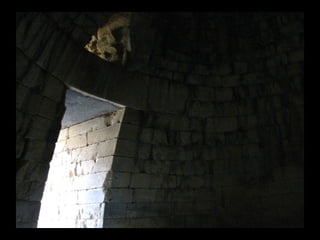
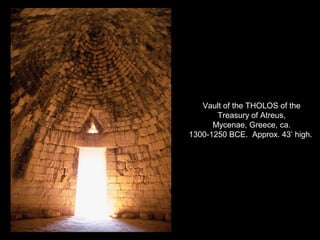
Vault of the THOLOS of the
Treasury of Atreus,
Mycenae, Greece, ca.
1300-1250 BCE. Approx. 43’ high.
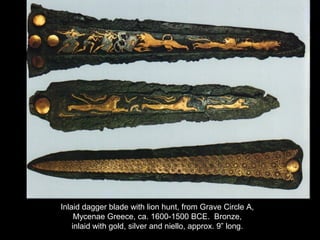
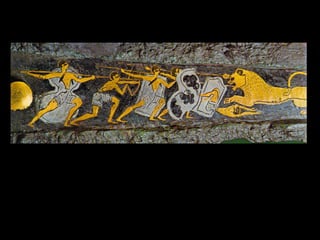
Inlaid dagger blade with lion hunt, from Grave Circle A,
Mycenae Greece, ca. 1600-1500 BCE. Bronze,
inlaid with gold, silver and niello, approx. 9” long.
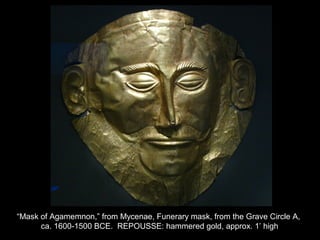
“Mask of Agamemnon,” from Mycenae, Funerary mask, from the Grave Circle A,
ca. 1600-1500 BCE. REPOUSSE: hammered gold, approx. 1’ high
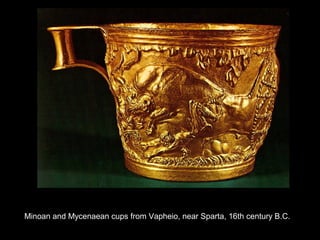
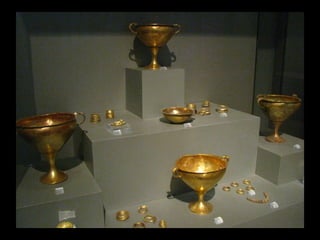
Minoan and Mycenaean cups from Vapheio, near Sparta, 16th century B.C.
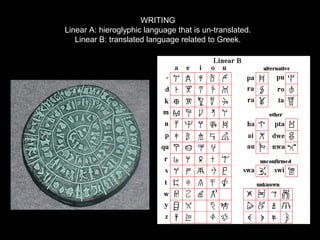
WRITING
Linear A: hieroglyphic language that is un-translated.
Linear B: translated language related to Greek.

Ah ch6 Aegean