FUTURE FARMING
WITH
ROBOTICS AGRICULTURE
BY SURJEET SINGH RANA
CONTENT
 INTRODUCTION
 FUTURE FARMING WITH ROBOTICS
AGRICULTURE
 HOW ROBOT WORKS
 TYPES OF ROBOT
 NEED ROBOTIC AGRICULTURE
 ROBOT USED IN AGRICULTURE
 ROBOT FARMING IN AGRICULTURE
 FUTURE SCOPE
 APPLICATIONS
 ADVANTAGES
 DISADVANTAGES
 CONCLUSION
 REFERENCE
 INTRODUCTION
A machine that works automatically and can do some tasks that a
human can do.
A robot is a mechanical , artificial agent And is
usually electromechanical system.
It is a divice that, because of software programming makes
complicated task easy to perform.
In making of this, we can required some things for programming it
such as use of iot , machine learning and artificial intelligence.
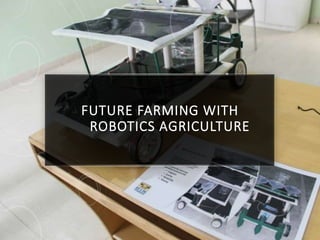
FUTURE FARMING WITH
ROBOTICS AGRICULTURE
 HOW ROBOTS WORK
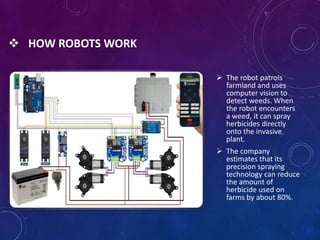
 The robot patrols
farmland and uses
computer vision to
detect weeds. When
the robot encounters
a weed, it can spray
herbicides directly
onto the invasive
plant.
 The company
estimates that its
precision spraying
technology can reduce
the amount of
herbicide used on
farms by about 80%.
 TYPES OF ROBOTS
 Crop-Harvesting Robot.
 Harvest Automation.
 Weeding Robots.
 Naio Technologies.
 Nexus Robotics.
 Robotic Greenhouses & Robot Farming.
 NEED ROBOTIC
AGRICULTURE
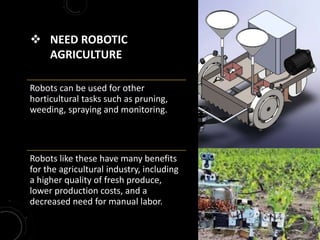
Robots can be used for other
horticultural tasks such as pruning,
weeding, spraying and monitoring.
Robots like these have many benefits
for the agricultural industry, including
a higher quality of fresh produce,
lower production costs, and a
decreased need for manual labor.
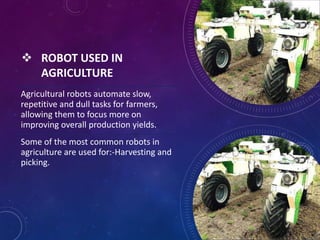
 ROBOT USED IN
AGRICULTURE
Agricultural robots automate slow,
repetitive and dull tasks for farmers,
allowing them to focus more on
improving overall production yields.
Some of the most common robots in
agriculture are used for:-Harvesting and
picking.
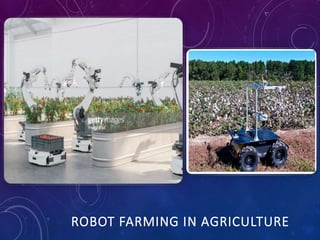
ROBOT FARMING IN AGRICULTURE
FUTURE SCOPE
 TO PREVENT, CONTROL AND CONTAIN DISEASES, VECTORS AND
PESTS IN ORDER TO ENHANCE AGRICULTURAL PRODUCTION AND
PRODUCTIVITY.
 TO PROMOTE THE DEVELOPMENT OF SUSTAINABLE DOMESTIC
AND FOREIGN MARKETS FOR AGRICULTURAL COMMODITIES IN
ORDER TO ENHANCE ACCESS AND GENERATION OF INCOME.
 APPLICATIONS
Agricultural robots automate
slow, repetitive and dull tasks for
farmers, allowing them to focus
more on improving overall
production yields. Some of the
most common robots in
agriculture are used for:
Harvesting and picking
Autonomous mowing, pruning,
seeding, spraying and thinning
Sorting and packing Utility platforms
 ADVANTAGES
 The robots can reduce up to 80% of farm’s use of pesticide.
 The robots may perform more or different tasks in the future.
 The robots can create the jobs for the people who have to
make the robots and who have to fix the robots.
 The robots have many fields of application in the agriculture
such as the Merlin Robot Milker, Rosphere, Harvest
Automation, Orange Harvester, lettuce bot, and the weeder,
Another field of application is the horticulture, One
horticultural application is the development of RV 100 by
Harvest Automation Inc.
 DISADVANTAGES
They Lead Humans to Lose Their Jobs.
They Need Constant Power.
They're Restricted to their Programming.
The Perform Relatively Few Tasks.
They Have No Emotions.
They Impacts Human Interaction.
They Require Expertise to Set Them Up.
They're Expensive to Install and Run.
 CONCLUSION
 In agriculture, the opportunities
for robot enhanced productivity
are immense and the robots are
appearing on farms in various
guises and in increasing
numbers. The other problems
associated with
autonomous farm equipment
can probably be overcome with
technology.
REFERENCE
• https://youtu.be/jvbIvtwEDTY
• https://youtu.be/Xr4aBFUzLmw
• https://images.app.goo.gl/KX4Zy31c8D6DAwU
v5
THANK YOU

AGRICULTURAL ROBOT FOR FUTURE FARMING

  • 1.
  • 2.
    CONTENT  INTRODUCTION  FUTUREFARMING WITH ROBOTICS AGRICULTURE  HOW ROBOT WORKS  TYPES OF ROBOT  NEED ROBOTIC AGRICULTURE  ROBOT USED IN AGRICULTURE  ROBOT FARMING IN AGRICULTURE  FUTURE SCOPE  APPLICATIONS  ADVANTAGES  DISADVANTAGES  CONCLUSION  REFERENCE
  • 3.
     INTRODUCTION A machinethat works automatically and can do some tasks that a human can do. A robot is a mechanical , artificial agent And is usually electromechanical system. It is a divice that, because of software programming makes complicated task easy to perform. In making of this, we can required some things for programming it such as use of iot , machine learning and artificial intelligence.
  • 4.
  • 5.
     HOW ROBOTSWORK  The robot patrols farmland and uses computer vision to detect weeds. When the robot encounters a weed, it can spray herbicides directly onto the invasive plant.  The company estimates that its precision spraying technology can reduce the amount of herbicide used on farms by about 80%.
  • 6.
     TYPES OFROBOTS  Crop-Harvesting Robot.  Harvest Automation.  Weeding Robots.  Naio Technologies.  Nexus Robotics.  Robotic Greenhouses & Robot Farming.
  • 7.
     NEED ROBOTIC AGRICULTURE Robotscan be used for other horticultural tasks such as pruning, weeding, spraying and monitoring. Robots like these have many benefits for the agricultural industry, including a higher quality of fresh produce, lower production costs, and a decreased need for manual labor.
  • 8.
     ROBOT USEDIN AGRICULTURE Agricultural robots automate slow, repetitive and dull tasks for farmers, allowing them to focus more on improving overall production yields. Some of the most common robots in agriculture are used for:-Harvesting and picking.
  • 9.
    ROBOT FARMING INAGRICULTURE
  • 10.
    FUTURE SCOPE  TOPREVENT, CONTROL AND CONTAIN DISEASES, VECTORS AND PESTS IN ORDER TO ENHANCE AGRICULTURAL PRODUCTION AND PRODUCTIVITY.  TO PROMOTE THE DEVELOPMENT OF SUSTAINABLE DOMESTIC AND FOREIGN MARKETS FOR AGRICULTURAL COMMODITIES IN ORDER TO ENHANCE ACCESS AND GENERATION OF INCOME.
  • 11.
     APPLICATIONS Agricultural robotsautomate slow, repetitive and dull tasks for farmers, allowing them to focus more on improving overall production yields. Some of the most common robots in agriculture are used for: Harvesting and picking Autonomous mowing, pruning, seeding, spraying and thinning Sorting and packing Utility platforms
  • 12.
     ADVANTAGES  Therobots can reduce up to 80% of farm’s use of pesticide.  The robots may perform more or different tasks in the future.  The robots can create the jobs for the people who have to make the robots and who have to fix the robots.  The robots have many fields of application in the agriculture such as the Merlin Robot Milker, Rosphere, Harvest Automation, Orange Harvester, lettuce bot, and the weeder, Another field of application is the horticulture, One horticultural application is the development of RV 100 by Harvest Automation Inc.
  • 13.
     DISADVANTAGES They LeadHumans to Lose Their Jobs. They Need Constant Power. They're Restricted to their Programming. The Perform Relatively Few Tasks. They Have No Emotions. They Impacts Human Interaction. They Require Expertise to Set Them Up. They're Expensive to Install and Run.
  • 14.
     CONCLUSION  Inagriculture, the opportunities for robot enhanced productivity are immense and the robots are appearing on farms in various guises and in increasing numbers. The other problems associated with autonomous farm equipment can probably be overcome with technology.
  • 15.
  • 16.