

The API Lifecycle Series – Part 1
Evolving API Development and Testing:
From Open Source to Pro Tooling
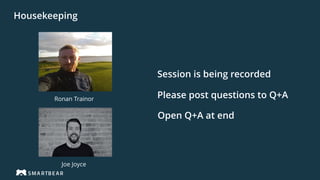
Housekeeping
Proprietary & Confidential
Session is being recorded
Please post questions to Q+A
Open Q+A at end
Ronan Trainor
Joe Joyce
3
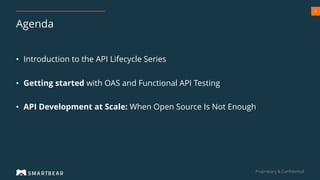
• Introduction to the API Lifecycle Series
• Getting started with OAS and Functional API Testing
• API Development at Scale: When Open Source Is Not Enough
Proprietary & Confidential
Agenda
Introduction to the API Lifecycle
Series
5
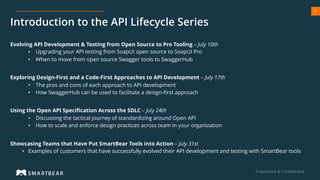
Evolving API Development & Testing from Open Source to Pro Tooling – July 10th
• Upgrading your API testing from SoapUI open source to SoapUI Pro
• When to move from open source Swagger tools to SwaggerHub
Exploring Design-First and a Code-First Approaches to API Development – July 17th
• The pros and cons of each approach to API development
• How SwaggerHub can be used to facilitate a design-first approach
Using the Open API Specification Across the SDLC – July 24th
• Discussing the tactical journey of standardizing around Open API
• How to scale and enforce design practices across team in your organization
Showcasing Teams that Have Put SmartBear Tools into Action – July 31st
• Examples of customers that have successfully evolved their API development and testing with SmartBear tools
Proprietary & Confidential
Introduction to the API Lifecycle Series
Getting started with OAS and
Functional API Testing
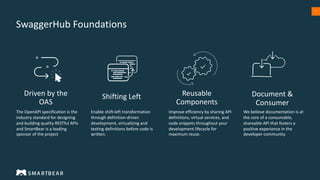
SwaggerHub Foundations
Reusable
Components
Shifting LeftDriven by the
OAS
Document &
Consumer
Proprietary & Confidential
7
The OpenAPI specification is the
industry standard for designing
and building quality RESTful APIs
and SmartBear is a leading
sponsor of the project
Enable shift-left transformation
through definition-driven
development, virtualizing and
testing definitions before code is
written.
Improve efficiency by sharing API
definitions, virtual services, and
code snippets throughout your
development lifecycle for
maximum reuse.
We believe documentation is at
the core of a consumable,
shareable API that fosters a
positive experience in the
developer community.
8
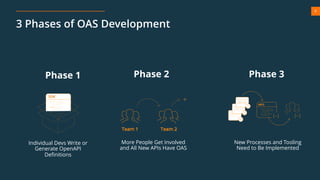
Phase 1
Individual Devs Write or
Generate OpenAPI
Definitions
Phase 2
More People Get Involved
and All New APIs Have OAS
Phase 3
New Processes and Tooling
Need to Be Implemented
3 Phases of OAS Development
9
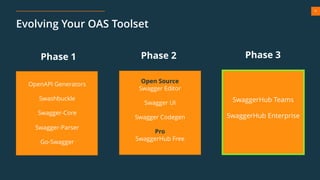
Evolving Your OAS Toolset
Phase 1 Phase 2 Phase 3
OpenAPI Generators
Swashbuckle
Swagger-Core
Swagger-Parser
Go-Swagger
Open Source
Swagger Editor
Swagger UI
Swagger Codegen
Pro
SwaggerHub Free
SwaggerHub Teams
SwaggerHub Enterprise
10
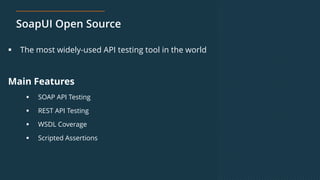
SoapUI Open Source
Main Features
§ SOAP API Testing
§ REST API Testing
§ WSDL Coverage
§ Scripted Assertions
§ The most widely-used API testing tool in the world
11
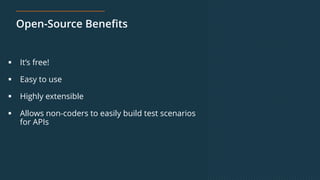
Open-Source Benefits
§ It’s free!
§ Easy to use
§ Highly extensible
§ Allows non-coders to easily build test scenarios
for APIs
12
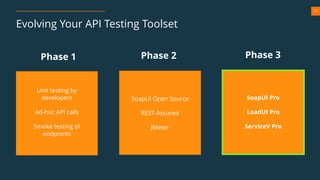
Evolving Your API Testing Toolset
Phase 1 Phase 2 Phase 3
Unit testing by
developers
Ad-hoc API calls
Smoke testing of
endpoints
SoapUI Open Source
REST-Assured
JMeter
SoapUI Pro
LoadUI Pro
ServiceV Pro
OAS Development at Scale: When
Open Source Is Not Enough
14
OAS Development Challenges
Challenge 1: Too many versions of too many specs in too
many places
Challenge 2: Too many people/teams involved that need
to collaborate and share
Challenge 3: Loss of control and visibility into API design
process
Challenge 4: Integrating API development into existing
delivery pipeline
15
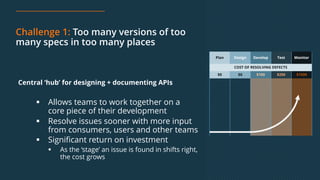
Challenge 1: Too many versions of too
many specs in too many places
Central ‘hub’ for designing + documenting APIs
§ Allows teams to work together on a
core piece of their development
§ Resolve issues sooner with more input
from consumers, users and other teams
§ Significant return on investment
§ As the ‘stage’ an issue is found in shifts right,
the cost grows
Plan Design Develop Test Monitor
$0 $0 $100 $250 $1500
COST OF RESOLVING DEFECTS
16
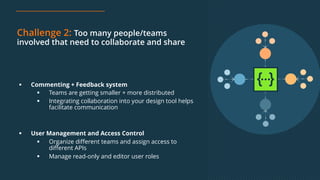
Challenge 2: Too many people/teams
involved that need to collaborate and share
§ Commenting + Feedback system
§ Teams are getting smaller + more distributed
§ Integrating collaboration into your design tool helps
facilitate communication
§ User Management and Access Control
§ Organize different teams and assign access to
different APIs
§ Manage read-only and editor user roles
{ }…
17
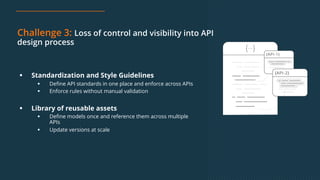
Challenge 3: Loss of control and visibility into API
design process
§ Standardization and Style Guidelines
§ Define API standards in one place and enforce across APIs
§ Enforce rules without manual validation
§ Library of reusable assets
§ Define models once and reference them across multiple
APIs
§ Update versions at scale
18
Challenge 4: Integrating API development
into existing delivery pipeline
§ Sync with Source Control
§ Keep source code in sync with API designs
§ Push to API Gateway
§ Push APIs to API gateways like Azure, AWS, and Apigee for
consumption
§ Enable CI/CD Process
§ Leverage your API contract in your CI/CD pipeline
19
API Testing: When Open Source is
Not Enough
20
When Dynamic Test Data is Needed
§ Connect your test cases to external data sources
§ Excel / CSV / JSON / database tables and more
§ Reuse test cases
§ Improve test coverage
21
When Multiple Environments Need to
be Tested
§ Reuse test cases across different environments
§ Switch environments through the UI or
programmatically
§ Increased test coverage, faster
22
When You Need To Run Your Tests in
a CI / CD Pipeline
§ Native integrations with popular CI tools
§ Include your API tests in deployments and builds
§ Improved automation across the lifecycle
23
Other Pro benefits…
§ Faster assertions
§ REST Refactoring
§ Reporting (JUnit, pdf, Allure)
24
Questions?
Thank You!
Join our next session on Wednesday, July 17th
Exploring Design-First and Code-First Approaches to API Development

The API Lifecycle Series: Evolving API Development and Testing from Open Source to Pro Tooling

  • 1.
    The API LifecycleSeries – Part 1 Evolving API Development and Testing: From Open Source to Pro Tooling
  • 2.
    Housekeeping Proprietary & Confidential Sessionis being recorded Please post questions to Q+A Open Q+A at end Ronan Trainor Joe Joyce
  • 3.
    3 • Introduction tothe API Lifecycle Series • Getting started with OAS and Functional API Testing • API Development at Scale: When Open Source Is Not Enough Proprietary & Confidential Agenda
  • 4.
    Introduction to theAPI Lifecycle Series
  • 5.
    5 Evolving API Development& Testing from Open Source to Pro Tooling – July 10th • Upgrading your API testing from SoapUI open source to SoapUI Pro • When to move from open source Swagger tools to SwaggerHub Exploring Design-First and a Code-First Approaches to API Development – July 17th • The pros and cons of each approach to API development • How SwaggerHub can be used to facilitate a design-first approach Using the Open API Specification Across the SDLC – July 24th • Discussing the tactical journey of standardizing around Open API • How to scale and enforce design practices across team in your organization Showcasing Teams that Have Put SmartBear Tools into Action – July 31st • Examples of customers that have successfully evolved their API development and testing with SmartBear tools Proprietary & Confidential Introduction to the API Lifecycle Series
  • 6.
    Getting started withOAS and Functional API Testing
  • 7.
    SwaggerHub Foundations Reusable Components Shifting LeftDrivenby the OAS Document & Consumer Proprietary & Confidential 7 The OpenAPI specification is the industry standard for designing and building quality RESTful APIs and SmartBear is a leading sponsor of the project Enable shift-left transformation through definition-driven development, virtualizing and testing definitions before code is written. Improve efficiency by sharing API definitions, virtual services, and code snippets throughout your development lifecycle for maximum reuse. We believe documentation is at the core of a consumable, shareable API that fosters a positive experience in the developer community.
  • 8.
    8 Phase 1 Individual DevsWrite or Generate OpenAPI Definitions Phase 2 More People Get Involved and All New APIs Have OAS Phase 3 New Processes and Tooling Need to Be Implemented 3 Phases of OAS Development
  • 9.
    9 Evolving Your OASToolset Phase 1 Phase 2 Phase 3 OpenAPI Generators Swashbuckle Swagger-Core Swagger-Parser Go-Swagger Open Source Swagger Editor Swagger UI Swagger Codegen Pro SwaggerHub Free SwaggerHub Teams SwaggerHub Enterprise
  • 10.
    10 SoapUI Open Source MainFeatures § SOAP API Testing § REST API Testing § WSDL Coverage § Scripted Assertions § The most widely-used API testing tool in the world
  • 11.
    11 Open-Source Benefits § It’sfree! § Easy to use § Highly extensible § Allows non-coders to easily build test scenarios for APIs
  • 12.
    12 Evolving Your APITesting Toolset Phase 1 Phase 2 Phase 3 Unit testing by developers Ad-hoc API calls Smoke testing of endpoints SoapUI Open Source REST-Assured JMeter SoapUI Pro LoadUI Pro ServiceV Pro
  • 13.
    OAS Development atScale: When Open Source Is Not Enough
  • 14.
    14 OAS Development Challenges Challenge1: Too many versions of too many specs in too many places Challenge 2: Too many people/teams involved that need to collaborate and share Challenge 3: Loss of control and visibility into API design process Challenge 4: Integrating API development into existing delivery pipeline
  • 15.
    15 Challenge 1: Toomany versions of too many specs in too many places Central ‘hub’ for designing + documenting APIs § Allows teams to work together on a core piece of their development § Resolve issues sooner with more input from consumers, users and other teams § Significant return on investment § As the ‘stage’ an issue is found in shifts right, the cost grows Plan Design Develop Test Monitor $0 $0 $100 $250 $1500 COST OF RESOLVING DEFECTS
  • 16.
    16 Challenge 2: Toomany people/teams involved that need to collaborate and share § Commenting + Feedback system § Teams are getting smaller + more distributed § Integrating collaboration into your design tool helps facilitate communication § User Management and Access Control § Organize different teams and assign access to different APIs § Manage read-only and editor user roles { }…
  • 17.
    17 Challenge 3: Lossof control and visibility into API design process § Standardization and Style Guidelines § Define API standards in one place and enforce across APIs § Enforce rules without manual validation § Library of reusable assets § Define models once and reference them across multiple APIs § Update versions at scale
  • 18.
    18 Challenge 4: IntegratingAPI development into existing delivery pipeline § Sync with Source Control § Keep source code in sync with API designs § Push to API Gateway § Push APIs to API gateways like Azure, AWS, and Apigee for consumption § Enable CI/CD Process § Leverage your API contract in your CI/CD pipeline
  • 19.
    19 API Testing: WhenOpen Source is Not Enough
  • 20.
    20 When Dynamic TestData is Needed § Connect your test cases to external data sources § Excel / CSV / JSON / database tables and more § Reuse test cases § Improve test coverage
  • 21.
    21 When Multiple EnvironmentsNeed to be Tested § Reuse test cases across different environments § Switch environments through the UI or programmatically § Increased test coverage, faster
  • 22.
    22 When You NeedTo Run Your Tests in a CI / CD Pipeline § Native integrations with popular CI tools § Include your API tests in deployments and builds § Improved automation across the lifecycle
  • 23.
    23 Other Pro benefits… §Faster assertions § REST Refactoring § Reporting (JUnit, pdf, Allure)
  • 24.
    24 Questions? Thank You! Join ournext session on Wednesday, July 17th Exploring Design-First and Code-First Approaches to API Development