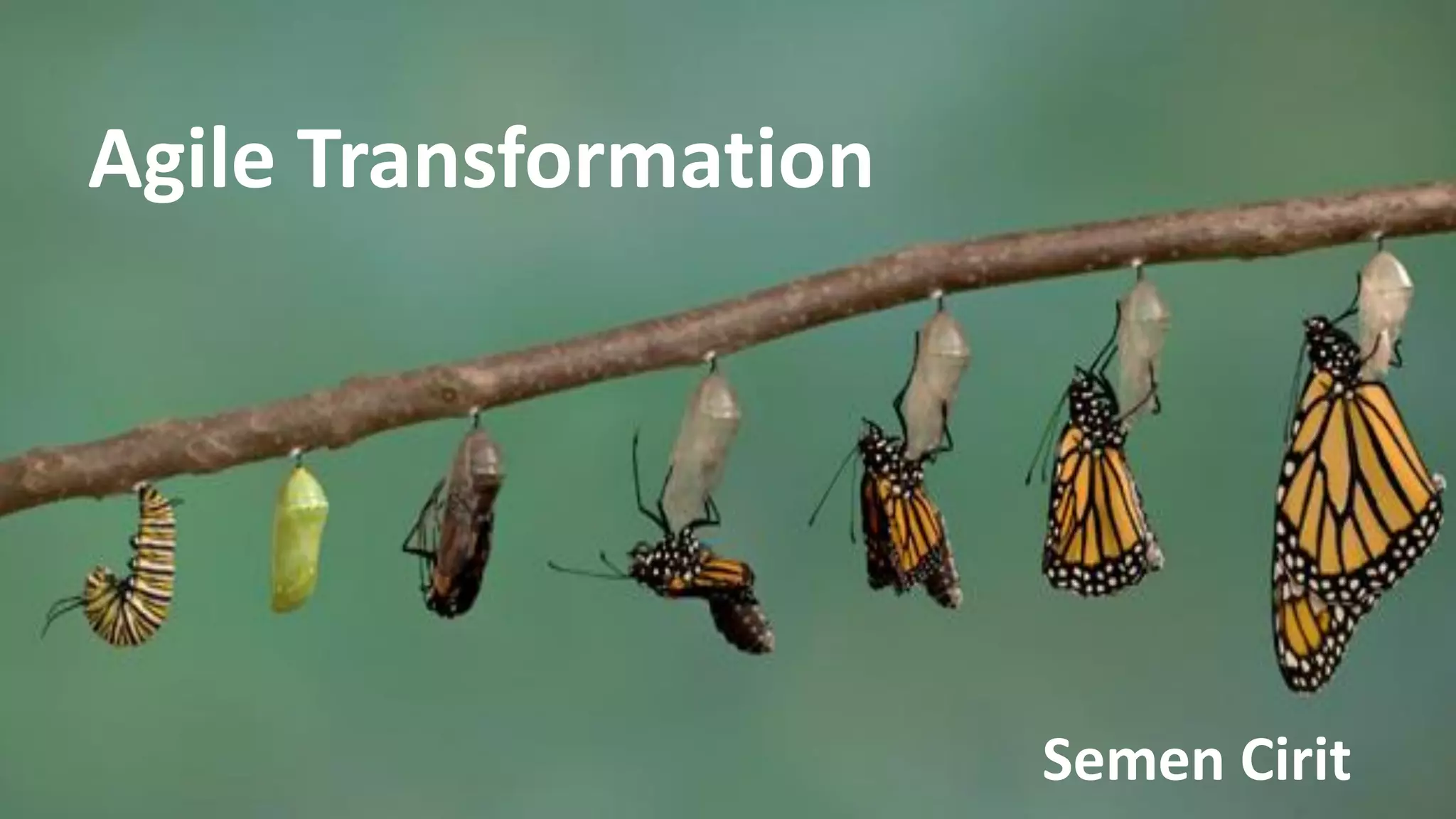
Agile Transformation
Semen Cirit
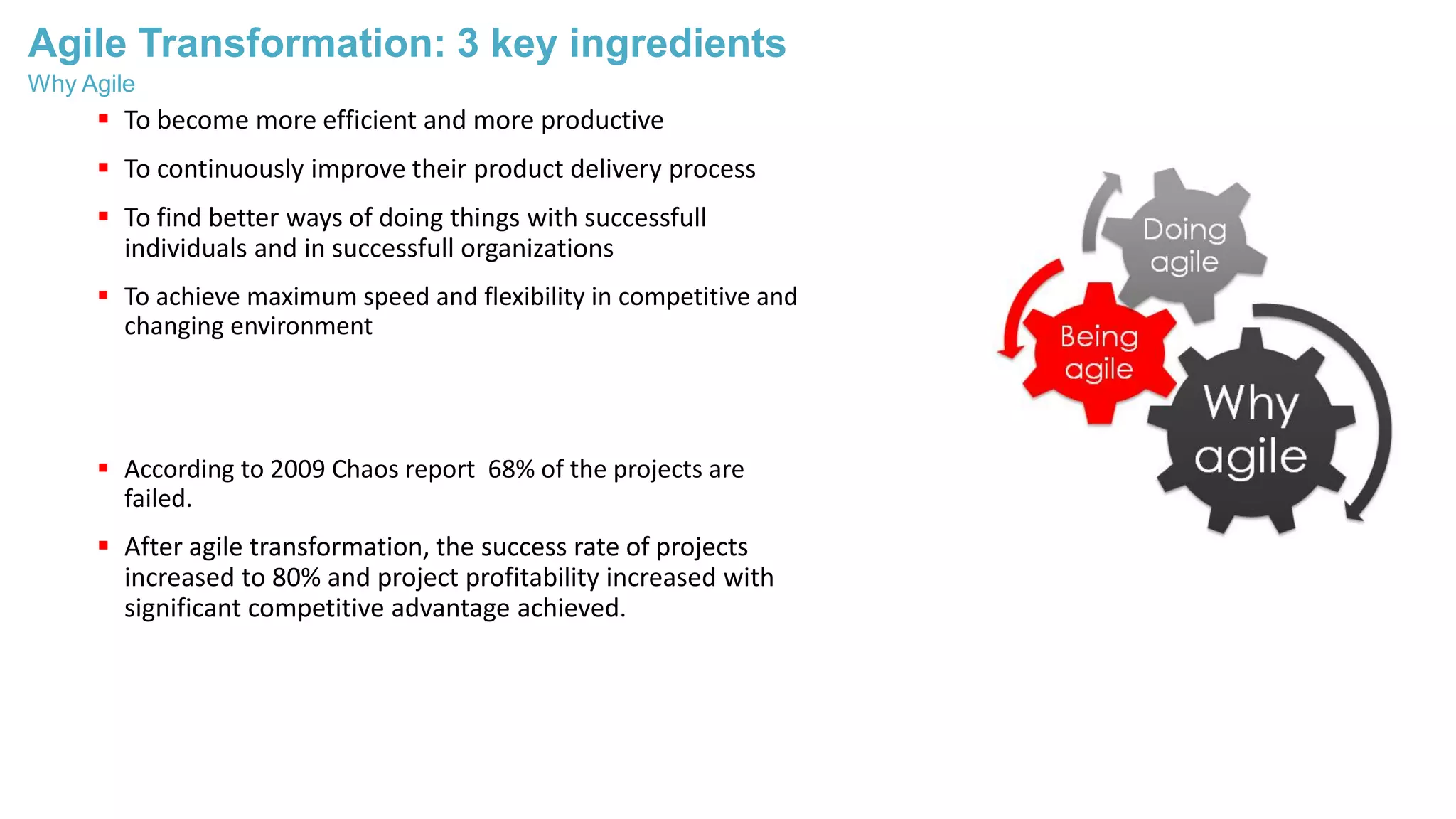
Agile Transformation: 3 key ingredients
 To become more efficient and more productive
 To continuously improve their product delivery process
 To find better ways of doing things with successfull
individuals and in successfull organizations
 To achieve maximum speed and flexibility in competitive and
changing environment
 According to 2009 Chaos report 68% of the projects are
failed.
 After agile transformation, the success rate of projects
increased to 80% and project profitability increased with
significant competitive advantage achieved.
Why Agile
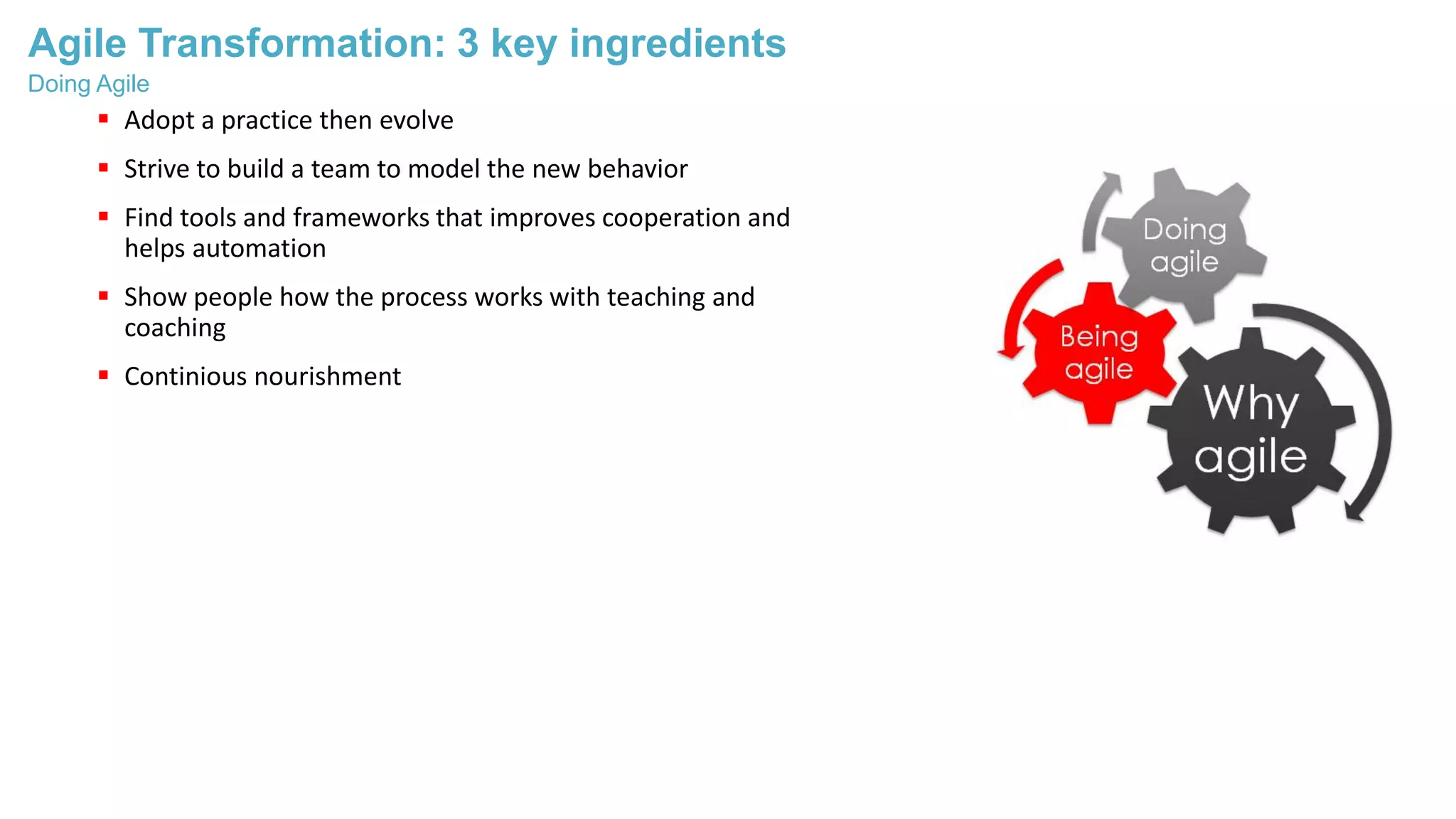
Agile Transformation: 3 key ingredients
 Adopt a practice then evolve
 Strive to build a team to model the new behavior
 Find tools and frameworks that improves cooperation and
helps automation
 Show people how the process works with teaching and
coaching
 Continious nourishment
Doing Agile
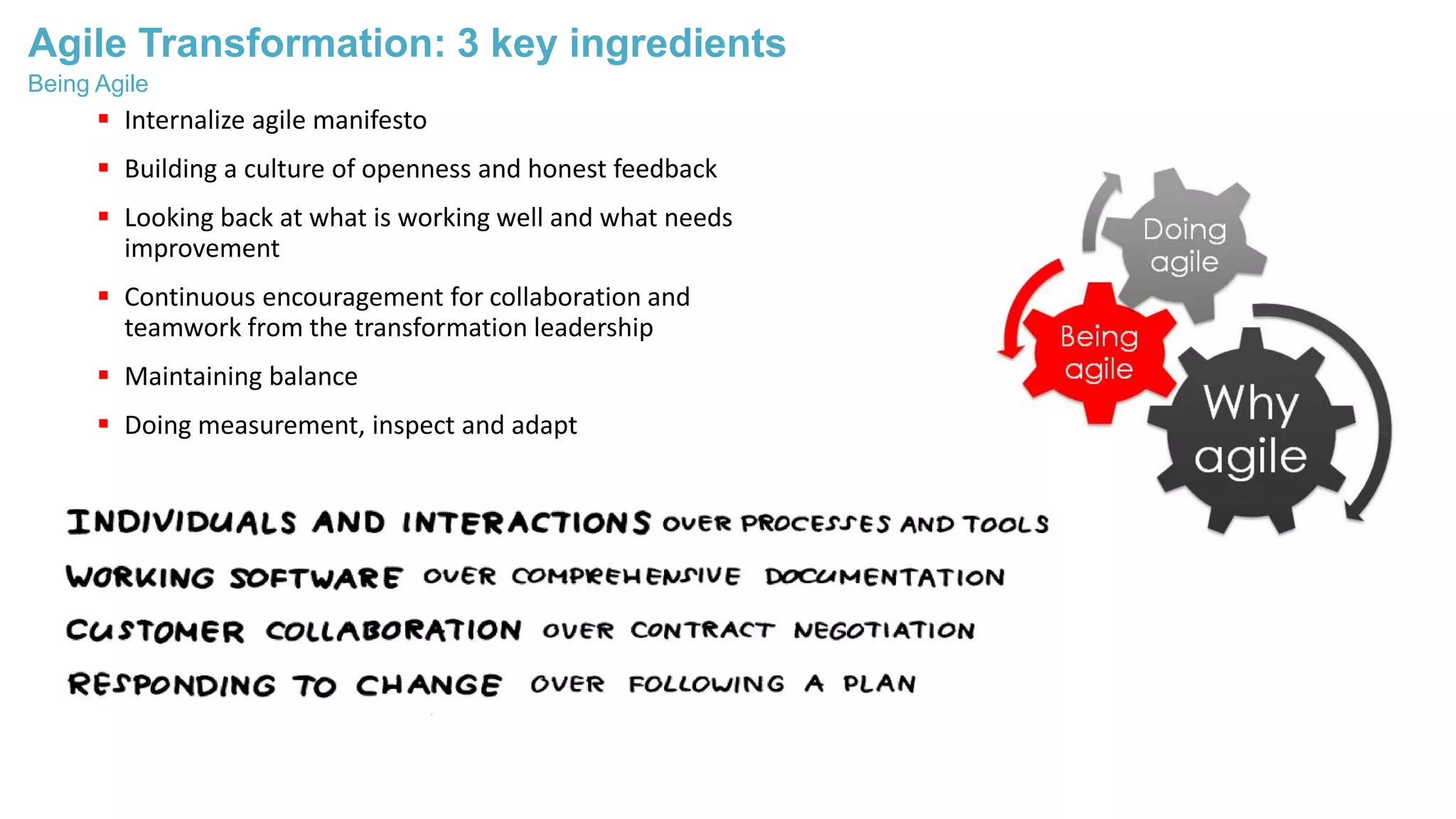
Agile Transformation: 3 key ingredients
 Internalize agile manifesto
 Building a culture of openness and honest feedback
 Looking back at what is working well and what needs
improvement
 Continuous encouragement for collaboration and
teamwork from the transformation leadership
 Maintaining balance
 Doing measurement, inspect and adapt
Being Agile
Road Map
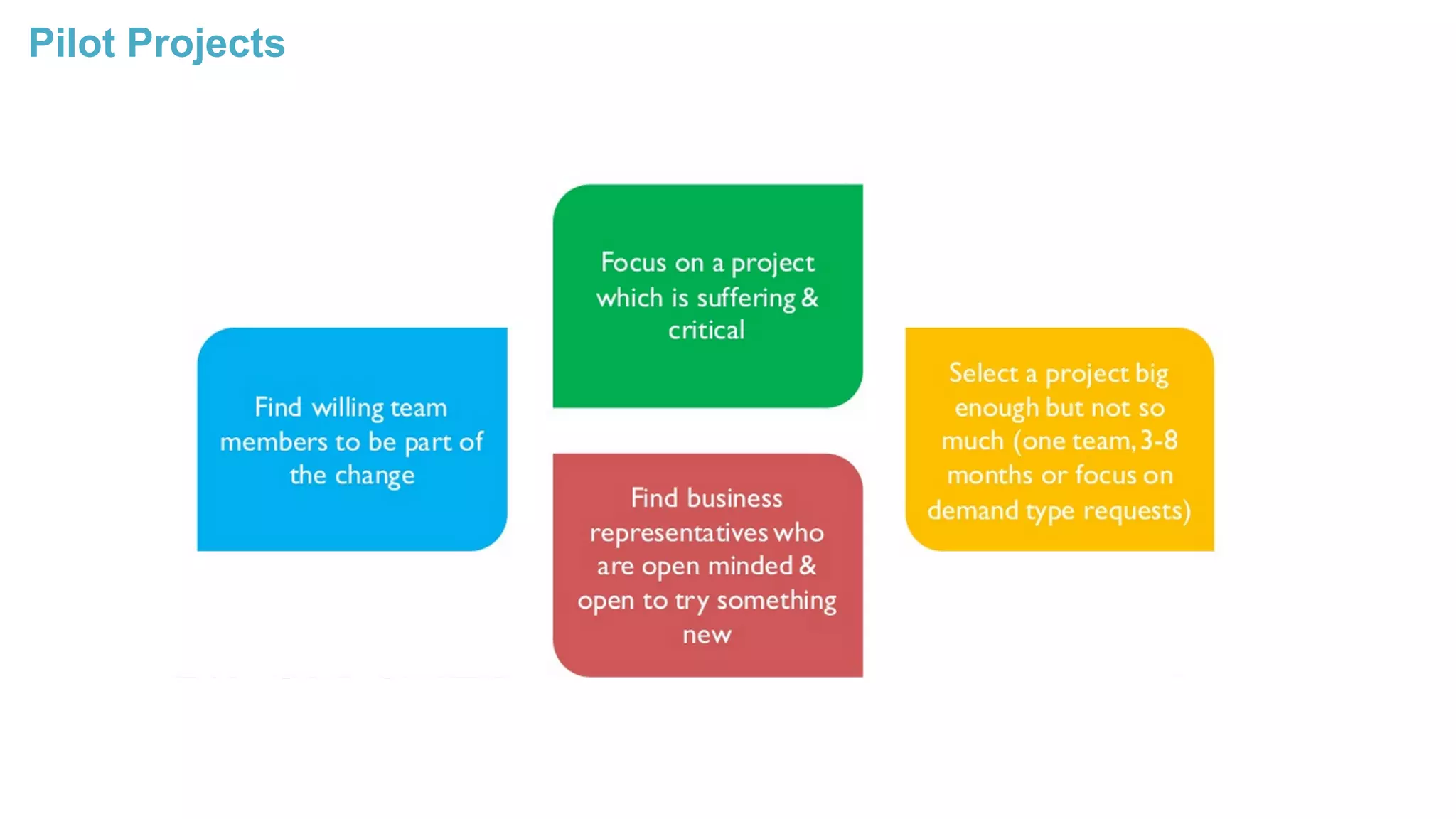
Pilot Projects
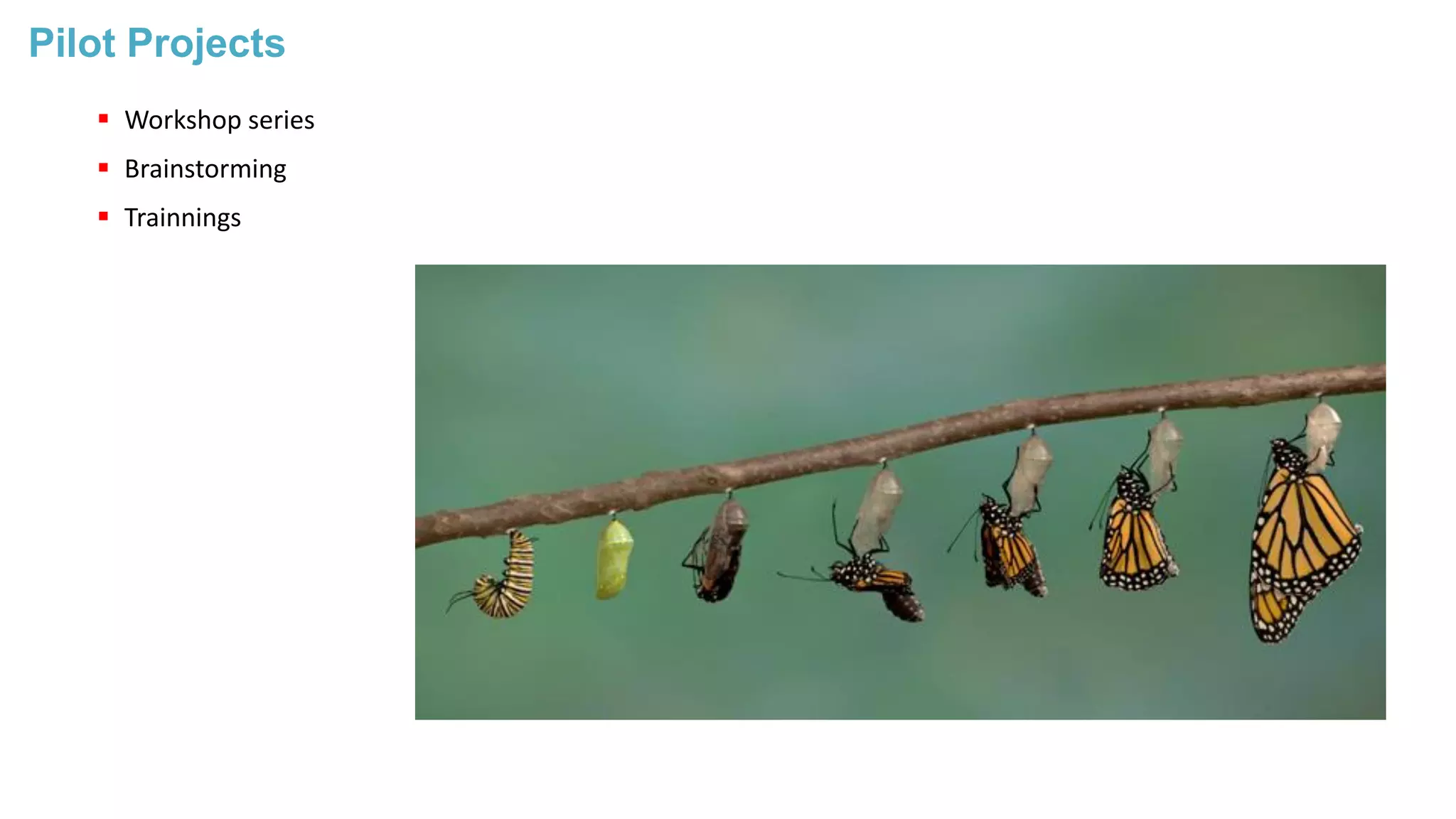
Pilot Projects
 Workshop series
 Brainstorming
 Trainnings
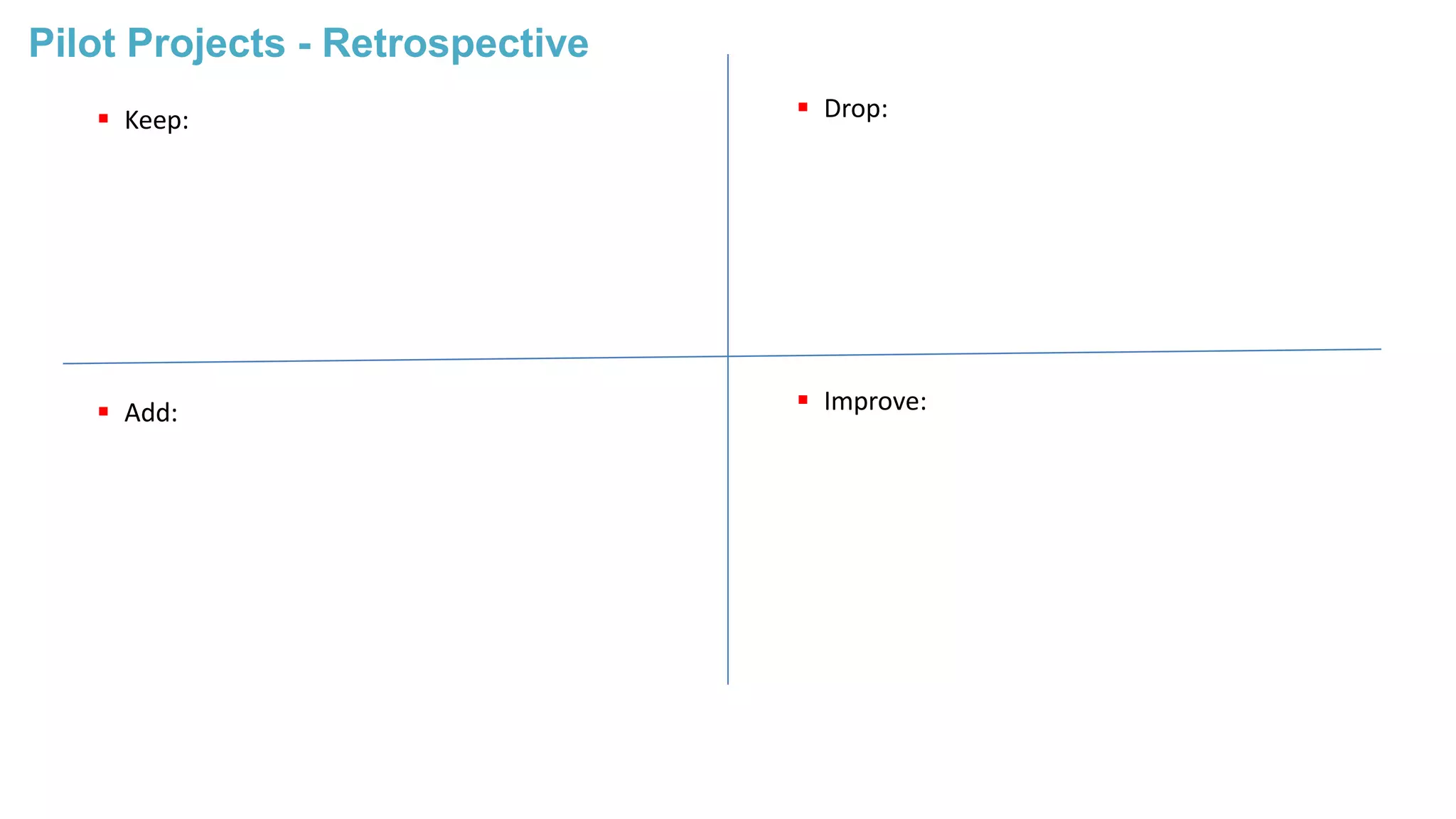
Pilot Projects - Retrospective
 Keep:
 Add:
 Drop:
 Improve:
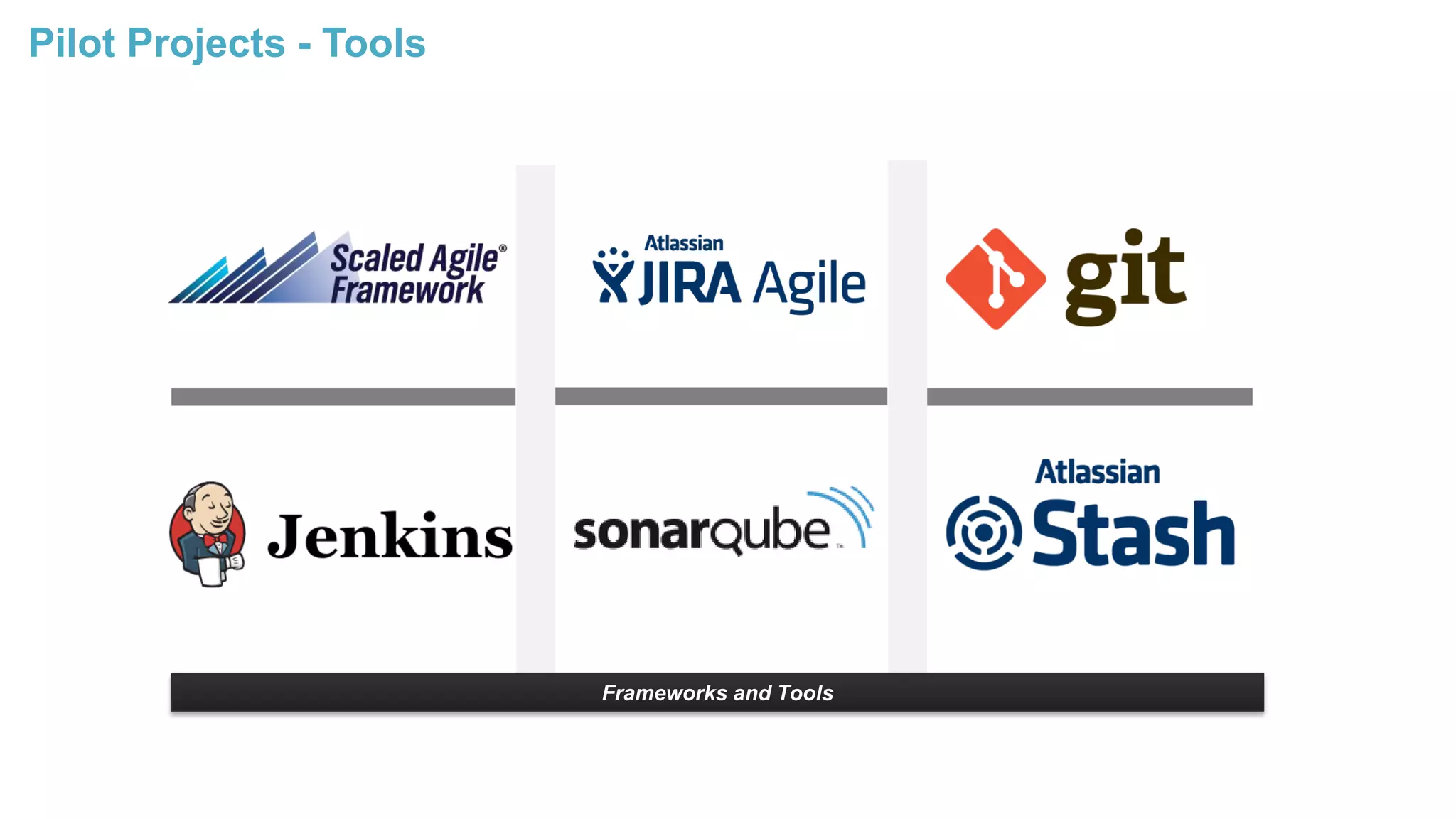
Pilot Projects - Tools
Frameworks and Tools
Pilot Projects
Learning Steps
 Start small number of teams
 Focus on team work and transparency
 Focus on quick delivery
 Obey working agreements
 Do not look for perfection
 Do not do long or fluctuating sprints
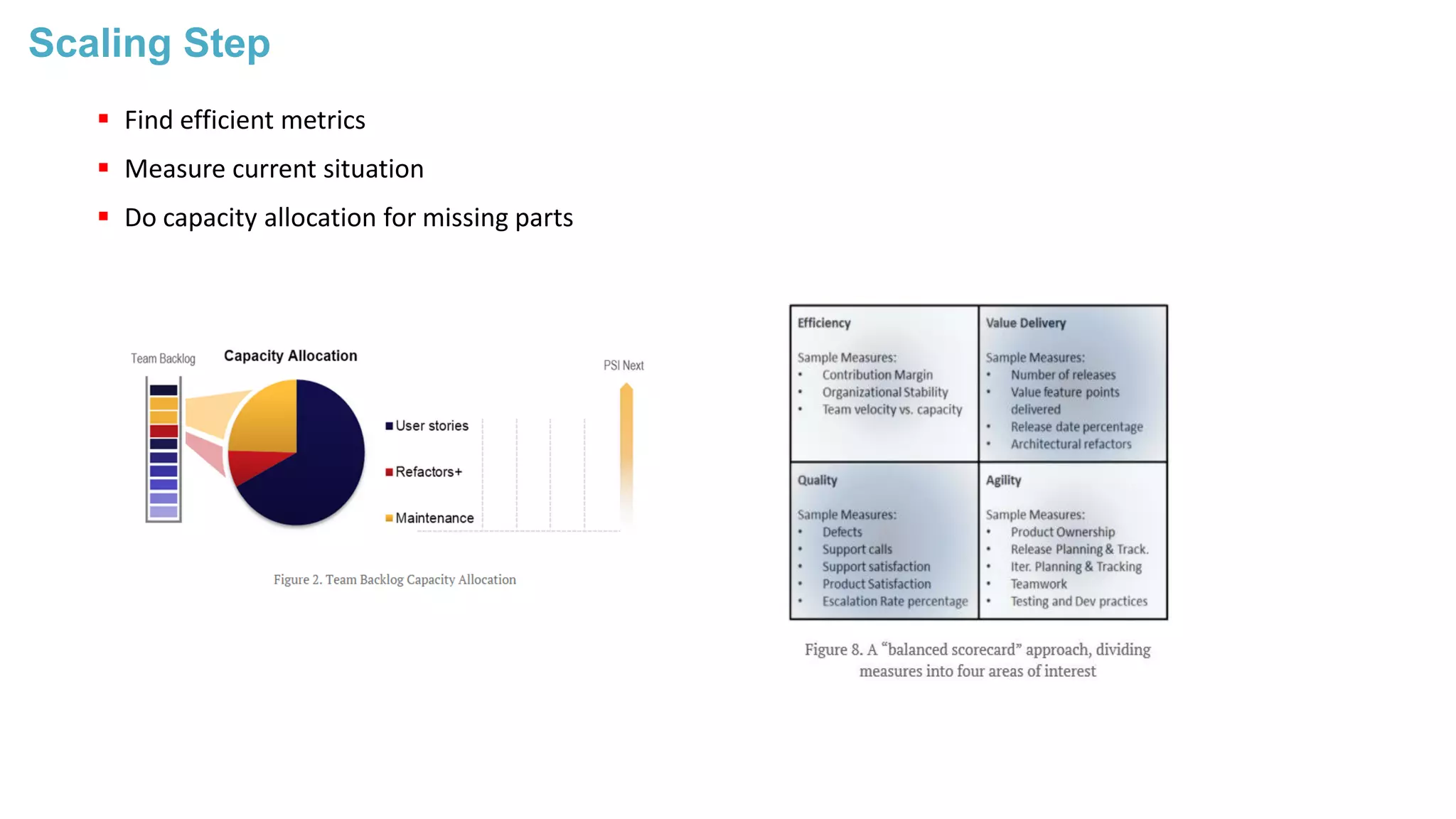
Scaling Step
 Find efficient metrics
 Measure current situation
 Do capacity allocation for missing parts
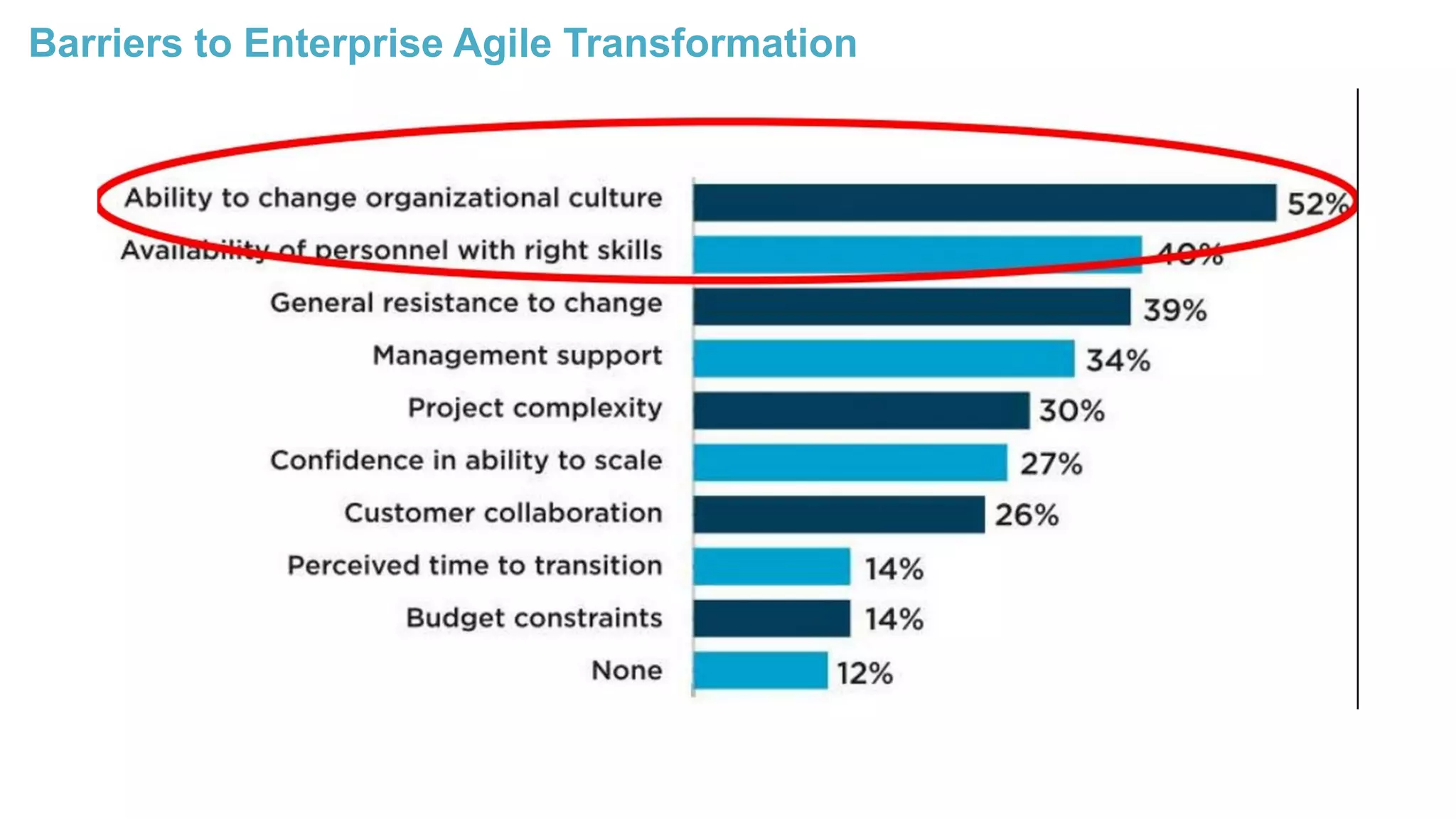
Barriers to Enterprise Agile Transformation
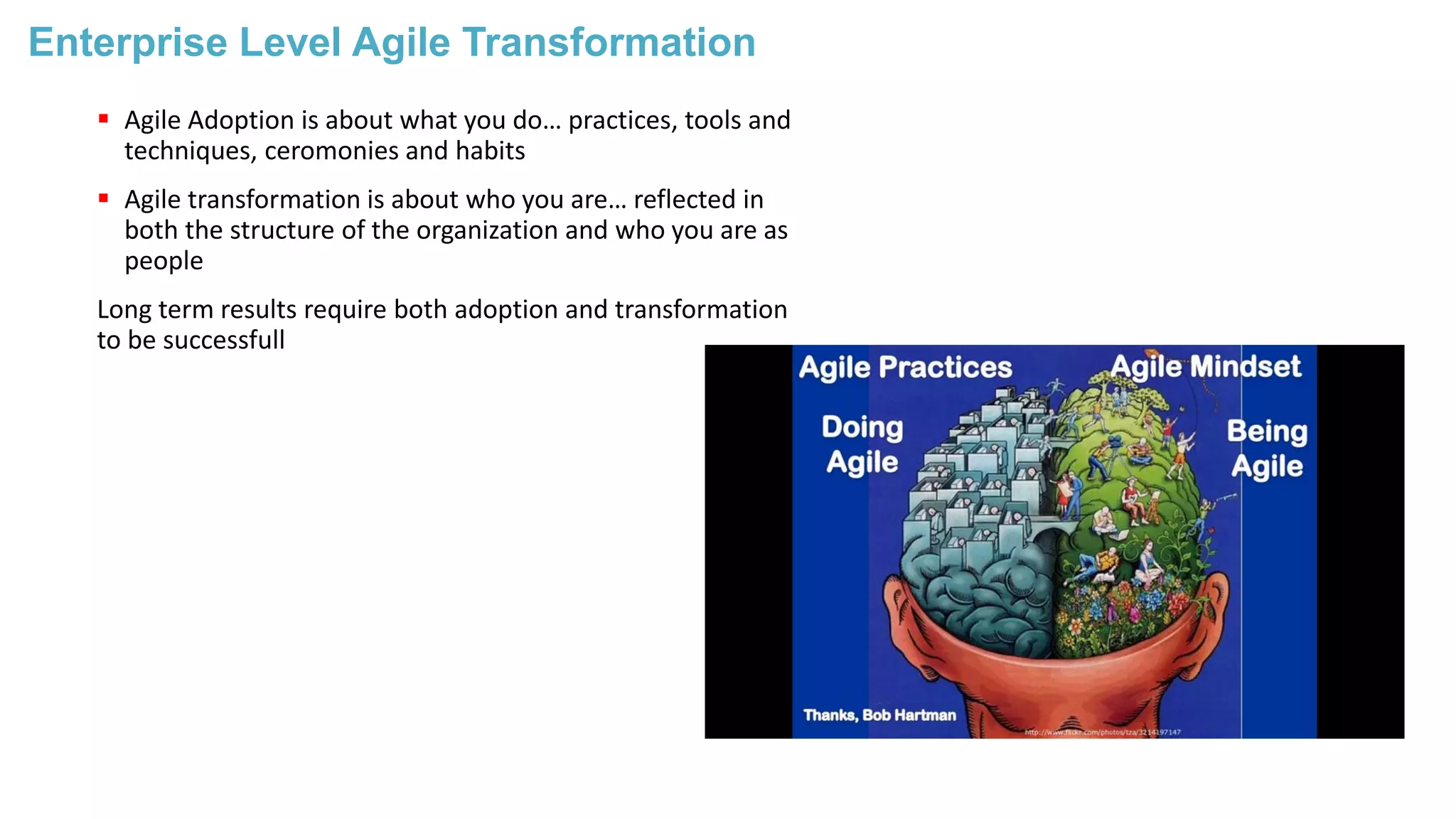
Enterprise Level Agile Transformation
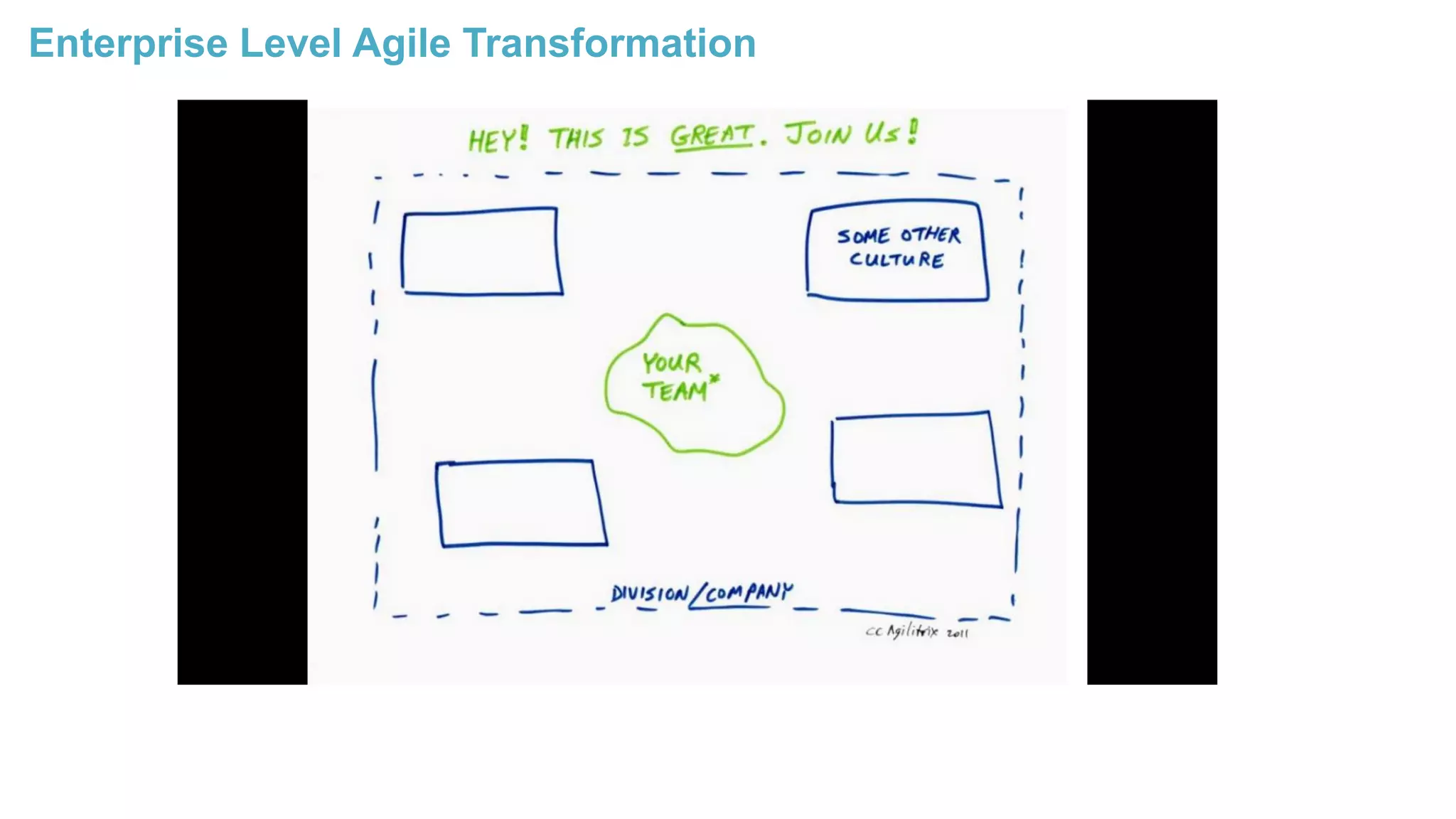
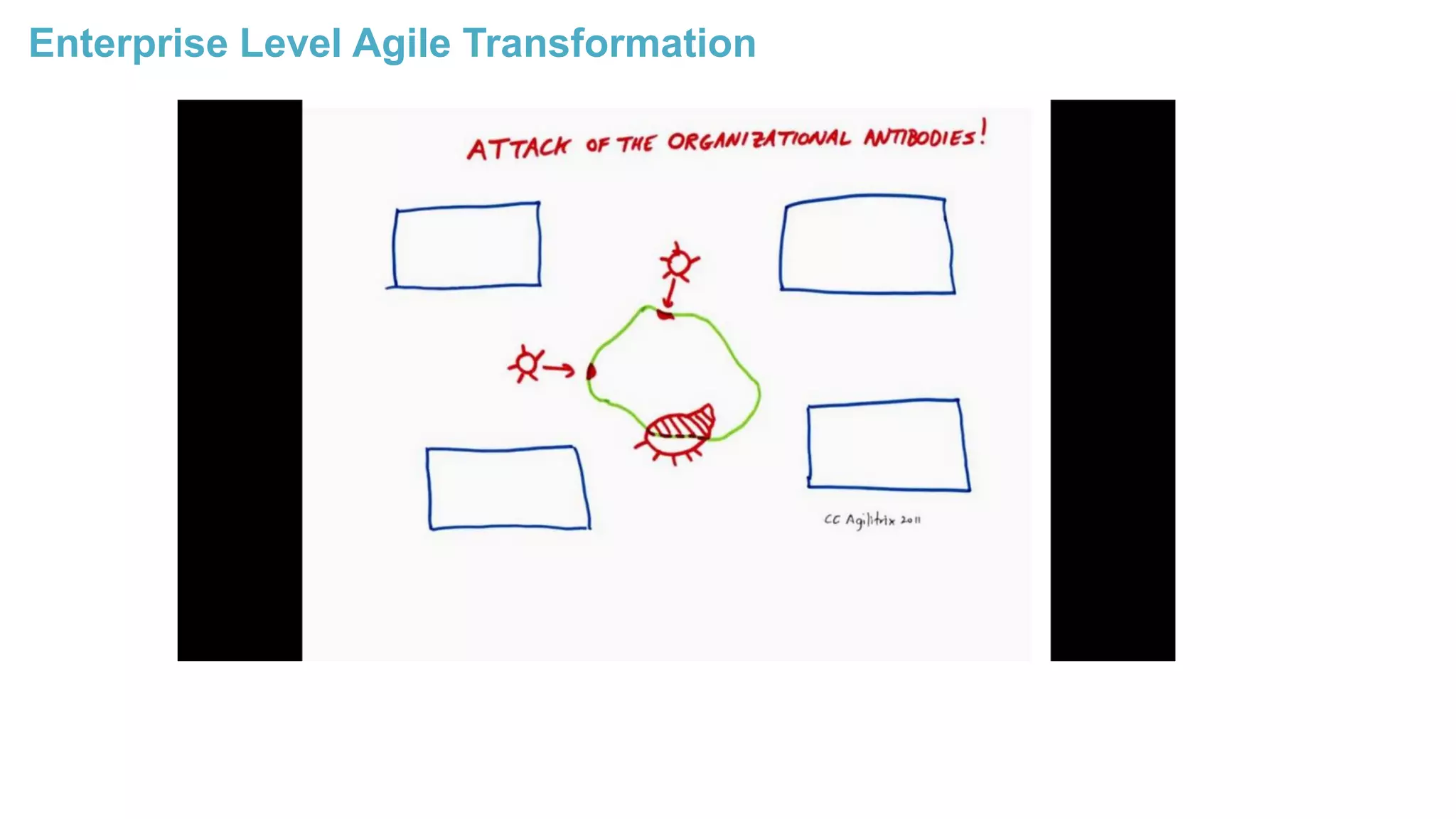
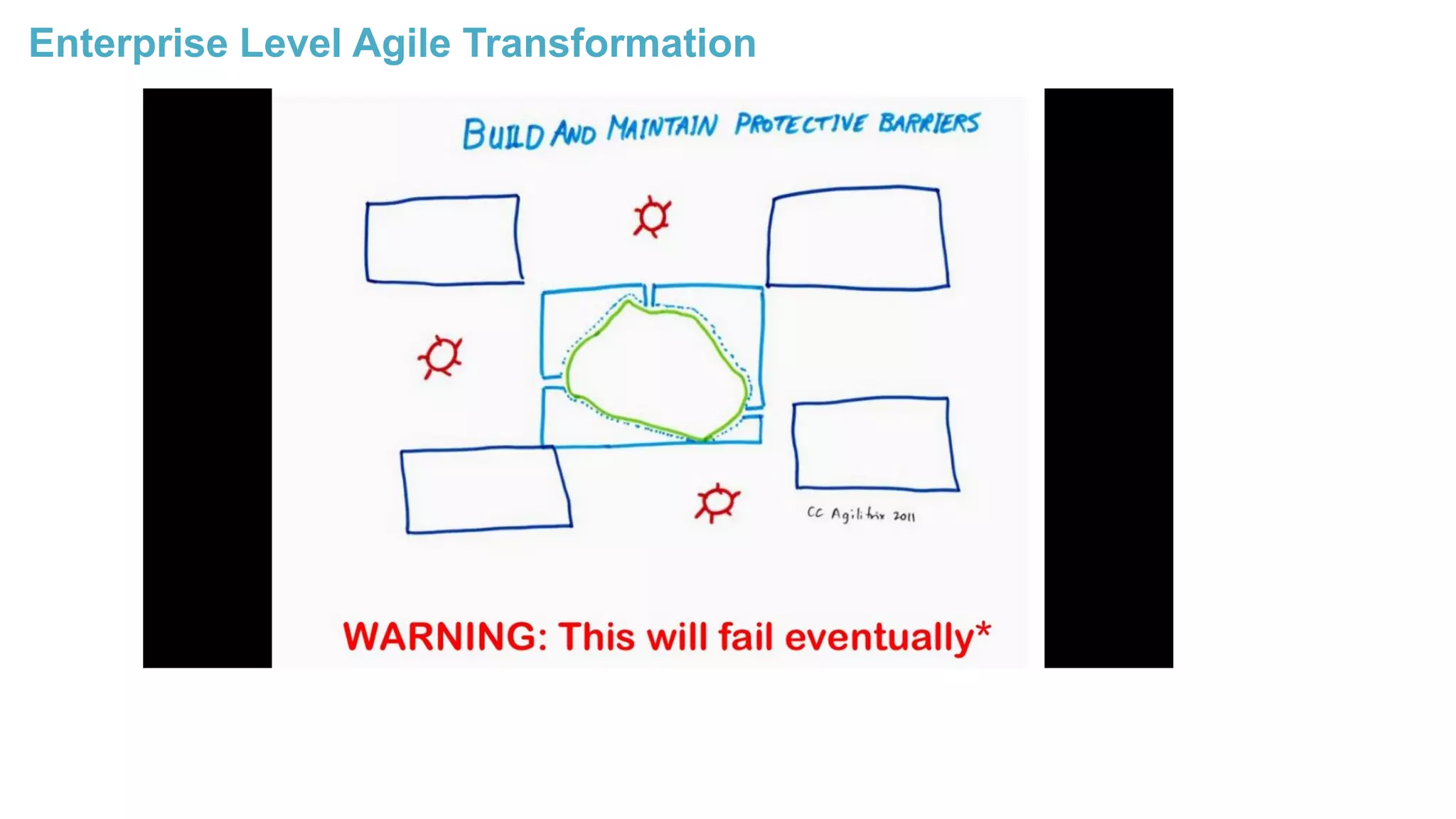
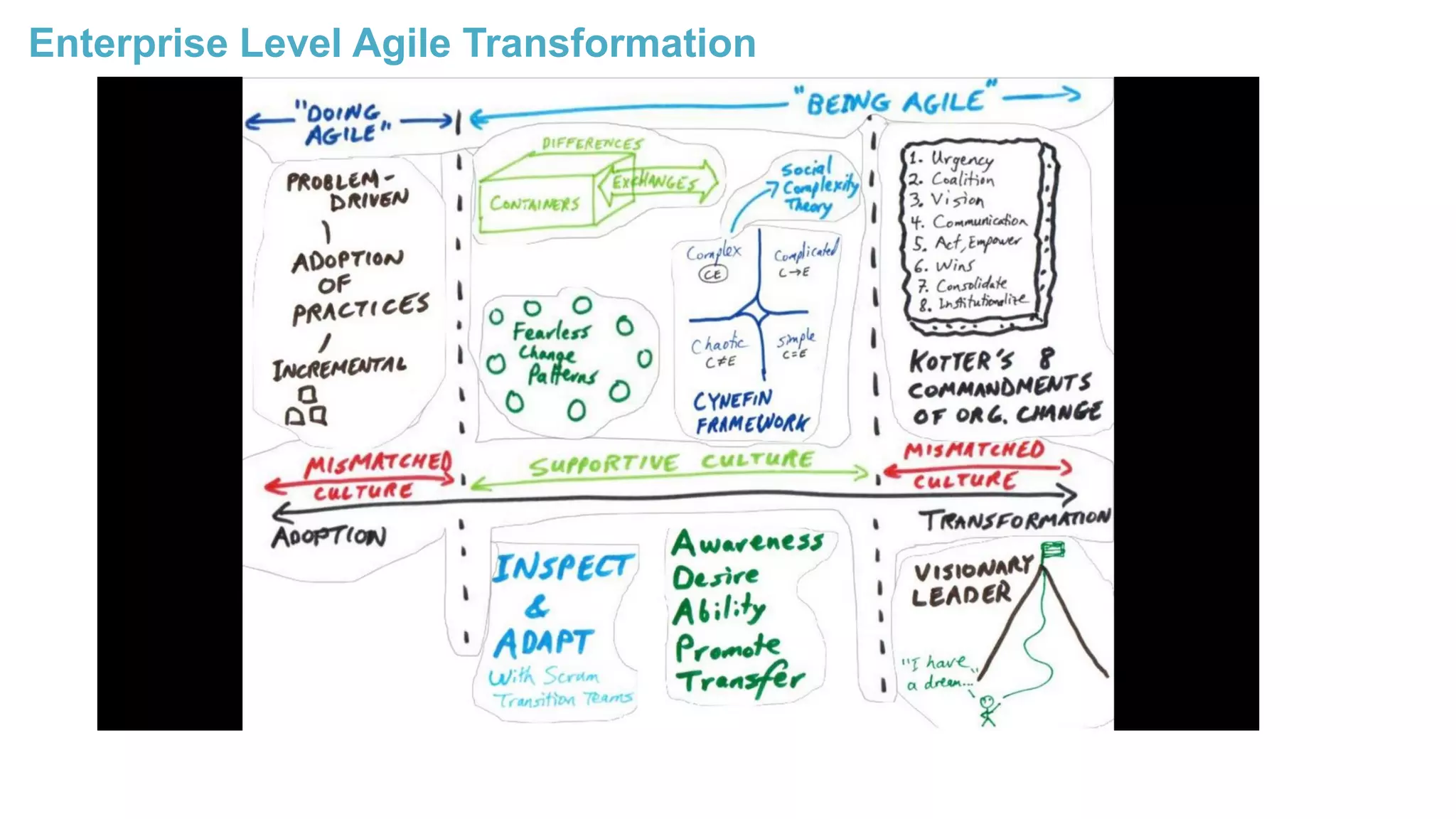
 Agile Adoption is about what you do… practices, tools and
techniques, ceromonies and habits
 Agile transformation is about who you are… reflected in
both the structure of the organization and who you are as
people
Long term results require both adoption and transformation
to be successfull
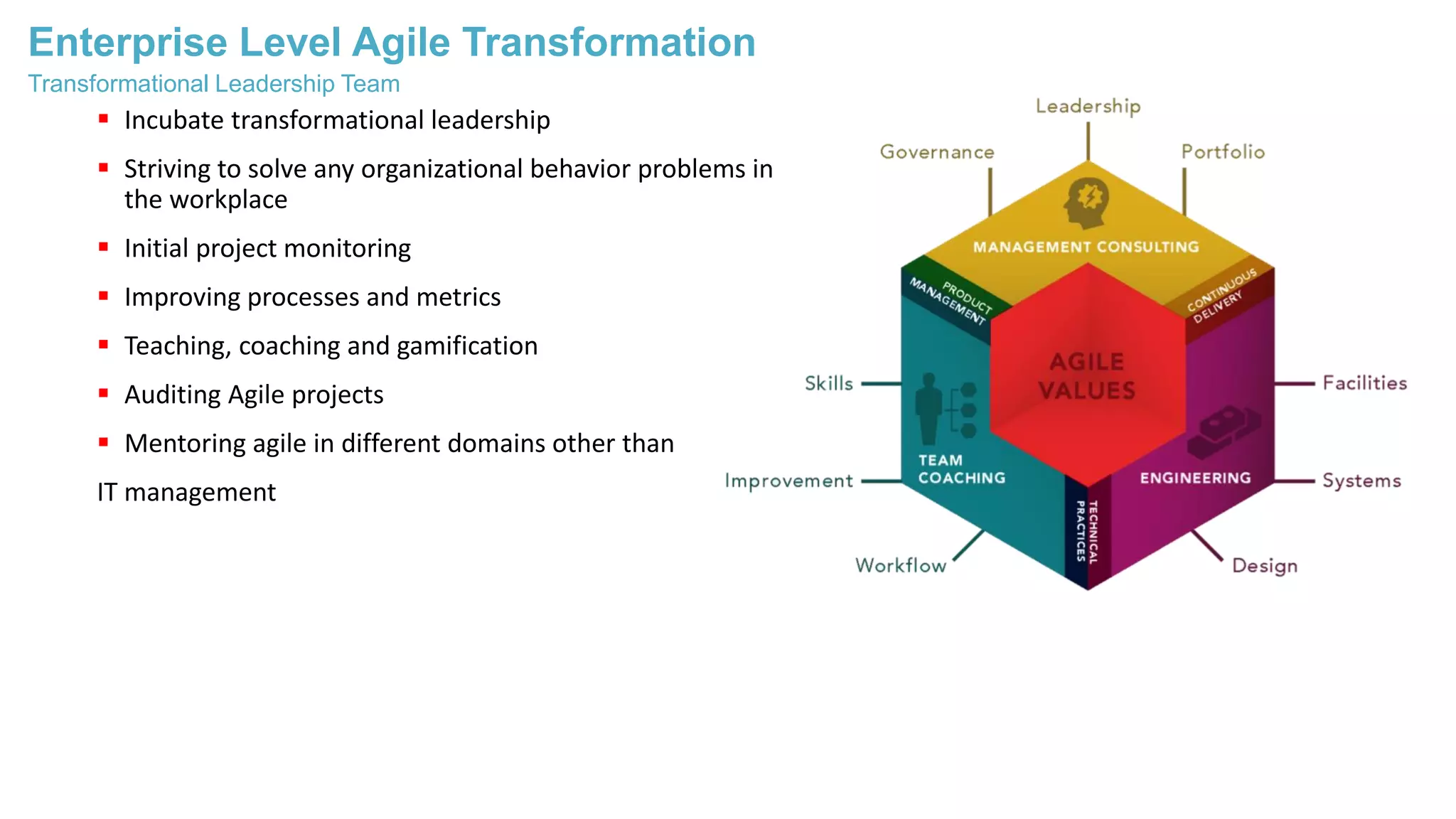
Enterprise Level Agile Transformation
 Incubate transformational leadership
 Striving to solve any organizational behavior problems in
the workplace
 Initial project monitoring
 Improving processes and metrics
 Teaching, coaching and gamification
 Auditing Agile projects
 Mentoring agile in different domains other than
IT management
Transformational Leadership Team
Benefits
• Increased Agile Maturity: self-organizing and continuously improving
teams
• Shortened development cycles: concept-to-cash timeline decreasing
• End-user/customer happiness: increased high quality delivery.
Maintenance and operational cost decreasing
• Increased business value: amount of business value, teams deliver
from their sprints
• Increased delivery reliability: teams simply become more reliable in
their predictions
• Increased velocity: increased amount of output a team delivers at the
same cost
• Employee happiness: increases retention and makes growth and
recruitment easier
Thank you

Agile Transformation Strategy

  • 1.
  • 2.
    Agile Transformation: 3key ingredients  To become more efficient and more productive  To continuously improve their product delivery process  To find better ways of doing things with successfull individuals and in successfull organizations  To achieve maximum speed and flexibility in competitive and changing environment  According to 2009 Chaos report 68% of the projects are failed.  After agile transformation, the success rate of projects increased to 80% and project profitability increased with significant competitive advantage achieved. Why Agile
  • 3.
    Agile Transformation: 3key ingredients  Adopt a practice then evolve  Strive to build a team to model the new behavior  Find tools and frameworks that improves cooperation and helps automation  Show people how the process works with teaching and coaching  Continious nourishment Doing Agile
  • 4.
    Agile Transformation: 3key ingredients  Internalize agile manifesto  Building a culture of openness and honest feedback  Looking back at what is working well and what needs improvement  Continuous encouragement for collaboration and teamwork from the transformation leadership  Maintaining balance  Doing measurement, inspect and adapt Being Agile
  • 5.
  • 6.
  • 7.
    Pilot Projects  Workshopseries  Brainstorming  Trainnings
  • 8.
    Pilot Projects -Retrospective  Keep:  Add:  Drop:  Improve:
  • 9.
    Pilot Projects -Tools Frameworks and Tools
  • 10.
    Pilot Projects Learning Steps Start small number of teams  Focus on team work and transparency  Focus on quick delivery  Obey working agreements  Do not look for perfection  Do not do long or fluctuating sprints
  • 11.
    Scaling Step  Findefficient metrics  Measure current situation  Do capacity allocation for missing parts
  • 12.
    Barriers to EnterpriseAgile Transformation
  • 13.
    Enterprise Level AgileTransformation  Agile Adoption is about what you do… practices, tools and techniques, ceromonies and habits  Agile transformation is about who you are… reflected in both the structure of the organization and who you are as people Long term results require both adoption and transformation to be successfull
  • 14.
    Enterprise Level AgileTransformation
  • 15.
    Enterprise Level AgileTransformation
  • 16.
    Enterprise Level AgileTransformation
  • 17.
    Enterprise Level AgileTransformation
  • 18.
    Enterprise Level AgileTransformation  Incubate transformational leadership  Striving to solve any organizational behavior problems in the workplace  Initial project monitoring  Improving processes and metrics  Teaching, coaching and gamification  Auditing Agile projects  Mentoring agile in different domains other than IT management Transformational Leadership Team
  • 19.
    Benefits • Increased AgileMaturity: self-organizing and continuously improving teams • Shortened development cycles: concept-to-cash timeline decreasing • End-user/customer happiness: increased high quality delivery. Maintenance and operational cost decreasing • Increased business value: amount of business value, teams deliver from their sprints • Increased delivery reliability: teams simply become more reliable in their predictions • Increased velocity: increased amount of output a team delivers at the same cost • Employee happiness: increases retention and makes growth and recruitment easier
  • 20.