Agile Startup

        Low Burn by Design not Crisis


                                  By Robin Low
Timing is everything.
Adaptability is key, not the
business plan.
Traditional startups are
fighting yesterday’s war.
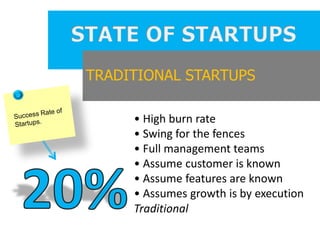
TRADITIONAL STARTUPS

     • High burn rate
     • Swing for the fences
     • Full management teams
     • Assume customer is known
     • Assume features are known
     • Assumes growth is by execution
     Traditional
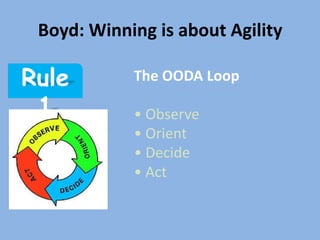
Boyd: Winning is about Agility

Rule        The OODA Loop

 1          • Observe
            • Orient
            • Decide
            • Act
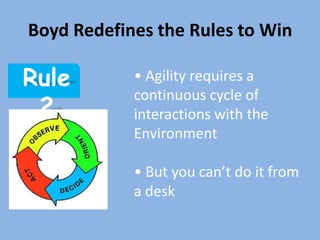
Boyd Redefines the Rules to Win

Rule        • Agility requires a
            continuous cycle of
 2          interactions with the
            Environment

            • But you can’t do it from
            a desk
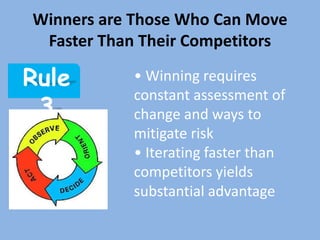
Winners are Those Who Can Move
 Faster Than Their Competitors

Rule       • Winning requires
           constant assessment of
 3         change and ways to
           mitigate risk
           • Iterating faster than
           competitors yields
           substantial advantage
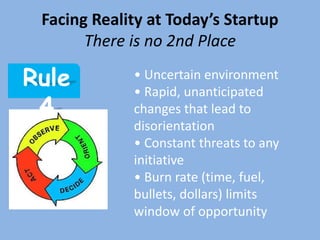
Facing Reality at Today’s Startup
       There is no 2nd Place

Rule         • Uncertain environment
             • Rapid, unanticipated
 4           changes that lead to
             disorientation
             • Constant threats to any
             initiative
             • Burn rate (time, fuel,
             bullets, dollars) limits
             window of opportunity
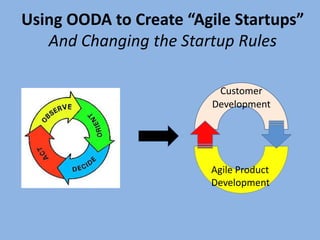
Using OODA to Create “Agile Startups”
   And Changing the Startup Rules

                         Customer
                        Development


                        Agile Product
                        Development
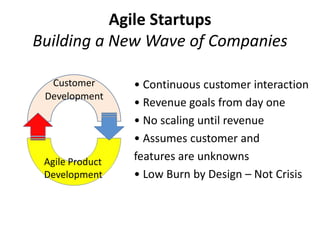
Agile Startups
Building a New Wave of Companies

  Customer       • Continuous customer interaction
 Development
                 • Revenue goals from day one
                 • No scaling until revenue
                 • Assumes customer and
 Agile Product   features are unknowns
 Development     • Low Burn by Design – Not Crisis
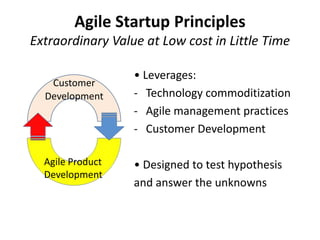
Agile Startup Principles
Extraordinary Value at Low cost in Little Time

                  • Leverages:
   Customer
  Development     - Technology commoditization
                  - Agile management practices
                  - Customer Development

  Agile Product   • Designed to test hypothesis
  Development
                  and answer the unknowns
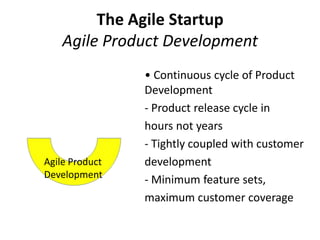
The Agile Startup
    Agile Product Development
                • Continuous cycle of Product
                Development
                - Product release cycle in
                hours not years
                - Tightly coupled with customer
Agile Product   development
Development
                - Minimum feature sets,
                maximum customer coverage
The Agile Startup
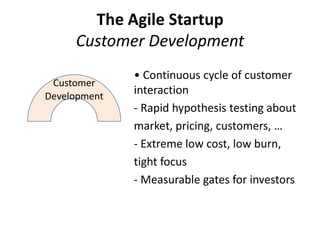
     Customer Development
              • Continuous cycle of customer
 Customer
Development
              interaction
              - Rapid hypothesis testing about
              market, pricing, customers, …
              - Extreme low cost, low burn,
              tight focus
              - Measurable gates for investors
The Agile Startup
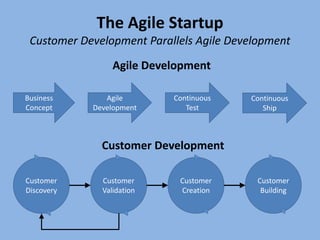
 Customer Development Parallels Agile Development
                 Agile Development

Business       Agile       Continuous    Continuous
Concept     Development       Test          Ship


              Customer Development

Customer      Customer      Customer      Customer
Discovery     Validation    Creation       Building
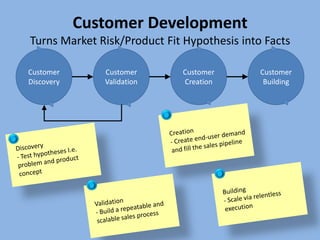
Customer Development
Turns Market Risk/Product Fit Hypothesis into Facts

Customer       Customer      Customer        Customer
Discovery      Validation    Creation         Building
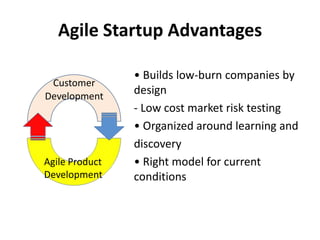
Agile Startup Advantages

                • Builds low-burn companies by
 Customer
Development
                design
                - Low cost market risk testing
                • Organized around learning and
                discovery
Agile Product   • Right model for current
Development     conditions
It is up to you to build the next wave of capital
efficient startups

          https://www.facebook.com/socialhub

Agile startup

  • 1.
    Agile Startup Low Burn by Design not Crisis By Robin Low
  • 2.
    Timing is everything. Adaptabilityis key, not the business plan. Traditional startups are fighting yesterday’s war.
  • 3.
    TRADITIONAL STARTUPS • High burn rate • Swing for the fences • Full management teams • Assume customer is known • Assume features are known • Assumes growth is by execution Traditional
  • 5.
    Boyd: Winning isabout Agility Rule The OODA Loop 1 • Observe • Orient • Decide • Act
  • 6.
    Boyd Redefines theRules to Win Rule • Agility requires a continuous cycle of 2 interactions with the Environment • But you can’t do it from a desk
  • 7.
    Winners are ThoseWho Can Move Faster Than Their Competitors Rule • Winning requires constant assessment of 3 change and ways to mitigate risk • Iterating faster than competitors yields substantial advantage
  • 8.
    Facing Reality atToday’s Startup There is no 2nd Place Rule • Uncertain environment • Rapid, unanticipated 4 changes that lead to disorientation • Constant threats to any initiative • Burn rate (time, fuel, bullets, dollars) limits window of opportunity
  • 9.
    Using OODA toCreate “Agile Startups” And Changing the Startup Rules Customer Development Agile Product Development
  • 10.
    Agile Startups Building aNew Wave of Companies Customer • Continuous customer interaction Development • Revenue goals from day one • No scaling until revenue • Assumes customer and Agile Product features are unknowns Development • Low Burn by Design – Not Crisis
  • 11.
    Agile Startup Principles ExtraordinaryValue at Low cost in Little Time • Leverages: Customer Development - Technology commoditization - Agile management practices - Customer Development Agile Product • Designed to test hypothesis Development and answer the unknowns
  • 12.
    The Agile Startup Agile Product Development • Continuous cycle of Product Development - Product release cycle in hours not years - Tightly coupled with customer Agile Product development Development - Minimum feature sets, maximum customer coverage
  • 13.
    The Agile Startup Customer Development • Continuous cycle of customer Customer Development interaction - Rapid hypothesis testing about market, pricing, customers, … - Extreme low cost, low burn, tight focus - Measurable gates for investors
  • 14.
    The Agile Startup Customer Development Parallels Agile Development Agile Development Business Agile Continuous Continuous Concept Development Test Ship Customer Development Customer Customer Customer Customer Discovery Validation Creation Building
  • 15.
    Customer Development Turns MarketRisk/Product Fit Hypothesis into Facts Customer Customer Customer Customer Discovery Validation Creation Building
  • 16.
    Agile Startup Advantages • Builds low-burn companies by Customer Development design - Low cost market risk testing • Organized around learning and discovery Agile Product • Right model for current Development conditions
  • 17.
    It is upto you to build the next wave of capital efficient startups https://www.facebook.com/socialhub