






Startup tools
Luiz Borba - http://borba.blog.br - @luizborba
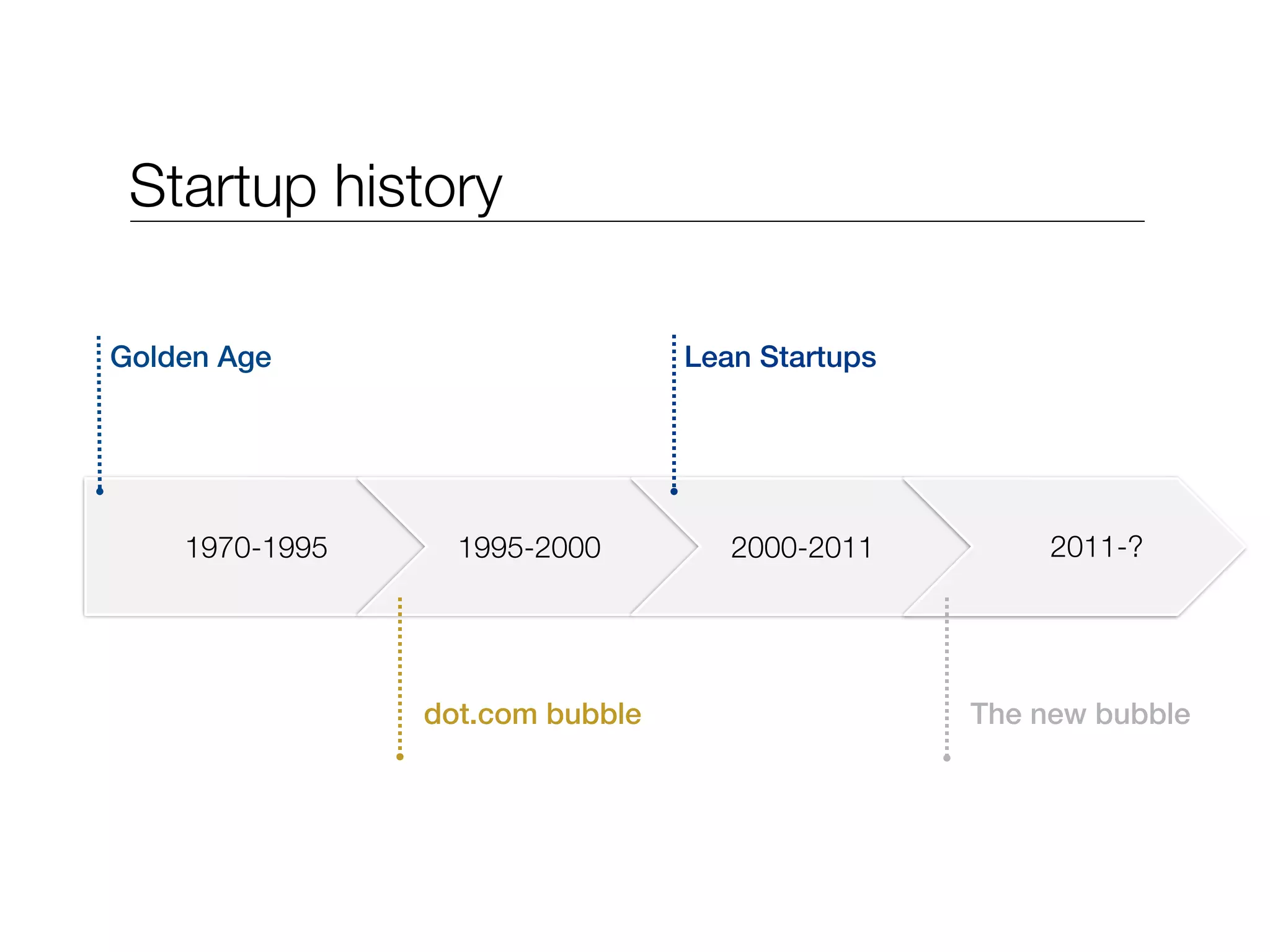
Startup history

Golden Age                       Lean Startups


    1970-1995     1995-2000         2000-2011         2011-?


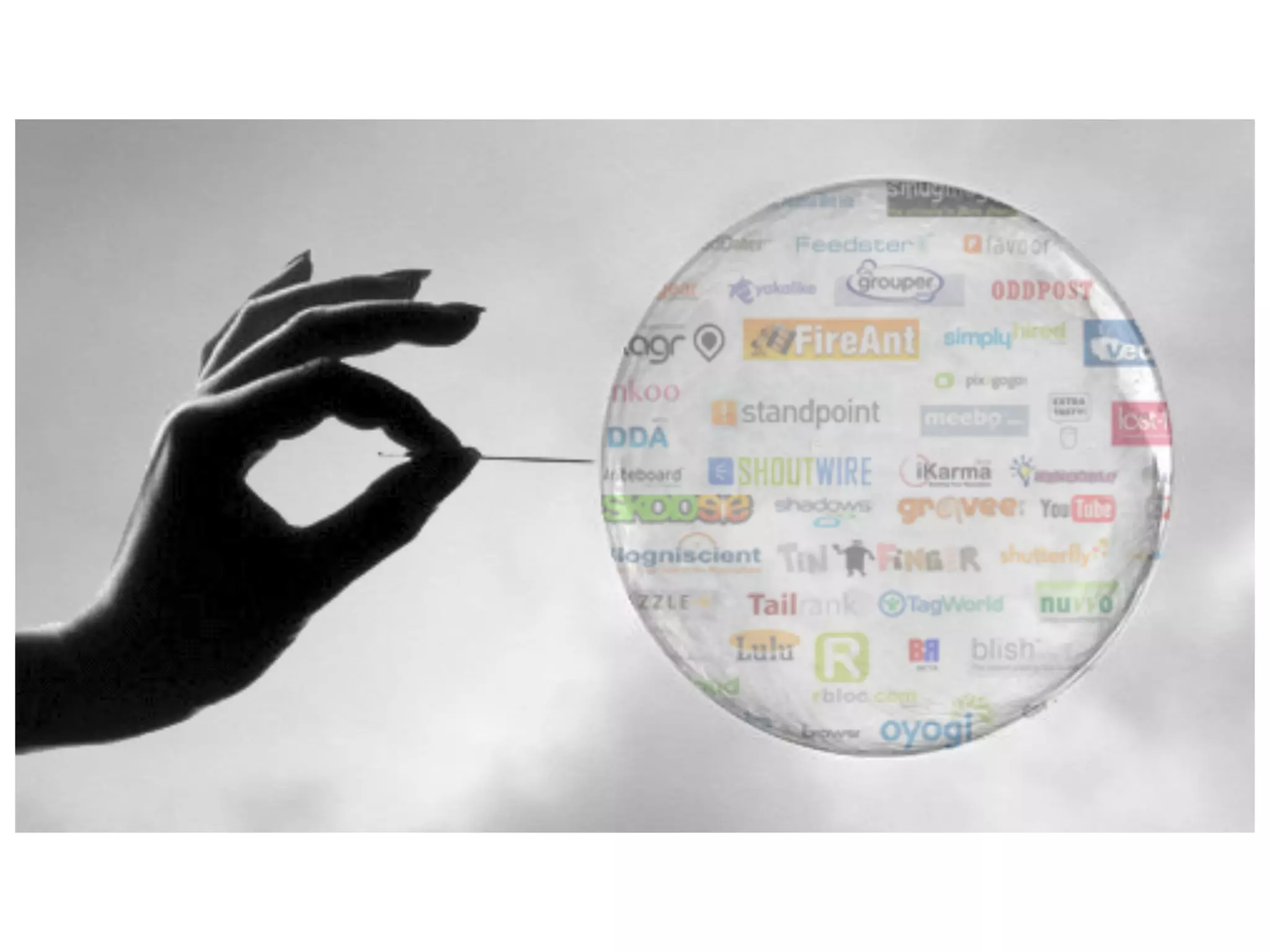
                dot.com bubble                   The new bubble
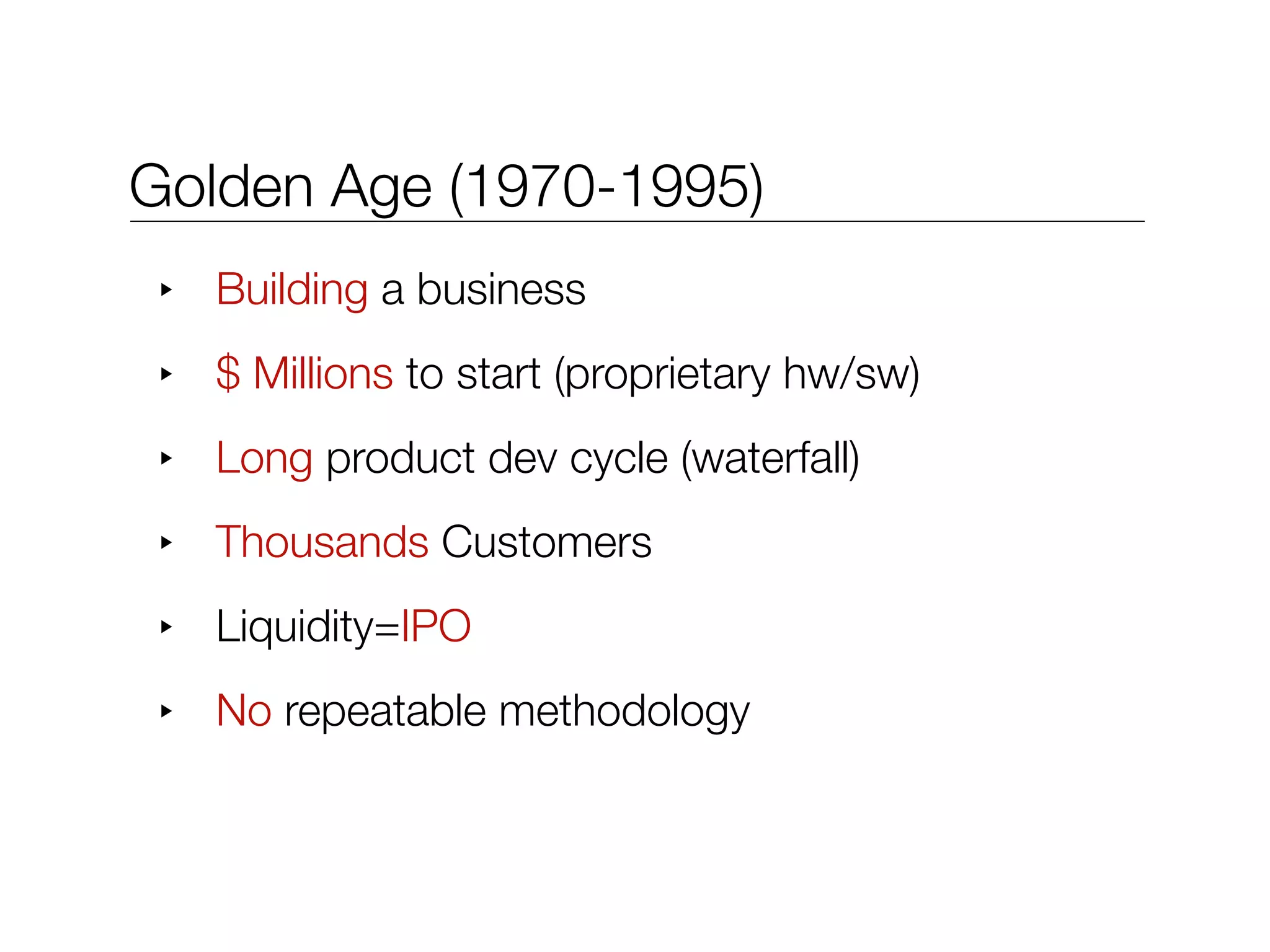
Golden Age (1970-1995)
 ‣   Building a business
 ‣   $ Millions to start (proprietary hw/sw)
 ‣   Long product dev cycle (waterfall)
 ‣   Thousands Customers
 ‣   Liquidity=IPO
 ‣   No repeatable methodology
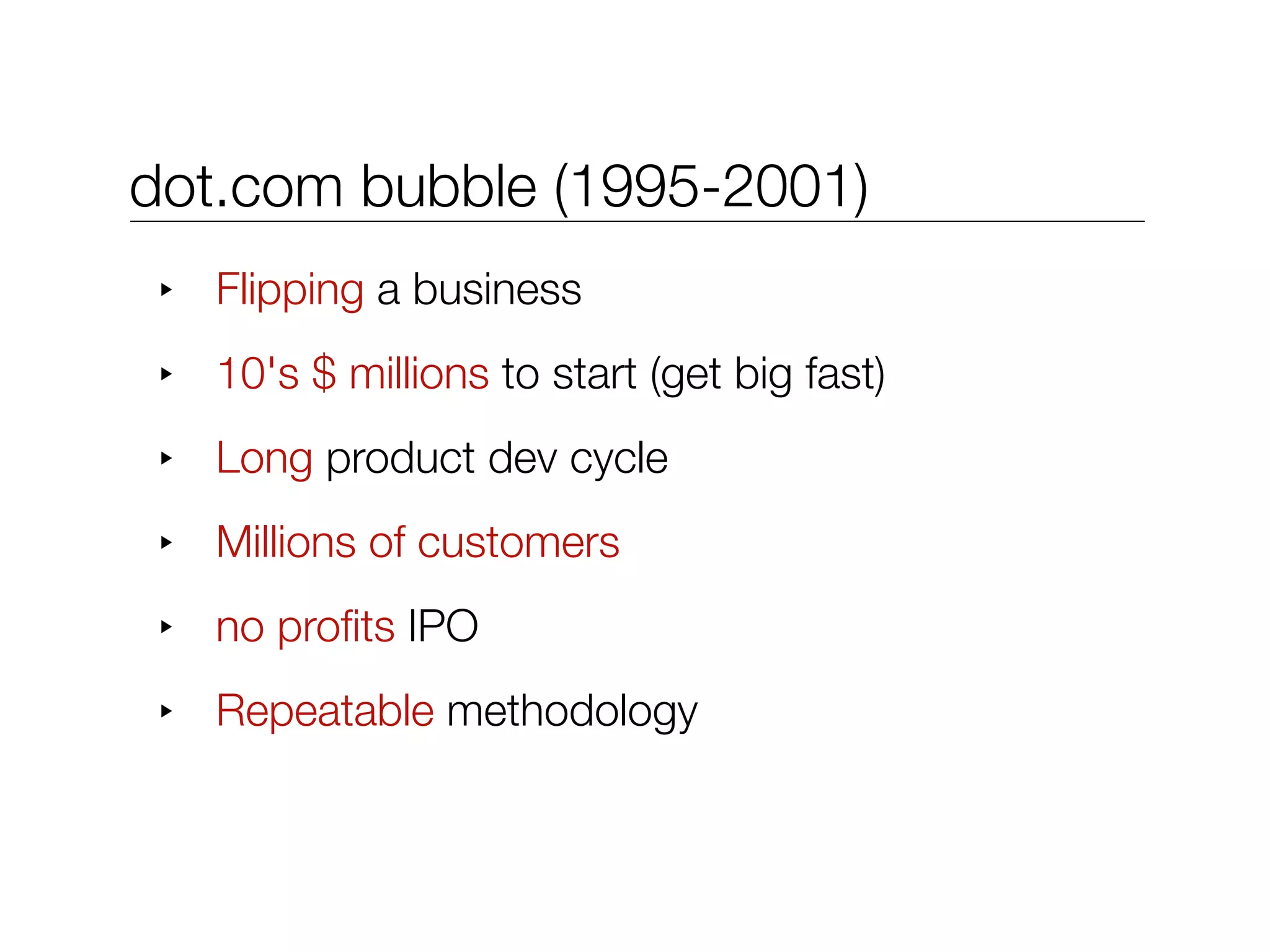
dot.com bubble (1995-2001)
 ‣   Flipping a business
 ‣   10's $ millions to start (get big fast)
 ‣   Long product dev cycle
 ‣   Millions of customers
 ‣   no profits IPO
 ‣   Repeatable methodology
Lean Startups (2001-2010)
 ‣   < $500k to start
 ‣   Short product dev cycle (agile development)
 ‣   10's millions customers
 ‣   M&A (revenue & network of users)
 ‣   Repeatable methodology
$41 millions
The new bubble (2010-????)
 ‣   Flipping a built business?
 ‣   Short product dev cycle (agile development)
 ‣   10's/100's millions customers
 ‣   M&A & IPO
 ‣   Repeatable methodology
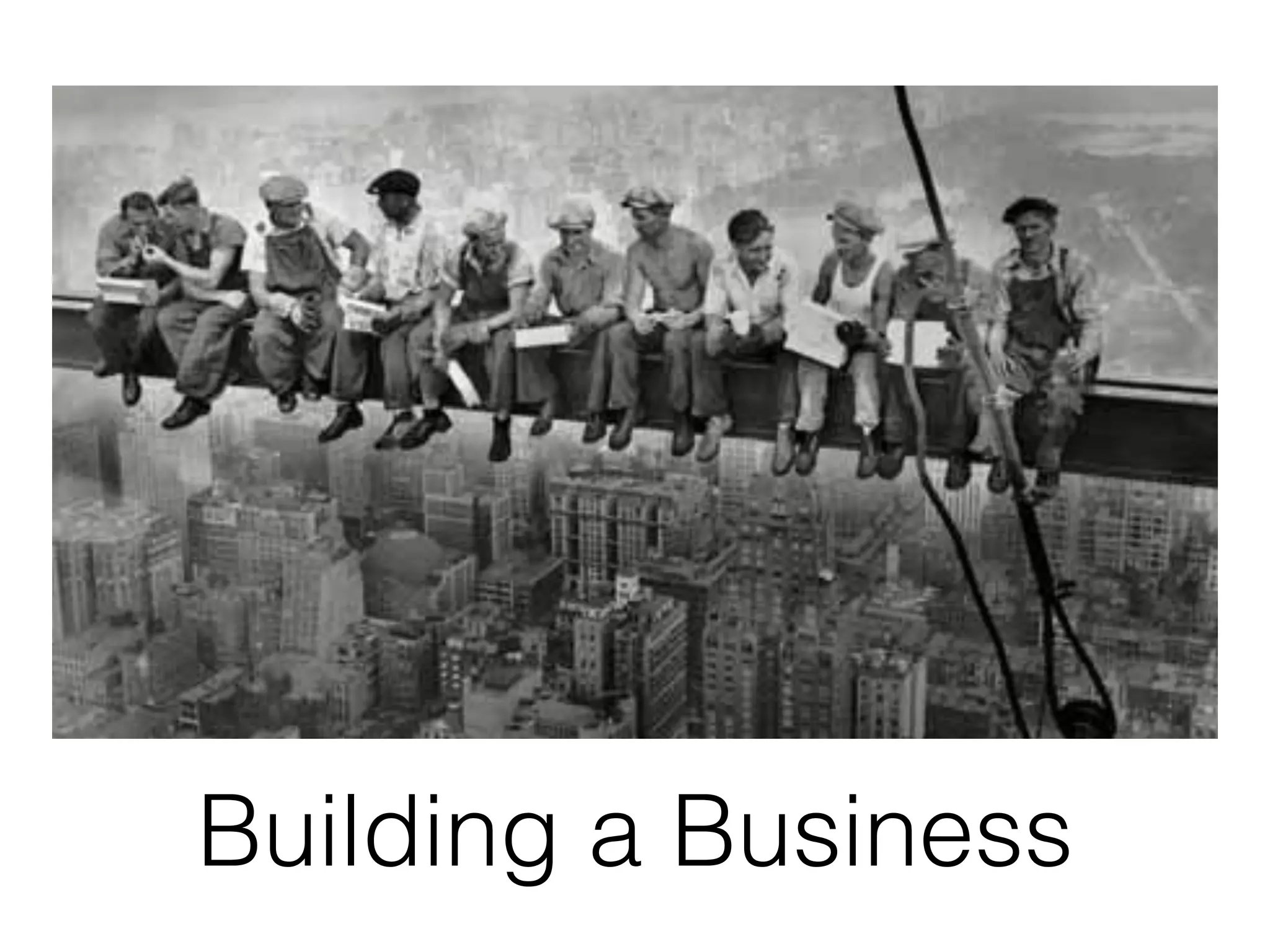
Building a Business
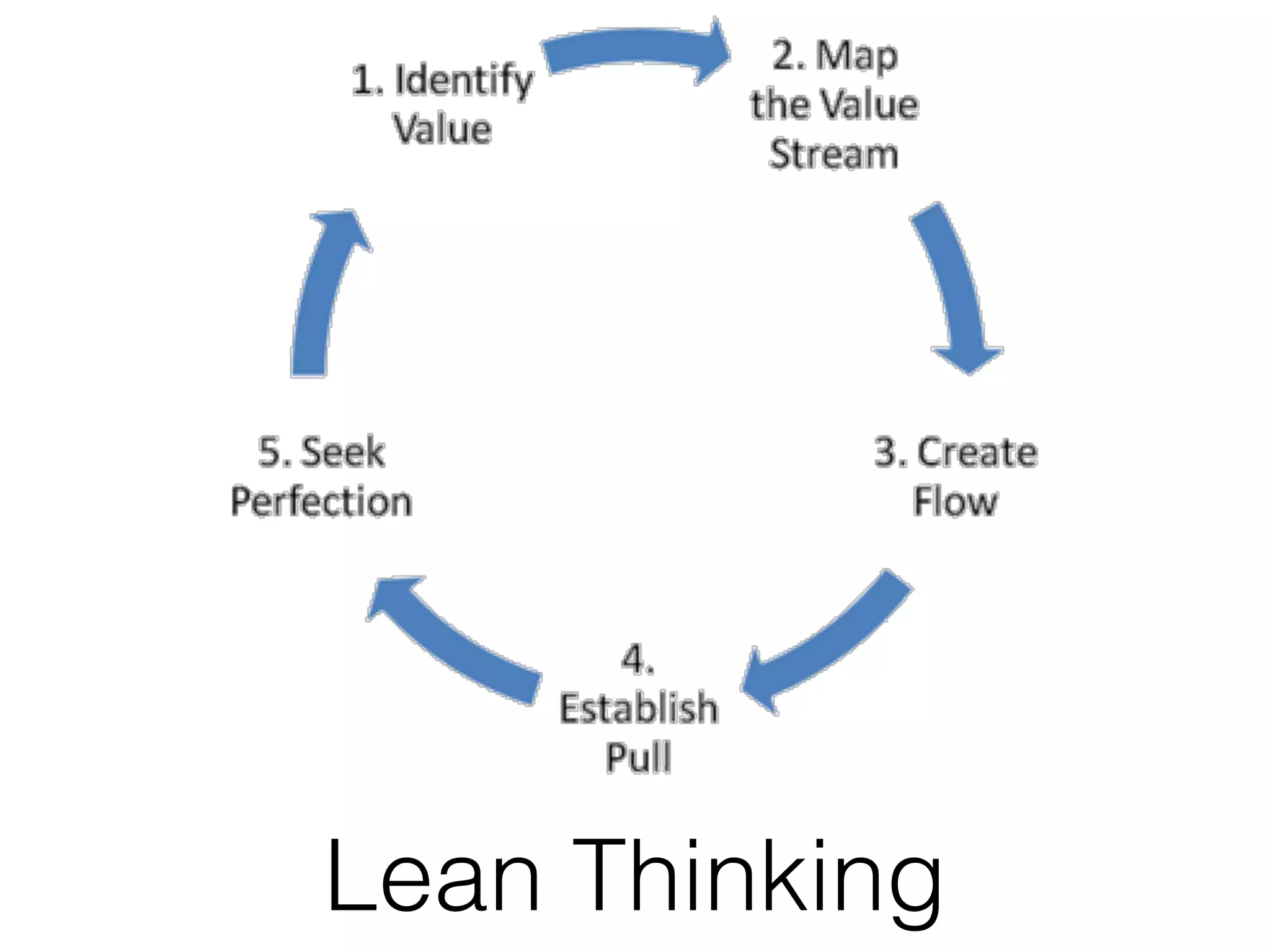
Lean Thinking
Identify value from standpoint
    of the end customer
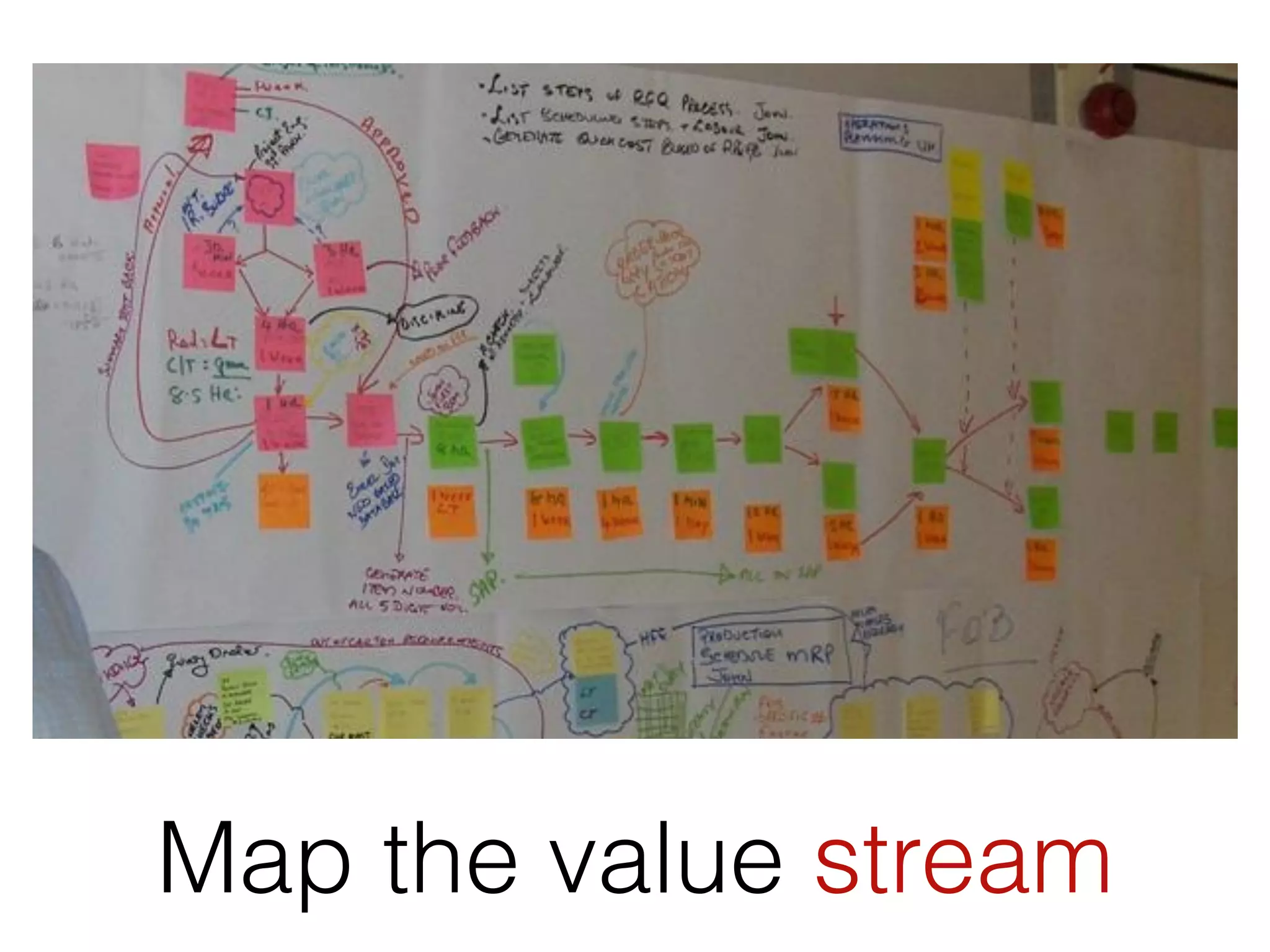
Map the value stream
Create flow by eliminating waste
Understand the customer demand
Pursue perfection
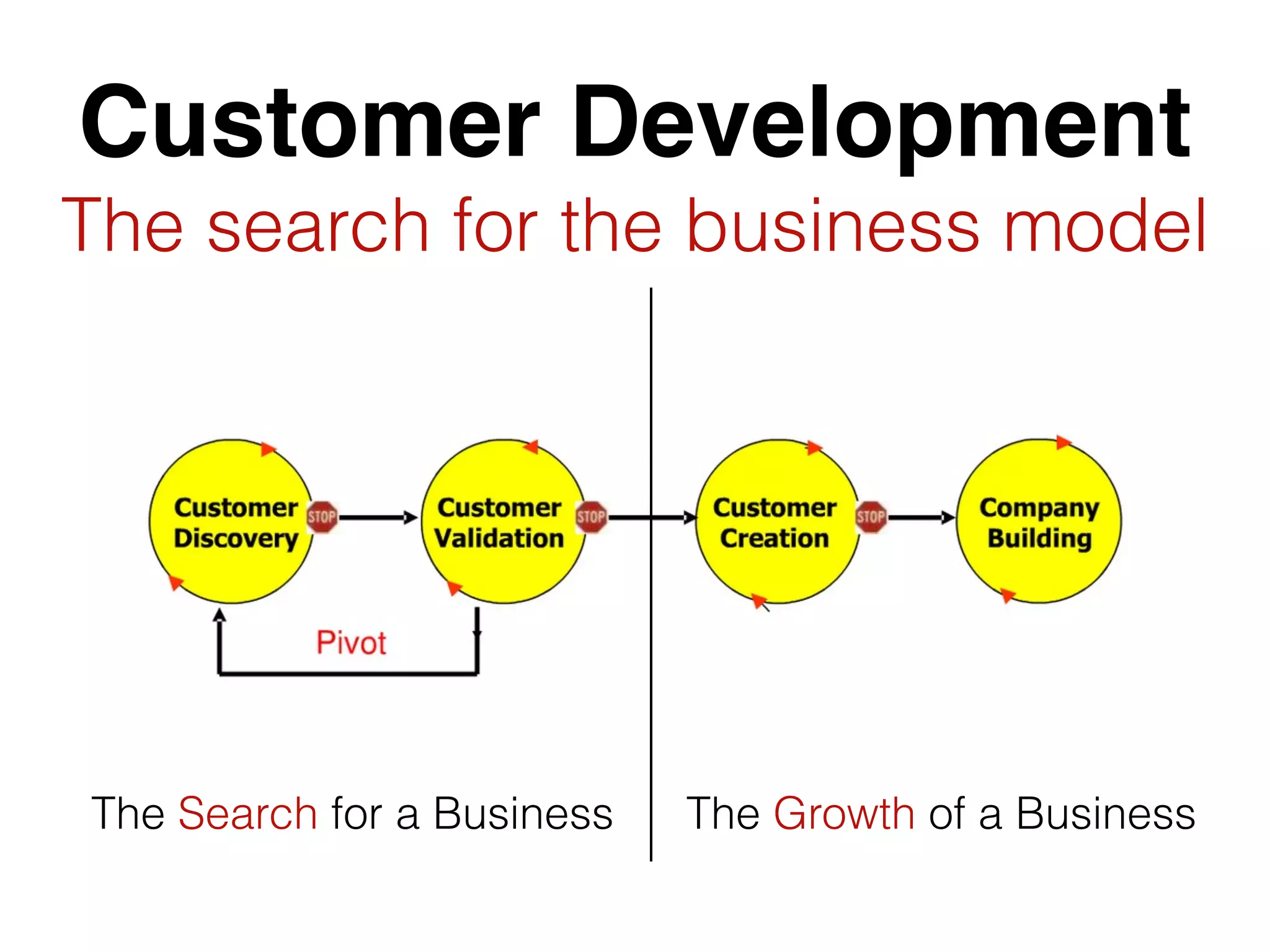
Customer Development
The search for the business model


The Search for a Business   The Growth of a Business
‘   Startup is an organization formed to
    search for a repeatable and scalable
    business model

                                  - Steve Blank
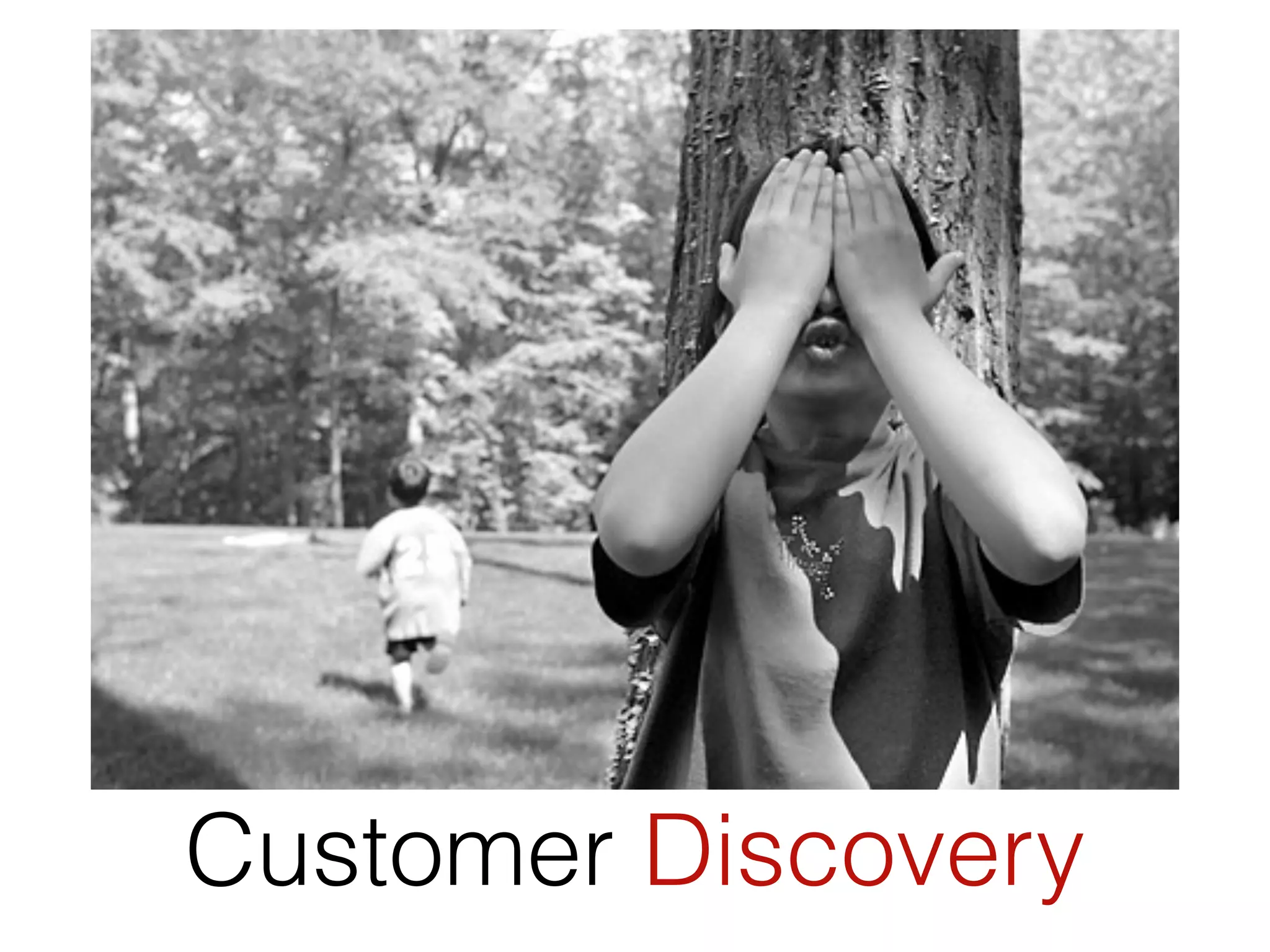
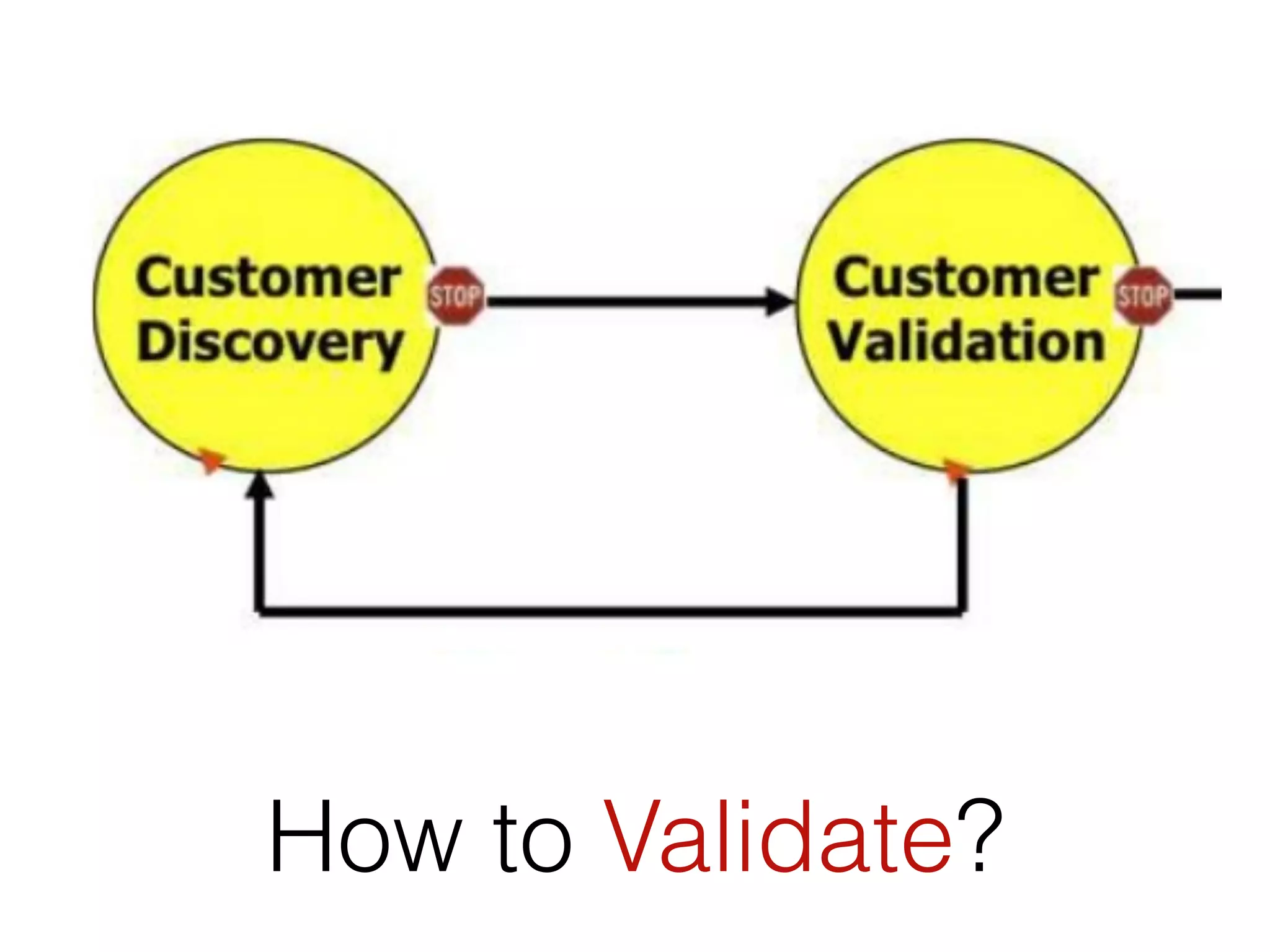
Customer Discovery
Customer Discovery
 ‣   Stop selling, start listening
 ‣   Test your hypotheses
 ‣   Continuous Discovery
Get out
 of the
building
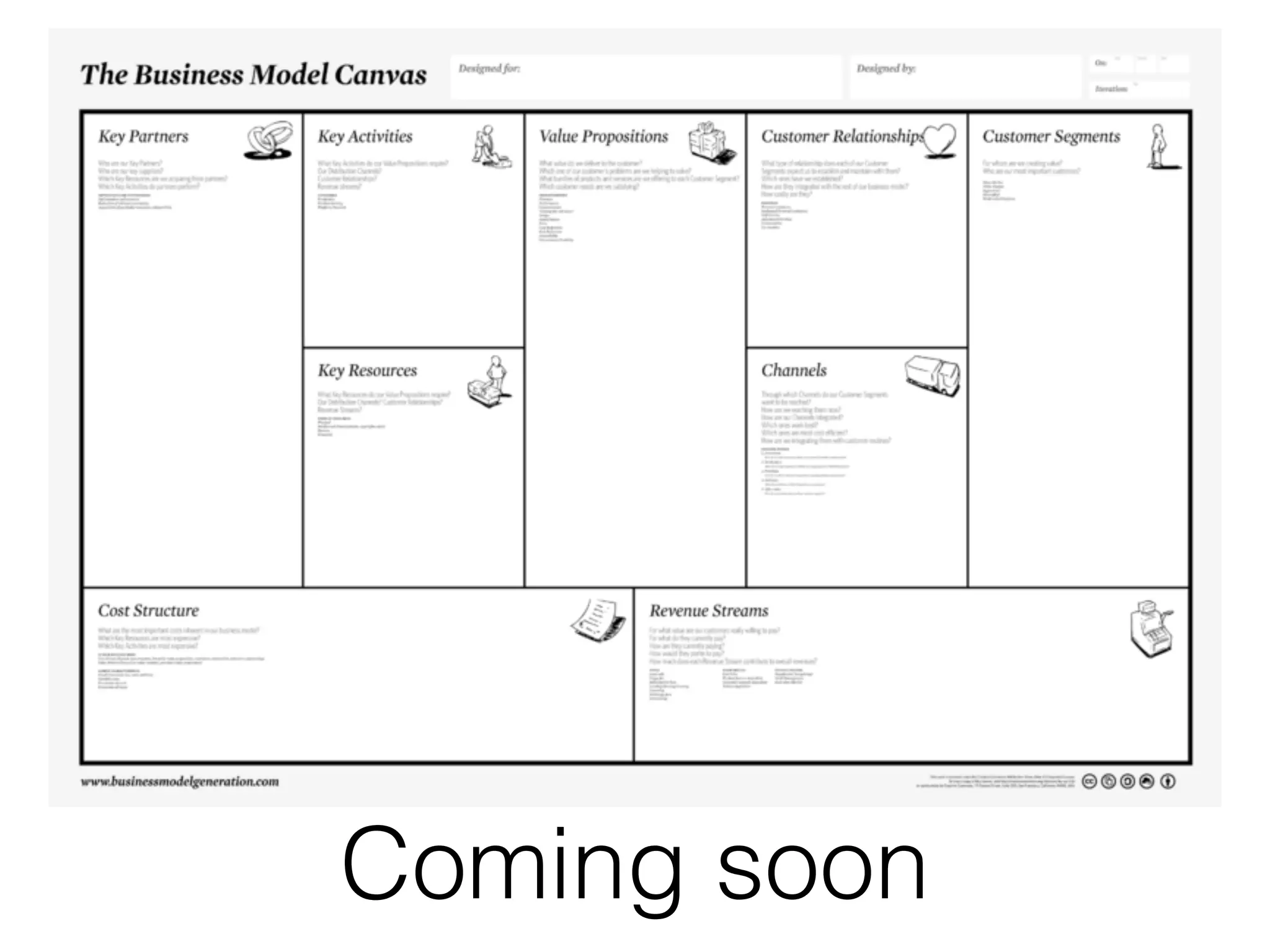
Coming soon
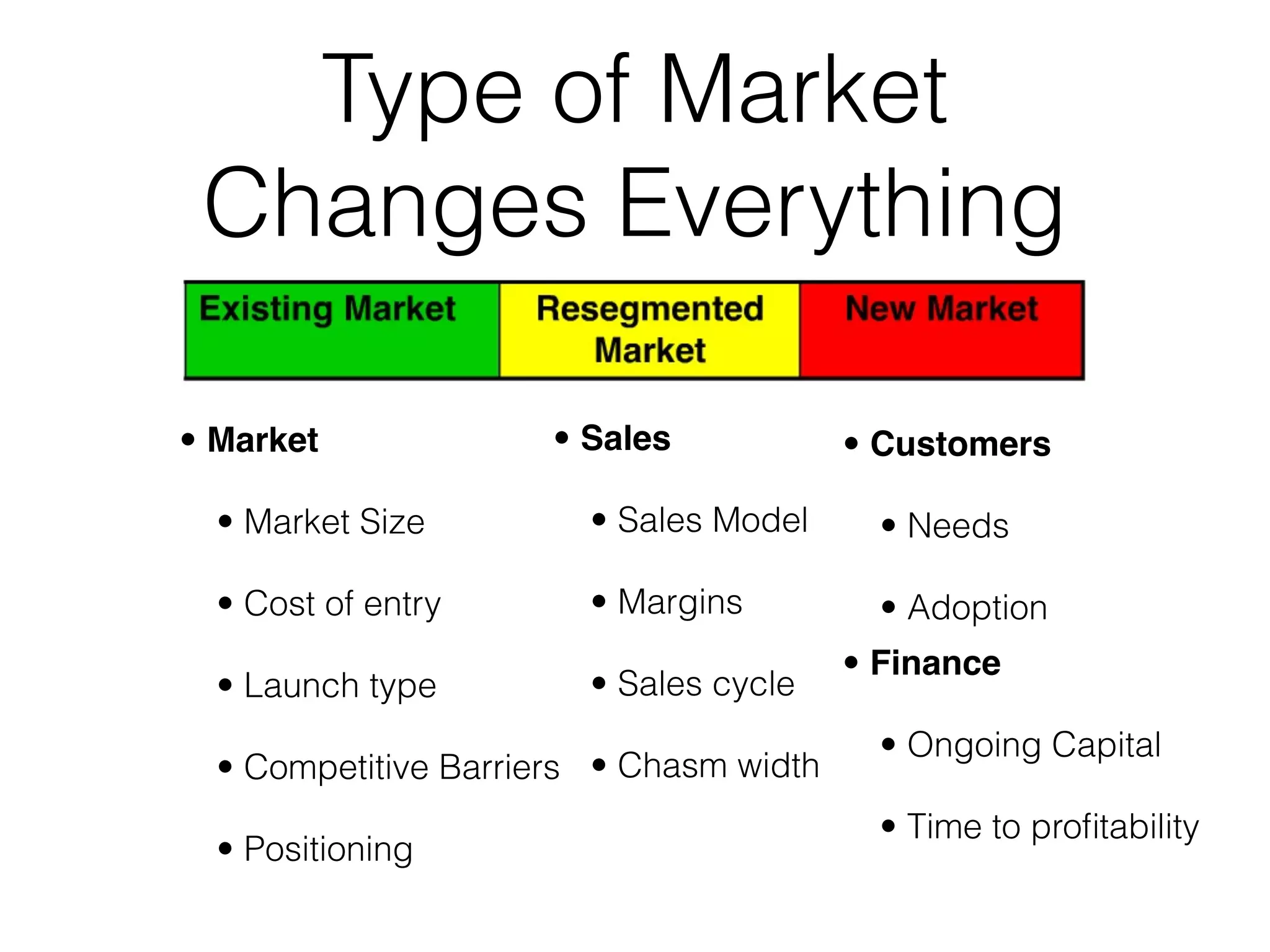
Type of Market
 Changes Everything

• Market              • Sales            • Customers

  • Market Size         • Sales Model      • Needs

  • Cost of entry       • Margins          • Adoption
                                         • Finance
  • Launch type         • Sales cycle
                                           • Ongoing Capital
  • Competitive Barriers • Chasm width
                                           • Time to profitability
  • Positioning
Customer Validation
How to Validate?
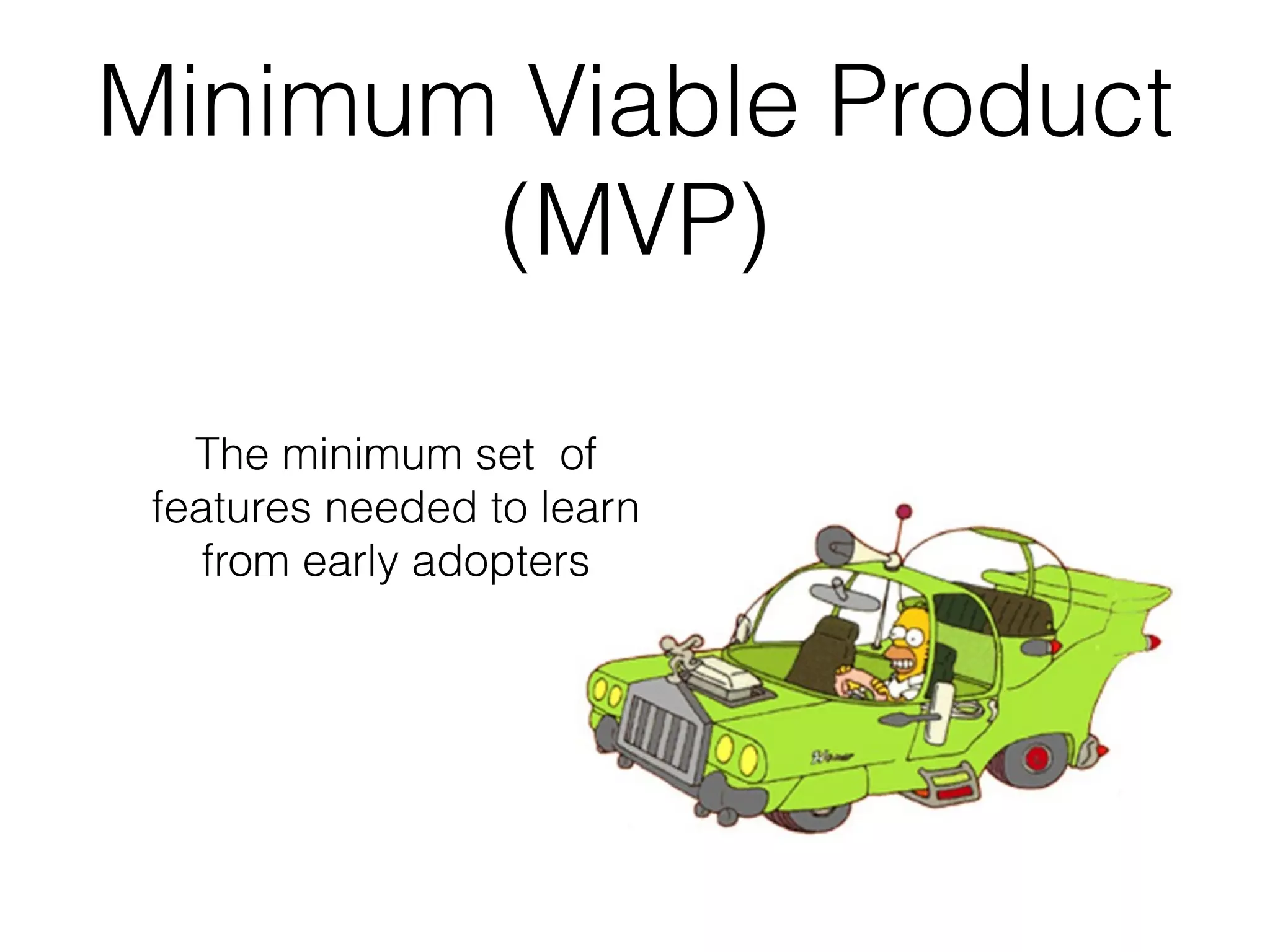
Minimum Viable Product
       (MVP)

   The minimum set of
 features needed to learn
    from early adopters
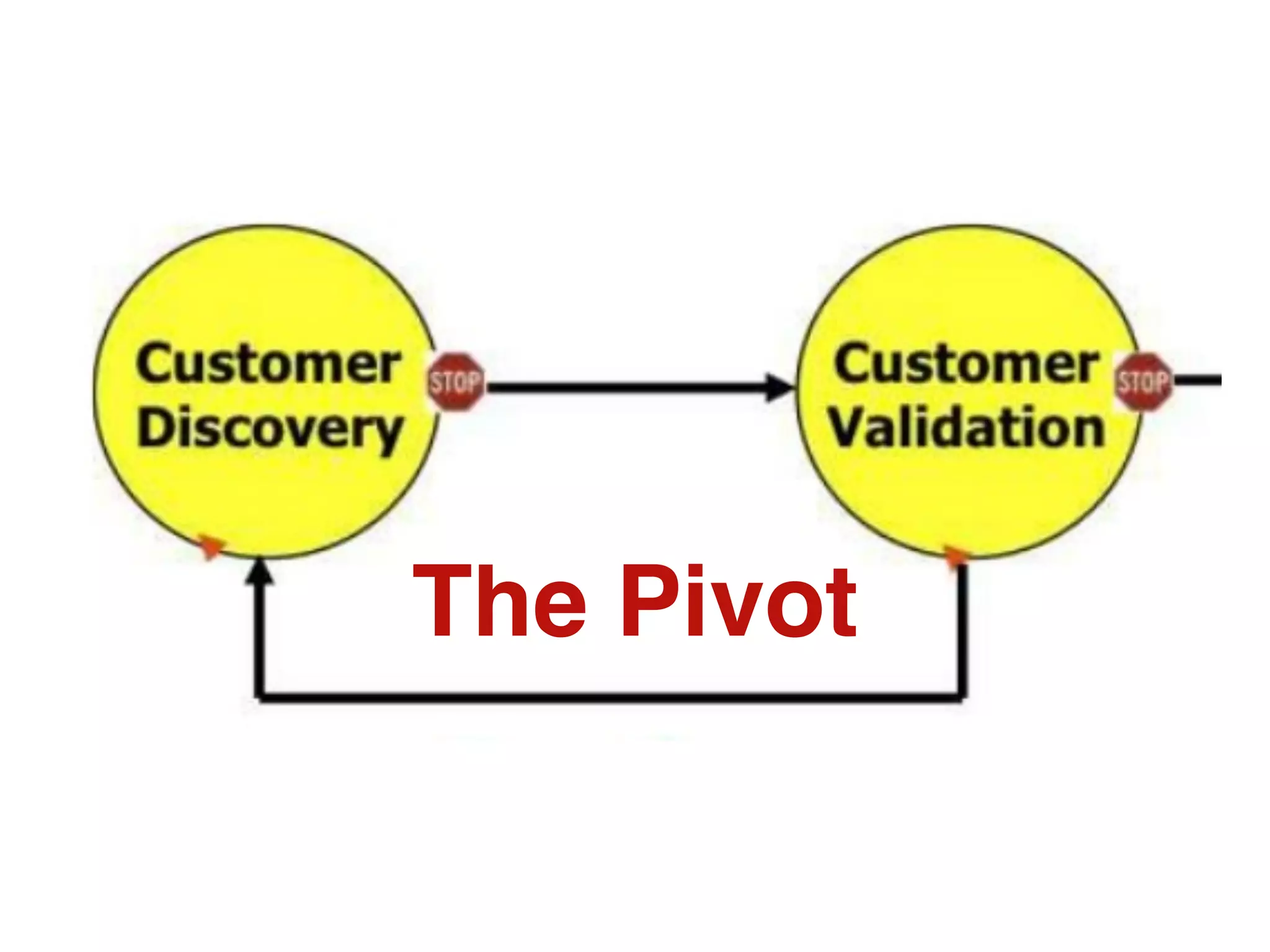
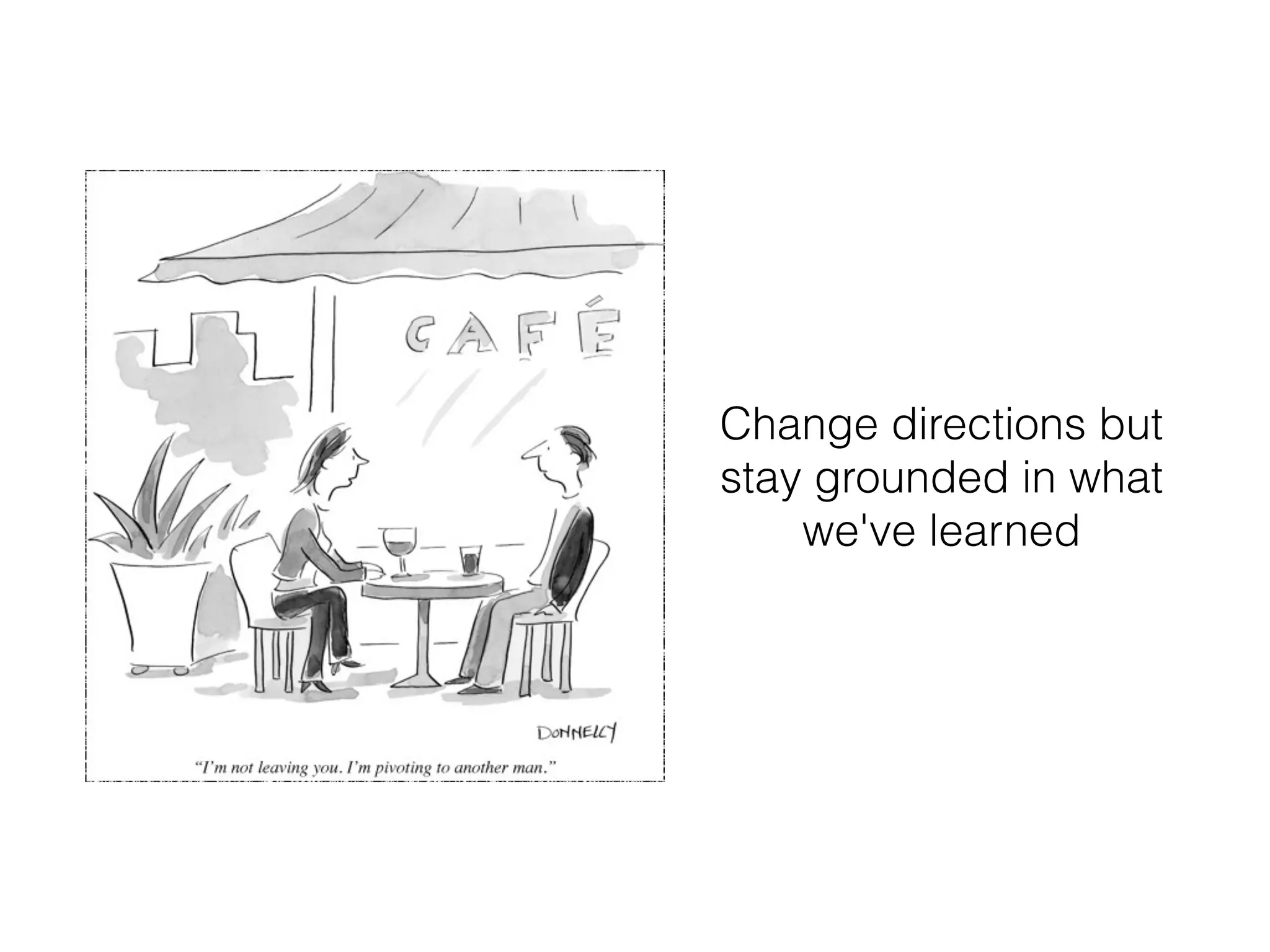
The Pivot
Change directions but
stay grounded in what
    we've learned
‘   A startup is a human institution
    designed to deliver a new product or
    service under conditions of extreme
    uncertainty.
                                  - Eric Ries
The Lean Startup Principles
 ‣   Entrepeneurs are everywhere
 ‣   Entrepeneurship is management
 ‣   Validated Learning
 ‣   Innovation Accounting
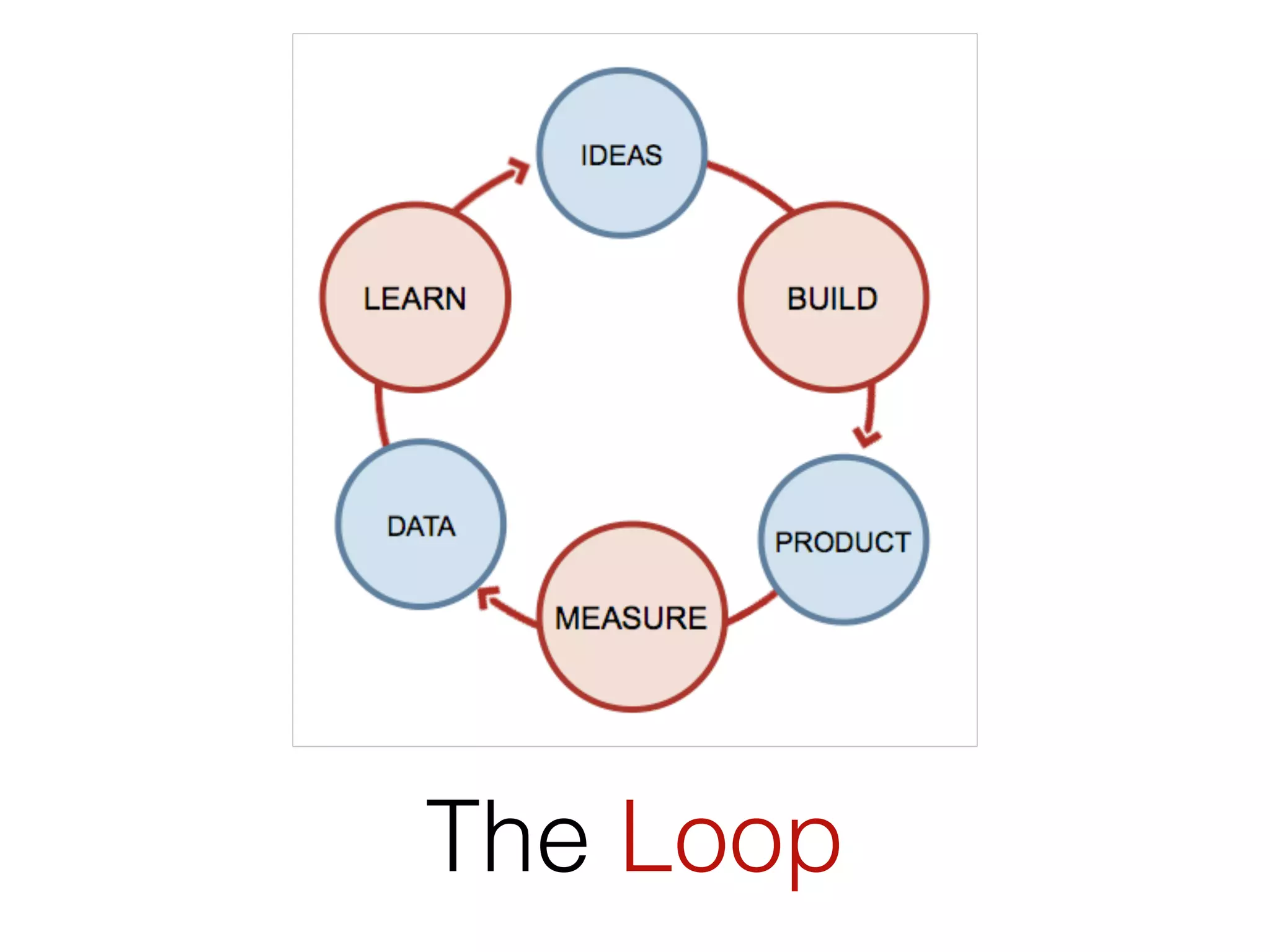
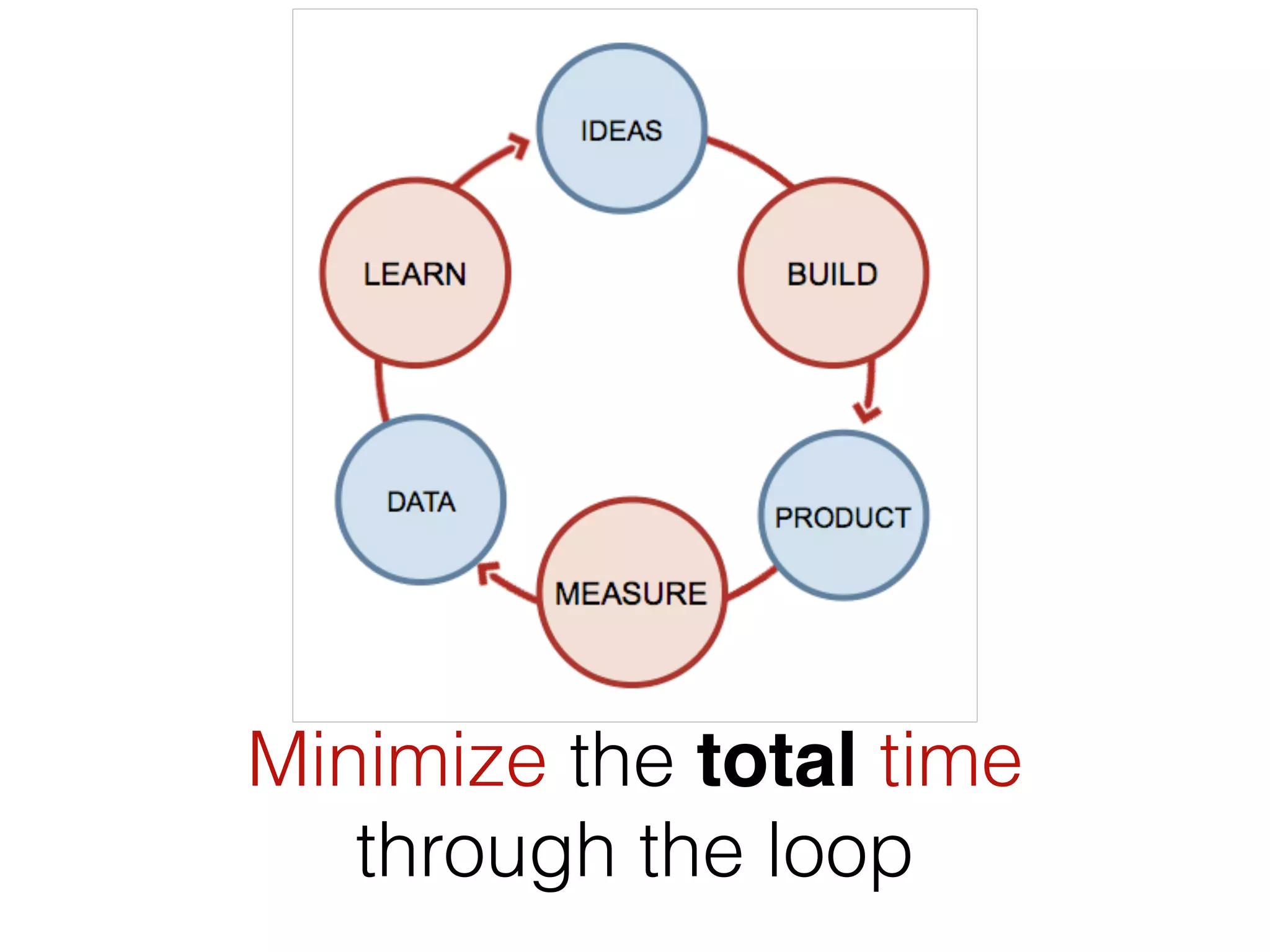
 ‣   Build-Measure-Learn
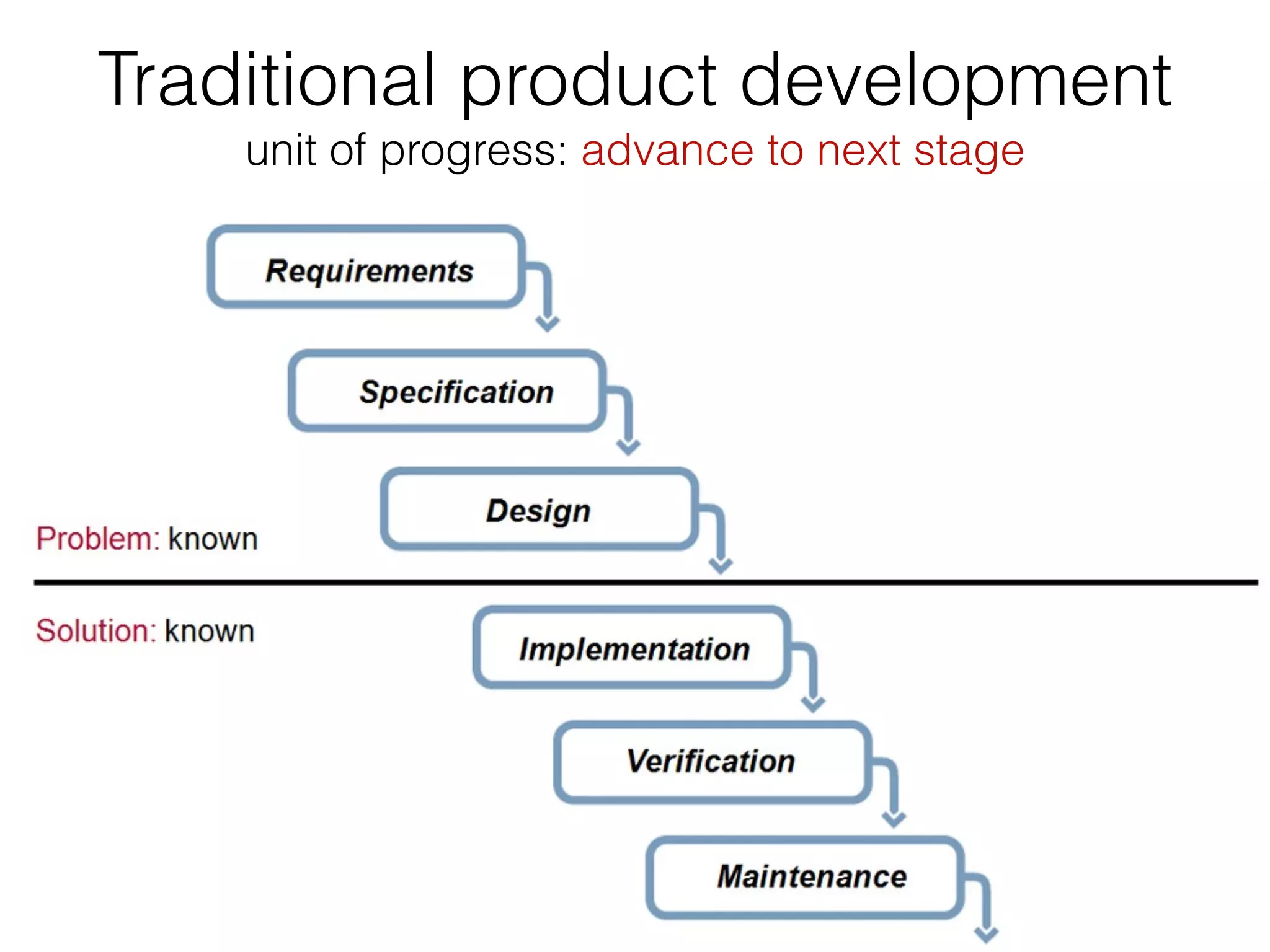
Traditional product development
    unit of progress: advance to next stage
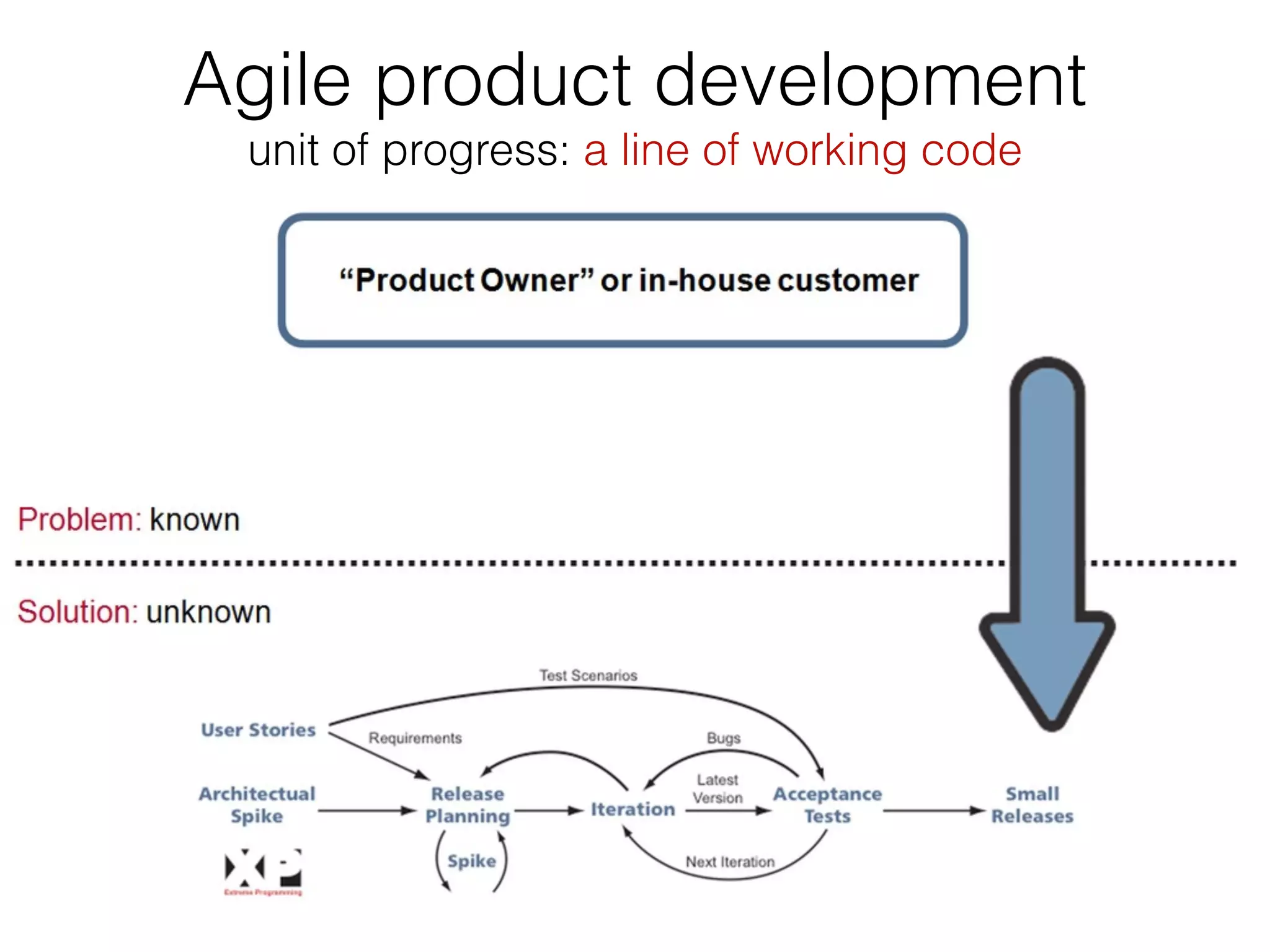
Agile product development
 unit of progress: a line of working code
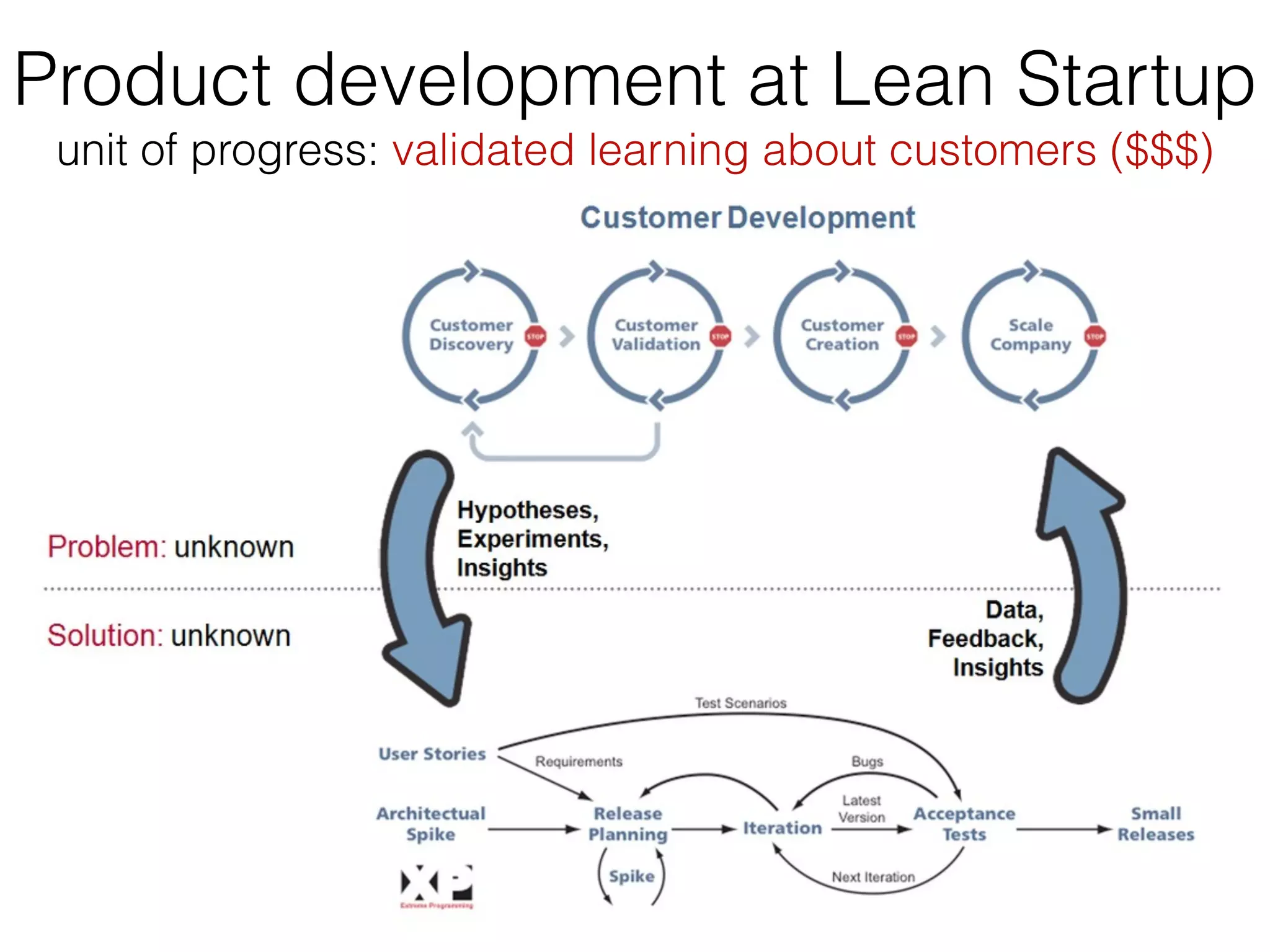
Product development at Lean Startup
 unit of progress: validated learning about customers ($$$)
The Loop
Minimize the total time
   through the loop
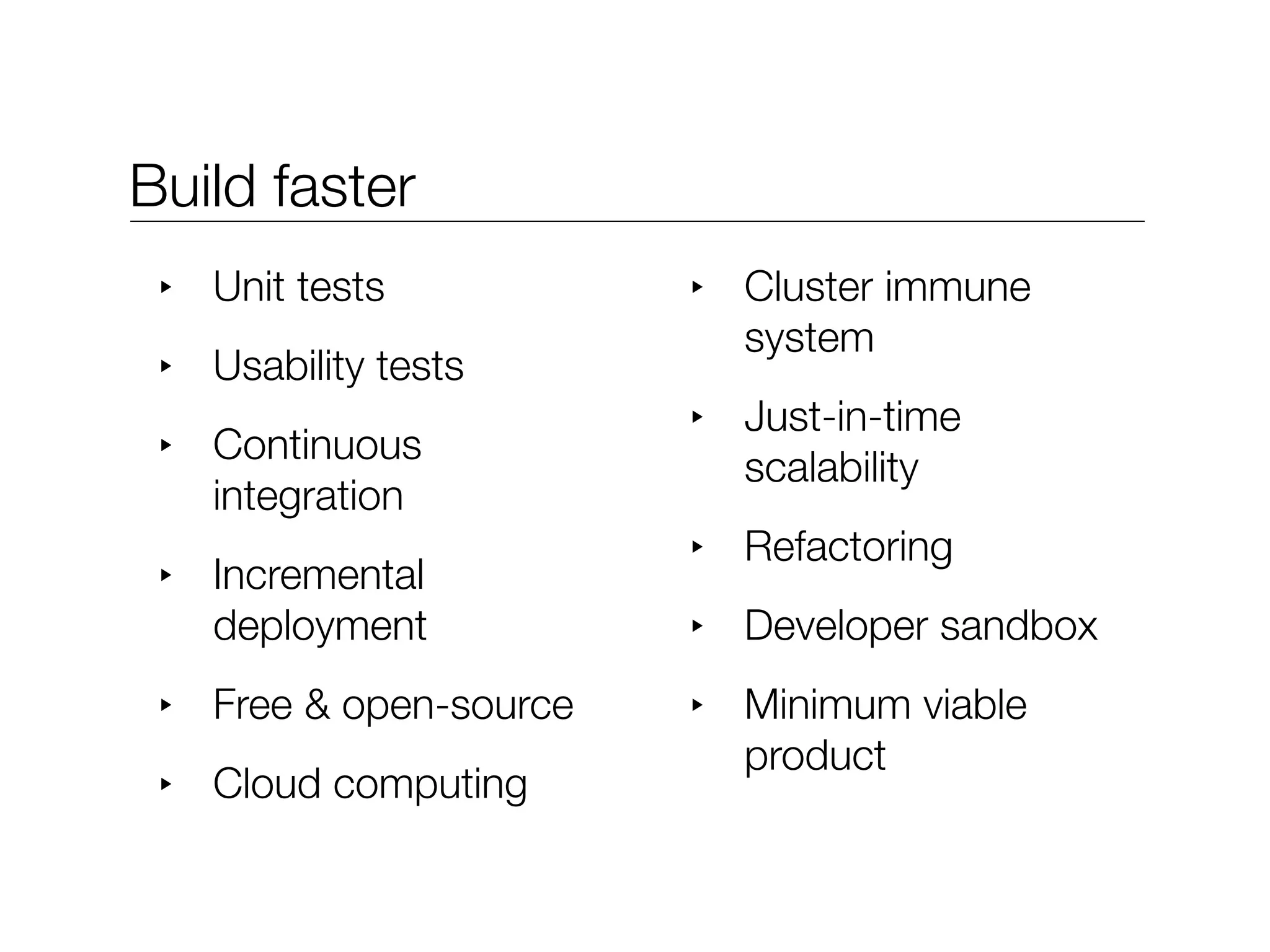
Build faster
 ‣   Unit tests           ‣   Cluster immune
                              system
 ‣   Usability tests
                          ‣   Just-in-time
 ‣   Continuous
                              scalability
     integration
                          ‣   Refactoring
 ‣   Incremental
     deployment           ‣   Developer sandbox
 ‣   Free & open-source   ‣   Minimum viable
                              product
 ‣   Cloud computing
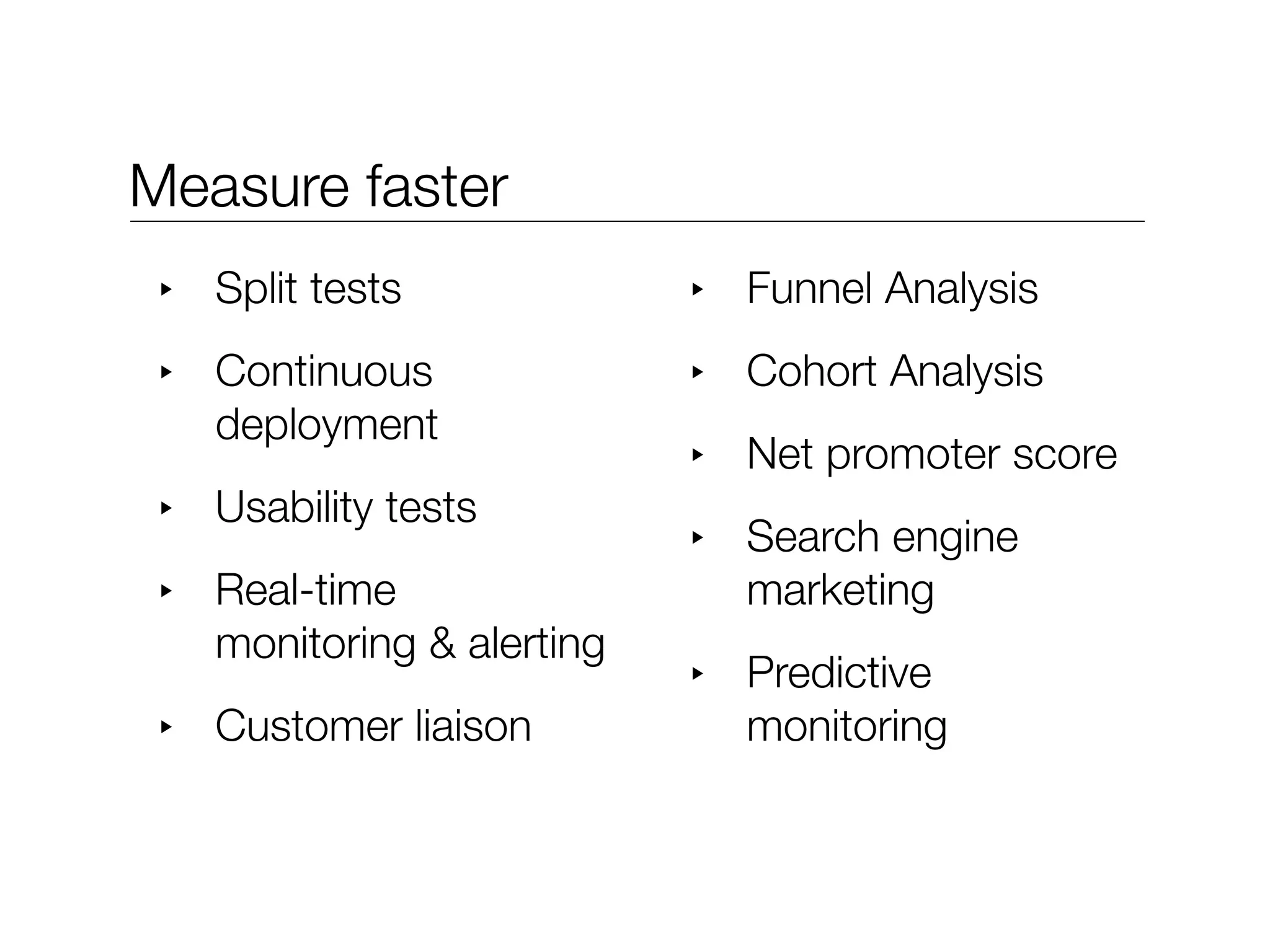
Measure faster
 ‣   Split tests             ‣   Funnel Analysis
 ‣   Continuous              ‣   Cohort Analysis
     deployment
                             ‣   Net promoter score
 ‣   Usability tests
                             ‣   Search engine
 ‣   Real-time                   marketing
     monitoring & alerting
                             ‣   Predictive
 ‣   Customer liaison            monitoring
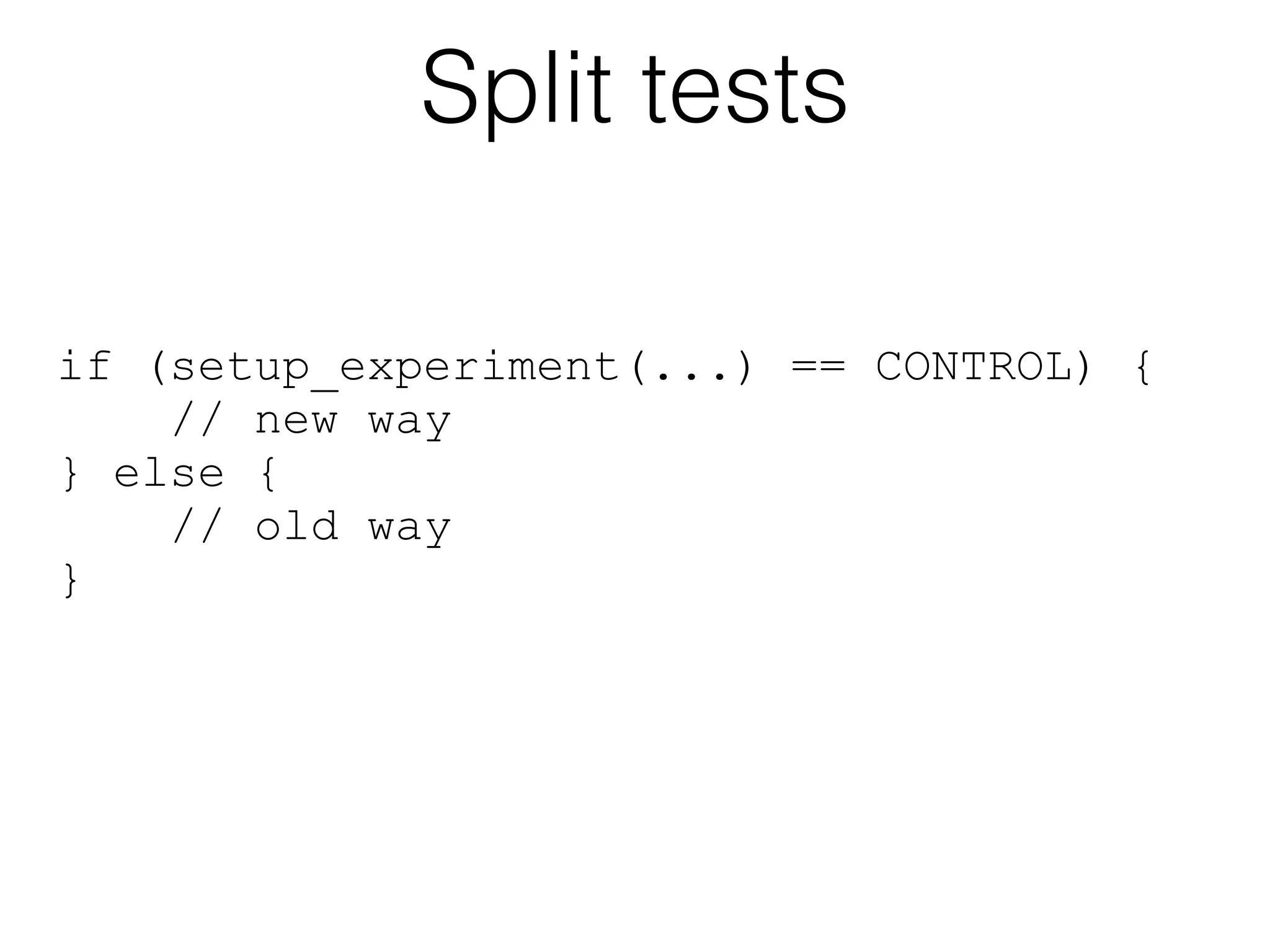
Split tests

if (setup_experiment(...) == CONTROL) {
    // new way
} else {
    // old way
}
Continuous deployment
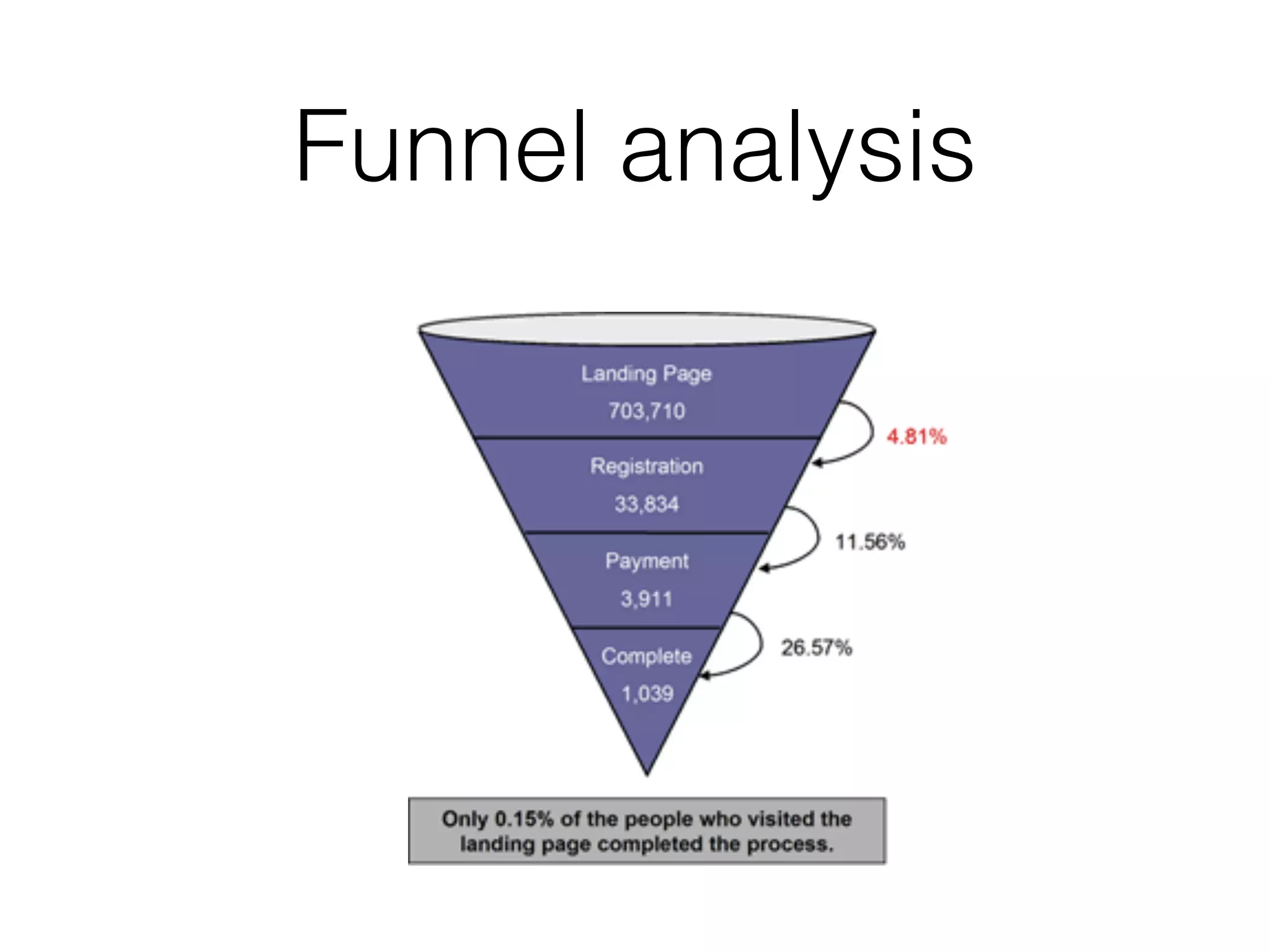
Funnel analysis
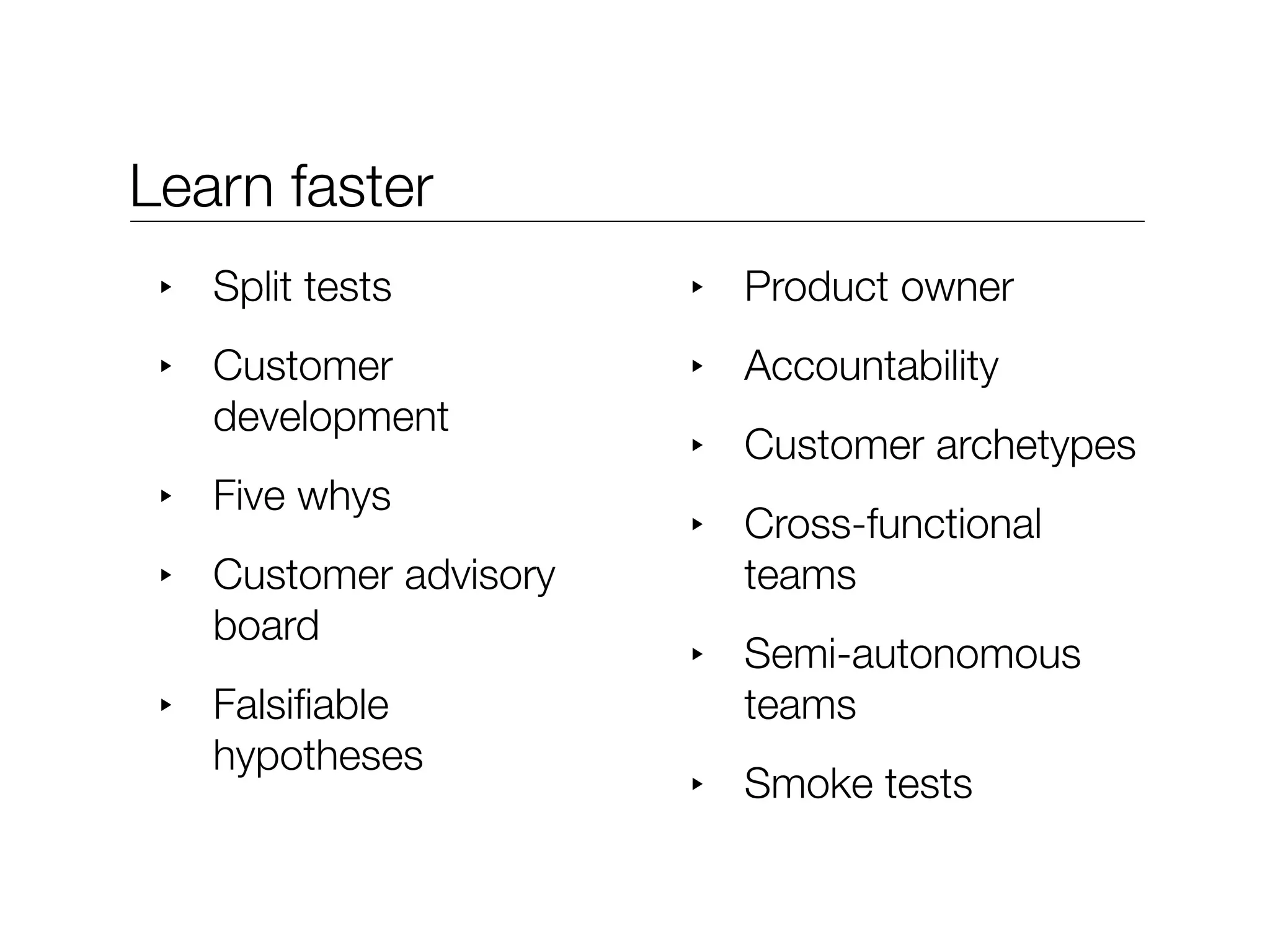
Learn faster
 ‣   Split tests         ‣   Product owner
 ‣   Customer            ‣   Accountability
     development
                         ‣   Customer archetypes
 ‣   Five whys
                         ‣   Cross-functional
 ‣   Customer advisory       teams
     board
                         ‣   Semi-autonomous
 ‣   Falsifiable              teams
     hypotheses
                         ‣   Smoke tests
Reality Check
http://slidesha.re/kexf1L
Q&A
Thank you

Startup tools