Power of one
Power of the Commuity
By Robin Low
Doing Good
• Everyone likes to do good, but have you
thought about having real impact in the things
you do?
• Donations are an easy way to help, but is the
money reaching the ground and causing any
real impact?
• Why do we fail at helping?
Power of One
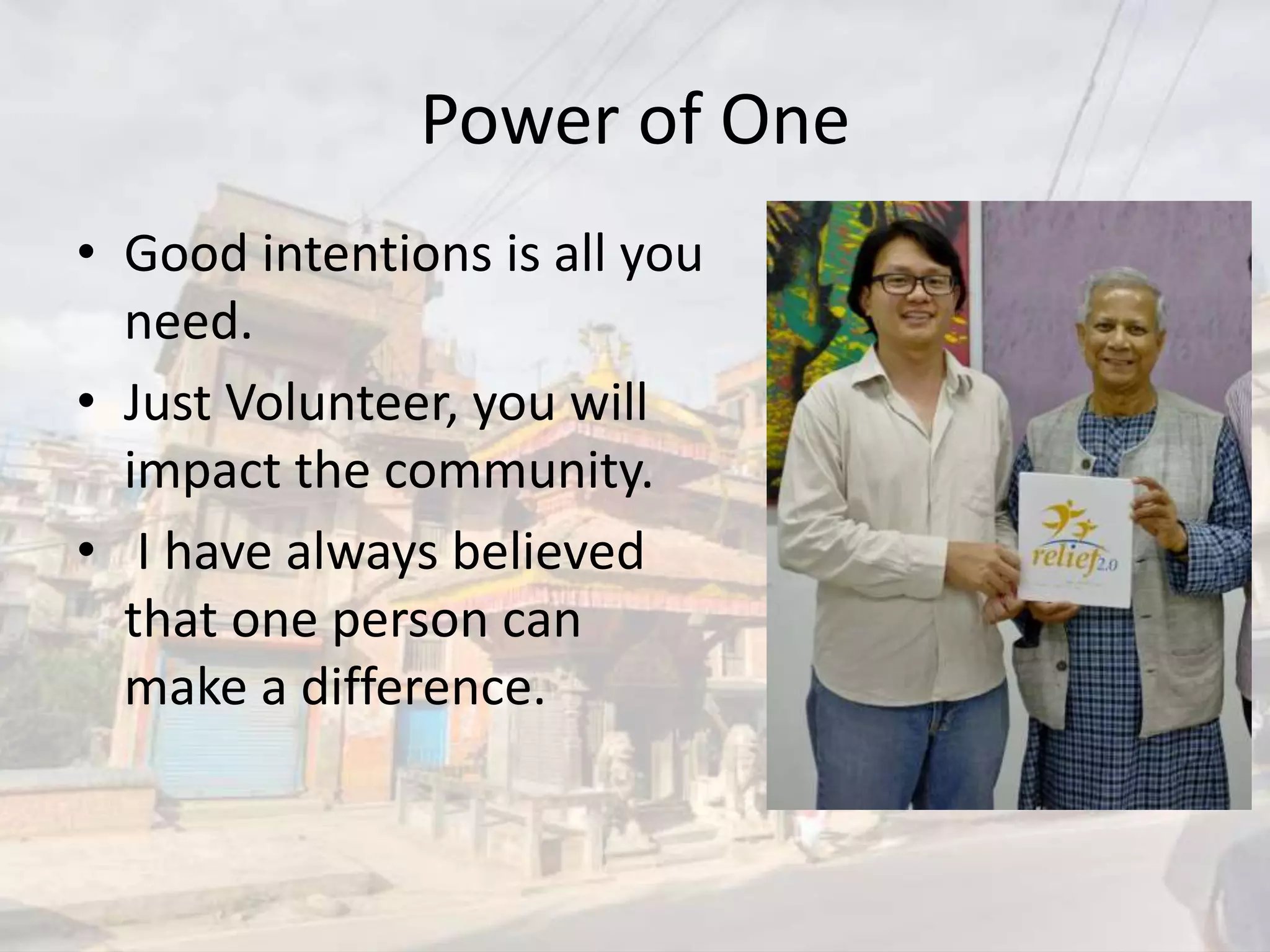
• Good intentions is all you
need.
• Just Volunteer, you will
impact the community.
• I have always believed
that one person can
make a difference.
Define help
• Help is any form of assistance.
-- Wikipedia
Case 1
• Robin’s Chicken Farms
• 200 chickens, chicken coops.
• Skills building, breeding, feeding, transporting
and selling eggs.
• Crop rotation
Case 1: impact
• Sold eggs increasing daily income from $7 to
$50
• Repaid back capital of $2000 in 3 months.
Case 1: results
• After 9 months.
• All chickens are eaten, no chickens remain.
• All villages back to what it was before.
• Except some houses with flat screen TVs
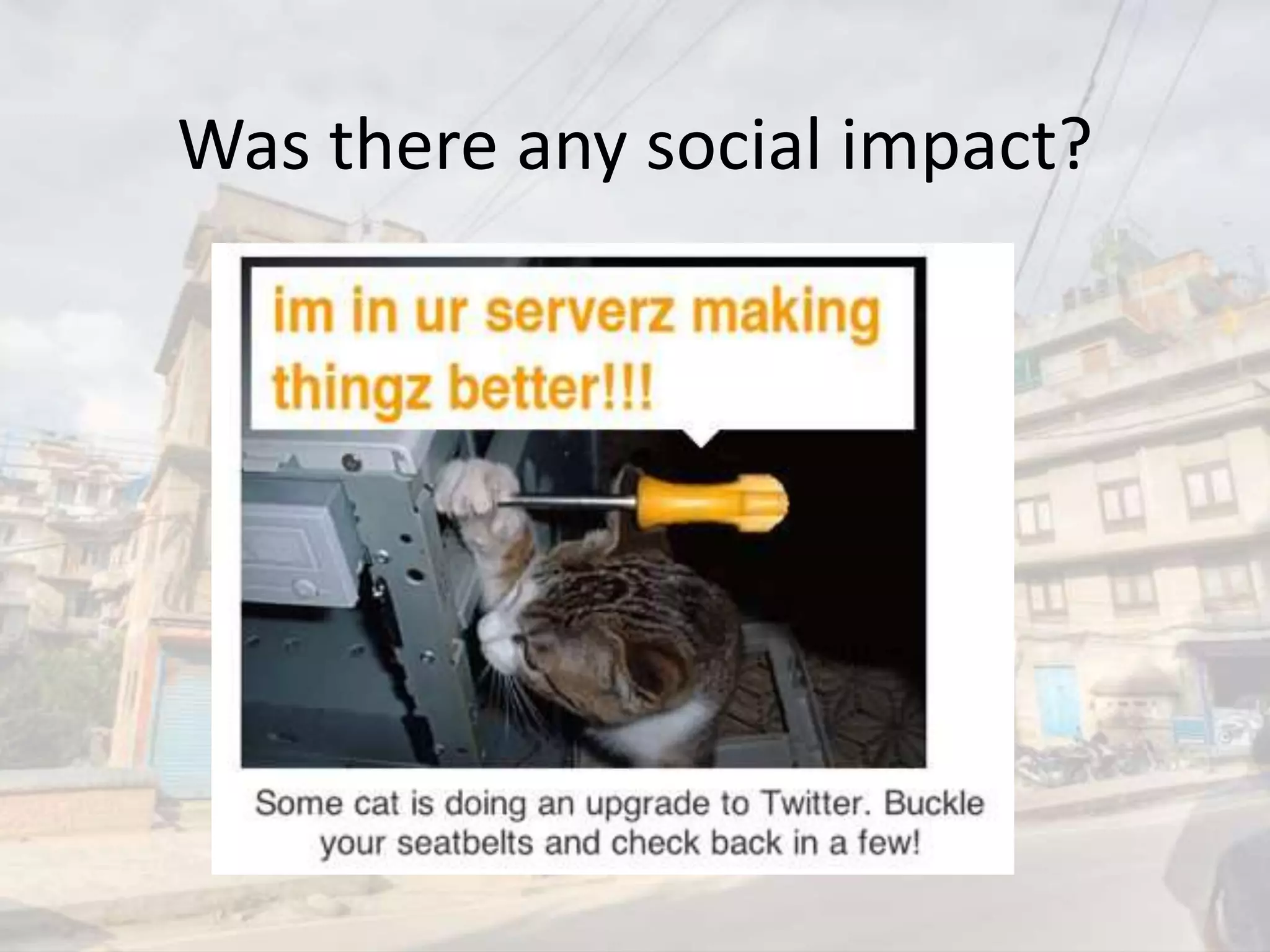
Was there any social impact?
Aid can alleviate immediate misery and that is
why we love it. Charity is a human response to
all those images that pull on our heartstrings.
But are we giving out of pity?
All evidence points to the conclusion that, aid
not only has no positive effect on economic
growth, it may even undermine it.
“Philanthropy dollar” can only
be used once, the “social dollar”
can be used again and again.
-- Muhammad Yunus
Dangers of social intervention
• Making life decisions for those we are helping
• Is there “Over Helping?”
Celebrities giving in Africa.
• Has any country been saved by foreign AID?
• African countries are creating wealth, many
companies are doing well in Africa, but after
years of aid, why is poverty not reduced?
Free mosquito nets
• Mosquito net repair and training project in
Kenya squashed by the incoming of millions of
mosquito nets.
• Instead of importing millions of dollars worth
of malaria medicine, we can also grow
Artemisinin locally, which can process to
malaria medication.
• But we decide to continue endless cycle of
dependency.
Curse of Exclusion of
Locals in Disaster
Relief and Recovery
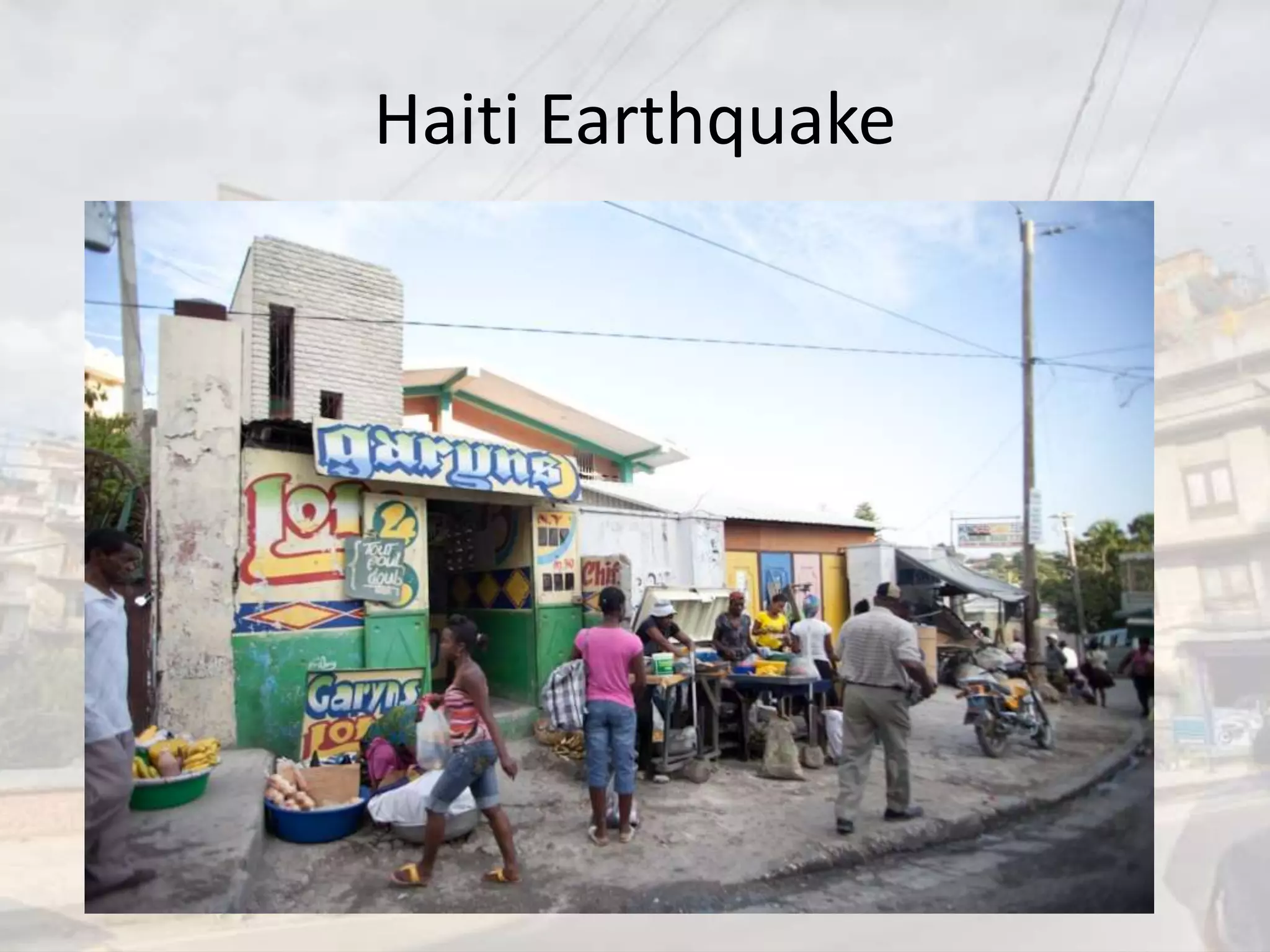
Haiti Earthquake
Doctors in Haiti
• Many free clinics from the Earthquake in 2010
are still running.
• Doctors from New York, Vermont, California,
Zurich, Berlin are in Port-au-Prince.
• Some local clinics and doctors are sitting in
the shelters because they have no jobs.
• This is the real impact for FREE MEDICAL
CARE.
Case 2
• Water project in India (With NGO)
• Running a few projects on tech in education in
various third world countries.
• NGO with water filters want to test in school.
• Installed at 2 schools, benefited 500 families.
Case 2: impact
• More than 1000 people have access to clean
water.
• Moms collect water to bring home to cook.
• Less sick days for kids, kids can focus in class.
Case 2: results
• Project got funding and want to scale to
villages.
• Villagers heard about the project, got excited.
• Criteria – village with dirtiest water will get a
pump and filter.
• Over 16 villages have poison in their wells.
• Only have funds for 8 filters and pumps.
Poor People are not Stupid
-- Muhammad Yunus
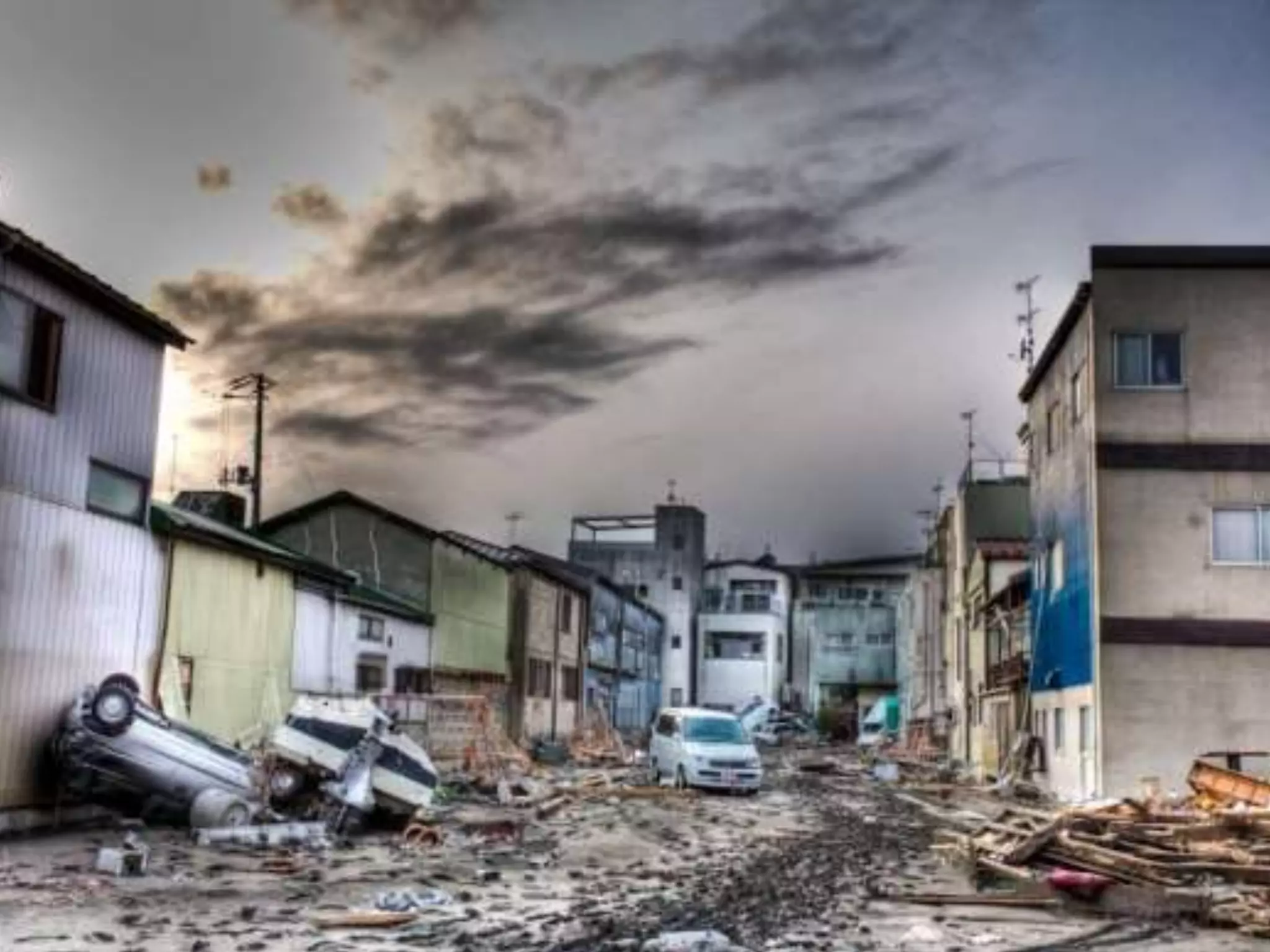
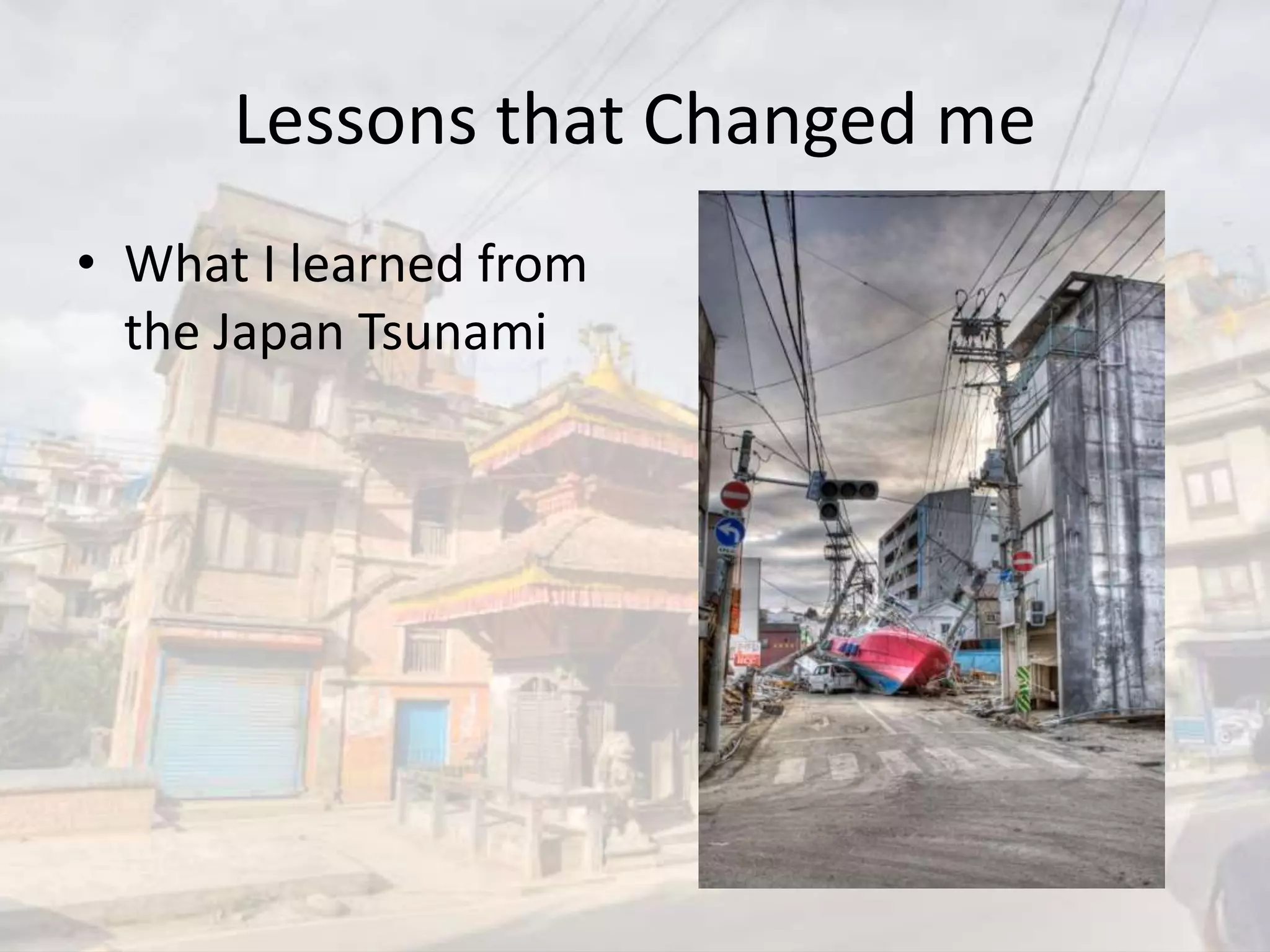
Lessons that Changed me
• What I learned from
the Japan Tsunami
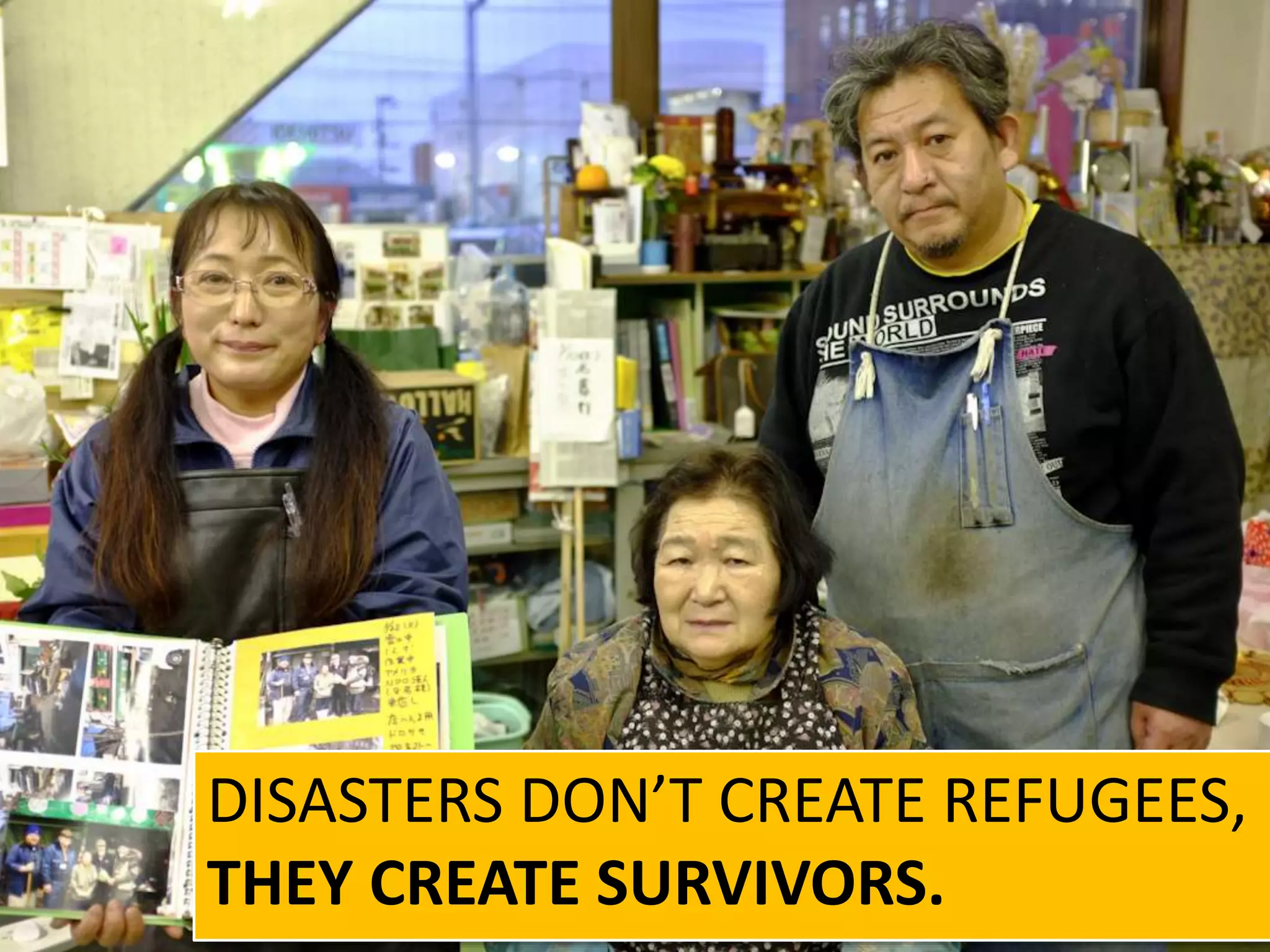
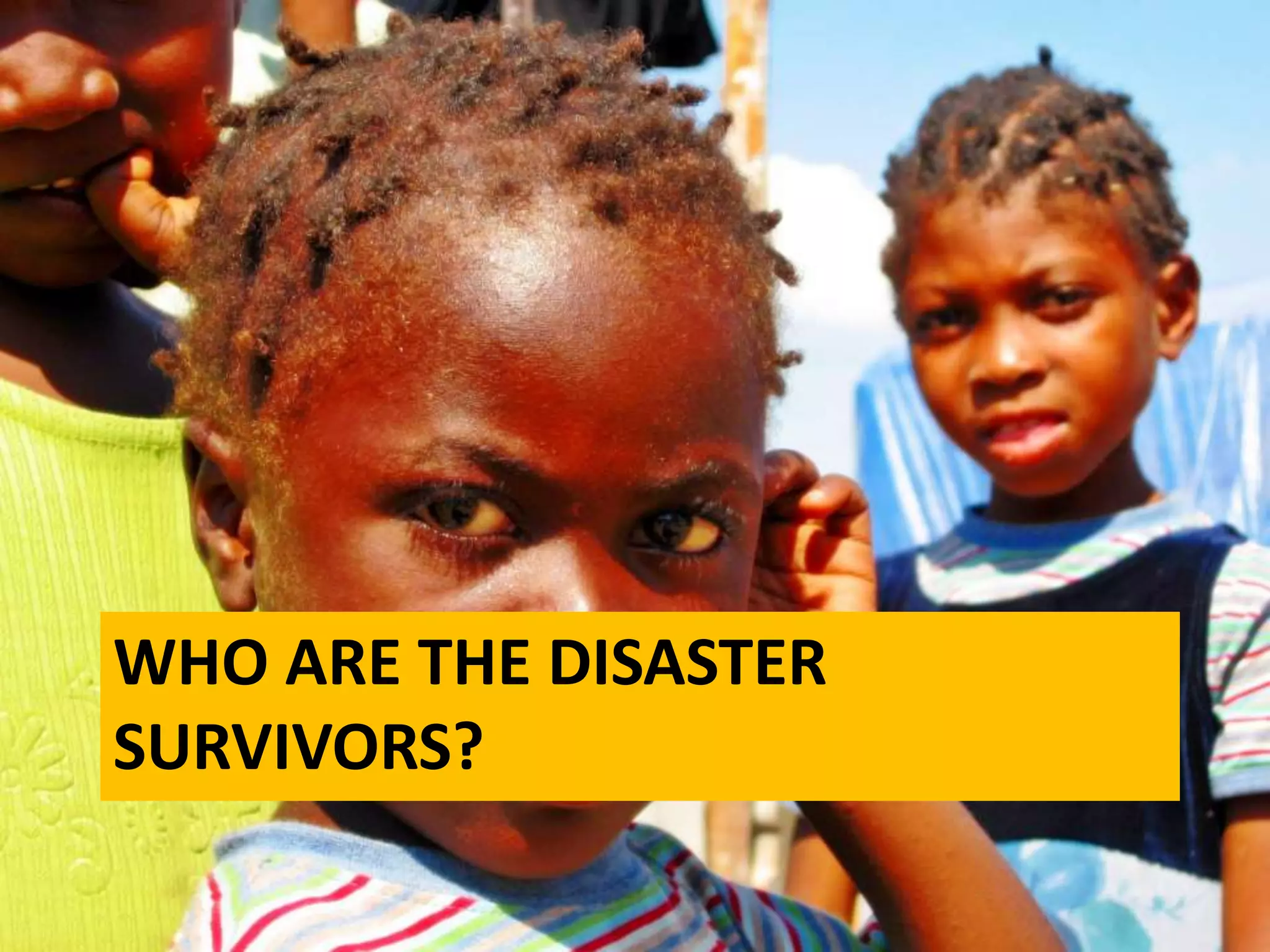
DISASTERS DON’T CREATE REFUGEES,
THEY CREATE SURVIVORS.
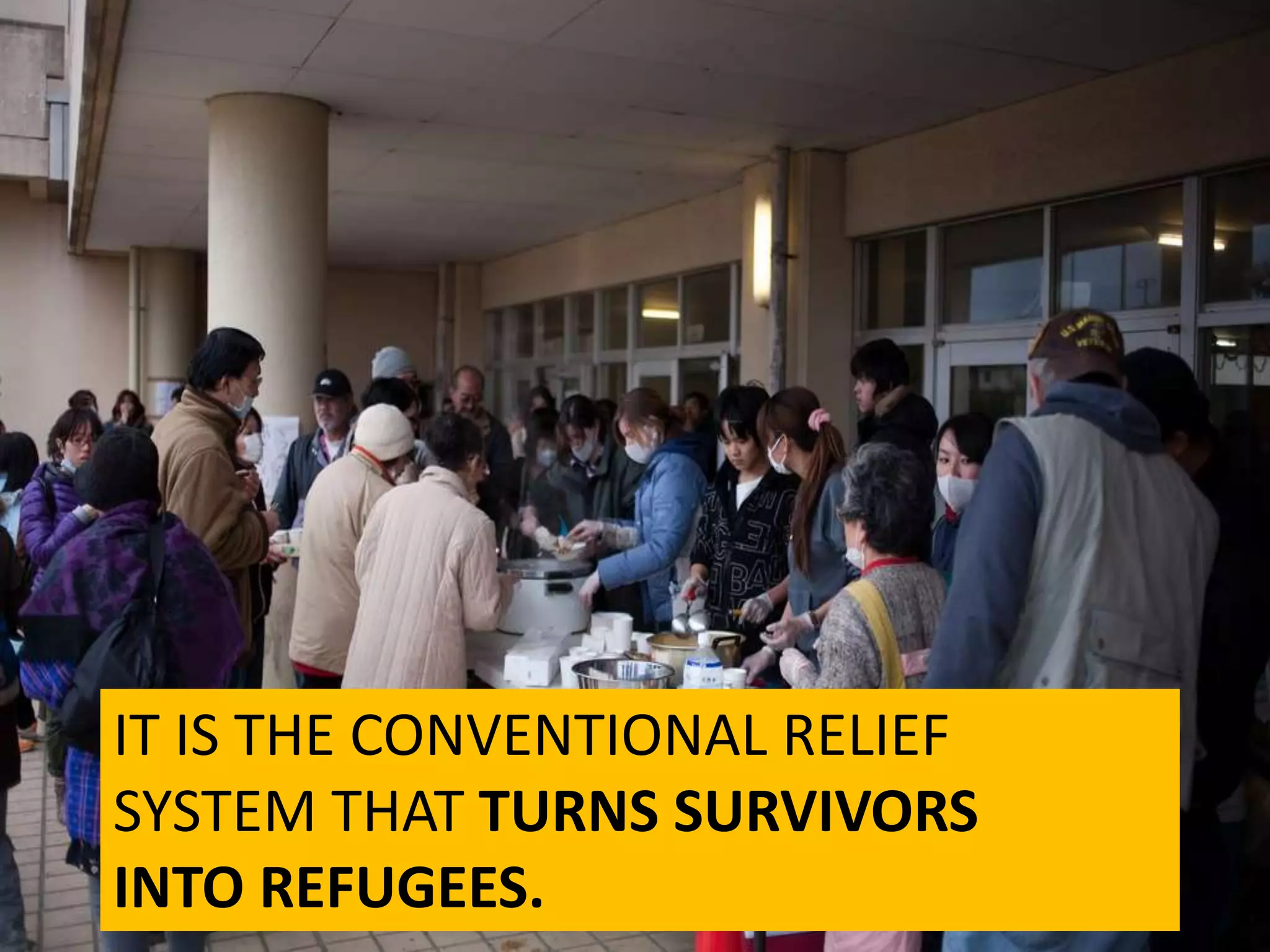
IT IS THE CONVENTIONAL RELIEF
SYSTEM THAT TURNS SURVIVORS
INTO REFUGEES.
WHO ARE THE DISASTER
SURVIVORS?
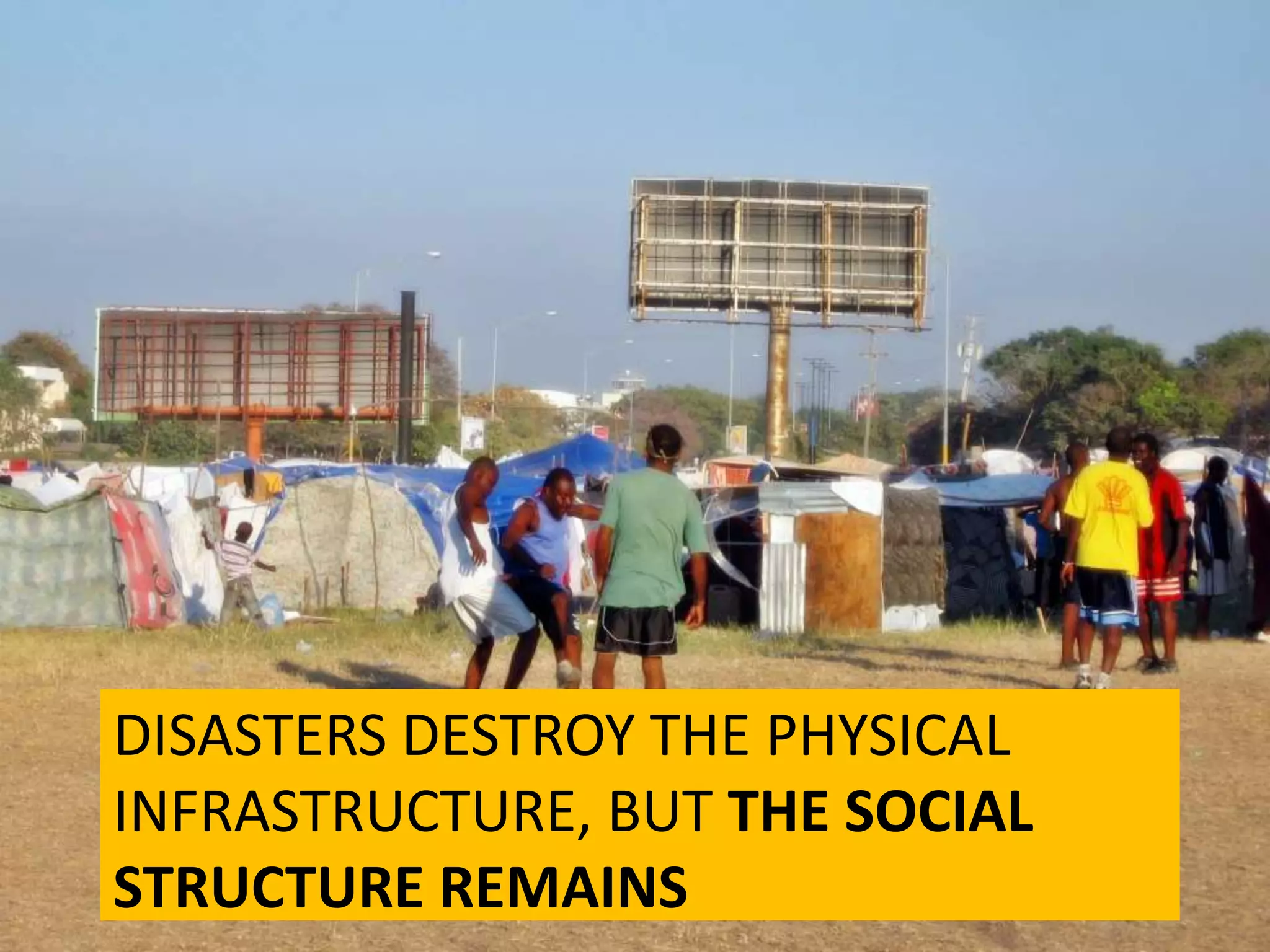
DISASTERS DESTROY THE PHYSICAL
INFRASTRUCTURE, BUT THE SOCIAL
STRUCTURE REMAINS
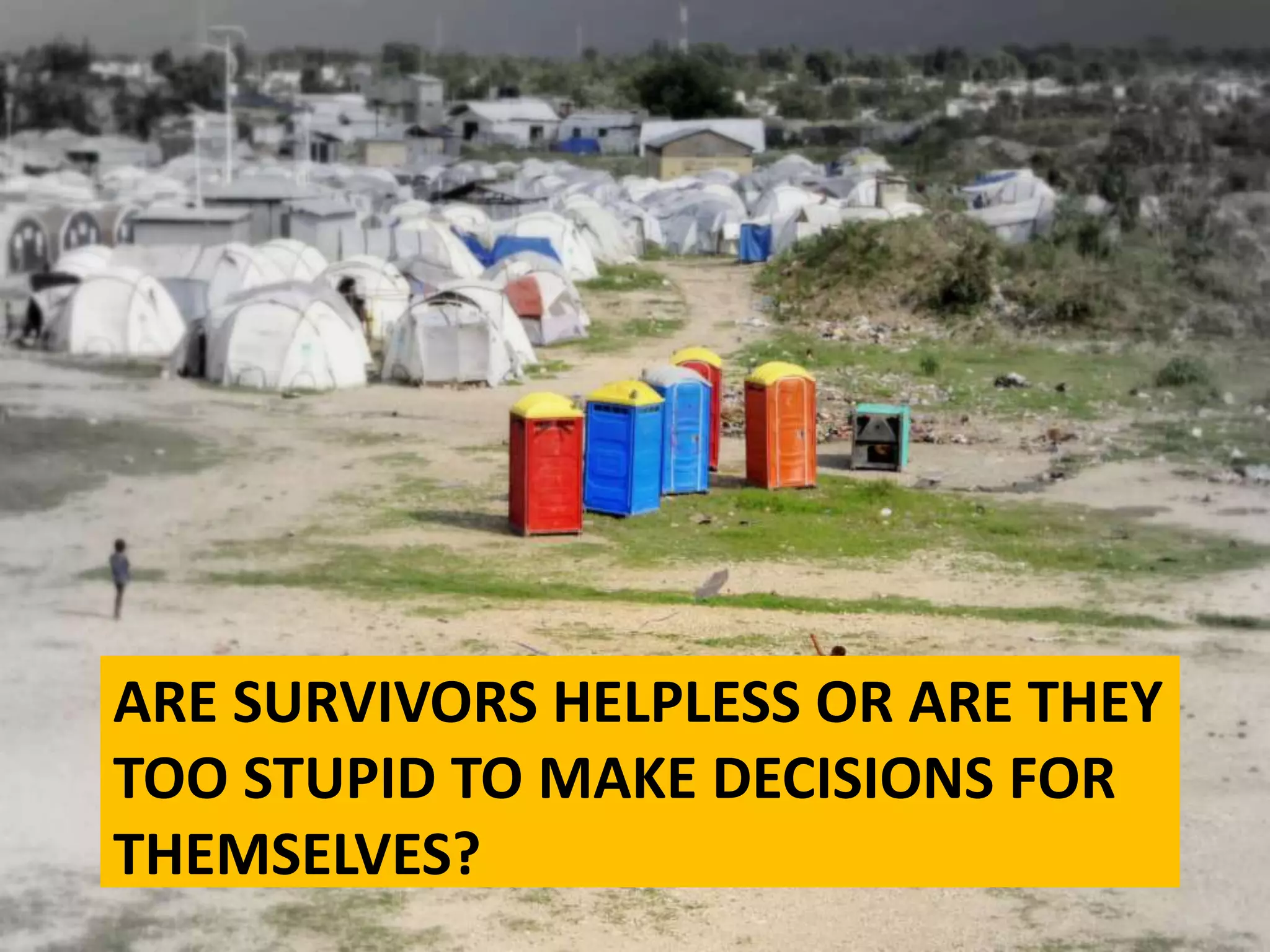
ARE SURVIVORS HELPLESS OR ARE THEY
TOO STUPID TO MAKE DECISIONS FOR
THEMSELVES?
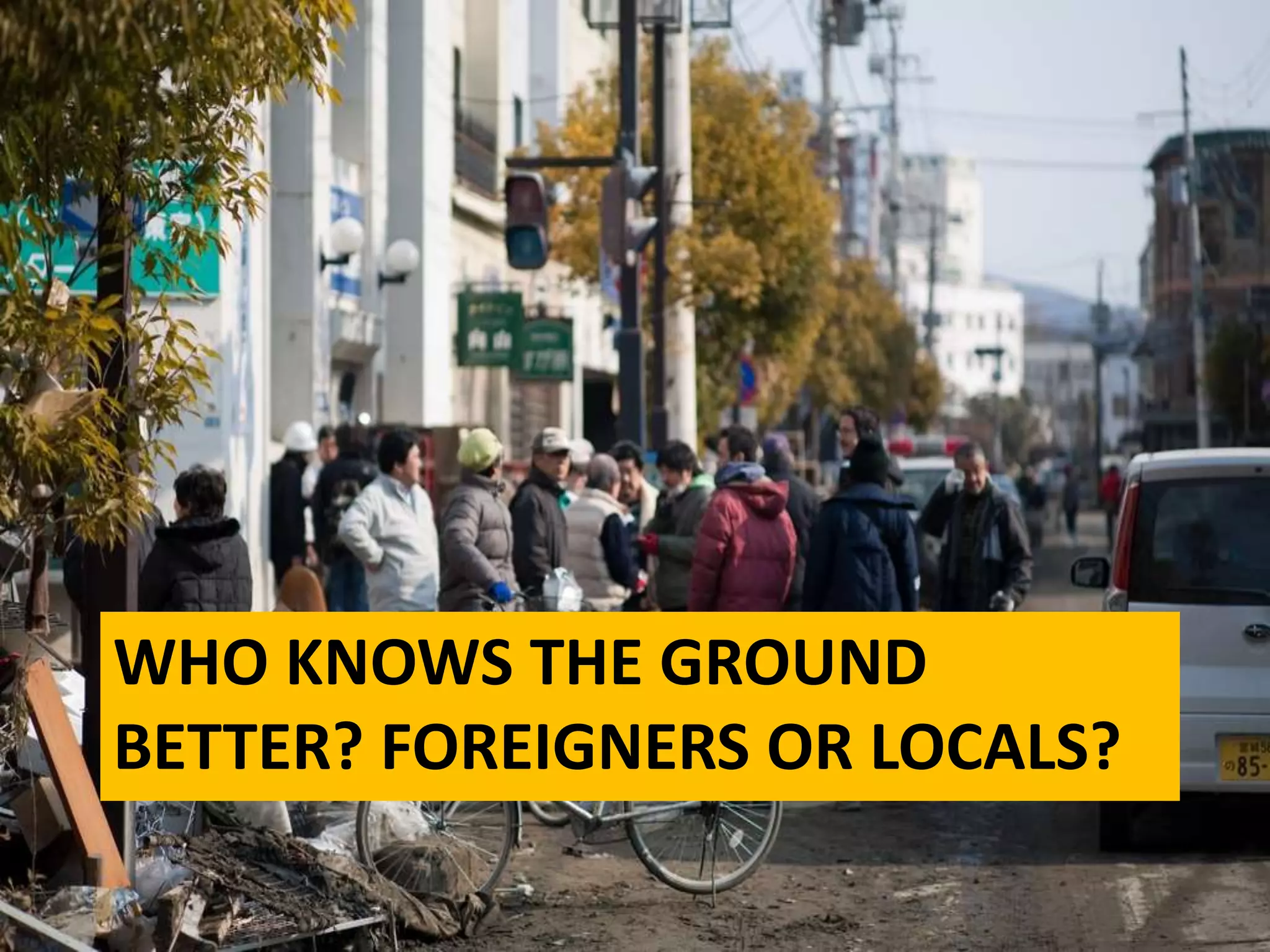
WHO KNOWS THE GROUND
BETTER? FOREIGNERS OR LOCALS?
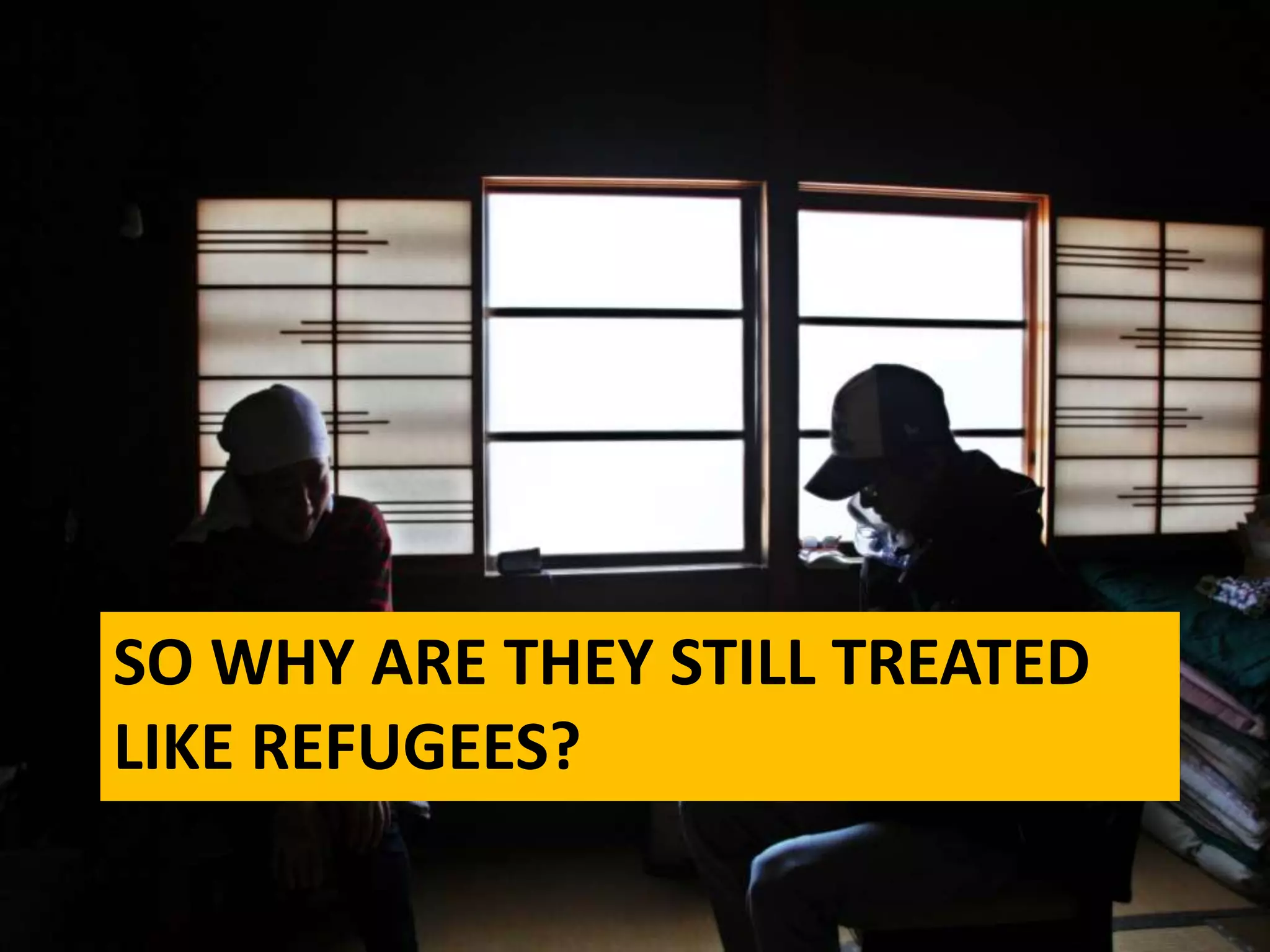
SO WHY ARE THEY STILL TREATED
LIKE REFUGEES?
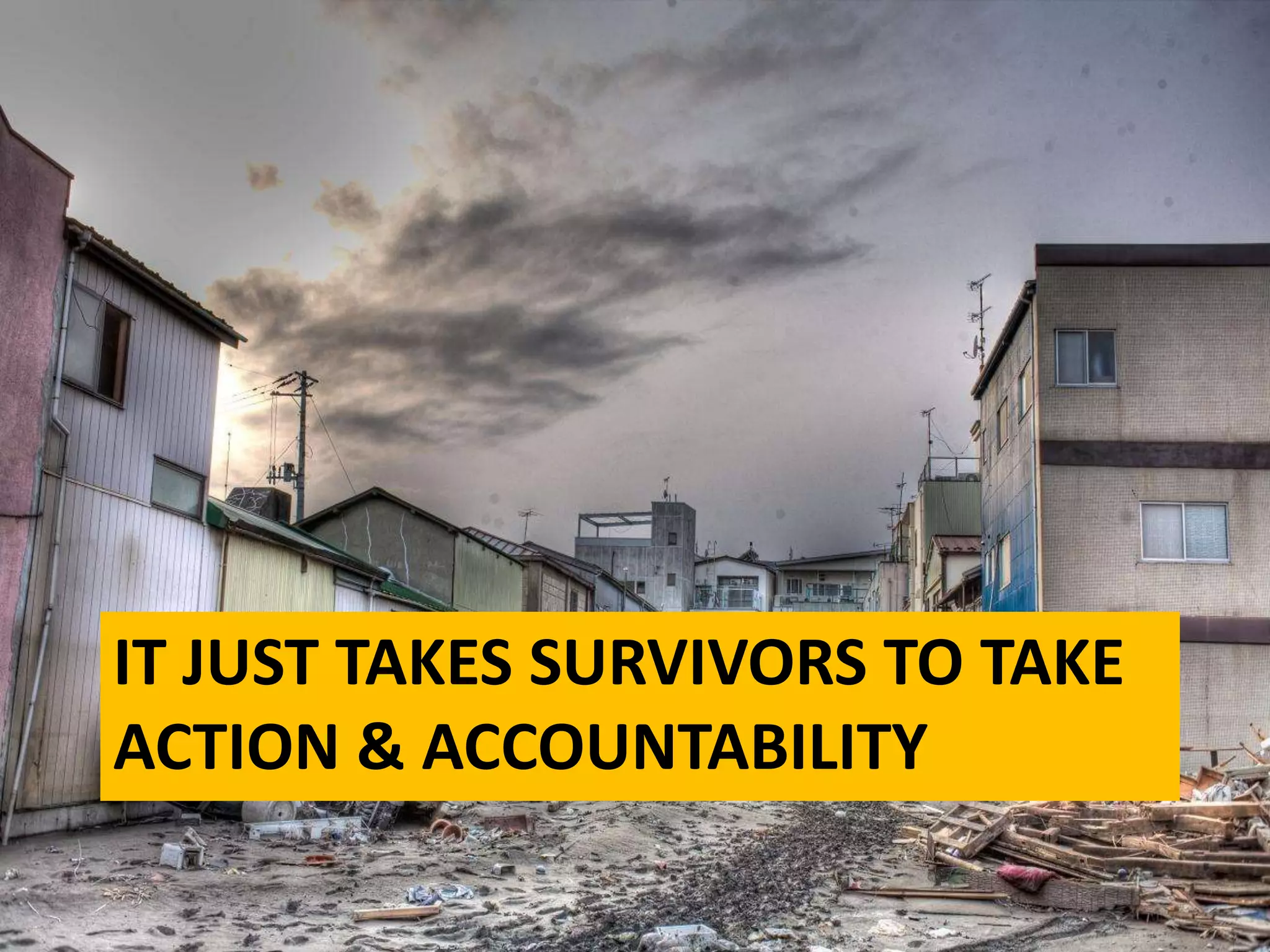
IT JUST TAKES SURVIVORS TO TAKE
ACTION & ACCOUNTABILITY
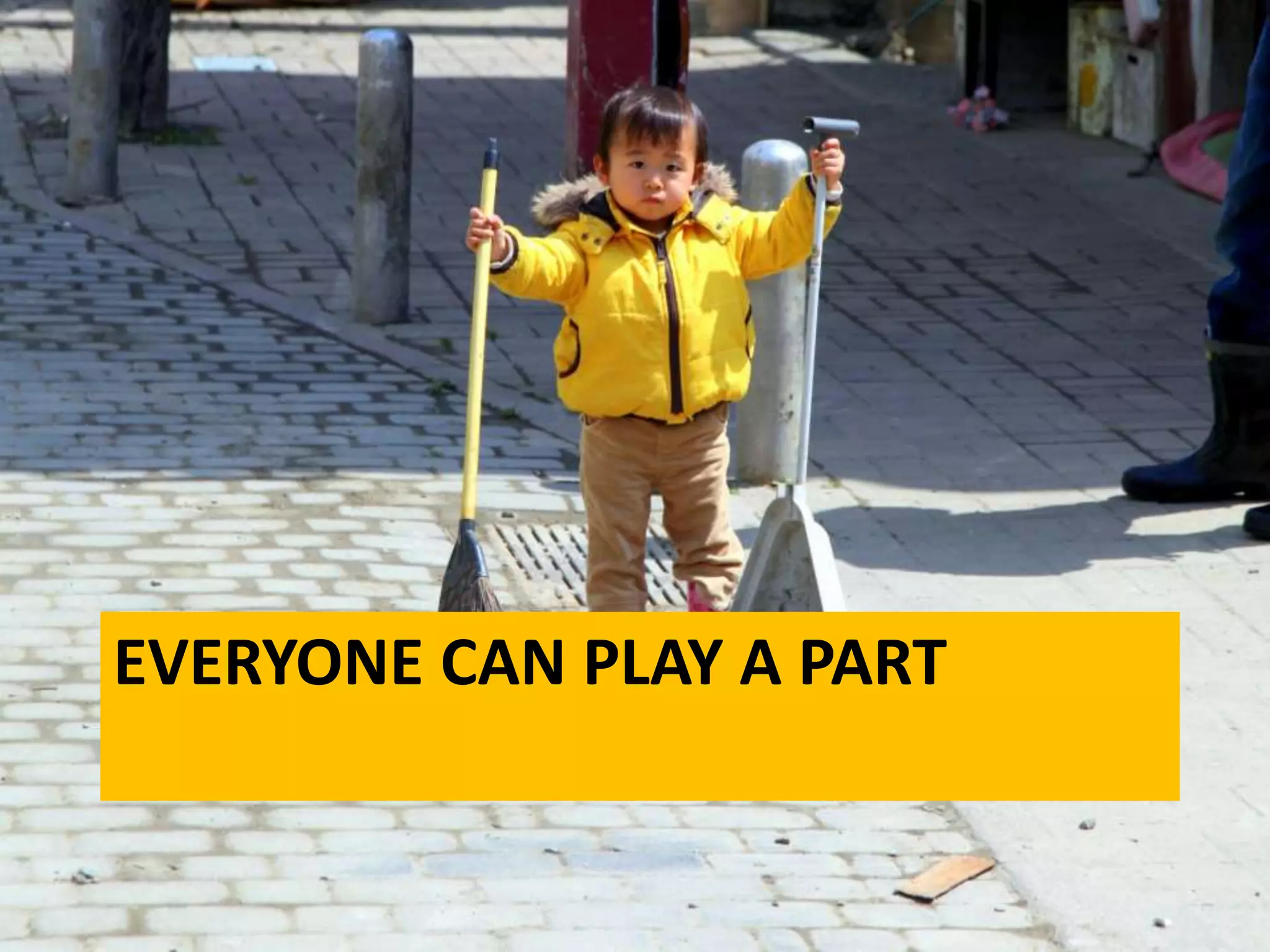
EVERYONE CAN PLAY A PART
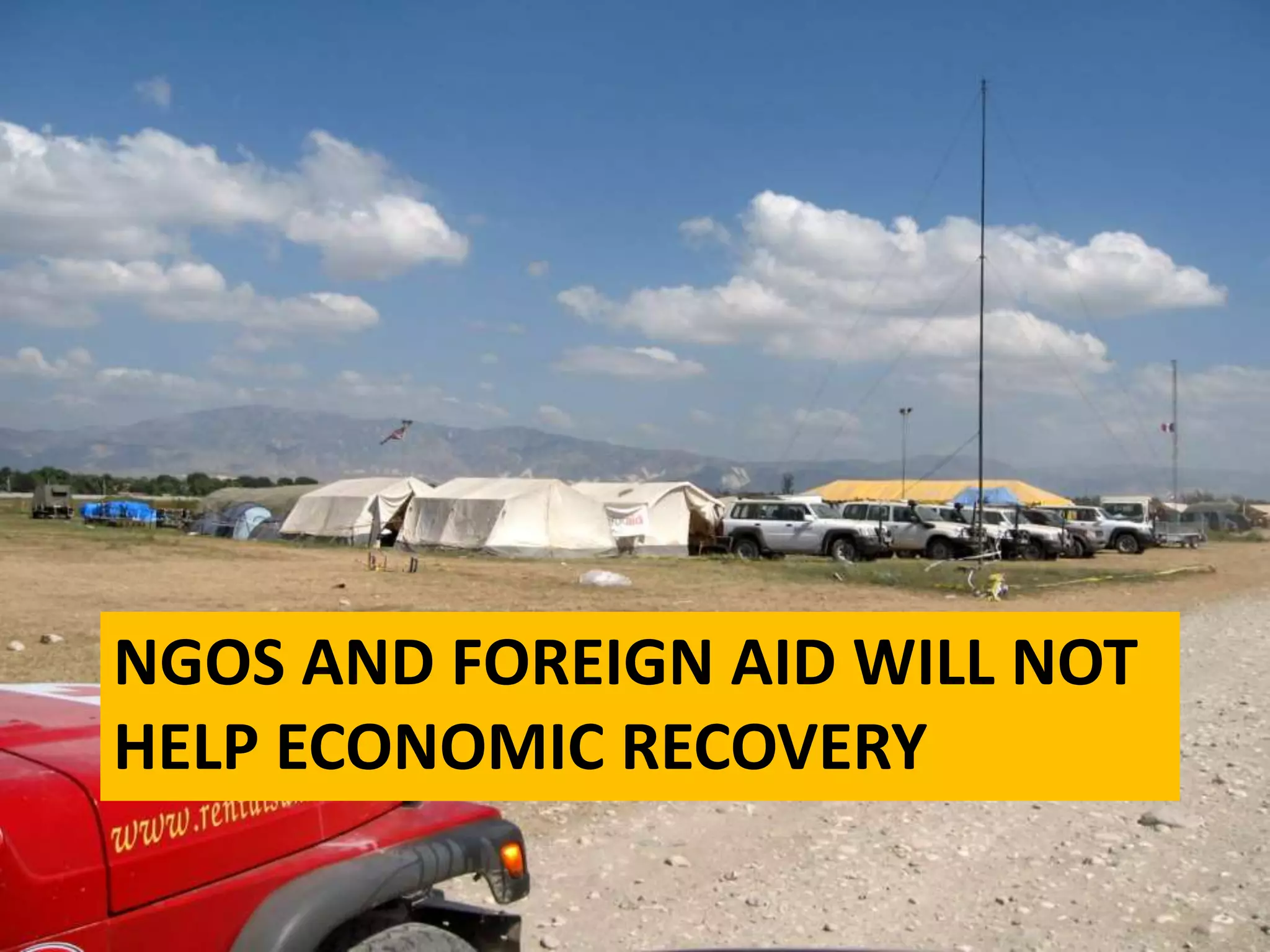
NGOS AND FOREIGN AID WILL NOT
HELP ECONOMIC RECOVERY
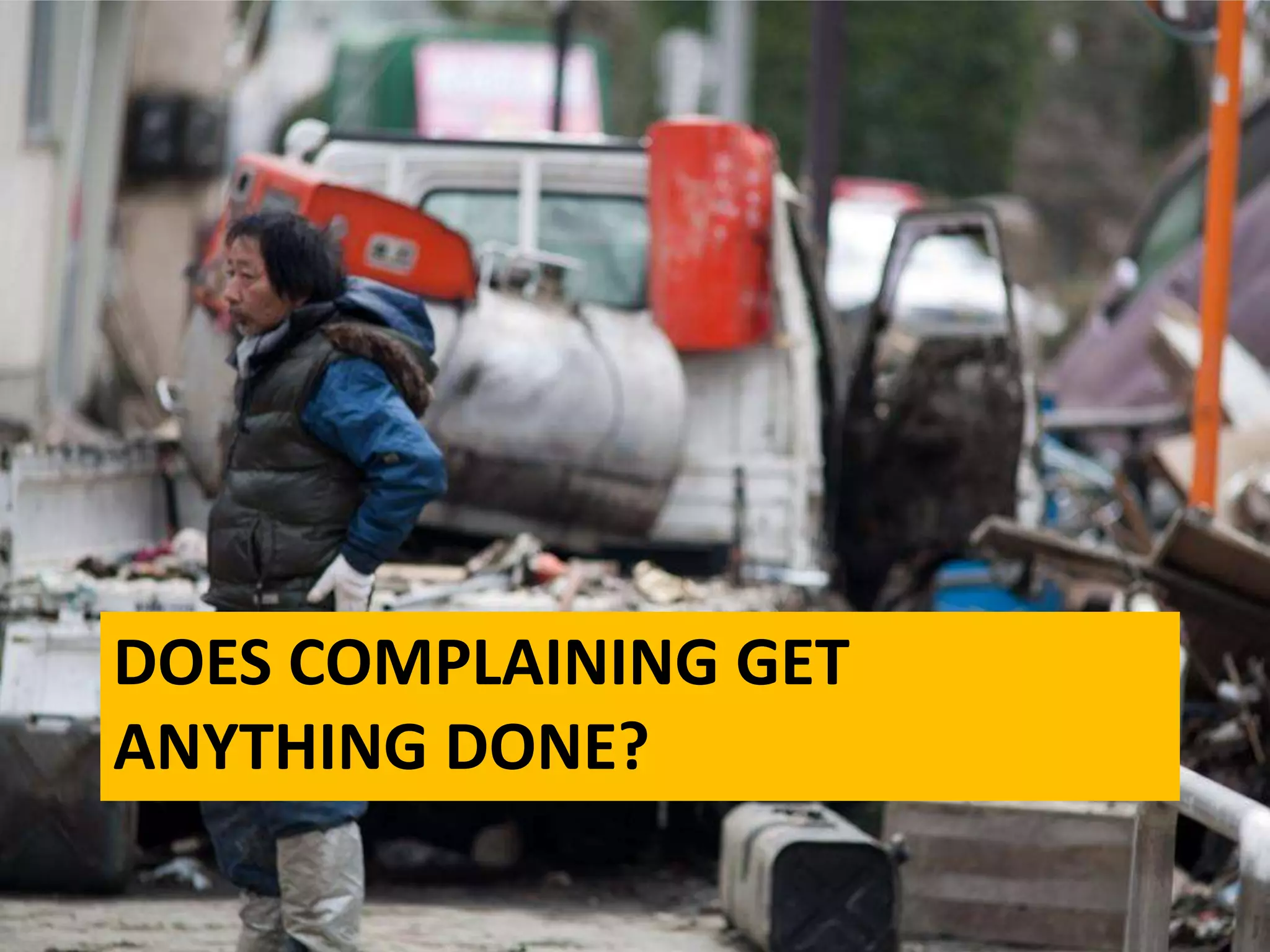
DOES COMPLAINING GET
ANYTHING DONE?
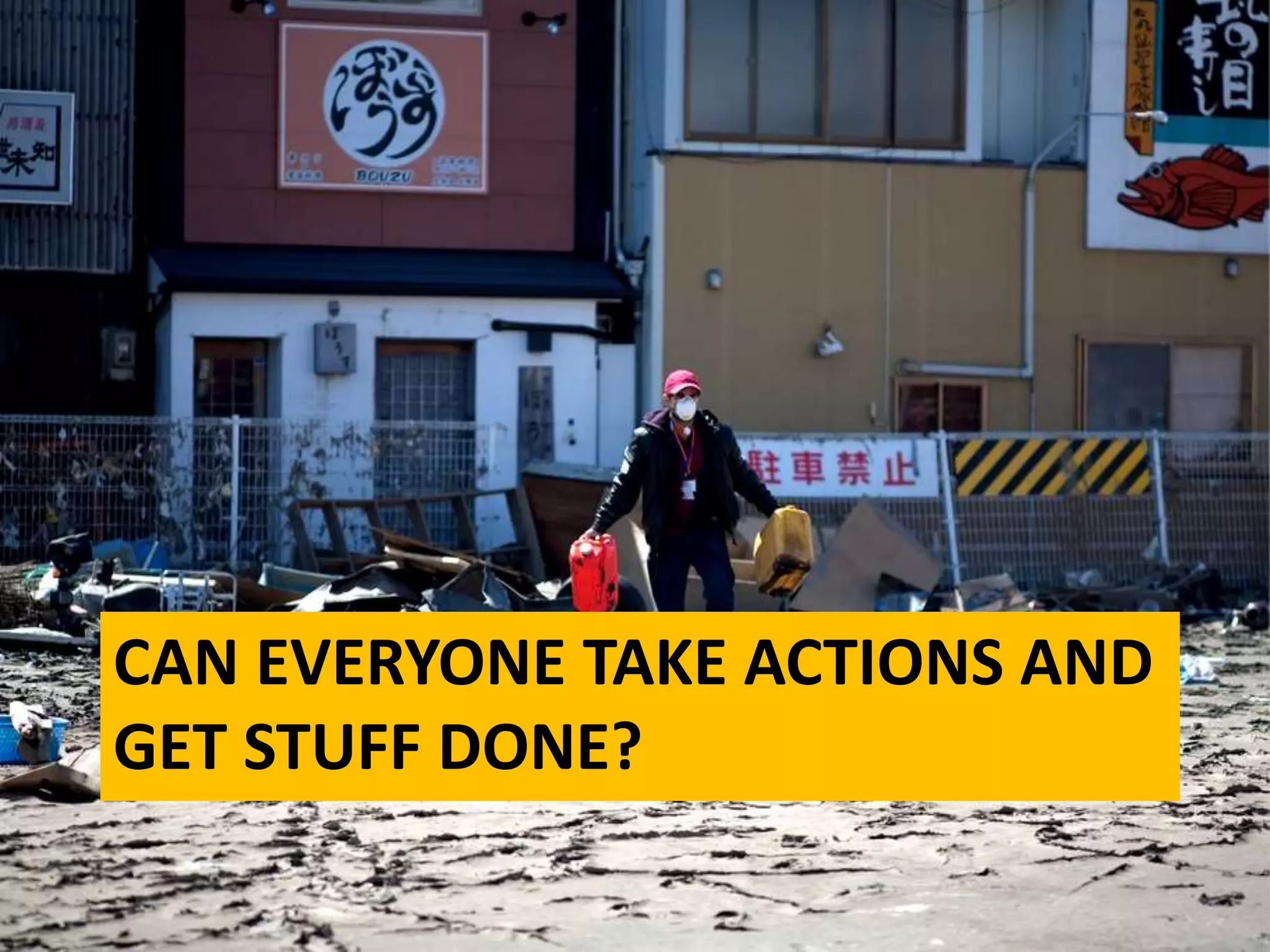
CAN EVERYONE TAKE ACTIONS AND
GET STUFF DONE?
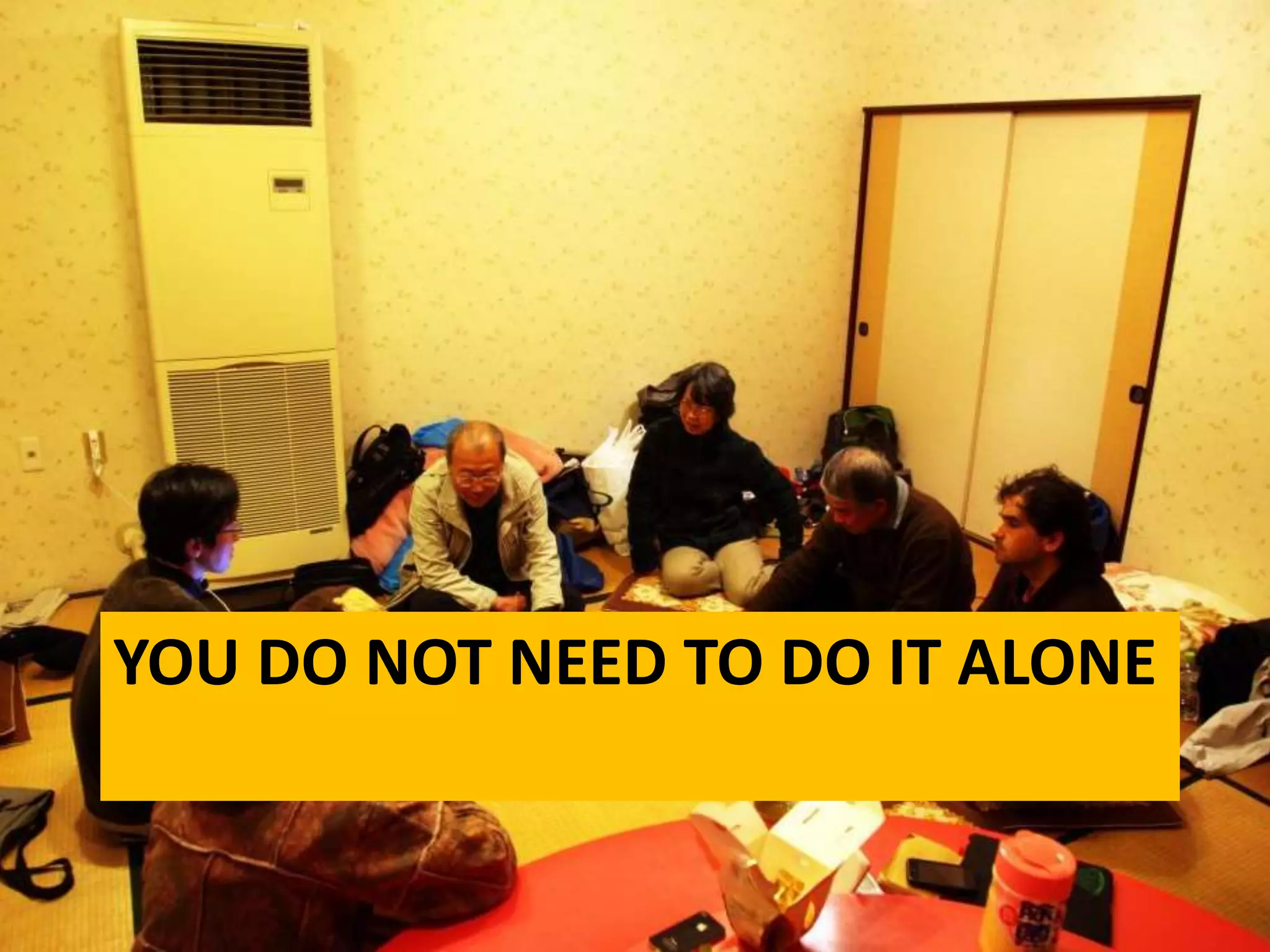
YOU DO NOT NEED TO DO IT ALONE
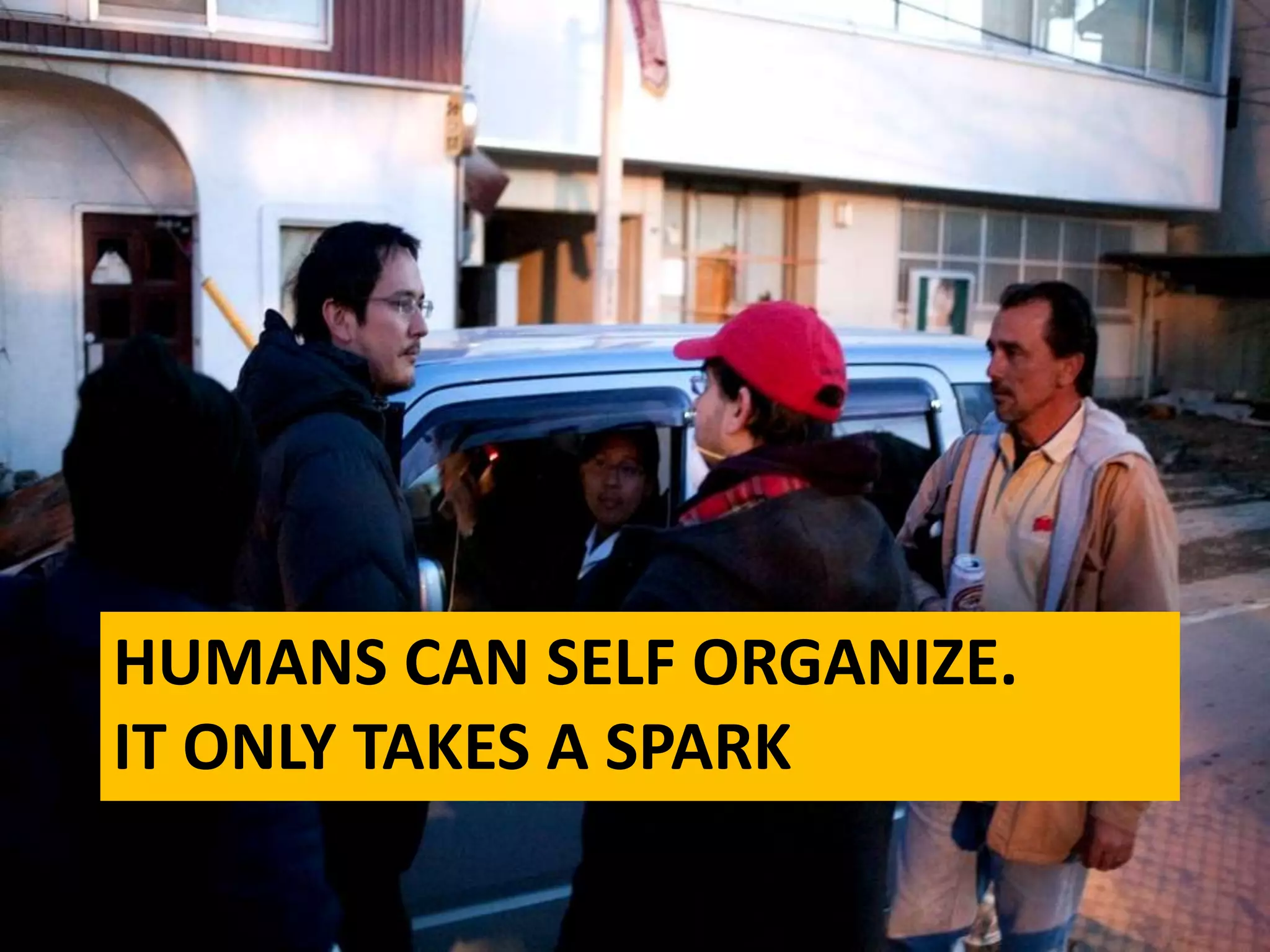
HUMANS CAN SELF ORGANIZE.
IT ONLY TAKES A SPARK
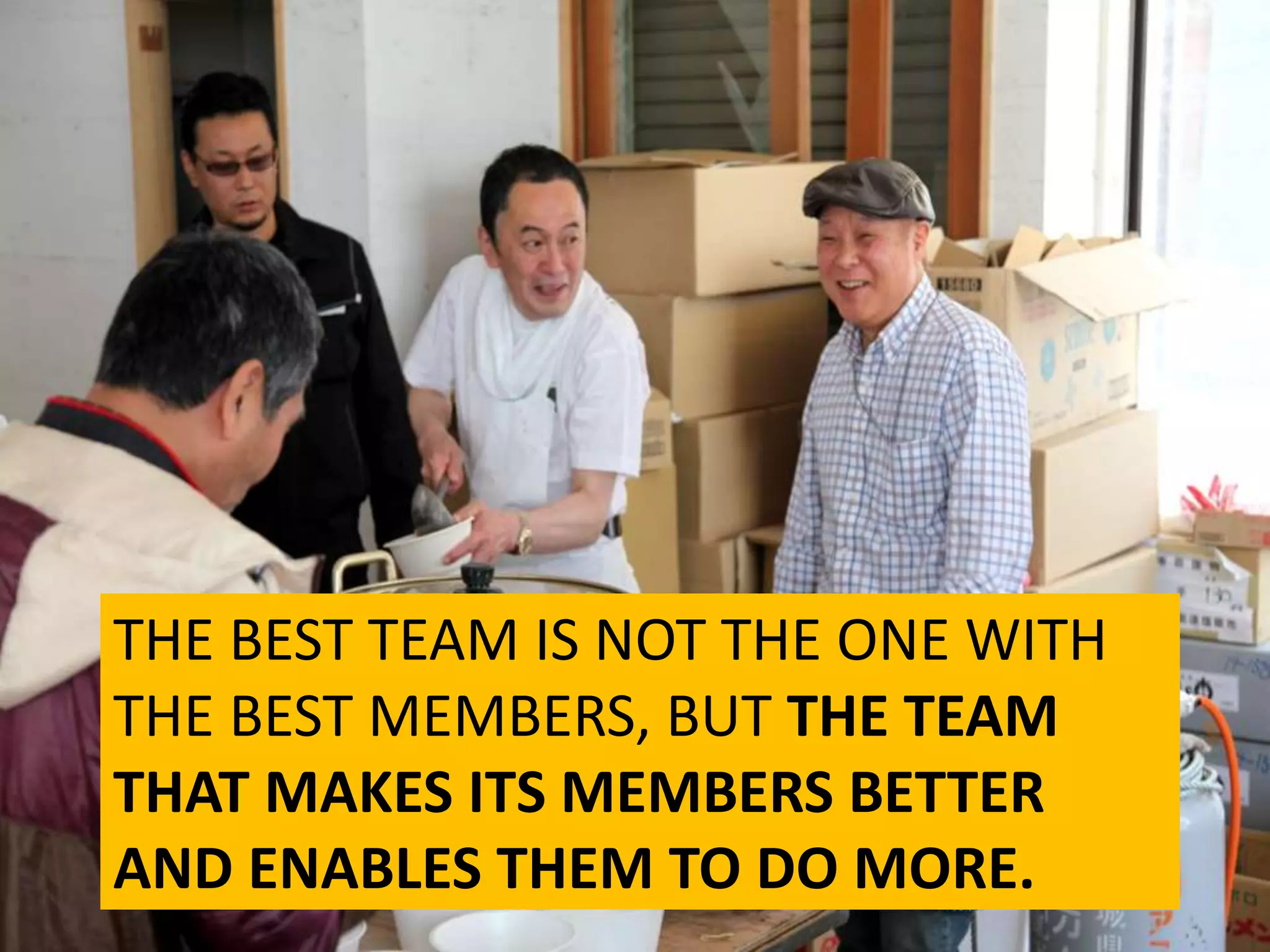
THE BEST TEAM IS NOT THE ONE WITH
THE BEST MEMBERS, BUT THE TEAM
THAT MAKES ITS MEMBERS BETTER
AND ENABLES THEM TO DO MORE.
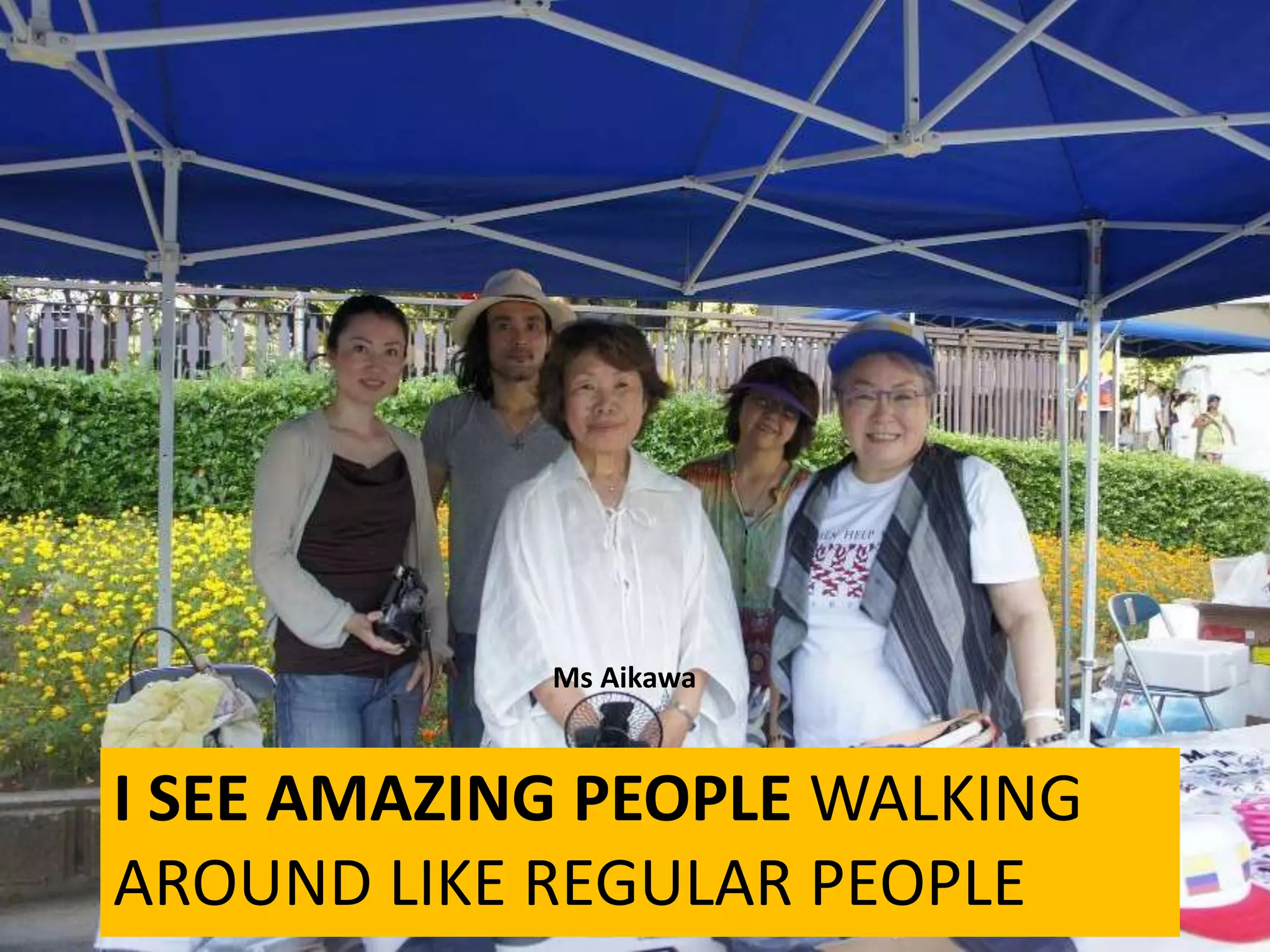
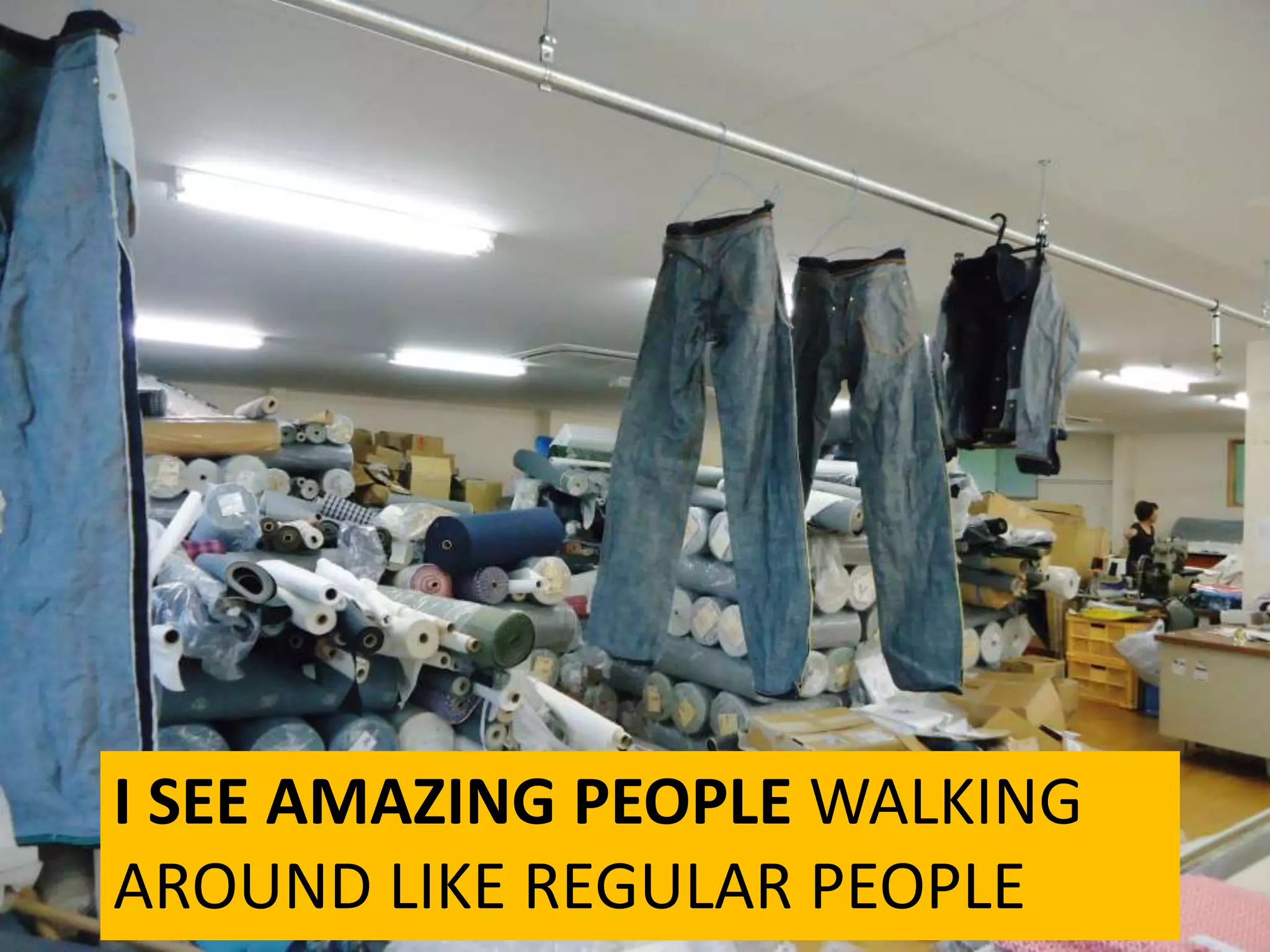
I SEE AMAZING PEOPLE WALKING
AROUND LIKE REGULAR PEOPLE
Ms Aikawa
I SEE AMAZING PEOPLE WALKING
AROUND LIKE REGULAR PEOPLE
I SEE AMAZING PEOPLE WALKING
AROUND LIKE REGULAR PEOPLE
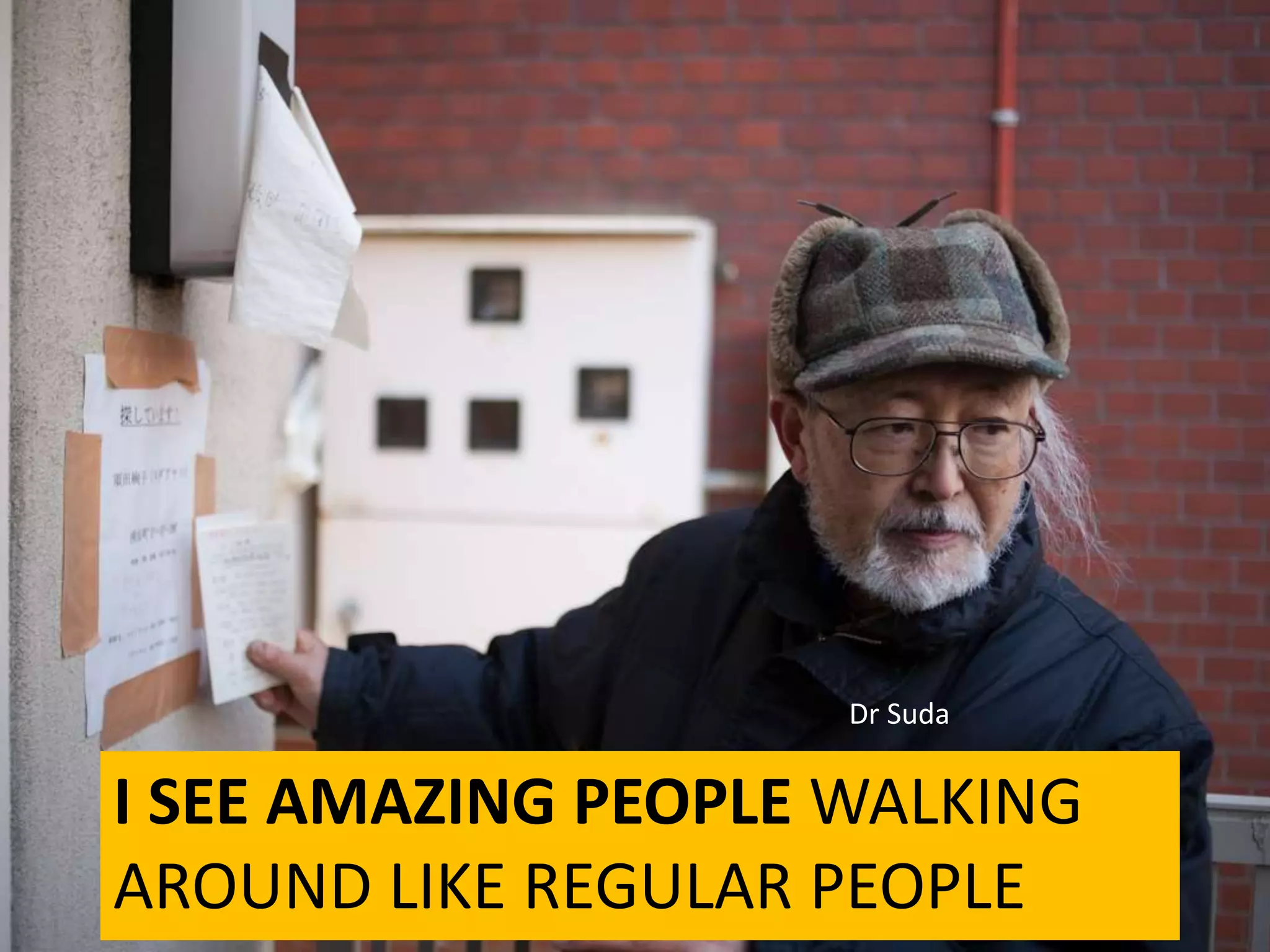
Dr Suda
I SEE AMAZING PEOPLE WALKING
AROUND LIKE REGULAR PEOPLE
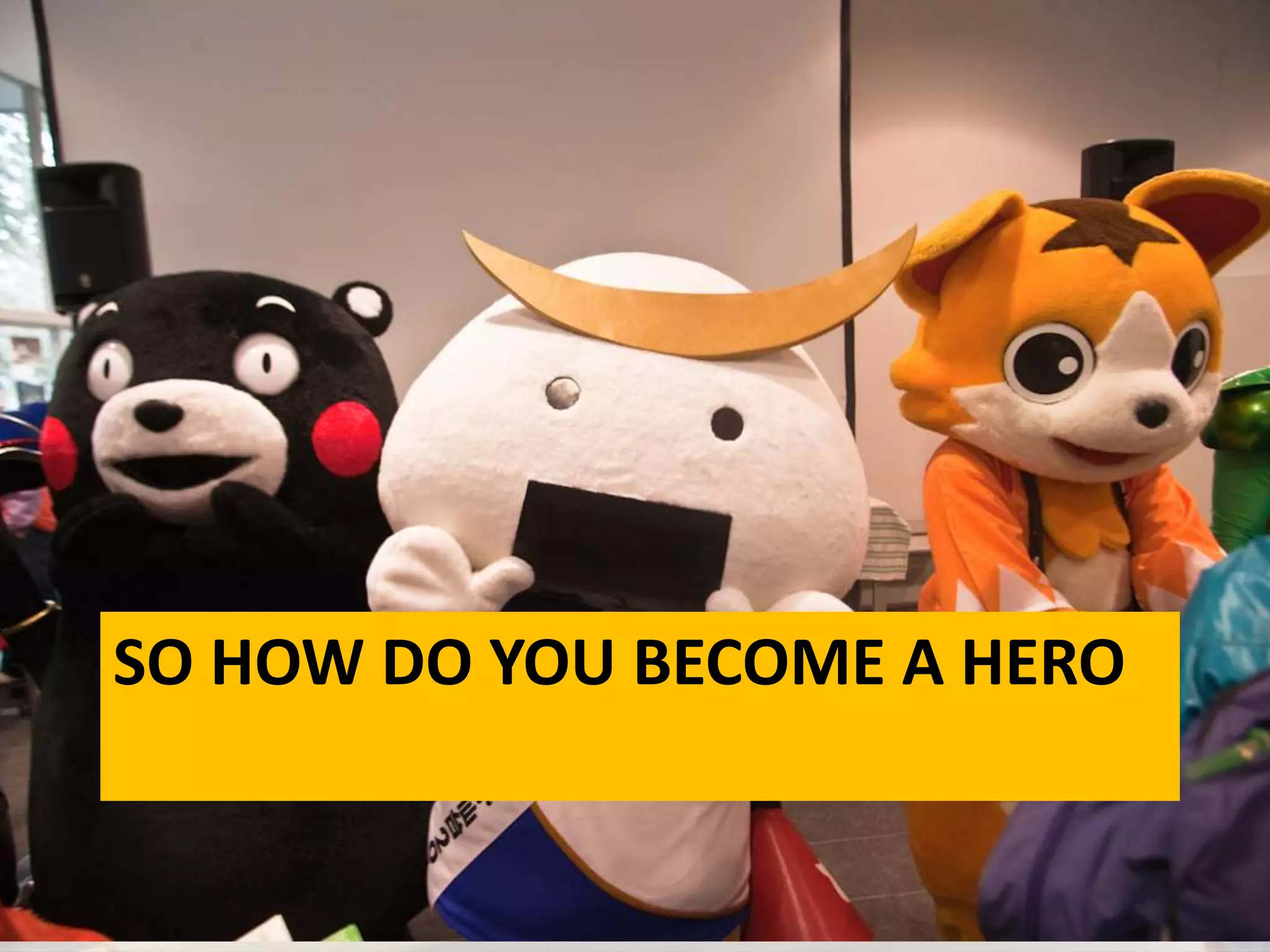
SO HOW DO YOU BECOME A HERO
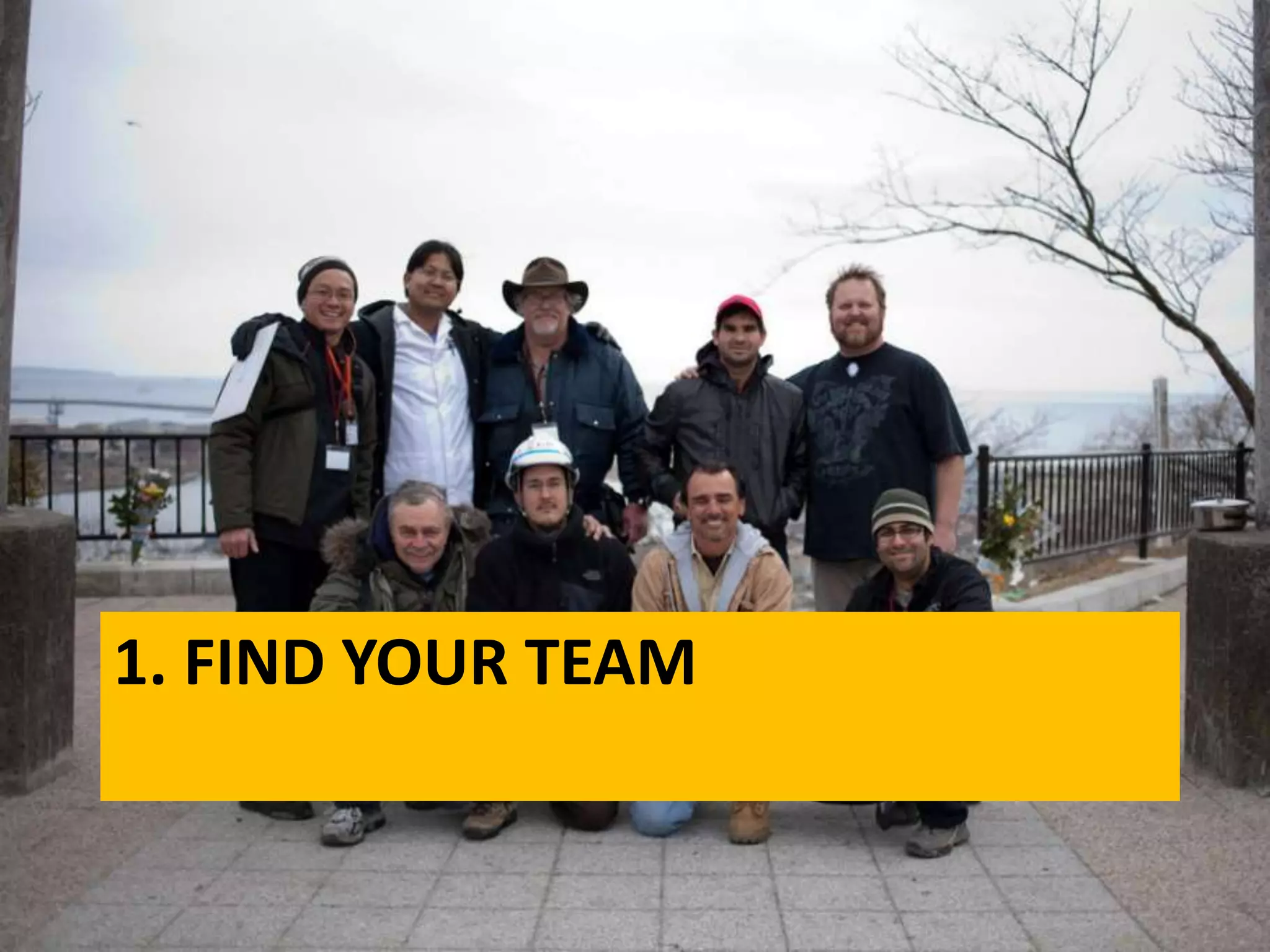
1. FIND YOUR TEAM
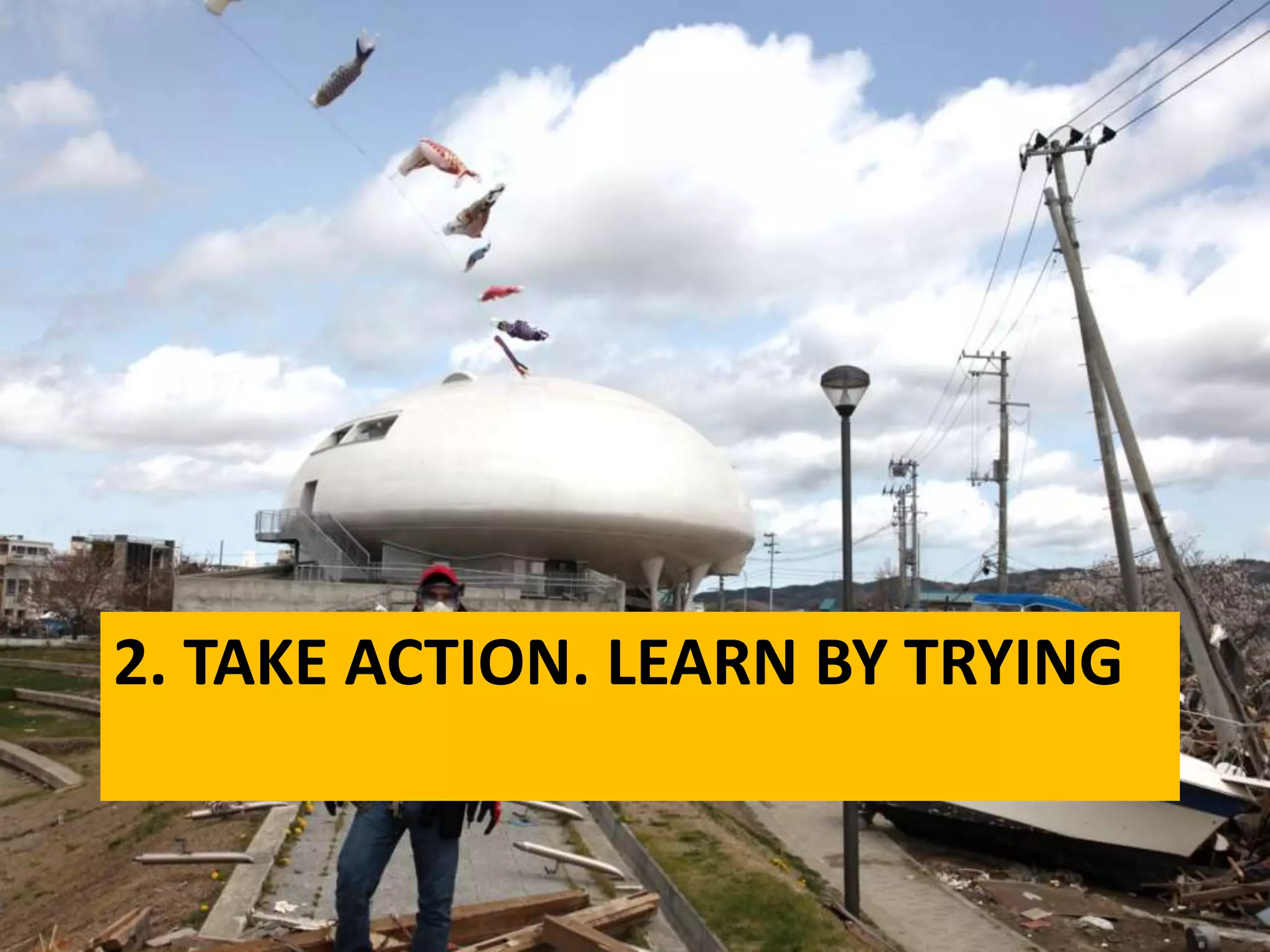
2. TAKE ACTION. LEARN BY TRYING
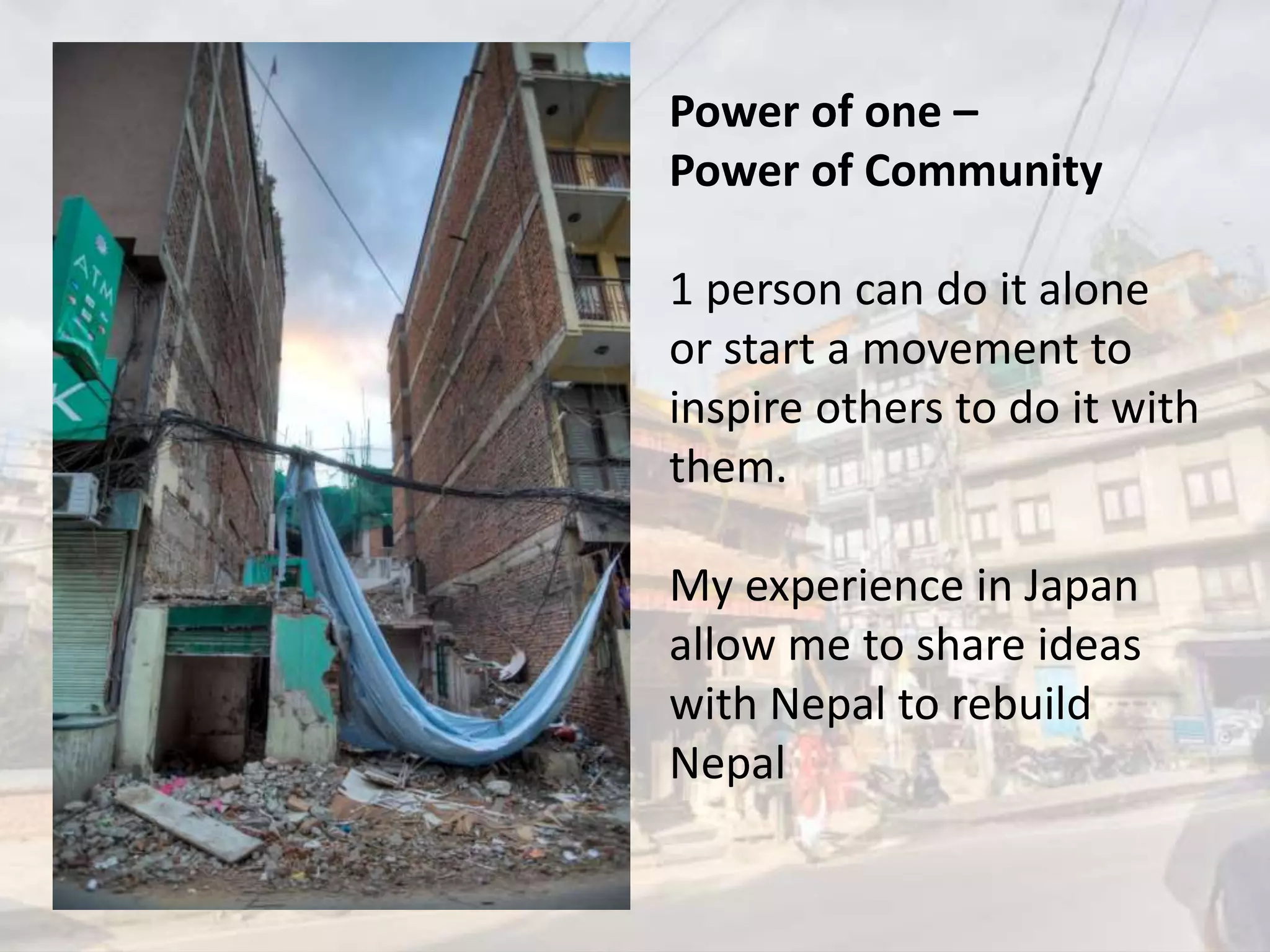
Power of one –
Power of Community
1 person can do it alone
or start a movement to
inspire others to do it with
them.
My experience in Japan
allow me to share ideas
with Nepal to rebuild
Nepal
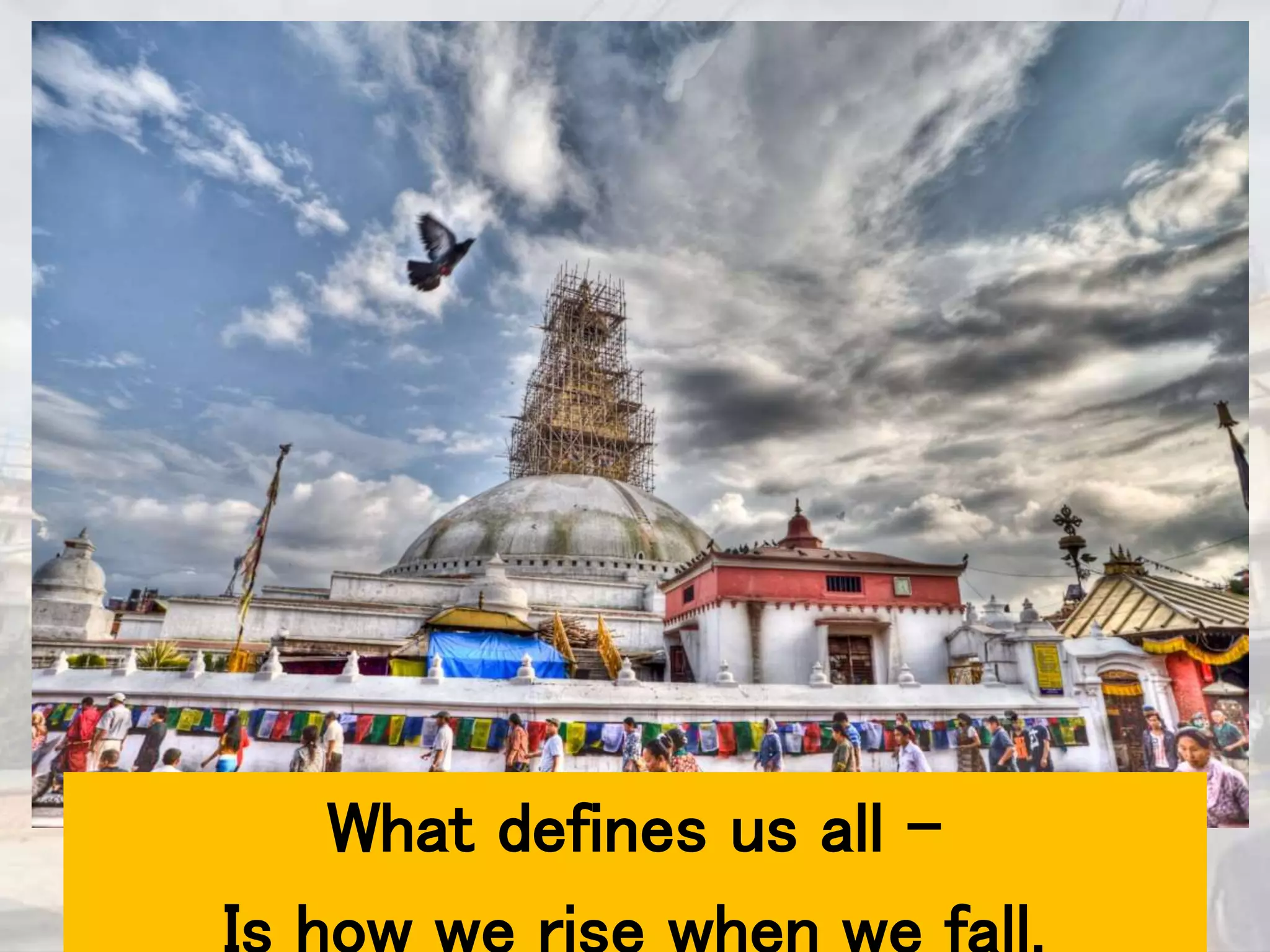
What defines us all –
Is how we rise when we fall.
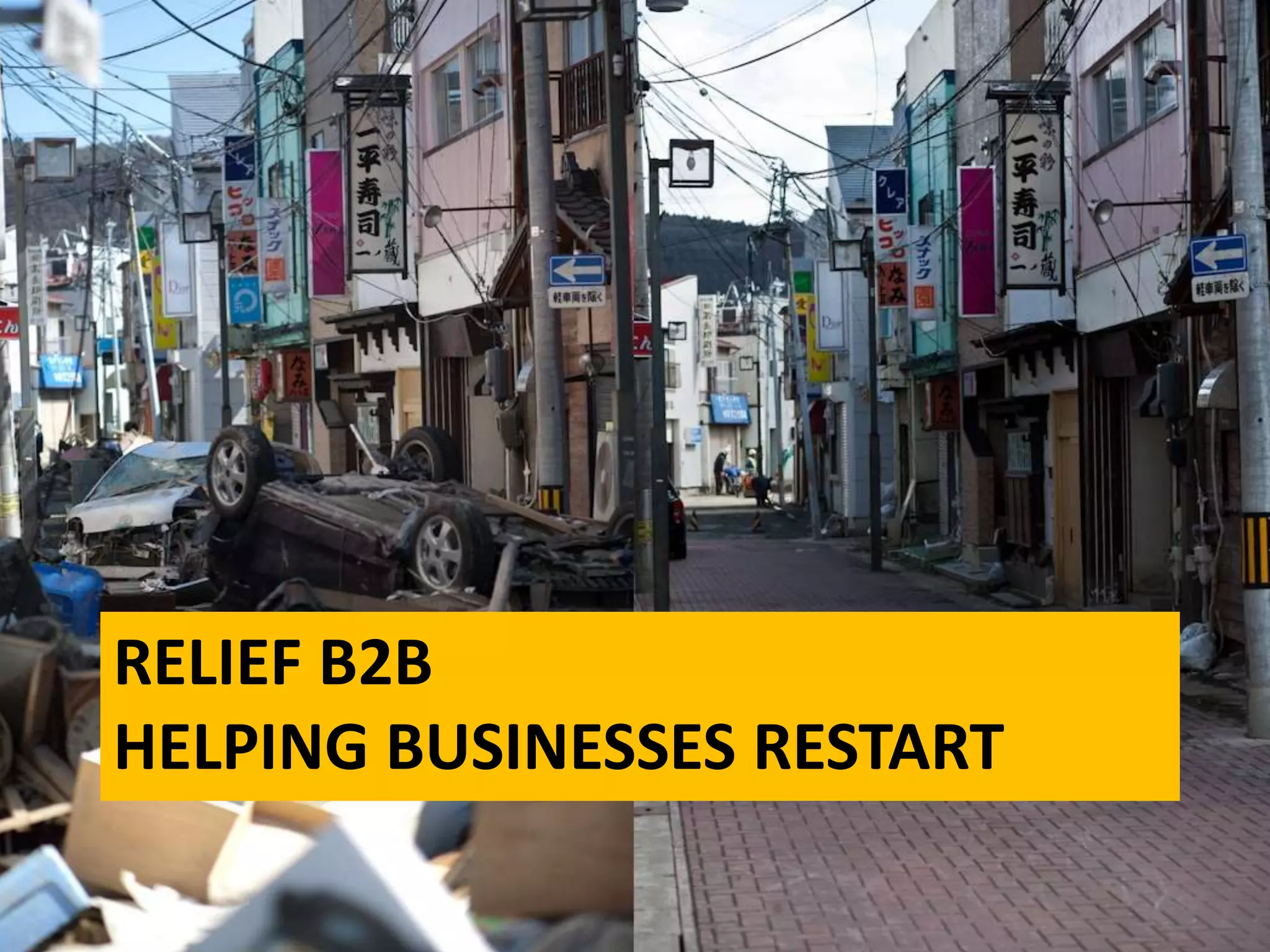
RELIEF B2B
HELPING BUSINESSES RESTART
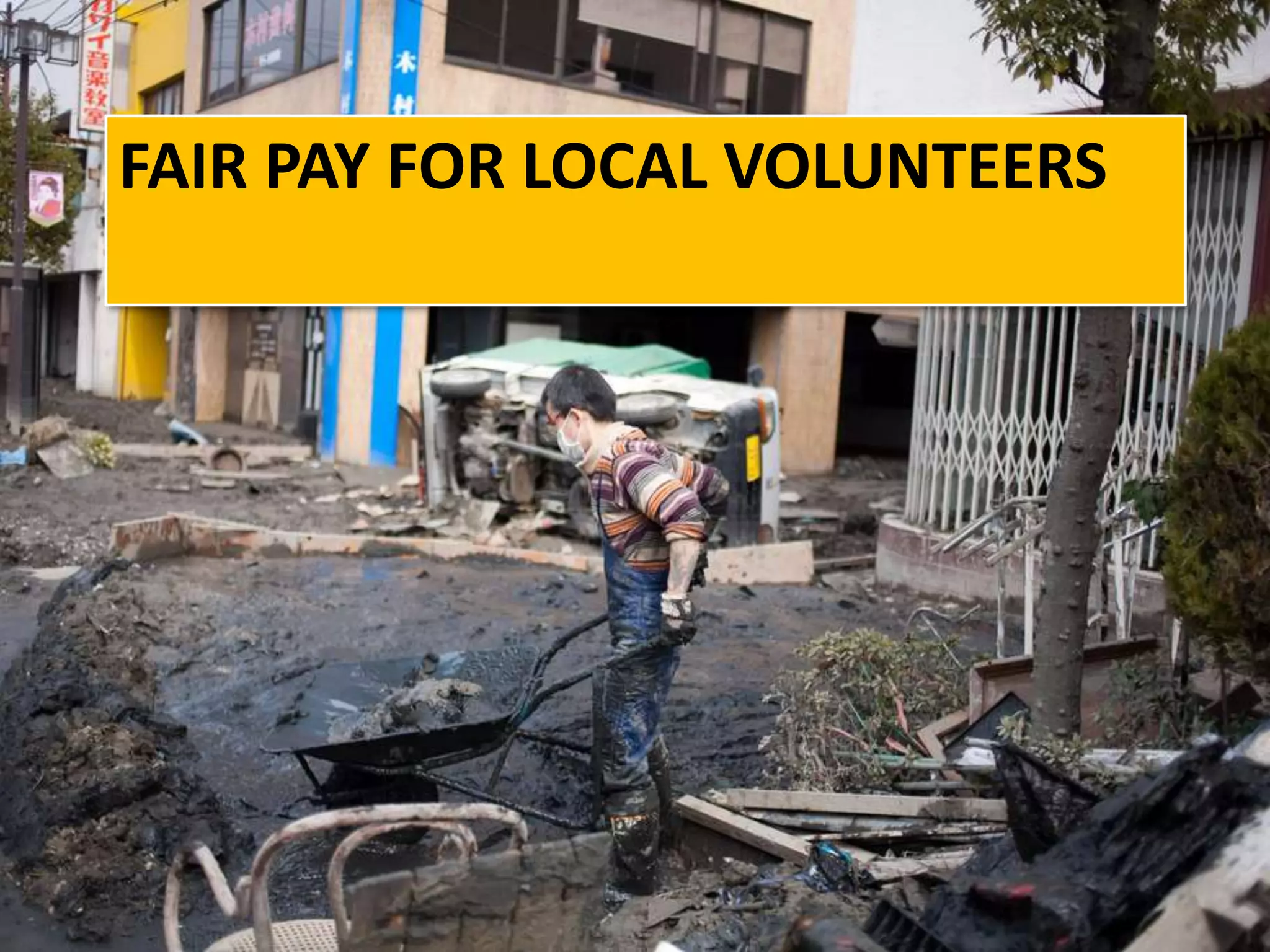
FAIR PAY FOR LOCAL VOLUNTEERS
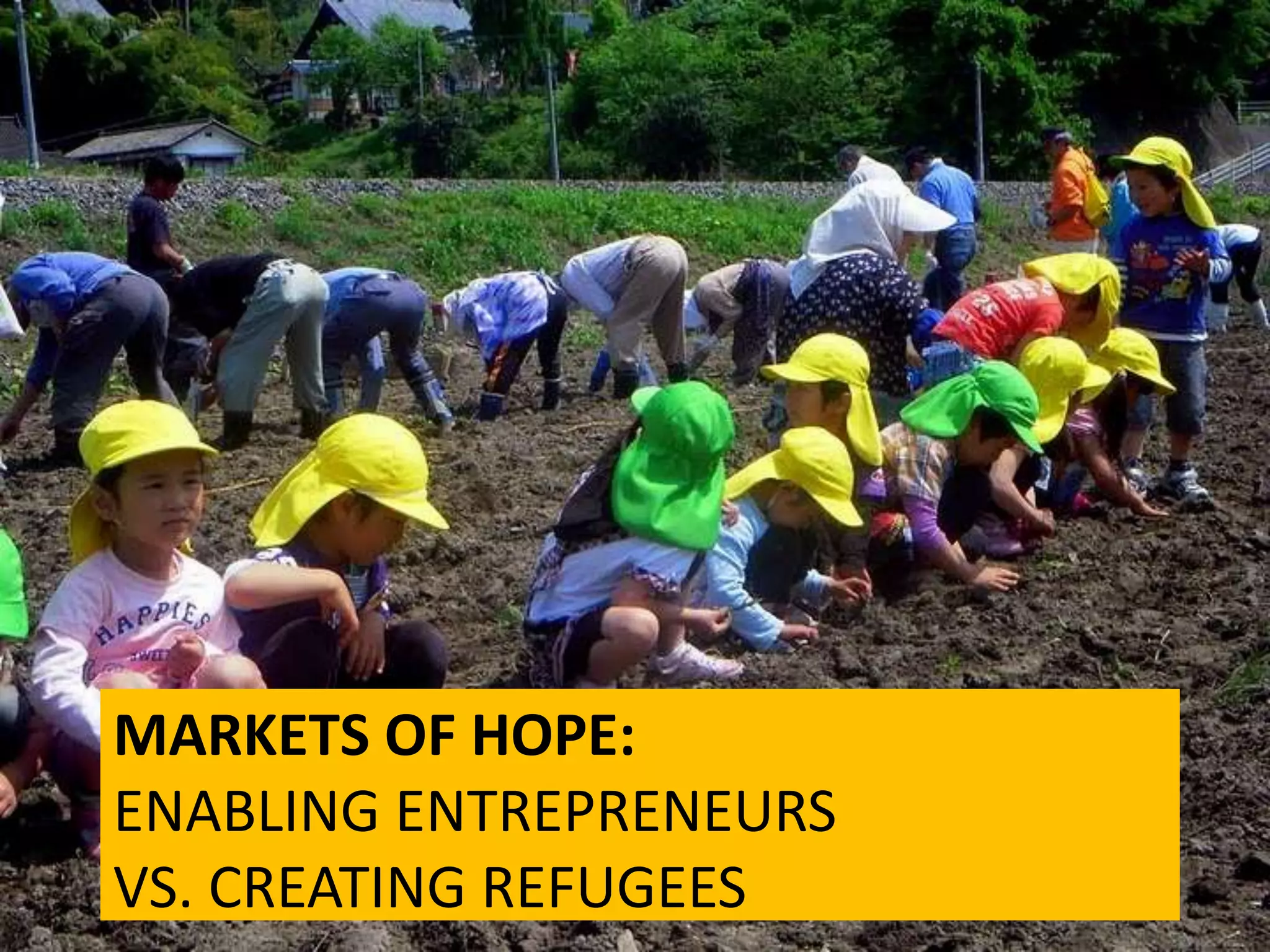
MARKETS OF HOPE:
ENABLING ENTREPRENEURS
VS. CREATING REFUGEES
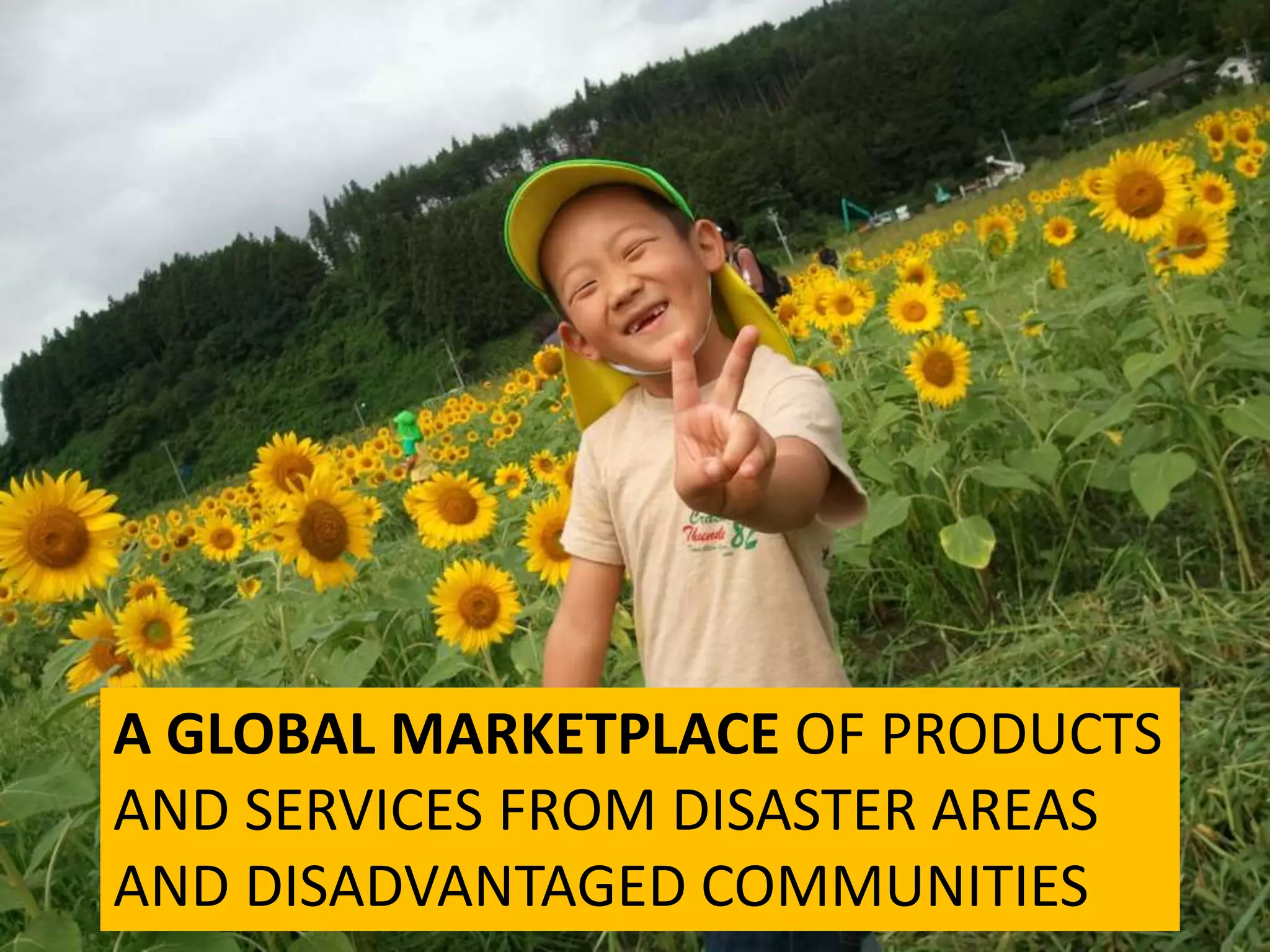
A GLOBAL MARKETPLACE OF PRODUCTS
AND SERVICES FROM DISASTER AREAS
AND DISADVANTAGED COMMUNITIES
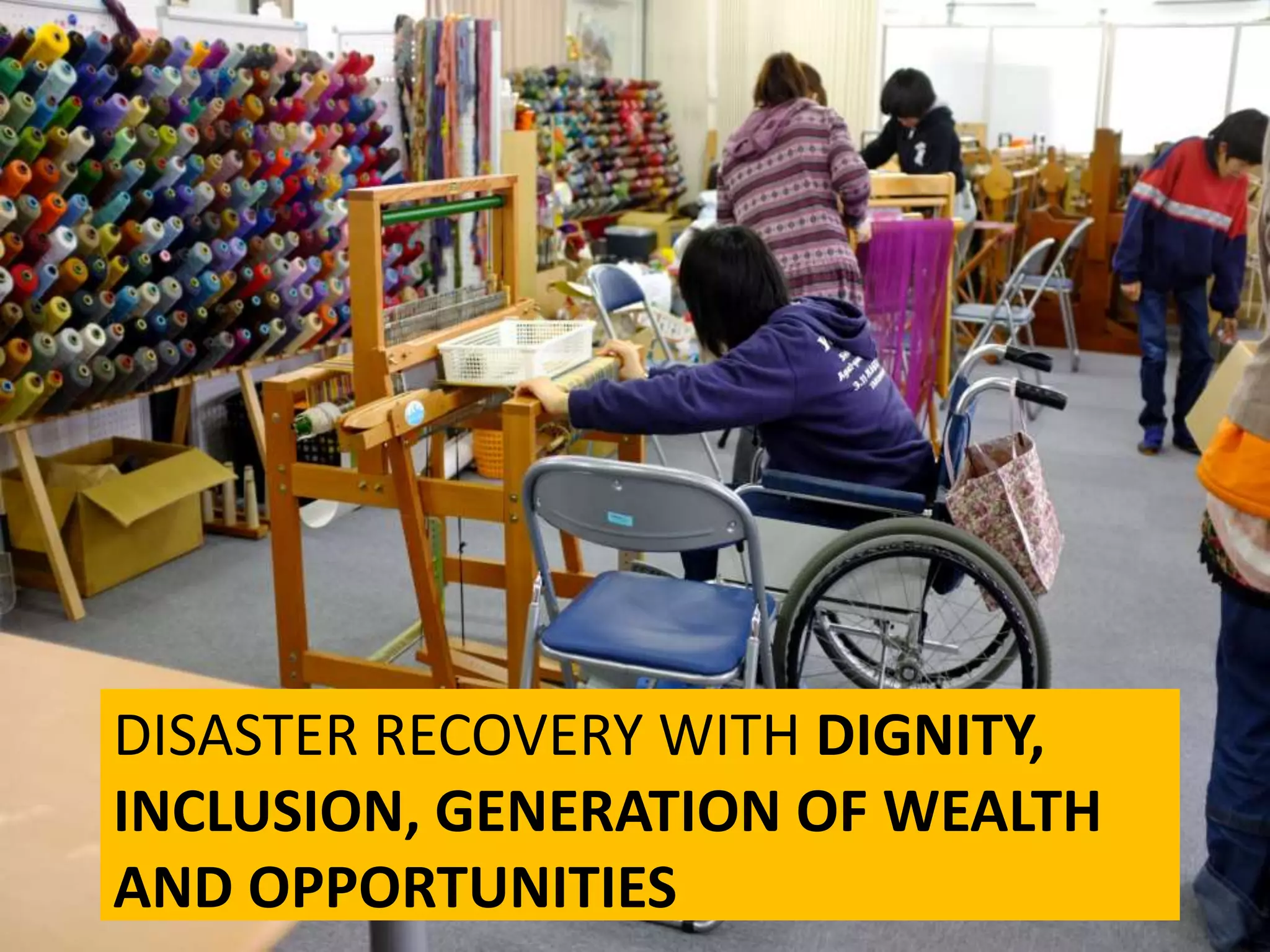
DISASTER RECOVERY WITH DIGNITY,
INCLUSION, GENERATION OF WEALTH
AND OPPORTUNITIES
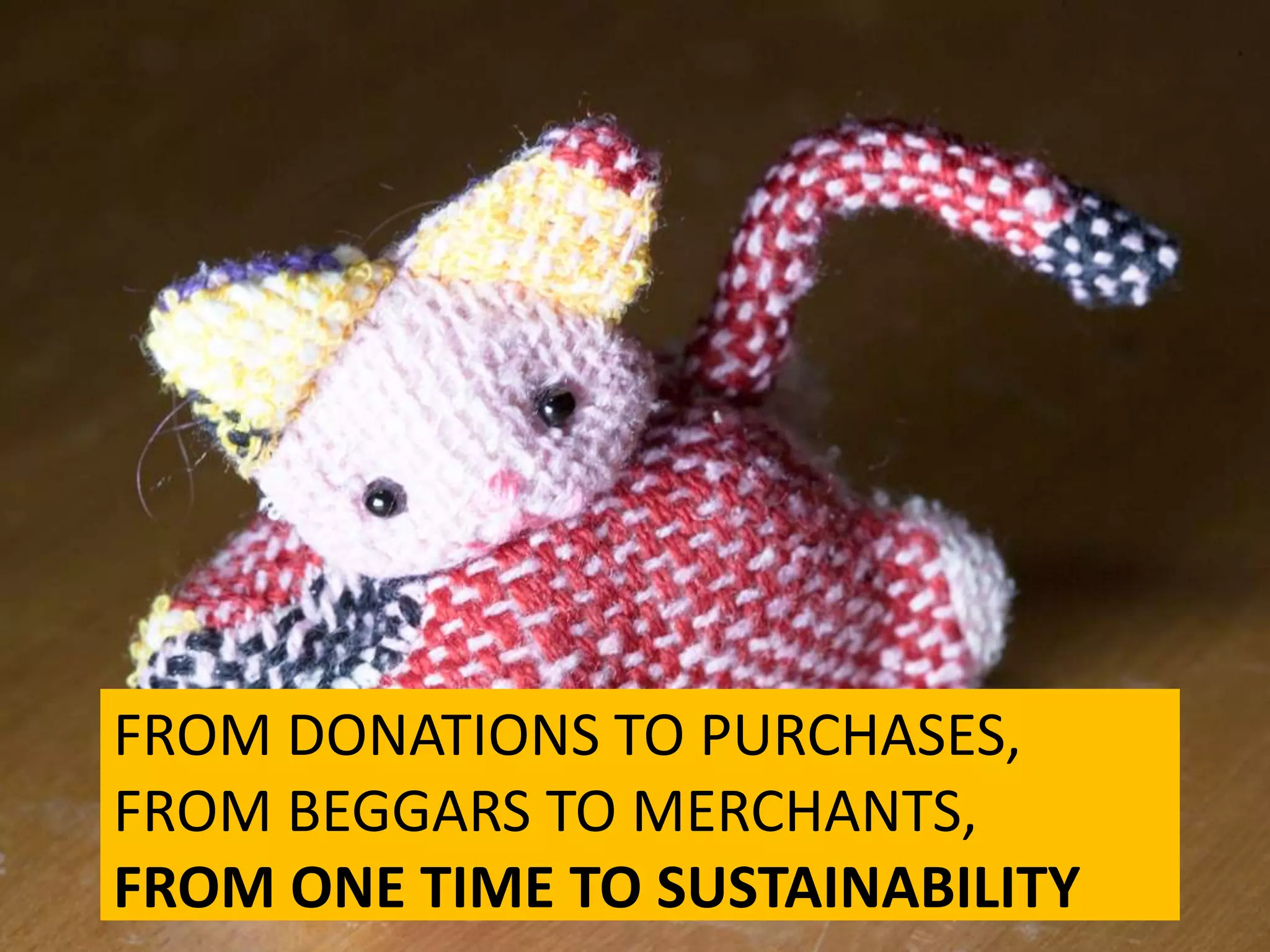
FROM DONATIONS TO PURCHASES,
FROM BEGGARS TO MERCHANTS,
FROM ONE TIME TO SUSTAINABILITY
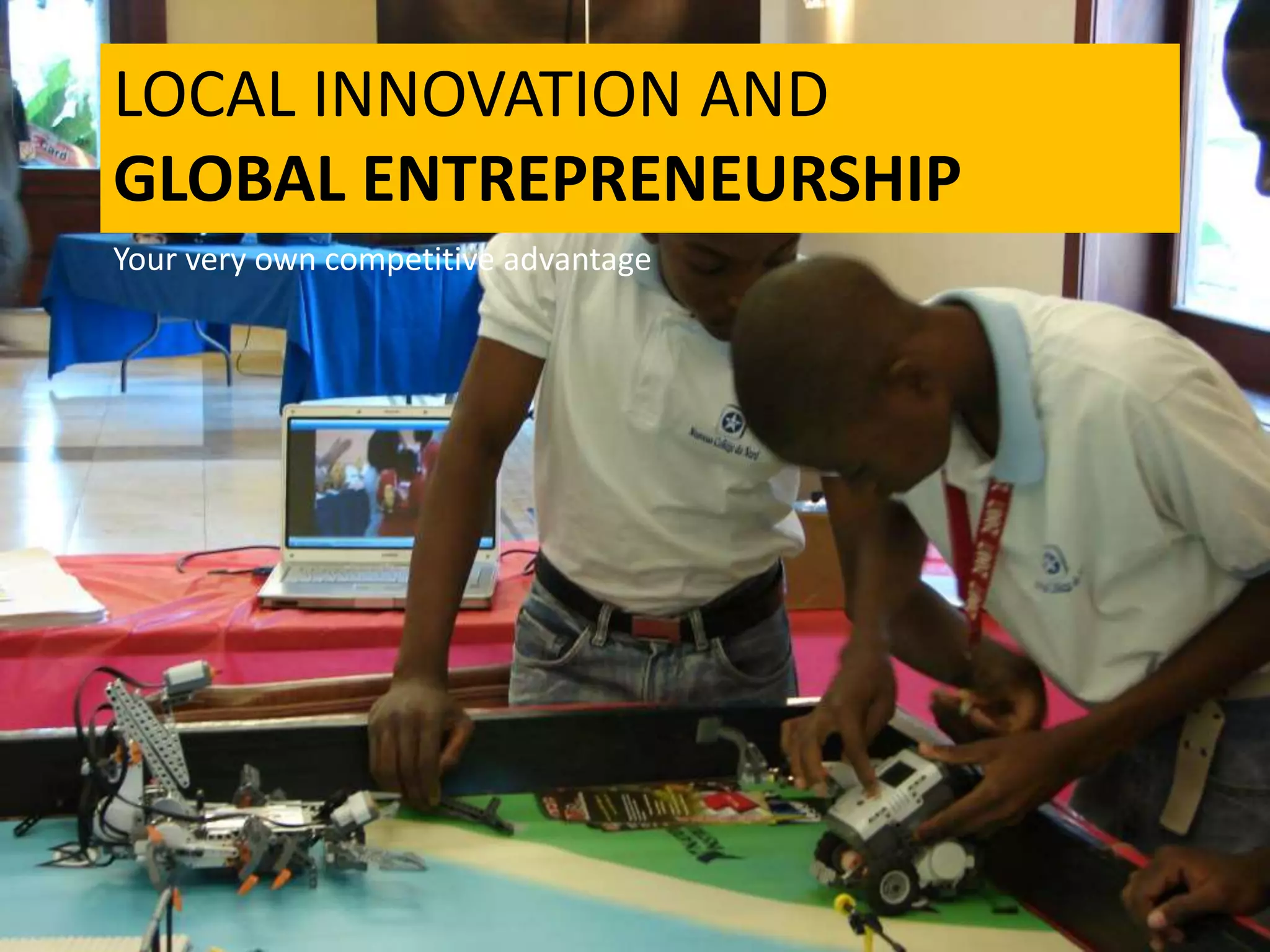
LOCAL INNOVATION AND
GLOBAL ENTREPRENEURSHIP
Your very own competitive advantage
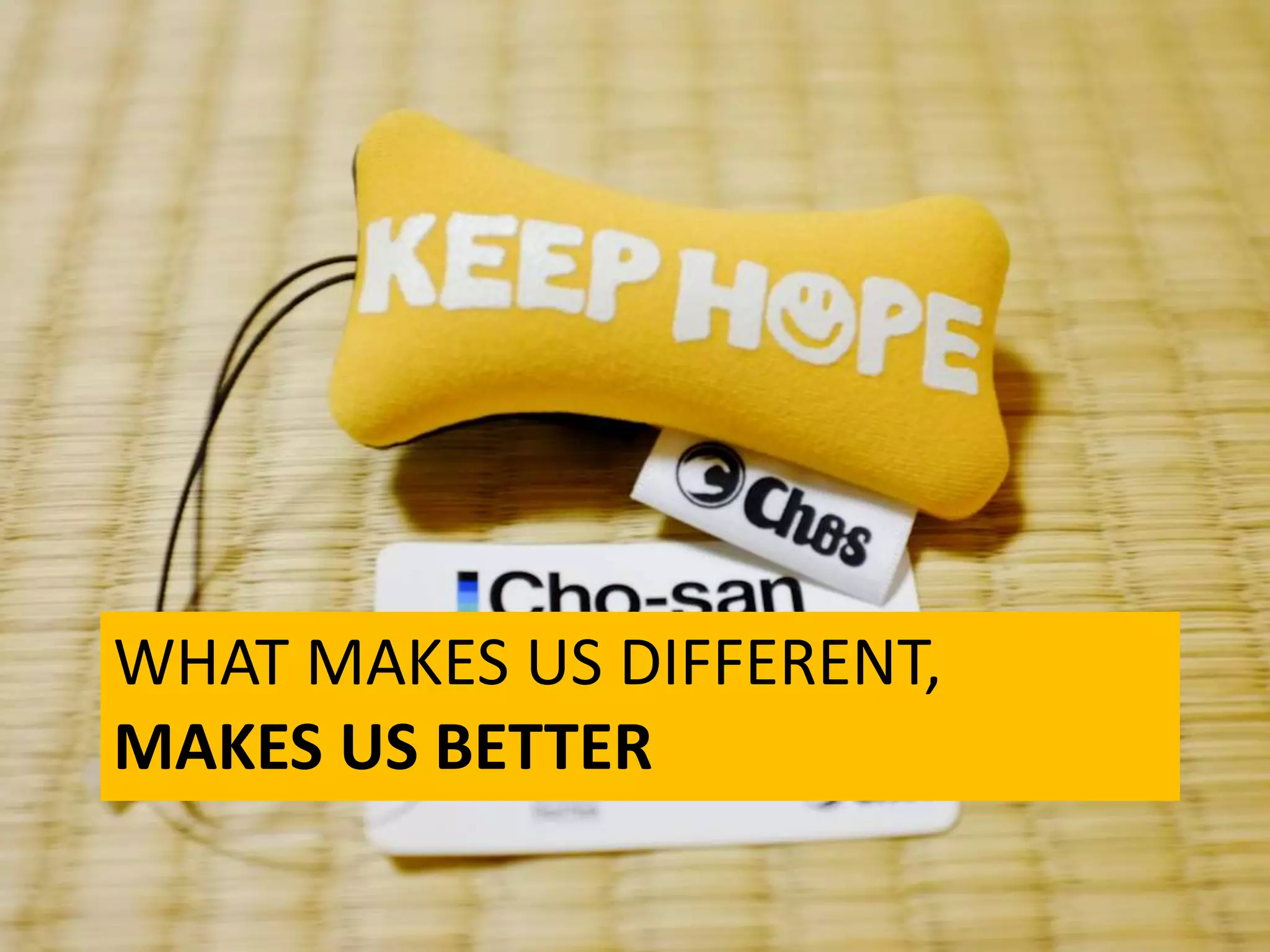
WHAT MAKES US DIFFERENT,
MAKES US BETTER
Never Help!
• Engage
• Enable
• Empower
• Connect
It is not just what you have
done, it’s what’s your impact.

Good intentions does not mean real impact

  • 1.
    Power of one Powerof the Commuity By Robin Low
  • 2.
    Doing Good • Everyonelikes to do good, but have you thought about having real impact in the things you do? • Donations are an easy way to help, but is the money reaching the ground and causing any real impact? • Why do we fail at helping?
  • 3.
    Power of One •Good intentions is all you need. • Just Volunteer, you will impact the community. • I have always believed that one person can make a difference.
  • 4.
    Define help • Helpis any form of assistance. -- Wikipedia
  • 5.
    Case 1 • Robin’sChicken Farms • 200 chickens, chicken coops. • Skills building, breeding, feeding, transporting and selling eggs. • Crop rotation
  • 6.
    Case 1: impact •Sold eggs increasing daily income from $7 to $50 • Repaid back capital of $2000 in 3 months.
  • 7.
    Case 1: results •After 9 months. • All chickens are eaten, no chickens remain. • All villages back to what it was before. • Except some houses with flat screen TVs
  • 8.
    Was there anysocial impact?
  • 9.
    Aid can alleviateimmediate misery and that is why we love it. Charity is a human response to all those images that pull on our heartstrings. But are we giving out of pity? All evidence points to the conclusion that, aid not only has no positive effect on economic growth, it may even undermine it.
  • 10.
    “Philanthropy dollar” canonly be used once, the “social dollar” can be used again and again. -- Muhammad Yunus
  • 11.
    Dangers of socialintervention • Making life decisions for those we are helping • Is there “Over Helping?”
  • 12.
    Celebrities giving inAfrica. • Has any country been saved by foreign AID? • African countries are creating wealth, many companies are doing well in Africa, but after years of aid, why is poverty not reduced?
  • 13.
    Free mosquito nets •Mosquito net repair and training project in Kenya squashed by the incoming of millions of mosquito nets. • Instead of importing millions of dollars worth of malaria medicine, we can also grow Artemisinin locally, which can process to malaria medication. • But we decide to continue endless cycle of dependency.
  • 14.
    Curse of Exclusionof Locals in Disaster Relief and Recovery
  • 15.
  • 16.
    Doctors in Haiti •Many free clinics from the Earthquake in 2010 are still running. • Doctors from New York, Vermont, California, Zurich, Berlin are in Port-au-Prince. • Some local clinics and doctors are sitting in the shelters because they have no jobs. • This is the real impact for FREE MEDICAL CARE.
  • 17.
    Case 2 • Waterproject in India (With NGO) • Running a few projects on tech in education in various third world countries. • NGO with water filters want to test in school. • Installed at 2 schools, benefited 500 families.
  • 18.
    Case 2: impact •More than 1000 people have access to clean water. • Moms collect water to bring home to cook. • Less sick days for kids, kids can focus in class.
  • 19.
    Case 2: results •Project got funding and want to scale to villages. • Villagers heard about the project, got excited. • Criteria – village with dirtiest water will get a pump and filter. • Over 16 villages have poison in their wells. • Only have funds for 8 filters and pumps.
  • 20.
    Poor People arenot Stupid -- Muhammad Yunus
  • 22.
    Lessons that Changedme • What I learned from the Japan Tsunami
  • 23.
    DISASTERS DON’T CREATEREFUGEES, THEY CREATE SURVIVORS.
  • 24.
    IT IS THECONVENTIONAL RELIEF SYSTEM THAT TURNS SURVIVORS INTO REFUGEES.
  • 25.
    WHO ARE THEDISASTER SURVIVORS?
  • 26.
    DISASTERS DESTROY THEPHYSICAL INFRASTRUCTURE, BUT THE SOCIAL STRUCTURE REMAINS
  • 27.
    ARE SURVIVORS HELPLESSOR ARE THEY TOO STUPID TO MAKE DECISIONS FOR THEMSELVES?
  • 28.
    WHO KNOWS THEGROUND BETTER? FOREIGNERS OR LOCALS?
  • 29.
    SO WHY ARETHEY STILL TREATED LIKE REFUGEES?
  • 30.
    IT JUST TAKESSURVIVORS TO TAKE ACTION & ACCOUNTABILITY
  • 31.
  • 32.
    NGOS AND FOREIGNAID WILL NOT HELP ECONOMIC RECOVERY
  • 33.
  • 34.
    CAN EVERYONE TAKEACTIONS AND GET STUFF DONE?
  • 35.
    YOU DO NOTNEED TO DO IT ALONE
  • 36.
    HUMANS CAN SELFORGANIZE. IT ONLY TAKES A SPARK
  • 37.
    THE BEST TEAMIS NOT THE ONE WITH THE BEST MEMBERS, BUT THE TEAM THAT MAKES ITS MEMBERS BETTER AND ENABLES THEM TO DO MORE.
  • 38.
    I SEE AMAZINGPEOPLE WALKING AROUND LIKE REGULAR PEOPLE Ms Aikawa
  • 39.
    I SEE AMAZINGPEOPLE WALKING AROUND LIKE REGULAR PEOPLE
  • 40.
    I SEE AMAZINGPEOPLE WALKING AROUND LIKE REGULAR PEOPLE Dr Suda
  • 41.
    I SEE AMAZINGPEOPLE WALKING AROUND LIKE REGULAR PEOPLE
  • 42.
    SO HOW DOYOU BECOME A HERO
  • 43.
  • 44.
    2. TAKE ACTION.LEARN BY TRYING
  • 45.
    Power of one– Power of Community 1 person can do it alone or start a movement to inspire others to do it with them. My experience in Japan allow me to share ideas with Nepal to rebuild Nepal
  • 46.
    What defines usall – Is how we rise when we fall.
  • 47.
  • 48.
    FAIR PAY FORLOCAL VOLUNTEERS
  • 49.
    MARKETS OF HOPE: ENABLINGENTREPRENEURS VS. CREATING REFUGEES
  • 50.
    A GLOBAL MARKETPLACEOF PRODUCTS AND SERVICES FROM DISASTER AREAS AND DISADVANTAGED COMMUNITIES
  • 51.
    DISASTER RECOVERY WITHDIGNITY, INCLUSION, GENERATION OF WEALTH AND OPPORTUNITIES
  • 52.
    FROM DONATIONS TOPURCHASES, FROM BEGGARS TO MERCHANTS, FROM ONE TIME TO SUSTAINABILITY
  • 53.
    LOCAL INNOVATION AND GLOBALENTREPRENEURSHIP Your very own competitive advantage
  • 54.
    WHAT MAKES USDIFFERENT, MAKES US BETTER
  • 55.
    Never Help! • Engage •Enable • Empower • Connect
  • 56.
    It is notjust what you have done, it’s what’s your impact.

Editor's Notes

  • #39 Ms Aikawa owns a factory and allowed people to stay at her factory after the Tsunami. A month later when things are more stable, the survivors lost their job as their stores are destroyed. Ms Aikawa let them work in her factory.
  • #41 I met Dr Suda at Ishinomaki. He was working hard cleaning his dental clinic to restart. At 70 years old, he is willing to take a US$250k loan to reopen his clinic. The reason he gave was, he is the only dentist within a 5km radius. It is his duty to provide his service while he can. His story allowed us to inspire many older store owners to restart their businesses.
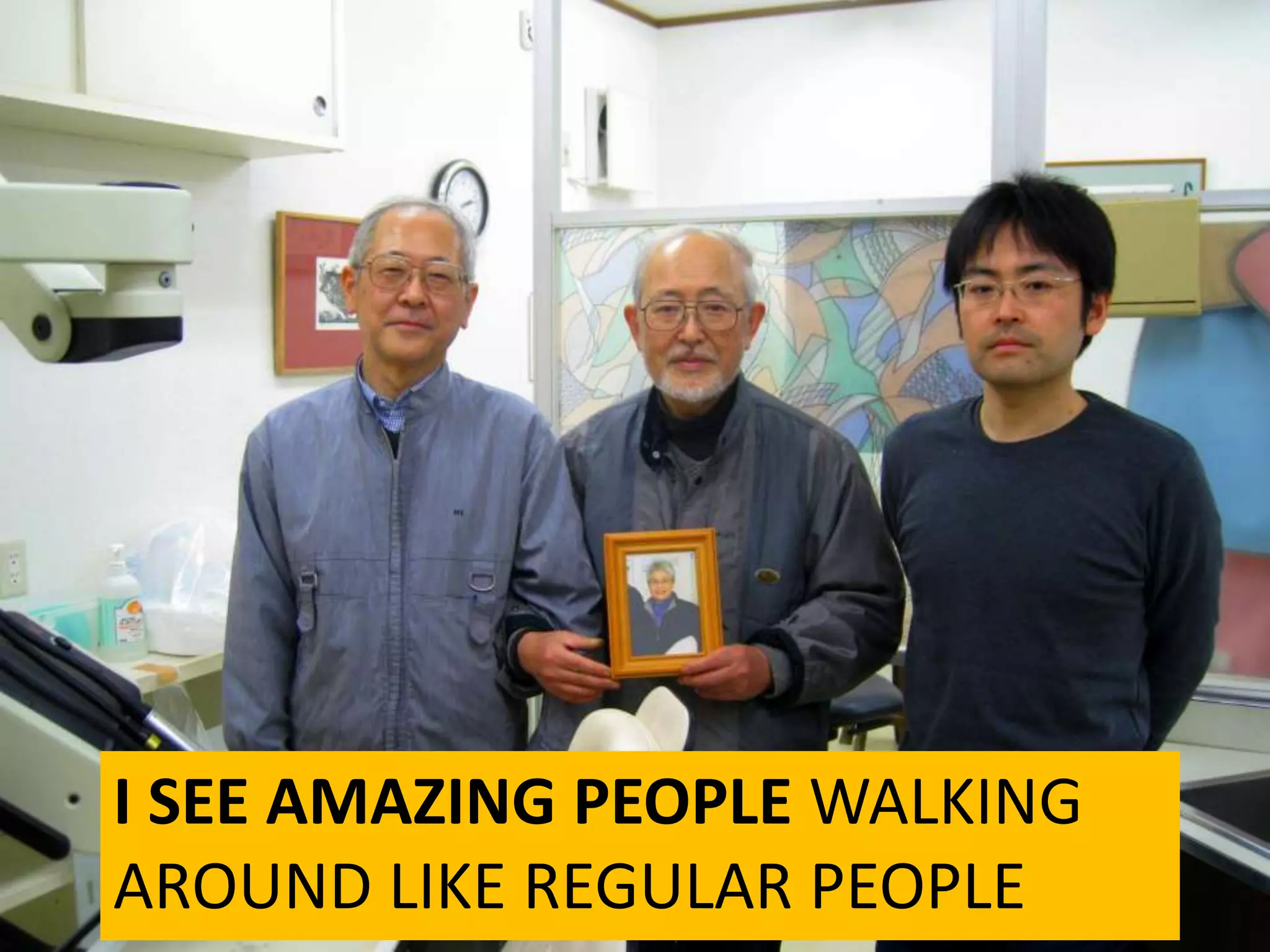
  • #42 1 year later, when I visited Dr Suda again, I realized that the photo of the lady outside the dental clinic was his wife, and despite losing his wife, he was still determined to service his community.
  • #48 Small businesses want to restart and cannot get loans when their businesses is destroyed. Most of them wait for the government or insurance companies but it may take a long time. Relief B2B is taking the interview of the business owner in his store, asking 4 questions: 1) What happened during the Tsunami? 2) What did you lose? 3) How much do you need? 4) What are you going to use the money for? And going to the next town with this interview of a few businesses and gather other business owners who are interested in supporting. We are requesting for interesting bearing loans so that these business owners can restart. This is not donations or charities, and you don’t need to go far as businesses 5km from the coastline are not really affected by the tsunami at all. This will allow business owners to start their business and not have to wait, and employ their employees sitting in the shelters.
  • #49 This is the best idea I’ve encountered in my years of disaster relief. What the disaster area needs is not more volunteers who come and are too poor to eat as most volunteers have time but not money. With fair pay for volunteers, the newly re-opened businesses can restart and have customers. This jumpstarts the economy in the area and I have never seen any other countries recover that fast economically in disaster areas.
  • #50 For those who do not own businesses or have jobs, many of them can focus on other activities to generate income. In Ishinomaki, seniors in several shelters engage in handicrafts to make products. Kids are also trained to make some art and handicrafts which they can sell. Instead of relying on charities to get by, small economic activities allow them to support themselves.
  • #51 Many people from overseas are interested in supporting, and bringing Markets of Hope to the Internet allows a new way of supporting disadvantaged communities. Changing mindsets from Donation -> conscious buying, Changing the roles from Donor -> Conscious Buyer, Receipient -> Generator of wealth.
  • #54 Communities understand their problems better than others. Solving complex problems during a crisis also allows the community to spread their ideas to other areas with the same problem. A local solution may in turn become a global business.