
AGILE SOFTWARE ARCHITECTURE 
BOYAN MIHAYLOV 
// bm@ebita.dk 
// linkedin.com/in/bmihaylov
/ Introduction 
/ Software architecture 
/ System requirement specifications 
/ Software architecture documentation 
/ Agile software architecture 
/ Case example 
/ Conclusion 
/ Q & A 
2 
AGENDA
/ M.Sc. in Computer Science @ The University of Copenhagen (2013) 
/ 6+ years professional experience 
/ 2.5 years in Ebita 
/ Conference speaker 
/ Interests 
/ Software architecture 
/ Design patterns & architecture tactics 
/ API development 
/ Web 
3 
BOYAN MIHAYLOV
4 
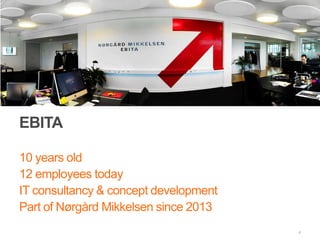
EBITA 
10 years old 
12 employees today 
IT consultancy & concept development 
Part of Nørgård Mikkelsen since 2013
5 
OUR CUSTOMERS
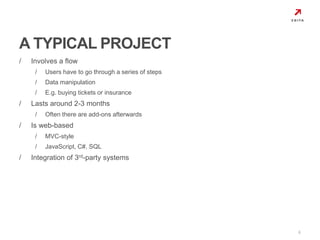
/ Involves a flow 
/ Users have to go through a series of steps 
/ Data manipulation 
/ E.g. buying tickets or insurance 
/ Lasts around 2-3 months 
/ Often there are add-ons afterwards 
/ Is web-based 
/ MVC-style 
/ JavaScript, C#, SQL 
/ Integration of 3rd-party systems 
6 
A TYPICAL PROJECT
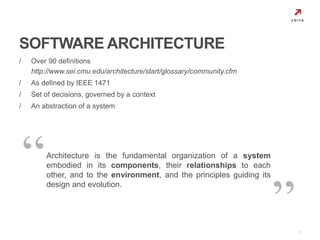
/ Over 90 definitions 
http://www.sei.cmu.edu/architecture/start/glossary/community.cfm 
/ As defined by IEEE 1471 
/ Set of decisions, governed by a context 
/ An abstraction of a system 
7 
SOFTWARE ARCHITECTURE 
Architecture is the fundamental organization of a system 
embodied in its components, their relationships to each 
other, and to the environment, and the principles guiding its 
design and evolution.
/ Start as early as possible 
/ Get-to-know-the-system process 
/ Questions to ask: 
/ Who are the stakeholders? Is it B2B or B2C? 
/ How many users are going to use the system? 
/ Are there external systems to be involved? 
/ What information will be managed, stored, and presented? 
/ What is the most important function of the system? 
/ How many environments are necessary? (development, test, production, etc.) 
/ Where will the system be hosted? Any special requirements for access? VPN? 
8 
THE BEGINNING
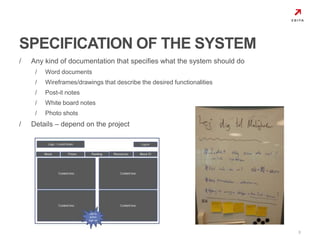
/ Any kind of documentation that specifies what the system should do 
/ Word documents 
/ Wireframes/drawings that describe the desired functionalities 
/ Post-it notes 
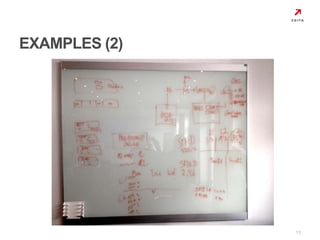
/ White board notes 
/ Photo shots 
/ Details – depend on the project 
9 
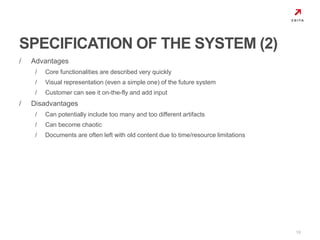
SPECIFICATION OF THE SYSTEM
/ Advantages 
/ Core functionalities are described very quickly 
/ Visual representation (even a simple one) of the future system 
/ Customer can see it on-the-fly and add input 
/ Disadvantages 
/ Can potentially include too many and too different artifacts 
/ Can become chaotic 
/ Documents are often left with old content due to time/resource limitations 
10 
SPECIFICATION OF THE SYSTEM (2)
/ Motivation 
/ Write decisions down 
/ People leave projects, people join projects 
/ Future maintenance of the system 
/ Challenges 
/ How to document many views? 
/ How to keep documents up-to-date? 
/ UML? 
/ KISS principle (keep it simple, stupid) 
11 
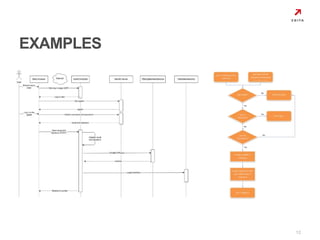
DOCUMENTING THE ARCHITECTURE
12 
EXAMPLES
13 
EXAMPLES (2)
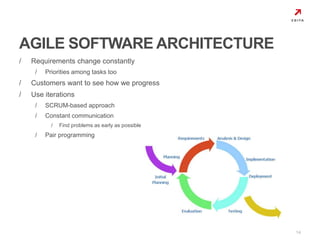
/ Requirements change constantly 
/ Priorities among tasks too 
/ Customers want to see how we progress 
/ Use iterations 
/ SCRUM-based approach 
/ Constant communication 
/ Find problems as early as possible 
/ Pair programming 
14 
AGILE SOFTWARE ARCHITECTURE
15 
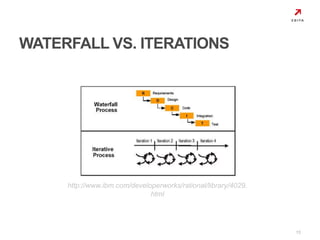
WATERFALL VS. ITERATIONS 
http://www.ibm.com/developerworks/rational/library/4029. 
html
16 
CASE EXAMPLE
A big company wants to have a new web system to sell tickets for ferries. They already 
have an administrative system used internally for managing all the inventory. This system 
exposes a web service for external communication. The company wants a decoupled 
website so that the back-end can easily be rewritten in other programming language in 
the future. 
17 
REQUIREMENTS
/ Issues 
/ The provided inventory web service has some limitations related to the provided data 
/ It requires an access token to be obtained and refreshed on a regular basis 
18 
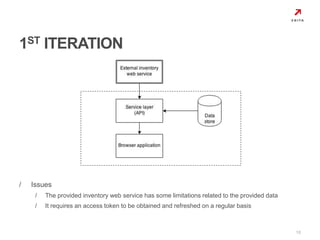
1ST ITERATION
/ Issues 
/ The provided inventory web service is very slow 
/ If it is stressed “too much”, it stops functioning 
19 
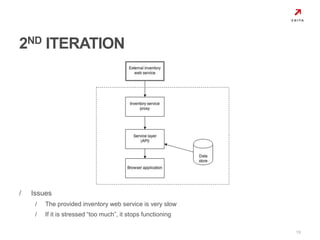
2ND ITERATION
/ Issues 
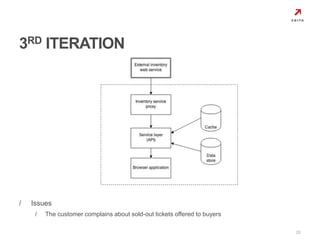
/ The customer complains about sold-out tickets offered to buyers 
20 
3RD ITERATION
21 
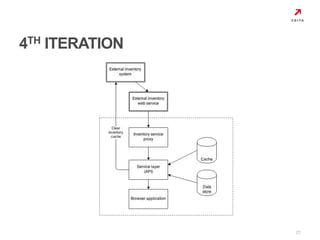
4TH ITERATION
/ Start simple, grow slowly 
/ Add complexity only when needed 
/ Try to postpone it as much as possible 
/ Do NOT predict the future, it changes a lot 
/ Write your code such that changes can happen ”painlessly” 
/ Document important decisions 
/ You will regret not doing this at a later point 
22 
TAKE-AWAY TIPS
23 
Q & A

Agile software architecture

  • 1.
    AGILE SOFTWARE ARCHITECTURE BOYAN MIHAYLOV // bm@ebita.dk // linkedin.com/in/bmihaylov
  • 2.
    / Introduction /Software architecture / System requirement specifications / Software architecture documentation / Agile software architecture / Case example / Conclusion / Q & A 2 AGENDA
  • 3.
    / M.Sc. inComputer Science @ The University of Copenhagen (2013) / 6+ years professional experience / 2.5 years in Ebita / Conference speaker / Interests / Software architecture / Design patterns & architecture tactics / API development / Web 3 BOYAN MIHAYLOV
  • 4.
    4 EBITA 10years old 12 employees today IT consultancy & concept development Part of Nørgård Mikkelsen since 2013
  • 5.
  • 6.
    / Involves aflow / Users have to go through a series of steps / Data manipulation / E.g. buying tickets or insurance / Lasts around 2-3 months / Often there are add-ons afterwards / Is web-based / MVC-style / JavaScript, C#, SQL / Integration of 3rd-party systems 6 A TYPICAL PROJECT
  • 7.
    / Over 90definitions http://www.sei.cmu.edu/architecture/start/glossary/community.cfm / As defined by IEEE 1471 / Set of decisions, governed by a context / An abstraction of a system 7 SOFTWARE ARCHITECTURE Architecture is the fundamental organization of a system embodied in its components, their relationships to each other, and to the environment, and the principles guiding its design and evolution.
  • 8.
    / Start asearly as possible / Get-to-know-the-system process / Questions to ask: / Who are the stakeholders? Is it B2B or B2C? / How many users are going to use the system? / Are there external systems to be involved? / What information will be managed, stored, and presented? / What is the most important function of the system? / How many environments are necessary? (development, test, production, etc.) / Where will the system be hosted? Any special requirements for access? VPN? 8 THE BEGINNING
  • 9.
    / Any kindof documentation that specifies what the system should do / Word documents / Wireframes/drawings that describe the desired functionalities / Post-it notes / White board notes / Photo shots / Details – depend on the project 9 SPECIFICATION OF THE SYSTEM
  • 10.
    / Advantages /Core functionalities are described very quickly / Visual representation (even a simple one) of the future system / Customer can see it on-the-fly and add input / Disadvantages / Can potentially include too many and too different artifacts / Can become chaotic / Documents are often left with old content due to time/resource limitations 10 SPECIFICATION OF THE SYSTEM (2)
  • 11.
    / Motivation /Write decisions down / People leave projects, people join projects / Future maintenance of the system / Challenges / How to document many views? / How to keep documents up-to-date? / UML? / KISS principle (keep it simple, stupid) 11 DOCUMENTING THE ARCHITECTURE
  • 12.
  • 13.
  • 14.
    / Requirements changeconstantly / Priorities among tasks too / Customers want to see how we progress / Use iterations / SCRUM-based approach / Constant communication / Find problems as early as possible / Pair programming 14 AGILE SOFTWARE ARCHITECTURE
  • 15.
    15 WATERFALL VS.ITERATIONS http://www.ibm.com/developerworks/rational/library/4029. html
  • 16.
  • 17.
    A big companywants to have a new web system to sell tickets for ferries. They already have an administrative system used internally for managing all the inventory. This system exposes a web service for external communication. The company wants a decoupled website so that the back-end can easily be rewritten in other programming language in the future. 17 REQUIREMENTS
  • 18.
    / Issues /The provided inventory web service has some limitations related to the provided data / It requires an access token to be obtained and refreshed on a regular basis 18 1ST ITERATION
  • 19.
    / Issues /The provided inventory web service is very slow / If it is stressed “too much”, it stops functioning 19 2ND ITERATION
  • 20.
    / Issues /The customer complains about sold-out tickets offered to buyers 20 3RD ITERATION
  • 21.
  • 22.
    / Start simple,grow slowly / Add complexity only when needed / Try to postpone it as much as possible / Do NOT predict the future, it changes a lot / Write your code such that changes can happen ”painlessly” / Document important decisions / You will regret not doing this at a later point 22 TAKE-AWAY TIPS
  • 23.

Editor's Notes

  • #9 - The first meetings with the customer also include one UX and developer