Core Systems Transformation Solutions 
Agile-Bureaucracy 
Maria Teryokhina, 
N. Novgorod, 2014 
Agenda
Confidential 2 
About Myself 
Education: 
• NNSU, 2010 – master’s degree, “Mathematics and 
Mechanics” department 
Work Experience: 
• 2012- “Return on Intelligence”: web-applications (HR Management, 
Benefits Management systems) 
• 2011-2012 “Tecom”: Windows applications for automation of the digital 
broadcasting system 
• 2008-2011 “Symphony Teleca”: desktop applications (PC Sync for 
Android), mobile phones (Win platforms), applications for mobile phones 
(Symbian); 
• 2014 (Part Time) “Freemake”: IPhone applications, desktop applications
Confidential 3 
Goals 
• To provide examples and problems related to cases when Testing 
Artefacts were lost in Agile Projects. 
• To provide solutions how to decrease effort for Testing Documentation 
support in Agile
Confidential 4 
Agenda 
• Agile Manifesto Overview 
• Testing Artefacts Overview 
• Pros and Cons of having Testing Artefacts
Confidential 5 
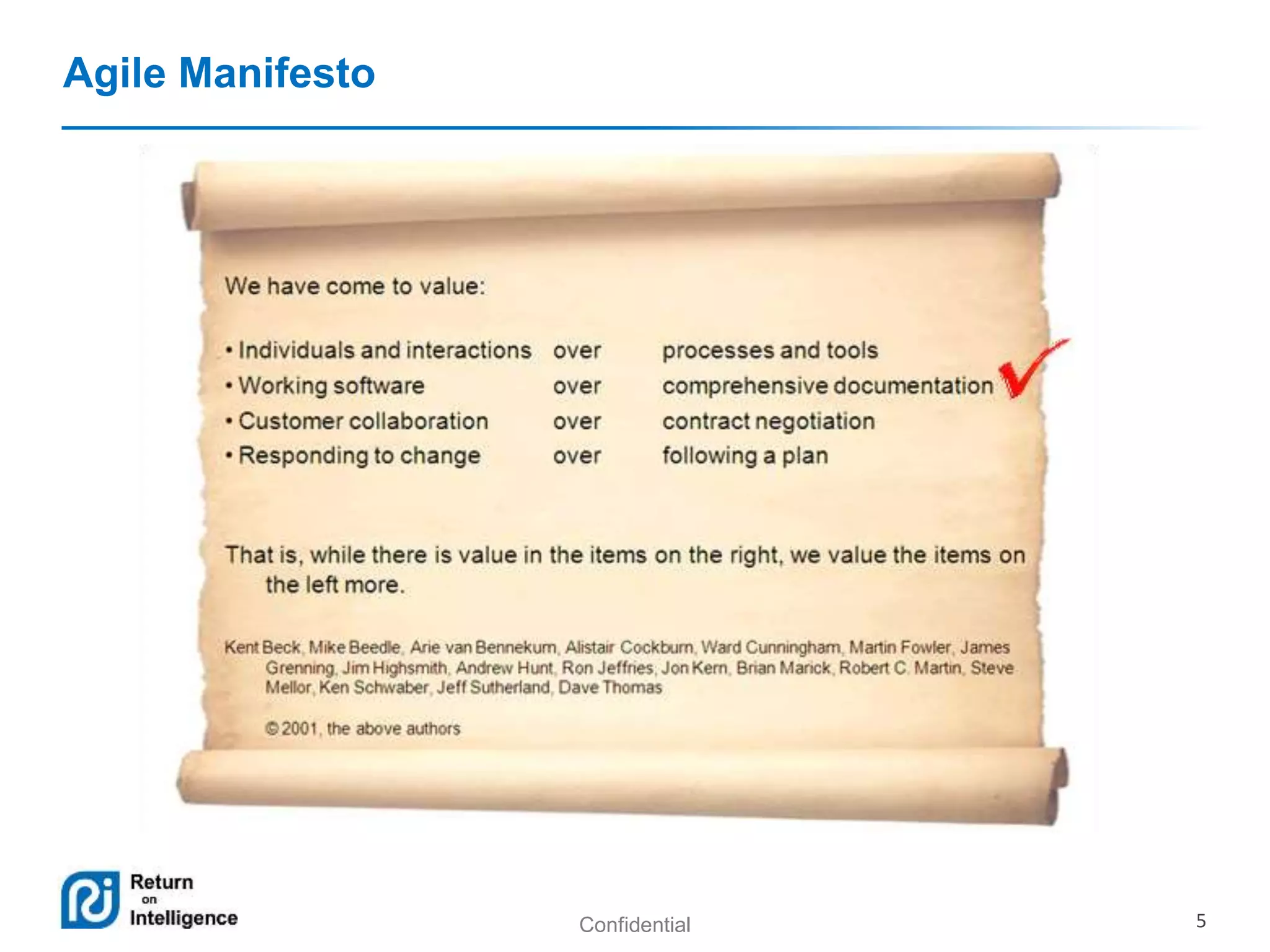
Agile Manifesto
Confidential 6 
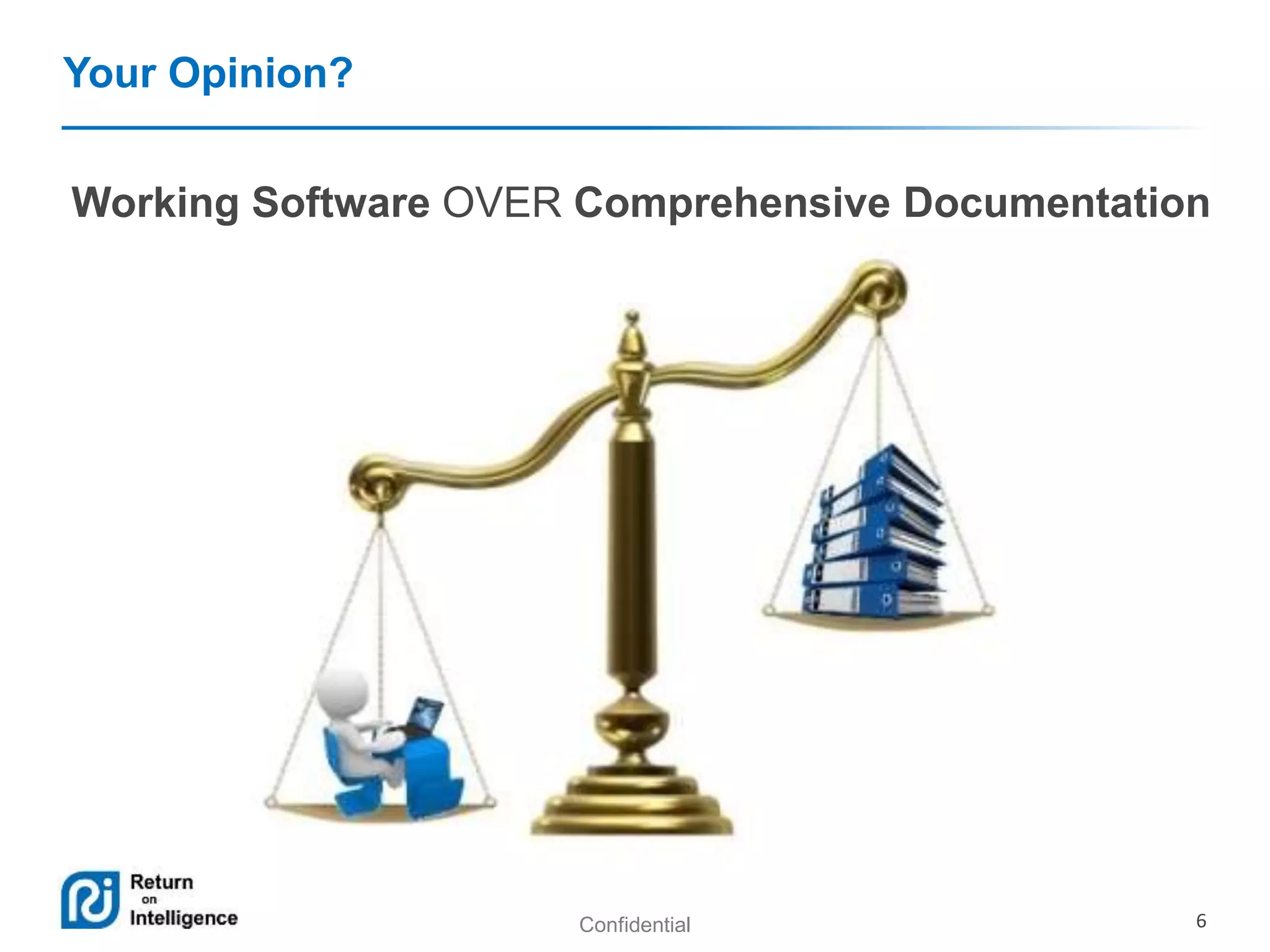
Your Opinion? 
Working Software OVER Comprehensive Documentation
Confidential 7 
Different Opinions 
• Documentation is not necessary at all 
• Only Customer’s required Documentation is necessary 
• Minimum Documentation is necessary
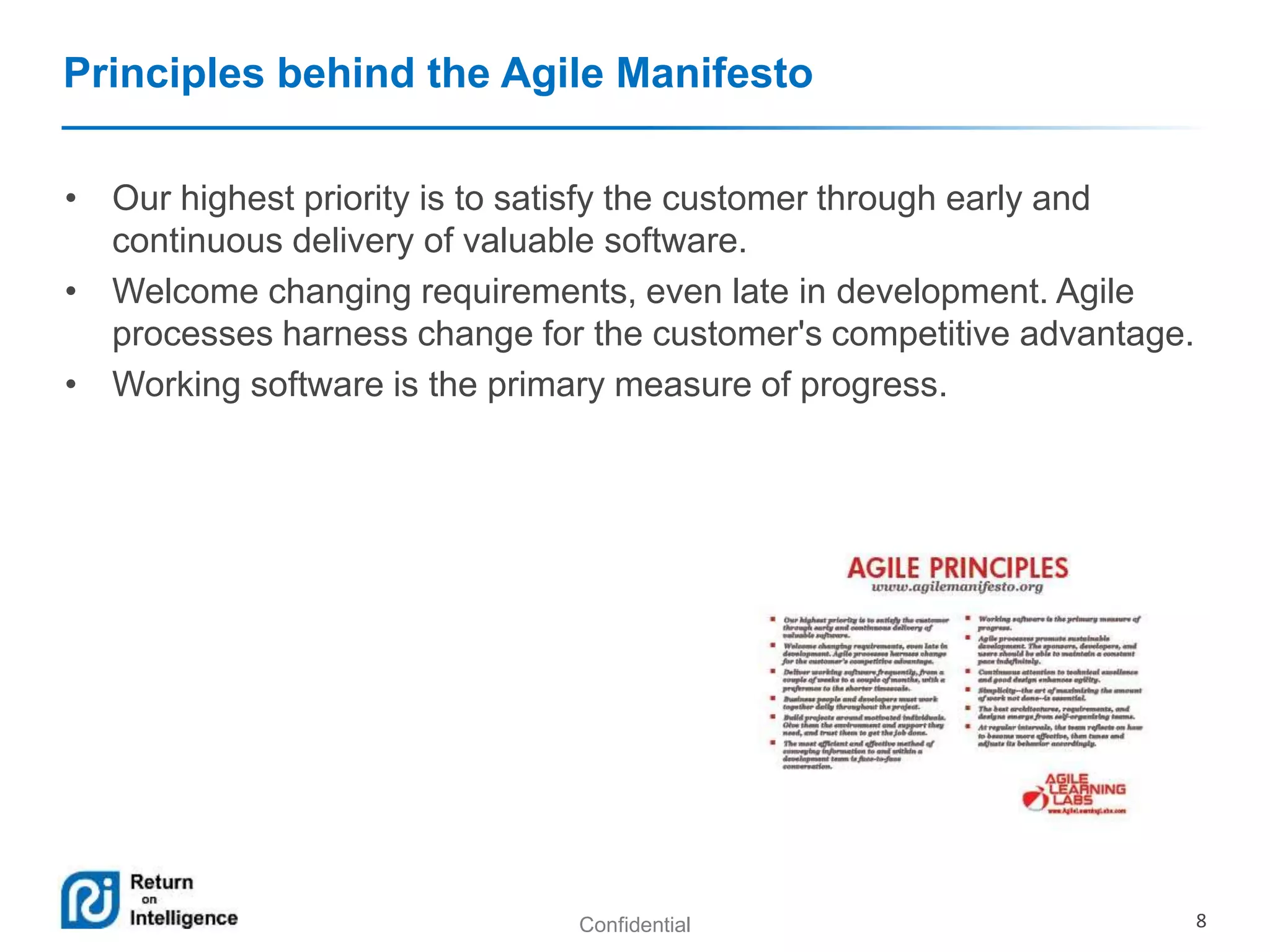
Principles behind the Agile Manifesto 
• Our highest priority is to satisfy the customer through early and 
continuous delivery of valuable software. 
• Welcome changing requirements, even late in development. Agile 
processes harness change for the customer's competitive advantage. 
• Working software is the primary measure of progress. 
Confidential 8
Confidential 9 
Testing Artefacts 
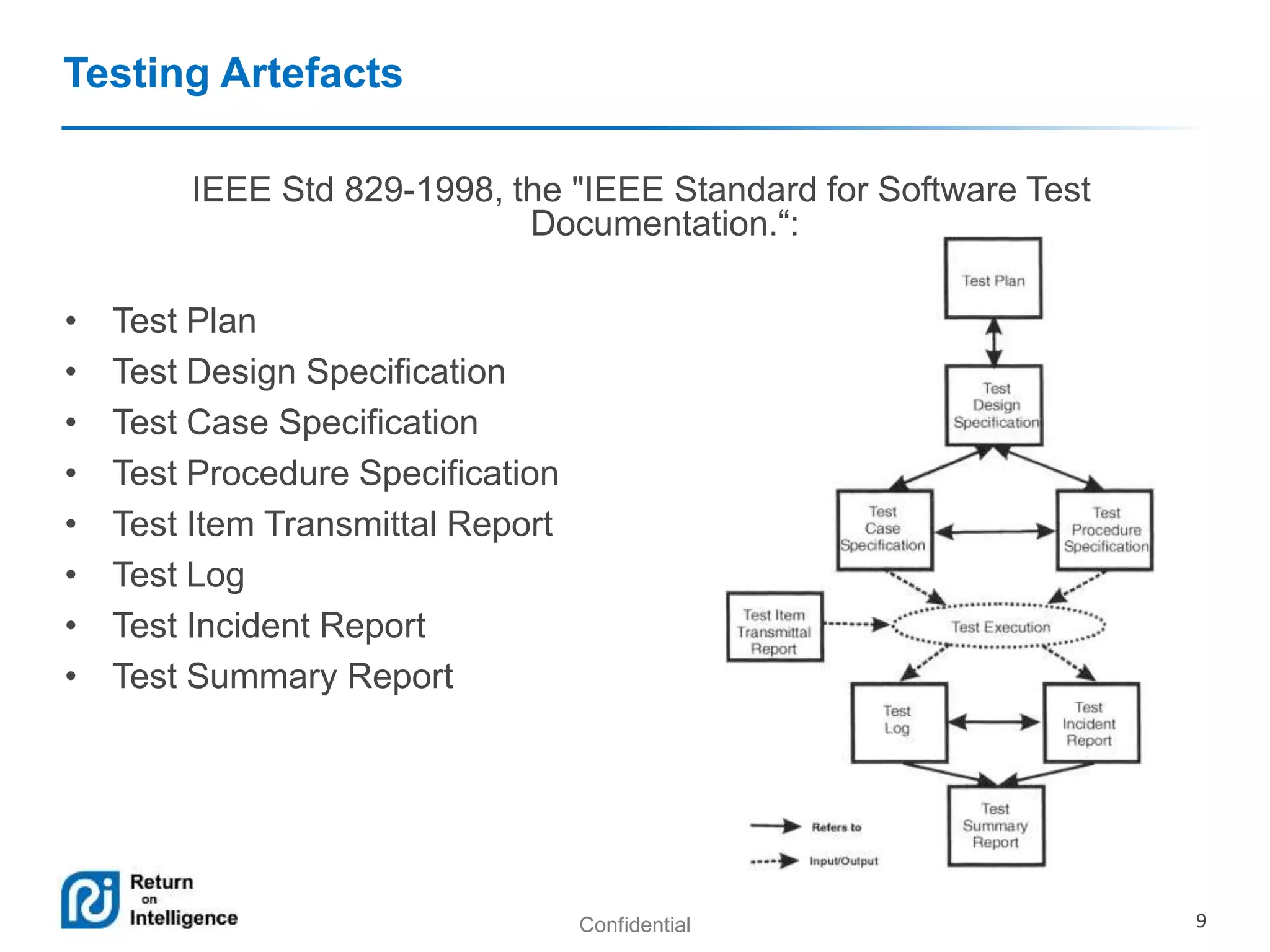
IEEE Std 829-1998, the "IEEE Standard for Software Test 
Documentation.“: 
• Test Plan 
• Test Design Specification 
• Test Case Specification 
• Test Procedure Specification 
• Test Item Transmittal Report 
• Test Log 
• Test Incident Report 
• Test Summary Report
Confidential 10 
Testing Artefacts 
• Test Plan 
• Test Cases 
• Defects 
• Reports/Metrics
Confidential 11 
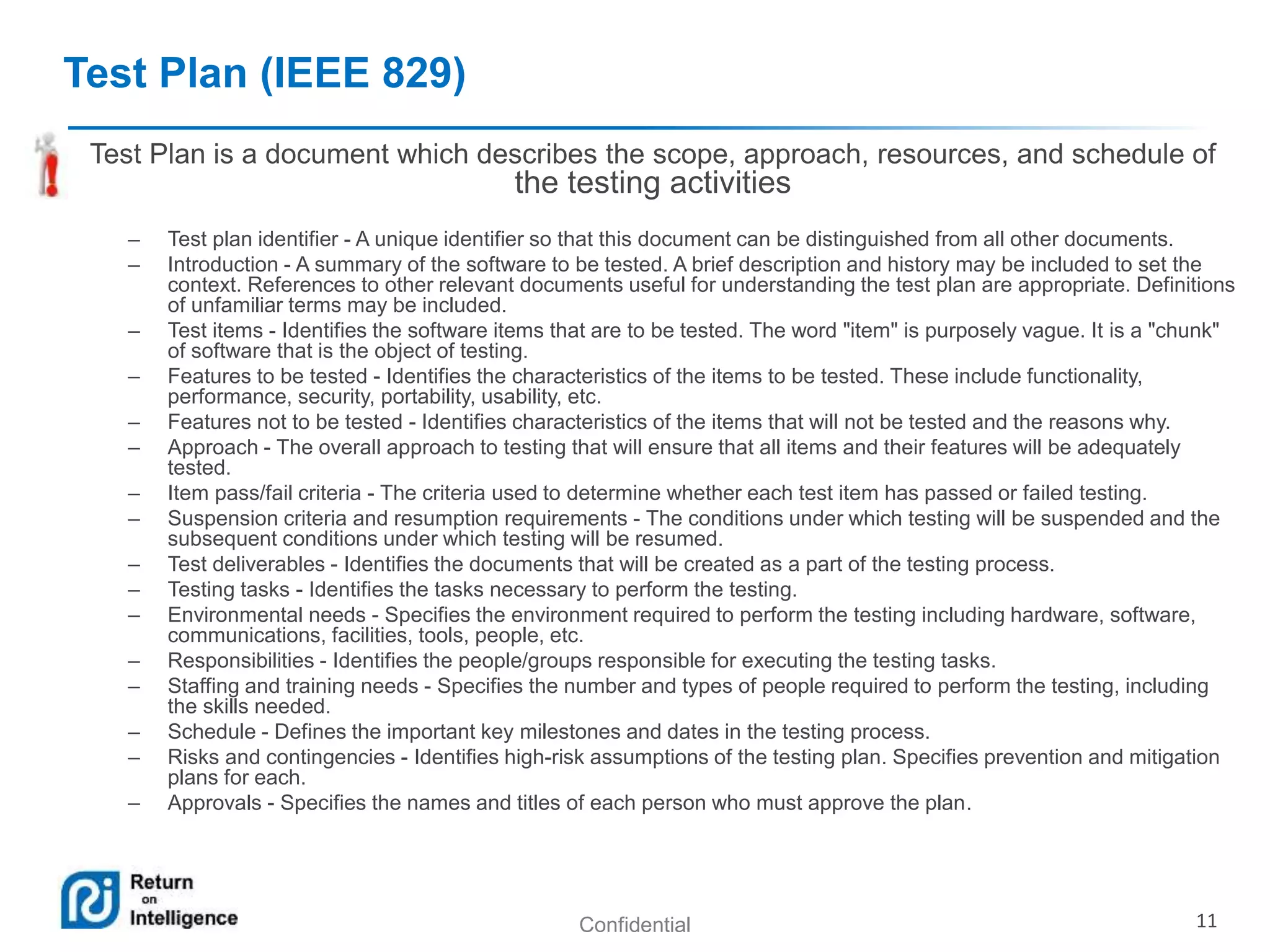
Test Plan (IEEE 829) 
Test Plan is a document which describes the scope, approach, resources, and schedule of 
the testing activities 
– Test plan identifier - A unique identifier so that this document can be distinguished from all other documents. 
– Introduction - A summary of the software to be tested. A brief description and history may be included to set the 
context. References to other relevant documents useful for understanding the test plan are appropriate. Definitions 
of unfamiliar terms may be included. 
– Test items - Identifies the software items that are to be tested. The word "item" is purposely vague. It is a "chunk" 
of software that is the object of testing. 
– Features to be tested - Identifies the characteristics of the items to be tested. These include functionality, 
performance, security, portability, usability, etc. 
– Features not to be tested - Identifies characteristics of the items that will not be tested and the reasons why. 
– Approach - The overall approach to testing that will ensure that all items and their features will be adequately 
tested. 
– Item pass/fail criteria - The criteria used to determine whether each test item has passed or failed testing. 
– Suspension criteria and resumption requirements - The conditions under which testing will be suspended and the 
subsequent conditions under which testing will be resumed. 
– Test deliverables - Identifies the documents that will be created as a part of the testing process. 
– Testing tasks - Identifies the tasks necessary to perform the testing. 
– Environmental needs - Specifies the environment required to perform the testing including hardware, software, 
communications, facilities, tools, people, etc. 
– Responsibilities - Identifies the people/groups responsible for executing the testing tasks. 
– Staffing and training needs - Specifies the number and types of people required to perform the testing, including 
the skills needed. 
– Schedule - Defines the important key milestones and dates in the testing process. 
– Risks and contingencies - Identifies high-risk assumptions of the testing plan. Specifies prevention and mitigation 
plans for each. 
– Approvals - Specifies the names and titles of each person who must approve the plan.
Confidential 12 
Test Plan (Agile) 
• Test Strategy, Objectives 
• Types of Testing 
• Priorities 
• Test Engineers Roles and Responsibilities 
• Test Environment Requirements (Configuration) 
• Testing Tools (Tools for Tests Automation, etc.) 
• Product Transition Procedure 
• Test Reporting Procedure 
• Bug Reporting Procedure 
• Acceptance Testing Procedure
Confidential 13 
Test Plan: Pros and Cons 
• All team members understand 
their goals, responsibilities and 
steps 
• The critical exceptions are 
prevented 
• New team members 
understand the process quickly 
• Time is spent on changes 
• Time Saving 
• “What are you doing?” 
• “Why should I do it?” 
• “Why should I do it this way?”
Confidential 14 
Test Plan: Don’t Write 
• No process at all 
• Small Team (1-2 developers only) 
• Small Project (1-2 months)
Confidential 15 
Test Cases 
• Test Cases 
• Check-Lists 
• Exploratory Testing
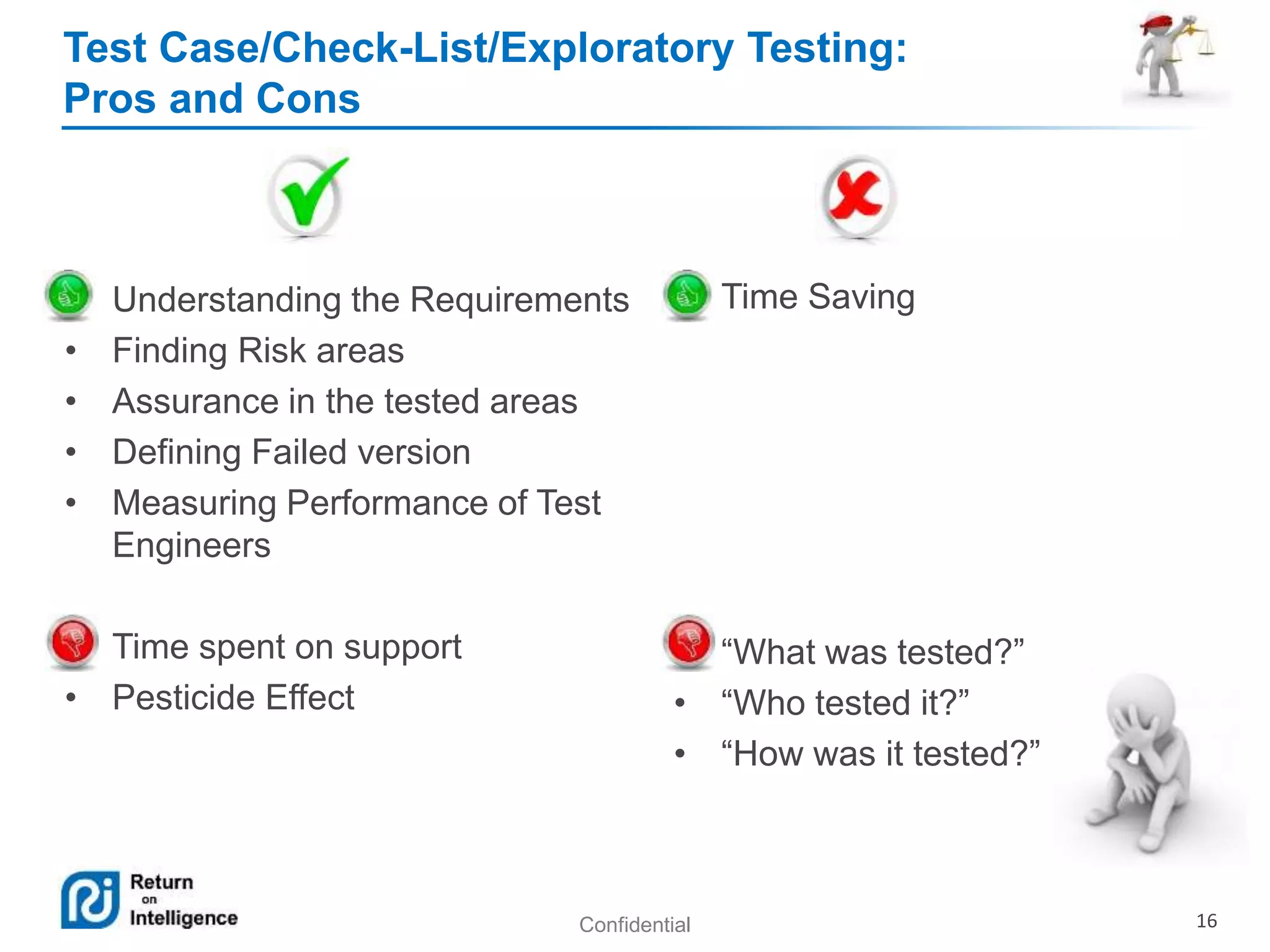
Test Case/Check-List/Exploratory Testing: 
Pros and Cons 
• Understanding the Requirements 
• Finding Risk areas 
• Assurance in the tested areas 
• Defining Failed version 
• Measuring Performance of Test 
Confidential 16 
Engineers 
• Time spent on support 
• Pesticide Effect 
• Time Saving 
• “What was tested?” 
• “Who tested it?” 
• “How was it tested?”
Confidential 17 
Test Cases: Don’t Write 
• No process at all 
• Small Team (1-2 developers only) 
• Small Project (1-2 months) 
• 1 Test Engineer with good experience 
• At the end of a Project 
• High trust of the customer to team 
• Product Dynamic, Risks are not interested for a customer
Confidential 18 
Defects 
• Formalized 
• Not formalized
Confidential 19 
Defects: Pros and Cons 
• Finding Risk areas 
• Quality assurance 
• Metrics collection (measurement 
of quality) 
• Defining Stable versions 
• Understanding the Priorities 
• Time spent on defect life cycle 
support 
• Time Saving 
• “Why don’t we know about this 
defect?” 
• “Was it fixed?”
Confidential 20 
Defects: Don’t Track 
• No process at all 
• Small Team (1-2 developers only) 
• Small Project (1-2 months) 
• Product Dynamic, Risks are not interested for a 
customer
Confidential 21 
Report/Metrics 
• Daily Standup Meetings 
• Weekly Reports 
• Sprint Reports 
• … 
• Pass Rate 
• TC/TS Dynamics 
• Defect Density 
• Defect Backlog Statistic 
• Defect Containment Statistic 
• Weekly PR Dynamics 
• Code Coverage 
• Review Metrics 
• …
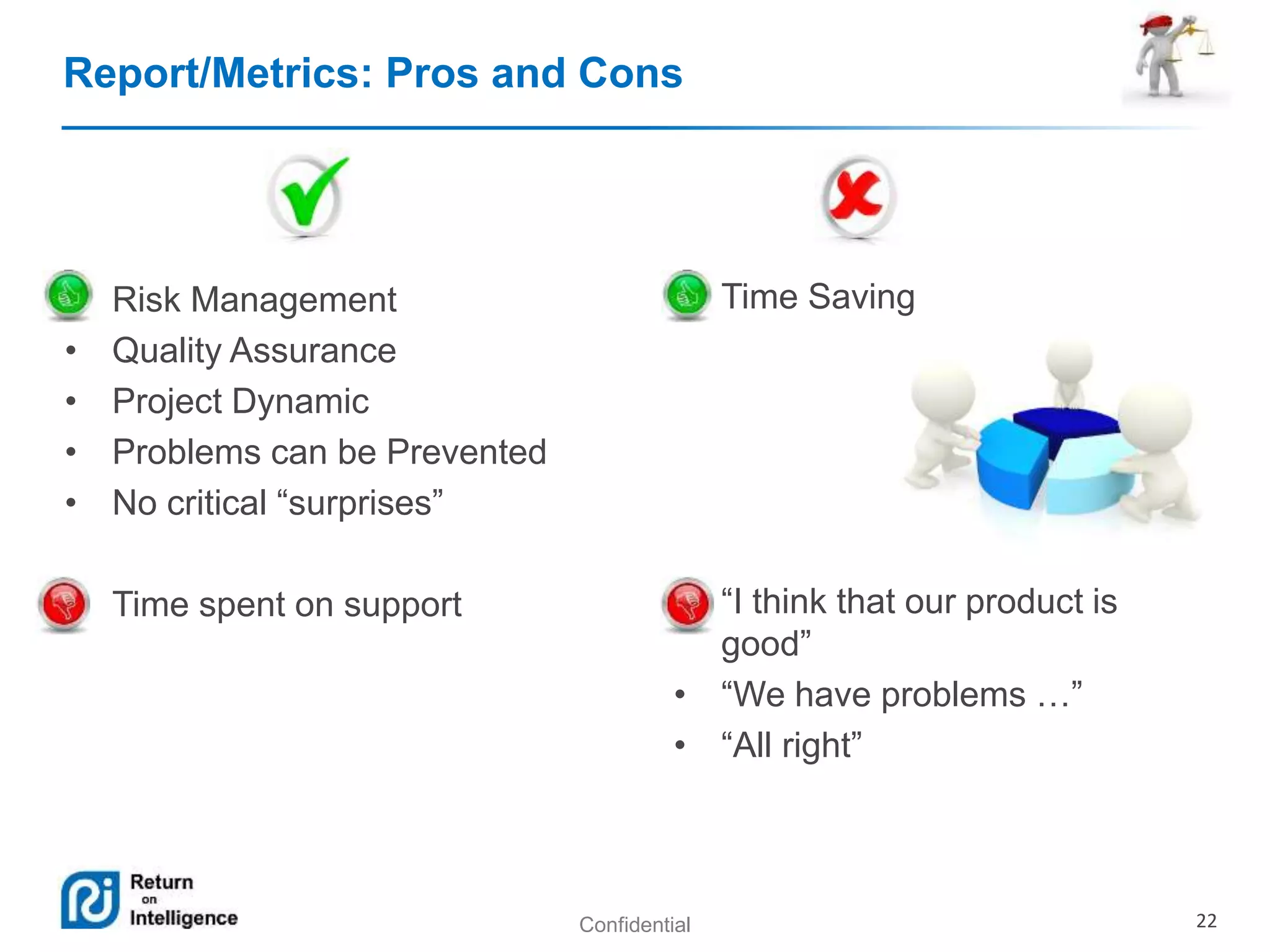
Report/Metrics: Pros and Cons 
Confidential 22 
• Risk Management 
• Quality Assurance 
• Project Dynamic 
• Problems can be Prevented 
• No critical “surprises” 
• Time spent on support 
• Time Saving 
• “I think that our product is 
good” 
• “We have problems …” 
• “All right”
Confidential 23 
Metrics: Don’t Track 
• No process at all 
• Small Team (1-2 developers only) 
• Small Project (1-2 months) 
• Product Dynamic, Risks are not interested for a 
customer/Managers
Confidential 24 
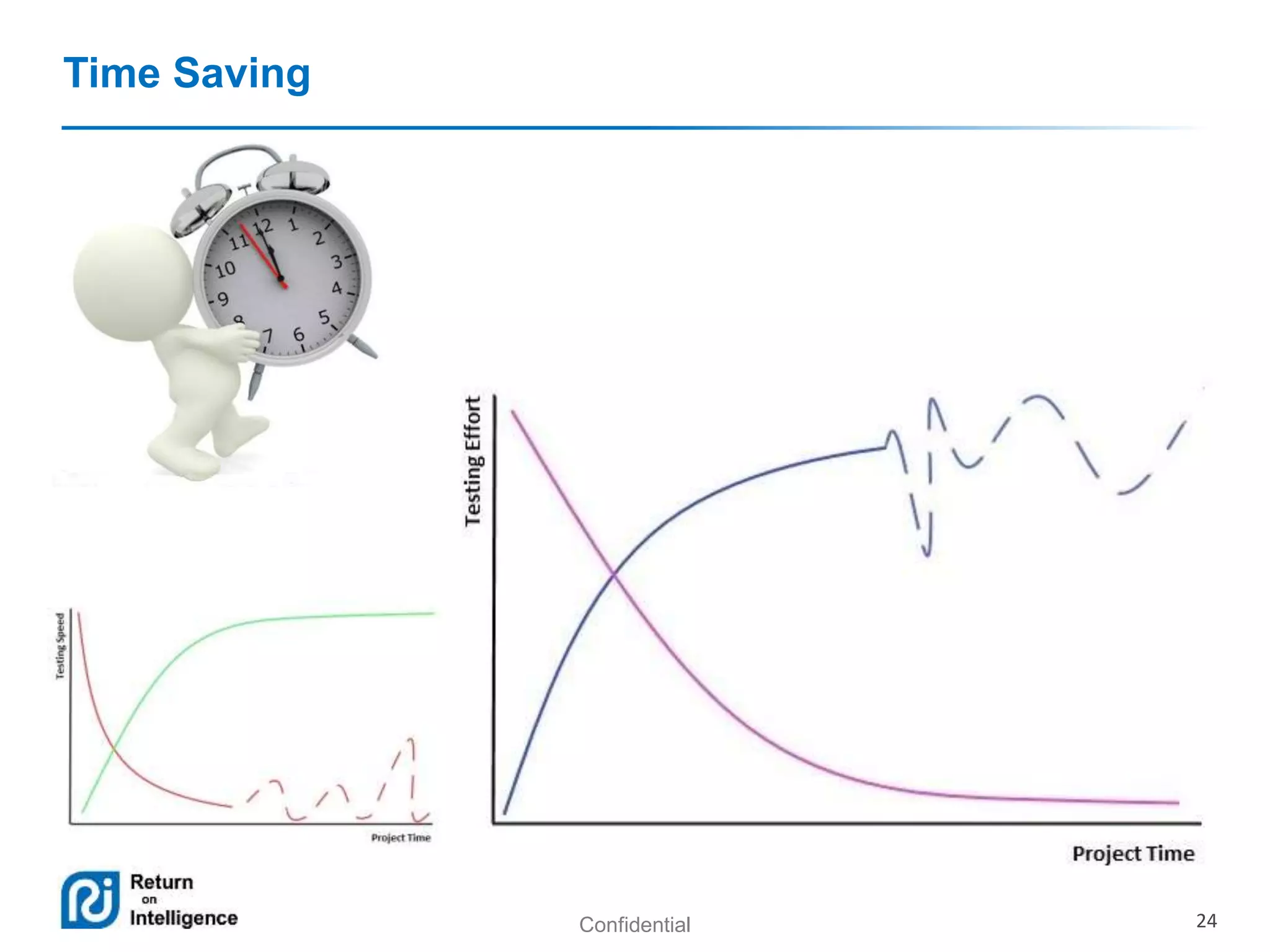
Time Saving
Confidential 25 
Literature 
• IEEE Std 829-1998, the "IEEE Standard for Software Test 
Documentation.“ 
• www.google.ru
Confidential 26 
Questions
Confidential 27 
Thank you 
Maria Teryokhina 
QA Lead 
Nizhniy Novgorod 
Skype: mariateryokhina 
maria.teryokhina@returnonintelligence.com

Agile Bureaucracy

  • 1.
    Core Systems TransformationSolutions Agile-Bureaucracy Maria Teryokhina, N. Novgorod, 2014 Agenda
  • 2.
    Confidential 2 AboutMyself Education: • NNSU, 2010 – master’s degree, “Mathematics and Mechanics” department Work Experience: • 2012- “Return on Intelligence”: web-applications (HR Management, Benefits Management systems) • 2011-2012 “Tecom”: Windows applications for automation of the digital broadcasting system • 2008-2011 “Symphony Teleca”: desktop applications (PC Sync for Android), mobile phones (Win platforms), applications for mobile phones (Symbian); • 2014 (Part Time) “Freemake”: IPhone applications, desktop applications
  • 3.
    Confidential 3 Goals • To provide examples and problems related to cases when Testing Artefacts were lost in Agile Projects. • To provide solutions how to decrease effort for Testing Documentation support in Agile
  • 4.
    Confidential 4 Agenda • Agile Manifesto Overview • Testing Artefacts Overview • Pros and Cons of having Testing Artefacts
  • 5.
  • 6.
    Confidential 6 YourOpinion? Working Software OVER Comprehensive Documentation
  • 7.
    Confidential 7 DifferentOpinions • Documentation is not necessary at all • Only Customer’s required Documentation is necessary • Minimum Documentation is necessary
  • 8.
    Principles behind theAgile Manifesto • Our highest priority is to satisfy the customer through early and continuous delivery of valuable software. • Welcome changing requirements, even late in development. Agile processes harness change for the customer's competitive advantage. • Working software is the primary measure of progress. Confidential 8
  • 9.
    Confidential 9 TestingArtefacts IEEE Std 829-1998, the "IEEE Standard for Software Test Documentation.“: • Test Plan • Test Design Specification • Test Case Specification • Test Procedure Specification • Test Item Transmittal Report • Test Log • Test Incident Report • Test Summary Report
  • 10.
    Confidential 10 TestingArtefacts • Test Plan • Test Cases • Defects • Reports/Metrics
  • 11.
    Confidential 11 TestPlan (IEEE 829) Test Plan is a document which describes the scope, approach, resources, and schedule of the testing activities – Test plan identifier - A unique identifier so that this document can be distinguished from all other documents. – Introduction - A summary of the software to be tested. A brief description and history may be included to set the context. References to other relevant documents useful for understanding the test plan are appropriate. Definitions of unfamiliar terms may be included. – Test items - Identifies the software items that are to be tested. The word "item" is purposely vague. It is a "chunk" of software that is the object of testing. – Features to be tested - Identifies the characteristics of the items to be tested. These include functionality, performance, security, portability, usability, etc. – Features not to be tested - Identifies characteristics of the items that will not be tested and the reasons why. – Approach - The overall approach to testing that will ensure that all items and their features will be adequately tested. – Item pass/fail criteria - The criteria used to determine whether each test item has passed or failed testing. – Suspension criteria and resumption requirements - The conditions under which testing will be suspended and the subsequent conditions under which testing will be resumed. – Test deliverables - Identifies the documents that will be created as a part of the testing process. – Testing tasks - Identifies the tasks necessary to perform the testing. – Environmental needs - Specifies the environment required to perform the testing including hardware, software, communications, facilities, tools, people, etc. – Responsibilities - Identifies the people/groups responsible for executing the testing tasks. – Staffing and training needs - Specifies the number and types of people required to perform the testing, including the skills needed. – Schedule - Defines the important key milestones and dates in the testing process. – Risks and contingencies - Identifies high-risk assumptions of the testing plan. Specifies prevention and mitigation plans for each. – Approvals - Specifies the names and titles of each person who must approve the plan.
  • 12.
    Confidential 12 TestPlan (Agile) • Test Strategy, Objectives • Types of Testing • Priorities • Test Engineers Roles and Responsibilities • Test Environment Requirements (Configuration) • Testing Tools (Tools for Tests Automation, etc.) • Product Transition Procedure • Test Reporting Procedure • Bug Reporting Procedure • Acceptance Testing Procedure
  • 13.
    Confidential 13 TestPlan: Pros and Cons • All team members understand their goals, responsibilities and steps • The critical exceptions are prevented • New team members understand the process quickly • Time is spent on changes • Time Saving • “What are you doing?” • “Why should I do it?” • “Why should I do it this way?”
  • 14.
    Confidential 14 TestPlan: Don’t Write • No process at all • Small Team (1-2 developers only) • Small Project (1-2 months)
  • 15.
    Confidential 15 TestCases • Test Cases • Check-Lists • Exploratory Testing
  • 16.
    Test Case/Check-List/Exploratory Testing: Pros and Cons • Understanding the Requirements • Finding Risk areas • Assurance in the tested areas • Defining Failed version • Measuring Performance of Test Confidential 16 Engineers • Time spent on support • Pesticide Effect • Time Saving • “What was tested?” • “Who tested it?” • “How was it tested?”
  • 17.
    Confidential 17 TestCases: Don’t Write • No process at all • Small Team (1-2 developers only) • Small Project (1-2 months) • 1 Test Engineer with good experience • At the end of a Project • High trust of the customer to team • Product Dynamic, Risks are not interested for a customer
  • 18.
    Confidential 18 Defects • Formalized • Not formalized
  • 19.
    Confidential 19 Defects:Pros and Cons • Finding Risk areas • Quality assurance • Metrics collection (measurement of quality) • Defining Stable versions • Understanding the Priorities • Time spent on defect life cycle support • Time Saving • “Why don’t we know about this defect?” • “Was it fixed?”
  • 20.
    Confidential 20 Defects:Don’t Track • No process at all • Small Team (1-2 developers only) • Small Project (1-2 months) • Product Dynamic, Risks are not interested for a customer
  • 21.
    Confidential 21 Report/Metrics • Daily Standup Meetings • Weekly Reports • Sprint Reports • … • Pass Rate • TC/TS Dynamics • Defect Density • Defect Backlog Statistic • Defect Containment Statistic • Weekly PR Dynamics • Code Coverage • Review Metrics • …
  • 22.
    Report/Metrics: Pros andCons Confidential 22 • Risk Management • Quality Assurance • Project Dynamic • Problems can be Prevented • No critical “surprises” • Time spent on support • Time Saving • “I think that our product is good” • “We have problems …” • “All right”
  • 23.
    Confidential 23 Metrics:Don’t Track • No process at all • Small Team (1-2 developers only) • Small Project (1-2 months) • Product Dynamic, Risks are not interested for a customer/Managers
  • 24.
  • 25.
    Confidential 25 Literature • IEEE Std 829-1998, the "IEEE Standard for Software Test Documentation.“ • www.google.ru
  • 26.
  • 27.
    Confidential 27 Thankyou Maria Teryokhina QA Lead Nizhniy Novgorod Skype: mariateryokhina maria.teryokhina@returnonintelligence.com

Editor's Notes

  • #7 Как вы понимаете третий пункт этого манифеста?