
AGILE - 5 POINTS
FOR MANAGERS
ANDY BRANDT
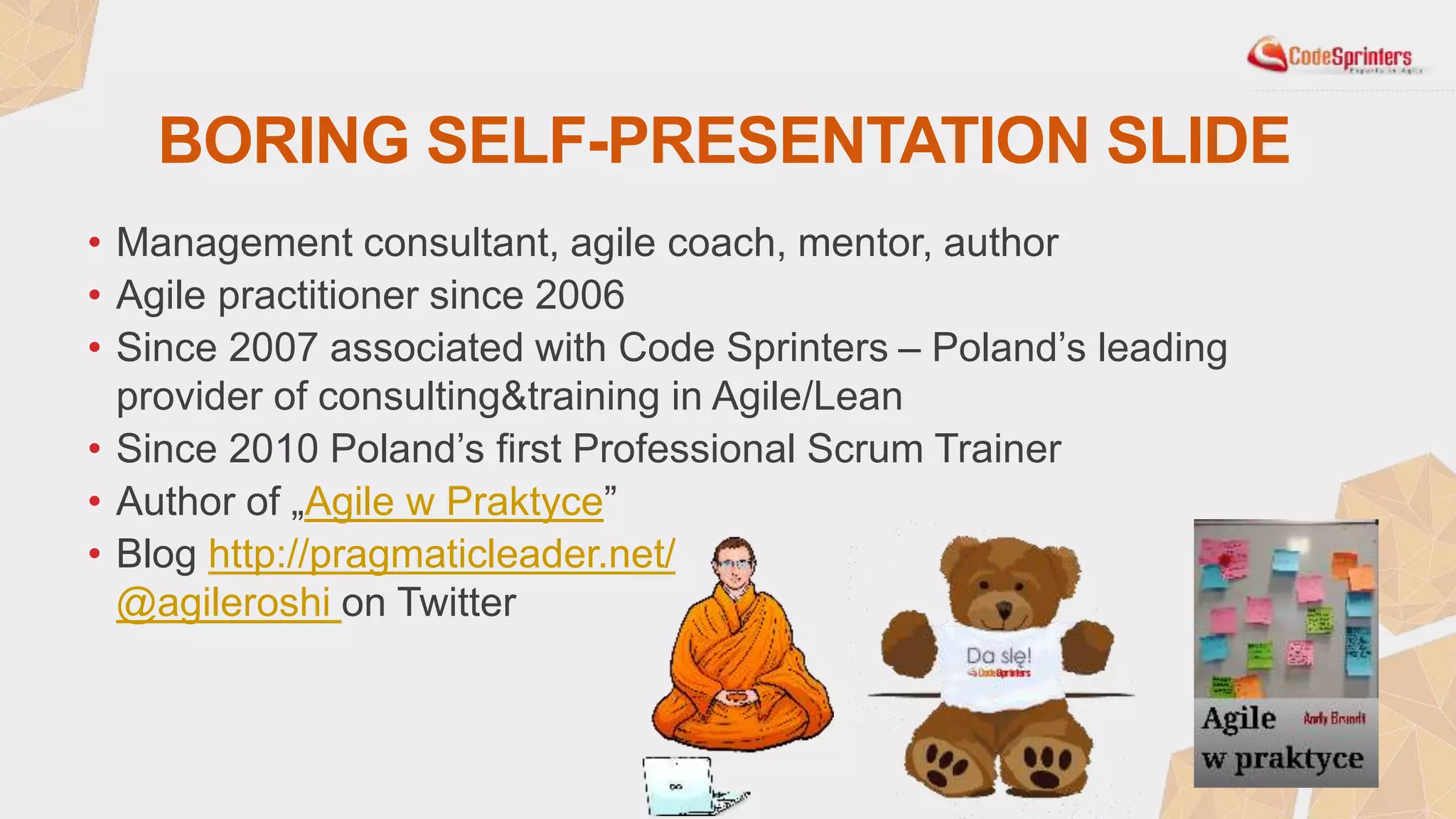
BORING SELF-PRESENTATION SLIDE
• Management consultant, agile coach, mentor, author
• Agile practitioner since 2006
• Since 2007 associated with Code Sprinters – Poland’s leading
provider of consulting&training in Agile/Lean
• Since 2010 Poland’s first Professional Scrum Trainer
• Author of „Agile w Praktyce”
• Blog http://pragmaticleader.net/
@agileroshi on Twitter
ASSUMPTIONS TESTING
?
ASSUMPTIONS
• Everyone knows Scrum and at least one scaling framework
• Everyone at least tried to work with Scrum or Kanban
• No one has to be convinced waterfall is a bad idea
• Most of you are line managers who want to know what they role is in
Agile
UNDERSTAND AGILE
• Understand Scrum is not all there is to Agile. And neither is Kanban. Those
are just two processes in the large “cloud” of Agile methods, frameworks &
practices.
• Understand Agile didn’t start with the Manifesto.
• Understand Agile is based on empirical process control and Lean principles.
• Understand empiricism in software products’ development is not possible.
without high quality engineering and modern technical practices.
• Understand how empiricism applies to your type of work.
• Understand the limitations of empirical approach.
• Understand the cultural setting necessary for empiricism that is implicitly
assumed by Agile frameworks and methods.
TRAINING? WORKSHOPS?
• For Developers – TDD workshops, BDD workshops, Clean Code dojos
and workshops, OO & Design Patterns trainings, various classes
provided by tech stack vendors, numerous books and blogs on widely
understood software craftsmanship.
• For Scrum Masters – Professional Scrum Master classes, workshops,
Agile Coaching Academy, Agile Coach Camps etc. numerous books and
websites focusing on their role as well as frameworks and processes.
• For Product Owners – Professional Scrum Product Owner classes,
workshops on product management, impact mapping, business value
quantification, books & blogs on the subject.
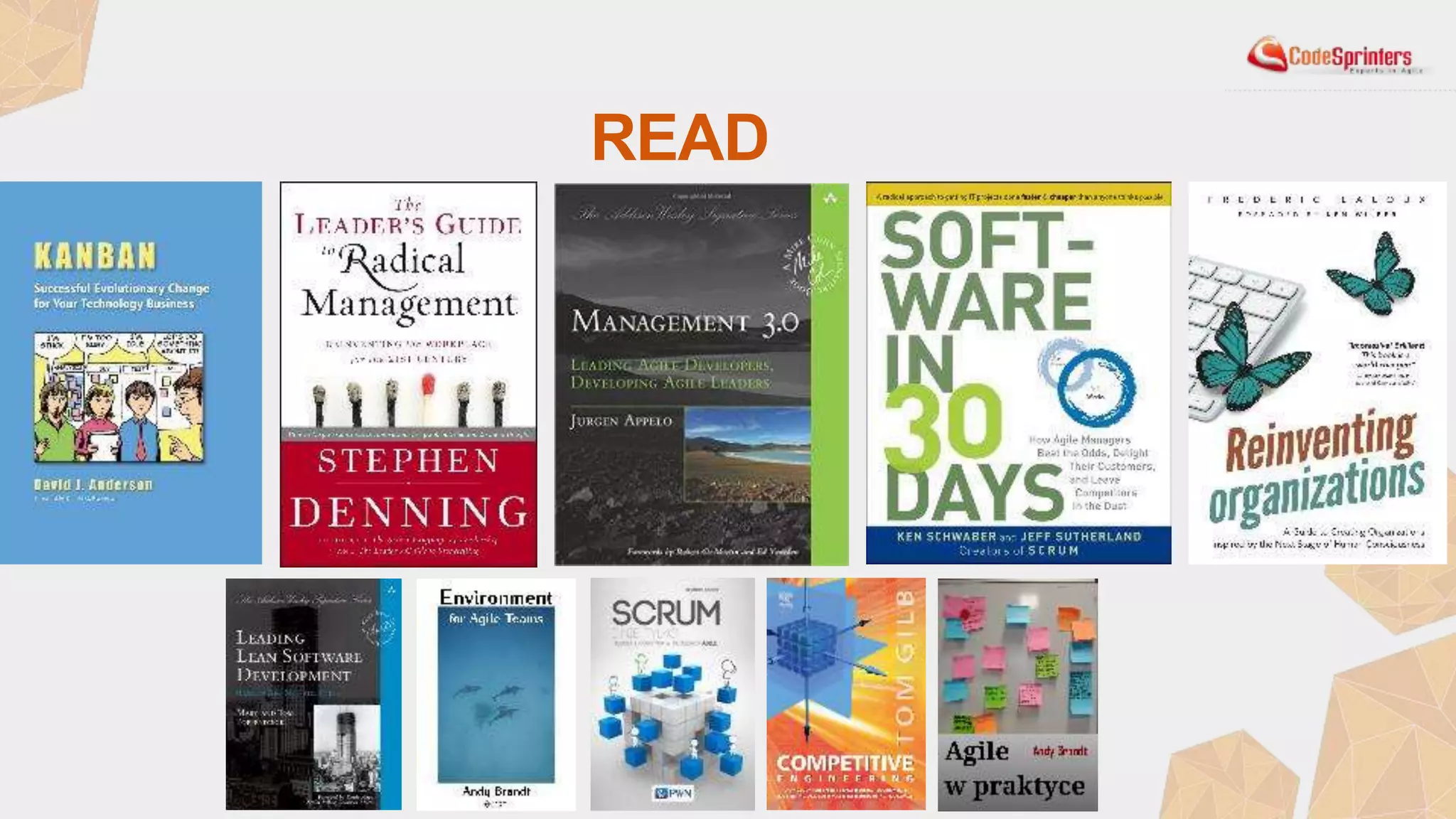
• What is there for Managers? Few books, almost no trainings (except
maybe Management 3.0), few blogs.
READ
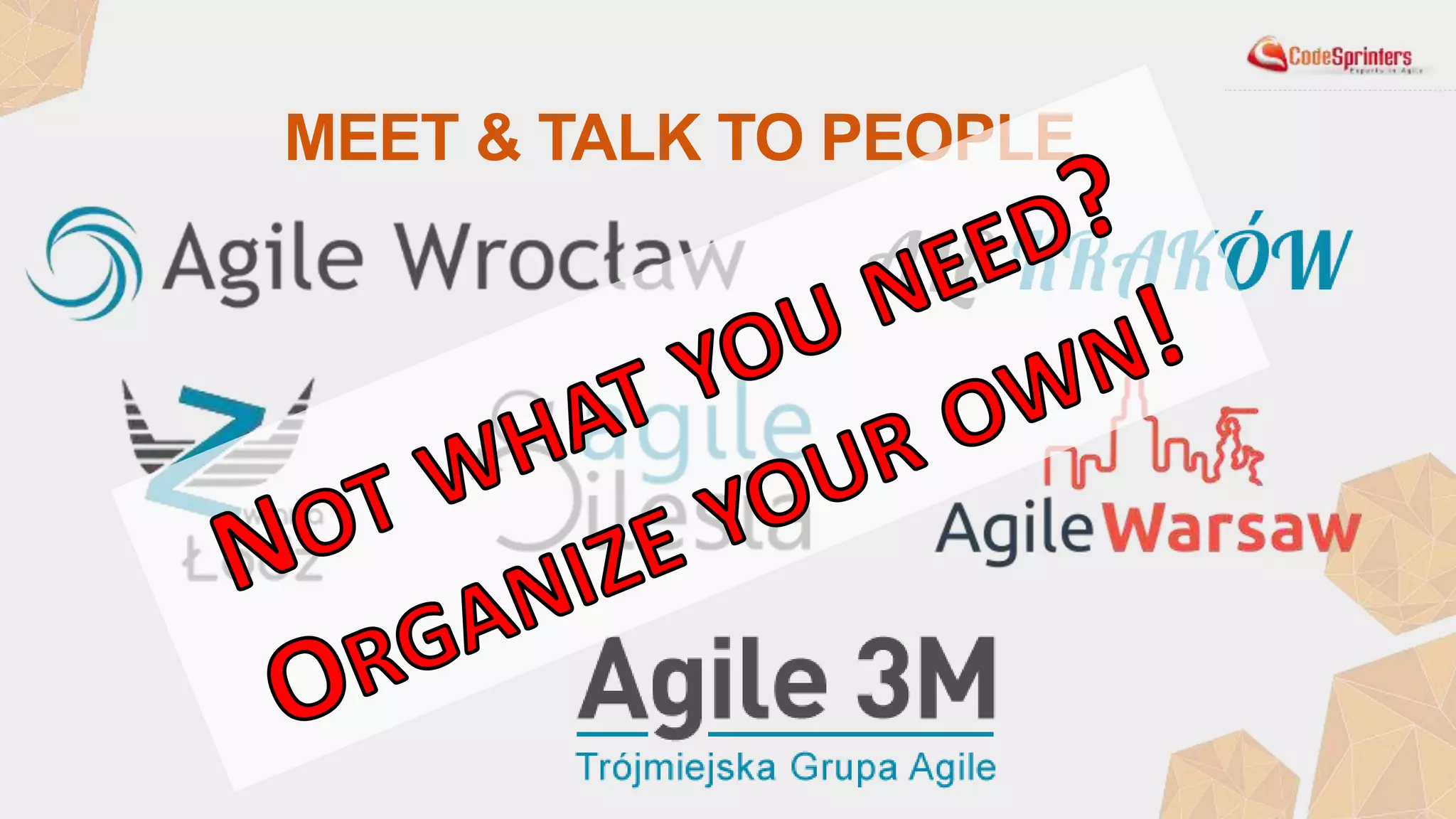
MEET & TALK TO PEOPLE
21 października
www.agileupdate.pl
Więcej info i rejestracja uczestników:
LAST BUT NOT LEAST
• Attend a training.
• Invite a good, experienced Agile Coach / Consultant to help you
0. UNDERSTAND
AGILE
IF YOU USE SOMETHING IT PAYS OFF TO
UNDERSTAND THE THEORY AND PRINCIPLES BEHIND IT
MANAGEMENT
Full Definition of MANAGEMENT
1 : the act or art of managing : the conducting or supervising of
something (as a business)
2 : judicious use of means to accomplish an end
3 : the collective body of those who manage or direct an enterprise
(from Merriam Webster dictionary)
MANAGEMENT
• Management – organizing the efforts of a group of
people to achieve desired results.
• Can be dissected into selecting and setting goals, organizing work
and monitoring progress.
• The small print:
• In order for this to make economic sense the benefits those efforts bring must exceed the costs of the people & resources
they use.
• Managers are people hired by those investing in the effort to ensure the benefits are greater than the costs & other goals
are achieved.
• Usually the investors do not really care about the methods [structures, frameworks, names, remuneration systems] used
by the managers as long as the goals are achieved and the profit margin is good enough.
AGILE VS. TRADITIONAL MANAGEMENT?
• External control is replaced with self-discipline reinforced by
transparency from team level up and a sense of professionalism re.
the work itself.
• Telling subordinates exactly what to do is replaced with giving goals
and reasons behind those goals.
• Upfront planning by a small group of specialists followed by execution
by large groups of low-skilled labor replaced with empirical progress in
small groups of highly-skilled specialists.
• The goals still come from investors/business who will also reap the
benefits from the work being done.
• They still expect you to take care of “judicious use of means to
accomplish” this.
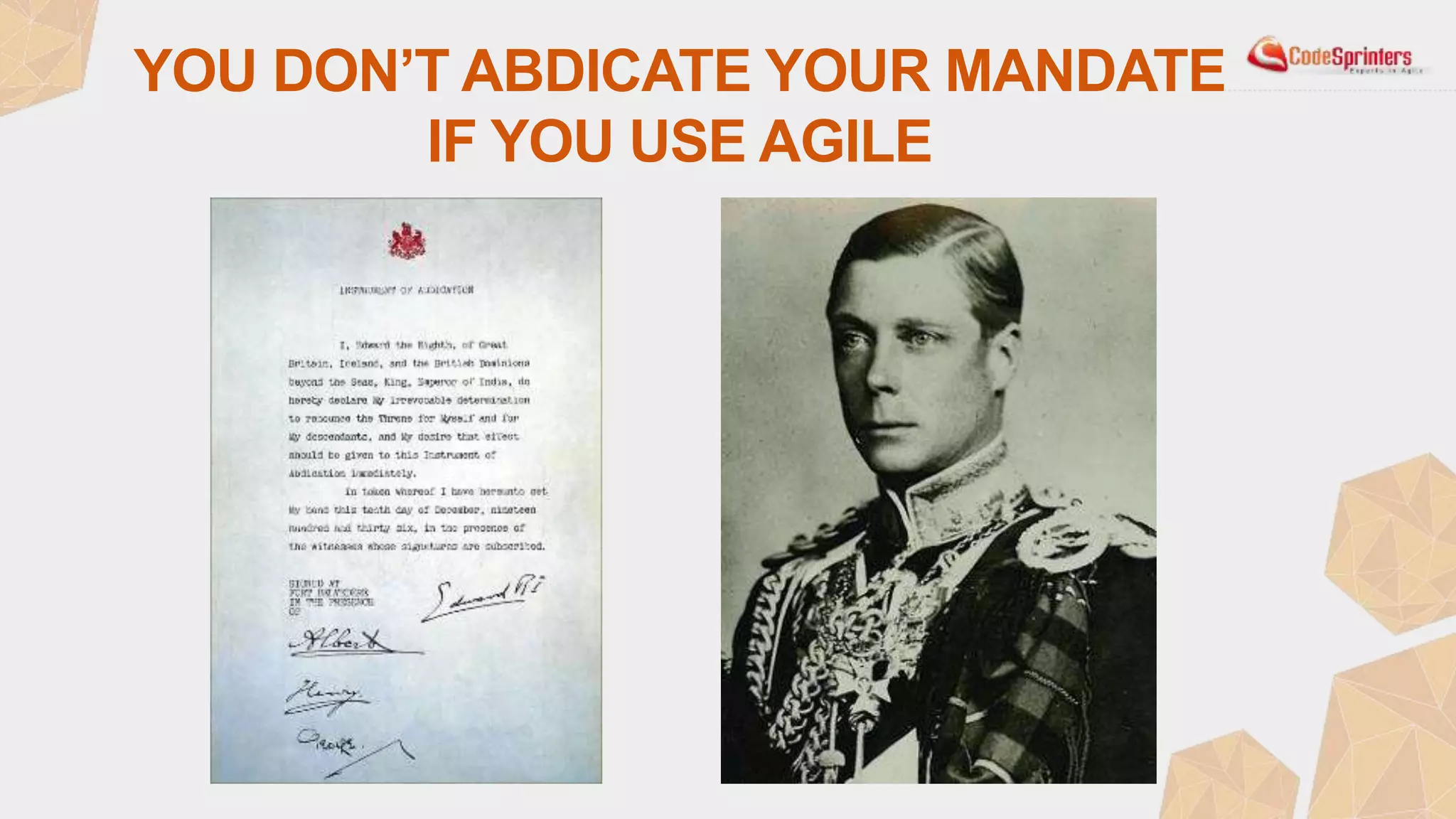
YOU DON’T ABDICATE YOUR MANDATE
IF YOU USE AGILE
1. AGILE IS (STILL)
MANAGEMENT
AGILE IS A MODERN, EFFECTIVE MANAGEMENT
PHILOSOPHY FOR CREATIVE WORK IN THE COMPLEX DOMAIN
WHAT TEAMS NEED TO THRIVE?
PHYSICAL ENVIRONMENT
• We want team work so physical environment must reflect this
• We need team spaces, spaces that teams can arrange on their own,
• We also need spaces for interactions between teams
• This has to be carefully thought out but doesn’t automatically imply
high costs and fancy designs
• Yes, this is your responsibility
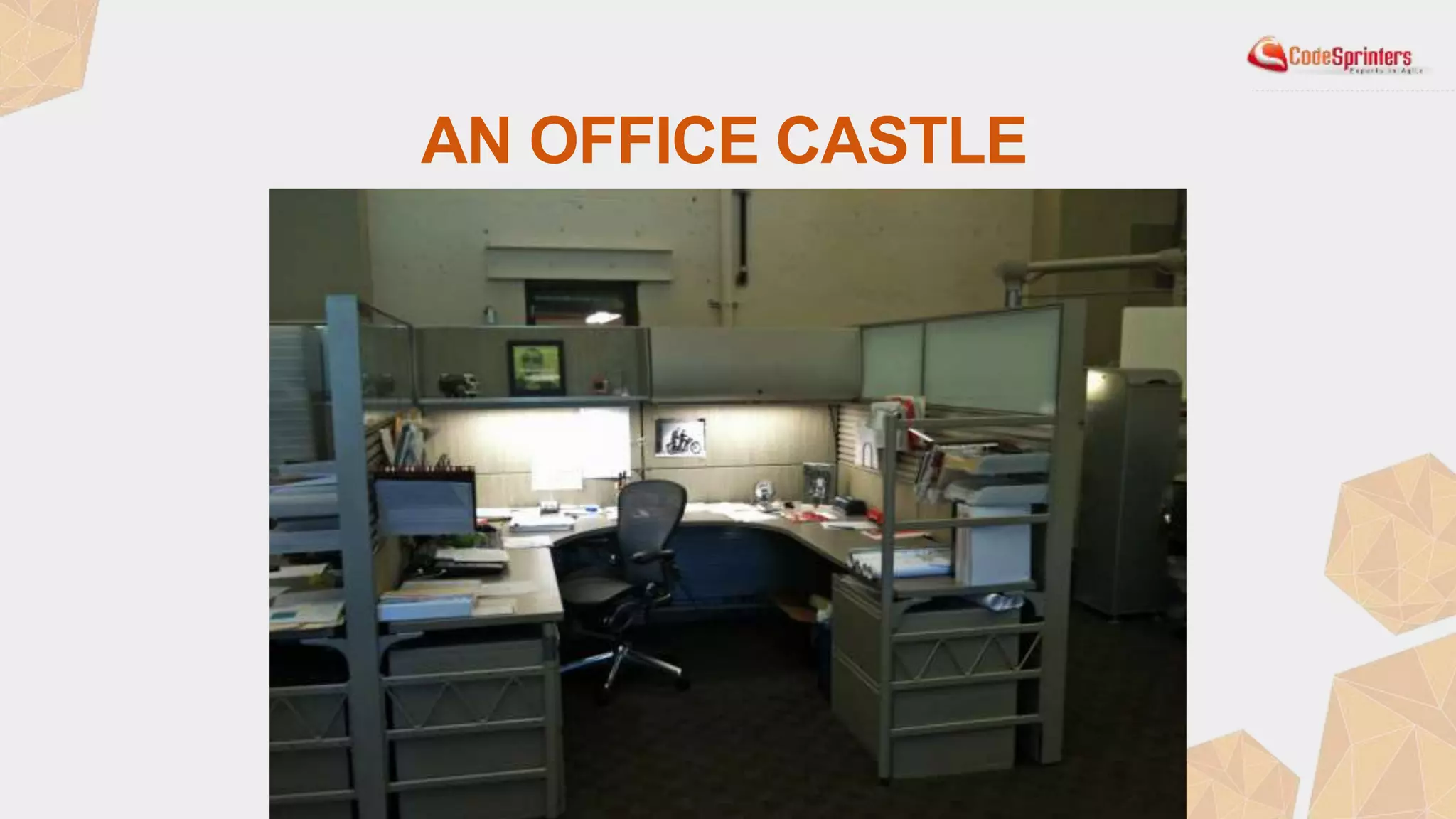
AN OFFICE CASTLE
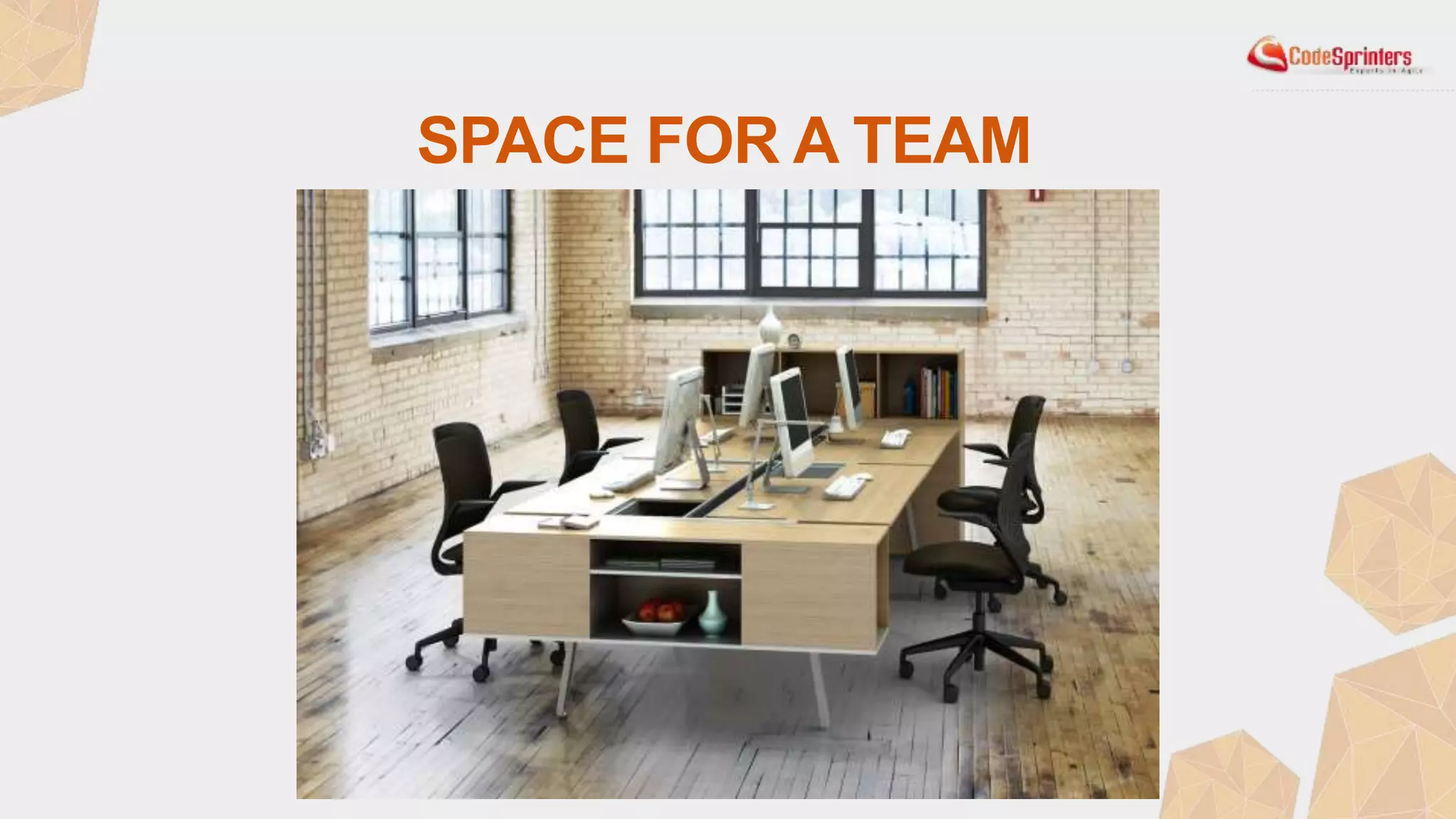
SPACE FOR A TEAM
INNOVATION
Doing something in a
way that wasn’t tried
before.
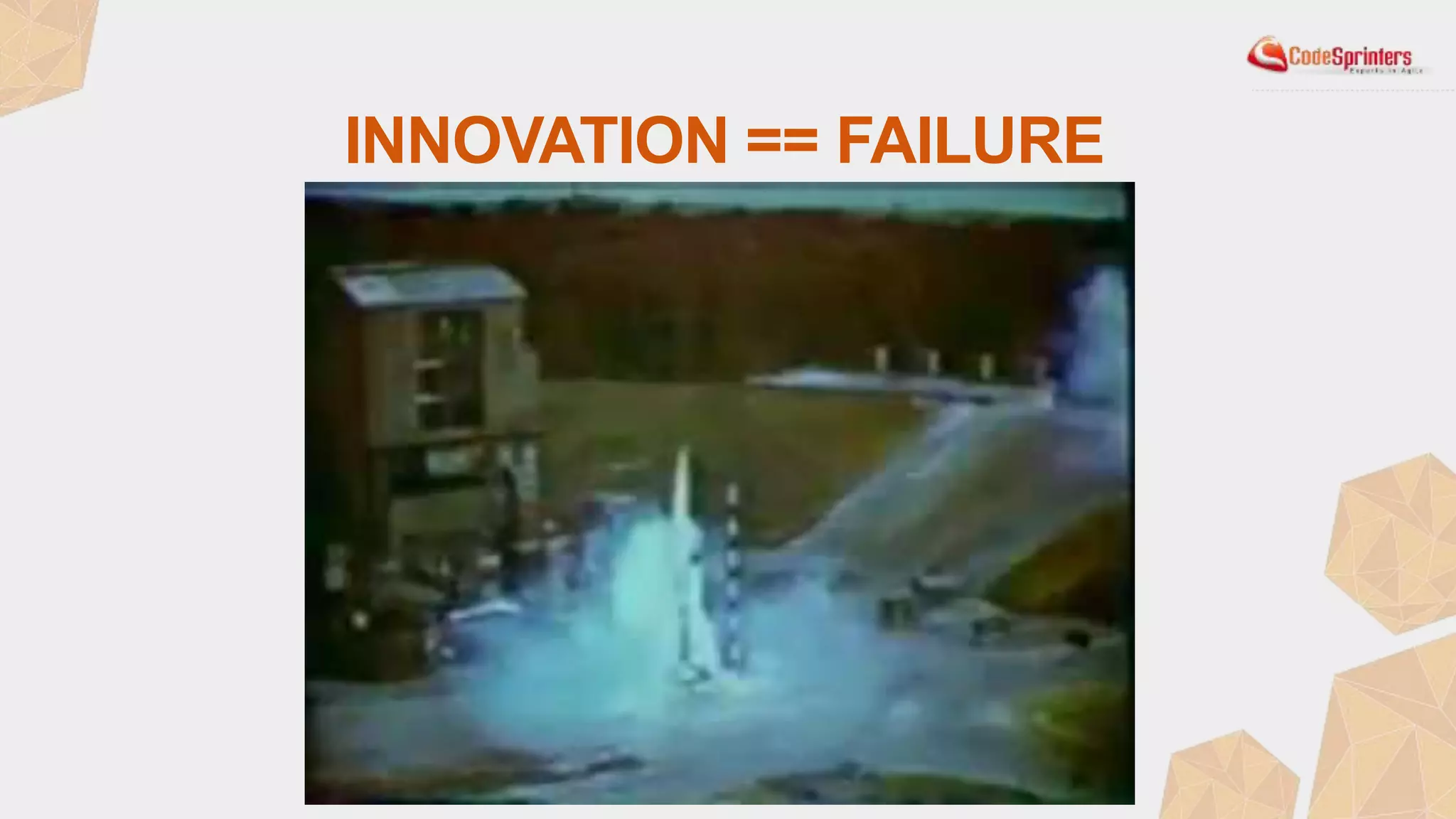
INNOVATION == FAILURE
CULTURE
(NON-PHYSICAL ENVIRONMENT)
• It must be safe to tell the truth – otherwise empiricism won’t work
• It must be safe to fail – otherwise there will be no innovation
• There must be a great sense of professionalism and pride in the work
being don that permeates all teams
• There must be discipline in adhering to internal agreements
• There must be a shared sense of purpose related to the work being
done (product, project)
• If we demand team work we can’t emphasize and promote individual
achievements as managers (instead strive to get people to show appreciation to each
another)
• Be extra careful with bonuses. (And fight off HR if needed.)
2. ENVIRONMENT
IS IMPORTANT
(AND YOUR
RESPONSIBILITY)
TEAMS NEED GOOD ENVIRONMENT BOTH PHYSICAL
AND INTANGIBLE TO THRIVE
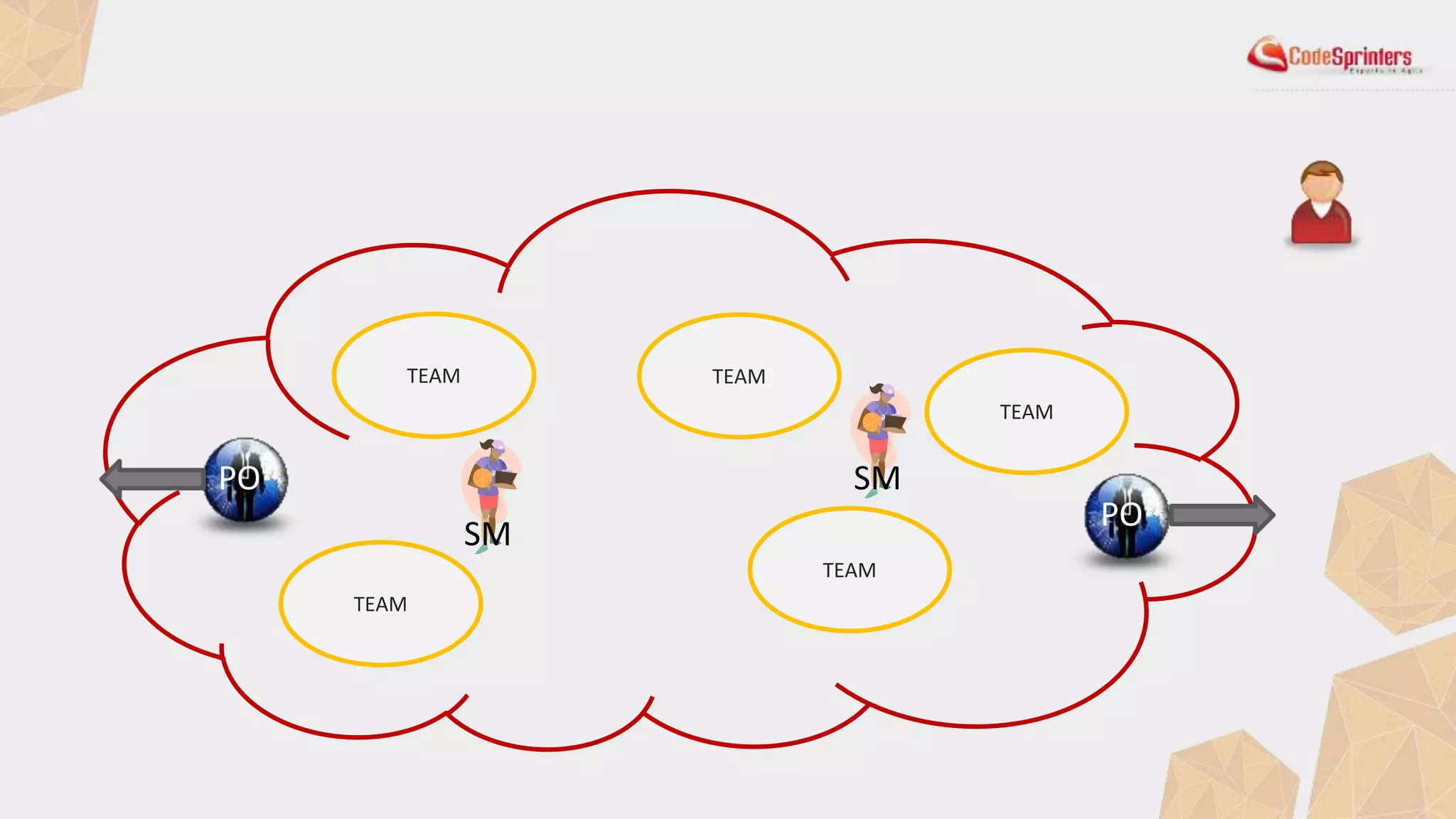
TEAMS
• Do all the work necessary to bring the product increment to done
• Organize how they work and monitor their progress during the sprint
• Retrospect and improve their way of working
• What do you do?
TEAM
TEAM
TEAM
TEAM
TEAM
PO
PO
SM
SM
WHAT A MANAGER DOES
• [Besides taking care of environment etc.]
• Care for the mechanism of teams, SMs, POs.
• Helps ensure cultural fit when hiring
• Intervenes when teams are in a deadlock
• Helps remove impediments SMs and teams are unable to
• Shields from stupidity coming from other parts of the organization
• [It is a lot like a higher-level SM with added responsibilities]
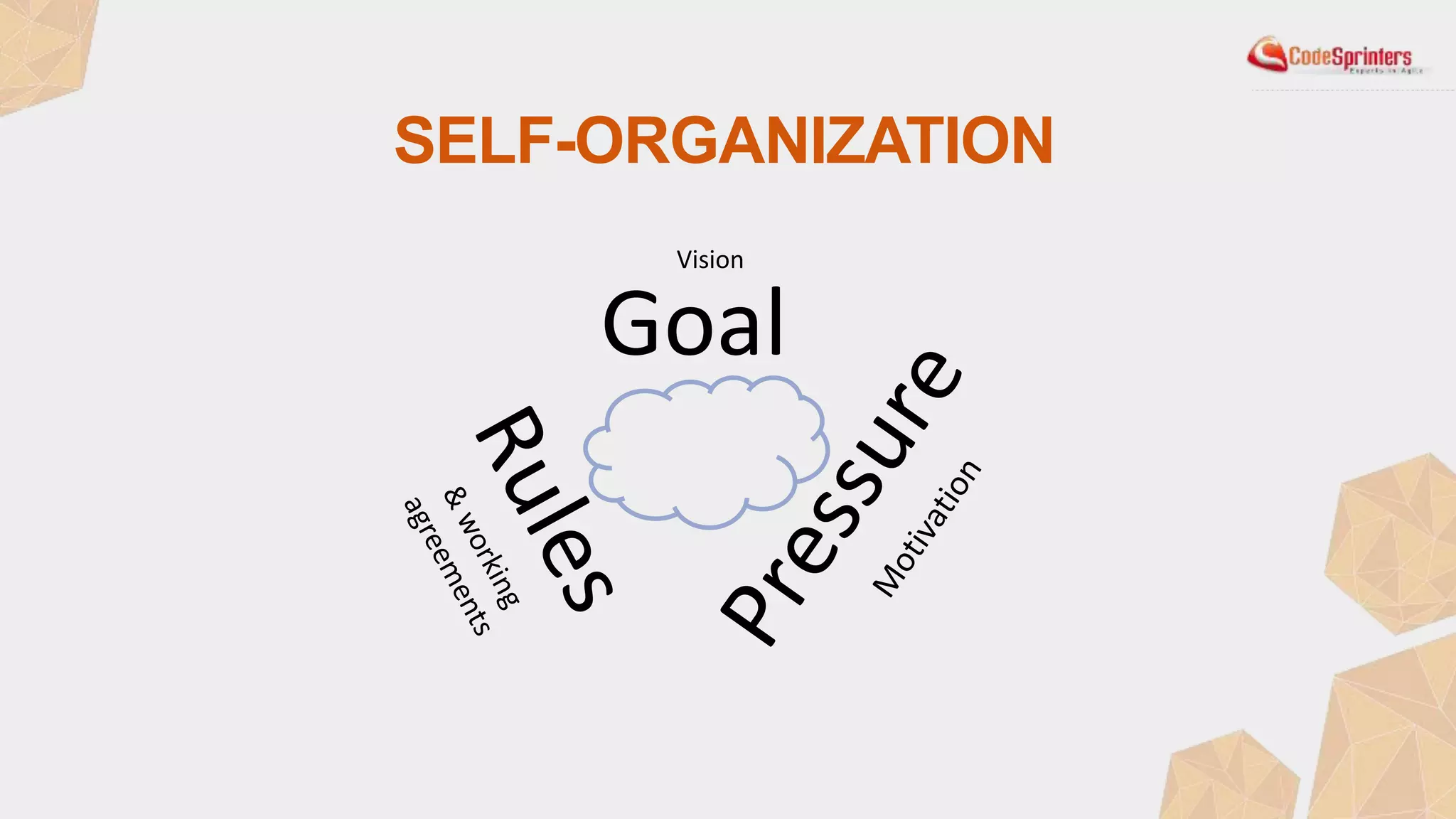
SELF-ORGANIZATION
Goal
Vision
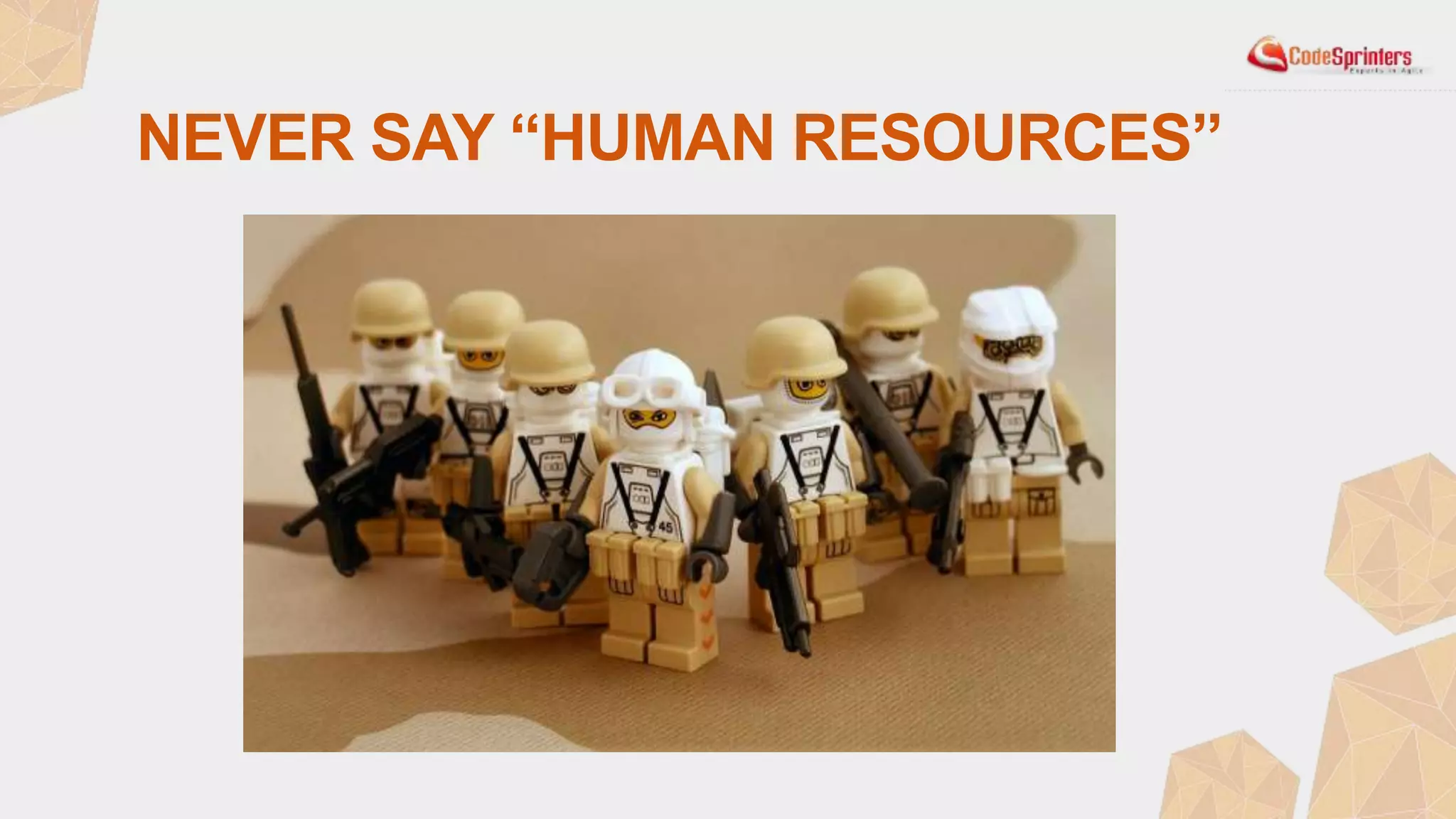
NEVER SAY “HUMAN RESOURCES”
People
3. IT’S ABOUT THE
TEAMS
SHIELD YOUR TEAMS FROM ALL BS YOU CAN
AND DON’T INTRODUCE YOUR OWN
TYPICAL MANAGERS’ PROBLEMS
• How do I know who is a good developer?
• How do I know who is not?
• How do I know whom to promote?
• How do I know whom to fire and when?
• How do I know if teams are doing well?
• How do I know ….
HOW TO KNOW?
• You can’t derive that knowledge from tools &
reports
• You either have to accept you don’t have it – or
be with your people
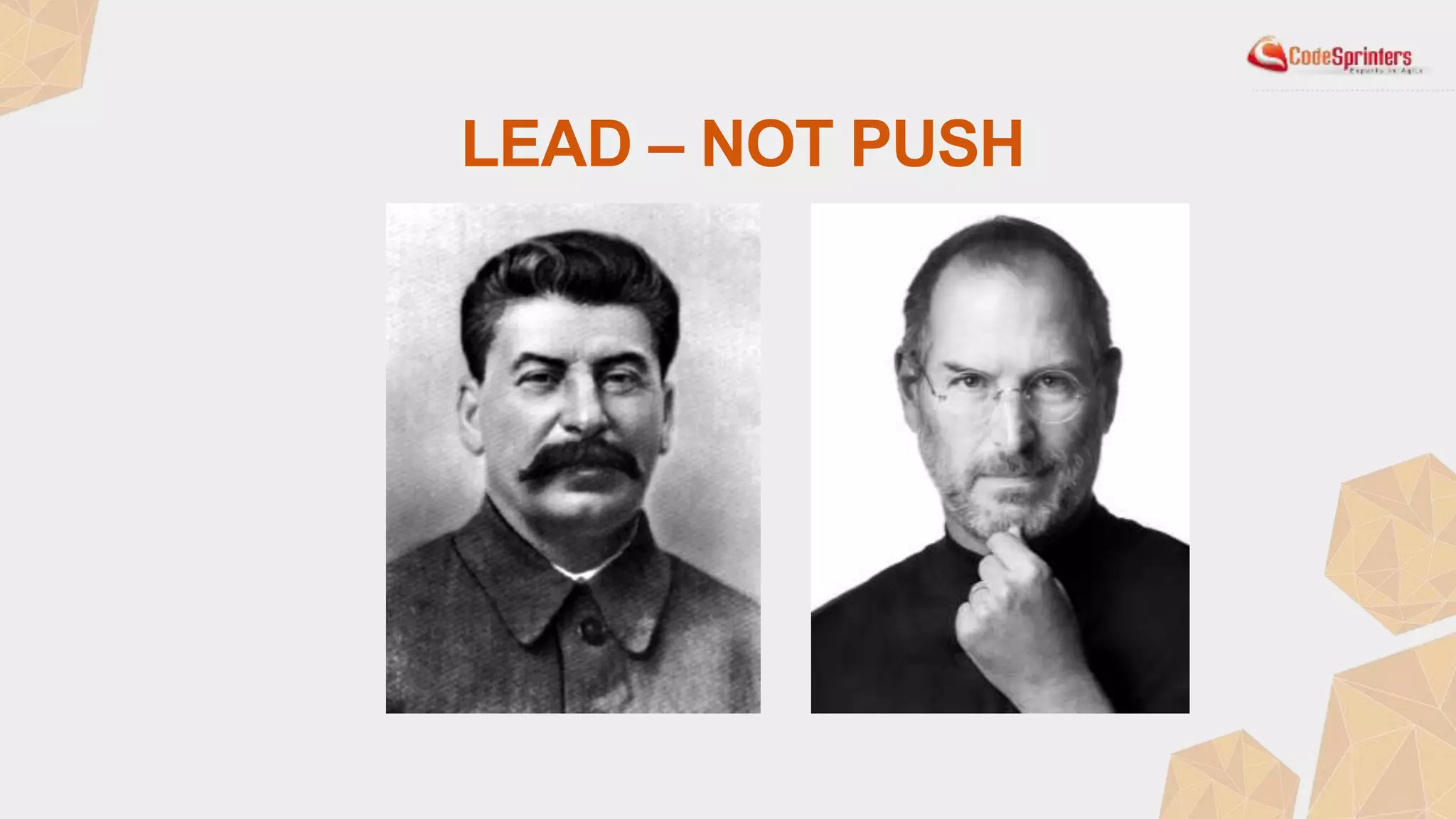
LEAD – NOT PUSH
LEAD BY EXAMPLE
• Want to know what’s going on? Be honest with
people.
• Want culture of quality? Make sure what you do
is the best you can.
• Want culture of openness? Be open.
• Want to work with smiling, energized people? ….
• …
4. BE A VISIBLE
EXAMPLE
AND AN INVISIBLE OBSERVER
YOU CAN’T MANAGE PEOPLE DOING COMPLEX
CREATIVE WORK WITH METRICS & SPREADSHEETS
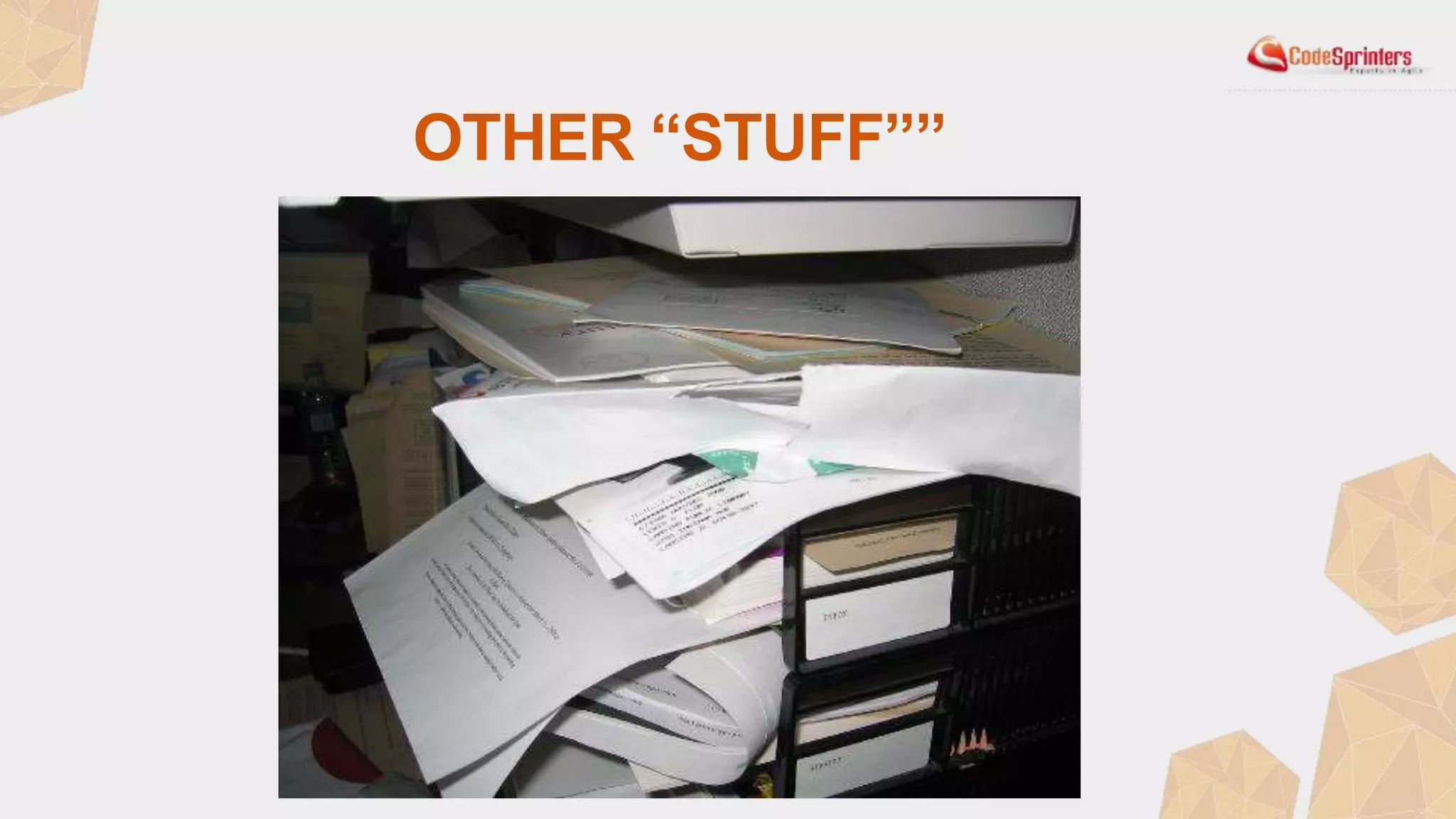
OTHER “STUFF””
OTHER “STUFF”
• Labour law & resulting paperwork (agreements, holiday leaves,
delegations etc. etc.)
• Other legal issues like “unhiring”
• Budgets, purchases etc.
• I bet you can all name more…
• Yep – you still have to do it.
5. DO STUFF NO
ONE ELSE WILL
SOMEONE STILL HAS TO SIGN PAPERS, FIRE PEOPLE
AND TAKE CARE OF ALL MUNDANE STUFF
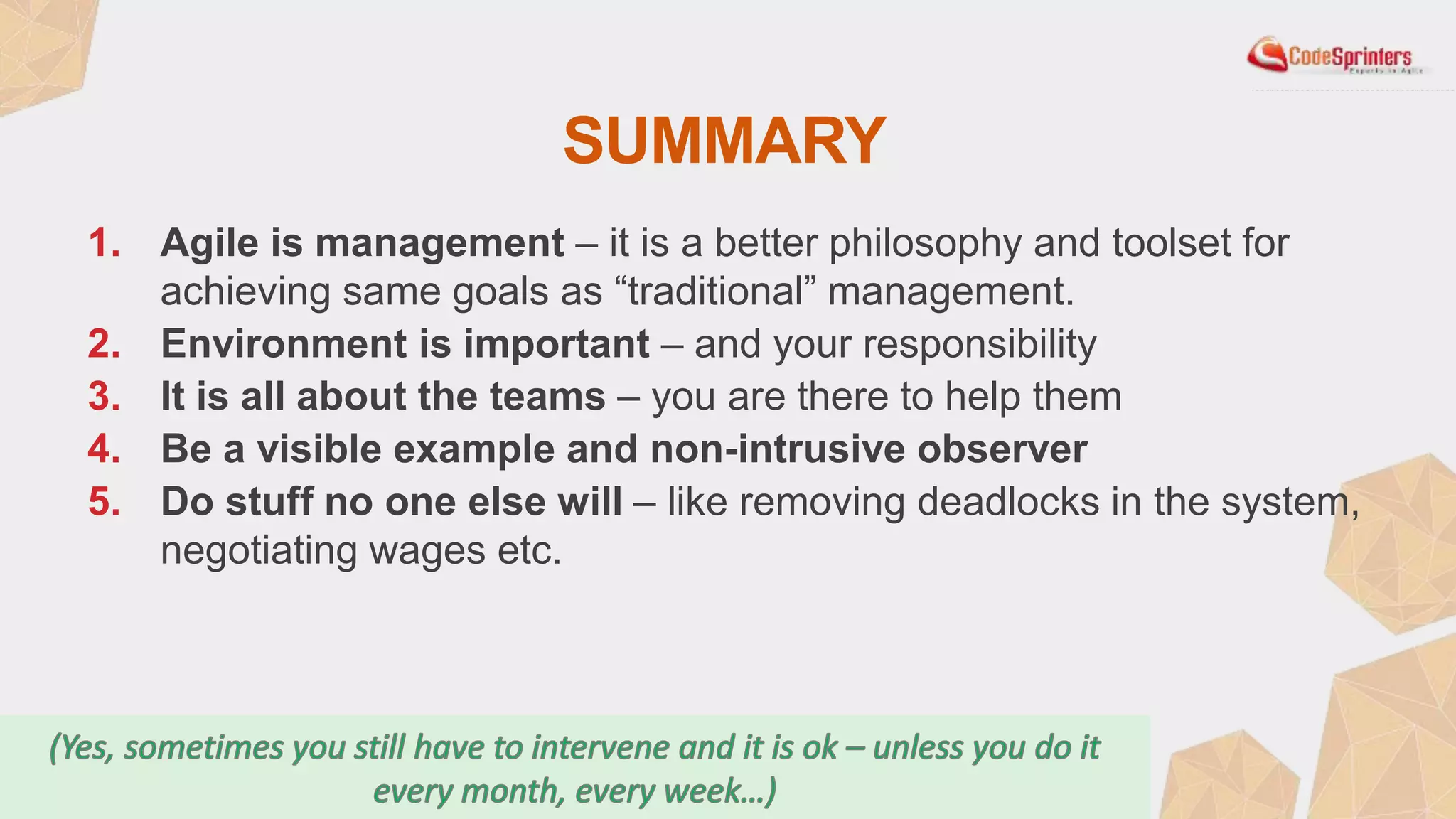
SUMMARY
1. Agile is management – it is a better philosophy and toolset for
achieving same goals as “traditional” management.
2. Environment is important – and your responsibility
3. It is all about the teams – you are there to help them
4. Be a visible example and non-intrusive observer
5. Do stuff no one else will – like removing deadlocks in the system,
negotiating wages etc.
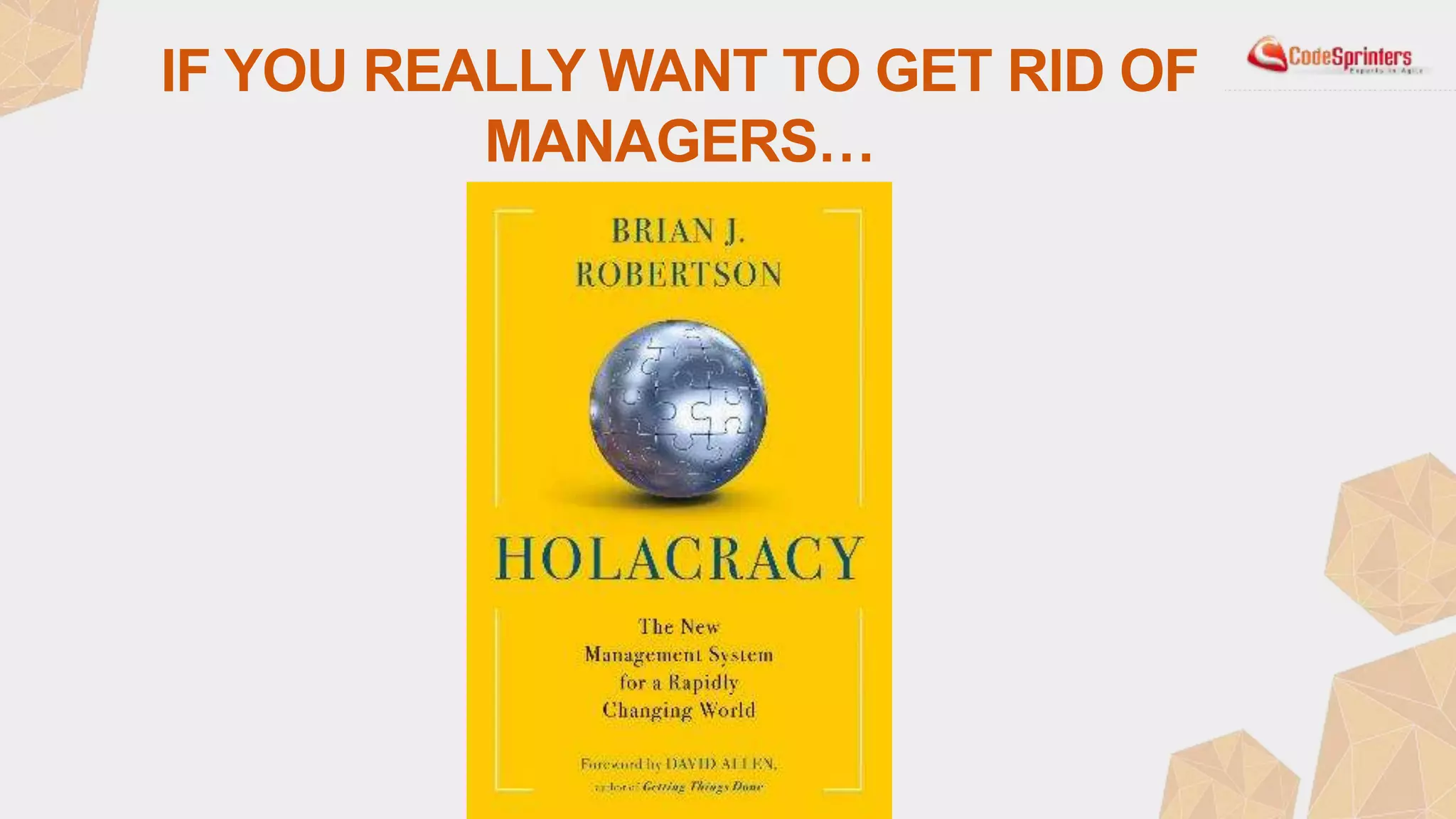
IF YOU REALLY WANT TO GET RID OF
MANAGERS…
THE END

Agile - 5 points for managers

  • 1.
    AGILE - 5POINTS FOR MANAGERS ANDY BRANDT
  • 2.
    BORING SELF-PRESENTATION SLIDE •Management consultant, agile coach, mentor, author • Agile practitioner since 2006 • Since 2007 associated with Code Sprinters – Poland’s leading provider of consulting&training in Agile/Lean • Since 2010 Poland’s first Professional Scrum Trainer • Author of „Agile w Praktyce” • Blog http://pragmaticleader.net/ @agileroshi on Twitter
  • 3.
  • 4.
    ASSUMPTIONS • Everyone knowsScrum and at least one scaling framework • Everyone at least tried to work with Scrum or Kanban • No one has to be convinced waterfall is a bad idea • Most of you are line managers who want to know what they role is in Agile
  • 5.
    UNDERSTAND AGILE • UnderstandScrum is not all there is to Agile. And neither is Kanban. Those are just two processes in the large “cloud” of Agile methods, frameworks & practices. • Understand Agile didn’t start with the Manifesto. • Understand Agile is based on empirical process control and Lean principles. • Understand empiricism in software products’ development is not possible. without high quality engineering and modern technical practices. • Understand how empiricism applies to your type of work. • Understand the limitations of empirical approach. • Understand the cultural setting necessary for empiricism that is implicitly assumed by Agile frameworks and methods.
  • 6.
    TRAINING? WORKSHOPS? • ForDevelopers – TDD workshops, BDD workshops, Clean Code dojos and workshops, OO & Design Patterns trainings, various classes provided by tech stack vendors, numerous books and blogs on widely understood software craftsmanship. • For Scrum Masters – Professional Scrum Master classes, workshops, Agile Coaching Academy, Agile Coach Camps etc. numerous books and websites focusing on their role as well as frameworks and processes. • For Product Owners – Professional Scrum Product Owner classes, workshops on product management, impact mapping, business value quantification, books & blogs on the subject. • What is there for Managers? Few books, almost no trainings (except maybe Management 3.0), few blogs.
  • 7.
  • 8.
    MEET & TALKTO PEOPLE
  • 9.
    MEET & TALKTO PEOPLE 21 października www.agileupdate.pl Więcej info i rejestracja uczestników:
  • 10.
    LAST BUT NOTLEAST • Attend a training. • Invite a good, experienced Agile Coach / Consultant to help you
  • 11.
    0. UNDERSTAND AGILE IF YOUUSE SOMETHING IT PAYS OFF TO UNDERSTAND THE THEORY AND PRINCIPLES BEHIND IT
  • 12.
    MANAGEMENT Full Definition ofMANAGEMENT 1 : the act or art of managing : the conducting or supervising of something (as a business) 2 : judicious use of means to accomplish an end 3 : the collective body of those who manage or direct an enterprise (from Merriam Webster dictionary)
  • 13.
    MANAGEMENT • Management –organizing the efforts of a group of people to achieve desired results. • Can be dissected into selecting and setting goals, organizing work and monitoring progress. • The small print: • In order for this to make economic sense the benefits those efforts bring must exceed the costs of the people & resources they use. • Managers are people hired by those investing in the effort to ensure the benefits are greater than the costs & other goals are achieved. • Usually the investors do not really care about the methods [structures, frameworks, names, remuneration systems] used by the managers as long as the goals are achieved and the profit margin is good enough.
  • 14.
    AGILE VS. TRADITIONALMANAGEMENT? • External control is replaced with self-discipline reinforced by transparency from team level up and a sense of professionalism re. the work itself. • Telling subordinates exactly what to do is replaced with giving goals and reasons behind those goals. • Upfront planning by a small group of specialists followed by execution by large groups of low-skilled labor replaced with empirical progress in small groups of highly-skilled specialists. • The goals still come from investors/business who will also reap the benefits from the work being done. • They still expect you to take care of “judicious use of means to accomplish” this.
  • 15.
    YOU DON’T ABDICATEYOUR MANDATE IF YOU USE AGILE
  • 16.
    1. AGILE IS(STILL) MANAGEMENT AGILE IS A MODERN, EFFECTIVE MANAGEMENT PHILOSOPHY FOR CREATIVE WORK IN THE COMPLEX DOMAIN
  • 17.
    WHAT TEAMS NEEDTO THRIVE?
  • 18.
    PHYSICAL ENVIRONMENT • Wewant team work so physical environment must reflect this • We need team spaces, spaces that teams can arrange on their own, • We also need spaces for interactions between teams • This has to be carefully thought out but doesn’t automatically imply high costs and fancy designs • Yes, this is your responsibility
  • 19.
  • 20.
  • 21.
    INNOVATION Doing something ina way that wasn’t tried before.
  • 22.
  • 23.
    CULTURE (NON-PHYSICAL ENVIRONMENT) • Itmust be safe to tell the truth – otherwise empiricism won’t work • It must be safe to fail – otherwise there will be no innovation • There must be a great sense of professionalism and pride in the work being don that permeates all teams • There must be discipline in adhering to internal agreements • There must be a shared sense of purpose related to the work being done (product, project) • If we demand team work we can’t emphasize and promote individual achievements as managers (instead strive to get people to show appreciation to each another) • Be extra careful with bonuses. (And fight off HR if needed.)
  • 24.
    2. ENVIRONMENT IS IMPORTANT (ANDYOUR RESPONSIBILITY) TEAMS NEED GOOD ENVIRONMENT BOTH PHYSICAL AND INTANGIBLE TO THRIVE
  • 25.
    TEAMS • Do allthe work necessary to bring the product increment to done • Organize how they work and monitor their progress during the sprint • Retrospect and improve their way of working • What do you do?
  • 26.
  • 27.
    WHAT A MANAGERDOES • [Besides taking care of environment etc.] • Care for the mechanism of teams, SMs, POs. • Helps ensure cultural fit when hiring • Intervenes when teams are in a deadlock • Helps remove impediments SMs and teams are unable to • Shields from stupidity coming from other parts of the organization • [It is a lot like a higher-level SM with added responsibilities]
  • 28.
  • 29.
    NEVER SAY “HUMANRESOURCES” People
  • 30.
    3. IT’S ABOUTTHE TEAMS SHIELD YOUR TEAMS FROM ALL BS YOU CAN AND DON’T INTRODUCE YOUR OWN
  • 31.
    TYPICAL MANAGERS’ PROBLEMS •How do I know who is a good developer? • How do I know who is not? • How do I know whom to promote? • How do I know whom to fire and when? • How do I know if teams are doing well? • How do I know ….
  • 32.
    HOW TO KNOW? •You can’t derive that knowledge from tools & reports • You either have to accept you don’t have it – or be with your people
  • 33.
  • 34.
    LEAD BY EXAMPLE •Want to know what’s going on? Be honest with people. • Want culture of quality? Make sure what you do is the best you can. • Want culture of openness? Be open. • Want to work with smiling, energized people? …. • …
  • 35.
    4. BE AVISIBLE EXAMPLE AND AN INVISIBLE OBSERVER YOU CAN’T MANAGE PEOPLE DOING COMPLEX CREATIVE WORK WITH METRICS & SPREADSHEETS
  • 36.
  • 37.
    OTHER “STUFF” • Labourlaw & resulting paperwork (agreements, holiday leaves, delegations etc. etc.) • Other legal issues like “unhiring” • Budgets, purchases etc. • I bet you can all name more… • Yep – you still have to do it.
  • 38.
    5. DO STUFFNO ONE ELSE WILL SOMEONE STILL HAS TO SIGN PAPERS, FIRE PEOPLE AND TAKE CARE OF ALL MUNDANE STUFF
  • 39.
    SUMMARY 1. Agile ismanagement – it is a better philosophy and toolset for achieving same goals as “traditional” management. 2. Environment is important – and your responsibility 3. It is all about the teams – you are there to help them 4. Be a visible example and non-intrusive observer 5. Do stuff no one else will – like removing deadlocks in the system, negotiating wages etc.
  • 40.
    IF YOU REALLYWANT TO GET RID OF MANAGERS…
  • 41.

Editor's Notes

  • #4 English Managers – size – budget - firing Scrum – Kanban - level
  • #6 (stuff like manual testing at the end, stabilization sprints etc. are just a sign of deficiency in tech capabilities)
  • #13 JUDICIOUS :  having, exercising, or characterized by sound judgment
  • #26 Besides ensuring it is indeed so!!! No part time, no “resources”
  • #36 People != processes