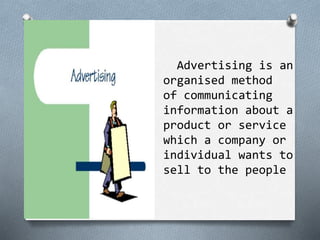
Advertising is an
organised method
of communicating
information about a
product or service
which a company or
individual wants to
sell to the people
TYPES OF ADVERTISING
 Television advertising
 Infomercials
 Online advertising
 Radio advertising
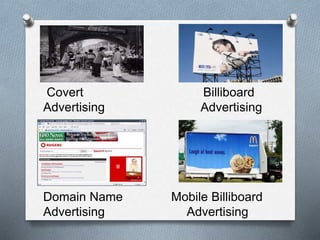
 Covert advertising
 Domain name
advertising
 Billiboard advertising
 Mobile billiboard
advertising
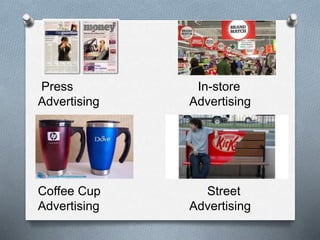
 Press advertising
 In-store advertising
 Coffee-cup advertising
 Street advertising
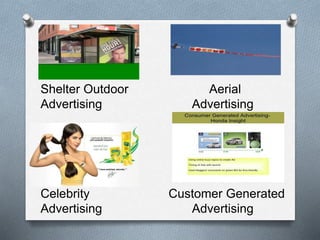
 Shelter outdoor
advertising
 Aerial advertising
 Celebrity brand
 Customer generated
advertising
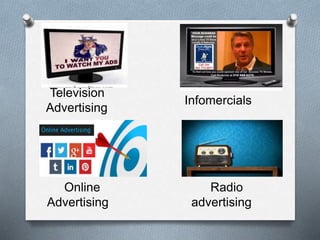
Television
Advertising
Infomercials
Online Radio
Advertising advertising
Covert Billiboard
Advertising Advertising
Domain Name Mobile Billiboard
Advertising Advertising
Press In-store
Advertising Advertising
Coffee Cup Street
Advertising Advertising
Shelter Outdoor Aerial
Advertising Advertising
Celebrity Customer Generated
Advertising Advertising
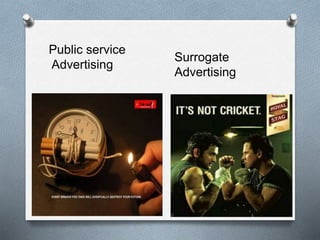
Public service
Advertising
Surrogate
Advertising
FEATURES OF ADVERTISING
 PAID FORM
attempt of the seller on which
he/she has spent some money to communicate
information to the consumer is called
advertising.
 IMPERSONAL PRESENTATION
the advertiser and the consumer do not
come into personal contact
SPEEDY AND MASS COMMUNICATION
Speedy Medium And Reaches
Millions Of People
 IDENTIFIED SPONSOR
Sponsor Can Be Either The Seller
Or The Producer Of That Product Or Service
 SELL OR PROMOTE IDEAS,GOODS,
SERVICES
Advertising Is Aimed At
Promoting And Selling Not Only Tangible
And Physical Goods, But Also Ideas And
Services
ADVANTAGES
 Increased Sales
 Steady Demand
 Quick Turnover
 Education of Consumers
 Lower Costs
 Creation Of Goodwill
 Controls Product Price
 Greater Dealer Interest
DISADVANTAGES
 Costly Function
 Encourage Monopoly
 High Prices
 Buying Problems
 Promotion Of Social Evils
 Creating Unrequired Desire
 Influences Purchasing Power
 Misuse Of Advertising
DO’S OF ADVERTISING
DO pick a company name , trademark or service mark that has
not already been chosen by someone else.
DO register your company with the appropriate state officials..
DO follow all state and national health and safety requirements
in developing your product.
DO advertise your product or service in a manner which is
lawful.
DO your homework and research before making the claim so
that U know it is true.
DO plan ahead.. Be prepared to spend money to market your
product
DONT’S OF ADVERTISING
DON'T be a copycat.
DON'T make guarantees or claims that
you can’T support with facts and evidence.
DON'T advertise in a misleading or
deceptive manner.
DON'T fail to appreciate your target
audience.
PRESENTED
BY
M.NOORISH NIHAR
PRIST SCHOOL OF BUSINESS

Advertising

  • 2.
    Advertising is an organisedmethod of communicating information about a product or service which a company or individual wants to sell to the people
  • 3.
    TYPES OF ADVERTISING Television advertising  Infomercials  Online advertising  Radio advertising  Covert advertising  Domain name advertising  Billiboard advertising  Mobile billiboard advertising  Press advertising  In-store advertising  Coffee-cup advertising  Street advertising  Shelter outdoor advertising  Aerial advertising  Celebrity brand  Customer generated advertising
  • 4.
  • 5.
    Covert Billiboard Advertising Advertising DomainName Mobile Billiboard Advertising Advertising
  • 6.
    Press In-store Advertising Advertising CoffeeCup Street Advertising Advertising
  • 7.
    Shelter Outdoor Aerial AdvertisingAdvertising Celebrity Customer Generated Advertising Advertising
  • 8.
  • 9.
    FEATURES OF ADVERTISING PAID FORM attempt of the seller on which he/she has spent some money to communicate information to the consumer is called advertising.  IMPERSONAL PRESENTATION the advertiser and the consumer do not come into personal contact
  • 10.
    SPEEDY AND MASSCOMMUNICATION Speedy Medium And Reaches Millions Of People  IDENTIFIED SPONSOR Sponsor Can Be Either The Seller Or The Producer Of That Product Or Service  SELL OR PROMOTE IDEAS,GOODS, SERVICES Advertising Is Aimed At Promoting And Selling Not Only Tangible And Physical Goods, But Also Ideas And Services
  • 14.
    ADVANTAGES  Increased Sales Steady Demand  Quick Turnover  Education of Consumers  Lower Costs  Creation Of Goodwill  Controls Product Price  Greater Dealer Interest
  • 15.
    DISADVANTAGES  Costly Function Encourage Monopoly  High Prices  Buying Problems  Promotion Of Social Evils  Creating Unrequired Desire  Influences Purchasing Power  Misuse Of Advertising
  • 16.
    DO’S OF ADVERTISING DOpick a company name , trademark or service mark that has not already been chosen by someone else. DO register your company with the appropriate state officials.. DO follow all state and national health and safety requirements in developing your product. DO advertise your product or service in a manner which is lawful. DO your homework and research before making the claim so that U know it is true. DO plan ahead.. Be prepared to spend money to market your product
  • 17.
    DONT’S OF ADVERTISING DON'Tbe a copycat. DON'T make guarantees or claims that you can’T support with facts and evidence. DON'T advertise in a misleading or deceptive manner. DON'T fail to appreciate your target audience.
  • 19.