Cultural Experience Centre
Project 1c: FInal Design Review
Ong Huey Chyi (0326649)
Cultural Experience Centre
‘ Architecture with social impact’
Focuses on empowering the people’s appreciation of their
own culture and environment
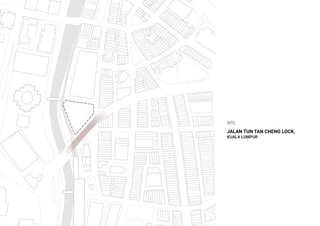
JALAN TUN TAN CHENG LOCK,
KUALA LUMPUR
SITE:
JALAN TUN TAN CHENG LOCK,
KUALA LUMPUR
SITE:
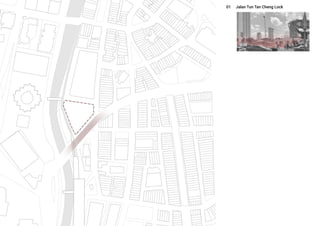
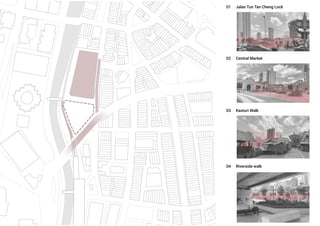
01 Jalan Tun Tan Cheng Lock
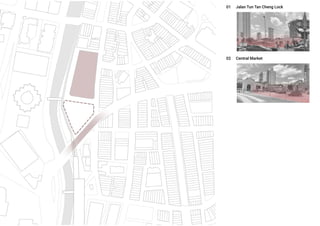
02 Central Market
01 Jalan Tun Tan Cheng Lock
02 Central Market
01 Jalan Tun Tan Cheng Lock
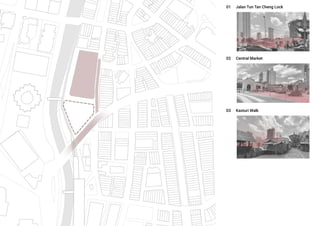
03 Kasturi Walk
02 Central Market
01 Jalan Tun Tan Cheng Lock
03 Kasturi Walk
04 Riverside walk
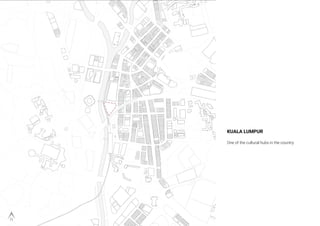
KUALA LUMPUR
One of the cultural hubs in the country
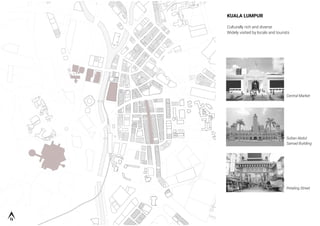
KUALA LUMPUR
Culturally rich and diverse
Widely visited by locals and tourists
Central Market
Petaling Street
Sultan Abdul
Samad Building
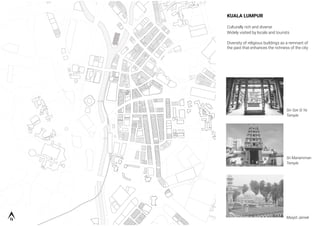
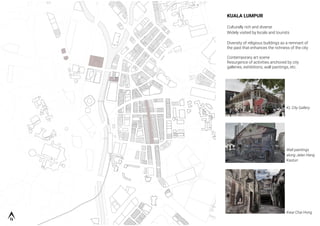
KUALA LUMPUR
Culturally rich and diverse
Widely visited by locals and tourists
Diversity of religious buildings as a remnant of
the past that enhances the richness of the city
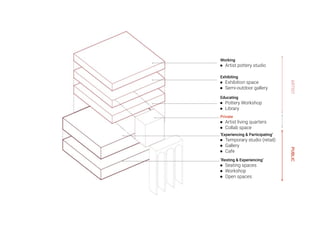
Sri Mariamman
Temple
Masjid Jamek
Sin Sze Si Ya
Temple
KUALA LUMPUR
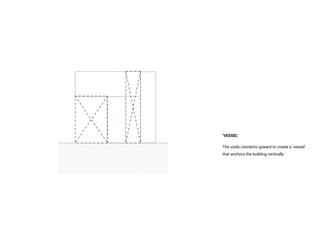
Culturally rich and diverse
Widely visited by locals and tourists
Diversity of religious buildings as a remnant of
the past that enhances the richness of the city
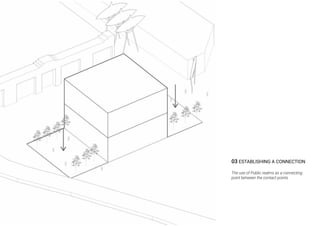
Contemporary art scene
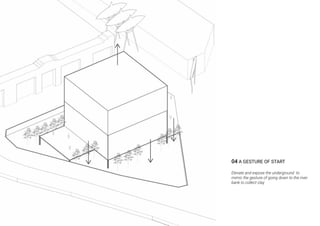
Resurgence of activities anchored by city
galleries, exhibitions, wall paintings, etc.
KL City Gallery
Wall paintings
along Jalan Hang
Kasturi
Kwai Chai Hong
WHERE DID IT ALL STARTED?
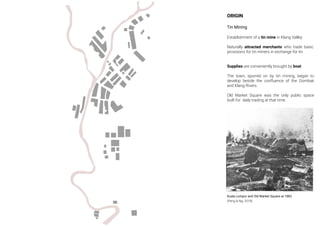
ORIGIN
Tin Mining
Establishment of a tin mine in Klang Valley
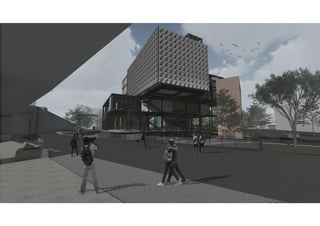
Naturally attracted merchants who trade basic
provisions for tin miners in exchange for tin
Supplies are conveniently brought by boat
The town, spurred on by tin mining, began to
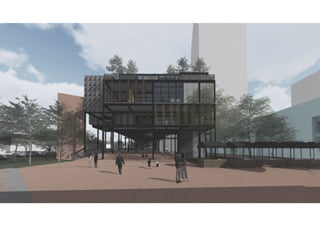
develop beside the confluence of the Gombak
and Klang Rivers.
Old Market Square was the only public space
built for daily trading at that time.
(Peng & Ng, 2018)
Kuala Lumpur and Old Market Square at 1882
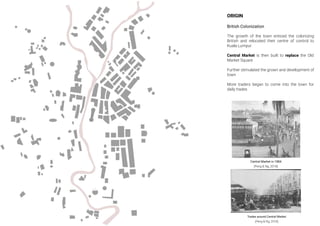
ORIGIN
British Colonization
The growth of the town enticed the colonizing
British and relocated their centre of control to
Kuala Lumpur
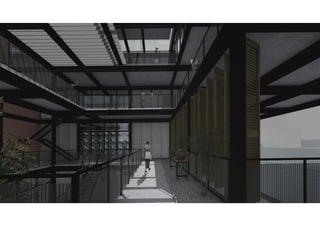
Central Market is then built to replace the Old
Market Square
Further stimulated the grown and development of
town
More traders began to come into the town for
daily trades
(Peng & Ng, 2018)
Central Market in 1884
(Peng & Ng, 2018)
Trades around Central Market
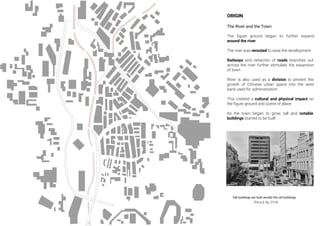
ORIGIN
The River and the Town
The figure ground began to further expand
around the river
The river was rerouted to ease the development
Railways and networks of roads branches out
across the river further stimulate the expansion
of town
RIver is also used as a division to prevent the
growth of Chinese urban space into the west
bank used for administration
This created a cultural and physical impact on
the figure ground and scene of place
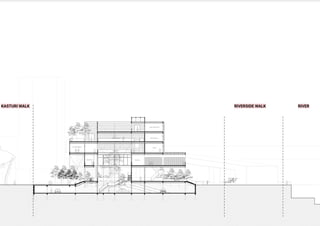
As the town began to grow, tall and notable
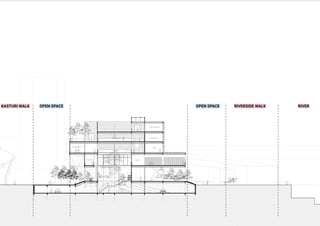
buildings started to be built
(Peng & Ng, 2018)
Tall buildings are built amidst the old buildings.
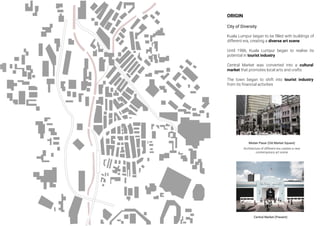
ORIGIN
City of Diversity
Kuala Lumpur began to be filled with buildings of
different era, creating a diverse art scene
Until 1986, Kuala Lumpur began to realise its
potential in tourist industry
Central Market was converted into a cultural
market that promotes local arts and crafts
The town began to shift into tourist industry
from its financial activities
Central Market (Present)
Medan Pasar (Old Market Square)
Architecture of different era creates a new
contemporary art scene
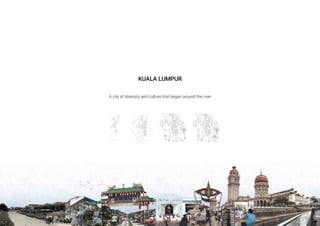
KUALA LUMPUR
A city of diversity and culture that began around the river
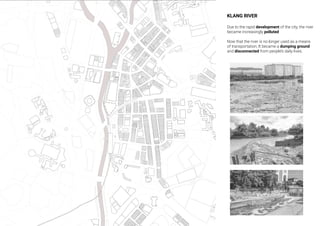
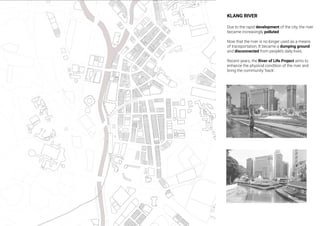
KLANG RIVER
Due to the rapid development of the city, the river
became increasingly polluted
Now that the river is no longer used as a means
of transportation, It became a dumping ground
and disconnected from people’s daily lives.
KLANG RIVER
Due to the rapid development of the city, the river
became increasingly polluted
Now that the river is no longer used as a means
of transportation, It became a dumping ground
and disconnected from people’s daily lives.
Recent years, the River of LIfe Project aims to
enhance the physical condition of the river and
bring the community ‘back’.
THE RIVERS
Despite the effort in improving the physical
condition of the river, people tend to forget about
the social impact of the river onto the culture of
Malaysia.
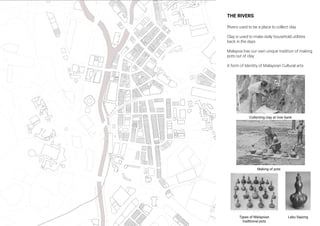
THE RIVERS
RIvers used to be a place to collect clay
Clay is used to make daily household utilities
back in the days
Malaysia has our own unique tradition of making
pots out of clay
A form of Identity of Malaysian Cultural arts
Collecting clay at river bank
Making of pots
Types of Malaysian
traditional pots
Labu Sayong
Kwong Yik Seng Crockery
shop (1938 - 2020)
Image source: (https://www.youtube.com/watch?v=eBbgyZVVWnk)
THE RIVERS
But as the country continue to develop, the art of
pot making is being replaced by electronic
appliances.
Thus, the craft is slowly dying away..
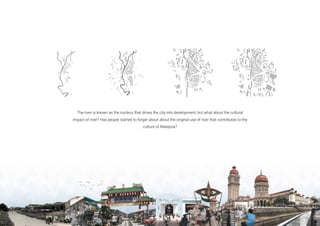
The river is known as the nucleus that drives the city into development, but what about the cultural
impact of river? Has people started to forget about about the original use of river that contributes to the
culture of Malaysia?
Pottery making is a form of identity of the culture of Malaysia
But it is still struggling to survive even until today.
“ Focuses on empowering the people’s appreciation of their
own culture and environment “
(Project Aim)
Kuala Lumpur
Culturally rich and diverse
Widely visited by locals and tourists
Where people celebrates arts
Kuala Lumpur
(ISSUE)
According to a research conducted by CEDANA report in 2018, the creative
industry in Malaysia is still on the low side in terms of income generation.
Pasar Seni, Kuala Lumpur
Today in the context of Pasar Seni, where it is
known as a tourist attraction are not just visited by
both the locals and tourists, but also foreigners
Providers Consumers
Vendors Blue collars /
tourists
Tourists
The appearance of a third party mostly as
street vendors who sells crafts to the tourists.
But instead of selling locally made goods, most
of the products mostly being mass produced in
other countries like China or Indonesia.
Results in a decline in local artist
More commercialised art retailers will occupy
the space
The local artist will lose their platform to
display and showcase their work
Local artist vs. Commercialised art retailers vs.
Street Vendors.
SITE ISSUE
Artist lack of platform to showcase their work.
CULTURAL ISSUE
The dying art of Pottery
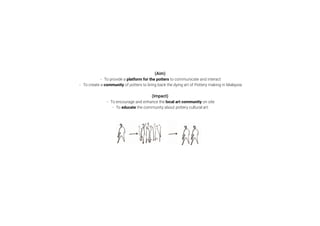
(Aim)
- To provide a platform for the potters to communicate and interact
- To create a community of potters to bring back the dying art of Pottery making in Malaysia
(Impact)
- To encourage and enhance the local art community on site
- To educate the community about pottery cultural art.
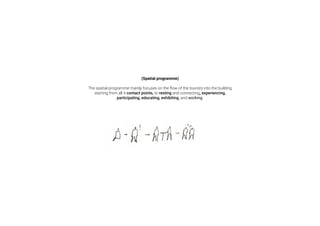
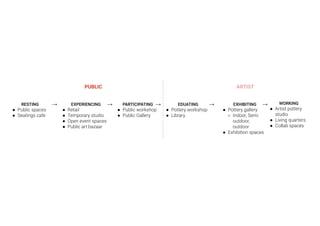
(Spatial programme)
The spatial programme mainly focuses on the flow of the tourists into the building
starting from all 4 contact points, to resting and connecting, experiencing,
participating, educating, exhibiting, and working.
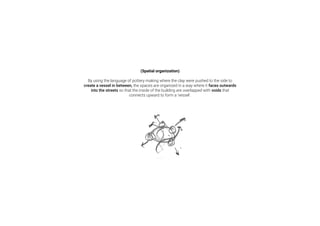
(Spatial organization)
By using the language of pottery making where the clay were pushed to the side to
create a vessel in between, the spaces are organized in a way where it faces outwards
into the streets so that the inside of the building are overlapped with voids that
connects upward to form a ‘vessel’.
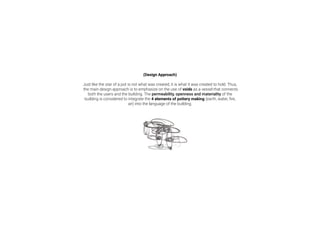
(Design Approach)
Just like the star of a pot is not what was created, it is what it was created to hold. Thus,
the main design approach is to emphasize on the use of voids as a vessel that connects
both the users and the building. The permeability, openness and materiality of the
building is considered to integrate the 4 elements of pottery making (earth, water, fire,
air) into the language of the building.
EARTH WATER AIR FIRE
CLAY IS COLLECTED FROM
RIVER BANK
WATER IS ADDED TO
SOFTEN THE CLAY
THE POTS ARE AIR-DRIED
AFTER MOLDING
POTS ARE PUT INTO KILN
TO BE HEATED
INSIDE OUT
The pinching the clay inside out
to create a void between solids
LAYERING
Overlapping patches sticks
together to build a form
PREPARATION
Gesture of going down the
river bank to collect clay
RESTING
● Public spaces
● Seatings cafe
EXPERIENCING
● Retail
● Temporary studio
● Open event spaces
● Public art bazaar
PARTICIPATING
● Public workshop
● Public Gallery
EDUATING
● Pottery workshop
● Library
EXHIBITING
● Pottery gallery
○ Indoor, Semi
outdoor,
outdoor
● Exhibition spaces
WORKING
● Artist pottery
studio
● Living quarters
● Collab spaces
→ → → → →
PUBLIC ARTIST
Working
● Artist pottery studio
Exhibiting
● Exhibition space
● Semi-outdoor gallery
Educating
● Pottery Workshop
● Library
Private
● Artist living quarters
● Collab space
‘Experiencing & Participating’
● Temporary studio (retail)
● Gallery
● Cafe
‘Resting & Experiencing’
● Seating spaces
● Workshop
● Open spaces
PUBLICARTIST
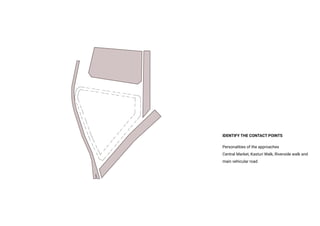
IDENTIFY THE CONTACT POINTS
Personalities of the approaches
Central Market, Kasturi Walk, Riverside walk and
main vehicular road
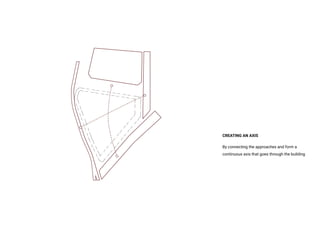
CREATING AN AXIS
By connecting the approaches and form a
continuous axis that goes through the building
INTERSECTING POINT
At the point where the axis intersects, a
void is cut out
SPATIAL ARRANGEMENTS
The spaces are then placed around the void facing
outward to create a ‘vessel’ in between.
‘VESSEL’
The voids connects upward to create a ‘vessel’
that anchors the building vertically
01 PLACING OF BLOCKS
Placement the Public and the Artist bllock
on site
02 EXTENDING TO CONTACT POINTS
The Public block extend outwards to reach
towards both contact points
03 ESTABLISHING A CONNECTION
The use of Public realms as a connecting
point between the contact points
04 A GESTURE OF START
Elevate and expose the underground to
mimic the gesture of going down to the river
bank to collect clay
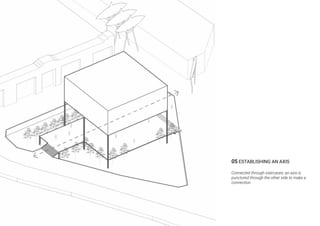
05 ESTABLISHING AN AXIS
Connected through staircases, an axis is
punctured through the other side to make a
connection
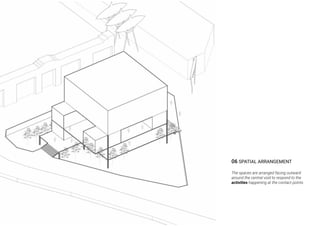
06 SPATIAL ARRANGEMENT
The spaces are arranged facing outward
around the central void to respond to the
activities happening at the contact points
Building made up of
different blocks
Introduction of louvered facade to respond
to the adjacent building
and is anchored by the vertical void
at the intersection of the axis
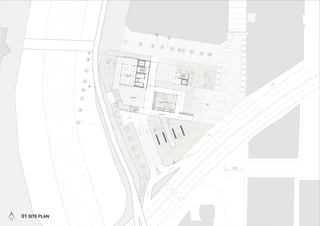
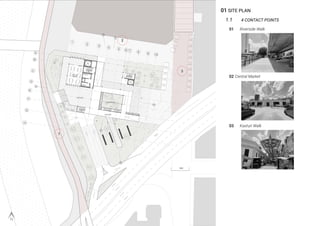
01 SITE PLAN
01 SITE PLAN
1.1 4 CONTACT POINTS
01 Riverside Walk
1
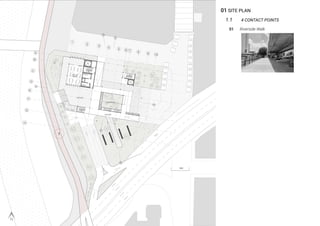
01 SITE PLAN
1.1 4 CONTACT POINTS
01 Riverside Walk
1
2
02 Central Market
01 SITE PLAN
1.1 4 CONTACT POINTS
01 Riverside Walk
1
2
3
02 Central Market
03 Kasturi Walk
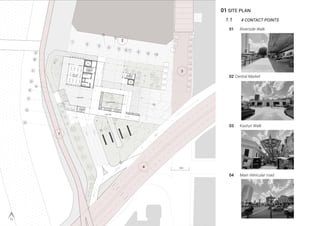
01 SITE PLAN
1.1 4 CONTACT POINTS
01 Riverside Walk
1
2
3
4
02 Central Market
03 Kasturi Walk
04 Main Vehicular road
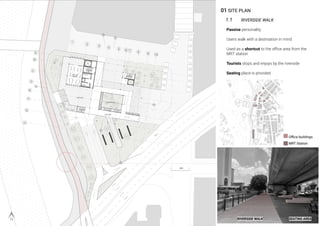
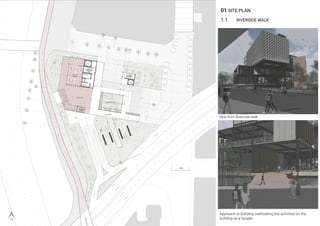
01 SITE PLAN
1.1 RIVERSIDE WALK
Passive personality
Users walk with a destination in mind
Used as a shortcut to the office area from the
MRT station
Tourists stops and enjoys by the riverside
Seating place is provided
RIVERSIDE WALK SEATING AREA
MRT Station
Office buildings
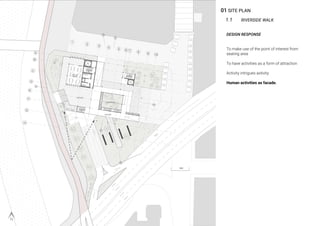
01 SITE PLAN
1.1 RIVERSIDE WALK
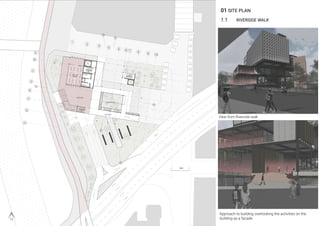
DESIGN RESPONSE
To make use of the point of interest from
seating area
To have activities as a form of attraction
Activity intrigues axtivity
Human activities as facade.
01 SITE PLAN
1.1 RIVERSIDE WALK
View from Riverside walk
Approach to building overlooking the activities on the
building as a facade
01 SITE PLAN
1.1 RIVERSIDE WALK
View from Riverside walk
Approach to building overlooking the activities on the
building as a facade
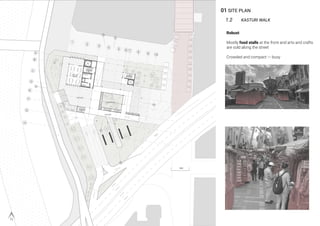
01 SITE PLAN
1.2 KASTURI WALK
Robust
Mostly food stalls at the front and arts and crafts
are sold along the street
Crowded and compact --- busy
01 SITE PLAN
1.2 KASTURI WALK
DESIGN RESPONSE
Connecting the robust street and building with
an open space
An intermediate space to blur the boundary
between two personalities
View from Kasturi Walk
An open space as a boundary with the continuation
of floor finishes into the building
01 SITE PLAN
1.2 KASTURI WALK
DESIGN RESPONSE
Connecting the robust street and building with
an open space
An intermediate space to blur the boundary
between two personalities
View from Kasturi Walk
An open space as a boundary with the continuation
of floor finishes into the building
01 SITE PLAN
1.2 KASTURI WALK
DESIGN RESPONSE
Staircase as a continuation from the open space
As an extension of activity from Kasturi walk as to
provide an informal seating area
View from Kasturi Walk
Staircase leading users from the street or open space
into the building.
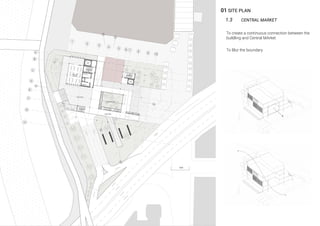
01 SITE PLAN
1.3 CENTRAL MARKET
To create a continuous connection between the
buildling and Central MArket
To Blur the boundary
01 SITE PLAN
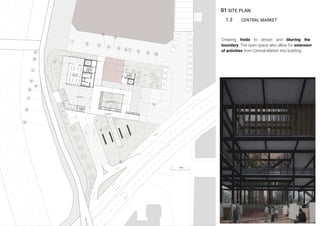
1.3 CENTRAL MARKET
Creating Voids to attract and blurring the
boundary. The open space also allow for extension
of activities from Central Market into building
01 SITE PLAN
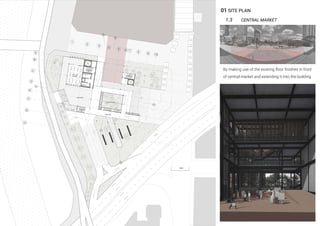
1.3 CENTRAL MARKET
By making use of the existing floor finishes in front
of central market and extending it into the building
01 SITE PLAN
1.4 MAIN VEHICULAR ROAD
To create an axis connecting Central Market
A gallery walkway
Go through language of pottery (past) before
arriving at central market (present)
Intergration of 4 elements and vessel.
01 SITE PLAN
1.4 MAIN VEHICULAR ROAD
To create an axis connecting Central Market
A gallery walkway
Go through language of pottery (past) before
arriving at central market (present)
Intergration of 4 elements and vessel.
01 SITE PLAN
1.4 MAIN VEHICULAR ROAD
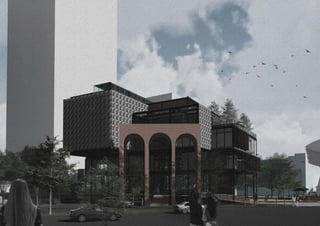
By using the five elements to indicate the language
of pottery, and arches to respond to the
streetscape
02 BASEMENT PLAN
Gradual slope from ground level with landscapes
It extends into the basement and exposing the
underground carpark.
Vehicular pathway around the central courtyard
VEHICULAR PATH
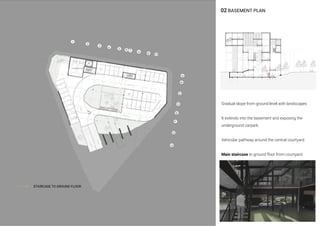
02 BASEMENT PLAN
Gradual slope from ground level with landscapes
It extends into the basement and exposing the
underground carpark.
Vehicular pathway around the central courtyard
Main staircase to ground floor from courtyard
STAIRCASE TO GROUND FLOOR
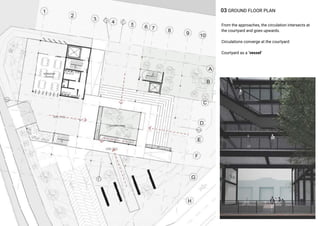
03 GROUND FLOOR PLAN
From the approaches, the circulation intersects at
the courtyard and goes upwards.
Circulations converge at the courtyard
Courtyard as a ‘vessel’
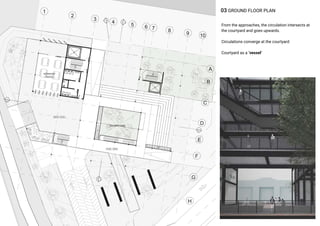
03 GROUND FLOOR PLAN
From the approaches, the circulation intersects at
the courtyard and goes upwards.
Circulations converge at the courtyard
Courtyard as a ‘vessel’
03 GROUND FLOOR PLAN
From the approaches, the circulation intersects at
the courtyard and goes upwards.
Circulations converge at the courtyard
Courtyard as a ‘vessel’
Different use of floor finish to distinguish between
activity area and courtyard
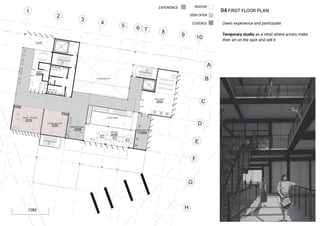
04 FIRST FLOOR PLAN
Users experience and participate
INDOOR
SEMI OPEN
COVERED
Users experience and participate
Temporary studio as a retail where artists make
their art on the spot and sell it
INDOOR
SEMI OPEN
COVERED
EXPERIENCE
04 FIRST FLOOR PLAN
Users experience and participate
Temporary studio as a retail where artists make
their art on the spot and sell it
Open and Indoor Gallery
INDOOR
SEMI OPEN
COVERED
EXPERIENCE
04 FIRST FLOOR PLAN
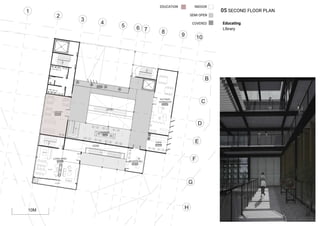
Educating
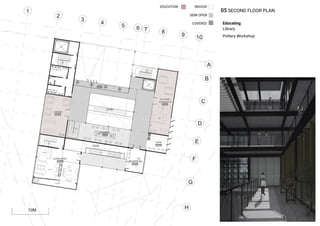
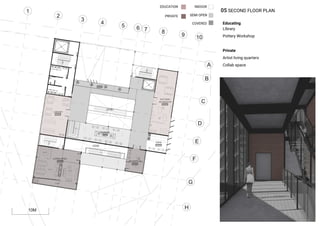
05 SECOND FLOOR PLAN
INDOOR
SEMI OPEN
COVERED
INDOOR
SEMI OPEN
COVERED
EDUCATION
Educating
LIbrary
05 SECOND FLOOR PLAN
INDOOR
SEMI OPEN
COVERED
EDUCATION
Educating
LIbrary
Pottery Workshop
05 SECOND FLOOR PLAN
INDOOR
SEMI OPEN
COVERED
EDUCATION
PRIVATE
Educating
LIbrary
Pottery Workshop
Private
Artist living quarters
Collab space
05 SECOND FLOOR PLAN
INDOOR
SEMI OPEN
COVERED
EDUCATION
PRIVATE
Educating
LIbrary
Pottery Workshop
Private
Artist living quarters
Collab space
05 SECOND FLOOR PLAN
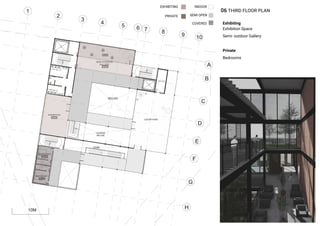
06 THIRD FLOOR PLAN
INDOOR
SEMI OPEN
COVERED
Exhibiting
06 THIRD FLOOR PLAN
Exhibiting
Exhibition Space
INDOOR
SEMI OPEN
COVERED
EXHIBITING
06 THIRD FLOOR PLAN
Exhibiting
Exhibition Space
Semi- outdoor Gallery
INDOOR
SEMI OPEN
COVERED
EXHIBITING
06 THIRD FLOOR PLAN
Exhibiting
Exhibition Space
Semi- outdoor Gallery
Private
Bedrooms
INDOOR
SEMI OPEN
COVERED
EXHIBITING
PRIVATE
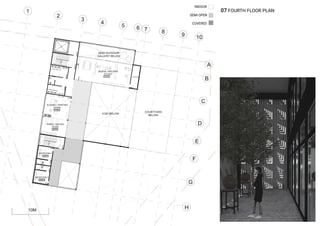
07 FOURTH FLOOR PLAN
INDOOR
SEMI OPEN
COVERED
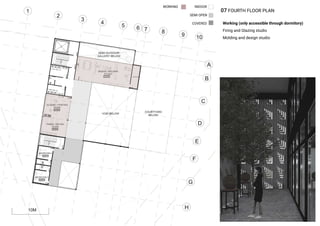
Working (only accessible through dormitory)
Firing and Glazing studio
Molding and design studio
INDOOR
SEMI OPEN
COVERED
WORKING
07 FOURTH FLOOR PLAN
INDOOR
SEMI OPEN
COVERED
WORKING
PRIVATE
Working (only accessible through dormitory)
Firing and Glazing studio
Molding and design studio
Private
Bedrooms
07 FOURTH FLOOR PLAN
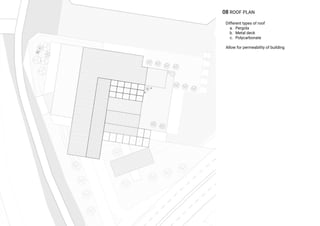
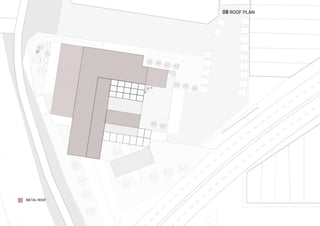
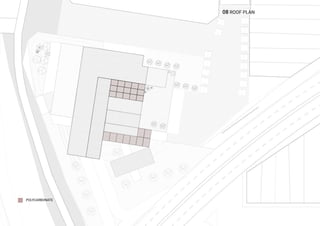
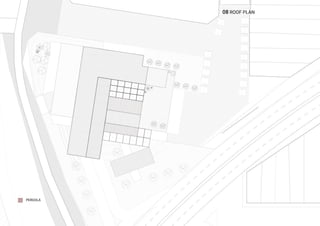
Different types of roof
a. Pergola
b. Metal deck
c. Polycarbonate
Allow for permeability of building
08 ROOF PLAN
08 ROOF PLAN
METAL ROOF
POLYCARBONATE
08 ROOF PLAN
PERGOLA
08 ROOF PLAN
KASTURI WALK RIVERSIDE WALK RIVER
KASTURI WALK RIVERSIDE WALK RIVEROPEN SPACE OPEN SPACE
WORKSHOP SPACE
COURTYARD
SEATING
WORKSHOP
RECEPTION RETAILOPEN GALLERY
LIBRARY
EXHIBITION
FIRING
STUDIO
COURTYARD
KASTURI WALK RIVERSIDE WALK RIVEROPEN SPACE OPEN SPACE
WORKSHOP SPACE
COURTYARD
SEATING
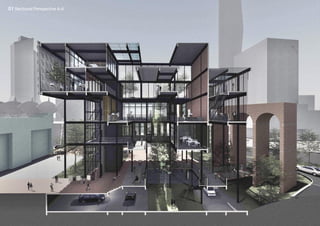
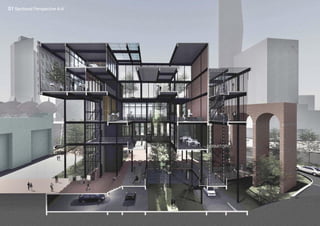
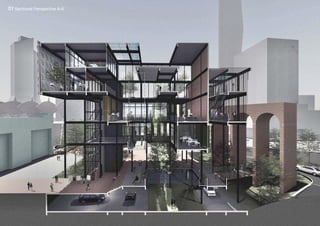
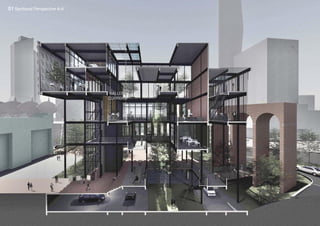
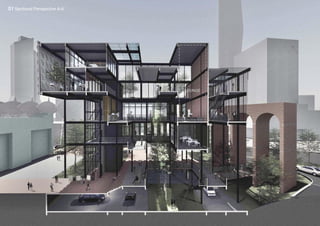
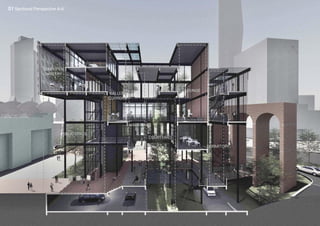
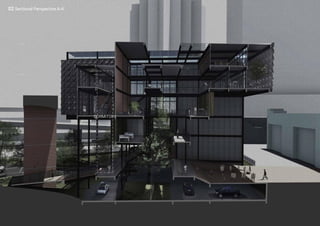
01 Sectional Perspective A-A’
COURTYARD
01 Sectional Perspective A-A’
PUBLIC SPACE
01 Sectional Perspective A-A’
DORMITORY
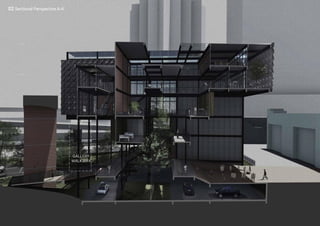
01 Sectional Perspective A-A’
WALKWAY
01 Sectional Perspective A-A’
GALLERY
CORRIDOR
01 Sectional Perspective A-A’
LOUNGE
01 Sectional Perspective A-A’
SEMI OPEN
GALLERY
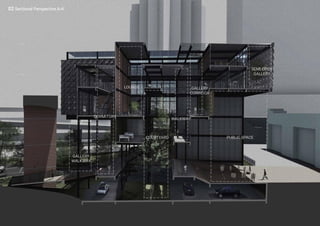
01 Sectional Perspective A-A’
SEMI OPEN
GALLERY
LOUNGE
GALLERY
CORRIDOR
WALKWAY
PUBLIC SPACE
COURTYARD
DORMITORY
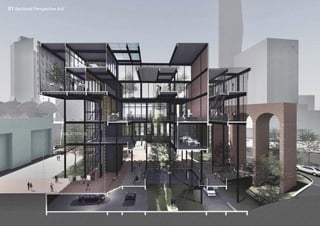
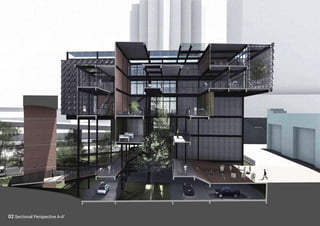
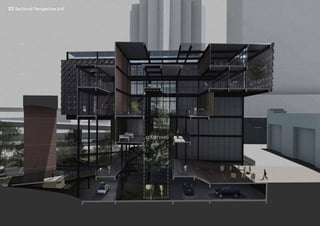
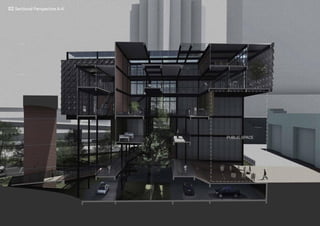
02 Sectional Perspective A-A’
COURTYARD
02 Sectional Perspective A-A’
PUBLIC SPACE
02 Sectional Perspective A-A’
DORMITORY
02 Sectional Perspective A-A’
GALLERY
WALKWAY
02 Sectional Perspective A-A’
WALKWAY
02 Sectional Perspective A-A’
GALLERY
CORRIDOR
02 Sectional Perspective A-A’
LOUNGE
02 Sectional Perspective A-A’
SEMI OPEN
GALLERY
02 Sectional Perspective A-A’
GALLERY
CORRIDOR
02 Sectional Perspective A-A’
SEMI OPEN
GALLERY
LOUNGE
WALKWAY
COURTYARD PUBLIC SPACE
DORMITORY
GALLERY
WALKWAY
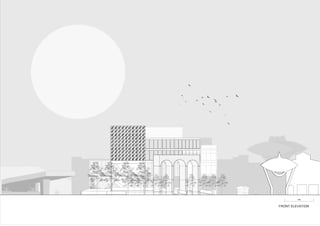
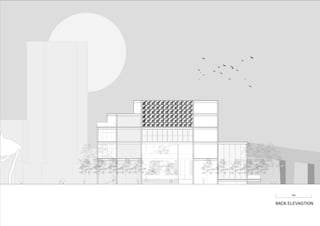
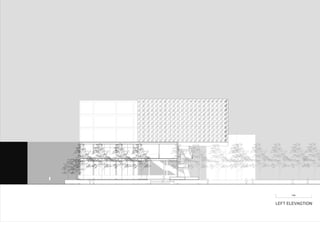
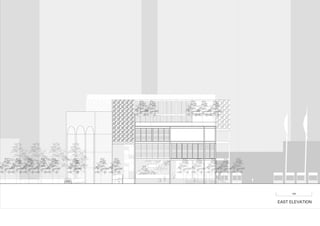
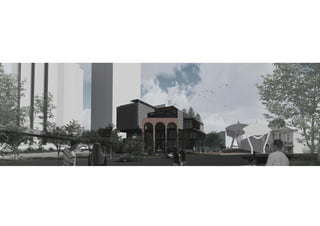
01 Elevation
1. Facade
2.
Adp final (2)
Adp final (2)
Adp final (2)
Adp final (2)
Adp final (2)
Adp final (2)
Adp final (2)
Adp final (2)
Adp final (2)

Adp final (2)

  • 1.
    Cultural Experience Centre Project1c: FInal Design Review Ong Huey Chyi (0326649)
  • 2.
    Cultural Experience Centre ‘Architecture with social impact’ Focuses on empowering the people’s appreciation of their own culture and environment
  • 3.
    JALAN TUN TANCHENG LOCK, KUALA LUMPUR SITE:
  • 4.
    JALAN TUN TANCHENG LOCK, KUALA LUMPUR SITE:
  • 5.
    01 Jalan TunTan Cheng Lock
  • 6.
    02 Central Market 01Jalan Tun Tan Cheng Lock
  • 7.
    02 Central Market 01Jalan Tun Tan Cheng Lock 03 Kasturi Walk
  • 8.
    02 Central Market 01Jalan Tun Tan Cheng Lock 03 Kasturi Walk 04 Riverside walk
  • 9.
    KUALA LUMPUR One ofthe cultural hubs in the country
  • 10.
    KUALA LUMPUR Culturally richand diverse Widely visited by locals and tourists Central Market Petaling Street Sultan Abdul Samad Building
  • 11.
    KUALA LUMPUR Culturally richand diverse Widely visited by locals and tourists Diversity of religious buildings as a remnant of the past that enhances the richness of the city Sri Mariamman Temple Masjid Jamek Sin Sze Si Ya Temple
  • 12.
    KUALA LUMPUR Culturally richand diverse Widely visited by locals and tourists Diversity of religious buildings as a remnant of the past that enhances the richness of the city Contemporary art scene Resurgence of activities anchored by city galleries, exhibitions, wall paintings, etc. KL City Gallery Wall paintings along Jalan Hang Kasturi Kwai Chai Hong
  • 13.
    WHERE DID ITALL STARTED?
  • 14.
    ORIGIN Tin Mining Establishment ofa tin mine in Klang Valley Naturally attracted merchants who trade basic provisions for tin miners in exchange for tin Supplies are conveniently brought by boat The town, spurred on by tin mining, began to develop beside the confluence of the Gombak and Klang Rivers. Old Market Square was the only public space built for daily trading at that time. (Peng & Ng, 2018) Kuala Lumpur and Old Market Square at 1882
  • 15.
    ORIGIN British Colonization The growthof the town enticed the colonizing British and relocated their centre of control to Kuala Lumpur Central Market is then built to replace the Old Market Square Further stimulated the grown and development of town More traders began to come into the town for daily trades (Peng & Ng, 2018) Central Market in 1884 (Peng & Ng, 2018) Trades around Central Market
  • 16.
    ORIGIN The River andthe Town The figure ground began to further expand around the river The river was rerouted to ease the development Railways and networks of roads branches out across the river further stimulate the expansion of town RIver is also used as a division to prevent the growth of Chinese urban space into the west bank used for administration This created a cultural and physical impact on the figure ground and scene of place As the town began to grow, tall and notable buildings started to be built (Peng & Ng, 2018) Tall buildings are built amidst the old buildings.
  • 17.
    ORIGIN City of Diversity KualaLumpur began to be filled with buildings of different era, creating a diverse art scene Until 1986, Kuala Lumpur began to realise its potential in tourist industry Central Market was converted into a cultural market that promotes local arts and crafts The town began to shift into tourist industry from its financial activities Central Market (Present) Medan Pasar (Old Market Square) Architecture of different era creates a new contemporary art scene
  • 18.
    KUALA LUMPUR A cityof diversity and culture that began around the river
  • 19.
    KLANG RIVER Due tothe rapid development of the city, the river became increasingly polluted Now that the river is no longer used as a means of transportation, It became a dumping ground and disconnected from people’s daily lives.
  • 20.
    KLANG RIVER Due tothe rapid development of the city, the river became increasingly polluted Now that the river is no longer used as a means of transportation, It became a dumping ground and disconnected from people’s daily lives. Recent years, the River of LIfe Project aims to enhance the physical condition of the river and bring the community ‘back’.
  • 21.
    THE RIVERS Despite theeffort in improving the physical condition of the river, people tend to forget about the social impact of the river onto the culture of Malaysia.
  • 22.
    THE RIVERS RIvers usedto be a place to collect clay Clay is used to make daily household utilities back in the days Malaysia has our own unique tradition of making pots out of clay A form of Identity of Malaysian Cultural arts Collecting clay at river bank Making of pots Types of Malaysian traditional pots Labu Sayong
  • 23.
    Kwong Yik SengCrockery shop (1938 - 2020) Image source: (https://www.youtube.com/watch?v=eBbgyZVVWnk) THE RIVERS But as the country continue to develop, the art of pot making is being replaced by electronic appliances. Thus, the craft is slowly dying away..
  • 24.
    The river isknown as the nucleus that drives the city into development, but what about the cultural impact of river? Has people started to forget about about the original use of river that contributes to the culture of Malaysia?
  • 25.
    Pottery making isa form of identity of the culture of Malaysia But it is still struggling to survive even until today.
  • 26.
    “ Focuses onempowering the people’s appreciation of their own culture and environment “ (Project Aim)
  • 27.
    Kuala Lumpur Culturally richand diverse Widely visited by locals and tourists Where people celebrates arts
  • 28.
    Kuala Lumpur (ISSUE) According toa research conducted by CEDANA report in 2018, the creative industry in Malaysia is still on the low side in terms of income generation.
  • 29.
    Pasar Seni, KualaLumpur Today in the context of Pasar Seni, where it is known as a tourist attraction are not just visited by both the locals and tourists, but also foreigners Providers Consumers Vendors Blue collars / tourists Tourists The appearance of a third party mostly as street vendors who sells crafts to the tourists. But instead of selling locally made goods, most of the products mostly being mass produced in other countries like China or Indonesia. Results in a decline in local artist More commercialised art retailers will occupy the space The local artist will lose their platform to display and showcase their work Local artist vs. Commercialised art retailers vs. Street Vendors.
  • 30.
    SITE ISSUE Artist lackof platform to showcase their work. CULTURAL ISSUE The dying art of Pottery
  • 31.
    (Aim) - To providea platform for the potters to communicate and interact - To create a community of potters to bring back the dying art of Pottery making in Malaysia (Impact) - To encourage and enhance the local art community on site - To educate the community about pottery cultural art.
  • 32.
    (Spatial programme) The spatialprogramme mainly focuses on the flow of the tourists into the building starting from all 4 contact points, to resting and connecting, experiencing, participating, educating, exhibiting, and working.
  • 33.
    (Spatial organization) By usingthe language of pottery making where the clay were pushed to the side to create a vessel in between, the spaces are organized in a way where it faces outwards into the streets so that the inside of the building are overlapped with voids that connects upward to form a ‘vessel’.
  • 34.
    (Design Approach) Just likethe star of a pot is not what was created, it is what it was created to hold. Thus, the main design approach is to emphasize on the use of voids as a vessel that connects both the users and the building. The permeability, openness and materiality of the building is considered to integrate the 4 elements of pottery making (earth, water, fire, air) into the language of the building.
  • 35.
    EARTH WATER AIRFIRE CLAY IS COLLECTED FROM RIVER BANK WATER IS ADDED TO SOFTEN THE CLAY THE POTS ARE AIR-DRIED AFTER MOLDING POTS ARE PUT INTO KILN TO BE HEATED
  • 36.
    INSIDE OUT The pinchingthe clay inside out to create a void between solids LAYERING Overlapping patches sticks together to build a form PREPARATION Gesture of going down the river bank to collect clay
  • 37.
    RESTING ● Public spaces ●Seatings cafe EXPERIENCING ● Retail ● Temporary studio ● Open event spaces ● Public art bazaar PARTICIPATING ● Public workshop ● Public Gallery EDUATING ● Pottery workshop ● Library EXHIBITING ● Pottery gallery ○ Indoor, Semi outdoor, outdoor ● Exhibition spaces WORKING ● Artist pottery studio ● Living quarters ● Collab spaces → → → → → PUBLIC ARTIST
  • 38.
    Working ● Artist potterystudio Exhibiting ● Exhibition space ● Semi-outdoor gallery Educating ● Pottery Workshop ● Library Private ● Artist living quarters ● Collab space ‘Experiencing & Participating’ ● Temporary studio (retail) ● Gallery ● Cafe ‘Resting & Experiencing’ ● Seating spaces ● Workshop ● Open spaces PUBLICARTIST
  • 39.
    IDENTIFY THE CONTACTPOINTS Personalities of the approaches Central Market, Kasturi Walk, Riverside walk and main vehicular road
  • 40.
    CREATING AN AXIS Byconnecting the approaches and form a continuous axis that goes through the building
  • 41.
    INTERSECTING POINT At thepoint where the axis intersects, a void is cut out
  • 42.
    SPATIAL ARRANGEMENTS The spacesare then placed around the void facing outward to create a ‘vessel’ in between.
  • 43.
    ‘VESSEL’ The voids connectsupward to create a ‘vessel’ that anchors the building vertically
  • 45.
    01 PLACING OFBLOCKS Placement the Public and the Artist bllock on site
  • 46.
    02 EXTENDING TOCONTACT POINTS The Public block extend outwards to reach towards both contact points
  • 47.
    03 ESTABLISHING ACONNECTION The use of Public realms as a connecting point between the contact points
  • 48.
    04 A GESTUREOF START Elevate and expose the underground to mimic the gesture of going down to the river bank to collect clay
  • 49.
    05 ESTABLISHING ANAXIS Connected through staircases, an axis is punctured through the other side to make a connection
  • 50.
    06 SPATIAL ARRANGEMENT Thespaces are arranged facing outward around the central void to respond to the activities happening at the contact points
  • 51.
    Building made upof different blocks Introduction of louvered facade to respond to the adjacent building and is anchored by the vertical void at the intersection of the axis
  • 53.
  • 54.
    01 SITE PLAN 1.14 CONTACT POINTS 01 Riverside Walk 1
  • 55.
    01 SITE PLAN 1.14 CONTACT POINTS 01 Riverside Walk 1 2 02 Central Market
  • 56.
    01 SITE PLAN 1.14 CONTACT POINTS 01 Riverside Walk 1 2 3 02 Central Market 03 Kasturi Walk
  • 57.
    01 SITE PLAN 1.14 CONTACT POINTS 01 Riverside Walk 1 2 3 4 02 Central Market 03 Kasturi Walk 04 Main Vehicular road
  • 58.
    01 SITE PLAN 1.1RIVERSIDE WALK Passive personality Users walk with a destination in mind Used as a shortcut to the office area from the MRT station Tourists stops and enjoys by the riverside Seating place is provided RIVERSIDE WALK SEATING AREA MRT Station Office buildings
  • 59.
    01 SITE PLAN 1.1RIVERSIDE WALK DESIGN RESPONSE To make use of the point of interest from seating area To have activities as a form of attraction Activity intrigues axtivity Human activities as facade.
  • 60.
    01 SITE PLAN 1.1RIVERSIDE WALK View from Riverside walk Approach to building overlooking the activities on the building as a facade
  • 61.
    01 SITE PLAN 1.1RIVERSIDE WALK View from Riverside walk Approach to building overlooking the activities on the building as a facade
  • 62.
    01 SITE PLAN 1.2KASTURI WALK Robust Mostly food stalls at the front and arts and crafts are sold along the street Crowded and compact --- busy
  • 63.
    01 SITE PLAN 1.2KASTURI WALK DESIGN RESPONSE Connecting the robust street and building with an open space An intermediate space to blur the boundary between two personalities View from Kasturi Walk An open space as a boundary with the continuation of floor finishes into the building
  • 64.
    01 SITE PLAN 1.2KASTURI WALK DESIGN RESPONSE Connecting the robust street and building with an open space An intermediate space to blur the boundary between two personalities View from Kasturi Walk An open space as a boundary with the continuation of floor finishes into the building
  • 65.
    01 SITE PLAN 1.2KASTURI WALK DESIGN RESPONSE Staircase as a continuation from the open space As an extension of activity from Kasturi walk as to provide an informal seating area View from Kasturi Walk Staircase leading users from the street or open space into the building.
  • 66.
    01 SITE PLAN 1.3CENTRAL MARKET To create a continuous connection between the buildling and Central MArket To Blur the boundary
  • 67.
    01 SITE PLAN 1.3CENTRAL MARKET Creating Voids to attract and blurring the boundary. The open space also allow for extension of activities from Central Market into building
  • 68.
    01 SITE PLAN 1.3CENTRAL MARKET By making use of the existing floor finishes in front of central market and extending it into the building
  • 69.
    01 SITE PLAN 1.4MAIN VEHICULAR ROAD To create an axis connecting Central Market A gallery walkway Go through language of pottery (past) before arriving at central market (present) Intergration of 4 elements and vessel.
  • 70.
    01 SITE PLAN 1.4MAIN VEHICULAR ROAD To create an axis connecting Central Market A gallery walkway Go through language of pottery (past) before arriving at central market (present) Intergration of 4 elements and vessel.
  • 71.
    01 SITE PLAN 1.4MAIN VEHICULAR ROAD By using the five elements to indicate the language of pottery, and arches to respond to the streetscape
  • 72.
    02 BASEMENT PLAN Gradualslope from ground level with landscapes It extends into the basement and exposing the underground carpark. Vehicular pathway around the central courtyard VEHICULAR PATH
  • 73.
    02 BASEMENT PLAN Gradualslope from ground level with landscapes It extends into the basement and exposing the underground carpark. Vehicular pathway around the central courtyard Main staircase to ground floor from courtyard STAIRCASE TO GROUND FLOOR
  • 74.
    03 GROUND FLOORPLAN From the approaches, the circulation intersects at the courtyard and goes upwards. Circulations converge at the courtyard Courtyard as a ‘vessel’
  • 75.
    03 GROUND FLOORPLAN From the approaches, the circulation intersects at the courtyard and goes upwards. Circulations converge at the courtyard Courtyard as a ‘vessel’
  • 76.
    03 GROUND FLOORPLAN From the approaches, the circulation intersects at the courtyard and goes upwards. Circulations converge at the courtyard Courtyard as a ‘vessel’ Different use of floor finish to distinguish between activity area and courtyard
  • 77.
    04 FIRST FLOORPLAN Users experience and participate INDOOR SEMI OPEN COVERED
  • 78.
    Users experience andparticipate Temporary studio as a retail where artists make their art on the spot and sell it INDOOR SEMI OPEN COVERED EXPERIENCE 04 FIRST FLOOR PLAN
  • 79.
    Users experience andparticipate Temporary studio as a retail where artists make their art on the spot and sell it Open and Indoor Gallery INDOOR SEMI OPEN COVERED EXPERIENCE 04 FIRST FLOOR PLAN
  • 80.
    Educating 05 SECOND FLOORPLAN INDOOR SEMI OPEN COVERED
  • 81.
  • 82.
  • 83.
  • 84.
  • 85.
    06 THIRD FLOORPLAN INDOOR SEMI OPEN COVERED Exhibiting
  • 86.
    06 THIRD FLOORPLAN Exhibiting Exhibition Space INDOOR SEMI OPEN COVERED EXHIBITING
  • 87.
    06 THIRD FLOORPLAN Exhibiting Exhibition Space Semi- outdoor Gallery INDOOR SEMI OPEN COVERED EXHIBITING
  • 88.
    06 THIRD FLOORPLAN Exhibiting Exhibition Space Semi- outdoor Gallery Private Bedrooms INDOOR SEMI OPEN COVERED EXHIBITING PRIVATE
  • 89.
    07 FOURTH FLOORPLAN INDOOR SEMI OPEN COVERED
  • 90.
    Working (only accessiblethrough dormitory) Firing and Glazing studio Molding and design studio INDOOR SEMI OPEN COVERED WORKING 07 FOURTH FLOOR PLAN
  • 91.
    INDOOR SEMI OPEN COVERED WORKING PRIVATE Working (onlyaccessible through dormitory) Firing and Glazing studio Molding and design studio Private Bedrooms 07 FOURTH FLOOR PLAN
  • 92.
    Different types ofroof a. Pergola b. Metal deck c. Polycarbonate Allow for permeability of building 08 ROOF PLAN
  • 93.
  • 94.
  • 95.
  • 96.
  • 97.
    KASTURI WALK RIVERSIDEWALK RIVEROPEN SPACE OPEN SPACE
  • 98.
    KASTURI WALK RIVERSIDEWALK RIVEROPEN SPACE OPEN SPACE WORKSHOP SPACE COURTYARD SEATING
  • 99.
    WORKSHOP RECEPTION RETAILOPEN GALLERY LIBRARY EXHIBITION FIRING STUDIO COURTYARD KASTURIWALK RIVERSIDE WALK RIVEROPEN SPACE OPEN SPACE WORKSHOP SPACE COURTYARD SEATING
  • 100.
  • 101.
    01 Sectional PerspectiveA-A’ COURTYARD
  • 102.
    01 Sectional PerspectiveA-A’ PUBLIC SPACE
  • 103.
    01 Sectional PerspectiveA-A’ DORMITORY
  • 104.
  • 105.
    01 Sectional PerspectiveA-A’ GALLERY CORRIDOR
  • 106.
  • 107.
    01 Sectional PerspectiveA-A’ SEMI OPEN GALLERY
  • 108.
  • 109.
    01 Sectional PerspectiveA-A’ SEMI OPEN GALLERY LOUNGE GALLERY CORRIDOR WALKWAY PUBLIC SPACE COURTYARD DORMITORY
  • 110.
  • 111.
  • 112.
    PUBLIC SPACE 02 SectionalPerspective A-A’
  • 113.
  • 114.
  • 115.
  • 116.
  • 117.
  • 118.
  • 119.
  • 120.
    02 Sectional PerspectiveA-A’ GALLERY CORRIDOR 02 Sectional Perspective A-A’ SEMI OPEN GALLERY LOUNGE WALKWAY COURTYARD PUBLIC SPACE DORMITORY GALLERY WALKWAY
  • 122.