ADOLESCENT
HEALTH PROGRAM
 HEALTH- can be defined as optimum physical,
emotional, social, spiritual, and intellectual health.
Health promotion is the science or art of helping
people change their lifestyle to move towards a state
of optimal health. Lifestyle change can be facilitated
through a combination of efforts to increase
awareness, change behaviour, and create
environments that support good health practices.
DEFINITION OF TERMS
ADOLESCENCE
Which Generation do you Belong?
 resistant towards current trends
 48% listening to radio
 well researched purchase decision
 career driven
 62% reading newspaper
 time ------ more in work
CHARACTERISTICS:
Gen X - 1965-1979 – BABY BUST
CHARACTERISTICS
GEN Y – 1980 – 1995 – MILLENEALS
Thinking outside the box
Living trendy
grown up with
technology
24/7 online
Express feelings and
thoughts
Spenders
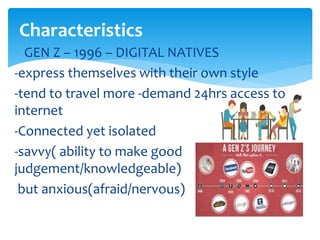
 GEN Z – 1996 – DIGITAL NATIVES
-express themselves with their own style
-tend to travel more -demand 24hrs access to
internet
-Connected yet isolated
-savvy( ability to make good
judgement/knowledgeable)
but anxious(afraid/nervous)
Characteristics
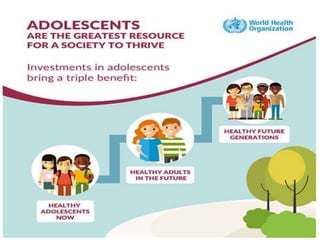
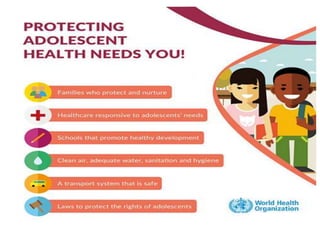
What is the importance
of adolescence health?
Problems of Adolescence
 General Health Problems
 Malnutrition
 Inadequate diet
 Anemia ; most important
o For Adolescents 15-19 years anemia {mild-39.1}, {Mode 14.9} &
{Severe – 1.7}
 Obesity and eating disorders. Extreme eating disorders like bulimia
and anorexia
 Mental Health Problems Depression is common
 Early and unprotected sex
 High number of unwanted pregnancies and unsafe abortions and
steep rise in HIV infection
Problems of Adolescence
A – doption of healthy life style
D - evelop appropriate i.e. strategy discourage early marriage and
teenage pregnancy
O – rganize adolescent/youth friendly
L – Ife skill training, legal support, liason with peers, parents
E – ducate about sexuality, safe sex, spirituality, responsible
parenthood
S – afe,secure and supportive environment to be provided
C – ounselling/curriculum in school inclusive of family life education
E – nable and empower for responsible citizenship
N – etworking for experience sharing
T – raining for income generation, teen, clubs
IMPORTANT REMINDER!
ADOLESCENT-HEALTH-PROGRAM.pptx

ADOLESCENT-HEALTH-PROGRAM.pptx

  • 1.
  • 2.
     HEALTH- canbe defined as optimum physical, emotional, social, spiritual, and intellectual health. Health promotion is the science or art of helping people change their lifestyle to move towards a state of optimal health. Lifestyle change can be facilitated through a combination of efforts to increase awareness, change behaviour, and create environments that support good health practices. DEFINITION OF TERMS
  • 3.
  • 4.
  • 5.
     resistant towardscurrent trends  48% listening to radio  well researched purchase decision  career driven  62% reading newspaper  time ------ more in work CHARACTERISTICS: Gen X - 1965-1979 – BABY BUST
  • 6.
    CHARACTERISTICS GEN Y –1980 – 1995 – MILLENEALS Thinking outside the box Living trendy grown up with technology 24/7 online Express feelings and thoughts Spenders
  • 7.
     GEN Z– 1996 – DIGITAL NATIVES -express themselves with their own style -tend to travel more -demand 24hrs access to internet -Connected yet isolated -savvy( ability to make good judgement/knowledgeable) but anxious(afraid/nervous) Characteristics
  • 8.
    What is theimportance of adolescence health?
  • 9.
  • 10.
     General HealthProblems  Malnutrition  Inadequate diet  Anemia ; most important o For Adolescents 15-19 years anemia {mild-39.1}, {Mode 14.9} & {Severe – 1.7}  Obesity and eating disorders. Extreme eating disorders like bulimia and anorexia  Mental Health Problems Depression is common  Early and unprotected sex  High number of unwanted pregnancies and unsafe abortions and steep rise in HIV infection Problems of Adolescence
  • 11.
    A – doptionof healthy life style D - evelop appropriate i.e. strategy discourage early marriage and teenage pregnancy O – rganize adolescent/youth friendly L – Ife skill training, legal support, liason with peers, parents E – ducate about sexuality, safe sex, spirituality, responsible parenthood S – afe,secure and supportive environment to be provided C – ounselling/curriculum in school inclusive of family life education E – nable and empower for responsible citizenship N – etworking for experience sharing T – raining for income generation, teen, clubs
  • 12.