Adjectives
Adjectives
 An adjective is a word that tells us more

about a noun. (By "noun" we include
pronouns and noun phrases.)
 An adjective "qualifies" or "modifies"
a noun (a big dog).
 We can often use two or more adjectives
together (a beautiful young French lady).
Determiners
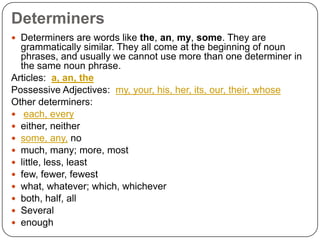
 Determiners are words like the, an, my, some. They are

grammatically similar. They all come at the beginning of noun
phrases, and usually we cannot use more than one determiner in
the same noun phrase.
Articles: a, an, the
Possessive Adjectives: my, your, his, her, its, our, their, whose
Other determiners:
 each, every
 either, neither
 some, any, no
 much, many; more, most
 little, less, least
 few, fewer, fewest
 what, whatever; which, whichever
 both, half, all
 Several
 enough
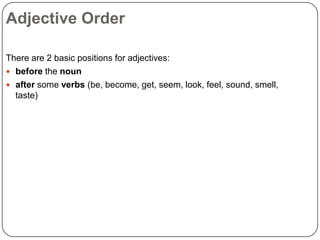
Adjective Order
There are 2 basic positions for adjectives:
 before the noun
 after some verbs (be, become, get, seem, look, feel, sound, smell,
taste)
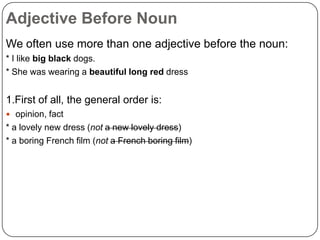
Adjective Before Noun
We often use more than one adjective before the noun:
* I like big black dogs.
* She was wearing a beautiful long red dress

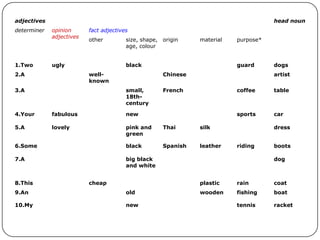
1.First of all, the general order is:
 opinion, fact

* a lovely new dress (not a new lovely dress)
* a boring French film (not a French boring film)
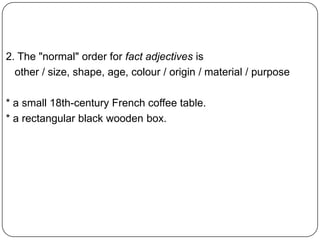
2. The "normal" order for fact adjectives is
other / size, shape, age, colour / origin / material / purpose
* a small 18th-century French coffee table.
* a rectangular black wooden box.
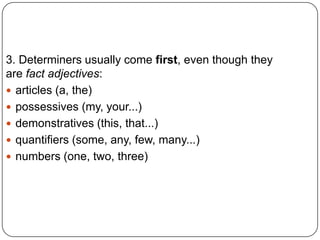
3. Determiners usually come first, even though they
are fact adjectives:
 articles (a, the)
 possessives (my, your...)
 demonstratives (this, that...)
 quantifiers (some, any, few, many...)
 numbers (one, two, three)
adjectives
determiner

1.Two

head noun
opinion
adjectives

fact adjectives
other

ugly

2.A

size, shape, origin
age, colour

material

black
wellknown

3.A

purpose*

guard
Chinese

small,
18thcentury

artist

French

coffee

fabulous

new

5.A

lovely

pink and
green

Thai

black

Spanish

leather

7.A

car

silk

6.Some

table

sports

4.Your

big black
and white

8.This

cheap

dogs

dress
riding

boots
dog

plastic

9.An

old

10.My

new

rain

coat

wooden

fishing

boat

tennis

racket
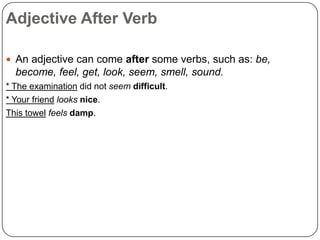
Adjective After Verb
 An adjective can come after some verbs, such as: be,

become, feel, get, look, seem, smell, sound.
* The examination did not seem difficult.
* Your friend looks nice.
This towel feels damp.
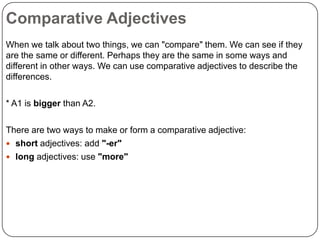
Comparative Adjectives
When we talk about two things, we can "compare" them. We can see if they
are the same or different. Perhaps they are the same in some ways and
different in other ways. We can use comparative adjectives to describe the
differences.
* A1 is bigger than A2.
There are two ways to make or form a comparative adjective:
 short adjectives: add "-er"
 long adjectives: use "more"
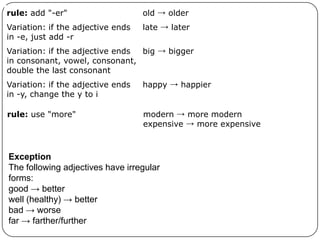
rule: add "-er"

old → older

Variation: if the adjective ends
in -e, just add -r

late → later

Variation: if the adjective ends
big → bigger
in consonant, vowel, consonant,
double the last consonant
Variation: if the adjective ends
in -y, change the y to i

happy → happier

rule: use "more"

modern → more modern
expensive → more expensive

Exception
The following adjectives have irregular
forms:
good → better
well (healthy) → better
bad → worse
far → farther/further
Use of Comparative Adjectives
We use comparative adjectives when talking about 2 things

* America is big. But Russia is bigger.
* I want to have a more powerful computer.
* Is French more difficult than English?
Superlative Adjectives
 A superlative adjective expresses the extreme or highest degree of a

quality. We use a superlative adjective to describe the extreme quality of
one thing in a group of things.

* John is the tallest.
Formation of Superlative Adjectives
As with comparative adjectives, there are two ways to form
a superlative adjective:
 short adjectives: add "-est"
 long adjectives: use "most“
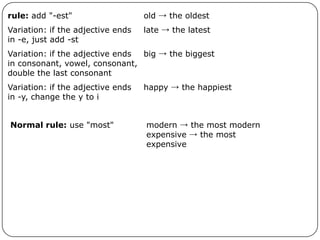
rule: add "-est"

old → the oldest

Variation: if the adjective ends
in -e, just add -st

late → the latest

Variation: if the adjective ends
big → the biggest
in consonant, vowel, consonant,
double the last consonant
Variation: if the adjective ends
in -y, change the y to i
Normal rule: use "most"

happy → the happiest

modern → the most modern
expensive → the most
expensive
Use of Superlative Adjectives
We use a superlative adjective to describe one thing in a
group of three or more things.
* Canada, China and Russia are big countries. But Russia
is the biggest.
* Mount Everest is the highest mountain in the world.

Adjectives

  • 1.
  • 2.
    Adjectives  An adjectiveis a word that tells us more about a noun. (By "noun" we include pronouns and noun phrases.)  An adjective "qualifies" or "modifies" a noun (a big dog).  We can often use two or more adjectives together (a beautiful young French lady).
  • 3.
    Determiners  Determiners arewords like the, an, my, some. They are grammatically similar. They all come at the beginning of noun phrases, and usually we cannot use more than one determiner in the same noun phrase. Articles: a, an, the Possessive Adjectives: my, your, his, her, its, our, their, whose Other determiners:  each, every  either, neither  some, any, no  much, many; more, most  little, less, least  few, fewer, fewest  what, whatever; which, whichever  both, half, all  Several  enough
  • 4.
    Adjective Order There are2 basic positions for adjectives:  before the noun  after some verbs (be, become, get, seem, look, feel, sound, smell, taste)
  • 5.
    Adjective Before Noun Weoften use more than one adjective before the noun: * I like big black dogs. * She was wearing a beautiful long red dress 1.First of all, the general order is:  opinion, fact * a lovely new dress (not a new lovely dress) * a boring French film (not a French boring film)
  • 6.
    2. The "normal"order for fact adjectives is other / size, shape, age, colour / origin / material / purpose * a small 18th-century French coffee table. * a rectangular black wooden box.
  • 7.
    3. Determiners usuallycome first, even though they are fact adjectives:  articles (a, the)  possessives (my, your...)  demonstratives (this, that...)  quantifiers (some, any, few, many...)  numbers (one, two, three)
  • 8.
    adjectives determiner 1.Two head noun opinion adjectives fact adjectives other ugly 2.A size,shape, origin age, colour material black wellknown 3.A purpose* guard Chinese small, 18thcentury artist French coffee fabulous new 5.A lovely pink and green Thai black Spanish leather 7.A car silk 6.Some table sports 4.Your big black and white 8.This cheap dogs dress riding boots dog plastic 9.An old 10.My new rain coat wooden fishing boat tennis racket
  • 9.
    Adjective After Verb An adjective can come after some verbs, such as: be, become, feel, get, look, seem, smell, sound. * The examination did not seem difficult. * Your friend looks nice. This towel feels damp.
  • 10.
    Comparative Adjectives When wetalk about two things, we can "compare" them. We can see if they are the same or different. Perhaps they are the same in some ways and different in other ways. We can use comparative adjectives to describe the differences. * A1 is bigger than A2. There are two ways to make or form a comparative adjective:  short adjectives: add "-er"  long adjectives: use "more"
  • 11.
    rule: add "-er" old→ older Variation: if the adjective ends in -e, just add -r late → later Variation: if the adjective ends big → bigger in consonant, vowel, consonant, double the last consonant Variation: if the adjective ends in -y, change the y to i happy → happier rule: use "more" modern → more modern expensive → more expensive Exception The following adjectives have irregular forms: good → better well (healthy) → better bad → worse far → farther/further
  • 12.
    Use of ComparativeAdjectives We use comparative adjectives when talking about 2 things * America is big. But Russia is bigger. * I want to have a more powerful computer. * Is French more difficult than English?
  • 13.
    Superlative Adjectives  Asuperlative adjective expresses the extreme or highest degree of a quality. We use a superlative adjective to describe the extreme quality of one thing in a group of things. * John is the tallest. Formation of Superlative Adjectives As with comparative adjectives, there are two ways to form a superlative adjective:  short adjectives: add "-est"  long adjectives: use "most“
  • 14.
    rule: add "-est" old→ the oldest Variation: if the adjective ends in -e, just add -st late → the latest Variation: if the adjective ends big → the biggest in consonant, vowel, consonant, double the last consonant Variation: if the adjective ends in -y, change the y to i Normal rule: use "most" happy → the happiest modern → the most modern expensive → the most expensive
  • 15.
    Use of SuperlativeAdjectives We use a superlative adjective to describe one thing in a group of three or more things. * Canada, China and Russia are big countries. But Russia is the biggest. * Mount Everest is the highest mountain in the world.