Download to read offline


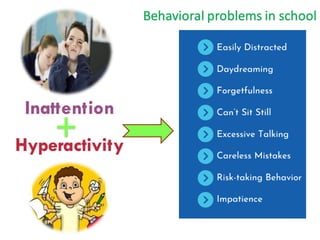
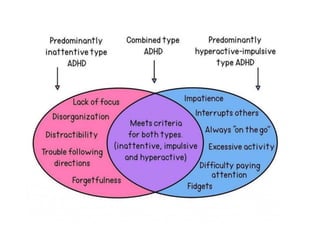
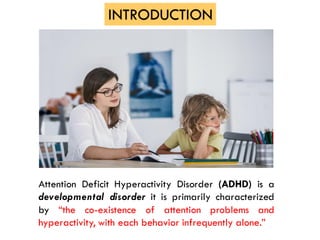
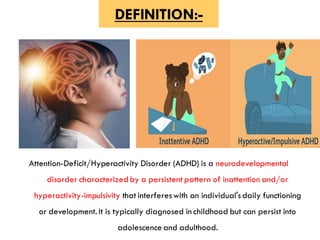
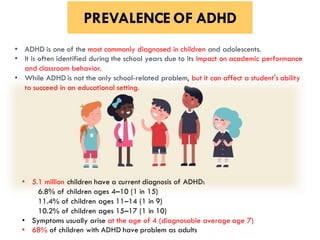
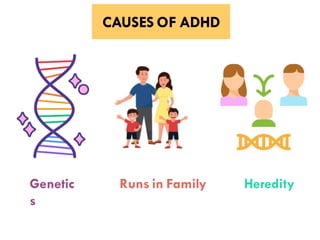
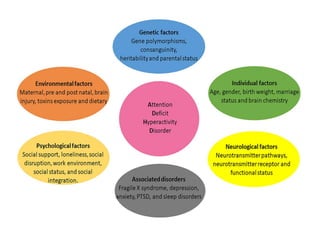
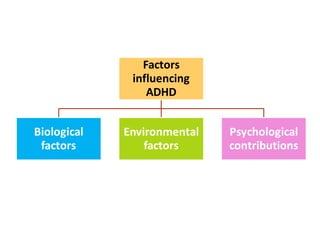
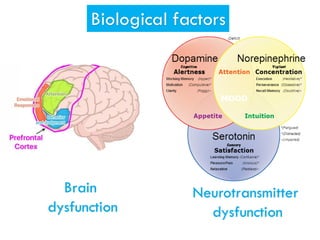

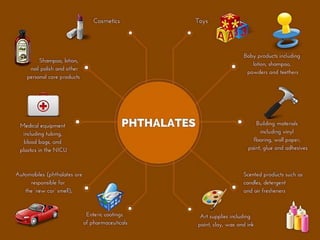
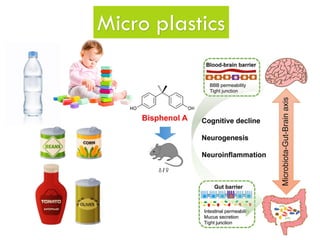
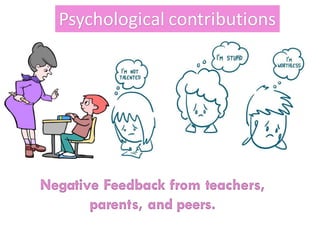
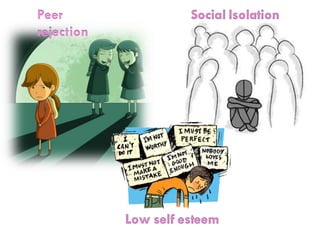
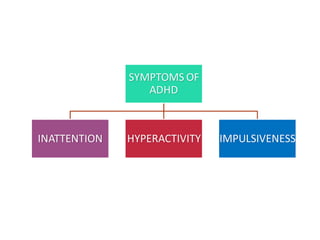
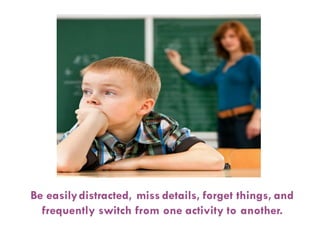


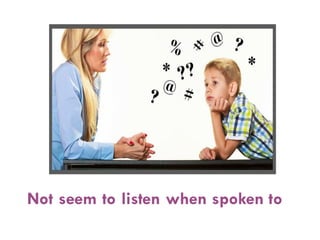
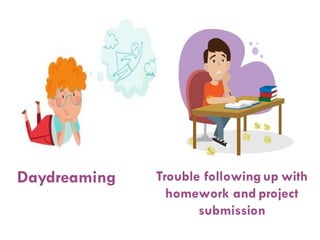
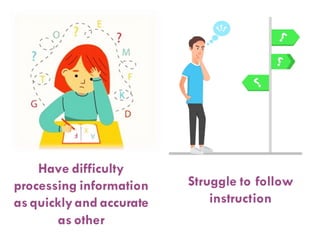

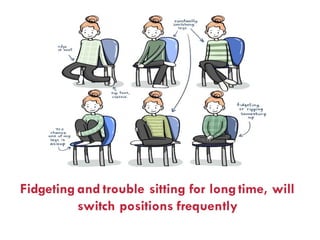
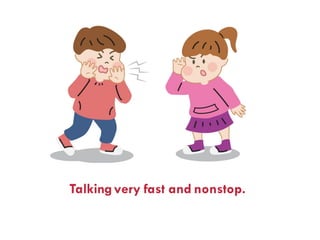



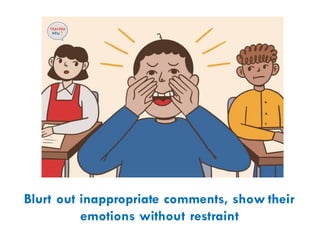
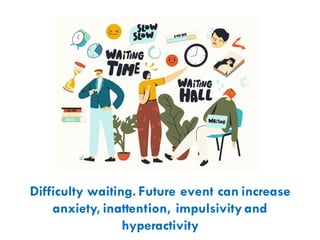

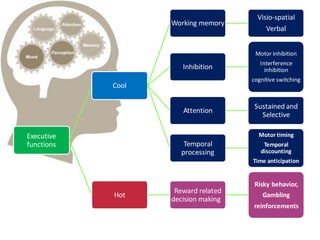
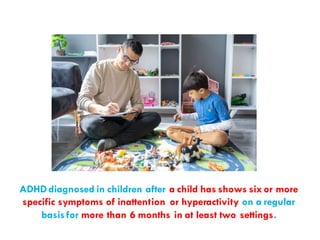
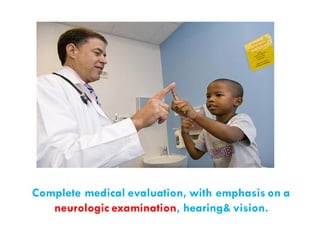


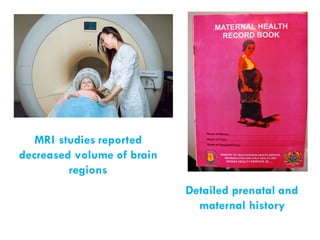
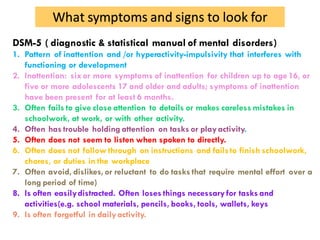
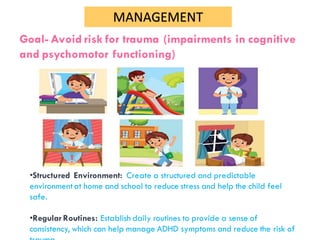
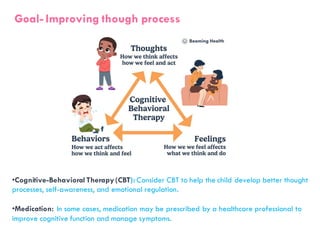
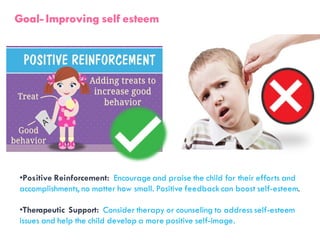

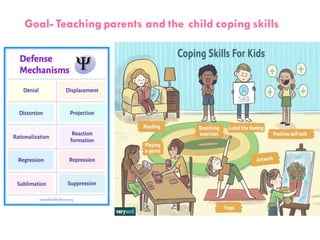


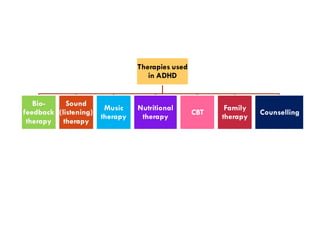
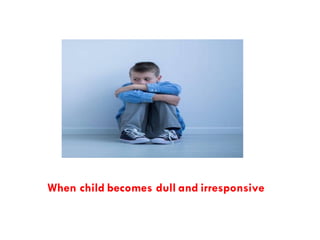


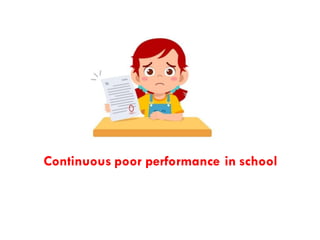








ADHD – Attention Deficit Hyperactivity Disorder Presented by: Anurag Joseph Course: M.Sc. Final Year (Mental Health Nursing) Institution: SMT RD GARDI Nurses Training Centre Case Study 1 – Inattentive Type (Raju) 5th standard student Trouble focusing in class; often daydreams Misses deadlines; delays homework Slow information processing; indecisive Case Study 2 – Hyperactive-Impulsive Type (Rahul) 3rd standard student Cannot sit still; loud and aggressive Talks fast; interrupts; impatient Disruptive, energetic when unsupervised Behavioral Problems in School Inattention + Hyperactivity Impacts learning, peer interaction, discipline Introduction ADHD is a developmental disorder marked by co-existing attention problems and hyperactivity, rarely found alone. Definition (DSM-5 Inspired) A neurodevelopmental disorder with persistent inattention and/or hyperactivity-impulsivity, interfering with functioning or development, starting in childhood. Prevalence 5.1 million children diagnosed in the U.S. 6.8% (ages 4–10), 11.4% (ages 11–14), 10.2% (ages 15–17) Symptoms may appear by age 4; diagnosable by 7 68% of affected children carry symptoms into adulthood Causes of ADHD Genetic Causes Strong hereditary link Runs in families Biological Factors Brain and neurotransmitter dysfunction Abnormal brain region volumes Environmental Factors Exposure to toxins (e.g., microplastics) Prenatal and perinatal risks Unstable home or school environment Psychological Contributions Negative feedback from peers/teachers Low self-esteem, peer rejection, isolation Symptoms of ADHD 1. Inattention Easily distracted, forgetful, daydreams Avoids long tasks, misses details Trouble completing homework and following instructions Difficulty processing information 2. Hyperactivity Fidgeting, inability to sit still Excessive talking and movement Constantly in motion, impulsive behavior 3. Impulsiveness Acts without thinking, interrupts frequently Instant gratification, inappropriate outbursts Anxiety about future events Why ADHD Children Are Different Issues in executive functions, working memory, motor inhibition, time management, and emotional regulation Problems with decision making, reward system, and risky behavior Diagnosis of ADHD Requires ≥6 symptoms (children) or ≥5 symptoms (adolescents/adults) over 6+ months in 2+ settings Tools include: Medical, neurological, vision, hearing exams Psychiatric evaluation (IQ, academics) Teacher/parent observations Brain imaging (MRI), prenatal history DSM-5 Key Diagnostic Points Persistent inattention/hyperactivity Symptoms must interfere with daily function Inattention signs include careless mistakes, trouble focusing, forgetfulness, etc. Management Goals & Strategies 1. Prevent Trauma Provide structured environments Maintain routine for predictability 2. Improve Thought Process Use Cognitive Behavioral Therapy (CBT) Consider medication if necessary 3. Boost Self-Esteem Encourage positive


