Durham Botanicals
                               http://www.durhambotanicals.com
                             Adenium Basic Care
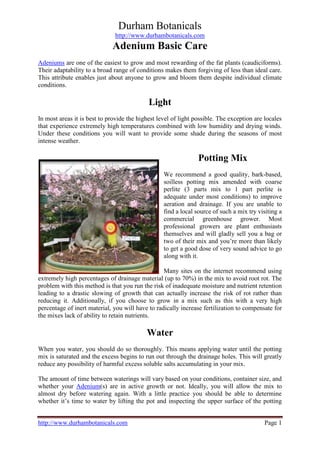
Adeniums are one of the easiest to grow and most rewarding of the fat plants (caudiciforms).
Their adaptability to a broad range of conditions makes them forgiving of less than ideal care.
This attribute enables just about anyone to grow and bloom them despite individual climate
conditions.

                                            Light
In most areas it is best to provide the highest level of light possible. The exception are locales
that experience extremely high temperatures combined with low humidity and drying winds.
Under these conditions you will want to provide some shade during the seasons of most
intense weather.

                                                                Potting Mix
                                                  We recommend a good quality, bark-based,
                                                  soilless potting mix amended with coarse
                                                  perlite (3 parts mix to 1 part perlite is
                                                  adequate under most conditions) to improve
                                                  aeration and drainage. If you are unable to
                                                  find a local source of such a mix try visiting a
                                                  commercial greenhouse grower. Most
                                                  professional growers are plant enthusiasts
                                                  themselves and will gladly sell you a bag or
                                                  two of their mix and you’re more than likely
                                                  to get a good dose of very sound advice to go
                                                  along with it.

                                                  Many sites on the internet recommend using
extremely high percentages of drainage material (up to 70%) in the mix to avoid root rot. The
problem with this method is that you run the risk of inadequate moisture and nutrient retention
leading to a drastic slowing of growth that can actually increase the risk of rot rather than
reducing it. Additionally, if you choose to grow in a mix such as this with a very high
percentage of inert material, you will have to radically increase fertilization to compensate for
the mixes lack of ability to retain nutrients.

                                           Water
When you water, you should do so thoroughly. This means applying water until the potting
mix is saturated and the excess begins to run out through the drainage holes. This will greatly
reduce any possibility of harmful excess soluble salts accumulating in your mix.

The amount of time between waterings will vary based on your conditions, container size, and
whether your Adenium(s) are in active growth or not. Ideally, you will allow the mix to
almost dry before watering again. With a little practice you should be able to determine
whether it’s time to water by lifting the pot and inspecting the upper surface of the potting


http://www.durhambotanicals.com                                                            Page 1
Durham Botanicals
                            http://www.durhambotanicals.com
mix. As the mix dries, your pots will become much lighter signalling that it’s time to water
your Adeniums again.

Overwatering can lead to root rot and should be avoided, but if you have used a mix with
adequate drainage you should have a fair margin for error. If you know that you have a heavy
hand with the watering can you should add a slightly higher percentage of perlite to your mix.

Under watering can be nearly as destructive as overwatering, so you should never allow your
mix to become dust dry as this will desiccate and destroy the delicate feeder roots necessary
for water and nutrient uptake.

If you intend to hand water your Adenium(s) it is best if you use a good quality water breaker
on your hose or watering can. This will prevent wash out and damage to delicate roots.

                                        Fertilizer
Probably the simplest and most effective way of providing your Adenium(s) with proper
nutrition is through the use of a good quality controlled release fertilizer. A balanced blend
such as 13-13-13 or 14-14-14 will yield excellent results. These mixes are available in
different release times ranging from a couple of months to nearly a year. We use and
recommend the shorter release terms because they activate almost immediately, vs. up to
several weeks for the longest term formulations, and will allow you to easily time the
discontinuation of feed if you live in an area where your Adenium(s) will go through a period
of winter dormancy.

                                                           Containers
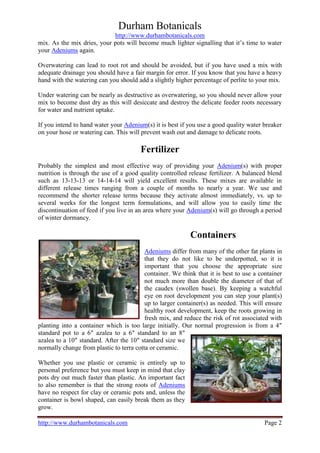
                                          Adeniums differ from many of the other fat plants in
                                          that they do not like to be underpotted, so it is
                                          important that you choose the appropriate size
                                          container. We think that it is best to use a container
                                          not much more than double the diameter of that of
                                          the caudex (swollen base). By keeping a watchful
                                          eye on root development you can step your plant(s)
                                          up to larger container(s) as needed. This will ensure
                                          healthy root development, keep the roots growing in
                                          fresh mix, and reduce the risk of rot associated with
planting into a container which is too large initially. Our normal progression is from a 4″
standard pot to a 6″ azalea to a 6″ standard to an 8″
azalea to a 10″ standard. After the 10″ standard size we
normally change from plastic to terra cotta or ceramic.

Whether you use plastic or ceramic is entirely up to
personal preference but you must keep in mind that clay
pots dry out much faster than plastic. An important fact
to also remember is that the strong roots of Adeniums
have no respect for clay or ceramic pots and, unless the
container is bowl shaped, can easily break them as they
grow.

http://www.durhambotanicals.com                                                          Page 2
Durham Botanicals
                            http://www.durhambotanicals.com


                               Since the form of the caudex and large roots is as important
                               as the bloom to many collectors, we feel we should mention
                               that the formation of the caudex is controlled, to a large
                               degree, by the depth and width of the container.

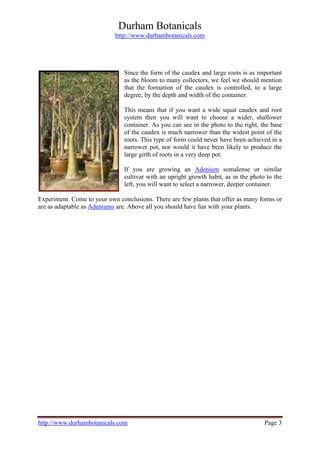
                               This means that if you want a wide squat caudex and root
                               system then you will want to choose a wider, shallower
                               container. As you can see in the photo to the right, the base
                               of the caudex is much narrower than the widest point of the
                               roots. This type of form could never have been achieved in a
                               narrower pot, nor would it have been likely to produce the
                               large girth of roots in a very deep pot.

                               If you are growing an Adenium somalense or similar
                               cultivar with an upright growth habit, as in the photo to the
                               left, you will want to select a narrower, deeper container.

Experiment. Come to your own conclusions. There are few plants that offer as many forms or
are as adaptable as Adeniums are. Above all you should have fun with your plants.


http://www.durhambotanicals.com                                                      Page 3

Adenium basic care

  • 1.
    Durham Botanicals http://www.durhambotanicals.com Adenium Basic Care Adeniums are one of the easiest to grow and most rewarding of the fat plants (caudiciforms). Their adaptability to a broad range of conditions makes them forgiving of less than ideal care. This attribute enables just about anyone to grow and bloom them despite individual climate conditions. Light In most areas it is best to provide the highest level of light possible. The exception are locales that experience extremely high temperatures combined with low humidity and drying winds. Under these conditions you will want to provide some shade during the seasons of most intense weather. Potting Mix We recommend a good quality, bark-based, soilless potting mix amended with coarse perlite (3 parts mix to 1 part perlite is adequate under most conditions) to improve aeration and drainage. If you are unable to find a local source of such a mix try visiting a commercial greenhouse grower. Most professional growers are plant enthusiasts themselves and will gladly sell you a bag or two of their mix and you’re more than likely to get a good dose of very sound advice to go along with it. Many sites on the internet recommend using extremely high percentages of drainage material (up to 70%) in the mix to avoid root rot. The problem with this method is that you run the risk of inadequate moisture and nutrient retention leading to a drastic slowing of growth that can actually increase the risk of rot rather than reducing it. Additionally, if you choose to grow in a mix such as this with a very high percentage of inert material, you will have to radically increase fertilization to compensate for the mixes lack of ability to retain nutrients. Water When you water, you should do so thoroughly. This means applying water until the potting mix is saturated and the excess begins to run out through the drainage holes. This will greatly reduce any possibility of harmful excess soluble salts accumulating in your mix. The amount of time between waterings will vary based on your conditions, container size, and whether your Adenium(s) are in active growth or not. Ideally, you will allow the mix to almost dry before watering again. With a little practice you should be able to determine whether it’s time to water by lifting the pot and inspecting the upper surface of the potting http://www.durhambotanicals.com Page 1
  • 2.
    Durham Botanicals http://www.durhambotanicals.com mix. As the mix dries, your pots will become much lighter signalling that it’s time to water your Adeniums again. Overwatering can lead to root rot and should be avoided, but if you have used a mix with adequate drainage you should have a fair margin for error. If you know that you have a heavy hand with the watering can you should add a slightly higher percentage of perlite to your mix. Under watering can be nearly as destructive as overwatering, so you should never allow your mix to become dust dry as this will desiccate and destroy the delicate feeder roots necessary for water and nutrient uptake. If you intend to hand water your Adenium(s) it is best if you use a good quality water breaker on your hose or watering can. This will prevent wash out and damage to delicate roots. Fertilizer Probably the simplest and most effective way of providing your Adenium(s) with proper nutrition is through the use of a good quality controlled release fertilizer. A balanced blend such as 13-13-13 or 14-14-14 will yield excellent results. These mixes are available in different release times ranging from a couple of months to nearly a year. We use and recommend the shorter release terms because they activate almost immediately, vs. up to several weeks for the longest term formulations, and will allow you to easily time the discontinuation of feed if you live in an area where your Adenium(s) will go through a period of winter dormancy. Containers Adeniums differ from many of the other fat plants in that they do not like to be underpotted, so it is important that you choose the appropriate size container. We think that it is best to use a container not much more than double the diameter of that of the caudex (swollen base). By keeping a watchful eye on root development you can step your plant(s) up to larger container(s) as needed. This will ensure healthy root development, keep the roots growing in fresh mix, and reduce the risk of rot associated with planting into a container which is too large initially. Our normal progression is from a 4″ standard pot to a 6″ azalea to a 6″ standard to an 8″ azalea to a 10″ standard. After the 10″ standard size we normally change from plastic to terra cotta or ceramic. Whether you use plastic or ceramic is entirely up to personal preference but you must keep in mind that clay pots dry out much faster than plastic. An important fact to also remember is that the strong roots of Adeniums have no respect for clay or ceramic pots and, unless the container is bowl shaped, can easily break them as they grow. http://www.durhambotanicals.com Page 2
  • 3.
    Durham Botanicals http://www.durhambotanicals.com Since the form of the caudex and large roots is as important as the bloom to many collectors, we feel we should mention that the formation of the caudex is controlled, to a large degree, by the depth and width of the container. This means that if you want a wide squat caudex and root system then you will want to choose a wider, shallower container. As you can see in the photo to the right, the base of the caudex is much narrower than the widest point of the roots. This type of form could never have been achieved in a narrower pot, nor would it have been likely to produce the large girth of roots in a very deep pot. If you are growing an Adenium somalense or similar cultivar with an upright growth habit, as in the photo to the left, you will want to select a narrower, deeper container. Experiment. Come to your own conclusions. There are few plants that offer as many forms or are as adaptable as Adeniums are. Above all you should have fun with your plants. http://www.durhambotanicals.com Page 3