
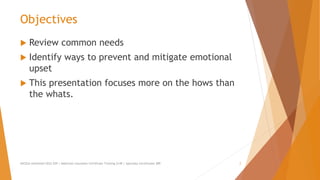
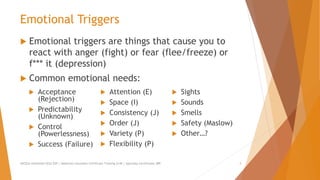

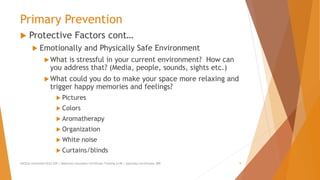

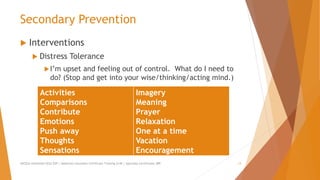
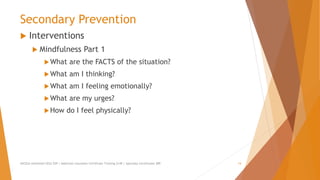
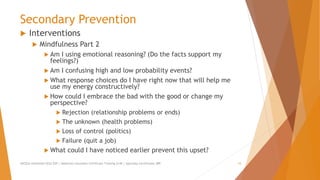
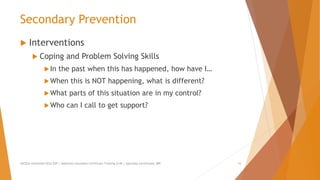
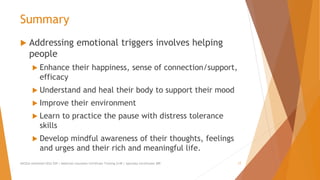
The document discusses ways to address emotional triggers. It recommends primary prevention by identifying risk factors and enhancing protective factors like social support, self-efficacy, and physical health. Secondary prevention involves distress tolerance skills and mindfulness exercises to help people pause when upset and evaluate their thoughts, feelings, and response options. The overall goal is to help people enhance well-being and develop coping strategies to constructively manage emotional triggers.


