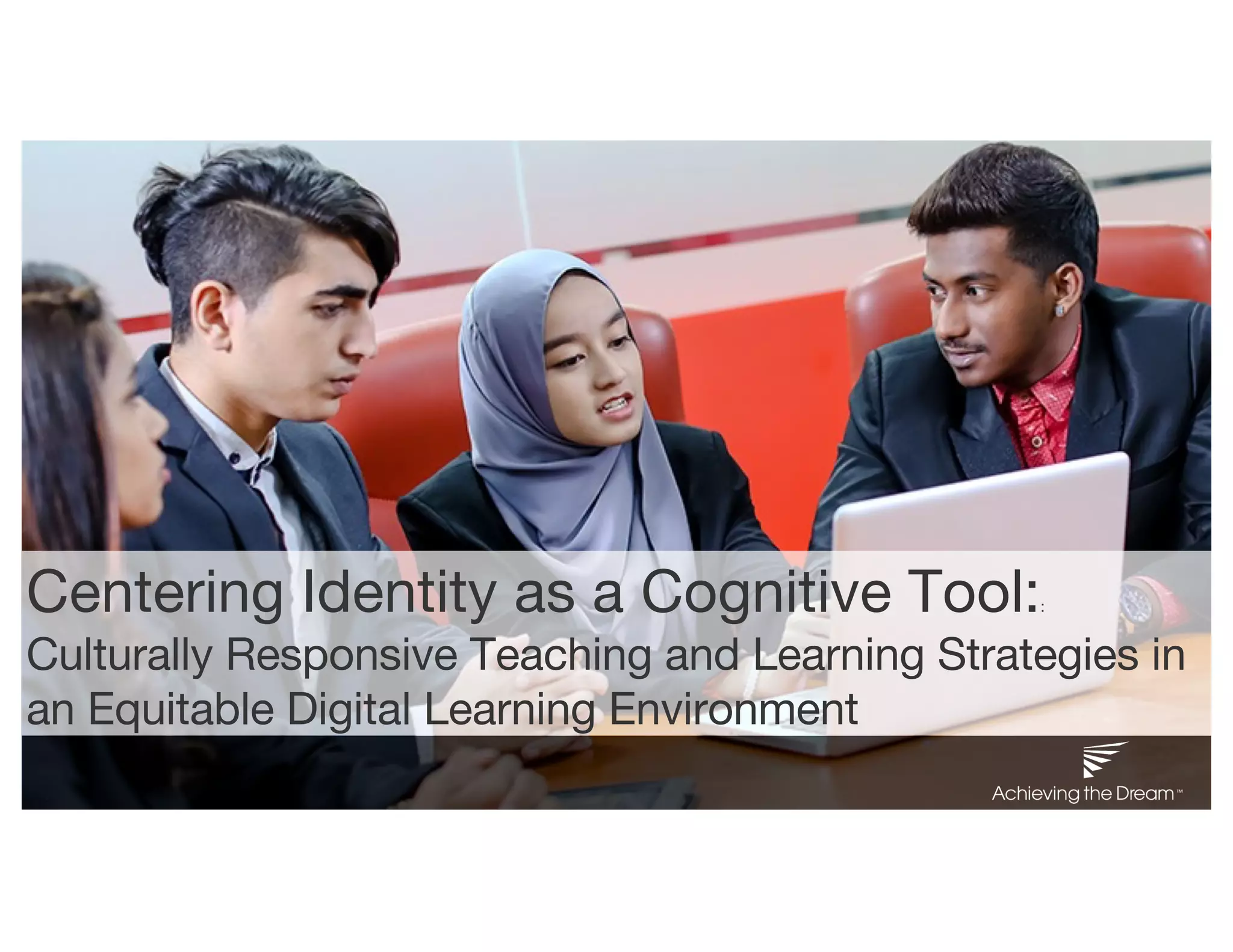
Centering Identity as a Cognitive Tool::
Culturally Responsive Teaching and Learning Strategies in
an Equitable Digital Learning Environment
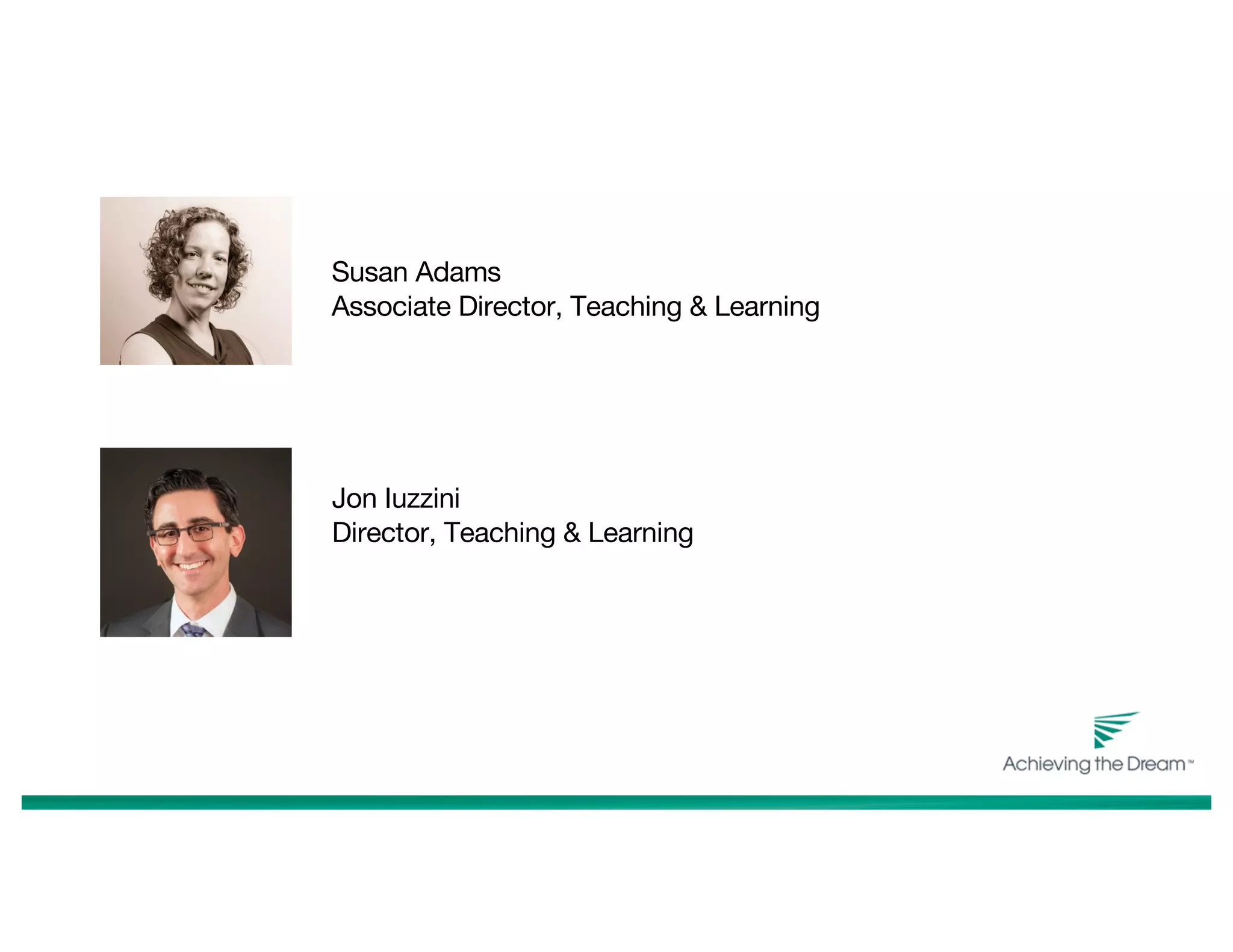
Jon Iuzzini
Director, Teaching & Learning
Susan Adams
Associate Director, Teaching & Learning
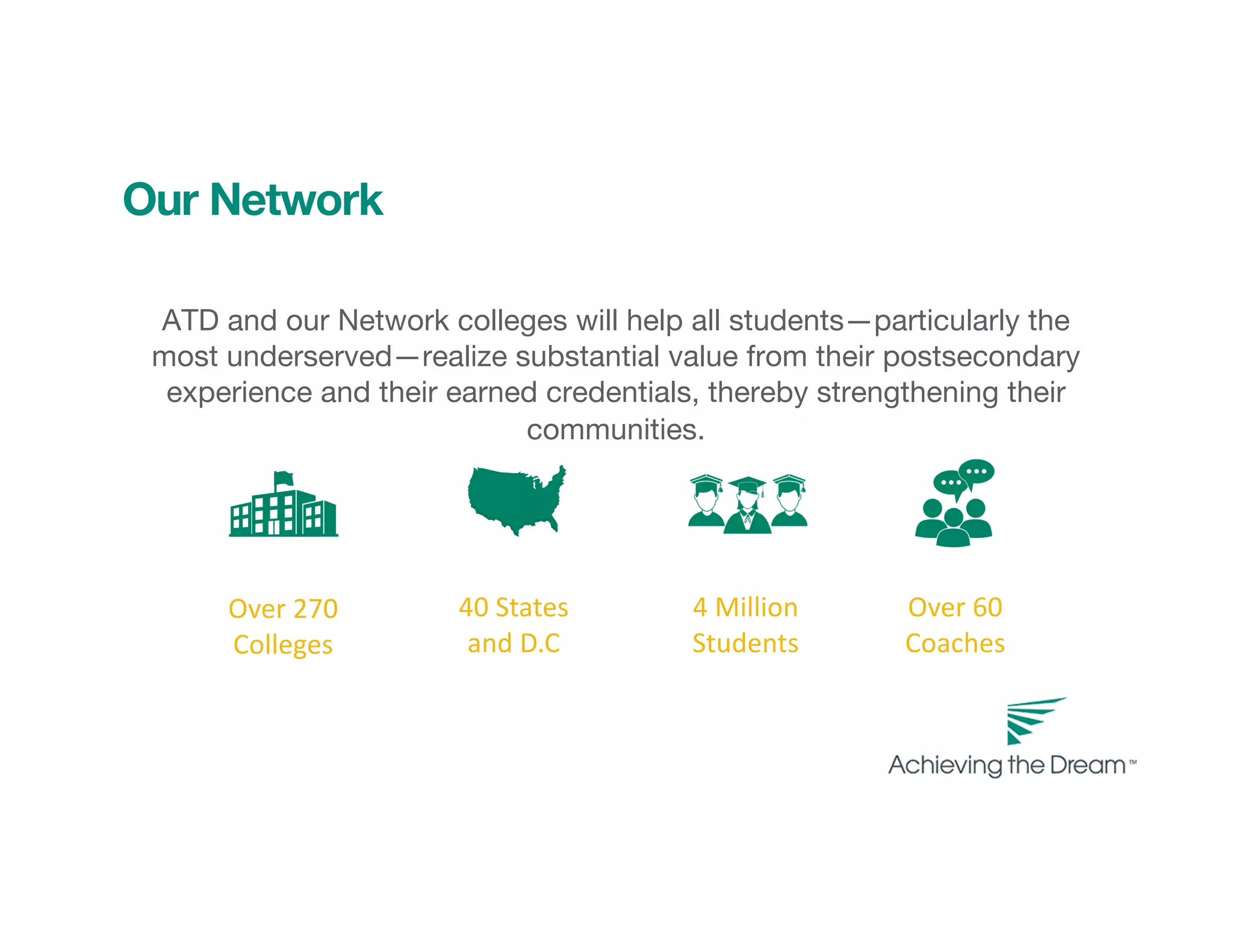
Our Network
4 Million
Students
40 States
and D.C
Over 270
Colleges
Over 60
Coaches
ATD and our Network colleges will help all students—particularly the
most underserved—realize substantial value from their postsecondary
experience and their earned credentials, thereby strengthening their
communities.
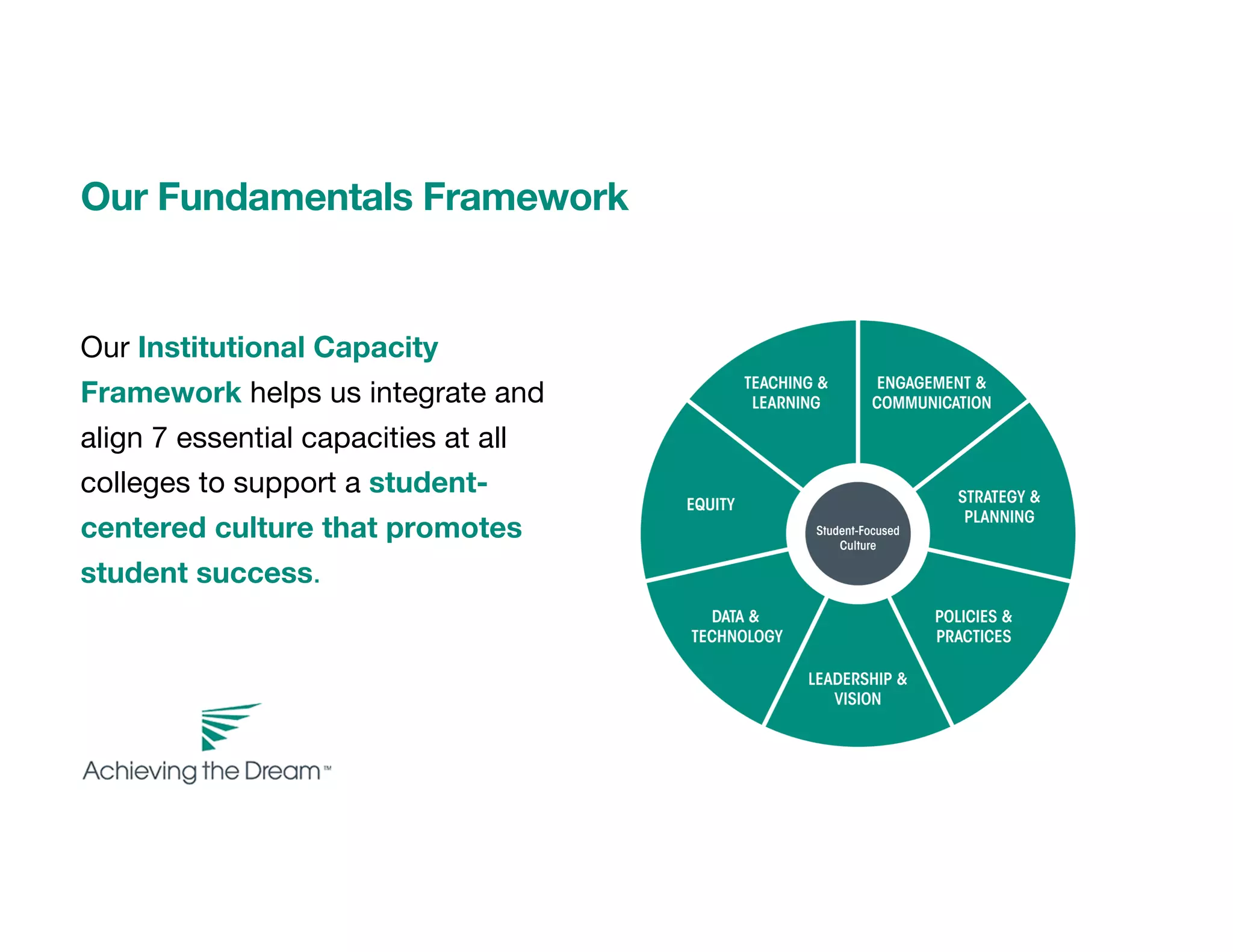
Our Fundamentals Framework
Our Institutional Capacity
Framework helps us integrate and
align 7 essential capacities at all
colleges to support a student-
centered culture that promotes
student success.
Intended Goals
Participants will:
• Explore how to position cultural knowledge as a cognitive tool in digital
classrooms.
• Visualize strategies that create equitable digital learning environments
through the lens of Zaretta Hammond's Culturally Responsive Teaching
Framework.
What is culturally responsive teaching?
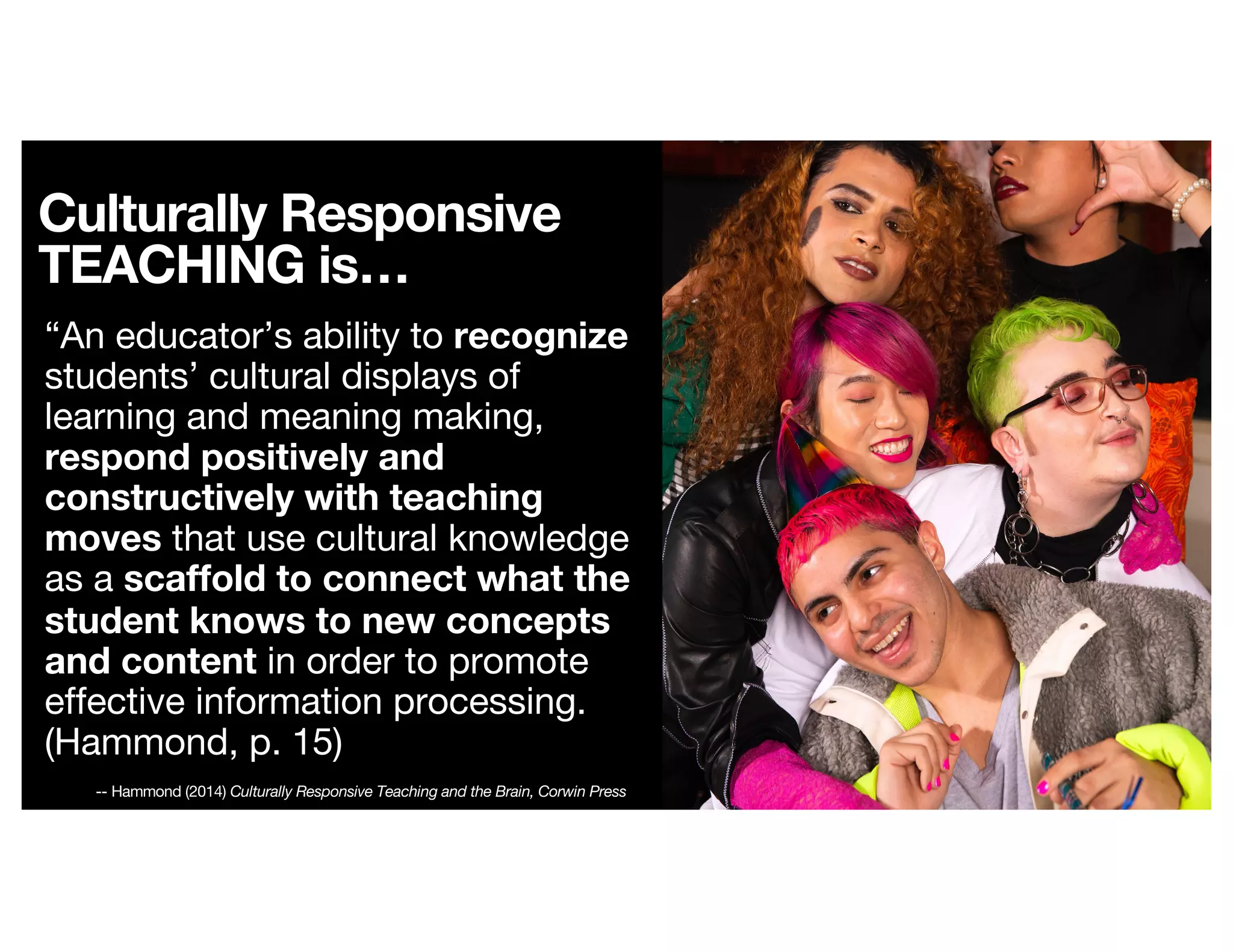
Culturally Responsive
TEACHING is…
“An educator’s ability to recognize
students’ cultural displays of
learning and meaning making,
respond positively and
constructively with teaching
moves that use cultural knowledge
as a scaffold to connect what the
student knows to new concepts
and content in order to promote
effective information processing.
(Hammond, p. 15)
-- Hammond (2014) Culturally Responsive Teaching and the Brain, Corwin Press
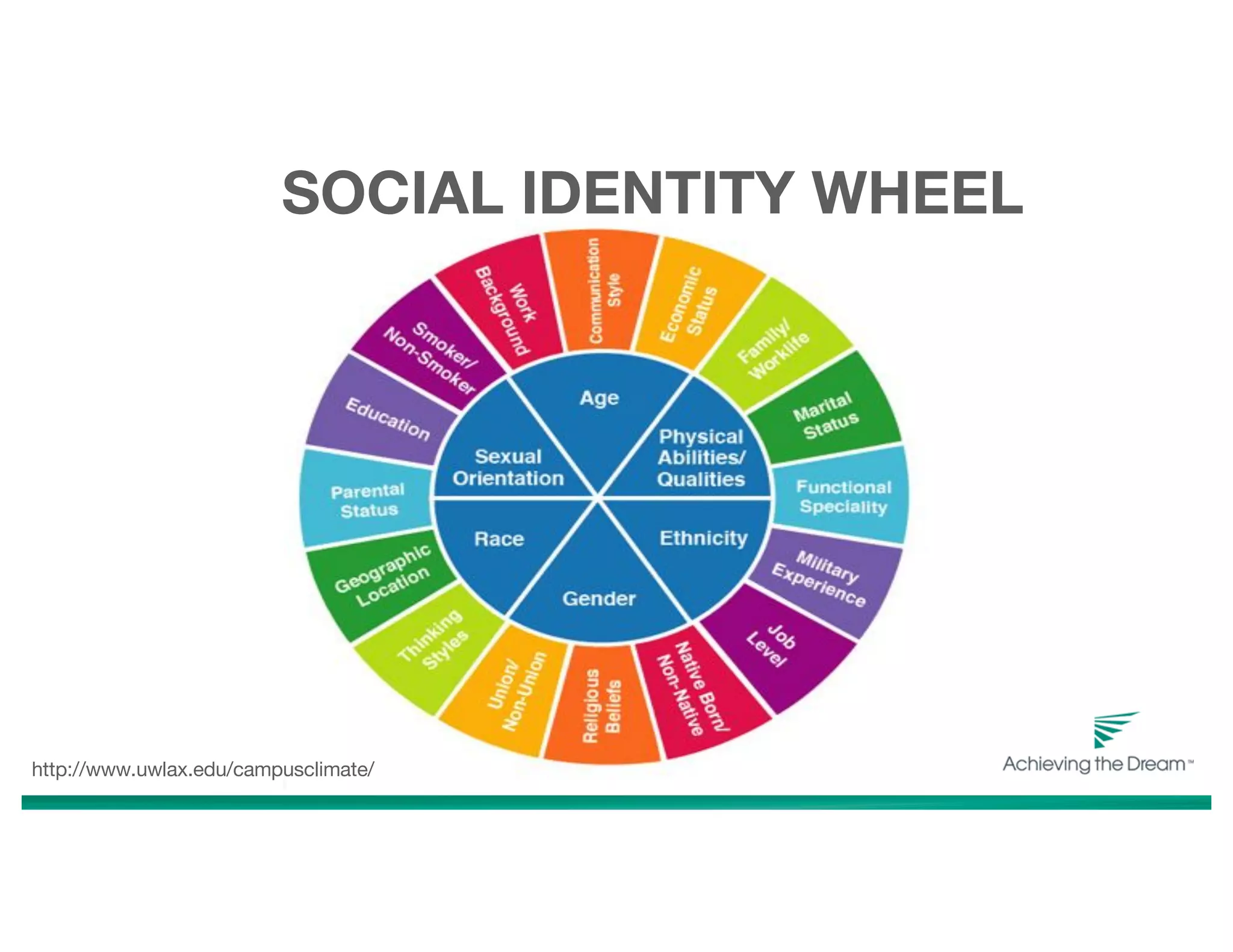
SOCIAL IDENTITY WHEEL
http://www.uwlax.edu/campusclimate/
Culturally Responsive Teaching
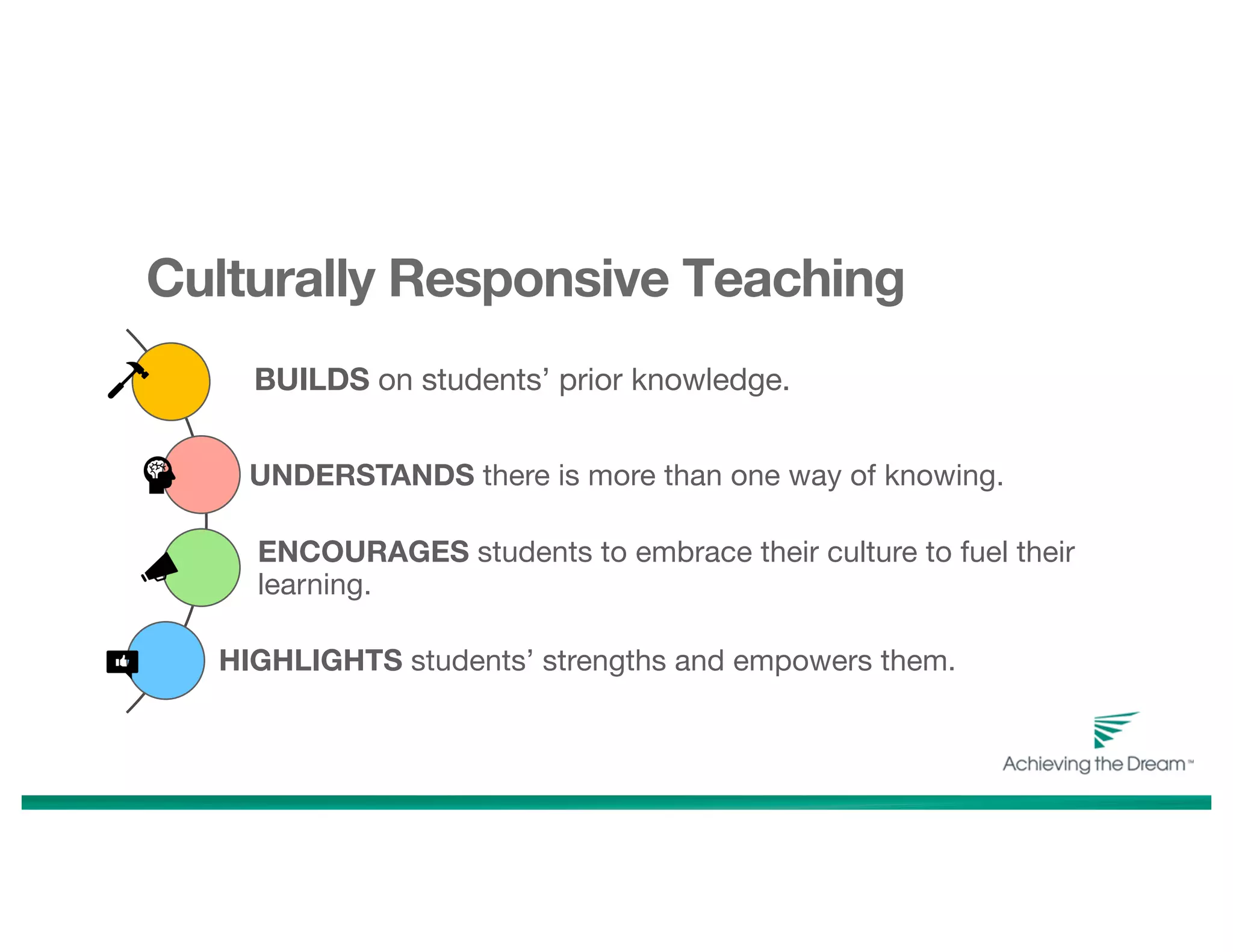
BUILDS on students’ prior knowledge.
UNDERSTANDS there is more than one way of knowing.
ENCOURAGES students to embrace their culture to fuel their
learning.
HIGHLIGHTS students’ strengths and empowers them.
• Differentiated Instruction
• Inquiry Based Learning
• Service Learning
• Project Based Learning
Culturally Responsive Teaching
&
Constructivist Teaching
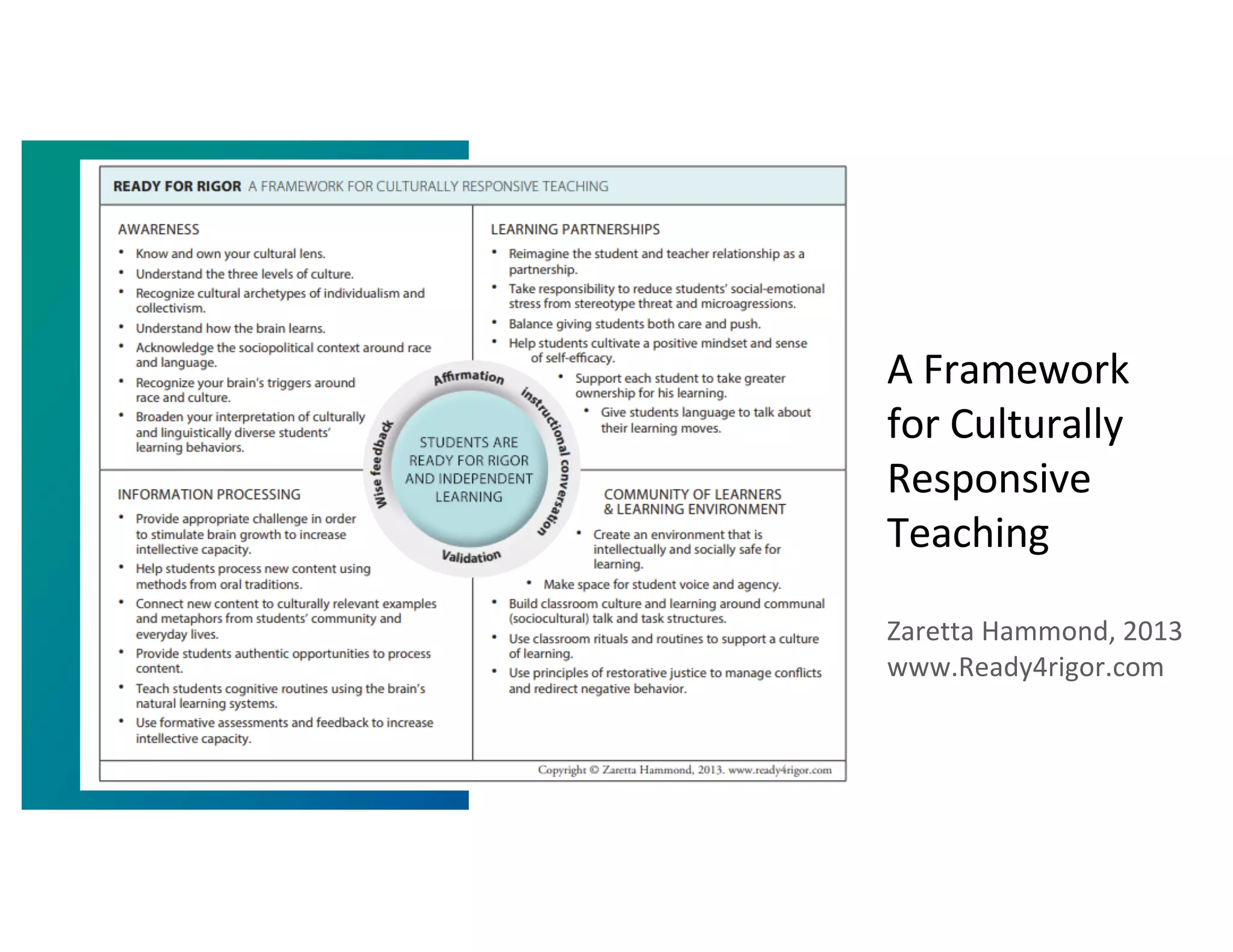
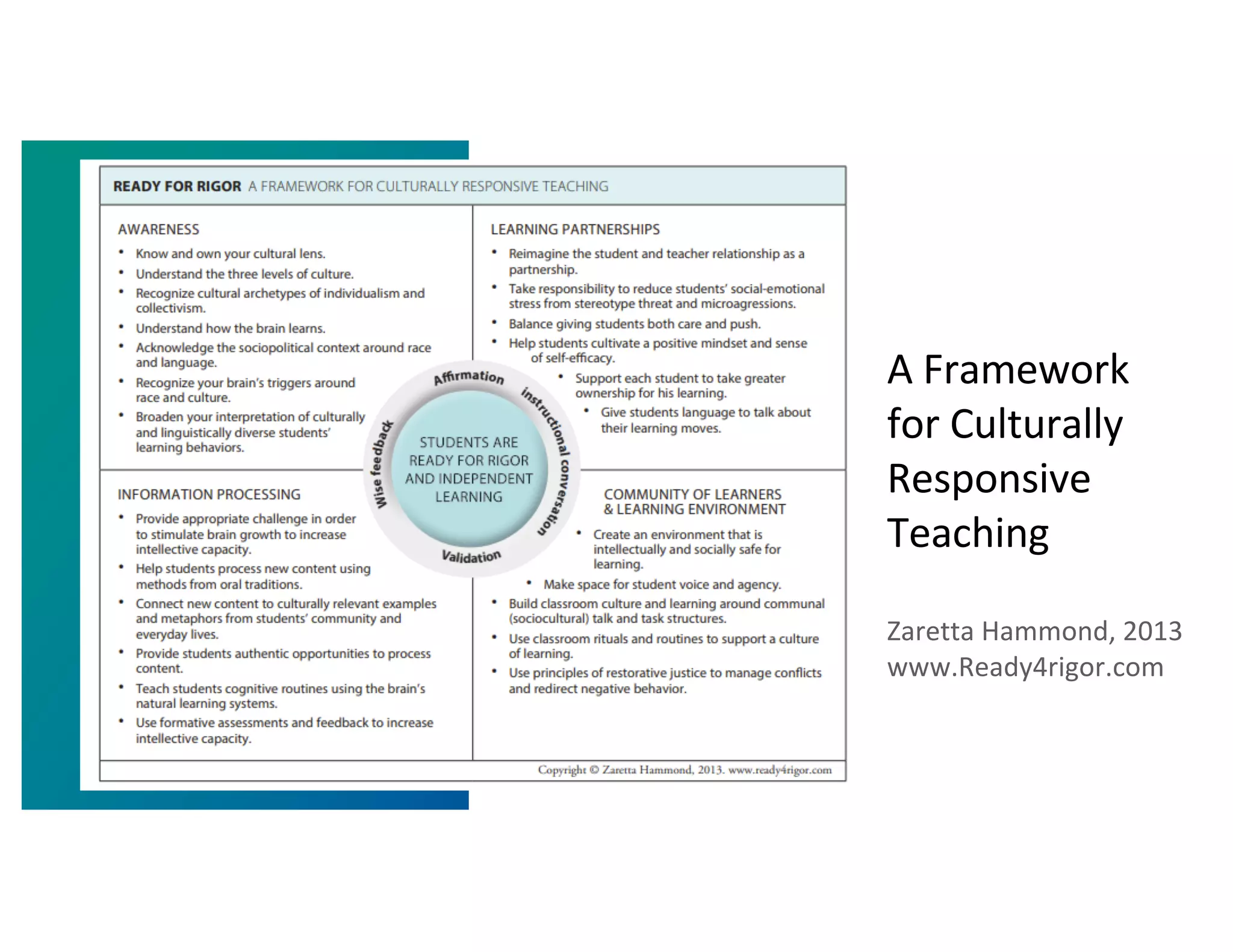
A Framework
for Culturally
Responsive
Teaching
Zaretta Hammond, 2013
www.Ready4rigor.com
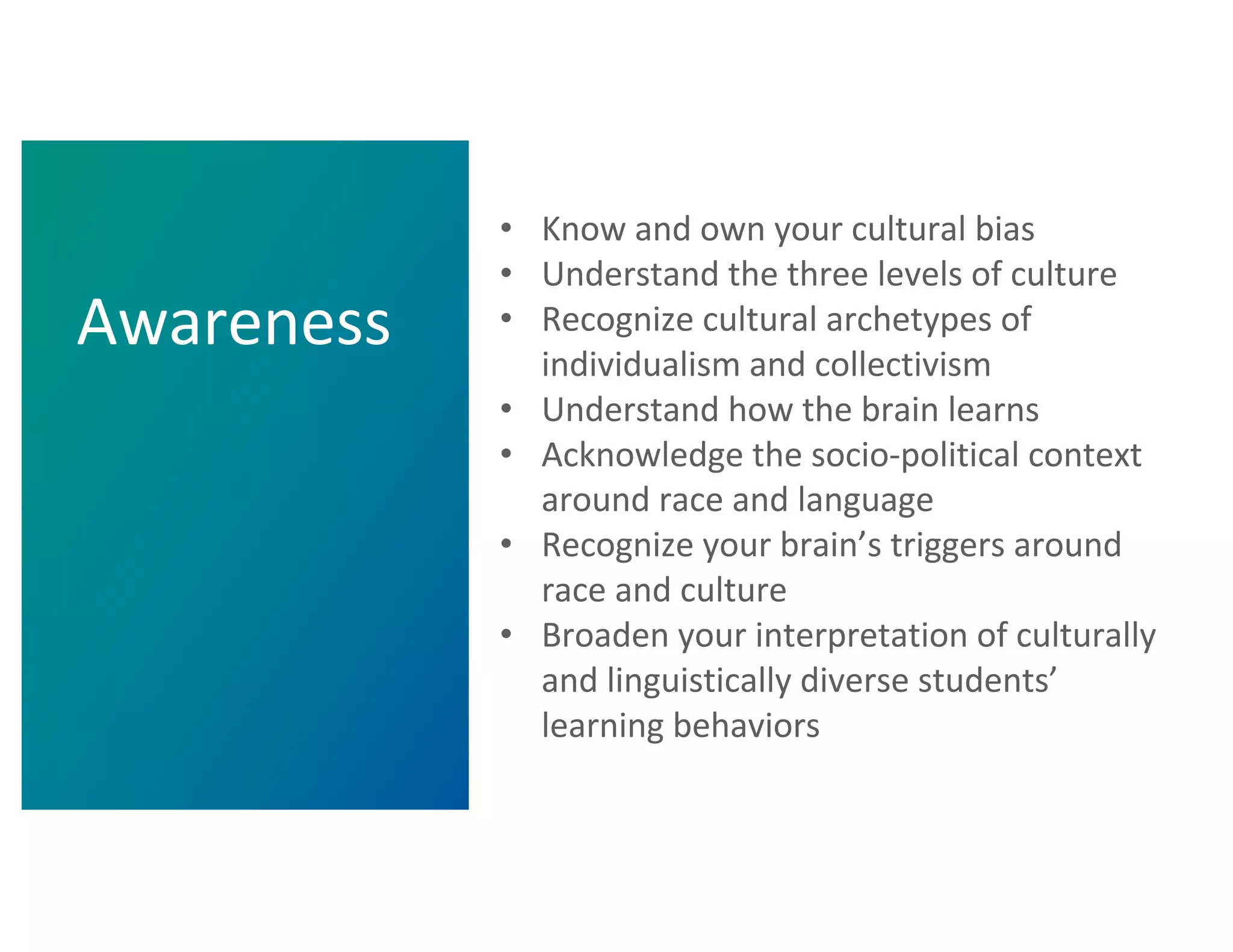
• Know and own your cultural bias
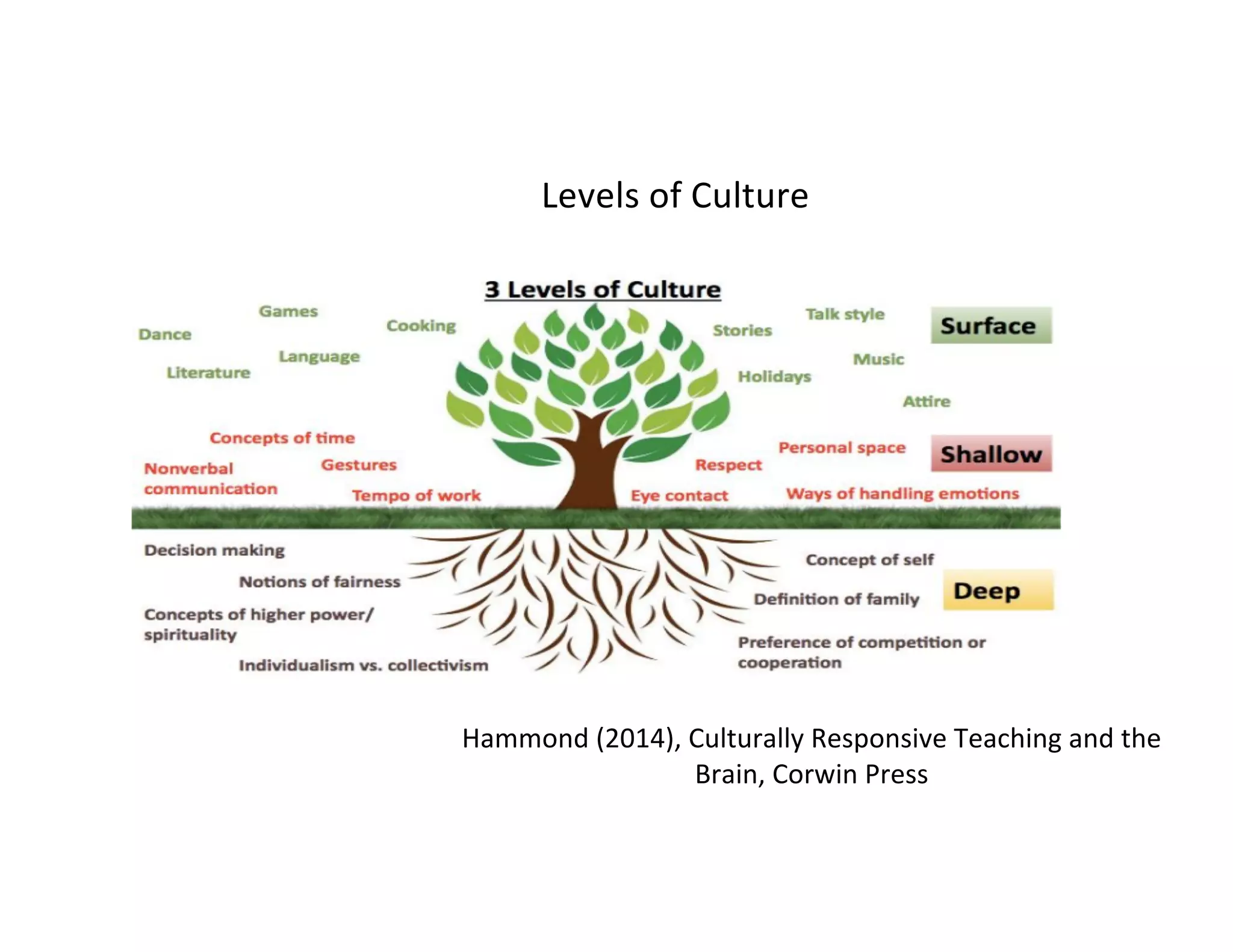
• Understand the three levels of culture
• Recognize cultural archetypes of
individualism and collectivism
• Understand how the brain learns
• Acknowledge the socio-political context
around race and language
• Recognize your brain’s triggers around
race and culture
• Broaden your interpretation of culturally
and linguistically diverse students’
learning behaviors
Awareness
Hammond (2014), Culturally Responsive Teaching and the
Brain, Corwin Press
Levels of Culture
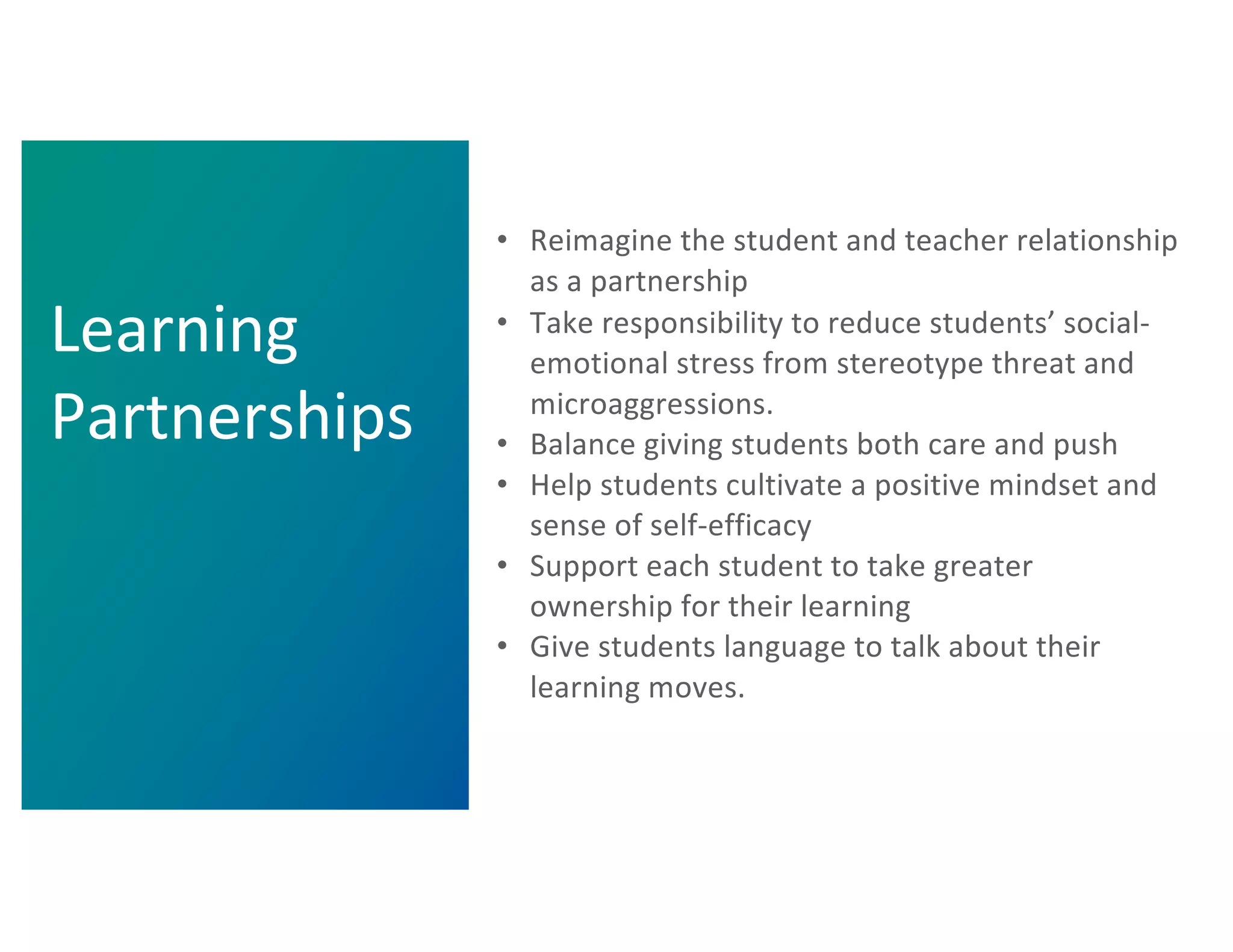
• Reimagine the student and teacher relationship
as a partnership
• Take responsibility to reduce students’ social-
emotional stress from stereotype threat and
microaggressions.
• Balance giving students both care and push
• Help students cultivate a positive mindset and
sense of self-efficacy
• Support each student to take greater
ownership for their learning
• Give students language to talk about their
learning moves.
Learning
Partnerships
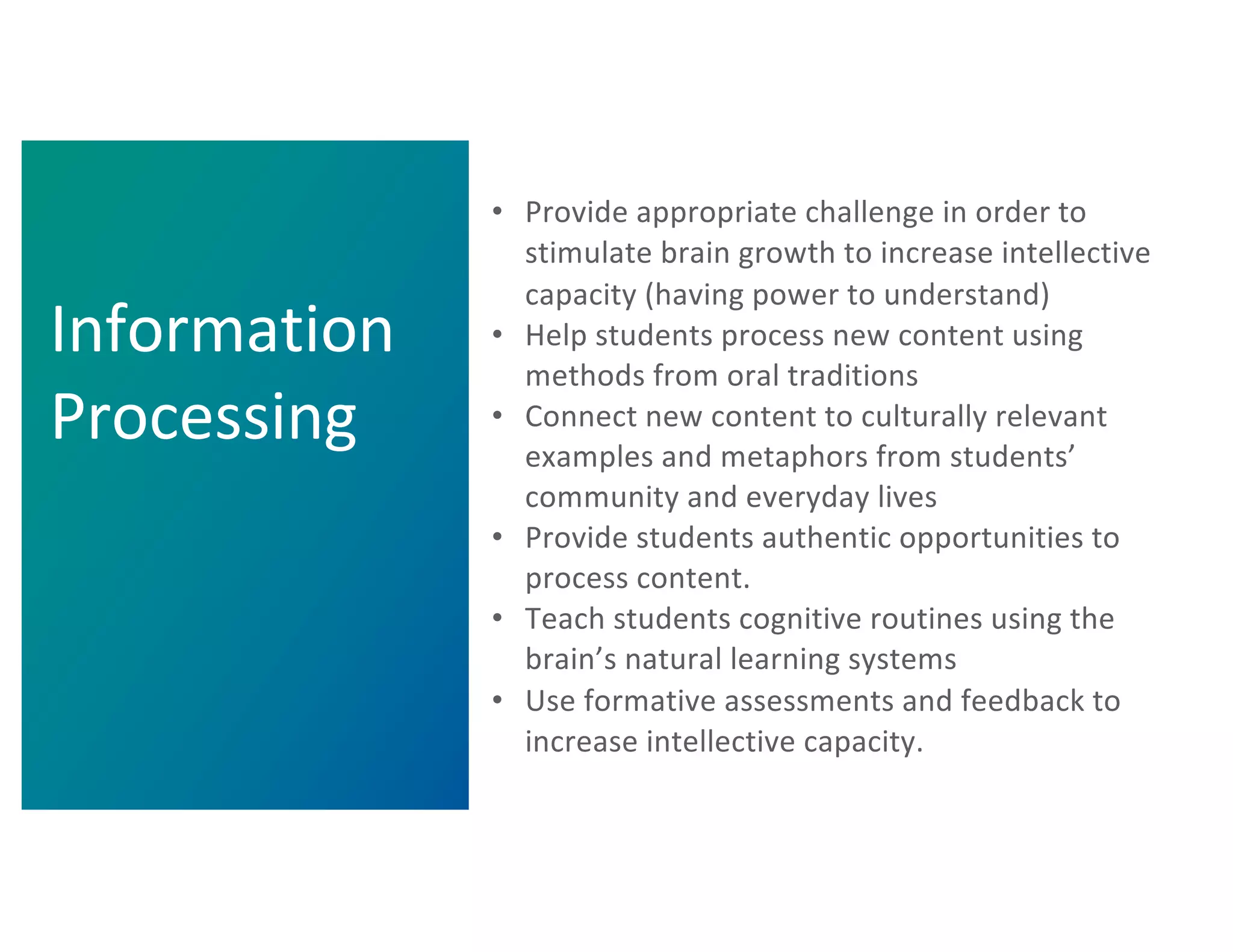
• Provide appropriate challenge in order to
stimulate brain growth to increase intellective
capacity (having power to understand)
• Help students process new content using
methods from oral traditions
• Connect new content to culturally relevant
examples and metaphors from students’
community and everyday lives
• Provide students authentic opportunities to
process content.
• Teach students cognitive routines using the
brain’s natural learning systems
• Use formative assessments and feedback to
increase intellective capacity.
Information
Processing
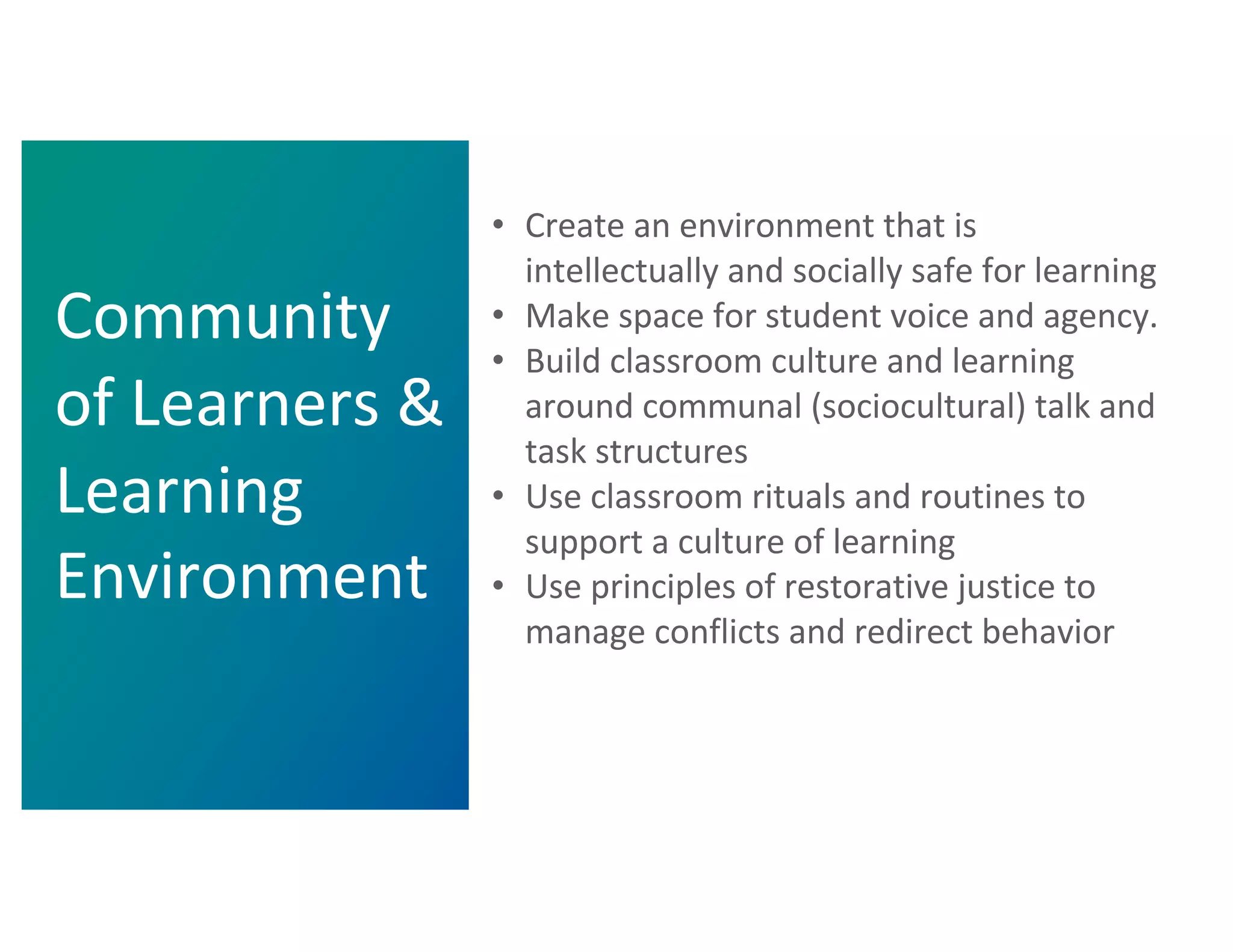
• Create an environment that is
intellectually and socially safe for learning
• Make space for student voice and agency.
• Build classroom culture and learning
around communal (sociocultural) talk and
task structures
• Use classroom rituals and routines to
support a culture of learning
• Use principles of restorative justice to
manage conflicts and redirect behavior
Community
of Learners &
Learning
Environment
A Framework
for Culturally
Responsive
Teaching
Zaretta Hammond, 2013
www.Ready4rigor.com
Can you visualize how the
elements of Zaretta Hammond's
Culturally Responsive Teaching
Framework play out in your digital
classroom?
https://padlet.com/sadams191/cen
terequity
ACTIVITY
ACTIVITY
THANK YOU FOR JOINING US TODAY!
Jon Iuzzini
Director, Teaching & Learning
jiuzzini@achievingthedream.org
@joniuzzini
Susan Adams
Associate Director, Teaching & Learning
sadams@achievingthedream.org
@edtechinsight

Adams & Iuzzini: Exploring Culturally Responsive Teaching and Learning Strategies in Designing Equitable Digital Learning Environments

  • 1.
    Centering Identity asa Cognitive Tool:: Culturally Responsive Teaching and Learning Strategies in an Equitable Digital Learning Environment
  • 2.
    Jon Iuzzini Director, Teaching& Learning Susan Adams Associate Director, Teaching & Learning
  • 3.
    Our Network 4 Million Students 40States and D.C Over 270 Colleges Over 60 Coaches ATD and our Network colleges will help all students—particularly the most underserved—realize substantial value from their postsecondary experience and their earned credentials, thereby strengthening their communities.
  • 4.
    Our Fundamentals Framework OurInstitutional Capacity Framework helps us integrate and align 7 essential capacities at all colleges to support a student- centered culture that promotes student success.
  • 5.
    Intended Goals Participants will: •Explore how to position cultural knowledge as a cognitive tool in digital classrooms. • Visualize strategies that create equitable digital learning environments through the lens of Zaretta Hammond's Culturally Responsive Teaching Framework.
  • 6.
    What is culturallyresponsive teaching?
  • 7.
    Culturally Responsive TEACHING is… “Aneducator’s ability to recognize students’ cultural displays of learning and meaning making, respond positively and constructively with teaching moves that use cultural knowledge as a scaffold to connect what the student knows to new concepts and content in order to promote effective information processing. (Hammond, p. 15) -- Hammond (2014) Culturally Responsive Teaching and the Brain, Corwin Press
  • 8.
  • 9.
    Culturally Responsive Teaching BUILDSon students’ prior knowledge. UNDERSTANDS there is more than one way of knowing. ENCOURAGES students to embrace their culture to fuel their learning. HIGHLIGHTS students’ strengths and empowers them.
  • 10.
    • Differentiated Instruction •Inquiry Based Learning • Service Learning • Project Based Learning Culturally Responsive Teaching & Constructivist Teaching
  • 11.
  • 12.
    • Know andown your cultural bias • Understand the three levels of culture • Recognize cultural archetypes of individualism and collectivism • Understand how the brain learns • Acknowledge the socio-political context around race and language • Recognize your brain’s triggers around race and culture • Broaden your interpretation of culturally and linguistically diverse students’ learning behaviors Awareness
  • 13.
    Hammond (2014), CulturallyResponsive Teaching and the Brain, Corwin Press Levels of Culture
  • 14.
    • Reimagine thestudent and teacher relationship as a partnership • Take responsibility to reduce students’ social- emotional stress from stereotype threat and microaggressions. • Balance giving students both care and push • Help students cultivate a positive mindset and sense of self-efficacy • Support each student to take greater ownership for their learning • Give students language to talk about their learning moves. Learning Partnerships
  • 15.
    • Provide appropriatechallenge in order to stimulate brain growth to increase intellective capacity (having power to understand) • Help students process new content using methods from oral traditions • Connect new content to culturally relevant examples and metaphors from students’ community and everyday lives • Provide students authentic opportunities to process content. • Teach students cognitive routines using the brain’s natural learning systems • Use formative assessments and feedback to increase intellective capacity. Information Processing
  • 16.
    • Create anenvironment that is intellectually and socially safe for learning • Make space for student voice and agency. • Build classroom culture and learning around communal (sociocultural) talk and task structures • Use classroom rituals and routines to support a culture of learning • Use principles of restorative justice to manage conflicts and redirect behavior Community of Learners & Learning Environment
  • 17.
  • 18.
    Can you visualizehow the elements of Zaretta Hammond's Culturally Responsive Teaching Framework play out in your digital classroom? https://padlet.com/sadams191/cen terequity ACTIVITY ACTIVITY
  • 19.
    THANK YOU FORJOINING US TODAY! Jon Iuzzini Director, Teaching & Learning jiuzzini@achievingthedream.org @joniuzzini Susan Adams Associate Director, Teaching & Learning sadams@achievingthedream.org @edtechinsight