Download as PDF, PPTX




![Character-based Neural Machine Translation [Ling+2015]
http://arxiv.org/pdf/1511.04586v1.pdf](https://image.slidesharecdn.com/attentionmechanismswithtensorflow-160826140300/85/Attention-mechanisms-with-tensorflow-11-320.jpg)
![Character-based Neural Machine Translation [Ling+2015]
http://arxiv.org/pdf/1511.04586v1.pdf
String to Vector
String Generation](https://image.slidesharecdn.com/attentionmechanismswithtensorflow-160826140300/85/Attention-mechanisms-with-tensorflow-12-320.jpg)

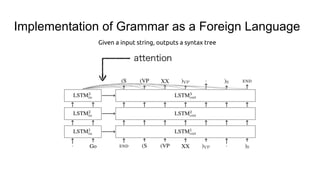
![Implementation of Grammar as a Foreign Language
Given a input string, outputs a syntax tree
[Go.] is put in reversed ordertranslate.py uses the same model, but for en-fr translation task](https://image.slidesharecdn.com/attentionmechanismswithtensorflow-160826140300/85/Attention-mechanisms-with-tensorflow-16-320.jpg)
![Preprocess
Create Model
Train
Test
I go.
Je vais.
Original English
Original French
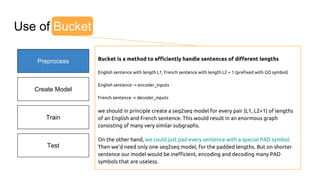
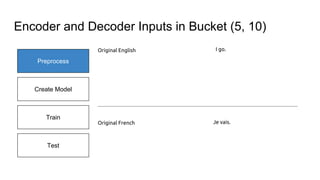
As a compromise between constructing a graph for every pair of lengths and
padding to a single length, we use a number of buckets and pad each sentence to
the length of the bucket above it. In translate.py we use the following default
buckets.
buckets = [(5, 10), (10, 15), (20, 25), (40, 50)]
This means that if the input is an English sentence with 3 tokens, and the
corresponding output is a French sentence with 6 tokens, then they will be put in
the first bucket and padded to length 5 for encoder inputs, and length 10 for
decoder inputs.
Use of Bucket](https://image.slidesharecdn.com/attentionmechanismswithtensorflow-160826140300/85/Attention-mechanisms-with-tensorflow-20-320.jpg)
![Preprocess
Create Model
Train
Test
I go.
Je vais.
["I", "go", "."]
["Je", "vais", "."]
Tokenization
Tokenization
Original English
Original French
Encoder and Decoder Inputs in Bucket (5, 10)](https://image.slidesharecdn.com/attentionmechanismswithtensorflow-160826140300/85/Attention-mechanisms-with-tensorflow-22-320.jpg)
![Preprocess
Create Model
Train
Test
I go.
Je vais.
["I", "go", "."]
["Je", "vais", "."]
Tokenization
["PAD""PAD"".", "go", "I"]
["GO", "Je", "vais", ".","EOS","PAD","PAD","PAD","PAD","PAD"]
Encoder Input
Tokenization
Decoder Input
Original English
Original French
Encoder and Decoder Inputs in Bucket (5, 10)](https://image.slidesharecdn.com/attentionmechanismswithtensorflow-160826140300/85/Attention-mechanisms-with-tensorflow-23-320.jpg)
![Train
Test
[ ["PAD""PAD"".", "go", "I"], … ]
[ ["GO", "Je", "vais", ".","EOS","PAD","PAD","PAD","PAD","PAD"], … ]
Encoder Inputs
Decoder Inputs
Creating Seq2Seq Attention Model
Create Model
Preprocessing
Create Model
Preprocess
model embedding_rnn_seq2seq(encoder_inputs, decoder_inputs, …,
feed_prev=False)](https://image.slidesharecdn.com/attentionmechanismswithtensorflow-160826140300/85/Attention-mechanisms-with-tensorflow-24-320.jpg)
![Train
Test
[ ["PAD""PAD"".", "go", "I"], … ]
[ ["GO", "Je", "vais", ".","EOS","PAD","PAD","PAD","PAD","PAD"], … ]
Encoder Inputs
Decoder Inputs
Creating Seq2Seq Attention Model
Create Model
Preprocessing
Create Model
Preprocess
model embedding_rnn_seq2seq(encoder_inputs, decoder_inputs, …,
feed_prev=False)
embedding_rnn_seq2seq() is made of encoder + embedding_attention_decoder](https://image.slidesharecdn.com/attentionmechanismswithtensorflow-160826140300/85/Attention-mechanisms-with-tensorflow-25-320.jpg)
![Train
Test
[ ["PAD""PAD"".", "go", "I"], … ]
[ ["GO", "Je", "vais", ".","EOS","PAD","PAD","PAD","PAD","PAD"], … ]
Encoder Inputs
Decoder Inputs
Creating Seq2Seq Attention Model
Create Model
Preprocessing
Create Model
Preprocess
model embedding_rnn_seq2seq(encoder_inputs, decoder_inputs, …,
feed_prev=False)
embedding_rnn_seq2seq() is made of encoder + embedding_attention_decoder()
embedding_attention_decoder() is made of embedding + attention_decoder()](https://image.slidesharecdn.com/attentionmechanismswithtensorflow-160826140300/85/Attention-mechanisms-with-tensorflow-26-320.jpg)
![Train
Test
[ ["PAD""PAD"".", "go", "I"], … ]
[ ["GO", "Je", "vais", ".","EOS","PAD","PAD","PAD","PAD","PAD"], … ]
Encoder Inputs
Decoder Inputs
Creating Seq2Seq Attention Model
Create Model
Preprocessing
Create Model
Preprocess
model embedding_rnn_seq2seq(encoder_inputs, decoder_inputs, …,
feed_prev=False)
“feed_prev = False” means that the decoder will use decoder_inputs tensors as
provided](https://image.slidesharecdn.com/attentionmechanismswithtensorflow-160826140300/85/Attention-mechanisms-with-tensorflow-27-320.jpg)
![Train
Test
[ ["PAD""PAD"".", "go", "I"], … ]
[ ["GO", "Je", "vais", ".","EOS","PAD","PAD","PAD","PAD","PAD"], … ]
Encoder Inputs
Decoder Inputs
Creating Seq2Seq Attention Model
Create Model
Preprocessing
Create Model
Preprocess
embedding_rnn_seq2seq(encoder_inputs, decoder_inputs, …,
feed_prev=False)
outputs, states = model_with_buckets(encoder_inputs, decoder_inputs, model, … )
model
(Just a wrapper function that helps with using buckets)](https://image.slidesharecdn.com/attentionmechanismswithtensorflow-160826140300/85/Attention-mechanisms-with-tensorflow-28-320.jpg)
![python translate.py --decode
--data_dir [your_data_directory] --train_dir [checkpoints_directory]
Reading model parameters from /tmp/translate.ckpt-340000
> Who is the president of the United States?
Qui est le président des États-Unis ?
Result](https://image.slidesharecdn.com/attentionmechanismswithtensorflow-160826140300/85/Attention-mechanisms-with-tensorflow-32-320.jpg)
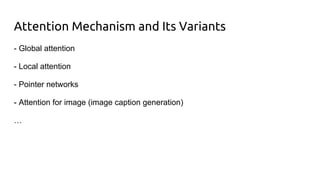
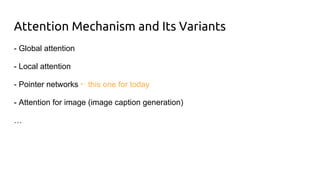
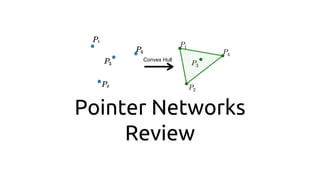
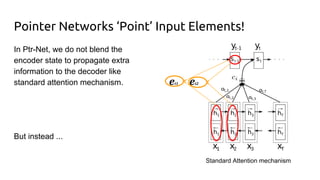
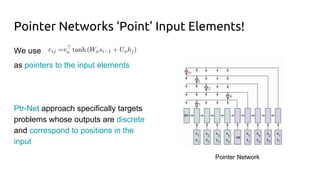
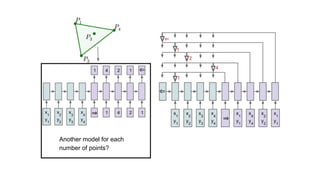
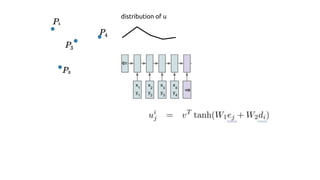
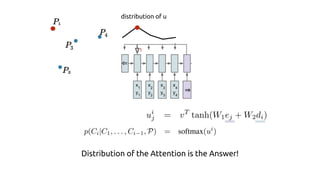
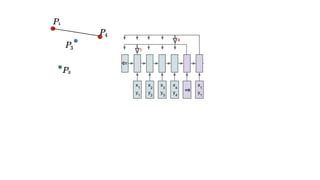
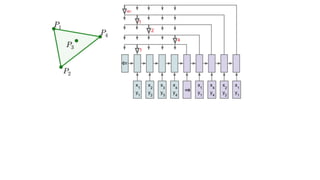
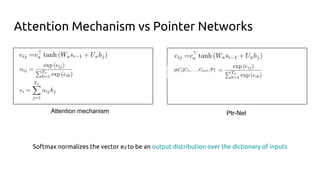


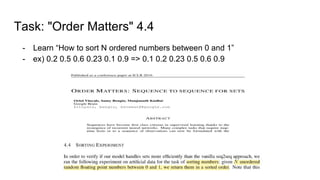
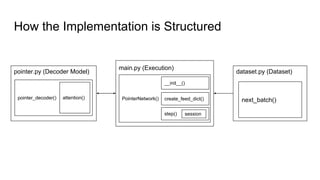
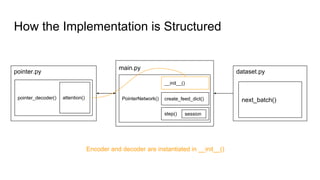
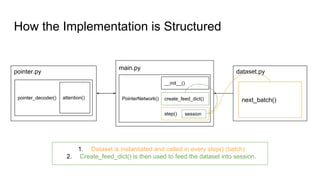
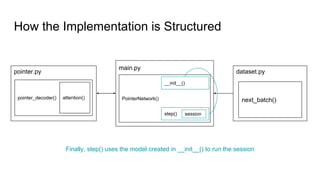
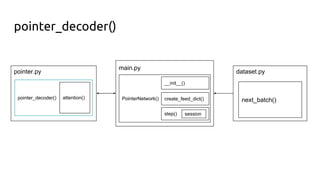
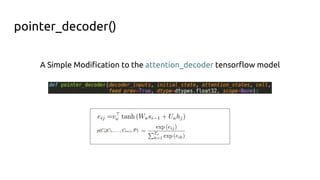
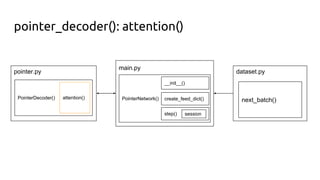
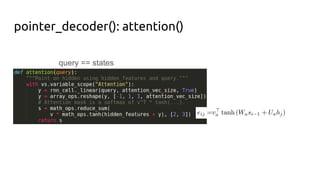
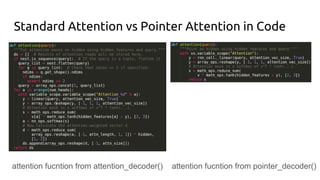
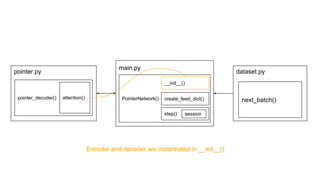
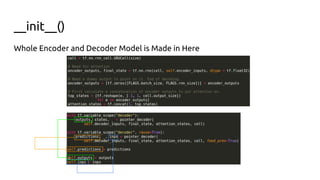

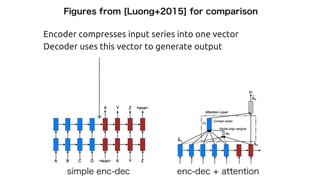
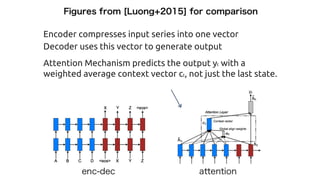
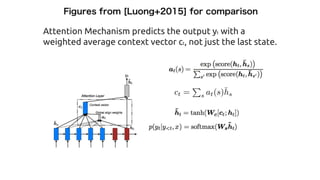
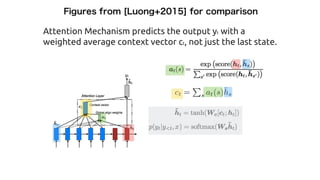
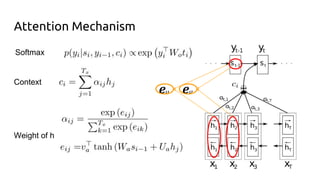
The document discusses attention mechanisms and their implementation in TensorFlow. It begins with an overview of attention mechanisms and their use in neural machine translation. It then reviews the code implementation of an attention mechanism for neural machine translation from English to French using TensorFlow. Finally, it briefly discusses pointer networks, an attention mechanism variant, and code implementation of pointer networks for solving sorting problems.


![[Paper Reading] Attention is All You Need](https://cdn.slidesharecdn.com/ss_thumbnails/reading20181228-190111054908-thumbnail.jpg?width=640&height=640&fit=bounds)


