Acute heart failure

       AIMS
•   Common emergency presentation
•   High mortality & morbidity in survivors
•   Diagnosis not always straightforward
•   Classic examination findings not sensitive
    or specific
•   Prompt recognition & stabilization of
    patient- priority
•   At 40 yrs age- lifetime risk: 21%
•   Increasing prevalence
•   In extremis + rapid deterioration
•   Often respond very rapidly to treatment
•   Very satisfying condition to treat
•   Outlook poor despite initial clinical
    improvement
Presentations
•   Acute SOB, frothy sputum
•   Collapse
•   Shock
•   Cardiac arrest
Acute pulmonary oedema
•   SPOTTER
•   Extreme SOB, puffing, unable to speak
•   Profuse sweating, cold clammy extremities

•   Tachycardia      irregularity
•   BP fall
•   Basal creps
•   Rarely wheeze predominant !!! ( asthma)
Collapse/ cardiac arrest
•   Severe HF of any cause:- prone for
    malignant arrythmias, PE 
•   Present as collapse
•   Very poor outcomes
•   Survival to discharge ???
Aetiology
•   CAD                  • Pulmonary embolism
•   Hypertensive heart   • Acute hepatic venous
    disease                thrombosis
•   Fluid overload       • IWMI+RVMI
•   Acute valvular       • Tamponade
    regurgitations
•   Arrythmias
CAD
•   Most common cause
•   Can be the 1st manifestation
•   SOB >>> chest pain
•   RVMI common in the setting of IWMI
•   LV > 40% infarct size
HHD
•   1st presentation
•   Accelerated hypertension
•   Onset of HF lowers previously high BP
•   Diastolic dysfunction is the basis
•   Age
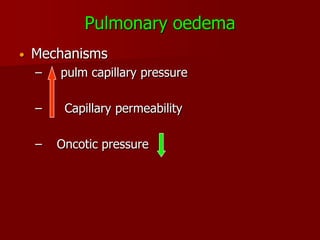
Pulmonary oedema
•   Mechanisms
    –   pulm capillary pressure

    –    Capillary permeability

    –   Oncotic pressure
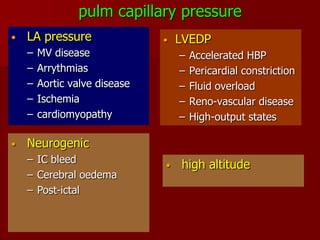
pulm capillary pressure
•   LA pressure                •   LVEDP
    –   MV disease                 –   Accelerated HBP
    –   Arrythmias                 –   Pericardial constriction
    –   Aortic valve disease       –   Fluid overload
    –   Ischemia                   –   Reno-vascular disease
    –   cardiomyopathy             –   High-output states

•   Neurogenic
    – IC bleed
                               •   high altitude
    – Cerebral oedema
    – Post-ictal
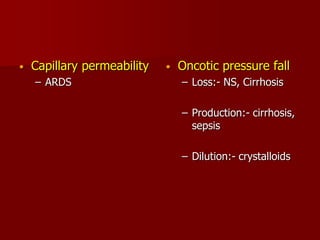
•   Capillary permeability   •   Oncotic pressure fall
    – ARDS                       – Loss:- NS, Cirrhosis

                                 – Production:- cirrhosis,
                                   sepsis

                                 – Dilution:- crystalloids
Investigations

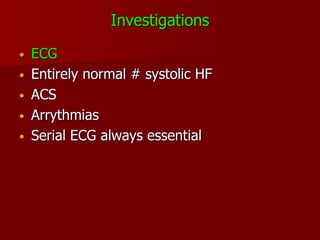
•   ECG
•   Entirely normal # systolic HF
•   ACS
•   Arrythmias
•   Serial ECG always essential
Cardiac enzymes
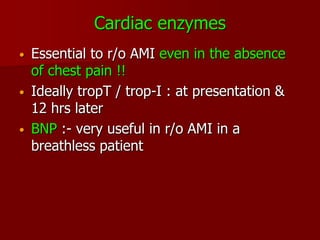
•   Essential to r/o AMI even in the absence
    of chest pain !!
•   Ideally tropT / trop-I : at presentation &
    12 hrs later
•   BNP :- very useful in r/o AMI in a
    breathless patient
CXR
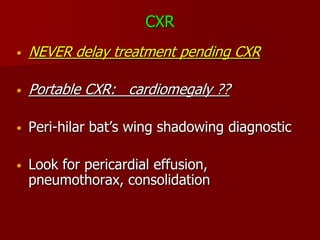
•   NEVER delay treatment pending CXR

•   Portable CXR: cardiomegaly ??

•   Peri-hilar bat’s wing shadowing diagnostic

•   Look for pericardial effusion,
    pneumothorax, consolidation
•   ECHO:- preferably as early as possible
•   To identify cause
•   Assess LV function,
•   Diastolic dysfunction
•   Cardiac tamponade
STABILIZATION
Actions in order

•   Propped up position
•   IV Morphine
•   100% Oxygen
•   IV Lasix
•   Monitor ECG
•   Venous access
•   Ensure optimal BP
•   Emergency blood samples
•   ABG            SpO2
Assess respiratory function
•   Wheeze: interstitial oedema
•   Aminophylline helpful- bolus
•   Indications for further support
    – Exhaustion
    – Persistent low paO2 < 8kPa
    – Rising pCO2
    – Worsening acidosis
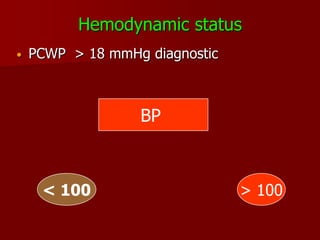
Hemodynamic status
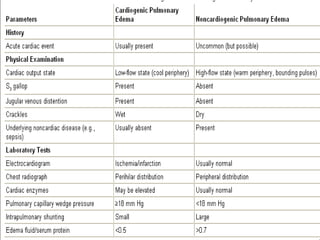
•   PCWP > 18 mmHg diagnostic


                  BP


     < 100                      > 100
Patient in shock
•   Insert central line
•   Renal dose Dopamine ( 2.5-5 µg/kg/mt)
•   Urgent ECHO for any mechanical causes
•   Increase Dopamine (but not > 10-20 ) 
    raises pulm filling prssures
•   Nor adrenaline preferred to high dose
    dopamine
•   Once Bp restored add vasodilators
SBP >100
•   Further doses of IV lasix 60-80 mg q8h or
    even 20-80 mg/hr infusion
•   NTG infusion at 2-10 mg/hr titrate to keep
    BP> 100
•   Vasodilators : ACEI
Acute Heart Failure

Acute Heart Failure

  • 1.
  • 2.
    Common emergency presentation • High mortality & morbidity in survivors • Diagnosis not always straightforward • Classic examination findings not sensitive or specific • Prompt recognition & stabilization of patient- priority
  • 3.
    At 40 yrs age- lifetime risk: 21% • Increasing prevalence • In extremis + rapid deterioration • Often respond very rapidly to treatment • Very satisfying condition to treat • Outlook poor despite initial clinical improvement
  • 4.
    Presentations • Acute SOB, frothy sputum • Collapse • Shock • Cardiac arrest
  • 5.
    Acute pulmonary oedema • SPOTTER • Extreme SOB, puffing, unable to speak • Profuse sweating, cold clammy extremities • Tachycardia irregularity • BP fall • Basal creps • Rarely wheeze predominant !!! ( asthma)
  • 6.
    Collapse/ cardiac arrest • Severe HF of any cause:- prone for malignant arrythmias, PE  • Present as collapse • Very poor outcomes • Survival to discharge ???
  • 7.
    Aetiology • CAD • Pulmonary embolism • Hypertensive heart • Acute hepatic venous disease thrombosis • Fluid overload • IWMI+RVMI • Acute valvular • Tamponade regurgitations • Arrythmias
  • 8.
    CAD • Most common cause • Can be the 1st manifestation • SOB >>> chest pain • RVMI common in the setting of IWMI • LV > 40% infarct size
  • 9.
    HHD • 1st presentation • Accelerated hypertension • Onset of HF lowers previously high BP • Diastolic dysfunction is the basis • Age
  • 10.
    Pulmonary oedema • Mechanisms – pulm capillary pressure – Capillary permeability – Oncotic pressure
  • 11.
    pulm capillary pressure • LA pressure • LVEDP – MV disease – Accelerated HBP – Arrythmias – Pericardial constriction – Aortic valve disease – Fluid overload – Ischemia – Reno-vascular disease – cardiomyopathy – High-output states • Neurogenic – IC bleed • high altitude – Cerebral oedema – Post-ictal
  • 12.
    Capillary permeability • Oncotic pressure fall – ARDS – Loss:- NS, Cirrhosis – Production:- cirrhosis, sepsis – Dilution:- crystalloids
  • 14.
    Investigations • ECG • Entirely normal # systolic HF • ACS • Arrythmias • Serial ECG always essential
  • 15.
    Cardiac enzymes • Essential to r/o AMI even in the absence of chest pain !! • Ideally tropT / trop-I : at presentation & 12 hrs later • BNP :- very useful in r/o AMI in a breathless patient
  • 16.
    CXR • NEVER delay treatment pending CXR • Portable CXR: cardiomegaly ?? • Peri-hilar bat’s wing shadowing diagnostic • Look for pericardial effusion, pneumothorax, consolidation
  • 17.
    ECHO:- preferably as early as possible • To identify cause • Assess LV function, • Diastolic dysfunction • Cardiac tamponade
  • 18.
  • 19.
    Actions in order • Propped up position • IV Morphine • 100% Oxygen • IV Lasix • Monitor ECG • Venous access • Ensure optimal BP • Emergency blood samples • ABG SpO2
  • 20.
    Assess respiratory function • Wheeze: interstitial oedema • Aminophylline helpful- bolus • Indications for further support – Exhaustion – Persistent low paO2 < 8kPa – Rising pCO2 – Worsening acidosis
  • 21.
    Hemodynamic status • PCWP > 18 mmHg diagnostic BP < 100 > 100
  • 22.
    Patient in shock • Insert central line • Renal dose Dopamine ( 2.5-5 µg/kg/mt) • Urgent ECHO for any mechanical causes • Increase Dopamine (but not > 10-20 )  raises pulm filling prssures • Nor adrenaline preferred to high dose dopamine • Once Bp restored add vasodilators
  • 23.
    SBP >100 • Further doses of IV lasix 60-80 mg q8h or even 20-80 mg/hr infusion • NTG infusion at 2-10 mg/hr titrate to keep BP> 100 • Vasodilators : ACEI