DIAGNOSIS AND EARLY HOSPITAL
MANAGEMENT OF ACUTE HEART FAILURE
Definition of Heart Failure
• A complex clinical syndrome that results from any structural
or functional impairment of ventricular filling or ejection of
blood¹
• A clinical syndrome characterized by typical symptoms that
may be accompanied by signs caused by a structural and/or
functional cardiac abnormality, resulting in a reduced cardiac
output and/or elevated intracardiac pressures at rest or
during stress²
1. 2013 ACCF/AHA Guideline for the Management of Heart Failure
2. 2016 ESC Guidelines for the diagnosis and treatment of acute and chronic heart failure
Definition of Acute Heart Failure
AHF refers to Rapid Onset or Worsening of
Symptoms and/or Signs of HF
• De novo vs Acute Decompensation of Chronic HF
• Primary cardiac dysfunction
• Acute myocardial dysfunction (ischaemic, inflammatory or toxic)
• Acute valve insufficiency or pericardial tamponade
• (and/or) with/without known precipitant factors
• AHF might have a ‘time to therapy’ concept → ‘pre-hospital’
management is considered a critical component of care.
Mebazaa A, et al. European Heart J (2015) 17, 544-588.
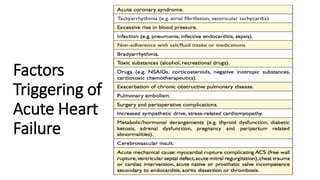
Factors
Triggering of
Acute Heart
Failure
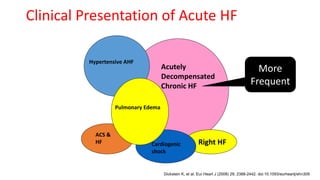
Pulmonary Edema
Acutely
Decompensated
Chronic HF
Cardiogenic
shock
Right HF
ACS &
HF
Hypertensive AHF
Clinical Presentation of Acute HF
More
Frequent
Dickstein K, et al. Eur Heart J (2008) 29, 2388-2442. doi:10.1093/eurheartj/ehn309
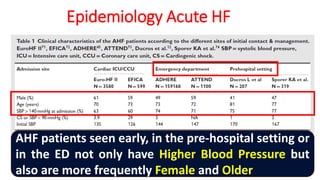
Epidemiology Acute HF
AHF patients seen early, in the pre-hospital setting or
in the ED not only have Higher Blood Pressure but
also are more frequently Female and Older
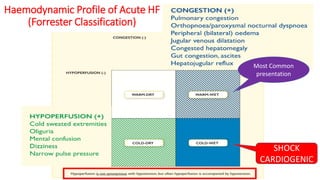
Haemodynamic Profile of Acute HF
(Forrester Classification)
Most Common
presentation
SHOCK
CARDIOGENIC
Pre-hospital and Early
Management Strategies
in Acute Heart Failure
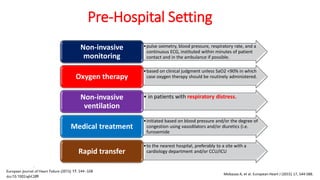
Pre-Hospital Setting
•pulse oximetry, blood pressure, respiratory rate, and a
continuous ECG, instituted within minutes of patient
contact and in the ambulance if possible.
Non-invasive
monitoring
•based on clinical judgment unless SaO2 <90% in which
case oxygen therapy should be routinely administered.Oxygen therapy
• in patients with respiratory distress.Non-invasive
ventilation
•initiated based on blood pressure and/or the degree of
congestion using vasodilators and/or diuretics (i.e.
furosemide
Medical treatment
•to the nearest hospital, preferably to a site with a
cardiology department and/or CCU/ICURapid transfer
Mebazaa A, et al. European Heart J (2015) 17, 544-588.
Step 1:
Initial Management of Patient
With Acute Heart Failure in Hospital
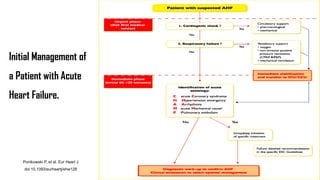
Initial Management of
a Patient with Acute
Heart Failure.
Ponikowski P, et al. Eur Heart J
doi:10.1093/eurheartj/ehw128
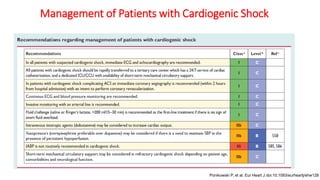
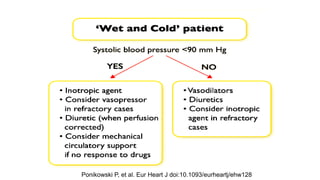
Management of Patients with Cardiogenic Shock
Ponikowski P, et al. Eur Heart J doi:10.1093/eurheartj/ehw128
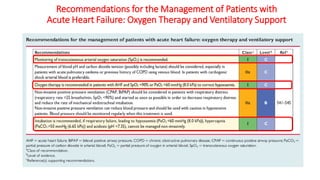
Recommendations for the Management of Patients with
Acute Heart Failure: Oxygen Therapy and Ventilatory Support
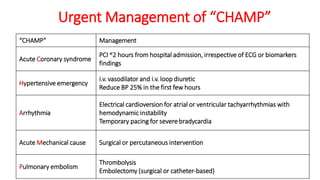
Urgent Management of “CHAMP”
“CHAMP” Management
Acute Coronary syndrome
PCI ˂2 hours from hospital admission, irrespective of ECG or biomarkers
findings
Hypertensive emergency
i.v. vasodilator and i.v. loop diuretic
Reduce BP 25% in the first few hours
Arrhythmia
Electrical cardioversion for atrial or ventricular tachyarrhythmias with
hemodynamic instability
Temporary pacing for severe bradycardia
Acute Mechanical cause Surgical or percutaneous intervention
Pulmonary embolism
Thrombolysis
Embolectomy (surgical or catheter-based)
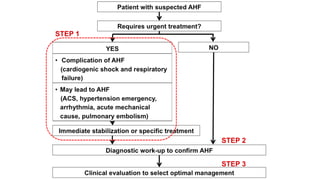
STEP 2:
(Diagnosis of AHF)
“Rule-in” or “Rule-out” AHF in Patients
Presenting with Congestion and/or
Hypoperfusion
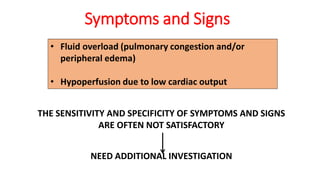
Symptoms and Signs
• Fluid overload (pulmonary congestion and/or
peripheral edema)
• Hypoperfusion due to low cardiac output
THE SENSITIVITY AND SPECIFICITY OF SYMPTOMS AND SIGNS
ARE OFTEN NOT SATISFACTORY
NEED ADDITIONAL INVESTIGATION
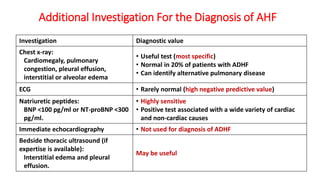
Additional Investigation For the Diagnosis of AHF
Investigation Diagnostic value
Chest x-ray:
Cardiomegaly, pulmonary
congestion, pleural effusion,
interstitial or alveolar edema
• Useful test (most specific)
• Normal in 20% of patients with ADHF
• Can identify alternative pulmonary disease
ECG • Rarely normal (high negative predictive value)
Natriuretic peptides:
BNP ˂100 pg/ml or NT-proBNP ˂300
pg/ml.
• Highly sensitive
• Positive test associated with a wide variety of cardiac
and non-cardiac causes
Immediate echocardiography • Not used for diagnosis of ADHF
Bedside thoracic ultrasound (if
expertise is available):
Interstitial edema and pleural
effusion.
May be useful
STEP 3:
Management of AHF Based on Symptoms
and Signs of Fluid Congestion and
Hypoperfusion
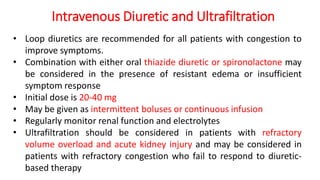
Intravenous Diuretic and Ultrafiltration
• Loop diuretics are recommended for all patients with congestion to
improve symptoms.
• Combination with either oral thiazide diuretic or spironolactone may
be considered in the presence of resistant edema or insufficient
symptom response
• Initial dose is 20-40 mg
• May be given as intermittent boluses or continuous infusion
• Regularly monitor renal function and electrolytes
• Ultrafiltration should be considered in patients with refractory
volume overload and acute kidney injury and may be considered in
patients with refractory congestion who fail to respond to diuretic-
based therapy
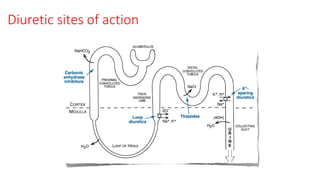
Diuretic sites of action
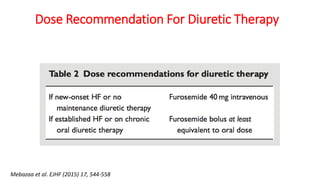
Mebazaa et al. EJHF (2015) 17, 544-558
Dose Recommendation For Diuretic Therapy
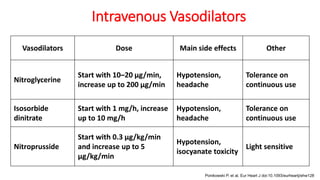
Intravenous Vasodilators
Vasodilators Dose Main side effects Other
Nitroglycerine
Start with 10–20 μg/min,
increase up to 200 μg/min
Hypotension,
headache
Tolerance on
continuous use
Isosorbide
dinitrate
Start with 1 mg/h, increase
up to 10 mg/h
Hypotension,
headache
Tolerance on
continuous use
Nitroprusside
Start with 0.3 μg/kg/min
and increase up to 5
μg/kg/min
Hypotension,
isocyanate toxicity
Light sensitive
Ponikowski P, et al. Eur Heart J doi:10.1093/eurheartj/ehw128
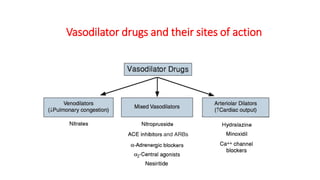
Vasodilator drugs and their sites of action
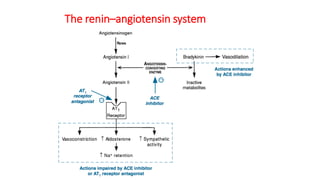
The renin–angiotensin system
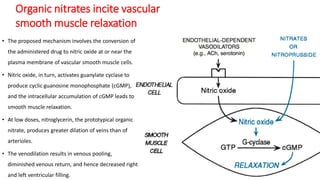
Organic nitrates incite vascular
smooth muscle relaxation
• The proposed mechanism involves the conversion of
the administered drug to nitric oxide at or near the
plasma membrane of vascular smooth muscle cells.
• Nitric oxide, in turn, activates guanylate cyclase to
produce cyclic guanosine monophosphate (cGMP),
and the intracellular accumulation of cGMP leads to
smooth muscle relaxation.
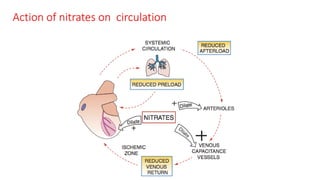
• At low doses, nitroglycerin, the prototypical organic
nitrate, produces greater dilation of veins than of
arterioles.
• The venodilation results in venous pooling,
diminished venous return, and hence decreased right
and left ventricular filling.
Action of nitrates on circulation
Ponikowski P, et al. Eur Heart J doi:10.1093/eurheartj/ehw128
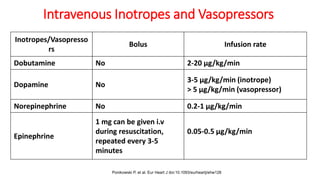
Intravenous Inotropes and Vasopressors
Inotropes/Vasopresso
rs
Bolus Infusion rate
Dobutamine No 2-20 μg/kg/min
Dopamine No
3-5 μg/kg/min (inotrope)
> 5 μg/kg/min (vasopressor)
Norepinephrine No 0.2-1 μg/kg/min
Epinephrine
1 mg can be given i.v
during resuscitation,
repeated every 3-5
minutes
0.05-0.5 μg/kg/min
Ponikowski P, et al. Eur Heart J doi:10.1093/eurheartj/ehw128
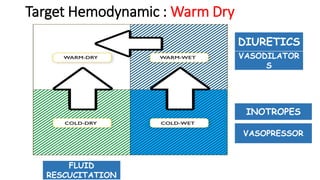
Target Hemodynamic : Warm Dry
FLUID
RESCUCITATION
INOTROPES
DIURETICS
VASODILATOR
S
VASOPRESSOR
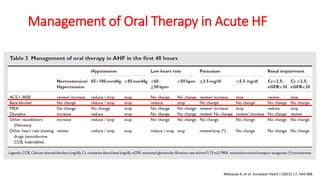
Management of Oral Therapy in Acute HF
Mebazaa A, et al. European Heart J (2015) 17, 544-588.
Discharge From Emergency Department
• Clinical response to initial treatment is an important indicator of likely
disposition
• Indicators of good response to initial therapy that might be considered in
discharge include :
• 1. Patient-reported subjective improvement
• 2. Resting HR < 100 bpm
• 3. No hypotension when standing up
• 4. Adequate urine output
• 5. Oxygen saturation > 95% in room air
• 6. No or moderate worsening of renal function (chronic renal disease might
be present)
Mebazaa A, et al. European Heart J (2015) 17, 544-588.
Discharge From Emergency Department
• Fast track discharge from ED should be considered in
hospitals with chronic disease management programs, once
the trigger for decompensation has been identified and early
management commenced
• Patients with de novo AHF should not be discharged home
from ED
Mebazaa A, et al. European Heart J (2015) 17, 544-588.
Criteria for Discharge
• Haemodynamically stable, euvolemic, established on evidence-based
oral medication and with stable renal function for at least 24 h before
discharge
• Once provided with tailored education and advice about self-care
• Patients should be:
• enrolled in a disease management program
• seen by their general practitioner within 1 week of discharge, by the
hospital cardiology team within 2 weeks of discharge
Summary
•AHF is a life-threatening medical condition requiring
evaluation and treatment
•Classification based on patients clinical profile
•Urgent evaluation and early diagnosis is important for
guiding the appropriate management
•Perform all ‘Steps’ simultaneously and urgently
Acute Heart Failure

Acute Heart Failure

  • 1.
    DIAGNOSIS AND EARLYHOSPITAL MANAGEMENT OF ACUTE HEART FAILURE
  • 2.
    Definition of HeartFailure • A complex clinical syndrome that results from any structural or functional impairment of ventricular filling or ejection of blood¹ • A clinical syndrome characterized by typical symptoms that may be accompanied by signs caused by a structural and/or functional cardiac abnormality, resulting in a reduced cardiac output and/or elevated intracardiac pressures at rest or during stress² 1. 2013 ACCF/AHA Guideline for the Management of Heart Failure 2. 2016 ESC Guidelines for the diagnosis and treatment of acute and chronic heart failure
  • 3.
    Definition of AcuteHeart Failure AHF refers to Rapid Onset or Worsening of Symptoms and/or Signs of HF • De novo vs Acute Decompensation of Chronic HF • Primary cardiac dysfunction • Acute myocardial dysfunction (ischaemic, inflammatory or toxic) • Acute valve insufficiency or pericardial tamponade • (and/or) with/without known precipitant factors • AHF might have a ‘time to therapy’ concept → ‘pre-hospital’ management is considered a critical component of care. Mebazaa A, et al. European Heart J (2015) 17, 544-588.
  • 4.
  • 5.
    Pulmonary Edema Acutely Decompensated Chronic HF Cardiogenic shock RightHF ACS & HF Hypertensive AHF Clinical Presentation of Acute HF More Frequent Dickstein K, et al. Eur Heart J (2008) 29, 2388-2442. doi:10.1093/eurheartj/ehn309
  • 6.
    Epidemiology Acute HF AHFpatients seen early, in the pre-hospital setting or in the ED not only have Higher Blood Pressure but also are more frequently Female and Older
  • 7.
    Haemodynamic Profile ofAcute HF (Forrester Classification) Most Common presentation SHOCK CARDIOGENIC
  • 8.
    Pre-hospital and Early ManagementStrategies in Acute Heart Failure
  • 9.
    Pre-Hospital Setting •pulse oximetry,blood pressure, respiratory rate, and a continuous ECG, instituted within minutes of patient contact and in the ambulance if possible. Non-invasive monitoring •based on clinical judgment unless SaO2 <90% in which case oxygen therapy should be routinely administered.Oxygen therapy • in patients with respiratory distress.Non-invasive ventilation •initiated based on blood pressure and/or the degree of congestion using vasodilators and/or diuretics (i.e. furosemide Medical treatment •to the nearest hospital, preferably to a site with a cardiology department and/or CCU/ICURapid transfer Mebazaa A, et al. European Heart J (2015) 17, 544-588.
  • 10.
    Step 1: Initial Managementof Patient With Acute Heart Failure in Hospital
  • 12.
    Initial Management of aPatient with Acute Heart Failure. Ponikowski P, et al. Eur Heart J doi:10.1093/eurheartj/ehw128
  • 13.
    Management of Patientswith Cardiogenic Shock Ponikowski P, et al. Eur Heart J doi:10.1093/eurheartj/ehw128
  • 14.
    Recommendations for theManagement of Patients with Acute Heart Failure: Oxygen Therapy and Ventilatory Support
  • 15.
    Urgent Management of“CHAMP” “CHAMP” Management Acute Coronary syndrome PCI ˂2 hours from hospital admission, irrespective of ECG or biomarkers findings Hypertensive emergency i.v. vasodilator and i.v. loop diuretic Reduce BP 25% in the first few hours Arrhythmia Electrical cardioversion for atrial or ventricular tachyarrhythmias with hemodynamic instability Temporary pacing for severe bradycardia Acute Mechanical cause Surgical or percutaneous intervention Pulmonary embolism Thrombolysis Embolectomy (surgical or catheter-based)
  • 16.
    STEP 2: (Diagnosis ofAHF) “Rule-in” or “Rule-out” AHF in Patients Presenting with Congestion and/or Hypoperfusion
  • 17.
    Symptoms and Signs •Fluid overload (pulmonary congestion and/or peripheral edema) • Hypoperfusion due to low cardiac output THE SENSITIVITY AND SPECIFICITY OF SYMPTOMS AND SIGNS ARE OFTEN NOT SATISFACTORY NEED ADDITIONAL INVESTIGATION
  • 18.
    Additional Investigation Forthe Diagnosis of AHF Investigation Diagnostic value Chest x-ray: Cardiomegaly, pulmonary congestion, pleural effusion, interstitial or alveolar edema • Useful test (most specific) • Normal in 20% of patients with ADHF • Can identify alternative pulmonary disease ECG • Rarely normal (high negative predictive value) Natriuretic peptides: BNP ˂100 pg/ml or NT-proBNP ˂300 pg/ml. • Highly sensitive • Positive test associated with a wide variety of cardiac and non-cardiac causes Immediate echocardiography • Not used for diagnosis of ADHF Bedside thoracic ultrasound (if expertise is available): Interstitial edema and pleural effusion. May be useful
  • 19.
    STEP 3: Management ofAHF Based on Symptoms and Signs of Fluid Congestion and Hypoperfusion
  • 22.
    Intravenous Diuretic andUltrafiltration • Loop diuretics are recommended for all patients with congestion to improve symptoms. • Combination with either oral thiazide diuretic or spironolactone may be considered in the presence of resistant edema or insufficient symptom response • Initial dose is 20-40 mg • May be given as intermittent boluses or continuous infusion • Regularly monitor renal function and electrolytes • Ultrafiltration should be considered in patients with refractory volume overload and acute kidney injury and may be considered in patients with refractory congestion who fail to respond to diuretic- based therapy
  • 23.
  • 24.
    Mebazaa et al.EJHF (2015) 17, 544-558 Dose Recommendation For Diuretic Therapy
  • 25.
    Intravenous Vasodilators Vasodilators DoseMain side effects Other Nitroglycerine Start with 10–20 μg/min, increase up to 200 μg/min Hypotension, headache Tolerance on continuous use Isosorbide dinitrate Start with 1 mg/h, increase up to 10 mg/h Hypotension, headache Tolerance on continuous use Nitroprusside Start with 0.3 μg/kg/min and increase up to 5 μg/kg/min Hypotension, isocyanate toxicity Light sensitive Ponikowski P, et al. Eur Heart J doi:10.1093/eurheartj/ehw128
  • 26.
    Vasodilator drugs andtheir sites of action
  • 27.
  • 28.
    Organic nitrates incitevascular smooth muscle relaxation • The proposed mechanism involves the conversion of the administered drug to nitric oxide at or near the plasma membrane of vascular smooth muscle cells. • Nitric oxide, in turn, activates guanylate cyclase to produce cyclic guanosine monophosphate (cGMP), and the intracellular accumulation of cGMP leads to smooth muscle relaxation. • At low doses, nitroglycerin, the prototypical organic nitrate, produces greater dilation of veins than of arterioles. • The venodilation results in venous pooling, diminished venous return, and hence decreased right and left ventricular filling.
  • 29.
    Action of nitrateson circulation
  • 30.
    Ponikowski P, etal. Eur Heart J doi:10.1093/eurheartj/ehw128
  • 31.
    Intravenous Inotropes andVasopressors Inotropes/Vasopresso rs Bolus Infusion rate Dobutamine No 2-20 μg/kg/min Dopamine No 3-5 μg/kg/min (inotrope) > 5 μg/kg/min (vasopressor) Norepinephrine No 0.2-1 μg/kg/min Epinephrine 1 mg can be given i.v during resuscitation, repeated every 3-5 minutes 0.05-0.5 μg/kg/min Ponikowski P, et al. Eur Heart J doi:10.1093/eurheartj/ehw128
  • 32.
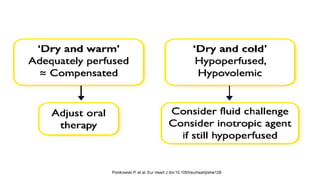
    Ponikowski P, etal. Eur Heart J doi:10.1093/eurheartj/ehw128
  • 33.
    Target Hemodynamic :Warm Dry FLUID RESCUCITATION INOTROPES DIURETICS VASODILATOR S VASOPRESSOR
  • 34.
    Management of OralTherapy in Acute HF Mebazaa A, et al. European Heart J (2015) 17, 544-588.
  • 35.
    Discharge From EmergencyDepartment • Clinical response to initial treatment is an important indicator of likely disposition • Indicators of good response to initial therapy that might be considered in discharge include : • 1. Patient-reported subjective improvement • 2. Resting HR < 100 bpm • 3. No hypotension when standing up • 4. Adequate urine output • 5. Oxygen saturation > 95% in room air • 6. No or moderate worsening of renal function (chronic renal disease might be present) Mebazaa A, et al. European Heart J (2015) 17, 544-588.
  • 36.
    Discharge From EmergencyDepartment • Fast track discharge from ED should be considered in hospitals with chronic disease management programs, once the trigger for decompensation has been identified and early management commenced • Patients with de novo AHF should not be discharged home from ED Mebazaa A, et al. European Heart J (2015) 17, 544-588.
  • 37.
    Criteria for Discharge •Haemodynamically stable, euvolemic, established on evidence-based oral medication and with stable renal function for at least 24 h before discharge • Once provided with tailored education and advice about self-care • Patients should be: • enrolled in a disease management program • seen by their general practitioner within 1 week of discharge, by the hospital cardiology team within 2 weeks of discharge
  • 38.
    Summary •AHF is alife-threatening medical condition requiring evaluation and treatment •Classification based on patients clinical profile •Urgent evaluation and early diagnosis is important for guiding the appropriate management •Perform all ‘Steps’ simultaneously and urgently