New clinical presentations of AHF
1.Acute decompensated heart failure
2.Acute pulmonary oedema
3.Isolated right ventricular failure
4.Cardiogenic shock
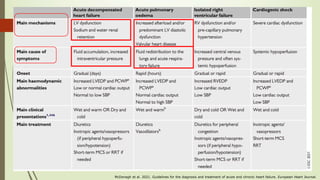
McDonagh et al. 2021. Guidelines for the diagnosis and treatment of acute and chronic heart failure. European Heart Journal.
n
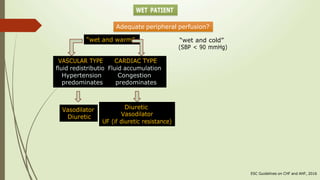
Hypertension Congestion
predominates predominates
“wet and warm” “wet and cold”
(SBP < 90 mmHg)
ESC Guidelines on CHF and AHF, 2016
Diuretic
Vasodilator
Diuretic
Adequate peripheral perfusion?
Intravenous vasodilators, namely nitrates or nitroprusside,
dilate venous and arterial vessels leading to
• a reduction in venous return to the heart,
• less congestion,
• lower after-load,
• increased stroke volume
relief of symptoms
i.v. vasodilators may be more effective than diuretics in those patients whose
acute pulmonary oedema is caused by increased afterload and fluid
redistribution to the lungs in the absence or with minimal fluid accumulation
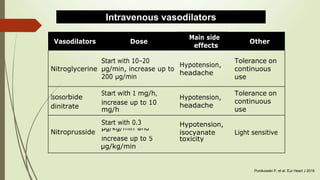
Vasodilators Dose
Main side
effects
Other
Start with 10–20
Nitroglycerine µg/min, increase up to
200 µg/min
Hypotension,
headache
Tolerance on
continuous
use
Isosorbide
Start with 1 mg/h,
dinitrate
increase up to 10
mg/h
Hypotension,
headache
Tolerance on
continuous
use
Start with 0.3 Hypotension,
Nitroprusside
µg/kg/min and
isocyanate Light sensitive
increase up to 5 toxicity
µg/kg/min
Ponikowski P, et al. Eur Heart J 2016
Intravenous vasodilators
• Loop diuretics are recommended for all patients
with congestion to improve symptoms.
• Combination with either oral thiazide diuretic or
spironolactone may be considered in the
presence of resistant edema or insufficient
symptom response
• May be given as intermittent boluses or
continuous infusion
• Regularly monitor renal function and electrolytes
Intravenous diuretics
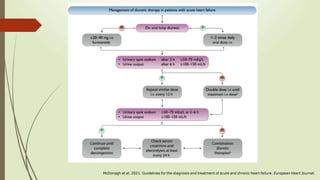
McDonagh et al. 2021. Guidelines for the diagnosis and treatment of acute and chronic heart failure. European Heart Journal.
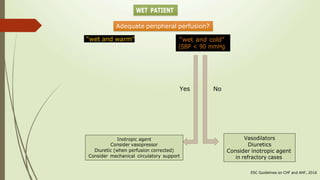
“wet and cold”
Adequate peripheral perfusion?
“wet and warm”
ESC Guidelines on CHF and AHF, 2016
Yes No
Vasodilators
Diuretics
Consider inotropic agent
in refractory cases
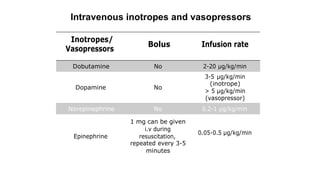
Intravenous inotropes and vasopressors
Inotropes/
Vasopressors
Bolus Infusion rate
Dopamine No
3-5 µg/kg/min
(inotrope)
> 5 µg/kg/min
(vasopressor)
Epinephrine
1 mg can be given
i.v during
resuscitation,
repeated every 3-5
minutes
0.05-0.5 µg/kg/min
Dobutamine No
Norepinephrine No 0.2-1 µg/kg/min
AHF ESC guideline.docx

AHF ESC guideline.docx

  • 1.
    New clinical presentationsof AHF 1.Acute decompensated heart failure 2.Acute pulmonary oedema 3.Isolated right ventricular failure 4.Cardiogenic shock
  • 2.
    McDonagh et al.2021. Guidelines for the diagnosis and treatment of acute and chronic heart failure. European Heart Journal.
  • 3.
    n Hypertension Congestion predominates predominates “wetand warm” “wet and cold” (SBP < 90 mmHg) ESC Guidelines on CHF and AHF, 2016 Diuretic Vasodilator Diuretic Adequate peripheral perfusion?
  • 4.
    Intravenous vasodilators, namelynitrates or nitroprusside, dilate venous and arterial vessels leading to • a reduction in venous return to the heart, • less congestion, • lower after-load, • increased stroke volume relief of symptoms i.v. vasodilators may be more effective than diuretics in those patients whose acute pulmonary oedema is caused by increased afterload and fluid redistribution to the lungs in the absence or with minimal fluid accumulation
  • 5.
    Vasodilators Dose Main side effects Other Startwith 10–20 Nitroglycerine µg/min, increase up to 200 µg/min Hypotension, headache Tolerance on continuous use Isosorbide Start with 1 mg/h, dinitrate increase up to 10 mg/h Hypotension, headache Tolerance on continuous use Start with 0.3 Hypotension, Nitroprusside µg/kg/min and isocyanate Light sensitive increase up to 5 toxicity µg/kg/min Ponikowski P, et al. Eur Heart J 2016 Intravenous vasodilators
  • 6.
    • Loop diureticsare recommended for all patients with congestion to improve symptoms. • Combination with either oral thiazide diuretic or spironolactone may be considered in the presence of resistant edema or insufficient symptom response • May be given as intermittent boluses or continuous infusion • Regularly monitor renal function and electrolytes Intravenous diuretics
  • 7.
    McDonagh et al.2021. Guidelines for the diagnosis and treatment of acute and chronic heart failure. European Heart Journal.
  • 8.
    “wet and cold” Adequateperipheral perfusion? “wet and warm” ESC Guidelines on CHF and AHF, 2016 Yes No Vasodilators Diuretics Consider inotropic agent in refractory cases
  • 9.
    Intravenous inotropes andvasopressors Inotropes/ Vasopressors Bolus Infusion rate Dopamine No 3-5 µg/kg/min (inotrope) > 5 µg/kg/min (vasopressor) Epinephrine 1 mg can be given i.v during resuscitation, repeated every 3-5 minutes 0.05-0.5 µg/kg/min Dobutamine No Norepinephrine No 0.2-1 µg/kg/min