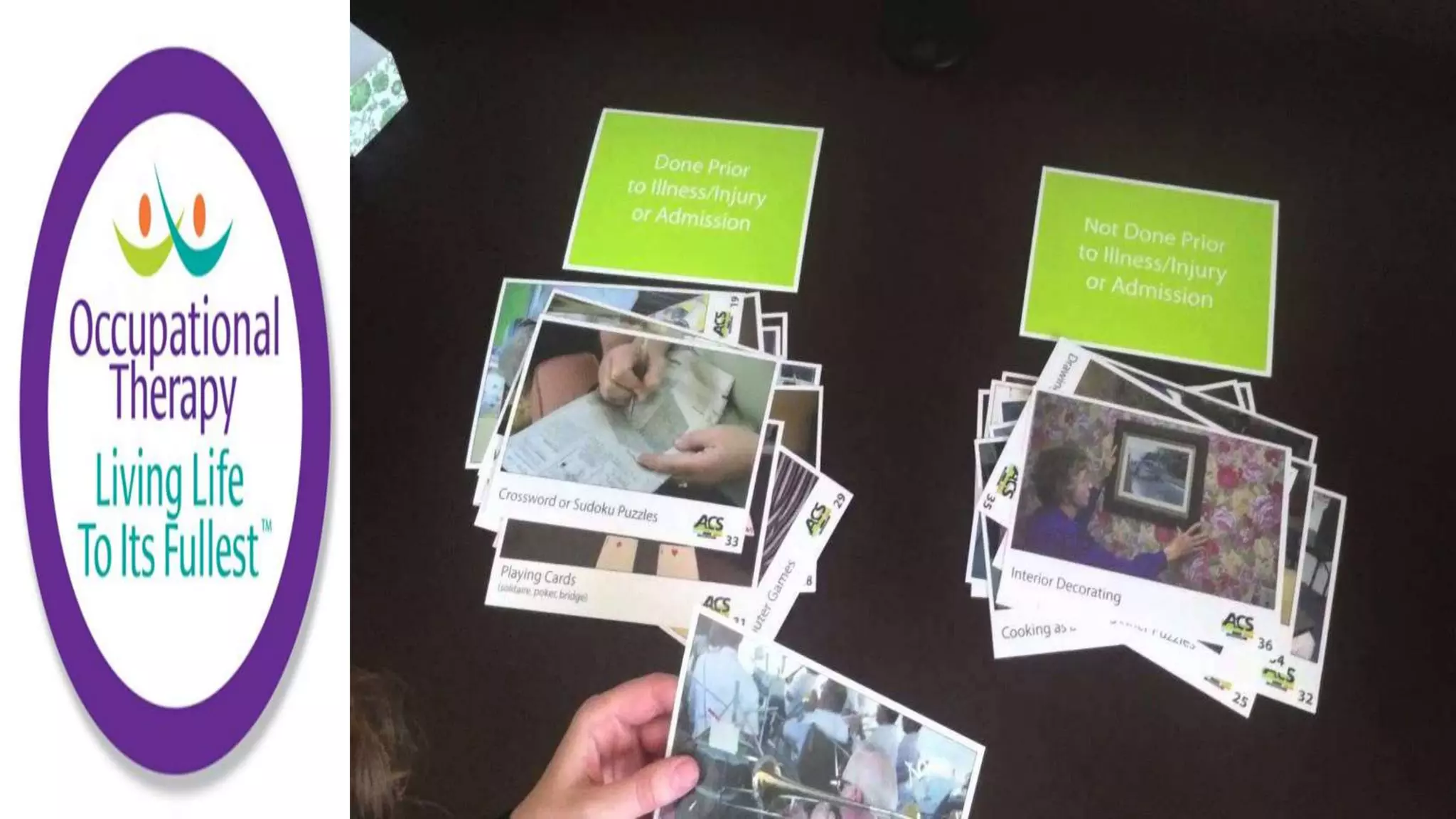
Activity Sort Cards
 ‘Everyone benefits from communities, workplaces and
societies that encourage active and visible participation
of older people’
 ‘Engagement in work, play, or activities of daily living
that are part of one’s socio-cultural context and that are
desired and / or necessary to one’s well-being.’
 Participation involves active engagement in daily life, in
families, in work and in communities
 Engagement in social activities key determinant for
healthy ageing
 The enablement of engagement in desired and/or needed
occupations is core domain occupational therapy
 Remediation services for older people through enabling
participation in meaningful occupations
 Reliable and valid measures of older people’s activity
participation are essential to increase understanding of
the factors that facilitate participation and evaluate
occupational therapy interventions that are directed at
increasing participation
Activity Card Sort (ACS)
 Self-report assessment of the perceived level of participation
 Well established measure of activity engagement for older people
 Eighty nine photograph cards for activities grouped in 4 categories:
- Instrumental
- Low & High Demand Leisure
- Social
 Recovery, Institutional and Community Living Version
 Different sorting categories of engagement and scoring methods
Limitations of the Activity Card Sort
The ACS does not provide information regarding factors
such as:
• Length of time spent engaged in activities
• Frequency of participation
• Social interactions during activity participation
• Difficulty experienced while performing an activity
Uses of the Activity Card Sorts
- The Activity Card Sort (ACS) measures participation in (social
activities) (descriptive assessment)
- Comparing premorbid engagement in activities with current activity
participation
- Useful for initial assessment, goal setting and intervention planning
(descriptive assessment)
- To monitor changes in activity participation following onset of
illness (evaluative assessment)
- To evaluate the effects of an intervention designed to impact on a
person’s activity participation (evaluative assessment)
- Creating an occupational history (descriptive assessment)
The ACS has been used to research participation for:
• Older people living in the community
• Older people facing disability transitions
• People experiencing cognitive deficits
• People with stroke
• People with vision problems
• People with Parkinson’s disease
Activity sort cards

Activity sort cards

  • 1.
  • 2.
     ‘Everyone benefitsfrom communities, workplaces and societies that encourage active and visible participation of older people’  ‘Engagement in work, play, or activities of daily living that are part of one’s socio-cultural context and that are desired and / or necessary to one’s well-being.’  Participation involves active engagement in daily life, in families, in work and in communities
  • 3.
     Engagement insocial activities key determinant for healthy ageing  The enablement of engagement in desired and/or needed occupations is core domain occupational therapy  Remediation services for older people through enabling participation in meaningful occupations  Reliable and valid measures of older people’s activity participation are essential to increase understanding of the factors that facilitate participation and evaluate occupational therapy interventions that are directed at increasing participation
  • 4.
    Activity Card Sort(ACS)  Self-report assessment of the perceived level of participation  Well established measure of activity engagement for older people  Eighty nine photograph cards for activities grouped in 4 categories: - Instrumental - Low & High Demand Leisure - Social  Recovery, Institutional and Community Living Version  Different sorting categories of engagement and scoring methods
  • 8.
    Limitations of theActivity Card Sort The ACS does not provide information regarding factors such as: • Length of time spent engaged in activities • Frequency of participation • Social interactions during activity participation • Difficulty experienced while performing an activity
  • 9.
    Uses of theActivity Card Sorts - The Activity Card Sort (ACS) measures participation in (social activities) (descriptive assessment) - Comparing premorbid engagement in activities with current activity participation - Useful for initial assessment, goal setting and intervention planning (descriptive assessment) - To monitor changes in activity participation following onset of illness (evaluative assessment) - To evaluate the effects of an intervention designed to impact on a person’s activity participation (evaluative assessment) - Creating an occupational history (descriptive assessment)
  • 10.
    The ACS hasbeen used to research participation for: • Older people living in the community • Older people facing disability transitions • People experiencing cognitive deficits • People with stroke • People with vision problems • People with Parkinson’s disease