

By Saima Abedi
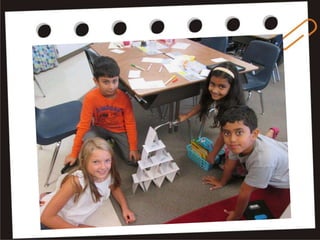
• Each group will get a stack of index cards.
• Each group will try to build the tallest card
house!
Before you could add a card to the house, you
have to write something on it that every member of
the team had in common. As more cards were
added, the commonalities tended to stretch a bit,
but it was all in the name of teamwork.
What could be the biggest challenge in
developing a classroom community and
how to overcome it?
“Schools and classrooms are where
children spend a significant amount of time
each week, and teachers have an
opportunity to help their students make the
most of that time together by developing a
classroom community each day.
McKinney, 2017
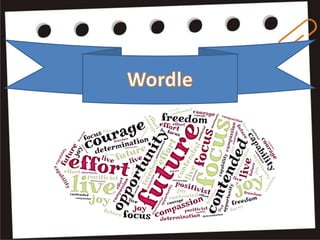
• Sit in a group.
• Create a list of words that you believe
defines active learning.
• You must use at least 15 different words to
define active learning.
• The most important words should appear
larger than other words.
https://wordart.com/create
https://worditout.com/word-cloud/create
https://www.jasondavies.com/wordcloud/
Drawing on students’ background
knowledge and experiences, can be an
effective way to bridge gaps and make the
content more accessible.
(Robertson, 2007)
• Kickstart student engagement (ice breaker)
• Activate Scheme and evoke curiosity
• Encourage building of new connections
• Visualize brainstorming feedback
• Help students reach a consensus as a group
• Ease into deep discussions for genuine responses
• Summarize topics to develop understanding
Which activating prior knowledge
strategy do you employ in your lessons?
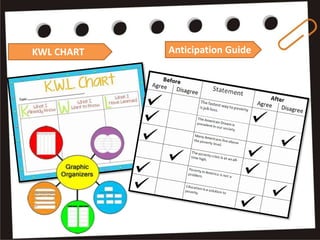
Anticipation GuideKWL CHART
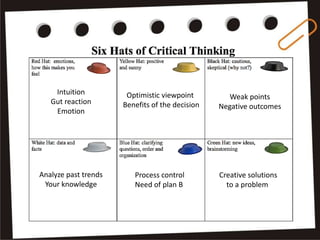
Intuition
Gut reaction
Emotion
Analyze past trends
Your knowledge
Weak points
Negative outcomes
Optimistic viewpoint
Benefits of the decision
Process control
Need of plan B
Creative solutions
to a problem
Group Work
Pre-teaching Vocabulary
A-Match the meaning with the words.
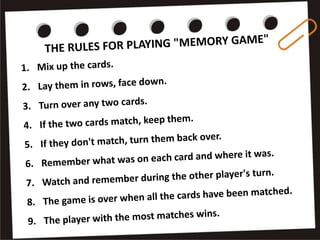
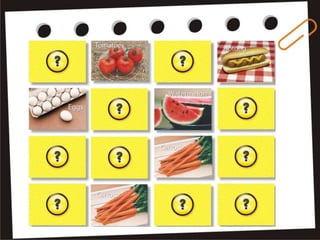
B-Read the rules of the memory game.
Why is pre-teaching vocabulary important
(specifically in a reading lesson)?
Line it up and fold it.
Which type of questions promotes deeper
learning?
Support your answer with examples.
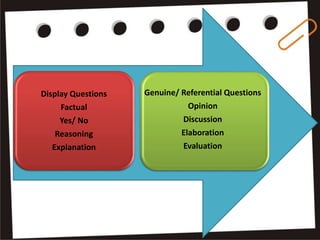
Display Questions
Factual
Yes/ No
Reasoning
Explanation
Genuine/ Referential Questions
Opinion
Discussion
Elaboration
Evaluation
• Read the given article to find the key points that you
would like to share with other group’s members.
• Distribute the key points among your team members.
• Once prepared, assemble in such a way that you have
your opponents on each of your side.
• Share your piece of information and listen to others.
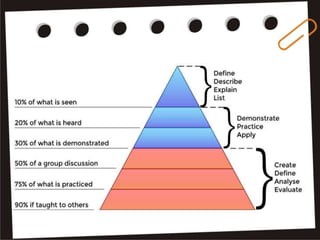
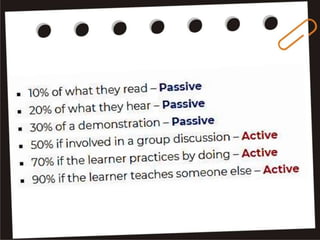
What is the best way to learn: by
reading, discussion or teaching others?
Support your answer with reasoning.
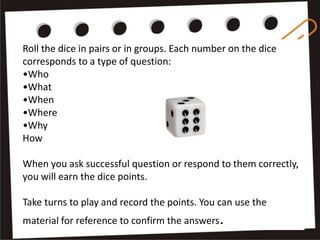
Roll the dice in pairs or in groups. Each number on the dice
corresponds to a type of question:
•Who
•What
•When
•Where
•Why
How
When you ask successful question or respond to them correctly,
you will earn the dice points.
Take turns to play and record the points. You can use the
material for reference to confirm the answers.
Turn and Talk
Which skill or concept can be taught through this dice
activity?
Time: 2- 3 min
Commutative Property Partners
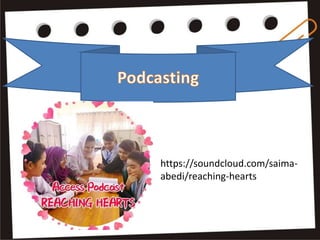
https://soundcloud.com/saima-
abedi/reaching-hearts
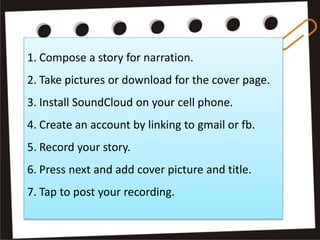
1. Compose a story for narration.
2. Take pictures or download for the cover page.
3. Install SoundCloud on your cell phone.
4. Create an account by linking to gmail or fb.
5. Record your story.
6. Press next and add cover picture and title.
7. Tap to post your recording.
Resources:
10 Online Learning Activities for Active Learners
https://blog.weevur.io/10-online-learning-activities-for-active-learners-f56a144f1112
Active Learning Strategies
https://teaching.berkeley.edu/active-learning-strategies
http://www.queensu.ca/teachingandlearning/modules/students/22_active_learning_strategies.html
ACTIVE LEARNING VS PASSIVE LEARNING
https://www.classcraft.com/blog/features/active-learning-vs-passive-learning/
https://titan-learning.com/active-learning-vs-passive-learning/
McKinney, A. (2017).The Importance of Building Community in the Classroom
https://www.teachervision.com/blog/morning-announcements/importance-building-community-classroom
Rivera, J (2010) Authentic Oral Interaction in the EFL Class:
What It Means, What It Does not
https://revistas.unal.edu.co/index.php/profile/article/view/13833/36806
Robertso, K. (2007). Connect Students' Background Knowledge to Content in the ELL Classroom
http://www.readingrockets.org/article/connect-students-background-knowledge-content-ell-classroom
For grouping
https://www.scholastic.com/teachers/blog-posts/genia-connell/15-quick-and-creative-ways-group-and-
partner-students/
https://www.create-abilities.com/blogs/create-abilities-blog/6-easy-ways-to-group-your-students
Wordle
Gardner, T. (2018) Ten Active Learning Strategies Using Word Clouds
https://community.macmillan.com/community/the-english-community/bedford-
bits/blog/2018/05/08/ten-active-learning-strategies-using-word-clouds

Active learning Excite Engage Empower

  • 1.
  • 3.
    • Each groupwill get a stack of index cards. • Each group will try to build the tallest card house!
  • 5.
    Before you couldadd a card to the house, you have to write something on it that every member of the team had in common. As more cards were added, the commonalities tended to stretch a bit, but it was all in the name of teamwork.
  • 6.
    What could bethe biggest challenge in developing a classroom community and how to overcome it?
  • 7.
    “Schools and classroomsare where children spend a significant amount of time each week, and teachers have an opportunity to help their students make the most of that time together by developing a classroom community each day. McKinney, 2017
  • 9.
    • Sit ina group. • Create a list of words that you believe defines active learning. • You must use at least 15 different words to define active learning. • The most important words should appear larger than other words.
  • 10.
  • 11.
    Drawing on students’background knowledge and experiences, can be an effective way to bridge gaps and make the content more accessible. (Robertson, 2007)
  • 12.
    • Kickstart studentengagement (ice breaker) • Activate Scheme and evoke curiosity • Encourage building of new connections • Visualize brainstorming feedback • Help students reach a consensus as a group • Ease into deep discussions for genuine responses • Summarize topics to develop understanding
  • 13.
    Which activating priorknowledge strategy do you employ in your lessons?
  • 14.
  • 15.
    Intuition Gut reaction Emotion Analyze pasttrends Your knowledge Weak points Negative outcomes Optimistic viewpoint Benefits of the decision Process control Need of plan B Creative solutions to a problem
  • 17.
    Group Work Pre-teaching Vocabulary A-Matchthe meaning with the words. B-Read the rules of the memory game.
  • 20.
    Why is pre-teachingvocabulary important (specifically in a reading lesson)?
  • 21.
    Line it upand fold it.
  • 23.
    Which type ofquestions promotes deeper learning? Support your answer with examples.
  • 24.
    Display Questions Factual Yes/ No Reasoning Explanation Genuine/Referential Questions Opinion Discussion Elaboration Evaluation
  • 25.
    • Read thegiven article to find the key points that you would like to share with other group’s members. • Distribute the key points among your team members. • Once prepared, assemble in such a way that you have your opponents on each of your side. • Share your piece of information and listen to others.
  • 27.
    What is thebest way to learn: by reading, discussion or teaching others? Support your answer with reasoning.
  • 32.
    Roll the dicein pairs or in groups. Each number on the dice corresponds to a type of question: •Who •What •When •Where •Why How When you ask successful question or respond to them correctly, you will earn the dice points. Take turns to play and record the points. You can use the material for reference to confirm the answers.
  • 33.
    Turn and Talk Whichskill or concept can be taught through this dice activity? Time: 2- 3 min
  • 34.
  • 35.
  • 36.
    1. Compose astory for narration. 2. Take pictures or download for the cover page. 3. Install SoundCloud on your cell phone. 4. Create an account by linking to gmail or fb. 5. Record your story. 6. Press next and add cover picture and title. 7. Tap to post your recording.
  • 39.
    Resources: 10 Online LearningActivities for Active Learners https://blog.weevur.io/10-online-learning-activities-for-active-learners-f56a144f1112 Active Learning Strategies https://teaching.berkeley.edu/active-learning-strategies http://www.queensu.ca/teachingandlearning/modules/students/22_active_learning_strategies.html ACTIVE LEARNING VS PASSIVE LEARNING https://www.classcraft.com/blog/features/active-learning-vs-passive-learning/ https://titan-learning.com/active-learning-vs-passive-learning/ McKinney, A. (2017).The Importance of Building Community in the Classroom https://www.teachervision.com/blog/morning-announcements/importance-building-community-classroom Rivera, J (2010) Authentic Oral Interaction in the EFL Class: What It Means, What It Does not https://revistas.unal.edu.co/index.php/profile/article/view/13833/36806 Robertso, K. (2007). Connect Students' Background Knowledge to Content in the ELL Classroom http://www.readingrockets.org/article/connect-students-background-knowledge-content-ell-classroom
  • 40.
    For grouping https://www.scholastic.com/teachers/blog-posts/genia-connell/15-quick-and-creative-ways-group-and- partner-students/ https://www.create-abilities.com/blogs/create-abilities-blog/6-easy-ways-to-group-your-students Wordle Gardner, T.(2018) Ten Active Learning Strategies Using Word Clouds https://community.macmillan.com/community/the-english-community/bedford- bits/blog/2018/05/08/ten-active-learning-strategies-using-word-clouds

Editor's Notes

  • #8 increased trust to take academic risks, decreased behavior issues, and a feeling of ownership of their environment and learning
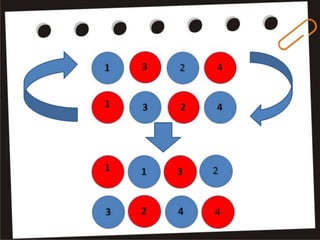
  • #21 From easier to difficult
  • #22 line up by height fold the line in half
  • #35 line up by height fold the line in half