•
•
•
•

•
•
•

•
•
1.
•
•
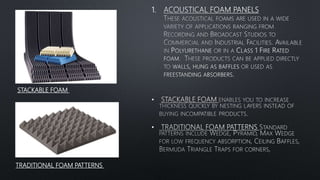
STACKABLE FOAM
TRADITIONAL FOAM PATTERNS
•
•
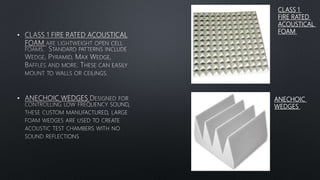
CLASS 1
FIRE RATED
ACOUSTICAL
FOAM
ANECHOIC
WEDGES
•
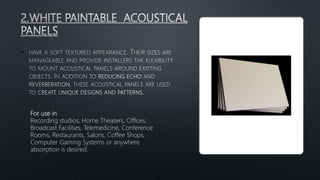
For use in
Recording studios, Home Theaters, Offices,
Broadcast Facilities, Telemedicine, Conference
Rooms, Restaurants, Salons, Coffee Shops,
Computer Gaming Systems or anywhere
absorption is desired.
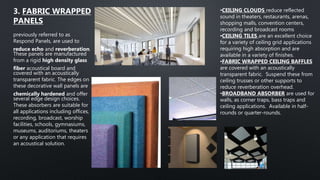
previously referred to as
Respond Panels, are used to
reduce echo and reverberation.
These panels are manufactured
from a rigid high density glass
fiber acoustical board and
covered with an acoustically
transparent fabric. The edges on
these decorative wall panels are
chemically hardened and offer
several edge design choices.
These absorbers are suitable for
all applications including offices,
recording, broadcast, worship
facilities, schools, gymnasiums,
museums, auditoriums, theaters
or any application that requires
an acoustical solution.
3. FABRIC WRAPPED
PANELS
•CEILING CLOUDS reduce reflected
sound in theaters, restaurants, arenas,
shopping malls, convention centers,
recording and broadcast rooms
•CEILING TILES are an excellent choice
for a variety of ceiling grid applications
requiring high absorption and are
available in a variety of finishes.
•FABRIC WRAPPED CEILING BAFFLES
are covered with an acoustically
transparent fabric. Suspend these from
ceiling trusses or other supports to
reduce reverberation overhead.
•BROADBAND ABSORBER are used for
walls, as corner traps, bass traps and
ceiling applications. Available in half-
rounds or quarter-rounds.
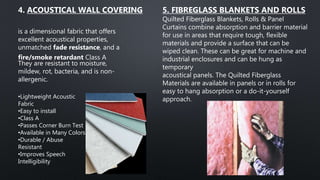
is a dimensional fabric that offers
excellent acoustical properties,
unmatched fade resistance, and a
fire/smoke retardant Class A
They are resistant to moisture,
mildew, rot, bacteria, and is non-
allergenic.
•Lightweight Acoustic
Fabric
•Easy to install
•Class A
•Passes Corner Burn Test
•Available in Many Colors
•Durable / Abuse
Resistant
•Improves Speech
Intelligibility
4. ACOUSTICAL WALL COVERING 5. FIBREGLASS BLANKETS AND ROLLS
Quilted Fiberglass Blankets, Rolls & Panel
Curtains combine absorption and barrier material
for use in areas that require tough, flexible
materials and provide a surface that can be
wiped clean. These can be great for machine and
industrial enclosures and can be hung as
temporary
acoustical panels. The Quilted Fiberglass
Materials are available in panels or in rolls for
easy to hang absorption or a do-it-yourself
approach.
•
•
•
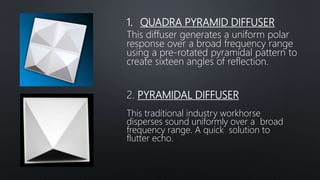
1. QUADRA PYRAMID DIFFUSER
This diffuser generates a uniform polar
response over a broad frequency range
using a pre-rotated pyramidal pattern to
create sixteen angles of reflection.
2. PYRAMIDAL DIFFUSER
This traditional industry workhorse
disperses sound uniformly over a broad
frequency range. A quick solution to
flutter echo.
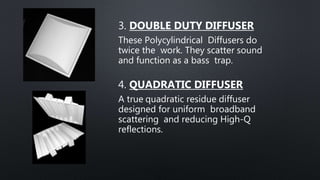
3. DOUBLE DUTY DIFFUSER
These Polycylindrical Diffusers do
twice the work. They scatter sound
and function as a bass trap.
4. QUADRATIC DIFFUSER
A true quadratic residue diffuser
designed for uniform broadband
scattering and reducing High-Q
reflections.
•
•
•
•
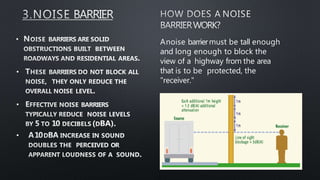
Anoise barriermust be tall enough
and long enough to block the
view of a highway from the area
that is to be protected, the
"receiver."
masonry wood
Material
concrete metal foams
•
•
•
•
•
•
•
•
•
The acoustic materials used in the old
churches were mainly stones, Mud and
Bricks.
These items were the wall materials for
the Halls but had ability to absorb and
control sound as well.
The new Halls are mainly built of blocks
and concrete, and padded with sound
insulation/absorptive materials, Sound
barriers and Reflectors, e.g. acoustic foam
panels.
1.Materials Used
THEN NOW
The shapes of Halls of the past were mainly
rectangular irrespective of the capacity.
They also had curved ceiling shapes.
Materials application techniques were crude
as opposed to technology aided application
techniques of today.
The new Halls come with varieties of shapes
depending on size and capacity of the Hall,
e.g. semi-circular shape, Hexagonal shapes,
sloppy floors and ceilings, etc..
Materials application techniques are
technology aided and of high quality.
2. Design and Materials Application Techniques
THEN NOW
Materials were largely very natural
with little or no proper industrial
chemical treatments to improve their
quality and prolong life span.
Materials are of quality and durable
as they are mostly factory treated
with a guaranteed life span.
3.Quality and Durability of Materials Used
THEN NOW
Materials were to some extent
performing well, but were largely
limited by the quality of production
and installation.
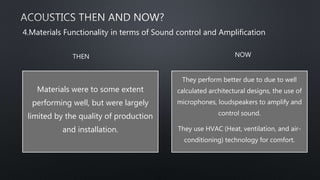
They perform better due to due to well
calculated architectural designs, the use of
microphones, loudspeakers to amplify and
control sound.
They use HVAC (Heat, ventilation, and air-
conditioning) technology for comfort.
4.Materials Functionality in terms of Sound control and Amplification
THEN NOW
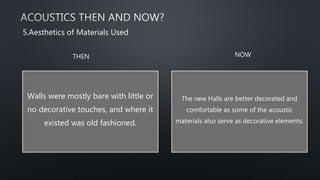
Walls were mostly bare with little or
no decorative touches, and where it
existed was old fashioned.
The new Halls are better decorated and
comfortable as some of the acoustic
materials also serve as decorative elements.
5.Aesthetics of Materials Used
THEN NOW
•
•
•
•
•
•
•

Acoustic material

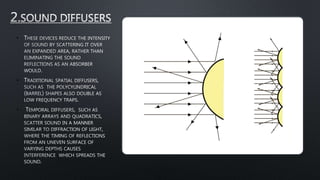
  • 2.
  • 4.
  • 5.
  • 6.
  • 7.
    • For use in Recordingstudios, Home Theaters, Offices, Broadcast Facilities, Telemedicine, Conference Rooms, Restaurants, Salons, Coffee Shops, Computer Gaming Systems or anywhere absorption is desired.
  • 8.
    previously referred toas Respond Panels, are used to reduce echo and reverberation. These panels are manufactured from a rigid high density glass fiber acoustical board and covered with an acoustically transparent fabric. The edges on these decorative wall panels are chemically hardened and offer several edge design choices. These absorbers are suitable for all applications including offices, recording, broadcast, worship facilities, schools, gymnasiums, museums, auditoriums, theaters or any application that requires an acoustical solution. 3. FABRIC WRAPPED PANELS •CEILING CLOUDS reduce reflected sound in theaters, restaurants, arenas, shopping malls, convention centers, recording and broadcast rooms •CEILING TILES are an excellent choice for a variety of ceiling grid applications requiring high absorption and are available in a variety of finishes. •FABRIC WRAPPED CEILING BAFFLES are covered with an acoustically transparent fabric. Suspend these from ceiling trusses or other supports to reduce reverberation overhead. •BROADBAND ABSORBER are used for walls, as corner traps, bass traps and ceiling applications. Available in half- rounds or quarter-rounds.
  • 9.
    is a dimensionalfabric that offers excellent acoustical properties, unmatched fade resistance, and a fire/smoke retardant Class A They are resistant to moisture, mildew, rot, bacteria, and is non- allergenic. •Lightweight Acoustic Fabric •Easy to install •Class A •Passes Corner Burn Test •Available in Many Colors •Durable / Abuse Resistant •Improves Speech Intelligibility 4. ACOUSTICAL WALL COVERING 5. FIBREGLASS BLANKETS AND ROLLS Quilted Fiberglass Blankets, Rolls & Panel Curtains combine absorption and barrier material for use in areas that require tough, flexible materials and provide a surface that can be wiped clean. These can be great for machine and industrial enclosures and can be hung as temporary acoustical panels. The Quilted Fiberglass Materials are available in panels or in rolls for easy to hang absorption or a do-it-yourself approach.
  • 10.
  • 11.
    1. QUADRA PYRAMIDDIFFUSER This diffuser generates a uniform polar response over a broad frequency range using a pre-rotated pyramidal pattern to create sixteen angles of reflection. 2. PYRAMIDAL DIFFUSER This traditional industry workhorse disperses sound uniformly over a broad frequency range. A quick solution to flutter echo.
  • 12.
    3. DOUBLE DUTYDIFFUSER These Polycylindrical Diffusers do twice the work. They scatter sound and function as a bass trap. 4. QUADRATIC DIFFUSER A true quadratic residue diffuser designed for uniform broadband scattering and reducing High-Q reflections.
  • 13.
    • • • • Anoise barriermust betall enough and long enough to block the view of a highway from the area that is to be protected, the "receiver."
  • 14.
  • 15.
  • 16.
  • 17.
  • 18.
    The acoustic materialsused in the old churches were mainly stones, Mud and Bricks. These items were the wall materials for the Halls but had ability to absorb and control sound as well. The new Halls are mainly built of blocks and concrete, and padded with sound insulation/absorptive materials, Sound barriers and Reflectors, e.g. acoustic foam panels. 1.Materials Used THEN NOW
  • 19.
    The shapes ofHalls of the past were mainly rectangular irrespective of the capacity. They also had curved ceiling shapes. Materials application techniques were crude as opposed to technology aided application techniques of today. The new Halls come with varieties of shapes depending on size and capacity of the Hall, e.g. semi-circular shape, Hexagonal shapes, sloppy floors and ceilings, etc.. Materials application techniques are technology aided and of high quality. 2. Design and Materials Application Techniques THEN NOW
  • 20.
    Materials were largelyvery natural with little or no proper industrial chemical treatments to improve their quality and prolong life span. Materials are of quality and durable as they are mostly factory treated with a guaranteed life span. 3.Quality and Durability of Materials Used THEN NOW
  • 21.
    Materials were tosome extent performing well, but were largely limited by the quality of production and installation. They perform better due to due to well calculated architectural designs, the use of microphones, loudspeakers to amplify and control sound. They use HVAC (Heat, ventilation, and air- conditioning) technology for comfort. 4.Materials Functionality in terms of Sound control and Amplification THEN NOW
  • 22.
    Walls were mostlybare with little or no decorative touches, and where it existed was old fashioned. The new Halls are better decorated and comfortable as some of the acoustic materials also serve as decorative elements. 5.Aesthetics of Materials Used THEN NOW
  • 23.