ACOs Are Defining the Problem. Should
 Pharma Reposition its Solutions?
Written by Anthony D. Slonim, MD, DrPH, Executive Vice President and Chief
Medical Officer, Barnabas Health. Executive Director, Barnabas Health ACO-
North, West Orange, New Jersey

                                October 1, 2012
                            www.cmrinstitute.org
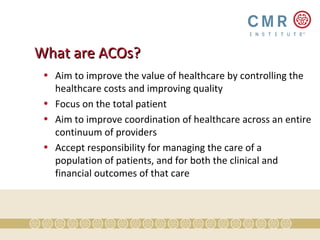
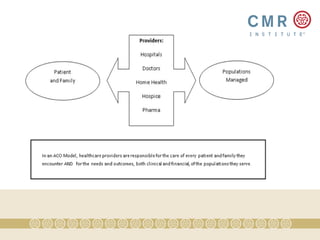
What are ACOs?
 • Aim to improve the value of healthcare by controlling the
   healthcare costs and improving quality
 • Focus on the total patient
 • Aim to improve coordination of healthcare across an entire
   continuum of providers
 • Accept responsibility for managing the care of a
   population of patients, and for both the clinical and
   financial outcomes of that care
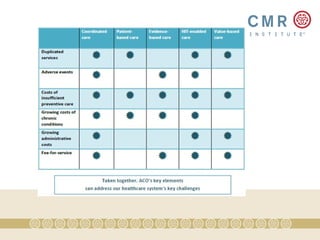
Five Key Elements of the ACO Model
 •   Coordinated care
 •   Patient-Centered care
 •   Evidence-based & outcomes-based care
 •   HIT (Health Information Technology) enabled care
 •   Value-based payment for care
Benefits of Coordinated Care
 • Eliminate waste and inefficiencies (eg, by avoiding duplicated tests)
 • Decrease adverse events (eg, by lessening the likelihood of drug
   interactions from multiple prescribers)
 • Establish accountability (by defining who is responsible for each
   aspect of patient care and increasing each caregiver’s awareness of
   how that impacts all other aspects of care)
 • Facilitate patient transitions from one care-setting to another (eg,
   from hospital to rehabilitation center to home)
Benefits of Patient-Centered Care
 • Improve care coordination
 • Help to more meaningfully define goals and desired
   outcomes, so success can be measured
 • Help increase the chances for successful outcomes— by
   making the patient an active partner in the
   treatment/management process
 • Better respond to more-informed, more discerning
   patient-consumers
Evidence-based & outcomes-based care:
 • Enables coordination of care— by providing a basis for
   consensus as to goals and treatment-paths
 • Enables improvement of care —by providing a basis for
   evaluating current practices and formulating best practices
 • Enables value-based reimbursement of care— by
   providing quality and cost-effectiveness measures
Health Information Technology Enables:
 • Coordination of care
 • Active involvement of the patient
 • Tracking of patient outcomes
 • Adherence to best practices and avoidance of adverse
   event
 • Measurement and analysis of outcomes and costs across a
   patient population
 • Tracking of outcomes and treatment costs
Value-based care:
 • Rewards coordination of care
 • Rewards improvements in quality and cost-effectiveness of
   care
 • Enables a different perspective for assigning value to
   treatment alternatives
For more information or to download the
              white paper:
      Please visit www.cmrinstitute.org

ACO Presentation

  • 1.
    ACOs Are Definingthe Problem. Should Pharma Reposition its Solutions? Written by Anthony D. Slonim, MD, DrPH, Executive Vice President and Chief Medical Officer, Barnabas Health. Executive Director, Barnabas Health ACO- North, West Orange, New Jersey October 1, 2012 www.cmrinstitute.org
  • 2.
    What are ACOs? • Aim to improve the value of healthcare by controlling the healthcare costs and improving quality • Focus on the total patient • Aim to improve coordination of healthcare across an entire continuum of providers • Accept responsibility for managing the care of a population of patients, and for both the clinical and financial outcomes of that care
  • 5.
    Five Key Elementsof the ACO Model • Coordinated care • Patient-Centered care • Evidence-based & outcomes-based care • HIT (Health Information Technology) enabled care • Value-based payment for care
  • 6.
    Benefits of CoordinatedCare • Eliminate waste and inefficiencies (eg, by avoiding duplicated tests) • Decrease adverse events (eg, by lessening the likelihood of drug interactions from multiple prescribers) • Establish accountability (by defining who is responsible for each aspect of patient care and increasing each caregiver’s awareness of how that impacts all other aspects of care) • Facilitate patient transitions from one care-setting to another (eg, from hospital to rehabilitation center to home)
  • 7.
    Benefits of Patient-CenteredCare • Improve care coordination • Help to more meaningfully define goals and desired outcomes, so success can be measured • Help increase the chances for successful outcomes— by making the patient an active partner in the treatment/management process • Better respond to more-informed, more discerning patient-consumers
  • 8.
    Evidence-based & outcomes-basedcare: • Enables coordination of care— by providing a basis for consensus as to goals and treatment-paths • Enables improvement of care —by providing a basis for evaluating current practices and formulating best practices • Enables value-based reimbursement of care— by providing quality and cost-effectiveness measures
  • 9.
    Health Information TechnologyEnables: • Coordination of care • Active involvement of the patient • Tracking of patient outcomes • Adherence to best practices and avoidance of adverse event • Measurement and analysis of outcomes and costs across a patient population • Tracking of outcomes and treatment costs
  • 10.
    Value-based care: •Rewards coordination of care • Rewards improvements in quality and cost-effectiveness of care • Enables a different perspective for assigning value to treatment alternatives
  • 11.
    For more informationor to download the white paper: Please visit www.cmrinstitute.org

Editor's Notes

  • #2 Not-for-profit – CMR Institute’s status is unique -- similar to universities and other institutions of higher learning. We are an independent, not-for-profit organization and proceeds from all educational programs are re-invested into maintaining and updating our expert educational content.   Physician origin/foundation – CMR Institute was founded by physicians who wanted to “raise the bar” for representatives. Their vision was for all representatives to be a resource with improved therapeutic knowledge through scientific education; superior communication skills to facilitate effective clinician interactions; and enhanced business expertise to truly understand of issues and challenges that physician’s face in providing patient care. Our mission has always been and remains to advance knowledge to enhance healthcare.