Techfit Ageing: Integrating Technology
for Holistic Ageing & Wellness
by Vaikunthan Rajaratnam
MBBS,FRCS(Ed),MBA,MIDT, PhD(Education).
Senior Consultant, Hand & Reconstructive Microsurgery, KTPH, Singapore
Program Director Instructional Design for Healthcare & AI in Healthcare NHG, Singapore
Adjunct Professor/UNESCO Chair Partner, Asia Pacific University of Technology and Innovation, Malaysia
https://tinyurl.com/TECHFITACHA24
Pre workshop survey
https://tinyurl.com/TECHFIT24
https://tinyurl.com/TECHFIT2024
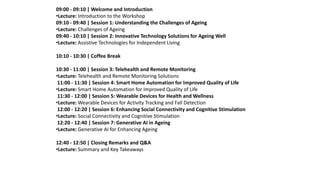
09:00 - 09:10 | Welcome and Introduction
•Lecture: Introduction to the Workshop
09:10 - 09:40 | Session 1: Understanding the Challenges of Ageing
•Lecture: Challenges of Ageing
09:40 - 10:10 | Session 2: Innovative Technology Solutions for Ageing Well
•Lecture: Assistive Technologies for Independent Living
10:10 - 10:30 | Coffee Break
10:30 - 11:00 | Session 3: Telehealth and Remote Monitoring
•Lecture: Telehealth and Remote Monitoring Solutions
11:00 - 11:30 | Session 4: Smart Home Automation for Improved Quality of Life
•Lecture: Smart Home Automation for Improved Quality of Life
11:30 - 12:00 | Session 5: Wearable Devices for Health and Wellness
•Lecture: Wearable Devices for Activity Tracking and Fall Detection
12:00 - 12:20 | Session 6: Enhancing Social Connectivity and Cognitive Stimulation
•Lecture: Social Connectivity and Cognitive Stimulation
12:20 - 12:40 | Session 7: Generative AI in Ageing
•Lecture: Generative AI for Enhancing Ageing
12:40 - 12:50 | Closing Remarks and Q&A
•Lecture: Summary and Key Takeaways
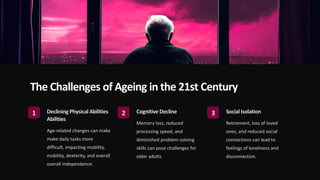
The Challenges of Ageing in the 21st Century
1 Declining Physical Abilities
Abilities
Age-related changes can make
make daily tasks more
difficult, impacting mobility,
mobility, dexterity, and overall
overall independence.
2 CognitiveDecline
Memory loss, reduced
processing speed, and
diminished problem-solving
skills can pose challenges for
older adults.
3 Social Isolation
Retirement, loss of loved
ones, and reduced social
connections can lead to
feelings of loneliness and
disconnection.
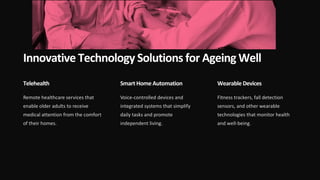
Innovative Technology Solutions for Ageing Well
Telehealth
Remote healthcare services that
enable older adults to receive
medical attention from the comfort
of their homes.
Smart Home Automation
Voice-controlled devices and
integrated systems that simplify
daily tasks and promote
independent living.
Wearable Devices
Fitness trackers, fall detection
sensors, and other wearable
technologies that monitor health
and well-being.
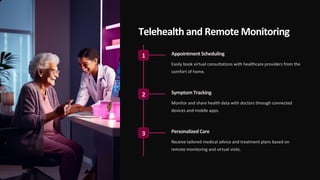
Telehealth and Remote Monitoring
1 AppointmentScheduling
Easily book virtual consultations with healthcare providers from the
comfort of home.
2 Symptom Tracking
Monitor and share health data with doctors through connected
devices and mobile apps.
3 Personalized Care
Receive tailored medical advice and treatment plans based on
remote monitoring and virtual visits.
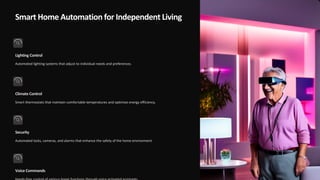
Smart Home Automation for Independent Living
Lighting Control
Automated lighting systems that adjust to individual needs and preferences.
Climate Control
Smart thermostats that maintain comfortable temperatures and optimize energy efficiency.
Security
Automated locks, cameras, and alarms that enhance the safety of the home environment.
Voice Commands
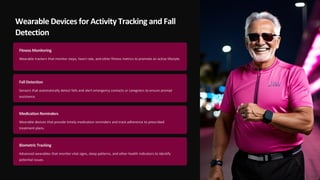
Wearable Devices for Activity Tracking and Fall
Detection
Fitness Monitoring
Wearable trackers that monitor steps, heart rate, and other fitness metrics to promote an active lifestyle.
Fall Detection
Sensors that automatically detect falls and alert emergency contacts or caregivers to ensure prompt
assistance.
Medication Reminders
Wearable devices that provide timely medication reminders and track adherence to prescribed
treatment plans.
Biometric Tracking
Advanced wearables that monitor vital signs, sleep patterns, and other health indicators to identify
potential issues.
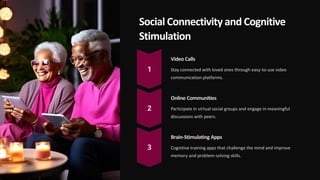
Social Connectivity and Cognitive
Stimulation
Video Calls
Stay connected with loved ones through easy-to-use video
communication platforms.
Online Communities
Participate in virtual social groups and engage in meaningful
discussions with peers.
Brain-Stimulating Apps
Cognitive training apps that challenge the mind and improve
memory and problem-solving skills.
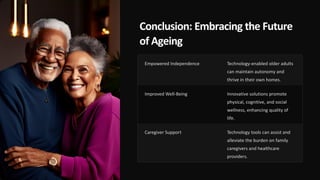
Conclusion: Embracing the Future
of Ageing
Empowered Independence Technology-enabled older adults
can maintain autonomy and
thrive in their own homes.
Improved Well-Being Innovative solutions promote
physical, cognitive, and social
wellness, enhancing quality of
life.
Caregiver Support Technology tools can assist and
alleviate the burden on family
caregivers and healthcare
providers.
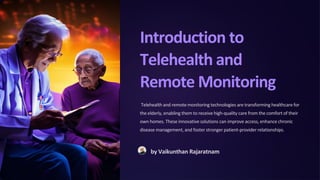
Introduction to
Telehealth and
Remote Monitoring
Telehealth and remote monitoring technologies are transforming healthcare for
the elderly, enabling them to receive high-quality care from the comfort of their
own homes. These innovative solutions can improve access, enhance chronic
disease management, and foster stronger patient-provider relationships.
by Vaikunthan Rajaratnam
Benefits of Telehealth for the Elderly
Increased Accessibility
Telehealth removes barriers like
transportation, mobility issues, and
and limited access to healthcare
facilities, especially for those living in
living in rural or underserved areas.
areas.
Improved Chronic Care
Remote monitoring devices can track
track vital signs, symptoms, and
medication adherence, enabling
proactive management of chronic
chronic conditions.
EnhancedIndependence
Telehealth empowers the elderly to
actively participate in their own care,
fostering a greater sense of
independence and control.
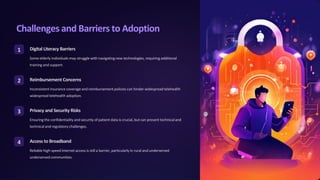
Challenges and Barriers to Adoption
1 Digital Literacy Barriers
Some elderly individuals may struggle with navigating new technologies, requiring additional
training and support.
2 Reimbursement Concerns
Inconsistent insurance coverage and reimbursement policies can hinder widespread telehealth
widespread telehealth adoption.
3 Privacy and Security Risks
Ensuring the confidentiality and security of patient data is crucial, but can present technical and
technical and regulatory challenges.
4 Access to Broadband
Reliable high-speed internet access is still a barrier, particularly in rural and underserved
underserved communities.
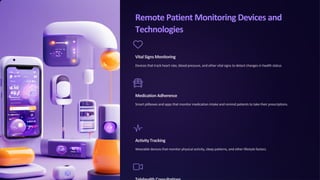
Remote Patient Monitoring Devices and
Technologies
VitalSignsMonitoring
Devices that track heart rate, blood pressure, and other vital signs to detect changes in health status.
MedicationAdherence
Smart pillboxes and apps that monitor medication intake and remind patients to take their prescriptions.
ActivityTracking
Wearable devices that monitor physical activity, sleep patterns, and other lifestyle factors.
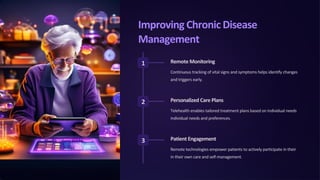
Improving Chronic Disease
Management
1 Remote Monitoring
Continuous tracking of vital signs and symptoms helps identify changes
and triggers early.
2 Personalized Care Plans
Telehealth enables tailored treatment plans based on individual needs
individual needs and preferences.
3 Patient Engagement
Remote technologies empower patients to actively participate in their
in their own care and self-management.
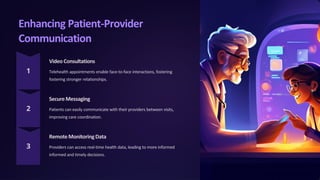
Enhancing Patient-Provider
Communication
Video Consultations
Telehealth appointments enable face-to-face interactions, fostering
fostering stronger relationships.
SecureMessaging
Patients can easily communicate with their providers between visits,
improving care coordination.
RemoteMonitoringData
Providers can access real-time health data, leading to more informed
informed and timely decisions.
Ensuring Data Privacy and Security
Encryptionand Access Control
Implementing robust security measures to protect patient
patient data and prevent unauthorized access.
Compliance with Regulations
Ensuring telehealth solutions adhere to HIPAA and other
other privacy laws to maintain patient trust.
Transparent Policies
Clearly communicating data privacy and security practices to
practices to patients, fostering transparency.
ContinuousMonitoring
Regularly reviewing and updating security protocols to
to address evolving threats and vulnerabilities.
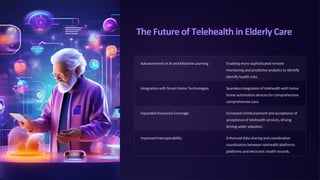
The Future of Telehealth in Elderly Care
Advancements in AI and Machine Learning Enabling more sophisticated remote
monitoring and predictive analytics to identify
identify health risks.
Integration with Smart Home Technologies Seamless integration of telehealth with home
home automation devices for comprehensive
comprehensive care.
Expanded Insurance Coverage Increased reimbursement and acceptance of
acceptance of telehealth services, driving
driving wider adoption.
Improved Interoperability Enhanced data sharing and coordination
coordination between telehealth platforms
platforms and electronic health records.
Introduction to
Smart Home
Automation
Smart home automation empowers independent living by seamlessly
integrating technology into your daily routines. From voice-controlled
lighting to secure access, smart home systems can enhance comfort,
convenience, and safety in your own home.
by Vaikunthan Rajaratnam
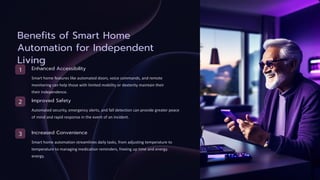
Benefits of Smart Home
Automation for Independent
Living
1 Enhanced Accessibility
Smart home features like automated doors, voice commands, and remote
monitoring can help those with limited mobility or dexterity maintain their
their independence.
2 Improved Safety
Automated security, emergency alerts, and fall detection can provide greater peace
of mind and rapid response in the event of an incident.
3 Increased Convenience
Smart home automation streamlines daily tasks, from adjusting temperature to
temperature to managing medication reminders, freeing up time and energy.
energy.
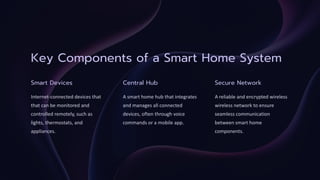
Key Components of a Smart Home System
Smart Devices
Internet-connected devices that
that can be monitored and
controlled remotely, such as
lights, thermostats, and
appliances.
Central Hub
A smart home hub that integrates
and manages all connected
devices, often through voice
commands or a mobile app.
Secure Network
A reliable and encrypted wireless
wireless network to ensure
seamless communication
between smart home
components.
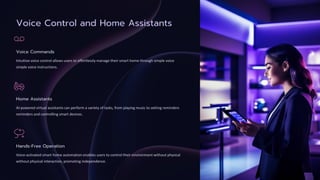
Voice Control and Home Assistants
Voice Commands
Intuitive voice control allows users to effortlessly manage their smart home through simple voice
simple voice instructions.
Home Assistants
AI-powered virtual assistants can perform a variety of tasks, from playing music to setting reminders
reminders and controlling smart devices.
Hands-Free Operation
Voice-activated smart home automation enables users to control their environment without physical
without physical interaction, promoting independence.
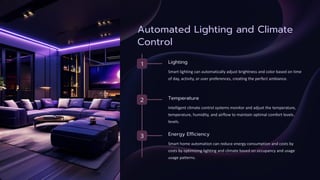
Automated Lighting and Climate
Control
1 Lighting
Smart lighting can automatically adjust brightness and color based on time
of day, activity, or user preferences, creating the perfect ambiance.
2 Temperature
Intelligent climate control systems monitor and adjust the temperature,
temperature, humidity, and airflow to maintain optimal comfort levels.
levels.
3 Energy Efficiency
Smart home automation can reduce energy consumption and costs by
costs by optimizing lighting and climate based on occupancy and usage
usage patterns.
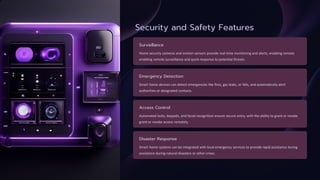
Security and Safety Features
Surveillance
Home security cameras and motion sensors provide real-time monitoring and alerts, enabling remote
enabling remote surveillance and quick response to potential threats.
Emergency Detection
Smart home devices can detect emergencies like fires, gas leaks, or falls, and automatically alert
authorities or designated contacts.
Access Control
Automated locks, keypads, and facial recognition ensure secure entry, with the ability to grant or revoke
grant or revoke access remotely.
Disaster Response
Smart home systems can be integrated with local emergency services to provide rapid assistance during
assistance during natural disasters or other crises.
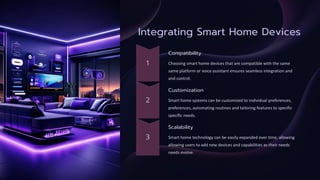
Integrating Smart Home Devices
Compatibility
Choosing smart home devices that are compatible with the same
same platform or voice assistant ensures seamless integration and
and control.
Customization
Smart home systems can be customized to individual preferences,
preferences, automating routines and tailoring features to specific
specific needs.
Scalability
Smart home technology can be easily expanded over time, allowing
allowing users to add new devices and capabilities as their needs
needs evolve.
Conclusion and Next Steps
1 Empowered Living
Smart home automation empowers individuals to maintain their
independence, enhance their quality of life, and stay connected to
their loved ones.
2 Continual Growth
As smart home technology continues to evolve, there are endless
endless possibilities for improving accessibility, safety, and overall
overall well-being for independent living.
3 Getting Started
Explore smart home options, prioritize your needs, and start
incorporating smart features that can make a meaningful difference
difference in your daily life.
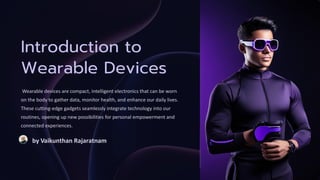
Introduction to
Wearable Devices
Wearable devices are compact, intelligent electronics that can be worn
on the body to gather data, monitor health, and enhance our daily lives.
These cutting-edge gadgets seamlessly integrate technology into our
routines, opening up new possibilities for personal empowerment and
connected experiences.
by Vaikunthan Rajaratnam
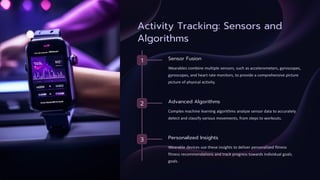
Activity Tracking: Sensors and
Algorithms
1 Sensor Fusion
Wearables combine multiple sensors, such as accelerometers, gyroscopes,
gyroscopes, and heart rate monitors, to provide a comprehensive picture
picture of physical activity.
2 Advanced Algorithms
Complex machine learning algorithms analyze sensor data to accurately
detect and classify various movements, from steps to workouts.
3 Personalized Insights
Wearable devices use these insights to deliver personalized fitness
fitness recommendations and track progress towards individual goals.
goals.
Fall Detection: Importance
and Challenges
1 Vital for Elderly
Fall detection is crucial for the safety of the elderly, who are at a
at a higher risk of serious injuries from falls.
2 Technical Complexities
Accurately detecting falls requires sophisticated motion sensors and
sensors and algorithms to differentiate between normal movements
movements and actual falls.
3 Privacy Concerns
Balancing fall detection with user privacy is an ongoing challenge, as
challenge, as wearables continuously monitor movements.
Wearable Device Design Considerations
Form Factor
Wearable devices must be
ergonomic, lightweight, and
discreet to encourage long-
term wear and seamless
term
integration into daily life.
User Experience
Intuitive controls, clear data
visualization, and personalized
features are essential for driving
consistent usage and user
satisfaction.
Power Efficiency
Optimizing battery life and power
power consumption is key to
ensuring wearables remain
reliable and convenient for the
the user.
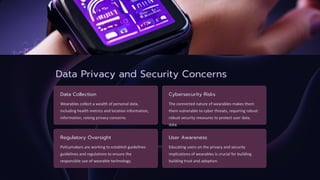
Data Privacy and Security Concerns
Data Collection
Wearables collect a wealth of personal data,
including health metrics and location information,
information, raising privacy concerns.
Cybersecurity Risks
The connected nature of wearables makes them
them vulnerable to cyber threats, requiring robust
robust security measures to protect user data.
data.
Regulatory Oversight
Policymakers are working to establish guidelines
guidelines and regulations to ensure the
responsible use of wearable technology.
User Awareness
Educating users on the privacy and security
implications of wearables is crucial for building
building trust and adoption.
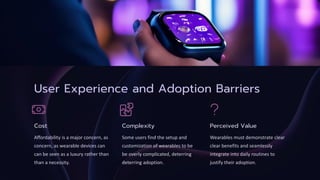
User Experience and Adoption Barriers
Cost
Affordability is a major concern, as
concern, as wearable devices can
can be seen as a luxury rather than
than a necessity.
Complexity
Some users find the setup and
customization of wearables to be
be overly complicated, deterring
deterring adoption.
Perceived Value
Wearables must demonstrate clear
clear benefits and seamlessly
integrate into daily routines to
justify their adoption.
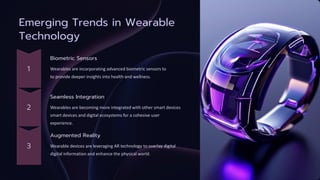
Emerging Trends in Wearable
Technology
Biometric Sensors
Wearables are incorporating advanced biometric sensors to
to provide deeper insights into health and wellness.
Seamless Integration
Wearables are becoming more integrated with other smart devices
smart devices and digital ecosystems for a cohesive user
experience.
Augmented Reality
Wearable devices are leveraging AR technology to overlay digital
digital information and enhance the physical world.
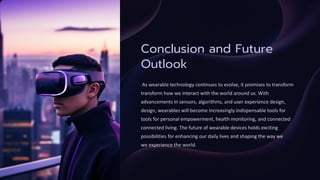
Conclusion and Future
Outlook
As wearable technology continues to evolve, it promises to transform
transform how we interact with the world around us. With
advancements in sensors, algorithms, and user experience design,
design, wearables will become increasingly indispensable tools for
tools for personal empowerment, health monitoring, and connected
connected living. The future of wearable devices holds exciting
possibilities for enhancing our daily lives and shaping the way we
we experience the world.
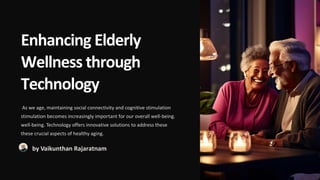
Enhancing Elderly
Wellness through
Technology
As we age, maintaining social connectivity and cognitive stimulation
stimulation becomes increasingly important for our overall well
well-
-
being. Technology offers innovative solutions to address these
being.
these crucial aspects of healthy aging.
by Vaikunthan Rajaratnam
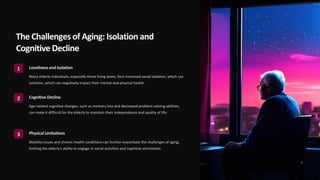
The Challenges of Aging: Isolation and
Cognitive Decline
1 Lonelinessand Isolation
Many elderly individuals, especially those living alone, face increased social isolation, which can
isolation, which can negatively impact their mental and physical health.
2 Cognitive Decline
Age-related cognitive changes, such as memory loss and decreased problem-solving abilities,
can make it difficult for the elderly to maintain their independence and quality of life.
3 Physical Limitations
Mobility issues and chronic health conditions can further exacerbate the challenges of aging,
limiting the elderly's ability to engage in social activities and cognitive stimulation.
The Role of Technology in Enhancing Social
Connections
Videoconferencing
Virtual face-to-face interactions
through platforms like Skype and
Zoom can help the elderly stay
connected with loved ones,
reducing feelings of isolation.
Social Media
Online communities and social
media platforms can provide the
elderly with a sense of belonging
and opportunities to engage in
discussions and share experiences.
Smart Home Devices
Voice-controlled assistants and
smart home technologies can
enable the elderly to access
information, entertainment, and
even healthcare services with ease.
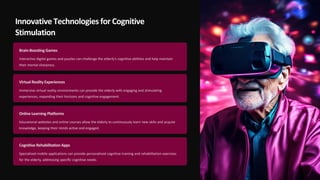
Innovative Technologies for Cognitive
Stimulation
Brain-Boosting Games
Interactive digital games and puzzles can challenge the elderly's cognitive abilities and help maintain
their mental sharpness.
Virtual Reality Experiences
Immersive virtual reality environments can provide the elderly with engaging and stimulating
experiences, expanding their horizons and cognitive engagement.
Online Learning Platforms
Educational websites and online courses allow the elderly to continuously learn new skills and acquire
knowledge, keeping their minds active and engaged.
Cognitive RehabilitationApps
Specialized mobile applications can provide personalized cognitive training and rehabilitation exercises
for the elderly, addressing specific cognitive needs.
Overcoming Barriers to Adoption
Technological Literacy
Provide user-friendly tutorials and ongoing support to help the elderly
navigate and utilize new technologies with confidence.
Accessibility
Ensure that technological solutions are designed with the unique needs
and limitations of the elderly in mind, prioritizing accessibility features.
Affordability
Explore cost-effective options and seek funding sources to make these
technologies accessible to the elderly, regardless of their financial status.
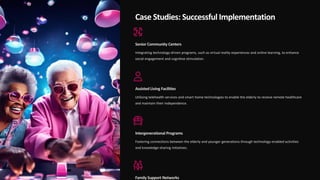
Case Studies: Successful Implementation
Senior Community Centers
Integrating technology-driven programs, such as virtual reality experiences and online learning, to enhance
social engagement and cognitive stimulation.
Assisted Living Facilities
Utilizing telehealth services and smart home technologies to enable the elderly to receive remote healthcare
and maintain their independence.
Intergenerational Programs
Fostering connections between the elderly and younger generations through technology-enabled activities
and knowledge-sharing initiatives.
Family Support Networks
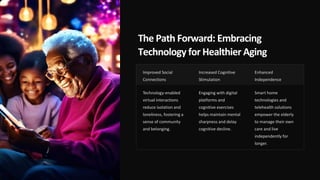
The Path Forward: Embracing
Technology for Healthier Aging
Improved Social
Connections
Increased Cognitive
Stimulation
Enhanced
Independence
Technology-enabled
virtual interactions
reduce isolation and
loneliness, fostering a
sense of community
and belonging.
Engaging with digital
platforms and
cognitive exercises
helps maintain mental
sharpness and delay
cognitive decline.
Smart home
technologies and
telehealth solutions
empower the elderly
to manage their own
care and live
independently for
longer.
Conclusion: Harnessing the Power of Technology
As we navigate the challenges of aging, technology has emerged as a powerful tool to enhance social connectivity and
cognitive stimulation for the elderly. By embracing these innovative solutions, we can create a future where the golden years
are filled with vibrant connections, lifelong learning, and a renewed sense of purpose.
Introduction to
Generative AI for
Healthy Aging
Generative AI holds immense potential to revolutionize the way we
we approach healthy aging. By leveraging advanced algorithms and
and machine learning, we can empower the elderly to live vibrant, fulfilling
vibrant, fulfilling lives.
by Vaikunthan Rajaratnam
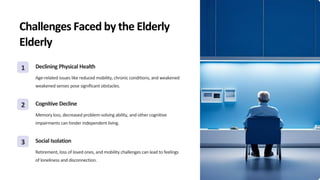
Challenges Faced by the Elderly
Elderly
1 Declining Physical Health
Age-related issues like reduced mobility, chronic conditions, and weakened
weakened senses pose significant obstacles.
2 Cognitive Decline
Memory loss, decreased problem-solving ability, and other cognitive
impairments can hinder independent living.
3 Social Isolation
Retirement, loss of loved ones, and mobility challenges can lead to feelings
of loneliness and disconnection.
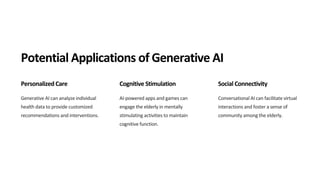
Potential Applications of Generative AI
Personalized Care
Generative AI can analyze individual
health data to provide customized
recommendations and interventions.
Cognitive Stimulation
AI-powered apps and games can
engage the elderly in mentally
stimulating activities to maintain
cognitive function.
Social Connectivity
Conversational AI can facilitate virtual
interactions and foster a sense of
community among the elderly.
https://tinyurl.com/AICOMAPNION24
https://tinyurl.com/LEARNER247
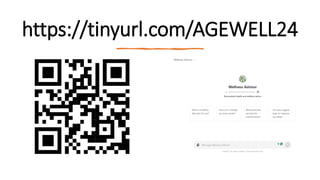
https://tinyurl.com/AGEWELL24
https://tinyurl.com/CREATIVECOMPANION
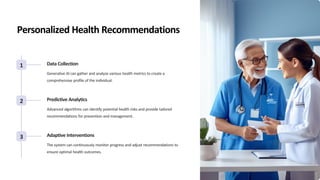
Personalized Health Recommendations
1 Data Collection
Generative AI can gather and analyze various health metrics to create a
comprehensive profile of the individual.
2 Predictive Analytics
Advanced algorithms can identify potential health risks and provide tailored
recommendations for prevention and management.
3 Adaptive Interventions
The system can continuously monitor progress and adjust recommendations to
ensure optimal health outcomes.
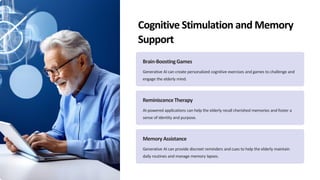
Cognitive Stimulation and Memory
Support
Brain-BoostingGames
Generative AI can create personalized cognitive exercises and games to challenge and
engage the elderly mind.
ReminiscenceTherapy
AI-powered applications can help the elderly recall cherished memories and foster a
sense of identity and purpose.
Memory Assistance
Generative AI can provide discreet reminders and cues to help the elderly maintain
daily routines and manage memory lapses.
Social Engagement and Connectedness
Virtual Interactions
Conversational AI can facilitate video calls
and group activities to combat loneliness
and promote social engagement.
Online Communities
AI-powered platforms can connect the
elderly with like-minded individuals,
fostering a sense of belonging and shared
experiences.
Volunteering Opportunities
Generative AI can match the elderly with
virtual volunteering roles, enabling them
to contribute to their communities.
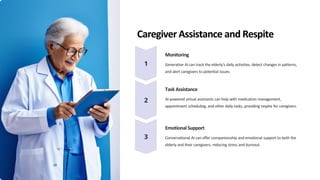
Caregiver Assistance and Respite
Monitoring
Generative AI can track the elderly's daily activities, detect changes in patterns,
and alert caregivers to potential issues.
Task Assistance
AI-powered virtual assistants can help with medication management,
appointment scheduling, and other daily tasks, providing respite for caregivers.
Emotional Support
Conversational AI can offer companionship and emotional support to both the
elderly and their caregivers, reducing stress and burnout.
Conclusion and Future Outlook
Empowering the Elderly Generative AI can transform the aging
experience by addressing key challenges
and promoting healthy, fulfilling lives.
Advancing Research Ongoing developments in Generative AI
will continue to expand the possibilities
for personalized care and support.
Ethical Considerations As the technology advances, it will be
crucial to ensure privacy, security, and the
responsible use of Generative AI for the
elderly.
Solutions of Digital Health for
Elderly in Malaysia
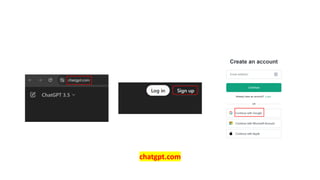
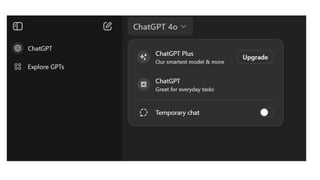
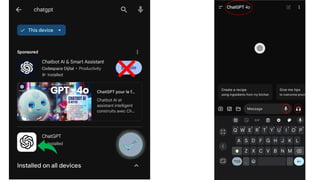
Opening a ChatGPT Account
chatgpt.com
• Home - healthapp (askmydoctor.asia)
• Online Pharmacy For Medicines, Supplements &
Healthcare Devices - DoctorOnCall
Features
• affordable, all-in-one remote
patient monitoring service
• for elderly care, providing
continuous health oversight and
• instant updates for peace of
mind.
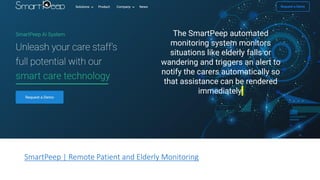
SmartPeep | Remote Patient and Elderly Monitoring
The SmartPeep automated
monitoring system monitors
situations like elderly falls or
wandering and triggers an alert to
notify the carers automatically so
that assistance can be rendered
immediately.
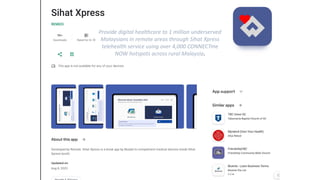
Provide digital healthcare to 1 million underserved
Malaysians in remote areas through Sihat Xpress
telehealth service using over 4,000 CONNECTme
NOW hotspots across rural Malaysia.
https://tinyurl.com/POSTSURVEYACHA2024

ACHA Workshop TechFit and Ageing Final 29July24.pdf

  • 1.
    Techfit Ageing: IntegratingTechnology for Holistic Ageing & Wellness by Vaikunthan Rajaratnam MBBS,FRCS(Ed),MBA,MIDT, PhD(Education). Senior Consultant, Hand & Reconstructive Microsurgery, KTPH, Singapore Program Director Instructional Design for Healthcare & AI in Healthcare NHG, Singapore Adjunct Professor/UNESCO Chair Partner, Asia Pacific University of Technology and Innovation, Malaysia
  • 2.
  • 3.
  • 4.
  • 5.
    09:00 - 09:10| Welcome and Introduction •Lecture: Introduction to the Workshop 09:10 - 09:40 | Session 1: Understanding the Challenges of Ageing •Lecture: Challenges of Ageing 09:40 - 10:10 | Session 2: Innovative Technology Solutions for Ageing Well •Lecture: Assistive Technologies for Independent Living 10:10 - 10:30 | Coffee Break 10:30 - 11:00 | Session 3: Telehealth and Remote Monitoring •Lecture: Telehealth and Remote Monitoring Solutions 11:00 - 11:30 | Session 4: Smart Home Automation for Improved Quality of Life •Lecture: Smart Home Automation for Improved Quality of Life 11:30 - 12:00 | Session 5: Wearable Devices for Health and Wellness •Lecture: Wearable Devices for Activity Tracking and Fall Detection 12:00 - 12:20 | Session 6: Enhancing Social Connectivity and Cognitive Stimulation •Lecture: Social Connectivity and Cognitive Stimulation 12:20 - 12:40 | Session 7: Generative AI in Ageing •Lecture: Generative AI for Enhancing Ageing 12:40 - 12:50 | Closing Remarks and Q&A •Lecture: Summary and Key Takeaways
  • 6.
    The Challenges ofAgeing in the 21st Century 1 Declining Physical Abilities Abilities Age-related changes can make make daily tasks more difficult, impacting mobility, mobility, dexterity, and overall overall independence. 2 CognitiveDecline Memory loss, reduced processing speed, and diminished problem-solving skills can pose challenges for older adults. 3 Social Isolation Retirement, loss of loved ones, and reduced social connections can lead to feelings of loneliness and disconnection.
  • 7.
    Innovative Technology Solutionsfor Ageing Well Telehealth Remote healthcare services that enable older adults to receive medical attention from the comfort of their homes. Smart Home Automation Voice-controlled devices and integrated systems that simplify daily tasks and promote independent living. Wearable Devices Fitness trackers, fall detection sensors, and other wearable technologies that monitor health and well-being.
  • 8.
    Telehealth and RemoteMonitoring 1 AppointmentScheduling Easily book virtual consultations with healthcare providers from the comfort of home. 2 Symptom Tracking Monitor and share health data with doctors through connected devices and mobile apps. 3 Personalized Care Receive tailored medical advice and treatment plans based on remote monitoring and virtual visits.
  • 9.
    Smart Home Automationfor Independent Living Lighting Control Automated lighting systems that adjust to individual needs and preferences. Climate Control Smart thermostats that maintain comfortable temperatures and optimize energy efficiency. Security Automated locks, cameras, and alarms that enhance the safety of the home environment. Voice Commands
  • 10.
    Wearable Devices forActivity Tracking and Fall Detection Fitness Monitoring Wearable trackers that monitor steps, heart rate, and other fitness metrics to promote an active lifestyle. Fall Detection Sensors that automatically detect falls and alert emergency contacts or caregivers to ensure prompt assistance. Medication Reminders Wearable devices that provide timely medication reminders and track adherence to prescribed treatment plans. Biometric Tracking Advanced wearables that monitor vital signs, sleep patterns, and other health indicators to identify potential issues.
  • 11.
    Social Connectivity andCognitive Stimulation Video Calls Stay connected with loved ones through easy-to-use video communication platforms. Online Communities Participate in virtual social groups and engage in meaningful discussions with peers. Brain-Stimulating Apps Cognitive training apps that challenge the mind and improve memory and problem-solving skills.
  • 12.
    Conclusion: Embracing theFuture of Ageing Empowered Independence Technology-enabled older adults can maintain autonomy and thrive in their own homes. Improved Well-Being Innovative solutions promote physical, cognitive, and social wellness, enhancing quality of life. Caregiver Support Technology tools can assist and alleviate the burden on family caregivers and healthcare providers.
  • 13.
    Introduction to Telehealth and RemoteMonitoring Telehealth and remote monitoring technologies are transforming healthcare for the elderly, enabling them to receive high-quality care from the comfort of their own homes. These innovative solutions can improve access, enhance chronic disease management, and foster stronger patient-provider relationships. by Vaikunthan Rajaratnam
  • 14.
    Benefits of Telehealthfor the Elderly Increased Accessibility Telehealth removes barriers like transportation, mobility issues, and and limited access to healthcare facilities, especially for those living in living in rural or underserved areas. areas. Improved Chronic Care Remote monitoring devices can track track vital signs, symptoms, and medication adherence, enabling proactive management of chronic chronic conditions. EnhancedIndependence Telehealth empowers the elderly to actively participate in their own care, fostering a greater sense of independence and control.
  • 15.
    Challenges and Barriersto Adoption 1 Digital Literacy Barriers Some elderly individuals may struggle with navigating new technologies, requiring additional training and support. 2 Reimbursement Concerns Inconsistent insurance coverage and reimbursement policies can hinder widespread telehealth widespread telehealth adoption. 3 Privacy and Security Risks Ensuring the confidentiality and security of patient data is crucial, but can present technical and technical and regulatory challenges. 4 Access to Broadband Reliable high-speed internet access is still a barrier, particularly in rural and underserved underserved communities.
  • 16.
    Remote Patient MonitoringDevices and Technologies VitalSignsMonitoring Devices that track heart rate, blood pressure, and other vital signs to detect changes in health status. MedicationAdherence Smart pillboxes and apps that monitor medication intake and remind patients to take their prescriptions. ActivityTracking Wearable devices that monitor physical activity, sleep patterns, and other lifestyle factors.
  • 17.
    Improving Chronic Disease Management 1Remote Monitoring Continuous tracking of vital signs and symptoms helps identify changes and triggers early. 2 Personalized Care Plans Telehealth enables tailored treatment plans based on individual needs individual needs and preferences. 3 Patient Engagement Remote technologies empower patients to actively participate in their in their own care and self-management.
  • 18.
    Enhancing Patient-Provider Communication Video Consultations Telehealthappointments enable face-to-face interactions, fostering fostering stronger relationships. SecureMessaging Patients can easily communicate with their providers between visits, improving care coordination. RemoteMonitoringData Providers can access real-time health data, leading to more informed informed and timely decisions.
  • 19.
    Ensuring Data Privacyand Security Encryptionand Access Control Implementing robust security measures to protect patient patient data and prevent unauthorized access. Compliance with Regulations Ensuring telehealth solutions adhere to HIPAA and other other privacy laws to maintain patient trust. Transparent Policies Clearly communicating data privacy and security practices to practices to patients, fostering transparency. ContinuousMonitoring Regularly reviewing and updating security protocols to to address evolving threats and vulnerabilities.
  • 20.
    The Future ofTelehealth in Elderly Care Advancements in AI and Machine Learning Enabling more sophisticated remote monitoring and predictive analytics to identify identify health risks. Integration with Smart Home Technologies Seamless integration of telehealth with home home automation devices for comprehensive comprehensive care. Expanded Insurance Coverage Increased reimbursement and acceptance of acceptance of telehealth services, driving driving wider adoption. Improved Interoperability Enhanced data sharing and coordination coordination between telehealth platforms platforms and electronic health records.
  • 21.
    Introduction to Smart Home Automation Smarthome automation empowers independent living by seamlessly integrating technology into your daily routines. From voice-controlled lighting to secure access, smart home systems can enhance comfort, convenience, and safety in your own home. by Vaikunthan Rajaratnam
  • 22.
    Benefits of SmartHome Automation for Independent Living 1 Enhanced Accessibility Smart home features like automated doors, voice commands, and remote monitoring can help those with limited mobility or dexterity maintain their their independence. 2 Improved Safety Automated security, emergency alerts, and fall detection can provide greater peace of mind and rapid response in the event of an incident. 3 Increased Convenience Smart home automation streamlines daily tasks, from adjusting temperature to temperature to managing medication reminders, freeing up time and energy. energy.
  • 23.
    Key Components ofa Smart Home System Smart Devices Internet-connected devices that that can be monitored and controlled remotely, such as lights, thermostats, and appliances. Central Hub A smart home hub that integrates and manages all connected devices, often through voice commands or a mobile app. Secure Network A reliable and encrypted wireless wireless network to ensure seamless communication between smart home components.
  • 24.
    Voice Control andHome Assistants Voice Commands Intuitive voice control allows users to effortlessly manage their smart home through simple voice simple voice instructions. Home Assistants AI-powered virtual assistants can perform a variety of tasks, from playing music to setting reminders reminders and controlling smart devices. Hands-Free Operation Voice-activated smart home automation enables users to control their environment without physical without physical interaction, promoting independence.
  • 25.
    Automated Lighting andClimate Control 1 Lighting Smart lighting can automatically adjust brightness and color based on time of day, activity, or user preferences, creating the perfect ambiance. 2 Temperature Intelligent climate control systems monitor and adjust the temperature, temperature, humidity, and airflow to maintain optimal comfort levels. levels. 3 Energy Efficiency Smart home automation can reduce energy consumption and costs by costs by optimizing lighting and climate based on occupancy and usage usage patterns.
  • 26.
    Security and SafetyFeatures Surveillance Home security cameras and motion sensors provide real-time monitoring and alerts, enabling remote enabling remote surveillance and quick response to potential threats. Emergency Detection Smart home devices can detect emergencies like fires, gas leaks, or falls, and automatically alert authorities or designated contacts. Access Control Automated locks, keypads, and facial recognition ensure secure entry, with the ability to grant or revoke grant or revoke access remotely. Disaster Response Smart home systems can be integrated with local emergency services to provide rapid assistance during assistance during natural disasters or other crises.
  • 27.
    Integrating Smart HomeDevices Compatibility Choosing smart home devices that are compatible with the same same platform or voice assistant ensures seamless integration and and control. Customization Smart home systems can be customized to individual preferences, preferences, automating routines and tailoring features to specific specific needs. Scalability Smart home technology can be easily expanded over time, allowing allowing users to add new devices and capabilities as their needs needs evolve.
  • 28.
    Conclusion and NextSteps 1 Empowered Living Smart home automation empowers individuals to maintain their independence, enhance their quality of life, and stay connected to their loved ones. 2 Continual Growth As smart home technology continues to evolve, there are endless endless possibilities for improving accessibility, safety, and overall overall well-being for independent living. 3 Getting Started Explore smart home options, prioritize your needs, and start incorporating smart features that can make a meaningful difference difference in your daily life.
  • 29.
    Introduction to Wearable Devices Wearabledevices are compact, intelligent electronics that can be worn on the body to gather data, monitor health, and enhance our daily lives. These cutting-edge gadgets seamlessly integrate technology into our routines, opening up new possibilities for personal empowerment and connected experiences. by Vaikunthan Rajaratnam
  • 30.
    Activity Tracking: Sensorsand Algorithms 1 Sensor Fusion Wearables combine multiple sensors, such as accelerometers, gyroscopes, gyroscopes, and heart rate monitors, to provide a comprehensive picture picture of physical activity. 2 Advanced Algorithms Complex machine learning algorithms analyze sensor data to accurately detect and classify various movements, from steps to workouts. 3 Personalized Insights Wearable devices use these insights to deliver personalized fitness fitness recommendations and track progress towards individual goals. goals.
  • 31.
    Fall Detection: Importance andChallenges 1 Vital for Elderly Fall detection is crucial for the safety of the elderly, who are at a at a higher risk of serious injuries from falls. 2 Technical Complexities Accurately detecting falls requires sophisticated motion sensors and sensors and algorithms to differentiate between normal movements movements and actual falls. 3 Privacy Concerns Balancing fall detection with user privacy is an ongoing challenge, as challenge, as wearables continuously monitor movements.
  • 32.
    Wearable Device DesignConsiderations Form Factor Wearable devices must be ergonomic, lightweight, and discreet to encourage long- term wear and seamless term integration into daily life. User Experience Intuitive controls, clear data visualization, and personalized features are essential for driving consistent usage and user satisfaction. Power Efficiency Optimizing battery life and power power consumption is key to ensuring wearables remain reliable and convenient for the the user.
  • 33.
    Data Privacy andSecurity Concerns Data Collection Wearables collect a wealth of personal data, including health metrics and location information, information, raising privacy concerns. Cybersecurity Risks The connected nature of wearables makes them them vulnerable to cyber threats, requiring robust robust security measures to protect user data. data. Regulatory Oversight Policymakers are working to establish guidelines guidelines and regulations to ensure the responsible use of wearable technology. User Awareness Educating users on the privacy and security implications of wearables is crucial for building building trust and adoption.
  • 34.
    User Experience andAdoption Barriers Cost Affordability is a major concern, as concern, as wearable devices can can be seen as a luxury rather than than a necessity. Complexity Some users find the setup and customization of wearables to be be overly complicated, deterring deterring adoption. Perceived Value Wearables must demonstrate clear clear benefits and seamlessly integrate into daily routines to justify their adoption.
  • 35.
    Emerging Trends inWearable Technology Biometric Sensors Wearables are incorporating advanced biometric sensors to to provide deeper insights into health and wellness. Seamless Integration Wearables are becoming more integrated with other smart devices smart devices and digital ecosystems for a cohesive user experience. Augmented Reality Wearable devices are leveraging AR technology to overlay digital digital information and enhance the physical world.
  • 36.
    Conclusion and Future Outlook Aswearable technology continues to evolve, it promises to transform transform how we interact with the world around us. With advancements in sensors, algorithms, and user experience design, design, wearables will become increasingly indispensable tools for tools for personal empowerment, health monitoring, and connected connected living. The future of wearable devices holds exciting possibilities for enhancing our daily lives and shaping the way we we experience the world.
  • 37.
    Enhancing Elderly Wellness through Technology Aswe age, maintaining social connectivity and cognitive stimulation stimulation becomes increasingly important for our overall well well- - being. Technology offers innovative solutions to address these being. these crucial aspects of healthy aging. by Vaikunthan Rajaratnam
  • 38.
    The Challenges ofAging: Isolation and Cognitive Decline 1 Lonelinessand Isolation Many elderly individuals, especially those living alone, face increased social isolation, which can isolation, which can negatively impact their mental and physical health. 2 Cognitive Decline Age-related cognitive changes, such as memory loss and decreased problem-solving abilities, can make it difficult for the elderly to maintain their independence and quality of life. 3 Physical Limitations Mobility issues and chronic health conditions can further exacerbate the challenges of aging, limiting the elderly's ability to engage in social activities and cognitive stimulation.
  • 39.
    The Role ofTechnology in Enhancing Social Connections Videoconferencing Virtual face-to-face interactions through platforms like Skype and Zoom can help the elderly stay connected with loved ones, reducing feelings of isolation. Social Media Online communities and social media platforms can provide the elderly with a sense of belonging and opportunities to engage in discussions and share experiences. Smart Home Devices Voice-controlled assistants and smart home technologies can enable the elderly to access information, entertainment, and even healthcare services with ease.
  • 40.
    Innovative Technologies forCognitive Stimulation Brain-Boosting Games Interactive digital games and puzzles can challenge the elderly's cognitive abilities and help maintain their mental sharpness. Virtual Reality Experiences Immersive virtual reality environments can provide the elderly with engaging and stimulating experiences, expanding their horizons and cognitive engagement. Online Learning Platforms Educational websites and online courses allow the elderly to continuously learn new skills and acquire knowledge, keeping their minds active and engaged. Cognitive RehabilitationApps Specialized mobile applications can provide personalized cognitive training and rehabilitation exercises for the elderly, addressing specific cognitive needs.
  • 41.
    Overcoming Barriers toAdoption Technological Literacy Provide user-friendly tutorials and ongoing support to help the elderly navigate and utilize new technologies with confidence. Accessibility Ensure that technological solutions are designed with the unique needs and limitations of the elderly in mind, prioritizing accessibility features. Affordability Explore cost-effective options and seek funding sources to make these technologies accessible to the elderly, regardless of their financial status.
  • 42.
    Case Studies: SuccessfulImplementation Senior Community Centers Integrating technology-driven programs, such as virtual reality experiences and online learning, to enhance social engagement and cognitive stimulation. Assisted Living Facilities Utilizing telehealth services and smart home technologies to enable the elderly to receive remote healthcare and maintain their independence. Intergenerational Programs Fostering connections between the elderly and younger generations through technology-enabled activities and knowledge-sharing initiatives. Family Support Networks
  • 43.
    The Path Forward:Embracing Technology for Healthier Aging Improved Social Connections Increased Cognitive Stimulation Enhanced Independence Technology-enabled virtual interactions reduce isolation and loneliness, fostering a sense of community and belonging. Engaging with digital platforms and cognitive exercises helps maintain mental sharpness and delay cognitive decline. Smart home technologies and telehealth solutions empower the elderly to manage their own care and live independently for longer.
  • 44.
    Conclusion: Harnessing thePower of Technology As we navigate the challenges of aging, technology has emerged as a powerful tool to enhance social connectivity and cognitive stimulation for the elderly. By embracing these innovative solutions, we can create a future where the golden years are filled with vibrant connections, lifelong learning, and a renewed sense of purpose.
  • 46.
    Introduction to Generative AIfor Healthy Aging Generative AI holds immense potential to revolutionize the way we we approach healthy aging. By leveraging advanced algorithms and and machine learning, we can empower the elderly to live vibrant, fulfilling vibrant, fulfilling lives. by Vaikunthan Rajaratnam
  • 47.
    Challenges Faced bythe Elderly Elderly 1 Declining Physical Health Age-related issues like reduced mobility, chronic conditions, and weakened weakened senses pose significant obstacles. 2 Cognitive Decline Memory loss, decreased problem-solving ability, and other cognitive impairments can hinder independent living. 3 Social Isolation Retirement, loss of loved ones, and mobility challenges can lead to feelings of loneliness and disconnection.
  • 48.
    Potential Applications ofGenerative AI Personalized Care Generative AI can analyze individual health data to provide customized recommendations and interventions. Cognitive Stimulation AI-powered apps and games can engage the elderly in mentally stimulating activities to maintain cognitive function. Social Connectivity Conversational AI can facilitate virtual interactions and foster a sense of community among the elderly.
  • 49.
  • 50.
  • 51.
  • 52.
  • 53.
    Personalized Health Recommendations 1Data Collection Generative AI can gather and analyze various health metrics to create a comprehensive profile of the individual. 2 Predictive Analytics Advanced algorithms can identify potential health risks and provide tailored recommendations for prevention and management. 3 Adaptive Interventions The system can continuously monitor progress and adjust recommendations to ensure optimal health outcomes.
  • 54.
    Cognitive Stimulation andMemory Support Brain-BoostingGames Generative AI can create personalized cognitive exercises and games to challenge and engage the elderly mind. ReminiscenceTherapy AI-powered applications can help the elderly recall cherished memories and foster a sense of identity and purpose. Memory Assistance Generative AI can provide discreet reminders and cues to help the elderly maintain daily routines and manage memory lapses.
  • 55.
    Social Engagement andConnectedness Virtual Interactions Conversational AI can facilitate video calls and group activities to combat loneliness and promote social engagement. Online Communities AI-powered platforms can connect the elderly with like-minded individuals, fostering a sense of belonging and shared experiences. Volunteering Opportunities Generative AI can match the elderly with virtual volunteering roles, enabling them to contribute to their communities.
  • 56.
    Caregiver Assistance andRespite Monitoring Generative AI can track the elderly's daily activities, detect changes in patterns, and alert caregivers to potential issues. Task Assistance AI-powered virtual assistants can help with medication management, appointment scheduling, and other daily tasks, providing respite for caregivers. Emotional Support Conversational AI can offer companionship and emotional support to both the elderly and their caregivers, reducing stress and burnout.
  • 57.
    Conclusion and FutureOutlook Empowering the Elderly Generative AI can transform the aging experience by addressing key challenges and promoting healthy, fulfilling lives. Advancing Research Ongoing developments in Generative AI will continue to expand the possibilities for personalized care and support. Ethical Considerations As the technology advances, it will be crucial to ensure privacy, security, and the responsible use of Generative AI for the elderly.
  • 58.
    Solutions of DigitalHealth for Elderly in Malaysia
  • 59.
    Opening a ChatGPTAccount chatgpt.com
  • 62.
    • Home -healthapp (askmydoctor.asia)
  • 63.
    • Online PharmacyFor Medicines, Supplements & Healthcare Devices - DoctorOnCall
  • 64.
    Features • affordable, all-in-oneremote patient monitoring service • for elderly care, providing continuous health oversight and • instant updates for peace of mind.
  • 65.
    SmartPeep | RemotePatient and Elderly Monitoring The SmartPeep automated monitoring system monitors situations like elderly falls or wandering and triggers an alert to notify the carers automatically so that assistance can be rendered immediately.
  • 66.
    Provide digital healthcareto 1 million underserved Malaysians in remote areas through Sihat Xpress telehealth service using over 4,000 CONNECTme NOW hotspots across rural Malaysia.
  • 67.