ACED and Expectations
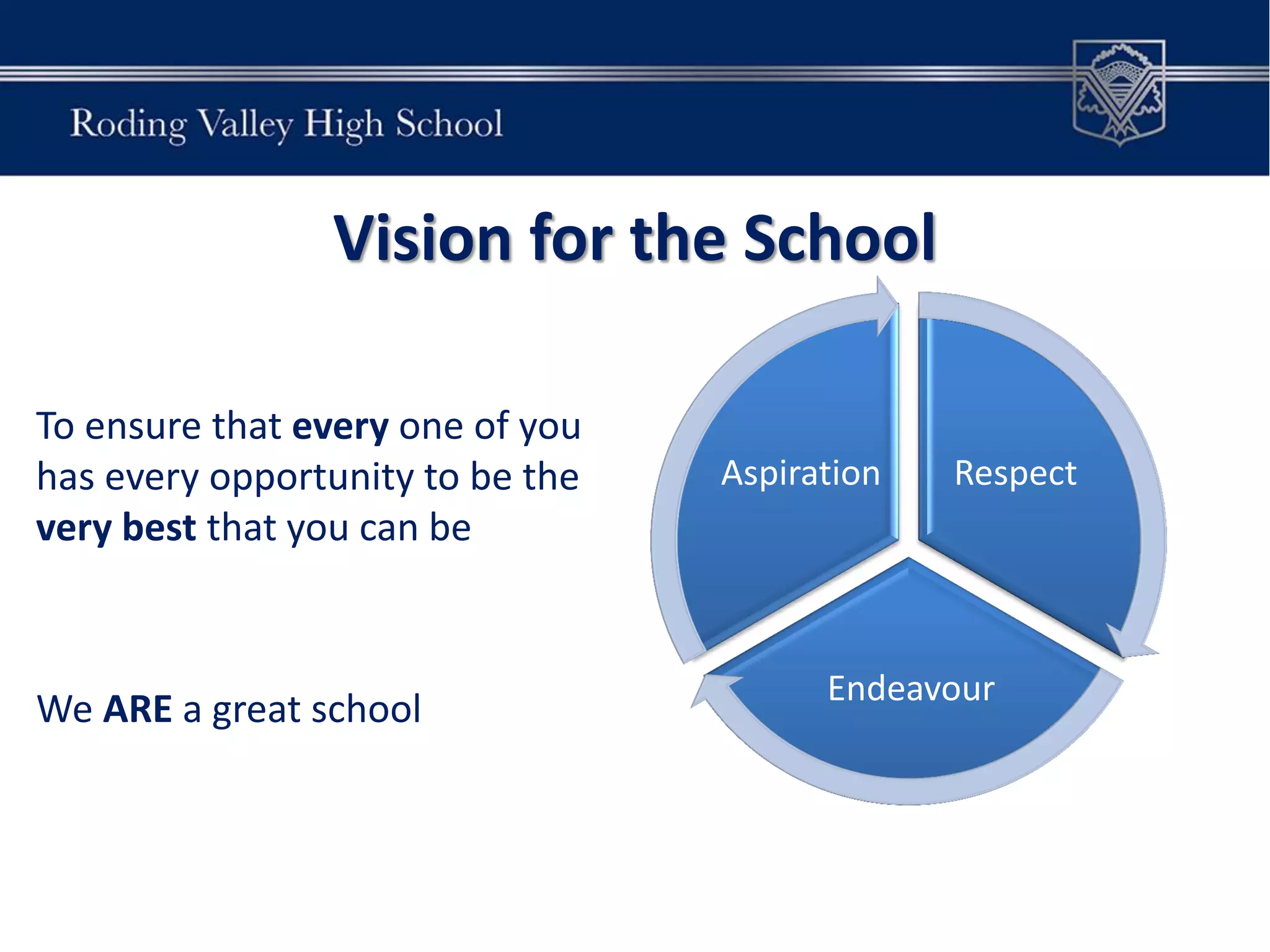
Vision for the School
Respect
Endeavour
Aspiration
We ARE a great school
To ensure that every one of you
has every opportunity to be the
very best that you can be
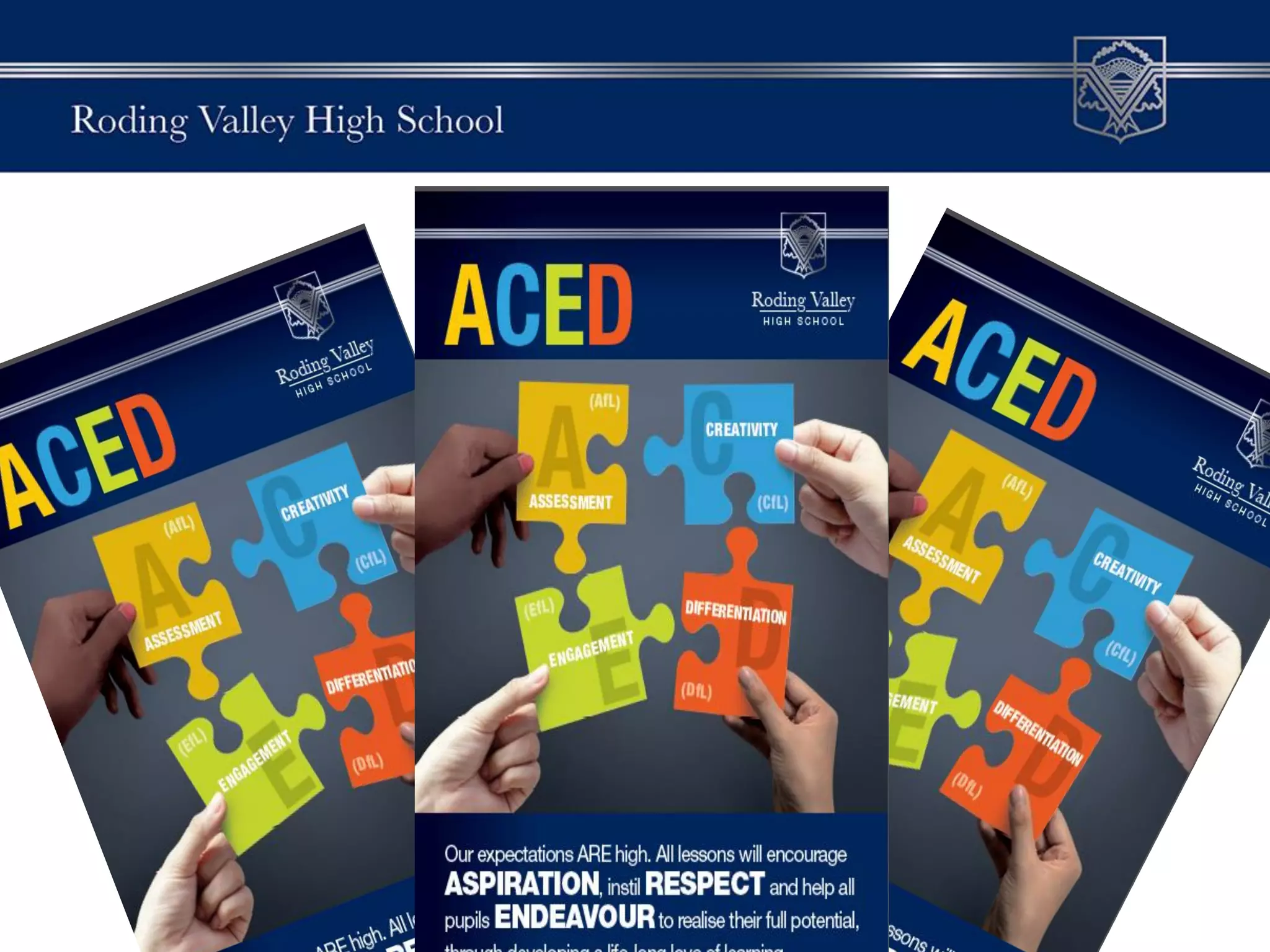
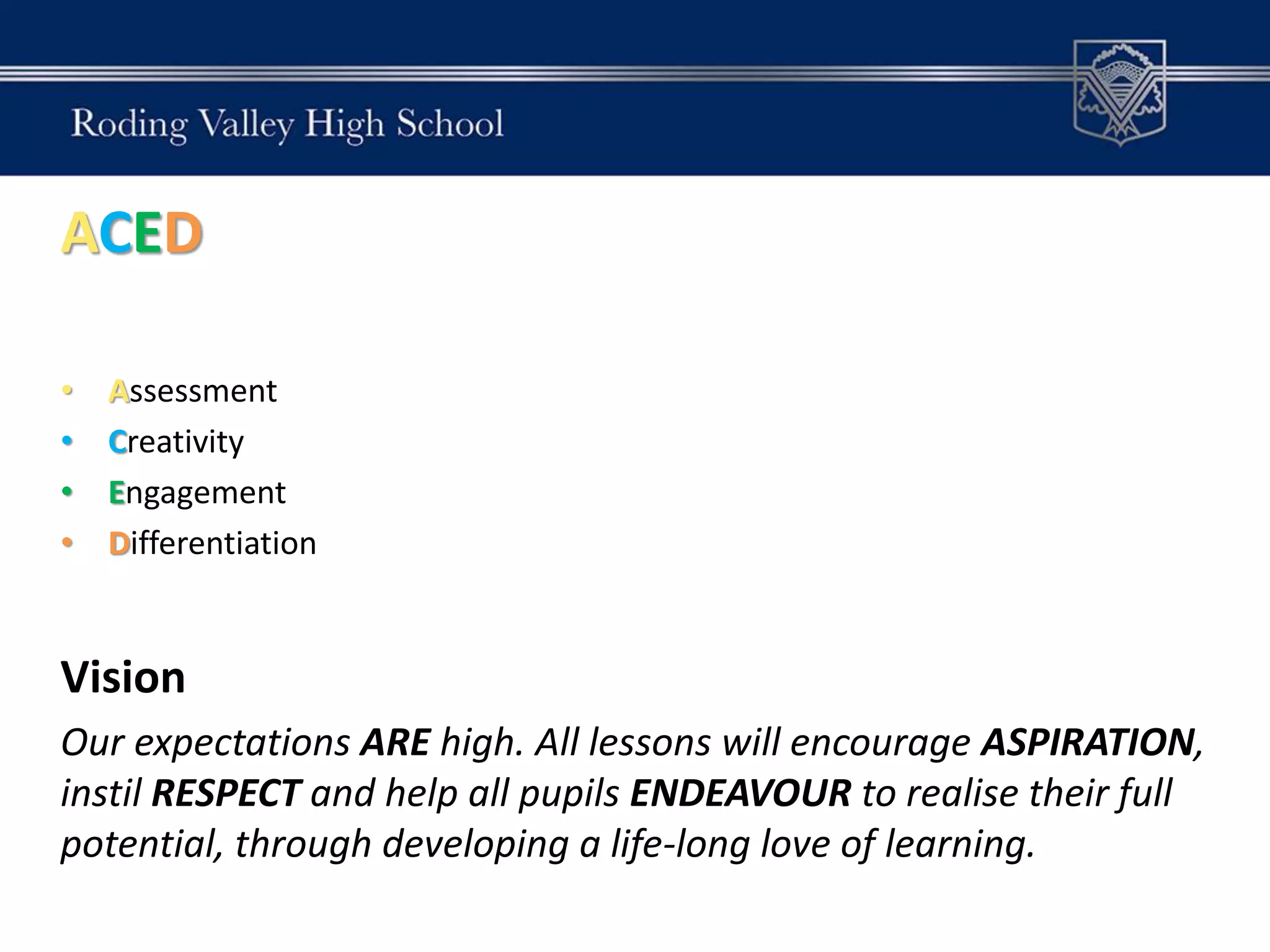
ACED
• Assessment
• Creativity
• Engagement
• Differentiation
Vision
Our expectations ARE high. All lessons will encourage ASPIRATION,
instil RESPECT and help all pupils ENDEAVOUR to realise their full
potential, through developing a life-long love of learning.
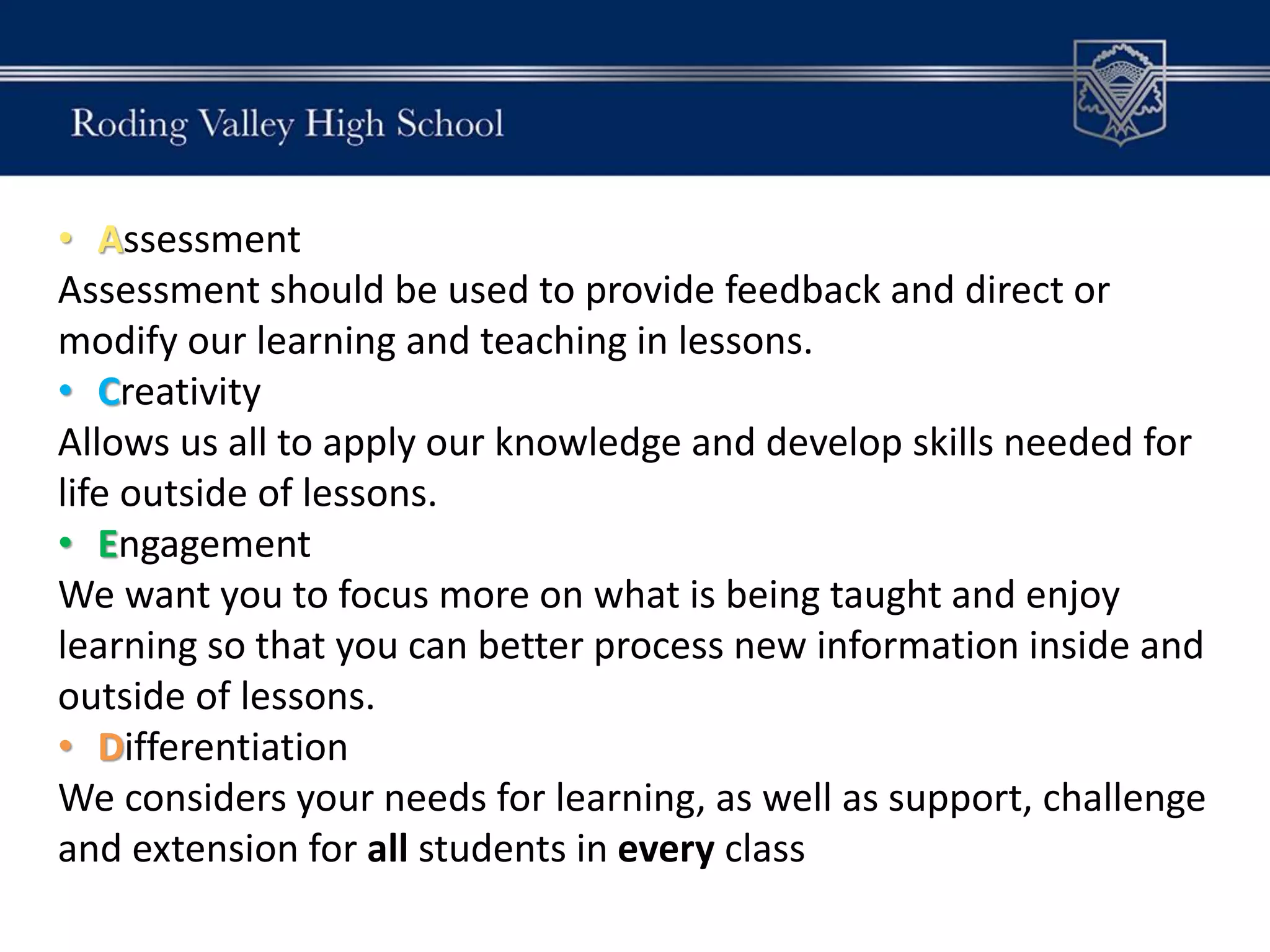
• Assessment
Assessment should be used to provide feedback and direct or
modify our learning and teaching in lessons.
• Creativity
Allows us all to apply our knowledge and develop skills needed for
life outside of lessons.
• Engagement
We want you to focus more on what is being taught and enjoy
learning so that you can better process new information inside and
outside of lessons.
• Differentiation
We considers your needs for learning, as well as support, challenge
and extension for all students in every class
We believe that using the ACED framework will
allow you to be outstanding learners and inspired
students who achieve outstanding results. Three
questions, we ask teachers to consider when
planning and delivering lessons are:
1. Are all pupils being challenged?
2. Are all pupils making progress?
3. Are all pupils at least engaged and at best
inspired?
Q. What do we need from YOU?
1. Be punctual
2. Wear full school uniform
3. Start on your ‘Do it now’ task without being asked
4. Take pride in the presentation of all of your work
5. Turn up with a full pencil case (including a green pen) for all lessons
6. Late students must knock and enter appropriately
7. Attempt all work with maximum effort.
8. Do not disrupt the learning of others
9. Students must not pack away until requested by the teacher and dismissed on time
using the classroom PC
10. Students stand behind chairs in silence before dismissal to check and ensure the
classroom is tidy
11. Students leave in an orderly fashion supervised by the teacher
12. Mobile phones must be switched of at all times (unless teacher permission has
been given).
Expectations
• Check your H/W regularly
• Complete all H/W to the best of your ability
It is important to
consistently
embed good
habits
Revision is really
about two
things:
1. Memory
2. Recall
Part 1:Revision Planning
Making your revision timetable
Setting out a revision timetable
Work on a 3:1:1 Ratio (for every 30 minutes of work you
need 10 minutes of ‘play’ and 10 minutes of rest)
Day 11am 12pm 1pm 2pm 3pm 4pm 5pm 6pm
Monday
At schoolTuesday
Wednesday
Thursday
Friday
Saturday
Sunday
Interleaving vs blocking
• “Blocking” your
revision – focusing on
one topic for a long
time then moving on
to the next topic – is
inefficient.
• “Interleaving” your
revision is far more
effective.
Part 2: Now we’ve planned what we are
going to do, what exactly do we need to do?
Flash Cards
Making an effective flashcard
• “Chunk” the learning down
• Each flashcard should be on one key
idea or concept
• The key information only should be
summarised on one side
• Use diagrams, bullet points etc.
• On the back, put key words and
possible exam questions on this
concept
Making a mind map
• Start with the theme in the middle
of the page.
• Develop your main idea.
• Each sub-branch must relate to the
branch before it.
• Use only key words and images.
• Key words must be written along the
branches.
• Colour code the branches.
• Make things stand out on the page
so they stand out in your mind.
• Design images you can relate to
which will help you remember key
information
Mind maps can be mostly text
Or mostly images
Aced and expectations assembly

Aced and expectations assembly

  • 1.
  • 2.
    Vision for theSchool Respect Endeavour Aspiration We ARE a great school To ensure that every one of you has every opportunity to be the very best that you can be
  • 4.
    ACED • Assessment • Creativity •Engagement • Differentiation Vision Our expectations ARE high. All lessons will encourage ASPIRATION, instil RESPECT and help all pupils ENDEAVOUR to realise their full potential, through developing a life-long love of learning.
  • 5.
    • Assessment Assessment shouldbe used to provide feedback and direct or modify our learning and teaching in lessons. • Creativity Allows us all to apply our knowledge and develop skills needed for life outside of lessons. • Engagement We want you to focus more on what is being taught and enjoy learning so that you can better process new information inside and outside of lessons. • Differentiation We considers your needs for learning, as well as support, challenge and extension for all students in every class
  • 6.
    We believe thatusing the ACED framework will allow you to be outstanding learners and inspired students who achieve outstanding results. Three questions, we ask teachers to consider when planning and delivering lessons are: 1. Are all pupils being challenged? 2. Are all pupils making progress? 3. Are all pupils at least engaged and at best inspired?
  • 7.
    Q. What dowe need from YOU?
  • 8.
    1. Be punctual 2.Wear full school uniform 3. Start on your ‘Do it now’ task without being asked 4. Take pride in the presentation of all of your work 5. Turn up with a full pencil case (including a green pen) for all lessons 6. Late students must knock and enter appropriately 7. Attempt all work with maximum effort. 8. Do not disrupt the learning of others 9. Students must not pack away until requested by the teacher and dismissed on time using the classroom PC 10. Students stand behind chairs in silence before dismissal to check and ensure the classroom is tidy 11. Students leave in an orderly fashion supervised by the teacher 12. Mobile phones must be switched of at all times (unless teacher permission has been given).
  • 10.
    Expectations • Check yourH/W regularly • Complete all H/W to the best of your ability
  • 11.
    It is importantto consistently embed good habits
  • 12.
    Revision is really abouttwo things: 1. Memory 2. Recall
  • 14.
    Part 1:Revision Planning Makingyour revision timetable
  • 15.
    Setting out arevision timetable Work on a 3:1:1 Ratio (for every 30 minutes of work you need 10 minutes of ‘play’ and 10 minutes of rest) Day 11am 12pm 1pm 2pm 3pm 4pm 5pm 6pm Monday At schoolTuesday Wednesday Thursday Friday Saturday Sunday
  • 16.
    Interleaving vs blocking •“Blocking” your revision – focusing on one topic for a long time then moving on to the next topic – is inefficient. • “Interleaving” your revision is far more effective.
  • 17.
    Part 2: Nowwe’ve planned what we are going to do, what exactly do we need to do?
  • 18.
  • 20.
    Making an effectiveflashcard • “Chunk” the learning down • Each flashcard should be on one key idea or concept • The key information only should be summarised on one side • Use diagrams, bullet points etc. • On the back, put key words and possible exam questions on this concept
  • 21.
    Making a mindmap • Start with the theme in the middle of the page. • Develop your main idea. • Each sub-branch must relate to the branch before it. • Use only key words and images. • Key words must be written along the branches. • Colour code the branches. • Make things stand out on the page so they stand out in your mind. • Design images you can relate to which will help you remember key information
  • 22.
    Mind maps canbe mostly text
  • 23.