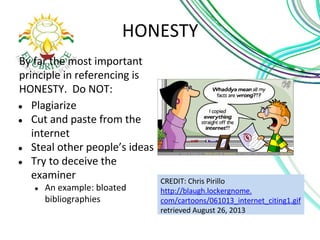
slides: slideshare.net/Edubridge 
backchannel: todaysmeet.com/TAISI 
#taisi14 
Academic Honesty 
in the Digital Age 
Mick Purcell 
Edunbridge International School 
mickpurcell@gmail.com
This paper investigates academic honesty in the digital age, and offers constructive advice, including tips, 
skills and policy guidelines, for international educators. Schools must focus on the promotion academic 
honesty rather than the punishment of academic dishonesty. Research shows that the single most 
important factor in promoting a school culture of academic honesty is the attitude of the students. If 
students value academic integrity, then their peers are less likely to cheat or plagiarize. Students must be 
taught explicitly to value academic honesty and how to practice academic honesty in the digital age. 
Practical tips are given about how to create a culture of academic honesty in the digital age. Students and 
teachers should discuss and include academic honesty in their Essential Agreements from a young age. 
Teachers must learn precisely how to cite, write bibliographies, use the internet effectively, give references 
within presentations, or acknowledge a work of art. Strategies for integrating academic honesty into the 
curriculum are presented with examples or vignettes of successful methods, including Academic Honesty 
in the Primary Years. The best online tools are presented. Practical strategies are suggested for students, 
teachers, parents, teacher-librarians, and administrators. There are tips about how to write a school’s 
Academic Honesty policy by involving the school community to reflect the school’s mission. 
There is a brief discussion of the importance of academic honesty as the bedrock of academic institutions 
in free societies, and the links between academic honesty, Ways of Knowing, the Learner Profile, and 
international-mindedness.
Primary Objectives: 
● Learn about AH issues facing educators and schools 
● Identify common mistakes made by students, teachers, and 
schools 
● Thoughtful conversation about the IB Position on Academic 
Honesty
The most important learning: 
● Support students, and focus on promoting academic 
honesty instead of punishing academic dishonesty 
● Move from academic honesty to educational integrity and 
relate AH to mission, school values, ethics, etc. 
● Begin young with student involvement 
● Train teachers: skills and issues in the Digital Age
Structure of this talk 
1. a survey of the academic discourse about educational 
integrity, and some results from research in the field 
2. how this discourse can and should be applied to international 
schools, and international schools in particular 
3. some practical tips for international educators about 
addressing academic integrity at your school
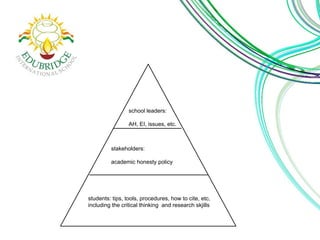
school leaders: 
AH, EI, issues, etc. 
stakeholders: 
academic honesty policy 
students: tips, tools, procedures, how to cite, etc, 
including the critical thinking and research skjills
The importance of including sources first 
● Get students to think about how their ideas are influenced 
by the ideas of others 
● Referencing requires “thinking, writing, and signaling”: 
○ inquirers, reflective, communicators, principled, etc.
Works Cited 
"Acadmic Honesty." Online Curriculum Centre. International Baccalaureate Organization, 2012. Web. 31 Jan. 2014. 
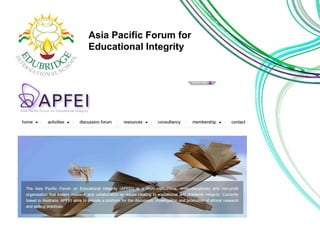
"APFEI | Asia Pacific Forum on Educational Integrity." APFEI, 2013. Web. 31 Jan. 2014. 
Carroll, Jude. "Academic honesty in the IB." IB position papers. International Baccalaureate Organization, 21 Feb, 2013. Web. 31 Jan. 2014. 
Crace, John. "Jude Carroll: Original Thinker." The Guardian. Guardian News and Media, 26 Apr. 2005. Web. 16 Mar. 2014. 
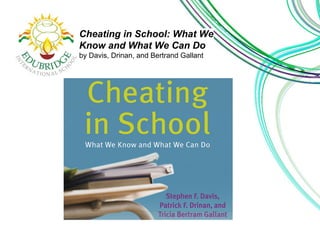
Davis, Stephen F., Patrick F. Drinan, and Tricia Bertram Gallant. Cheating in School: What We Know and What We Can Do. Chichester, U.K.: Wiley- 
Blackwell, 2009. Print. 
Garza, Celina. Academic Honesty Workshop. Proc. of IBAP Regional Conference 2014, Singapore, International Baccalaureate Organization, 2014. 
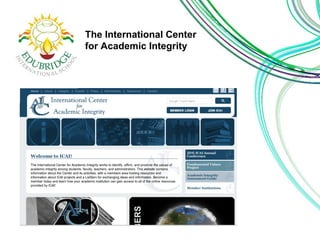
“ICAI | The International Center for Academic Integrity.” ICAI, 2014. Web. 15 Mar 2014. 
Josephson, Michael. "CHARACTER COUNTS!" Josephson Institute of Ethics, 20 Nov. 2012. Web. 15 Mar. 2014. 
Nicolson, Malcolm, Personal Interview, 28 Aug, 2013. 
Rise of the Planet of the Apes. Dir. Rupert Wyatt. Perf. James Franco, Andy Serkis, Freida Pinto. 20th Century Fox, 2011. 
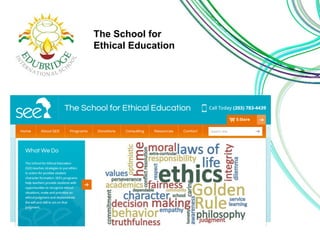
“SEE | The School for Ethical Education.” SEE, 2014. Wed 09 Mar 2014. 
Skaar, Havard, and Hugo Hammer. "Why Students Plagiarise from the Internet."International Journal for Educational Integrity. APFEI, Dec. 2013. 
Web. 31 Jan. 2014. 
Stephens, Jason M and Nicholson, Heather, Cases of Incongruity: Exploring the Divide between Adolescents' Beliefs and Behavior Related to 
Academic Dishonesty, Educational Studies, v34 n4 p361-376, Oct 2008.
Asia Pacific Forum for 
Educational Integrity
Cheating in School: What We 
Know and What We Can Do 
by Davis, Drinan, and Bertrand Gallant
The School for 
Ethical Education
The International Center 
for Academic Integrity
blogs.ibo.org 
Jude Carroll
occ.ibo.org 
Academic Honesty Policy
In the past 15 or 20 years, we see an 
emerging academic discipline: 
Educational Psychologists and others are 
studying academic integrity, cheating or 
dishonesty, educational ethics, etc. 
Some questions they ask:
Is plagiarism or cheating a significant problem?
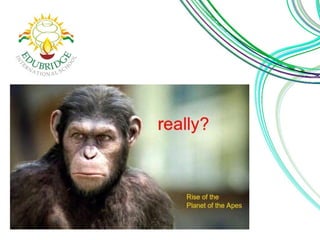
The IBO’s position paper states (without evidence): 
“Almost all learners behave honestly but a few do not.” 
(Carroll, 2012, p.1).
How can we measure whether students are copying from the 
internet, plagiarizing, etc? 
● Alfie Kohn suggests a revolutionary new method . . . .
Josephson Institute (2012) interviews more than 20,000 High 
School students every two years: 
○ 32% of students self-report copying and pasting from the 
internet for a school assignment; 
○ 51% of students self-report cheating on a test.
Håvard Skaar and Hugo Hammer from Oslo and Akershus 
University College, Norway (2013) 
● investigate secondary school students' plagiarism of internet 
sources in essay writing: 
○ 75% of students reported plagiarising from online 
sources; 
○ plagiarism accounted for 25% of the total amount of text.
There are many similar studies. There is an 
overwhelming consensus that: 
● cheating or academic misconduct is a significant 
problem; 
● the issues involving cheating or dishonesty 
(including the methods) are more complex 
because of the internet; 
● there is currently a disconnect in the attitudes 
between educators and students.
Håvard Skaar and Hugo Hammer from Oslo and Akershus 
University College, Norway (2013) 
● ask: what factors correlate to incidence of plagiarism? 
○ grades (better grades, less plagiarism) 
○ explicit education about plagiarism and methods of 
citation (more education, less plagiarism) 
○ bibliography (papers with a proper bibliography are 
significantly less likely to contain plagiarism) 
● no significant correlation for gender
As educators, two of these three factors 
are within our control: 
Explicitly teaching students about 
academic honesty, methods of citation, 
and ESPECIALLY about how to write a 
proper bibliography (in timetabled 
lessons) is likely to reduce the frequency 
of plagiarism.
What causes students to cheat?
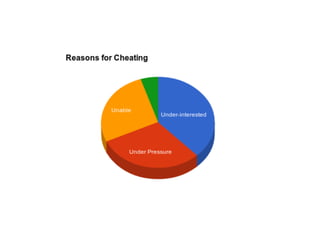
Jason M. Stephens (2008), Associate Professor of 
Educational Psychology at UConn, has classified 
the reasons into four categories: 
● under-interested 
● under pressure 
● unable 
● unrepentant
How deeply rooted is the problem?
the problem is deep-rooted: 
From 
ACADEMIC 
HONESTY to 
EDUCATIONAL 
INTEGRITY
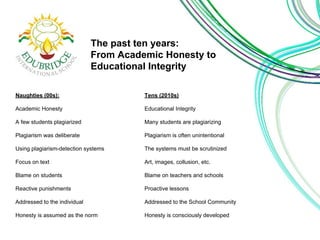
The past ten years: 
From Academic Honesty to 
Educational Integrity 
Naughties (00s): 
Academic Honesty 
A few students plagiarized 
Plagiarism was deliberate 
Using plagiarism-detection systems 
Focus on text 
Blame on students 
Reactive punishments 
Addressed to the individual 
Honesty is assumed as the norm 
Tens (2010s) 
Educational Integrity 
Many students are plagiarizing 
Plagiarism is often unintentional 
The systems must be scrutinized 
Art, images, collusion, etc. 
Blame on teachers and schools 
Proactive lessons 
Addressed to the School Community 
Honesty is consciously developed
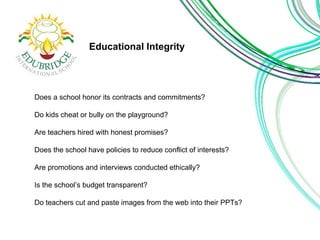
Educational Integrity 
Does a school honor its contracts and commitments? 
Do kids cheat or bully on the playground? 
Are teachers hired with honest promises? 
Does the school have policies to reduce conflict of interests? 
Are promotions and interviews conducted ethically? 
Is the school’s budget transparent? 
Do teachers cut and paste images from the web into their PPTs?
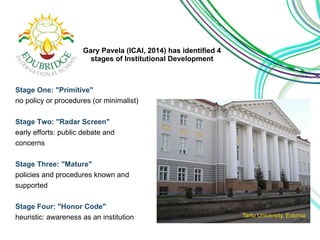
Gary Pavela (ICAI, 2014) has identified 4 
stages of Institutional Development 
Stage One: "Primitive" 
no policy or procedures (or minimalist) 
Stage Two: "Radar Screen" 
early efforts: public debate and 
concerns 
Stage Three: "Mature" 
policies and procedures known and 
supported 
Stage Four: "Honor Code" 
heuristic: awareness as an institution
Task: 
Academic Honesty Checklist 
for international schools 
For each descriptor, mark it: 
3 = Absolutely 2 = Mostly 1 = Partially 0 = Not at all
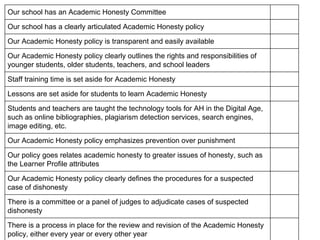
Our school has an Academic Honesty Committee 
Our school has a clearly articulated Academic Honesty policy 
Our Academic Honesty policy is transparent and easily available 
Our Academic Honesty policy clearly outlines the rights and responsibilities of 
younger students, older students, teachers, and school leaders 
Staff training time is set aside for Academic Honesty 
Lessons are set aside for students to learn Academic Honesty 
Students and teachers are taught the technology tools for AH in the Digital Age, 
such as online bibliographies, plagiarism detection services, search engines, 
image editing, etc. 
Our Academic Honesty policy emphasizes prevention over punishment 
Our policy goes relates academic honesty to greater issues of honesty, such as 
the Learner Profile attributes 
Our Academic Honesty policy clearly defines the procedures for a suspected 
case of dishonesty 
There is a committee or a panel of judges to adjudicate cases of suspected 
dishonesty 
There is a process in place for the review and revision of the Academic Honesty 
policy, either every year or every other year
Our teachers are well aware of our AH policy 
and they actively support it 
Our students are well aware of our AH policy 
and they actively support it 
Our parents are well aware of our AH policy 
and they actively support it 
What evidence is there?
“We investigate hundreds of cases of academic 
dishonesty each year, and in the majority of cases 
the problem is that the student was not intending to 
cheat, but that they were never taught properly in 
terms of ATL skills. For example, the student was 
poorly taught how to cite, how to write a 
bibliography, how to reference a work of art, etc.” 
Malcolm Nicolson (2013), 
Head of Development for the IBDP
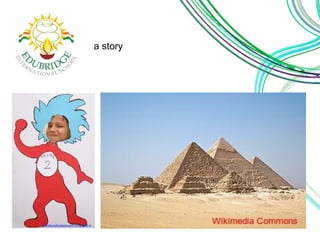
a story
a task 
which age group is closest to your heart? 
primary years? 
middle years? 
high school years? 
divide into groups of 3 - 4, based on the answer 
develop three important methods for teaching (academic) 
honesty to students in our schools 
WRITE each point in 140 characters or less 
contribute those 1 - 4 points to: todaysmeet.com/TAISI OR 
twitter #taisi14
Summary of IB Position Paper 
(Jude Carroll, 2012) 
● Support learners 
○ most important lesson: students need help in this area 
● Policies and procedures need to be especially clear 
○ to teachers, too, if plagiarism or collusion is suspected 
● Learners need to develop specific skills 
○ technology and timetabled lessons 
● Schools should provide detailed guidance to learners 
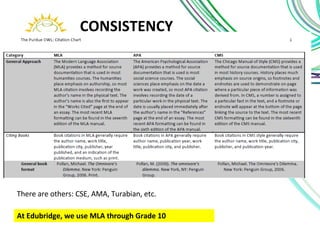
○ MLA, useful sites, etc. 
● Create a local academic honesty policy 
○ involve teachers and parents
In the Primary Years 
● Essential Agreements 
○ most important lesson: students need help in this area 
● Relate to Learner Profile 
● Involve Parents 
● Age Appropriate Measures 
○ promote understanding, not fear 
● Teacher training and Modeling
In the Middle Years 
● 21st century Skills 
○ Research Skills, Bibliography, Citations, etc. 
○ Thinking Skills: is this really your idea? 
○ Communication Skills 
○ Social Skills 
● Early Awareness and Understanding of Consequences, with 
increasing stakes 
● Specific tasks and lessons, including task-specific clarifications that 
include referencing in the rubric 
● Paraphrasing and active discussions of spiraling complexity 
● More teacher training and Technology Tools
Twelve Skills for Teachers 
and Students 
1. Writing a Bibliography using the school’s suggested format 
2. Writing Citations onto Images 
3. Explaining Sources in a Presentation 
4. Using Headings in a Word Processor 
5. Using the Research Tool in Google Docs or the References 
Tab in Microsoft Word 
6. Paraphrasing and Summarizing 
7. Using the Creative Commons Search Engine 
8. Using “Reverse Image Search” in Google 
9. Distinguishing between Primary, Secondary, and Tertiary 
sources 
10. Publishing a document with an Open Source License, such as 
cc-by-sa 3.0 
11. Parenthetical Citations, including Page number 
12. Mastering unusual citations, such as films, interviews, lectures, 
class discussions, etc.
In the High School 
● Very clear assignments 
● Focus on process 
● Very clear procedures and definitions, including technical terms: 
collusion, malpractice, etc. 
● Guarded use of plagiarism detection services 
○ teach students to submit 
● Scoratic discussions, e.g.: What is Art? 
● Signed pledge 
● Clear processes, including specific roles of teachers, librarian, EE 
Coordinator, Program Coordinator, etc.
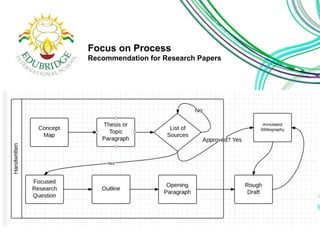
Focus on Process 
Recommendation for Research Papers
● community involvement, including teachers 
● the IB definitions of plagiarism, collusion and the duplication of work 
● appropriate reference to the IB learner profile 
● guidance on the distinction between legitimate collaboration and 
unacceptable collusion 
● information on what action will be taken by the IB if a candidate is 
suspected of malpractice and subsequently found guilty 
● an extract from the provisions of the Regulations relating to 
malpractice. 
● a link should lead the reader to the IBO AH policy
● clearly defined processes: step-by-step: what will happen if academic 
misconduct is suspected? 
● teachers must know what to do if they suspect plagiarism 
● up to the school, but be clear: missed deadlines? rewrites? etc. 
● clearly defined roles and responsibilities 
● e.g. who will check the turnitin report? what to do if there is a 
problem? 
● rights of the student: due process and an appeals process 
● which referencing style
IB Category 3 Workshop: 
Academic Honesty 
● Recommended for someone from your school 
● Lots of information about: 
○ how the IB investigates Academic Misconduct 
○ what is considered plagiarism 
○ the “Naughty List” 
○ the legal team in Geneva and paper mills 
● Celina Garza, Academic Honesty Manager, Cardiff 
● increasing transparency from the IB 
● how to write your Academic Honesty Policy
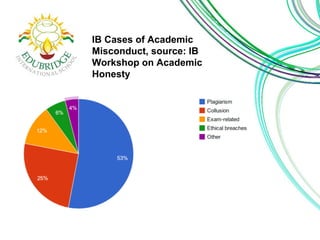
IB Cases of Academic 
Misconduct, source: IB 
Workshop on Academic 
Honesty
Common Mistakes by Students 
● copy and paste 
● overdependence on the internet 
● not citing unusual sources, such as lecture notes 
● not understanding “collusion” 
● thinking about “not getting caught” 
● doing Bibliography last minute 
● saying mentally “I will cite that later” 
● not using the Bibliography Database and other Word Processor 
tools 
● thinking a URL is a reference 
● inflating their Bibliographies, or not proofreading them
Common Mistakes by Teachers and Librarians 
● focus on punishing dishonesty instead of promoting 
honesty 
● assuming children understand right and wrong 
● oversimplifying the complexity of citing in the digital age 
● the same mistakes students make, especially thinking 
about “not getting caught” 
● not using the tools properly 
● not enough professional development in this area 
● overdependence on turnitin 
● misreading turnitin
Is there any good news? 
● Absolutely! International schools, with vigilance, and 
discussions like these, create best pre-Univ preparation on 
this issue. 
For example, the IB publishes statistics on AH: 
● Of 142,00 candidates, we still have only 1200 cases -- that 
includes cases that were dismissed or “not guilty”.
Final words 
● Please support students and be compassionate towards 
young learners 
● Academic Honesty addresses issues of how we construct 
knowledge 
● Understanding referencing, construction of knowledge, 
intellectual property, copyright law, etc. is complicated
The Sydney Opera House does not 
allow photographers to use its image. 
This photo is from a Picasa site which 
seems to belong to someone named 
Zakia Karmal. I assume she is the girl 
in the photograph, but maybe not -- 
maybe she is the photographer, or the 
person who owns the camera, or the 
person who owns the boat, or the 
person who hired the boat and the 
photographer. Copyright law is 
complicated. As long as she is not 
using the photograph for “commercial 
purposes,” SOH won’t sue her , but if 
her photograph gets a million hits, and 
she becomes famous . . . .
Writer Sheila Skillman and her Family 
scskillman.com
● 
● 
●
● 
● 
● 
● 
●
Activity 1: 
In your groups of six: 
Take the handout, a “term paper” by a student 
named Orlov. 
For each of the 15 arrows, determine whether the 
student is correct, or incorrect, and give a reason. 
Enter your decision and your reason into the 
Google Doc: 
https://docs.google.com/forms/d/1c- 
TYw9DMv0mBj9Vj0v7GpyjDCIlA_9o4JoX08084Sx8/ 
viewform
Secondary Objectives: 
● Tips about specific skills to promote Academic Honesty for 
teachers and students 
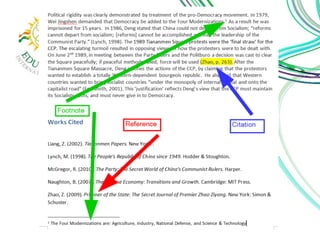
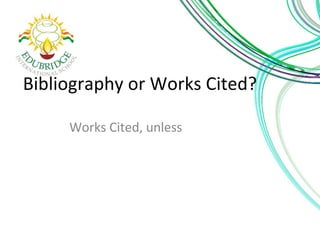
● Distinguish between citations, references, Bibliography, 
Works Cited, etc. 
● Conversation about Wikipedia 
● Gain skills in common applications, such as Microsoft Word 
or Google Docs
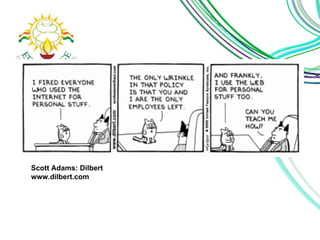
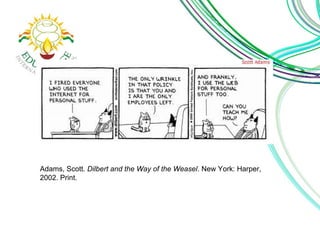
Scott Adams: Dilbert 
www.dilbert.com
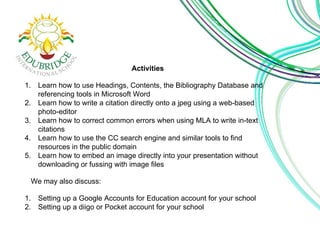
Activities 
1. Learn how to use Headings, Contents, the Bibliography Database and 
referencing tools in Microsoft Word 
2. Learn how to write a citation directly onto a jpeg using a web-based 
photo-editor 
3. Learn how to correct common errors when using MLA to write in-text 
citations 
4. Learn how to use the CC search engine and similar tools to find 
resources in the public domain 
5. Learn how to embed an image directly into your presentation without 
downloading or fussing with image files 
We may also discuss: 
1. Setting up a Google Accounts for Education account for your school 
2. Setting up a diigo or Pocket account for your school
Adams, Scott. Dilbert and the Way of the Weasel. New York: Harper, 
2002. Print.
● 
● 
● 
● 
●
● 
● 
●
Wikipedia
● 
● 
● 
● 
●
Academic Honesty in the Digital Age

Academic Honesty in the Digital Age

  • 1.
    slides: slideshare.net/Edubridge backchannel:todaysmeet.com/TAISI #taisi14 Academic Honesty in the Digital Age Mick Purcell Edunbridge International School mickpurcell@gmail.com
  • 2.
    This paper investigatesacademic honesty in the digital age, and offers constructive advice, including tips, skills and policy guidelines, for international educators. Schools must focus on the promotion academic honesty rather than the punishment of academic dishonesty. Research shows that the single most important factor in promoting a school culture of academic honesty is the attitude of the students. If students value academic integrity, then their peers are less likely to cheat or plagiarize. Students must be taught explicitly to value academic honesty and how to practice academic honesty in the digital age. Practical tips are given about how to create a culture of academic honesty in the digital age. Students and teachers should discuss and include academic honesty in their Essential Agreements from a young age. Teachers must learn precisely how to cite, write bibliographies, use the internet effectively, give references within presentations, or acknowledge a work of art. Strategies for integrating academic honesty into the curriculum are presented with examples or vignettes of successful methods, including Academic Honesty in the Primary Years. The best online tools are presented. Practical strategies are suggested for students, teachers, parents, teacher-librarians, and administrators. There are tips about how to write a school’s Academic Honesty policy by involving the school community to reflect the school’s mission. There is a brief discussion of the importance of academic honesty as the bedrock of academic institutions in free societies, and the links between academic honesty, Ways of Knowing, the Learner Profile, and international-mindedness.
  • 3.
    Primary Objectives: ●Learn about AH issues facing educators and schools ● Identify common mistakes made by students, teachers, and schools ● Thoughtful conversation about the IB Position on Academic Honesty
  • 4.
    The most importantlearning: ● Support students, and focus on promoting academic honesty instead of punishing academic dishonesty ● Move from academic honesty to educational integrity and relate AH to mission, school values, ethics, etc. ● Begin young with student involvement ● Train teachers: skills and issues in the Digital Age
  • 5.
    Structure of thistalk 1. a survey of the academic discourse about educational integrity, and some results from research in the field 2. how this discourse can and should be applied to international schools, and international schools in particular 3. some practical tips for international educators about addressing academic integrity at your school
  • 6.
    school leaders: AH,EI, issues, etc. stakeholders: academic honesty policy students: tips, tools, procedures, how to cite, etc, including the critical thinking and research skjills
  • 7.
    The importance ofincluding sources first ● Get students to think about how their ideas are influenced by the ideas of others ● Referencing requires “thinking, writing, and signaling”: ○ inquirers, reflective, communicators, principled, etc.
  • 8.
    Works Cited "AcadmicHonesty." Online Curriculum Centre. International Baccalaureate Organization, 2012. Web. 31 Jan. 2014. "APFEI | Asia Pacific Forum on Educational Integrity." APFEI, 2013. Web. 31 Jan. 2014. Carroll, Jude. "Academic honesty in the IB." IB position papers. International Baccalaureate Organization, 21 Feb, 2013. Web. 31 Jan. 2014. Crace, John. "Jude Carroll: Original Thinker." The Guardian. Guardian News and Media, 26 Apr. 2005. Web. 16 Mar. 2014. Davis, Stephen F., Patrick F. Drinan, and Tricia Bertram Gallant. Cheating in School: What We Know and What We Can Do. Chichester, U.K.: Wiley- Blackwell, 2009. Print. Garza, Celina. Academic Honesty Workshop. Proc. of IBAP Regional Conference 2014, Singapore, International Baccalaureate Organization, 2014. “ICAI | The International Center for Academic Integrity.” ICAI, 2014. Web. 15 Mar 2014. Josephson, Michael. "CHARACTER COUNTS!" Josephson Institute of Ethics, 20 Nov. 2012. Web. 15 Mar. 2014. Nicolson, Malcolm, Personal Interview, 28 Aug, 2013. Rise of the Planet of the Apes. Dir. Rupert Wyatt. Perf. James Franco, Andy Serkis, Freida Pinto. 20th Century Fox, 2011. “SEE | The School for Ethical Education.” SEE, 2014. Wed 09 Mar 2014. Skaar, Havard, and Hugo Hammer. "Why Students Plagiarise from the Internet."International Journal for Educational Integrity. APFEI, Dec. 2013. Web. 31 Jan. 2014. Stephens, Jason M and Nicholson, Heather, Cases of Incongruity: Exploring the Divide between Adolescents' Beliefs and Behavior Related to Academic Dishonesty, Educational Studies, v34 n4 p361-376, Oct 2008.
  • 9.
    Asia Pacific Forumfor Educational Integrity
  • 10.
    Cheating in School:What We Know and What We Can Do by Davis, Drinan, and Bertrand Gallant
  • 11.
    The School for Ethical Education
  • 12.
    The International Center for Academic Integrity
  • 13.
  • 14.
  • 15.
    In the past15 or 20 years, we see an emerging academic discipline: Educational Psychologists and others are studying academic integrity, cheating or dishonesty, educational ethics, etc. Some questions they ask:
  • 16.
    Is plagiarism orcheating a significant problem?
  • 17.
    The IBO’s positionpaper states (without evidence): “Almost all learners behave honestly but a few do not.” (Carroll, 2012, p.1).
  • 19.
    How can wemeasure whether students are copying from the internet, plagiarizing, etc? ● Alfie Kohn suggests a revolutionary new method . . . .
  • 20.
    Josephson Institute (2012)interviews more than 20,000 High School students every two years: ○ 32% of students self-report copying and pasting from the internet for a school assignment; ○ 51% of students self-report cheating on a test.
  • 21.
    Håvard Skaar andHugo Hammer from Oslo and Akershus University College, Norway (2013) ● investigate secondary school students' plagiarism of internet sources in essay writing: ○ 75% of students reported plagiarising from online sources; ○ plagiarism accounted for 25% of the total amount of text.
  • 22.
    There are manysimilar studies. There is an overwhelming consensus that: ● cheating or academic misconduct is a significant problem; ● the issues involving cheating or dishonesty (including the methods) are more complex because of the internet; ● there is currently a disconnect in the attitudes between educators and students.
  • 23.
    Håvard Skaar andHugo Hammer from Oslo and Akershus University College, Norway (2013) ● ask: what factors correlate to incidence of plagiarism? ○ grades (better grades, less plagiarism) ○ explicit education about plagiarism and methods of citation (more education, less plagiarism) ○ bibliography (papers with a proper bibliography are significantly less likely to contain plagiarism) ● no significant correlation for gender
  • 24.
    As educators, twoof these three factors are within our control: Explicitly teaching students about academic honesty, methods of citation, and ESPECIALLY about how to write a proper bibliography (in timetabled lessons) is likely to reduce the frequency of plagiarism.
  • 25.
  • 26.
    Jason M. Stephens(2008), Associate Professor of Educational Psychology at UConn, has classified the reasons into four categories: ● under-interested ● under pressure ● unable ● unrepentant
  • 28.
    How deeply rootedis the problem?
  • 30.
    the problem isdeep-rooted: From ACADEMIC HONESTY to EDUCATIONAL INTEGRITY
  • 31.
    The past tenyears: From Academic Honesty to Educational Integrity Naughties (00s): Academic Honesty A few students plagiarized Plagiarism was deliberate Using plagiarism-detection systems Focus on text Blame on students Reactive punishments Addressed to the individual Honesty is assumed as the norm Tens (2010s) Educational Integrity Many students are plagiarizing Plagiarism is often unintentional The systems must be scrutinized Art, images, collusion, etc. Blame on teachers and schools Proactive lessons Addressed to the School Community Honesty is consciously developed
  • 32.
    Educational Integrity Doesa school honor its contracts and commitments? Do kids cheat or bully on the playground? Are teachers hired with honest promises? Does the school have policies to reduce conflict of interests? Are promotions and interviews conducted ethically? Is the school’s budget transparent? Do teachers cut and paste images from the web into their PPTs?
  • 33.
    Gary Pavela (ICAI,2014) has identified 4 stages of Institutional Development Stage One: "Primitive" no policy or procedures (or minimalist) Stage Two: "Radar Screen" early efforts: public debate and concerns Stage Three: "Mature" policies and procedures known and supported Stage Four: "Honor Code" heuristic: awareness as an institution
  • 35.
    Task: Academic HonestyChecklist for international schools For each descriptor, mark it: 3 = Absolutely 2 = Mostly 1 = Partially 0 = Not at all
  • 36.
    Our school hasan Academic Honesty Committee Our school has a clearly articulated Academic Honesty policy Our Academic Honesty policy is transparent and easily available Our Academic Honesty policy clearly outlines the rights and responsibilities of younger students, older students, teachers, and school leaders Staff training time is set aside for Academic Honesty Lessons are set aside for students to learn Academic Honesty Students and teachers are taught the technology tools for AH in the Digital Age, such as online bibliographies, plagiarism detection services, search engines, image editing, etc. Our Academic Honesty policy emphasizes prevention over punishment Our policy goes relates academic honesty to greater issues of honesty, such as the Learner Profile attributes Our Academic Honesty policy clearly defines the procedures for a suspected case of dishonesty There is a committee or a panel of judges to adjudicate cases of suspected dishonesty There is a process in place for the review and revision of the Academic Honesty policy, either every year or every other year
  • 37.
    Our teachers arewell aware of our AH policy and they actively support it Our students are well aware of our AH policy and they actively support it Our parents are well aware of our AH policy and they actively support it What evidence is there?
  • 38.
    “We investigate hundredsof cases of academic dishonesty each year, and in the majority of cases the problem is that the student was not intending to cheat, but that they were never taught properly in terms of ATL skills. For example, the student was poorly taught how to cite, how to write a bibliography, how to reference a work of art, etc.” Malcolm Nicolson (2013), Head of Development for the IBDP
  • 39.
  • 40.
    a task whichage group is closest to your heart? primary years? middle years? high school years? divide into groups of 3 - 4, based on the answer develop three important methods for teaching (academic) honesty to students in our schools WRITE each point in 140 characters or less contribute those 1 - 4 points to: todaysmeet.com/TAISI OR twitter #taisi14
  • 41.
    Summary of IBPosition Paper (Jude Carroll, 2012) ● Support learners ○ most important lesson: students need help in this area ● Policies and procedures need to be especially clear ○ to teachers, too, if plagiarism or collusion is suspected ● Learners need to develop specific skills ○ technology and timetabled lessons ● Schools should provide detailed guidance to learners ○ MLA, useful sites, etc. ● Create a local academic honesty policy ○ involve teachers and parents
  • 42.
    In the PrimaryYears ● Essential Agreements ○ most important lesson: students need help in this area ● Relate to Learner Profile ● Involve Parents ● Age Appropriate Measures ○ promote understanding, not fear ● Teacher training and Modeling
  • 43.
    In the MiddleYears ● 21st century Skills ○ Research Skills, Bibliography, Citations, etc. ○ Thinking Skills: is this really your idea? ○ Communication Skills ○ Social Skills ● Early Awareness and Understanding of Consequences, with increasing stakes ● Specific tasks and lessons, including task-specific clarifications that include referencing in the rubric ● Paraphrasing and active discussions of spiraling complexity ● More teacher training and Technology Tools
  • 44.
    Twelve Skills forTeachers and Students 1. Writing a Bibliography using the school’s suggested format 2. Writing Citations onto Images 3. Explaining Sources in a Presentation 4. Using Headings in a Word Processor 5. Using the Research Tool in Google Docs or the References Tab in Microsoft Word 6. Paraphrasing and Summarizing 7. Using the Creative Commons Search Engine 8. Using “Reverse Image Search” in Google 9. Distinguishing between Primary, Secondary, and Tertiary sources 10. Publishing a document with an Open Source License, such as cc-by-sa 3.0 11. Parenthetical Citations, including Page number 12. Mastering unusual citations, such as films, interviews, lectures, class discussions, etc.
  • 45.
    In the HighSchool ● Very clear assignments ● Focus on process ● Very clear procedures and definitions, including technical terms: collusion, malpractice, etc. ● Guarded use of plagiarism detection services ○ teach students to submit ● Scoratic discussions, e.g.: What is Art? ● Signed pledge ● Clear processes, including specific roles of teachers, librarian, EE Coordinator, Program Coordinator, etc.
  • 46.
    Focus on Process Recommendation for Research Papers
  • 48.
    ● community involvement,including teachers ● the IB definitions of plagiarism, collusion and the duplication of work ● appropriate reference to the IB learner profile ● guidance on the distinction between legitimate collaboration and unacceptable collusion ● information on what action will be taken by the IB if a candidate is suspected of malpractice and subsequently found guilty ● an extract from the provisions of the Regulations relating to malpractice. ● a link should lead the reader to the IBO AH policy
  • 49.
    ● clearly definedprocesses: step-by-step: what will happen if academic misconduct is suspected? ● teachers must know what to do if they suspect plagiarism ● up to the school, but be clear: missed deadlines? rewrites? etc. ● clearly defined roles and responsibilities ● e.g. who will check the turnitin report? what to do if there is a problem? ● rights of the student: due process and an appeals process ● which referencing style
  • 50.
    IB Category 3Workshop: Academic Honesty ● Recommended for someone from your school ● Lots of information about: ○ how the IB investigates Academic Misconduct ○ what is considered plagiarism ○ the “Naughty List” ○ the legal team in Geneva and paper mills ● Celina Garza, Academic Honesty Manager, Cardiff ● increasing transparency from the IB ● how to write your Academic Honesty Policy
  • 51.
    IB Cases ofAcademic Misconduct, source: IB Workshop on Academic Honesty
  • 52.
    Common Mistakes byStudents ● copy and paste ● overdependence on the internet ● not citing unusual sources, such as lecture notes ● not understanding “collusion” ● thinking about “not getting caught” ● doing Bibliography last minute ● saying mentally “I will cite that later” ● not using the Bibliography Database and other Word Processor tools ● thinking a URL is a reference ● inflating their Bibliographies, or not proofreading them
  • 53.
    Common Mistakes byTeachers and Librarians ● focus on punishing dishonesty instead of promoting honesty ● assuming children understand right and wrong ● oversimplifying the complexity of citing in the digital age ● the same mistakes students make, especially thinking about “not getting caught” ● not using the tools properly ● not enough professional development in this area ● overdependence on turnitin ● misreading turnitin
  • 54.
    Is there anygood news? ● Absolutely! International schools, with vigilance, and discussions like these, create best pre-Univ preparation on this issue. For example, the IB publishes statistics on AH: ● Of 142,00 candidates, we still have only 1200 cases -- that includes cases that were dismissed or “not guilty”.
  • 55.
    Final words ●Please support students and be compassionate towards young learners ● Academic Honesty addresses issues of how we construct knowledge ● Understanding referencing, construction of knowledge, intellectual property, copyright law, etc. is complicated
  • 57.
    The Sydney OperaHouse does not allow photographers to use its image. This photo is from a Picasa site which seems to belong to someone named Zakia Karmal. I assume she is the girl in the photograph, but maybe not -- maybe she is the photographer, or the person who owns the camera, or the person who owns the boat, or the person who hired the boat and the photographer. Copyright law is complicated. As long as she is not using the photograph for “commercial purposes,” SOH won’t sue her , but if her photograph gets a million hits, and she becomes famous . . . .
  • 58.
    Writer Sheila Skillmanand her Family scskillman.com
  • 61.
  • 62.
    ● ● ● ● ●
  • 63.
    Activity 1: Inyour groups of six: Take the handout, a “term paper” by a student named Orlov. For each of the 15 arrows, determine whether the student is correct, or incorrect, and give a reason. Enter your decision and your reason into the Google Doc: https://docs.google.com/forms/d/1c- TYw9DMv0mBj9Vj0v7GpyjDCIlA_9o4JoX08084Sx8/ viewform
  • 64.
    Secondary Objectives: ●Tips about specific skills to promote Academic Honesty for teachers and students ● Distinguish between citations, references, Bibliography, Works Cited, etc. ● Conversation about Wikipedia ● Gain skills in common applications, such as Microsoft Word or Google Docs
  • 65.
    Scott Adams: Dilbert www.dilbert.com
  • 66.
    Activities 1. Learnhow to use Headings, Contents, the Bibliography Database and referencing tools in Microsoft Word 2. Learn how to write a citation directly onto a jpeg using a web-based photo-editor 3. Learn how to correct common errors when using MLA to write in-text citations 4. Learn how to use the CC search engine and similar tools to find resources in the public domain 5. Learn how to embed an image directly into your presentation without downloading or fussing with image files We may also discuss: 1. Setting up a Google Accounts for Education account for your school 2. Setting up a diigo or Pocket account for your school
  • 67.
    Adams, Scott. Dilbertand the Way of the Weasel. New York: Harper, 2002. Print.
  • 68.
    ● ● ● ● ●
  • 69.
  • 72.
  • 75.
    ● ● ● ● ●