INTERNATIONAL
ELECTROTECHNICAL
COMMISSION
IEC ONLINE COURSE 1
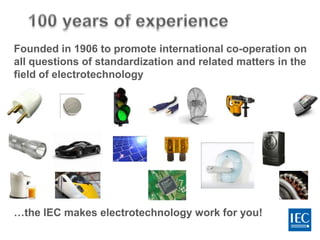
…the IEC makes electrotechnology work for you!
Founded in 1906 to promote international co-operation on
all questions of standardization and related matters in the
field of electrotechnology
 Founded in 1906 to promote international
co-operation in electrotechnical
standardization and related matters
 Non-governmental organization with input
from industry, government and other
stakeholders through National Committees.
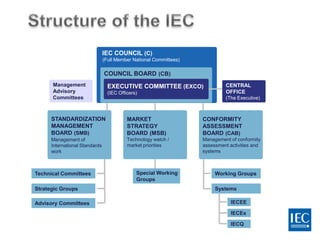
IEC COUNCIL (C)
(Full Member National Committees)
COUNCIL BOARD (CB)
CENTRAL
OFFICE
(The Executive)
STANDARDIZATION
MANAGEMENT
BOARD (SMB)
Management of
International Standards
work
MARKET
STRATEGY
BOARD (MSB)
Technology watch /
market priorities
CONFORMITY
ASSESSMENT
BOARD (CAB)
Management of conformity
assessment activities and
systems
EXECUTIVE COMMITTEE (EXCO)
(IEC Officers)
Management
Advisory
Committees
Technical Committees
Strategic Groups
Advisory Committees
Working Groups
Systems
IECEx
Special Working
Groups
IECEE
IECQ
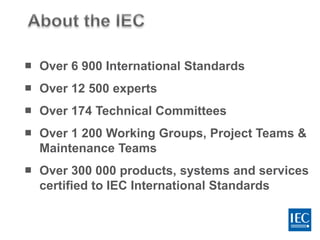
 Over 6 900 International Standards
 Over 12 500 experts
 Over 174 Technical Committees
 Over 1 200 Working Groups, Project Teams &
Maintenance Teams
 Over 300 000 products, systems and services
certified to IEC International Standards
6
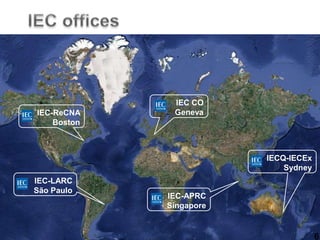
IEC-ReCNA
Boston
IEC-LARC
São Paulo
IECQ-IECEx
Sydney
IEC CO
Geneva
IEC-APRC
Singapore
6
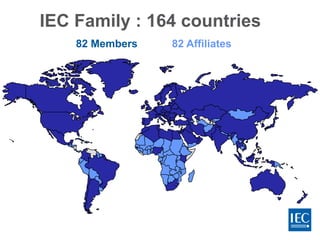
82 Members 82 Affiliates
IEC Family : 164 countries
 The IEC
 through its National Committees (NCs)
 through cooperative agreements and
 directly
 Encourages national use of
 IEC International Standards
 IEC Conformity Assessment Systems, and
 Supports all forms of Conformity
Assessment.
 One country = one vote
 Vote on IEC documents based on their
nation’s consensus viewpoint
 Nominate people to develop standards
 Support the use of IEC Conformity
Assessment Systems
 Promote the objectives of the IEC
 Support IEC work
 Implement IEC International Standards as
national or regional standards
 Prevent unauthorized reproduction &
distribution of IEC publications in its
country
 To be fully representative of all relevant
(or interested) parties in its country
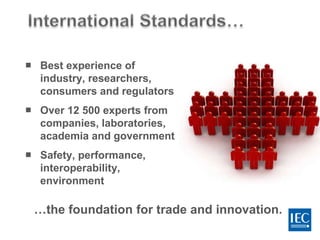
 Best experience of
industry, researchers,
consumers and regulators
 Over 12 500 experts from
companies, laboratories,
academia and government
 Safety, performance,
interoperability,
environment
…the foundation for trade and innovation.
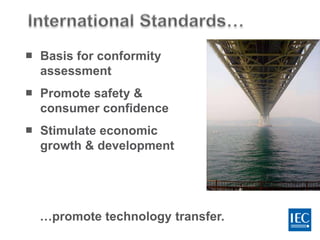
 Basis for conformity
assessment
 Promote safety &
consumer confidence
 Stimulate economic
growth & development
…promote technology transfer.
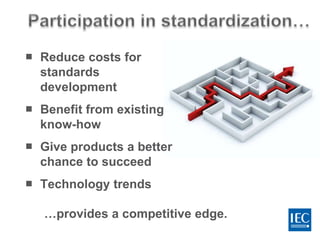
 Reduce costs for
standards
development
 Benefit from existing
know-how
 Give products a better
chance to succeed
 Technology trends
…provides a competitive edge.
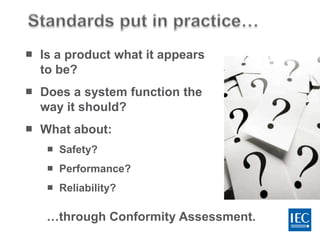
 Is a product what it appears
to be?
 Does a system function the
way it should?
 What about:
 Safety?
 Performance?
 Reliability?
…through Conformity Assessment.
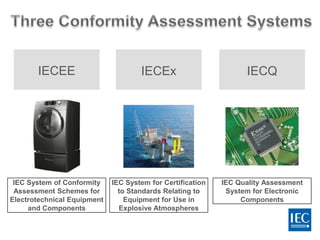
IECEE IECEx IECQ
IEC System of Conformity
Assessment Schemes for
Electrotechnical Equipment
and Components
IEC System for Certification
to Standards Relating to
Equipment for Use in
Explosive Atmospheres
IEC Quality Assessment
System for Electronic
Components
 Quicker market access
 Cut down trade barriers
 Reduce costs
 Standardized approach
to testing and
certification
 Increase confidence
 Globalization is a reality. Trade is global
 Facilitate interoperability
 Improve safety
 Improve efficiency
 Protect the environment
 Standards used as basis for regulations
 Remove delays and costs of multiple
testing and approval:
 Products get to market more quickly and
expense reduced
 Trade barriers caused by different certification
criteria in various countries reduced
 New markets opened up
 Help to ensure a fair global trading system
in accordance with WTO.
 Influence the developments and content of
IEC Standards
 Early warning of developing markets,
establish customer contacts
 Improve product safety and quality
 Rationalization and cost reduction in
design and manufacturing.
 International Standards are best source for
governments for
 Legislation/regulation
 Issuing tenders
 Recognized source for WTO compliance
 Contributes to fulfilling World Trade
Organization’s Agreement on Technical Barriers
to Trades
 Standards provide detailed technical
interpretation of the law.
 Putting our products into context: “Recognizing the
important contribution that international standards
and conformity assessment systems can make in
this regard by improving efficiency of production
and facilitating the conduct of international trade. . .”
 “Members shall use [international standards] as a
basis for their technical regulations....”
 “Members shall play a full part...in the
preparation...of international standards....”
WTO TBT Agreement
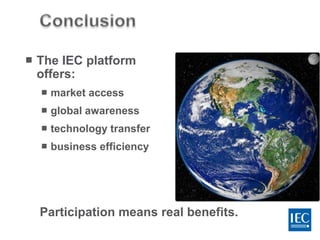
 The IEC platform
offers:
 market access
 global awareness
 technology transfer
 business efficiency
Participation means real benefits.
INTERNATIONAL
ELECTROTECHNICAL
COMMISSION
www.iec.ch tiss@iec.ch

Introduction to IEC

  • 1.
  • 2.
    …the IEC makeselectrotechnology work for you! Founded in 1906 to promote international co-operation on all questions of standardization and related matters in the field of electrotechnology
  • 3.
     Founded in1906 to promote international co-operation in electrotechnical standardization and related matters  Non-governmental organization with input from industry, government and other stakeholders through National Committees.
  • 4.
    IEC COUNCIL (C) (FullMember National Committees) COUNCIL BOARD (CB) CENTRAL OFFICE (The Executive) STANDARDIZATION MANAGEMENT BOARD (SMB) Management of International Standards work MARKET STRATEGY BOARD (MSB) Technology watch / market priorities CONFORMITY ASSESSMENT BOARD (CAB) Management of conformity assessment activities and systems EXECUTIVE COMMITTEE (EXCO) (IEC Officers) Management Advisory Committees Technical Committees Strategic Groups Advisory Committees Working Groups Systems IECEx Special Working Groups IECEE IECQ
  • 5.
     Over 6900 International Standards  Over 12 500 experts  Over 174 Technical Committees  Over 1 200 Working Groups, Project Teams & Maintenance Teams  Over 300 000 products, systems and services certified to IEC International Standards
  • 6.
  • 7.
    82 Members 82Affiliates IEC Family : 164 countries
  • 8.
     The IEC through its National Committees (NCs)  through cooperative agreements and  directly  Encourages national use of  IEC International Standards  IEC Conformity Assessment Systems, and  Supports all forms of Conformity Assessment.
  • 9.
     One country= one vote  Vote on IEC documents based on their nation’s consensus viewpoint  Nominate people to develop standards  Support the use of IEC Conformity Assessment Systems
  • 10.
     Promote theobjectives of the IEC  Support IEC work  Implement IEC International Standards as national or regional standards  Prevent unauthorized reproduction & distribution of IEC publications in its country  To be fully representative of all relevant (or interested) parties in its country
  • 11.
     Best experienceof industry, researchers, consumers and regulators  Over 12 500 experts from companies, laboratories, academia and government  Safety, performance, interoperability, environment …the foundation for trade and innovation.
  • 12.
     Basis forconformity assessment  Promote safety & consumer confidence  Stimulate economic growth & development …promote technology transfer.
  • 13.
     Reduce costsfor standards development  Benefit from existing know-how  Give products a better chance to succeed  Technology trends …provides a competitive edge.
  • 14.
     Is aproduct what it appears to be?  Does a system function the way it should?  What about:  Safety?  Performance?  Reliability? …through Conformity Assessment.
  • 15.
    IECEE IECEx IECQ IECSystem of Conformity Assessment Schemes for Electrotechnical Equipment and Components IEC System for Certification to Standards Relating to Equipment for Use in Explosive Atmospheres IEC Quality Assessment System for Electronic Components
  • 16.
     Quicker marketaccess  Cut down trade barriers  Reduce costs  Standardized approach to testing and certification  Increase confidence
  • 17.
     Globalization isa reality. Trade is global  Facilitate interoperability  Improve safety  Improve efficiency  Protect the environment  Standards used as basis for regulations
  • 18.
     Remove delaysand costs of multiple testing and approval:  Products get to market more quickly and expense reduced  Trade barriers caused by different certification criteria in various countries reduced  New markets opened up  Help to ensure a fair global trading system in accordance with WTO.
  • 19.
     Influence thedevelopments and content of IEC Standards  Early warning of developing markets, establish customer contacts  Improve product safety and quality  Rationalization and cost reduction in design and manufacturing.
  • 20.
     International Standardsare best source for governments for  Legislation/regulation  Issuing tenders  Recognized source for WTO compliance  Contributes to fulfilling World Trade Organization’s Agreement on Technical Barriers to Trades  Standards provide detailed technical interpretation of the law.
  • 21.
     Putting ourproducts into context: “Recognizing the important contribution that international standards and conformity assessment systems can make in this regard by improving efficiency of production and facilitating the conduct of international trade. . .”  “Members shall use [international standards] as a basis for their technical regulations....”  “Members shall play a full part...in the preparation...of international standards....” WTO TBT Agreement
  • 22.
     The IECplatform offers:  market access  global awareness  technology transfer  business efficiency Participation means real benefits.
  • 23.

Editor's Notes

  • #8 As per 31 October 2012
  • #10 IEC members are called National Committees. NCs are the backbone of the IEC.There can only be one member per countryThey vote on IEC documents – governance and technical documentsTheir vote should take into account all of the electrotechnical interests in their countryThey are responsible for deciding who will write IEC standards and support the use of the IEC conformity assessment systems