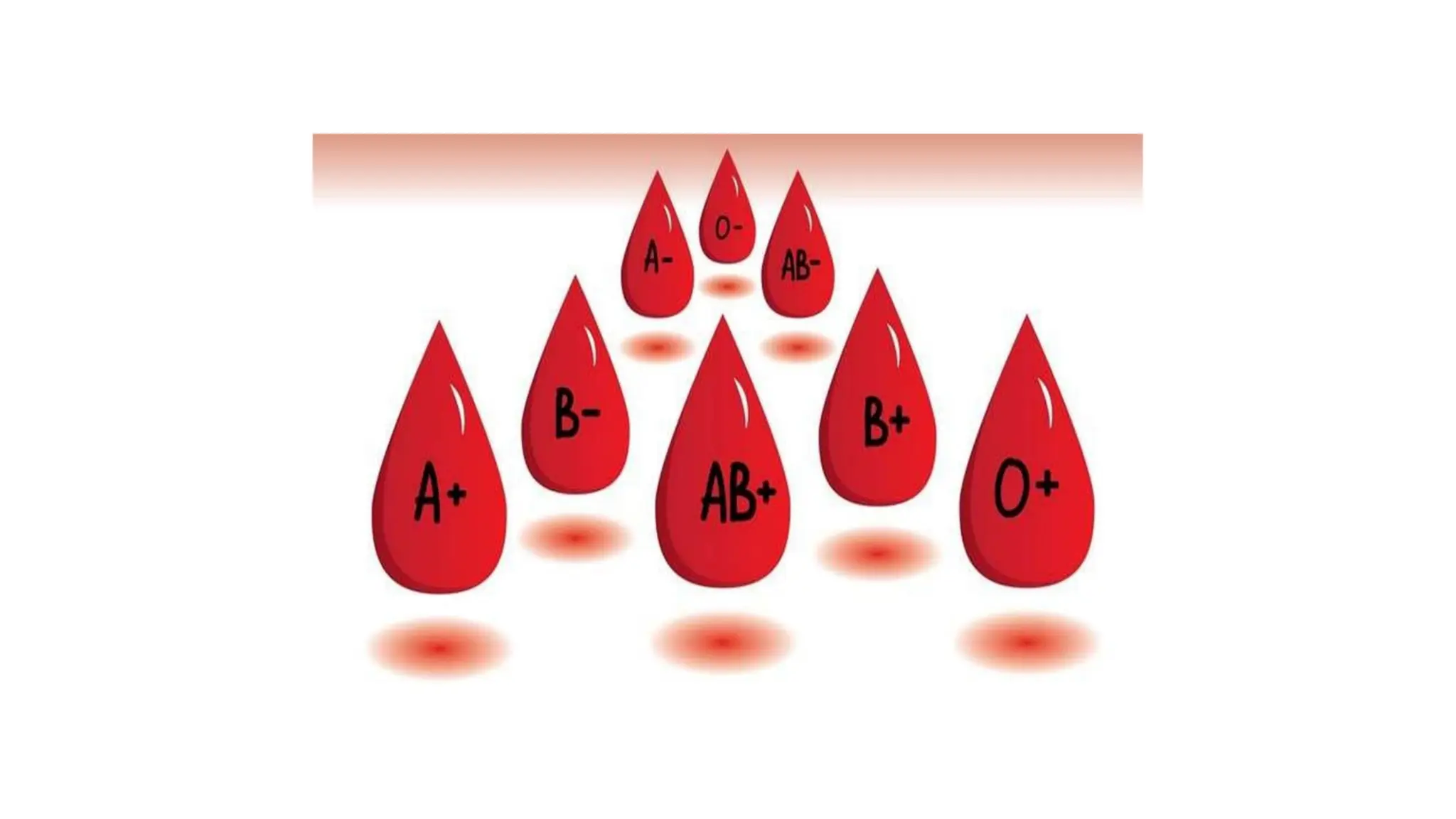
Blood group systems
• ABO
• MNS
• P
• Rh
• Lutheran
• Kell
• Dewis
ABO SYSTEM
• Blood grouping system
• Discovered by landsteiner in 1900
• ABO System results in four major blod groups:
• A,B,AB,O
PRINCIPLE
• The red cells contain different types of antigens( agglutinogen),while
plasma contains naturally occurring antibodies (agglutinins)
• In order to determine the blood group of an individual ,the red cells
are allowed to react with sera containing known antibody (agglutinin)
agglutination
• The interaction between an antibody and a particulate antigen results
in visible clumping called agglutination.
• Antibodies that produce such reactions are called as agglutinins
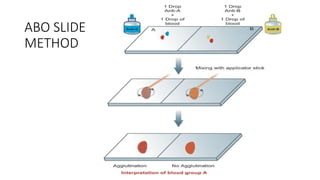
ABO SLIDE
METHOD
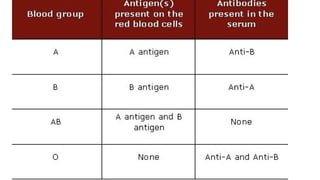
• ABO blood grouping system divides blood into 4 groups (A,B,AB,O)
based on the presence or absence of antigens A and B on the RBC
surfaces and naturally occurring antibodies anti-a and anti-b on
serum.
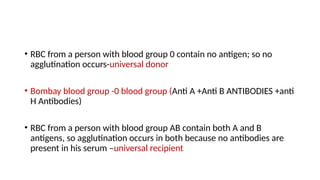
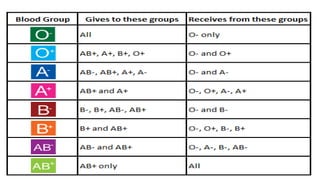
• RBC from a person with blood group 0 contain no antigen; so no
agglutination occurs-universal donor
• Bombay blood group -0 blood group (Anti A +Anti B ANTIBODIES +anti
H Antibodies)
• RBC from a person with blood group AB contain both A and B
antigens, so agglutination occurs in both because no antibodies are
present in his serum –universal recipient
Rhesus system
• The second system is called the rhesus system and is classified as
rhesus positive (+) and rhesus negative (-).
• The Rh is derived from the use of the blood of rhesus monkeys
in the basic test for determining the presence of the Rh antigen
in human blood.
• If this RhD antigen is present, the blood group isRhD
positive. If it's absent, the blood group is RhD
Rhesus system
• Rh blood group was reported by Landsteiner and weiner in 1940.
• Rh antigens are present on RBC
• Rh antibodies develop in response to known stimulus (blood
transfusion, or pregnancy)
Methods of rh grouping
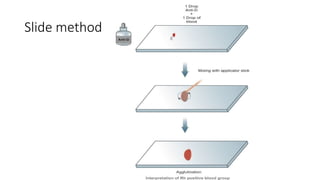
• Slide method
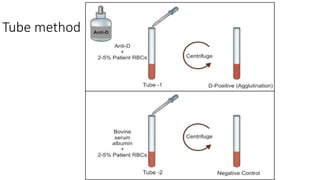
• Tube method
Slide method
Tube method
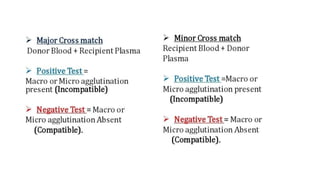
Cross matching
• Before blood transfusion , a cross match is a prerequisite
• It is done to avoid reactions of mismatched transfusion
• Donor recipient compatibility is tested by matching recipient’s serum
and donor red cells
procedure
• In a small test tube, place a drop of recipient’s serum.
• Add washed donor red cells suspended in 5% saline
• Mix the two and incubate at 37% for 30 mins
• Centrifuge at 3000 rpm for one minute
• After dislodging the cell palette gently from the centrifuge tube,
examine it for presence or absence of agglutination and haemolysis,
first grossly and then under the microscope.
interpretation
• If there is no agglutination or haemolysis, the donor recipient blood
groups are matched
• In a mismatch ,there is either haemolysis or agglutination or both.
Importance of blood grouping and cross
matching
• Done prior to blood transfusion
• Paternity disputes ABO and rh grouping is done
• Medicolegal use in criminal cases
• Suspectibility to various diseases –o blood group are suspectible to
peptic ulcer
• A blood group-gastric cancer
• Routine health checkup
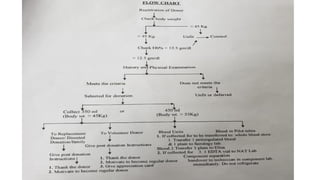
Donor screening
• It is done to minimize risks both to the recipient and to the donor.
• First layer of defense
• The WHO Recommends a lower limit of 18 for donating blood and
upper limit to 65 years of age.
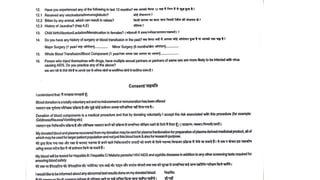
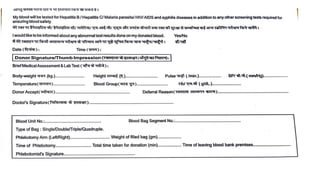
• Consent is taken before donation
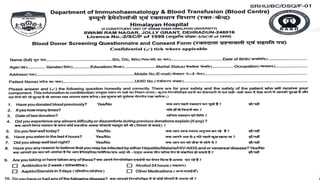
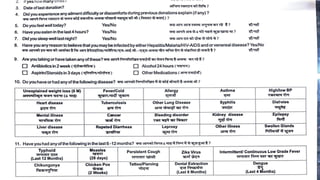
Blood donor screening form
• Hb, blood group, vitals-current health of the donor
• Last Donation; if any;date
• Last meal
• History of infections such as HIV/MALARIA/HEP
• Antibiotics consumption in 2 weeks
• Alcohol consumption in 24 hours
• respiratory disease,
• Heart disease,
• Liver disease,
• allergy,
• Epilepsy ,diabetes, BP,Cancer,
• History of last 6-12 months :-
Dengue, Typhoid, malaria, chikunguniya, chickenpox
• Tooth extraction
• Animal bite
• Hep A,E
• History of surgery in 1 year
• Tattoo in last 1 year
• Injection drug use
ABO SYSTEM.pptx blood grouping comptability

ABO SYSTEM.pptx blood grouping comptability

  • 2.
    Blood group systems •ABO • MNS • P • Rh • Lutheran • Kell • Dewis
  • 3.
    ABO SYSTEM • Bloodgrouping system • Discovered by landsteiner in 1900 • ABO System results in four major blod groups: • A,B,AB,O
  • 4.
    PRINCIPLE • The redcells contain different types of antigens( agglutinogen),while plasma contains naturally occurring antibodies (agglutinins) • In order to determine the blood group of an individual ,the red cells are allowed to react with sera containing known antibody (agglutinin)
  • 5.
    agglutination • The interactionbetween an antibody and a particulate antigen results in visible clumping called agglutination. • Antibodies that produce such reactions are called as agglutinins
  • 6.
  • 7.
    • ABO bloodgrouping system divides blood into 4 groups (A,B,AB,O) based on the presence or absence of antigens A and B on the RBC surfaces and naturally occurring antibodies anti-a and anti-b on serum.
  • 9.
    • RBC froma person with blood group 0 contain no antigen; so no agglutination occurs-universal donor • Bombay blood group -0 blood group (Anti A +Anti B ANTIBODIES +anti H Antibodies) • RBC from a person with blood group AB contain both A and B antigens, so agglutination occurs in both because no antibodies are present in his serum –universal recipient
  • 10.
    Rhesus system • Thesecond system is called the rhesus system and is classified as rhesus positive (+) and rhesus negative (-). • The Rh is derived from the use of the blood of rhesus monkeys in the basic test for determining the presence of the Rh antigen in human blood. • If this RhD antigen is present, the blood group isRhD positive. If it's absent, the blood group is RhD
  • 11.
    Rhesus system • Rhblood group was reported by Landsteiner and weiner in 1940. • Rh antigens are present on RBC • Rh antibodies develop in response to known stimulus (blood transfusion, or pregnancy)
  • 12.
    Methods of rhgrouping • Slide method • Tube method
  • 13.
  • 14.
  • 15.
    Cross matching • Beforeblood transfusion , a cross match is a prerequisite • It is done to avoid reactions of mismatched transfusion • Donor recipient compatibility is tested by matching recipient’s serum and donor red cells
  • 16.
    procedure • In asmall test tube, place a drop of recipient’s serum. • Add washed donor red cells suspended in 5% saline • Mix the two and incubate at 37% for 30 mins • Centrifuge at 3000 rpm for one minute
  • 17.
    • After dislodgingthe cell palette gently from the centrifuge tube, examine it for presence or absence of agglutination and haemolysis, first grossly and then under the microscope.
  • 18.
    interpretation • If thereis no agglutination or haemolysis, the donor recipient blood groups are matched • In a mismatch ,there is either haemolysis or agglutination or both.
  • 20.
    Importance of bloodgrouping and cross matching • Done prior to blood transfusion • Paternity disputes ABO and rh grouping is done • Medicolegal use in criminal cases • Suspectibility to various diseases –o blood group are suspectible to peptic ulcer • A blood group-gastric cancer • Routine health checkup
  • 21.
    Donor screening • Itis done to minimize risks both to the recipient and to the donor. • First layer of defense • The WHO Recommends a lower limit of 18 for donating blood and upper limit to 65 years of age. • Consent is taken before donation
  • 23.
    Blood donor screeningform • Hb, blood group, vitals-current health of the donor • Last Donation; if any;date • Last meal • History of infections such as HIV/MALARIA/HEP • Antibiotics consumption in 2 weeks • Alcohol consumption in 24 hours • respiratory disease, • Heart disease, • Liver disease, • allergy, • Epilepsy ,diabetes, BP,Cancer,
  • 24.
    • History oflast 6-12 months :- Dengue, Typhoid, malaria, chikunguniya, chickenpox • Tooth extraction • Animal bite • Hep A,E • History of surgery in 1 year • Tattoo in last 1 year • Injection drug use