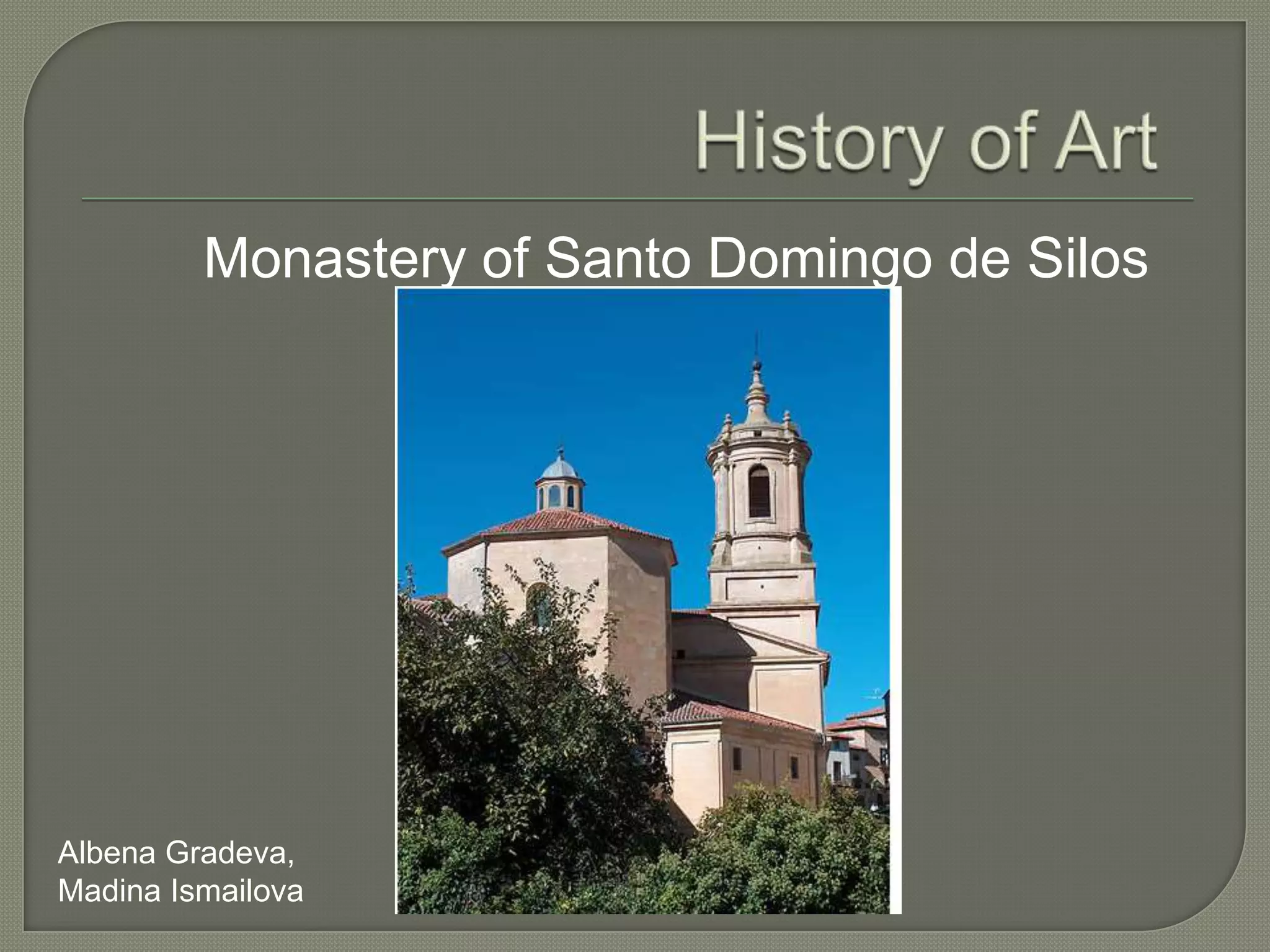
Monastery of Santo Domingo de Silos


Albena Gradeva,
Madina Ismailova
1. Introduction
 Historical context of the artwork.
 Artistic context.
 The author.

2. Analysis
 Description
 Style
 Features
 Symbolic   Meaning
3. Conclusion
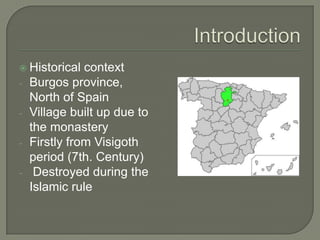
 Historical   context
-   Burgos province,
    North of Spain
-   Village built up due to
    the monastery
-   Firstly from Visigoth
    period (7th. Century)
-    Destroyed during the
    Islamic rule
-   Romanesque part built in 1088
-   1751 Romanesque part disappears: neoclassical
    temple, built by Pedro Machuca plans Ventura
    Rodríguez (many Romanesque features lost)
-   Author: not clear, only 2 different styles of 2
    teachers are visible
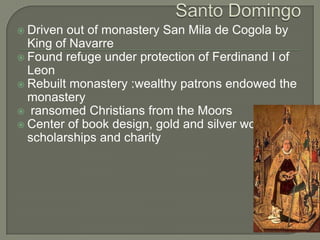
 Driven out of monastery San Mila de Cogola by
  King of Navarre
 Found refuge under protection of Ferdinand I of
  Leon
 Rebuilt monastery :wealthy patrons endowed the
  monastery
 ransomed Christians from the Moors
 Center of book design, gold and silver work,
  scholarships and charity
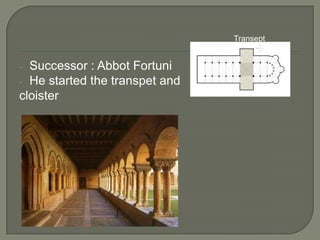
Transept


- Successor : Abbot Fortuni
- He started the transpet and
cloister
 Mainly Romanesque style
 Few pieces showing early Gothic style
  (annunciation)
 Two styles distinguished by columns
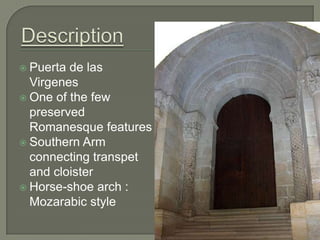
 Puerta de las
  Virgenes
 One of the few
  preserved
  Romanesque features
 Southern Arm
  connecting transpet
  and cloister
 Horse-shoe arch :
  Mozarabic style
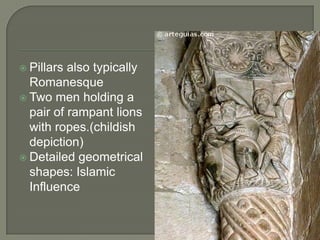
 Pillars also typically
  Romanesque
 Two men holding a
  pair of rampant lions
  with ropes.(childish
  depiction)
 Detailed geometrical
  shapes: Islamic
  Influence
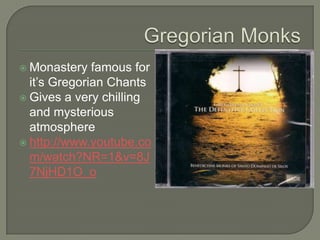
 Monastery   famous for
  it’s Gregorian Chants
 Gives a very chilling
  and mysterious
  atmosphere
 http://www.youtube.co
  m/watch?NR=1&v=8J
  7NjHD1O_o
Sculpture    used for 2 purposes
1) Decoration
2) Illustrate stories of the Bible
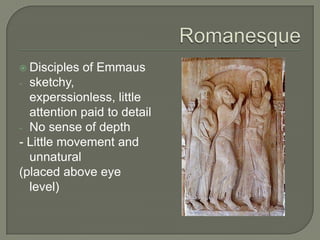
 Disciples   of Emmaus
- sketchy,
  experssionless, little
  attention paid to detail
- No sense of depth
- Little movement and
  unnatural
(placed above eye
  level)
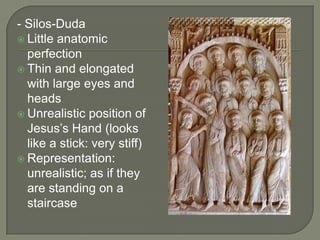
- Silos-Duda
 Little anatomic
  perfection
 Thin and elongated
  with large eyes and
  heads
 Unrealistic position of
  Jesus’s Hand (looks
  like a stick: very stiff)
 Representation:
  unrealistic; as if they
  are standing on a
  staircase
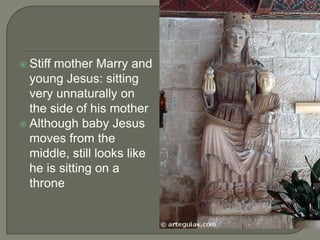
 Stiffmother Marry and
  young Jesus: sitting
  very unnaturally on
  the side of his mother
 Although baby Jesus
  moves from the
  middle, still looks like
  he is sitting on a
  throne
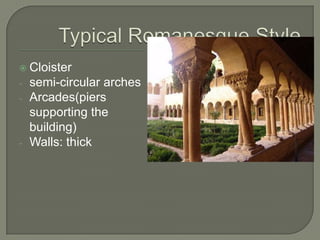
 Cloister
-   semi-circular arches
-   Arcades(piers
    supporting the
    building)
-   Walls: thick
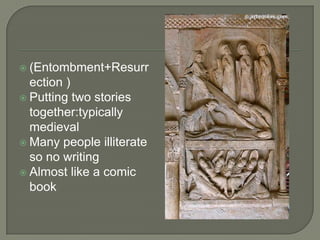
 (Entombment+Resurr
  ection )
 Putting two stories
  together:typically
  medieval
 Many people illiterate
  so no writing
 Almost like a comic
  book
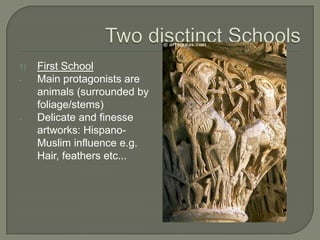
1)   First School
-    Main protagonists are
     animals (surrounded by
     foliage/stems)
-    Delicate and finesse
     artworks: Hispano-
     Muslim influence e.g.
     Hair, feathers etc...
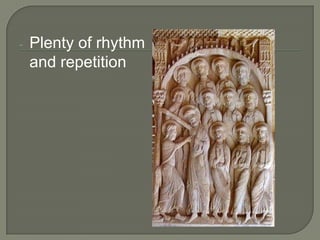
-   Plenty of rhythm
    and repetition
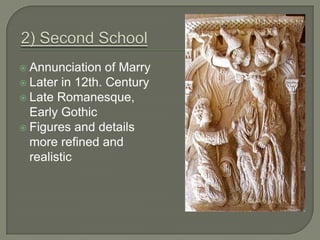
 Annunciation   of Marry
 Later in 12th. Century
 Late Romanesque,
  Early Gothic
 Figures and details
  more refined and
  realistic
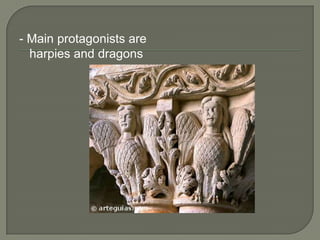
- Main protagonists are
  harpies and dragons

Abbey de Santo Domingo de Silos

  • 1.
    Monastery of SantoDomingo de Silos Albena Gradeva, Madina Ismailova
  • 2.
    1. Introduction  Historicalcontext of the artwork.  Artistic context.  The author. 2. Analysis  Description  Style  Features  Symbolic Meaning 3. Conclusion
  • 3.
     Historical context - Burgos province, North of Spain - Village built up due to the monastery - Firstly from Visigoth period (7th. Century) - Destroyed during the Islamic rule
  • 4.
    - Romanesque part built in 1088 - 1751 Romanesque part disappears: neoclassical temple, built by Pedro Machuca plans Ventura Rodríguez (many Romanesque features lost) - Author: not clear, only 2 different styles of 2 teachers are visible
  • 5.
     Driven outof monastery San Mila de Cogola by King of Navarre  Found refuge under protection of Ferdinand I of Leon  Rebuilt monastery :wealthy patrons endowed the monastery  ransomed Christians from the Moors  Center of book design, gold and silver work, scholarships and charity
  • 6.
    Transept - Successor :Abbot Fortuni - He started the transpet and cloister
  • 7.
     Mainly Romanesquestyle  Few pieces showing early Gothic style (annunciation)  Two styles distinguished by columns
  • 9.
     Puerta delas Virgenes  One of the few preserved Romanesque features  Southern Arm connecting transpet and cloister  Horse-shoe arch : Mozarabic style
  • 10.
     Pillars alsotypically Romanesque  Two men holding a pair of rampant lions with ropes.(childish depiction)  Detailed geometrical shapes: Islamic Influence
  • 11.
     Monastery famous for it’s Gregorian Chants  Gives a very chilling and mysterious atmosphere  http://www.youtube.co m/watch?NR=1&v=8J 7NjHD1O_o
  • 12.
    Sculpture used for 2 purposes 1) Decoration 2) Illustrate stories of the Bible
  • 13.
     Disciples of Emmaus - sketchy, experssionless, little attention paid to detail - No sense of depth - Little movement and unnatural (placed above eye level)
  • 14.
    - Silos-Duda  Littleanatomic perfection  Thin and elongated with large eyes and heads  Unrealistic position of Jesus’s Hand (looks like a stick: very stiff)  Representation: unrealistic; as if they are standing on a staircase
  • 15.
     Stiffmother Marryand young Jesus: sitting very unnaturally on the side of his mother  Although baby Jesus moves from the middle, still looks like he is sitting on a throne
  • 16.
     Cloister - semi-circular arches - Arcades(piers supporting the building) - Walls: thick
  • 17.
     (Entombment+Resurr ection )  Putting two stories together:typically medieval  Many people illiterate so no writing  Almost like a comic book
  • 18.
    1) First School - Main protagonists are animals (surrounded by foliage/stems) - Delicate and finesse artworks: Hispano- Muslim influence e.g. Hair, feathers etc...
  • 19.
    - Plenty of rhythm and repetition
  • 20.
     Annunciation of Marry  Later in 12th. Century  Late Romanesque, Early Gothic  Figures and details more refined and realistic
  • 21.
    - Main protagonistsare harpies and dragons

Editor's Notes

  • #2 http://www.youtube.com/watch?v=QSVRyJnhnt4
  • #9 2 main parts: cloister and the transept