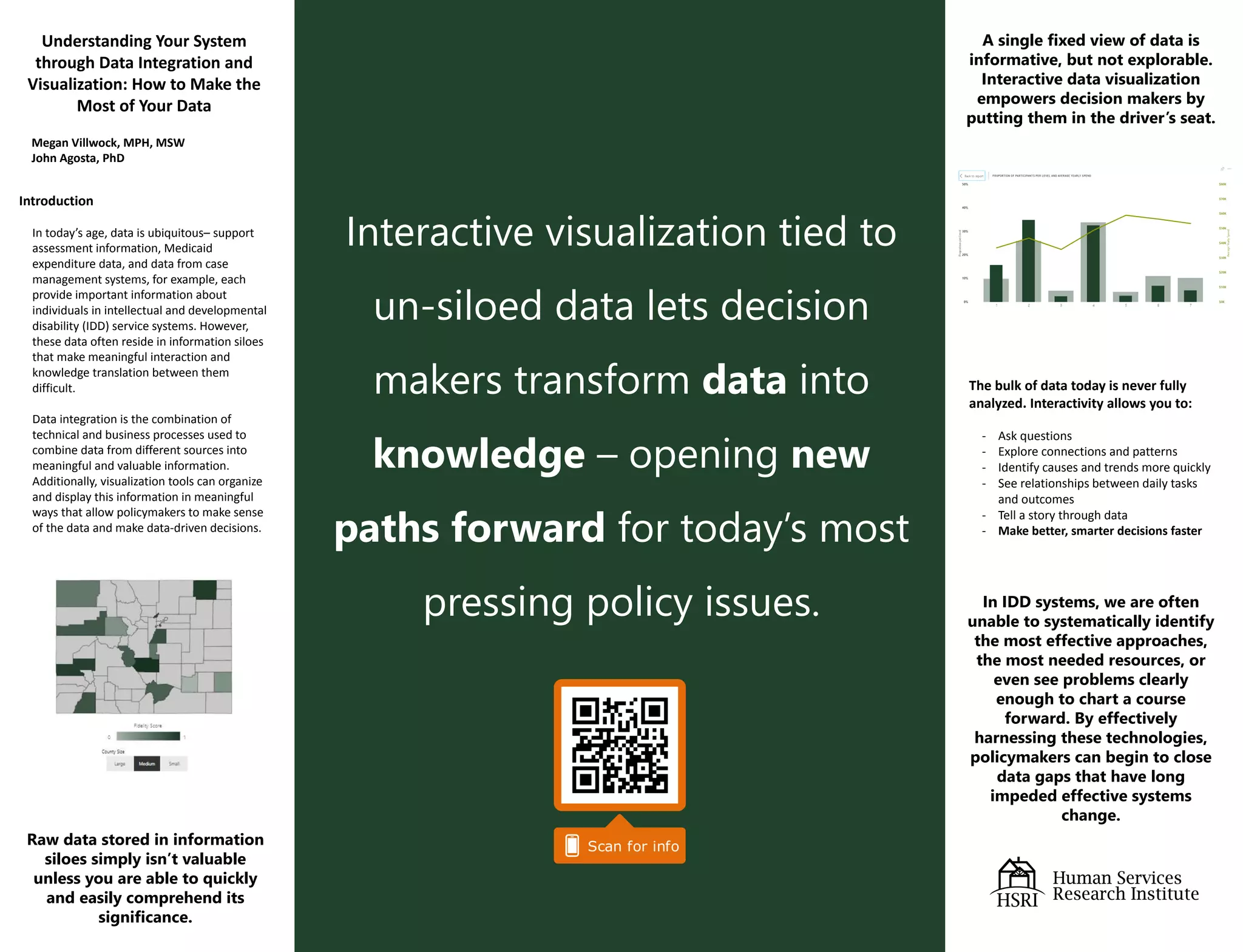
Interactive visualization tied to
un-siloed data lets decision
makers transform data into
knowledge – opening new
paths forward for today’s most
pressing policy issues.
Non-Cognitive Predictors of Student Success:
A Predictive Validity Comparison Between Domestic and International Students
Understanding Your System
through Data Integration and
Visualization: How to Make the
Most of Your Data
Megan Villwock, MPH, MSW
John Agosta, PhD
Introduction
In today’s age, data is ubiquitous– support
assessment information, Medicaid
expenditure data, and data from case
management systems, for example, each
provide important information about
individuals in intellectual and developmental
disability (IDD) service systems. However,
these data often reside in information siloes
that make meaningful interaction and
knowledge translation between them
difficult.
Data integration is the combination of
technical and business processes used to
combine data from different sources into
meaningful and valuable information.
Additionally, visualization tools can organize
and display this information in meaningful
ways that allow policymakers to make sense
of the data and make data-driven decisions.
Raw data stored in information
siloes simply isn’t valuable
unless you are able to quickly
and easily comprehend its
significance.
Non-Cognitive Predictors of Student Success:
A Predictive Validity Comparison Between Domestic and International Students
The bulk of data today is never fully
analyzed. Interactivity allows you to:
- Ask questions
- Explore connections and patterns
- Identify causes and trends more quickly
- See relationships between daily tasks
and outcomes
- Tell a story through data
- Make better, smarter decisions faster
A single fixed view of data is
informative, but not explorable.
Interactive data visualization
empowers decision makers by
putting them in the driver’s seat.
In IDD systems, we are often
unable to systematically identify
the most effective approaches,
the most needed resources, or
even see problems clearly
enough to chart a course
forward. By effectively
harnessing these technologies,
policymakers can begin to close
data gaps that have long
impeded effective systems
change.

AAIDD Data Visualization Poster

  • 1.
    Interactive visualization tiedto un-siloed data lets decision makers transform data into knowledge – opening new paths forward for today’s most pressing policy issues. Non-Cognitive Predictors of Student Success: A Predictive Validity Comparison Between Domestic and International Students Understanding Your System through Data Integration and Visualization: How to Make the Most of Your Data Megan Villwock, MPH, MSW John Agosta, PhD Introduction In today’s age, data is ubiquitous– support assessment information, Medicaid expenditure data, and data from case management systems, for example, each provide important information about individuals in intellectual and developmental disability (IDD) service systems. However, these data often reside in information siloes that make meaningful interaction and knowledge translation between them difficult. Data integration is the combination of technical and business processes used to combine data from different sources into meaningful and valuable information. Additionally, visualization tools can organize and display this information in meaningful ways that allow policymakers to make sense of the data and make data-driven decisions. Raw data stored in information siloes simply isn’t valuable unless you are able to quickly and easily comprehend its significance. Non-Cognitive Predictors of Student Success: A Predictive Validity Comparison Between Domestic and International Students The bulk of data today is never fully analyzed. Interactivity allows you to: - Ask questions - Explore connections and patterns - Identify causes and trends more quickly - See relationships between daily tasks and outcomes - Tell a story through data - Make better, smarter decisions faster A single fixed view of data is informative, but not explorable. Interactive data visualization empowers decision makers by putting them in the driver’s seat. In IDD systems, we are often unable to systematically identify the most effective approaches, the most needed resources, or even see problems clearly enough to chart a course forward. By effectively harnessing these technologies, policymakers can begin to close data gaps that have long impeded effective systems change.