A 0 1 – C O N T R O L L E D A S S E S S M E N T
I N D U S T R Y R E S E A R C H - M A R K E T I N G
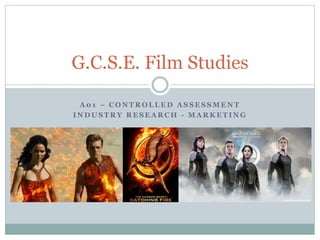
G.C.S.E. Film Studies
Starter
Name the four areas
you can select from
for the controlled
assessment?
Lesson Overview
 Period 1 – Controlled Assessment
 Analyse feedback on essays.
 Peer assessment
 Analyse the example scene and grade the example in groups.
Feedback to the class – compare structure to example scene.
 Complete first draft of the controlled assessment – 1 hour
 Period 2
 A01 – industry Research
 Element 1 - Distribution
Todays Objectives
 WALT
 How are films marketed
 What types of products area created as part of marketing
campaign?
 What is the purpose of these products and how they raise
awareness of the film.
 WILF
 Identify a range of products that could be made for a film
 Apply these products to your own film.
 Identify effectiveness of raising awareness.
Feedback
 You have five minutes review the feedback you have
received
 Once you have done this pass it to the person next to
you.
Peer Feedback
 You have ten minutes
 Review you fellow students work and using
the grading criteria on the front sheet give
them feedback and grade them.
 Be fair I will be taking back in the work – I
don’t take kindly to immaturity in this
manner otherwise I maybe reading out loud
your essays – you have been warned!
Sample Essay
 Reflect back on sample essay.
 Looking at the feedback you have received from both
teacher and peer consider methods of improving
your work.
 Create a plan – paragraph by paragraph plan before
you write the essay on what to cover and why?
Sample scene
 Man on Fire
 Class analysis discussion on camera and editing.
Analysing man on Fire
 Consider the use of Camera and editing pace for this film.
 Why are they using graphics?
 Why is it fast cut?
 Why does it use transitions?
 What are the transitions that it uses?
 How does the camera speed and movement change
throughout the scene and why?
 Can you tell who the film is aimed at, target audience?
Controlled Assessment –
A02 – MICRO ANALYSIS
 Mise-en-scène - setting, costume & props,
lighting/colour, performance, gesture & body
language
 Cinematography – framing, camera angles and
movement, shot size, focus
 Sound - diegetic and non-diegetic, parallel and
contrapuntal, sound bridges, ambient sound and
sound effects
 Editing – types of edits, pace of editing and special
effects.
Distribution
 The areas you will need to cover for this are:
 How was your film released in cinemas? – digital vs
film.
 Consider the range of marketing the was used for you
film – at least three products.
 Test screening and scheduling
Distribution
 Hunger Games Catching Fire – consider these areas:
 How the film is marketed?
 What products were created to market the film?
 Were these effective, give your opinion?
 You have ten minutes list and answer these
questions in your books
Marketing
 Test Screening
 A test screening is when a film goes before an audience and
depending what they think this could radically change the film?
 E.G.
 Titanic
 Blade Runner
 Tears of the Sun (NO ONE KILLS BRUNO)
Was your film changed due to test screenings
 Release Schedules
 When a film is released is important and film companies pick these
very importantly, they may coincide with holidays – Saw 5
(Halloween) or ‘Inglorious Basterds’ Boxing Day to beat out
competition.
 When was you film released and why?
Promotion
 Did your movie have any promotional tie – ins.
 This is when a film allows another product to
promote it if it to is sponsored. Transformers used
cars from General Motors. Resident Evil has lots of
Sony Products because Sony Entertainment paid for
the production.
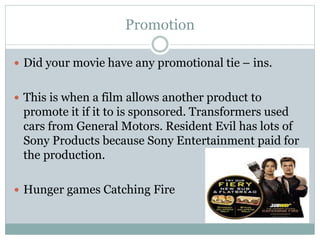
 Hunger games Catching Fire
Promotion
 Identify at least three products involved in the marketing
campaign.
 Websites
 Trailers
 Poster
 Sponsorship
 Branding
 The better the example used will improve grade don’t just
get the most obvious, especially for level 4.
Distribution
 How are film-prints created?
 What are digital copies for cinema exhibition?
 Digital vs Film
Distribution Example
 Toy Story premiered on November 19th 1995 in Hollywood; it
was released on November 22nd 1996 to 2,281 different
cinemas. The film remained in cinemas up to 37 weeks. The
estimated budget was $30,000,000. Although the movie
earned the top grossing film on its opening it only profited a
disappointing £144,903. The film was distributed by Buena
Vista internationally in the USA and the UK. In addition to
DVD and Blu-Ray releases Toy Story inspired characters
became toys, video games, theme parks attractions,
merchandise and spin offs. Due to the success of the film it
prompted a sequel four years later, Toy Story 2. Both films
were also released as a double feature in Disney Digital 3-D on
October 2nd 2009. On June 18th 2010 an additional film, Toy
Story 3 was released and made a huge $1 billion worldwide.
Differences
Consider what we have
covered today in distribution
what are the differences what
should you include as well?
Homework
 The areas you will need to cover for this are:
 How was your film released in cinemas? – digital vs film.
 Consider the range of marketing the was used for you
film – at least three products.
 Test screening and scheduling
 Cover all the above criteria for your film

A01 controlled - marketing

  • 1.
    A 0 1– C O N T R O L L E D A S S E S S M E N T I N D U S T R Y R E S E A R C H - M A R K E T I N G G.C.S.E. Film Studies
  • 2.
    Starter Name the fourareas you can select from for the controlled assessment?
  • 3.
    Lesson Overview  Period1 – Controlled Assessment  Analyse feedback on essays.  Peer assessment  Analyse the example scene and grade the example in groups. Feedback to the class – compare structure to example scene.  Complete first draft of the controlled assessment – 1 hour  Period 2  A01 – industry Research  Element 1 - Distribution
  • 4.
    Todays Objectives  WALT How are films marketed  What types of products area created as part of marketing campaign?  What is the purpose of these products and how they raise awareness of the film.  WILF  Identify a range of products that could be made for a film  Apply these products to your own film.  Identify effectiveness of raising awareness.
  • 5.
    Feedback  You havefive minutes review the feedback you have received  Once you have done this pass it to the person next to you.
  • 6.
    Peer Feedback  Youhave ten minutes  Review you fellow students work and using the grading criteria on the front sheet give them feedback and grade them.  Be fair I will be taking back in the work – I don’t take kindly to immaturity in this manner otherwise I maybe reading out loud your essays – you have been warned!
  • 7.
    Sample Essay  Reflectback on sample essay.  Looking at the feedback you have received from both teacher and peer consider methods of improving your work.  Create a plan – paragraph by paragraph plan before you write the essay on what to cover and why?
  • 8.
    Sample scene  Manon Fire  Class analysis discussion on camera and editing.
  • 9.
    Analysing man onFire  Consider the use of Camera and editing pace for this film.  Why are they using graphics?  Why is it fast cut?  Why does it use transitions?  What are the transitions that it uses?  How does the camera speed and movement change throughout the scene and why?  Can you tell who the film is aimed at, target audience?
  • 10.
    Controlled Assessment – A02– MICRO ANALYSIS  Mise-en-scène - setting, costume & props, lighting/colour, performance, gesture & body language  Cinematography – framing, camera angles and movement, shot size, focus  Sound - diegetic and non-diegetic, parallel and contrapuntal, sound bridges, ambient sound and sound effects  Editing – types of edits, pace of editing and special effects.
  • 11.
    Distribution  The areasyou will need to cover for this are:  How was your film released in cinemas? – digital vs film.  Consider the range of marketing the was used for you film – at least three products.  Test screening and scheduling
  • 12.
    Distribution  Hunger GamesCatching Fire – consider these areas:  How the film is marketed?  What products were created to market the film?  Were these effective, give your opinion?  You have ten minutes list and answer these questions in your books
  • 13.
    Marketing  Test Screening A test screening is when a film goes before an audience and depending what they think this could radically change the film?  E.G.  Titanic  Blade Runner  Tears of the Sun (NO ONE KILLS BRUNO) Was your film changed due to test screenings  Release Schedules  When a film is released is important and film companies pick these very importantly, they may coincide with holidays – Saw 5 (Halloween) or ‘Inglorious Basterds’ Boxing Day to beat out competition.  When was you film released and why?
  • 14.
    Promotion  Did yourmovie have any promotional tie – ins.  This is when a film allows another product to promote it if it to is sponsored. Transformers used cars from General Motors. Resident Evil has lots of Sony Products because Sony Entertainment paid for the production.  Hunger games Catching Fire
  • 15.
    Promotion  Identify atleast three products involved in the marketing campaign.  Websites  Trailers  Poster  Sponsorship  Branding  The better the example used will improve grade don’t just get the most obvious, especially for level 4.
  • 16.
    Distribution  How arefilm-prints created?  What are digital copies for cinema exhibition?  Digital vs Film
  • 17.
    Distribution Example  ToyStory premiered on November 19th 1995 in Hollywood; it was released on November 22nd 1996 to 2,281 different cinemas. The film remained in cinemas up to 37 weeks. The estimated budget was $30,000,000. Although the movie earned the top grossing film on its opening it only profited a disappointing £144,903. The film was distributed by Buena Vista internationally in the USA and the UK. In addition to DVD and Blu-Ray releases Toy Story inspired characters became toys, video games, theme parks attractions, merchandise and spin offs. Due to the success of the film it prompted a sequel four years later, Toy Story 2. Both films were also released as a double feature in Disney Digital 3-D on October 2nd 2009. On June 18th 2010 an additional film, Toy Story 3 was released and made a huge $1 billion worldwide.
  • 18.
    Differences Consider what wehave covered today in distribution what are the differences what should you include as well?
  • 19.
    Homework  The areasyou will need to cover for this are:  How was your film released in cinemas? – digital vs film.  Consider the range of marketing the was used for you film – at least three products.  Test screening and scheduling  Cover all the above criteria for your film