1
BY
A DESIGN OF IBC - A CONDUCTIVE PROCESS IN PROTECTING
THE INTEREST OF STAKEHOLDERS
COVERAGE :
A DESIGN OF IBC -A CONDUCTIVE PROCESS IN
PROTECTING THE INTEREST OFSTAKEHOLDERS
1. NUDGING THEORY
2. DESIGN OF IBC
3. CONDUCTIVE PROCESS
4. PROTECTION OF INTEREST OF STAKEHOLDERS
5. Entrepreneurship development
2
NUDGING THEORY
3
NUDGING THEORY PEREPTION
•Perception nudges target the underlying
perceptions of organizational behaviour to
bring about a change in understanding,
and therefore, a change in behaviour.
4
Nudging theory
• Influence of Human Behaviour
• Subtle Way to Enforce Change
• Small Action Indirect Change In Behaviour
• Influencing Choice Without Taking Power of Choice
5
Nudging theory
Different Nudges
 Perception Nudge
Motivation Nudge
Ability And Simplicity Nudge
6
Nudging theory
SEVEN STEPS
1) Define Change
2) Analysing Stakeholders
3) Work Plan and Timelines
4) Inclusive Decision Making
5) Receptive to Feedback
6) Removing Bottlenecks
7) Consistency
7
DESIGN OF IBC
8
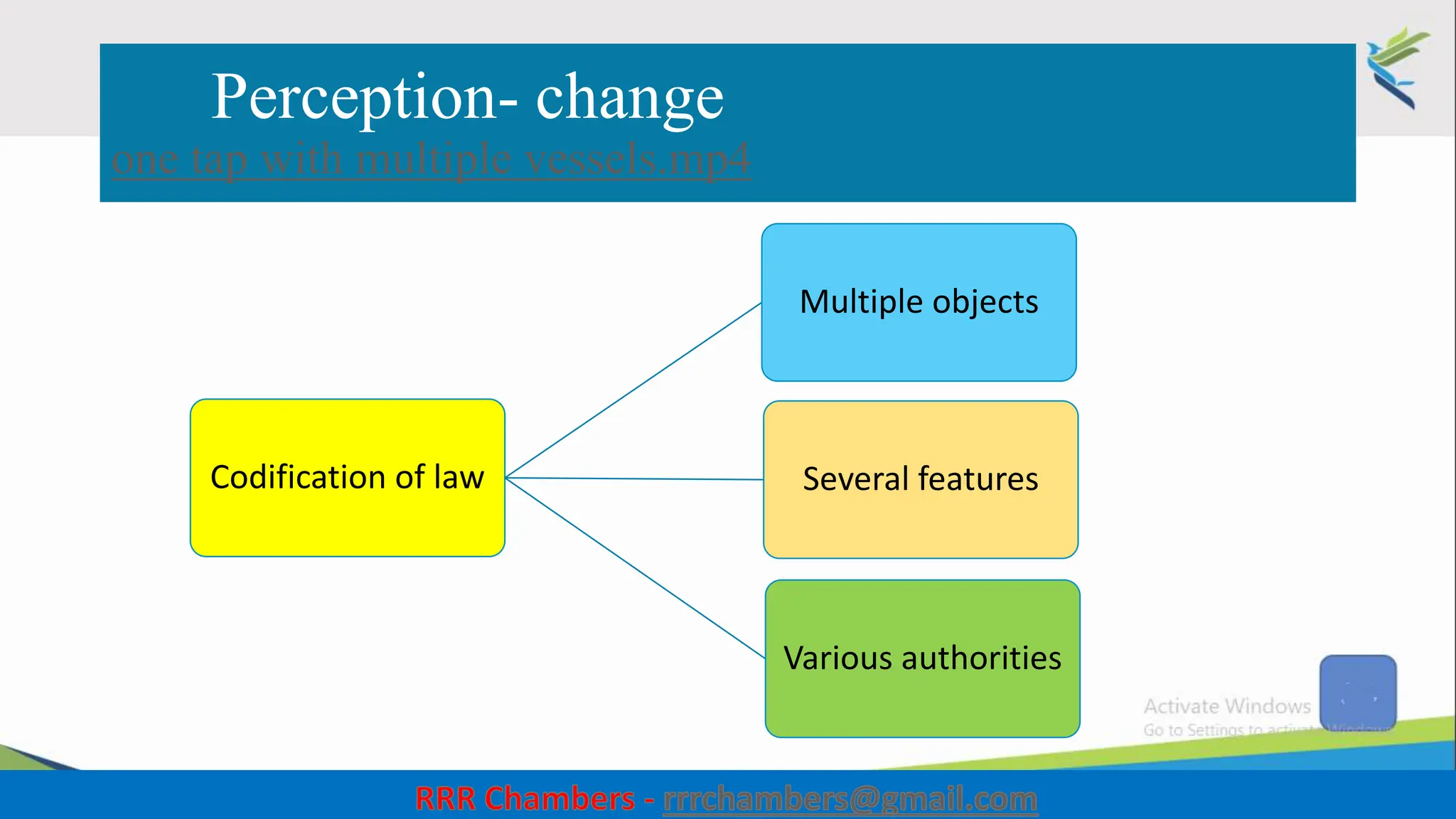
Perception- change
one tap with multiple vessels.mp4
Codification of law
Multiple objects
Several features
Various authorities
9
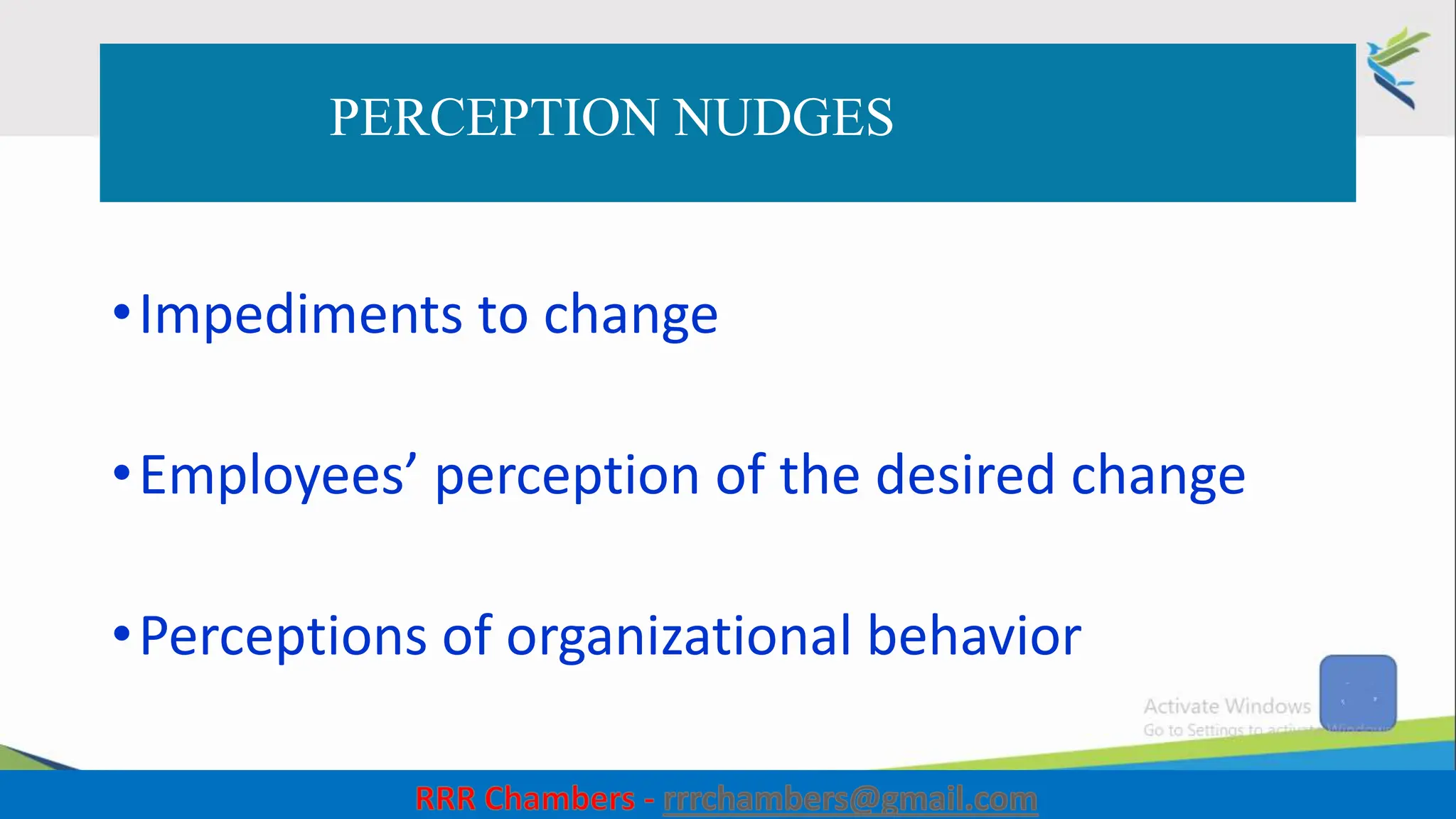
PERCEPTION NUDGES
•Impediments to change
•Employees’ perception of the desired change
•Perceptions of organizational behavior
10
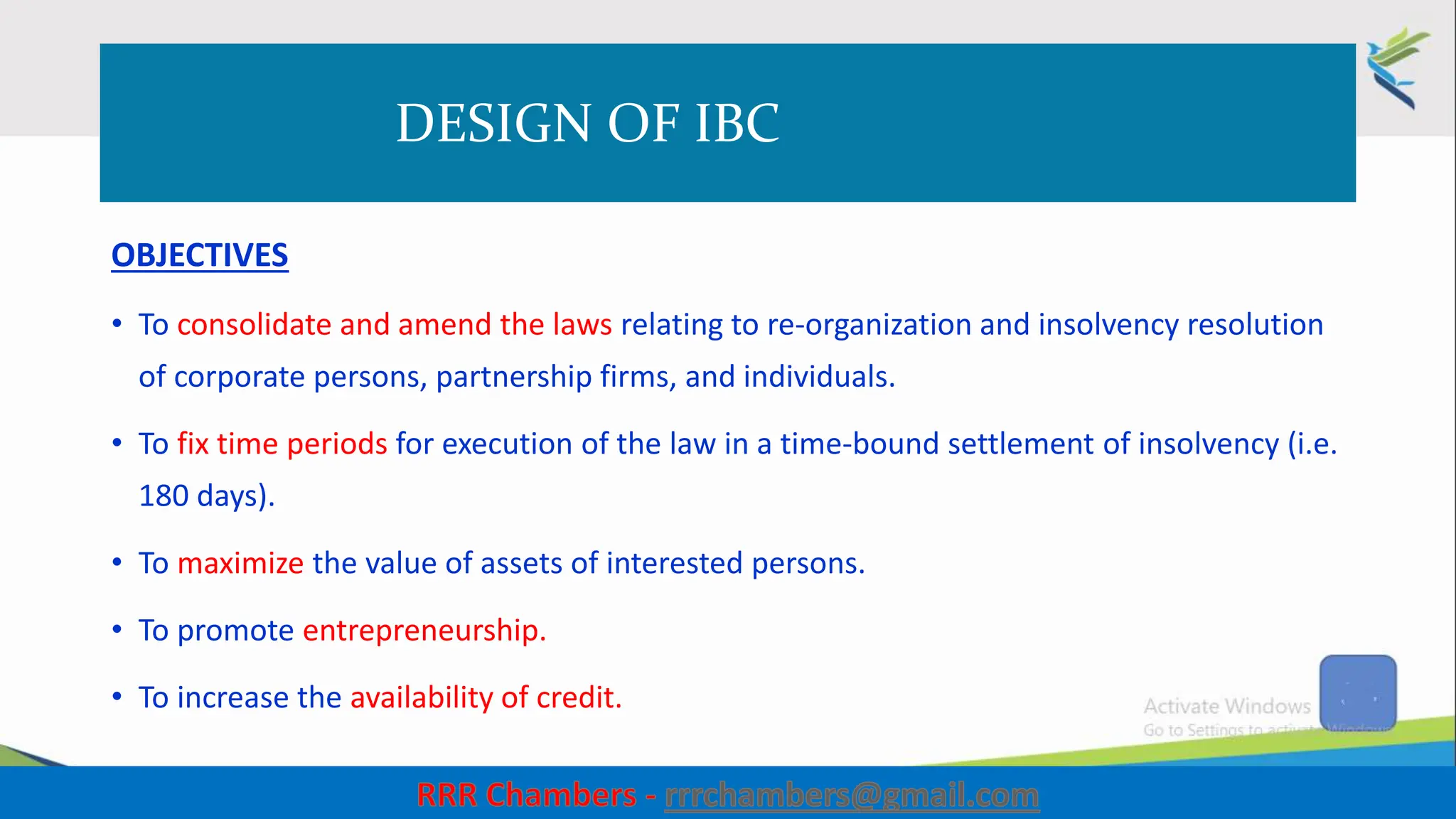
DESIGN OF IBC
OBJECTIVES
• To consolidate and amend the laws relating to re-organization and insolvency resolution
of corporate persons, partnership firms, and individuals.
• To fix time periods for execution of the law in a time-bound settlement of insolvency (i.e.
180 days).
• To maximize the value of assets of interested persons.
• To promote entrepreneurship.
• To increase the availability of credit.
11
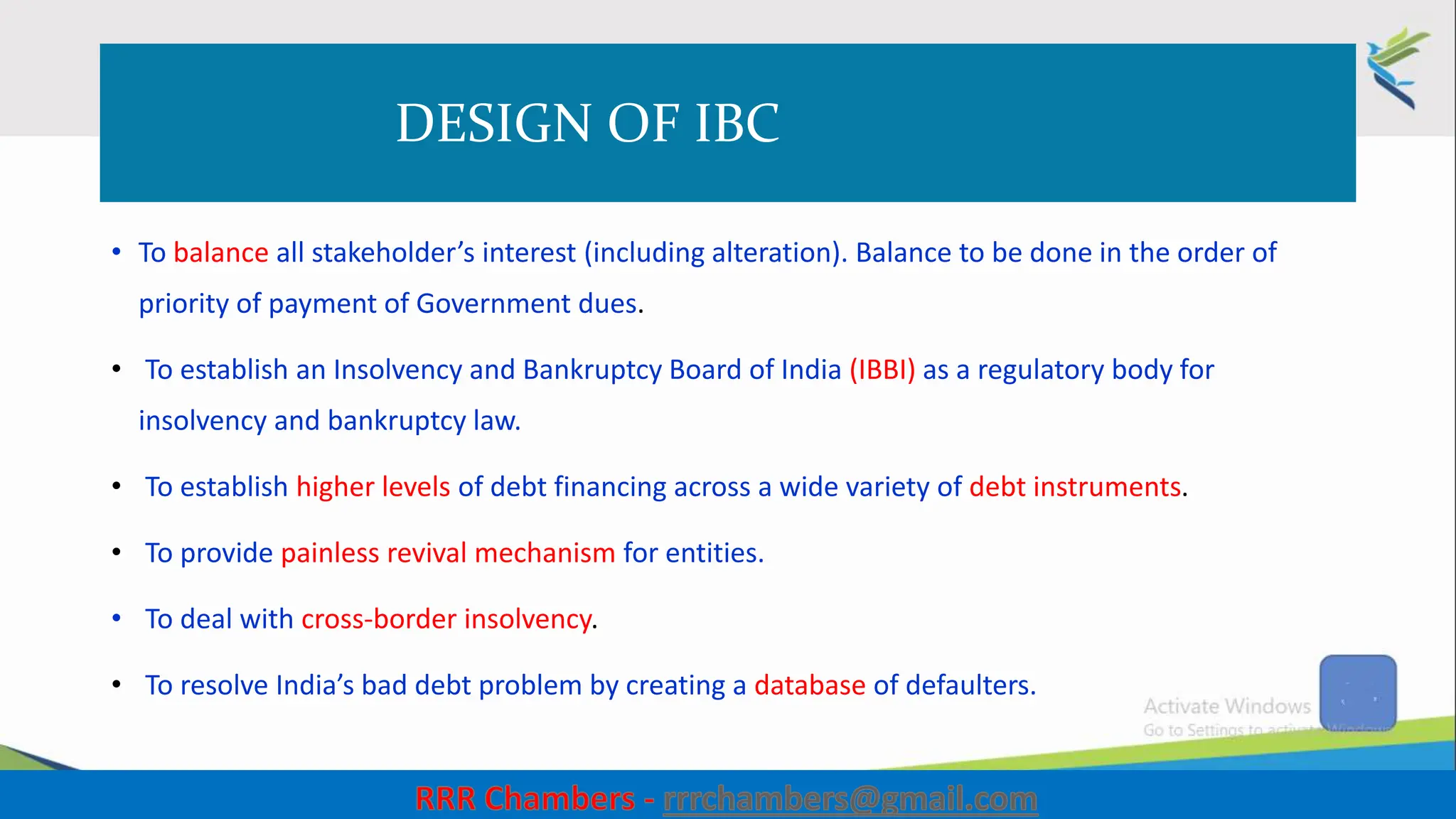
DESIGN OF IBC
• To balance all stakeholder’s interest (including alteration). Balance to be done in the order of
priority of payment of Government dues.
• To establish an Insolvency and Bankruptcy Board of India (IBBI) as a regulatory body for
insolvency and bankruptcy law.
• To establish higher levels of debt financing across a wide variety of debt instruments.
• To provide painless revival mechanism for entities.
• To deal with cross-border insolvency.
• To resolve India’s bad debt problem by creating a database of defaulters.
12
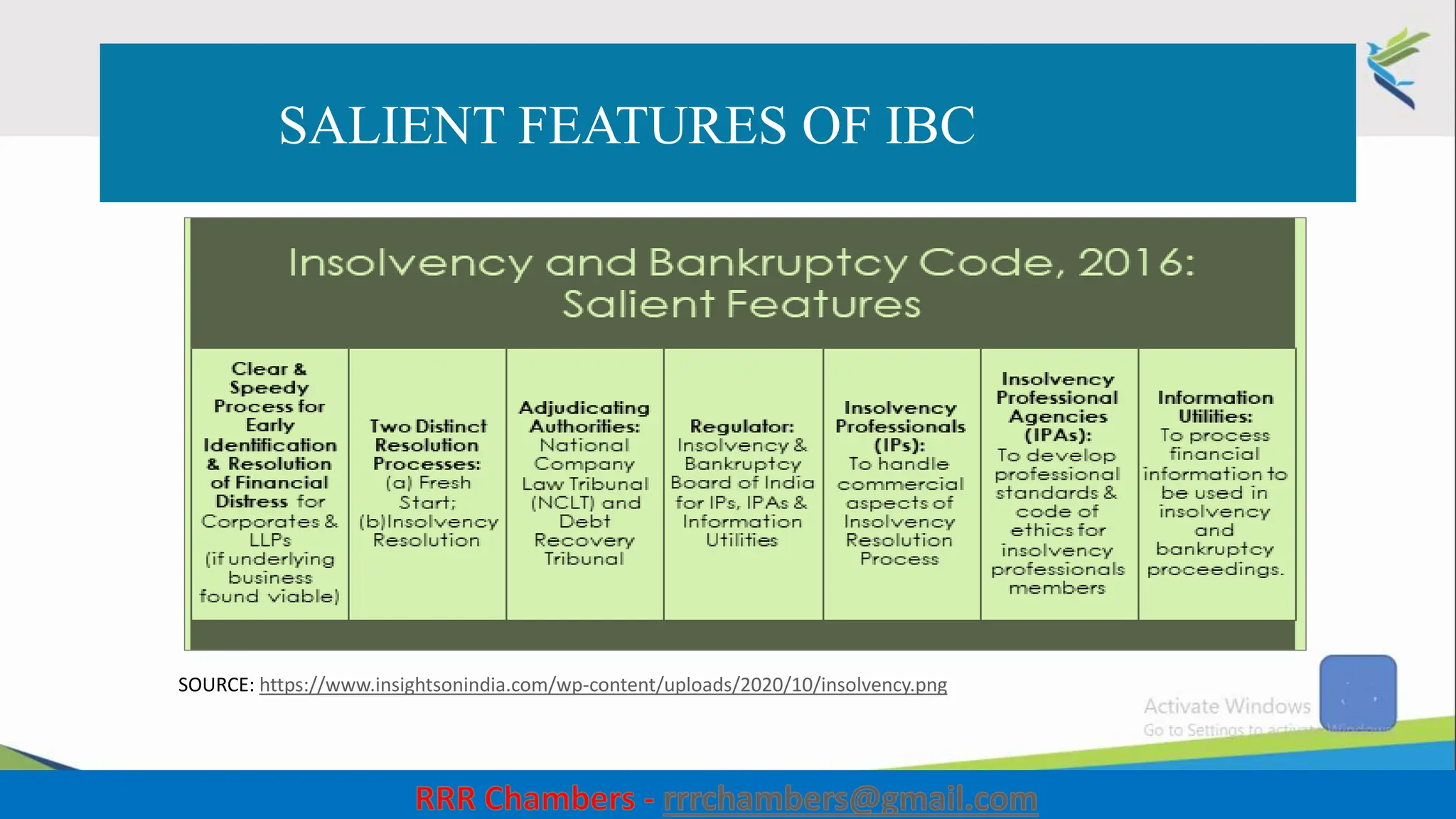
SALIENT FEATURES OF IBC
13
SOURCE: https://www.insightsonindia.com/wp-content/uploads/2020/10/insolvency.png
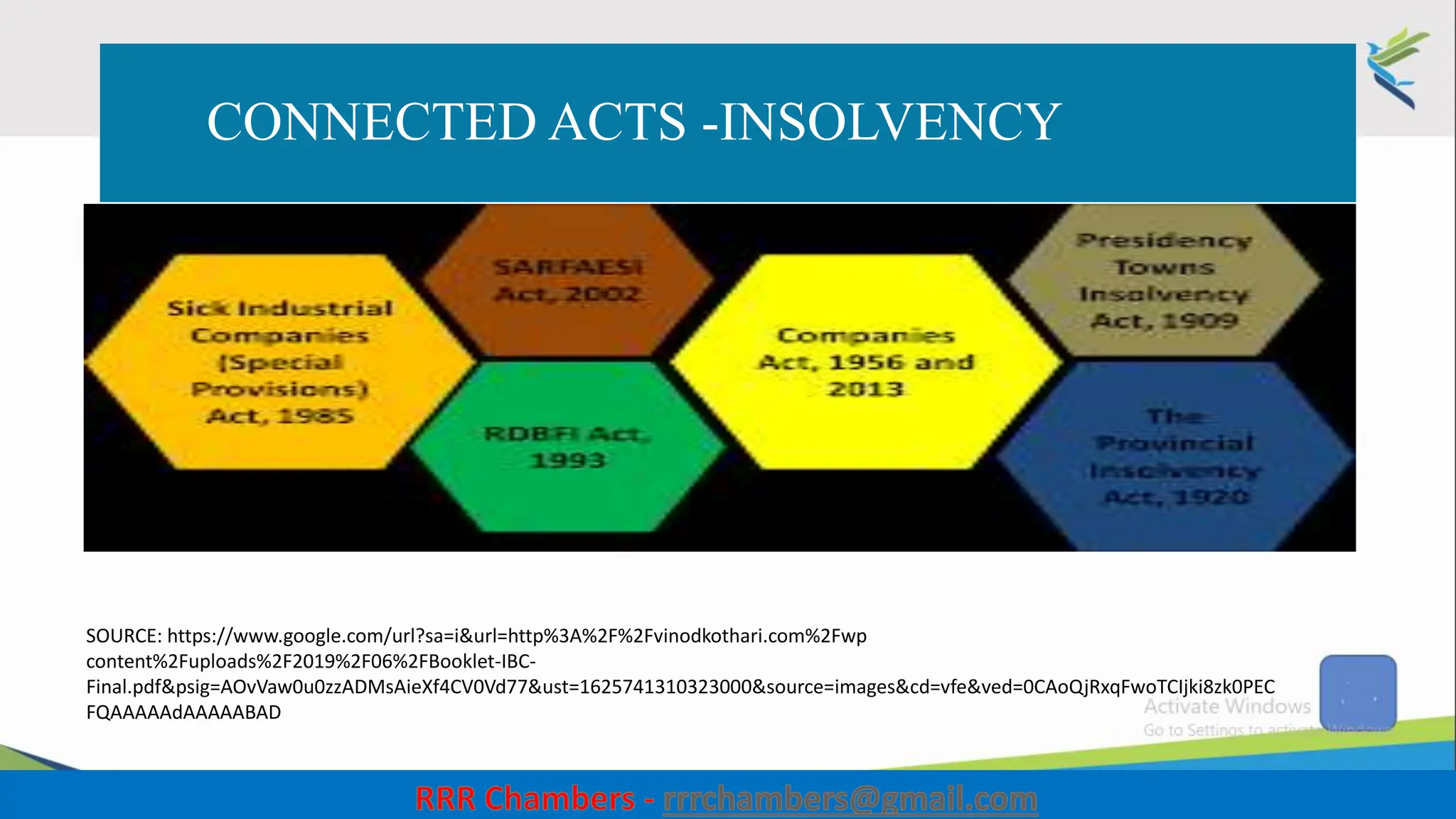
CONNECTED ACTS -INSOLVENCY
14
SOURCE: https://www.google.com/url?sa=i&url=http%3A%2F%2Fvinodkothari.com%2Fwp
content%2Fuploads%2F2019%2F06%2FBooklet-IBC-
Final.pdf&psig=AOvVaw0u0zzADMsAieXf4CV0Vd77&ust=1625741310323000&source=images&cd=vfe&ved=0CAoQjRxqFwoTCIjki8zk0PEC
FQAAAAAdAAAAABAD
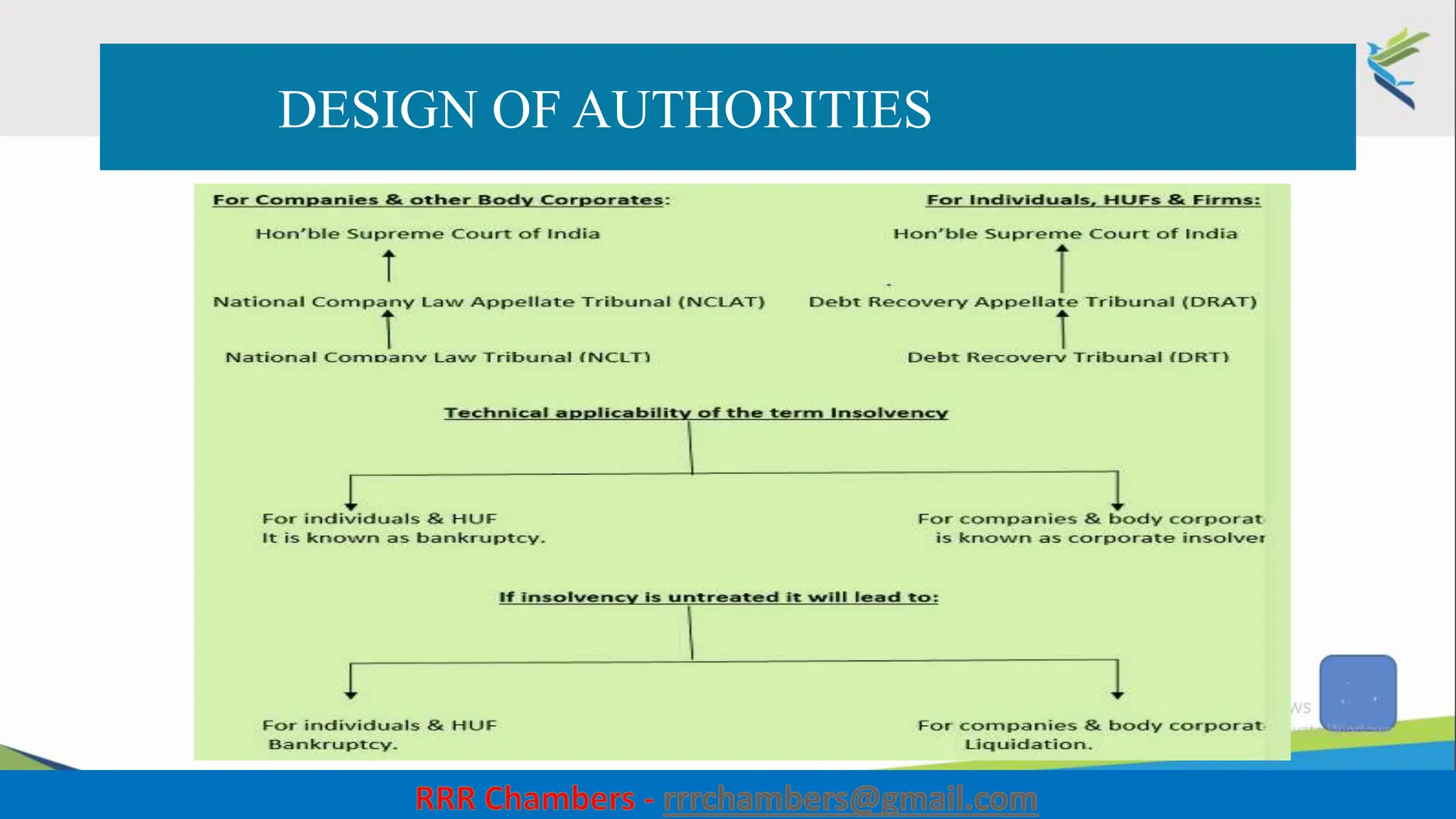
DESIGN OF AUTHORITIES
15
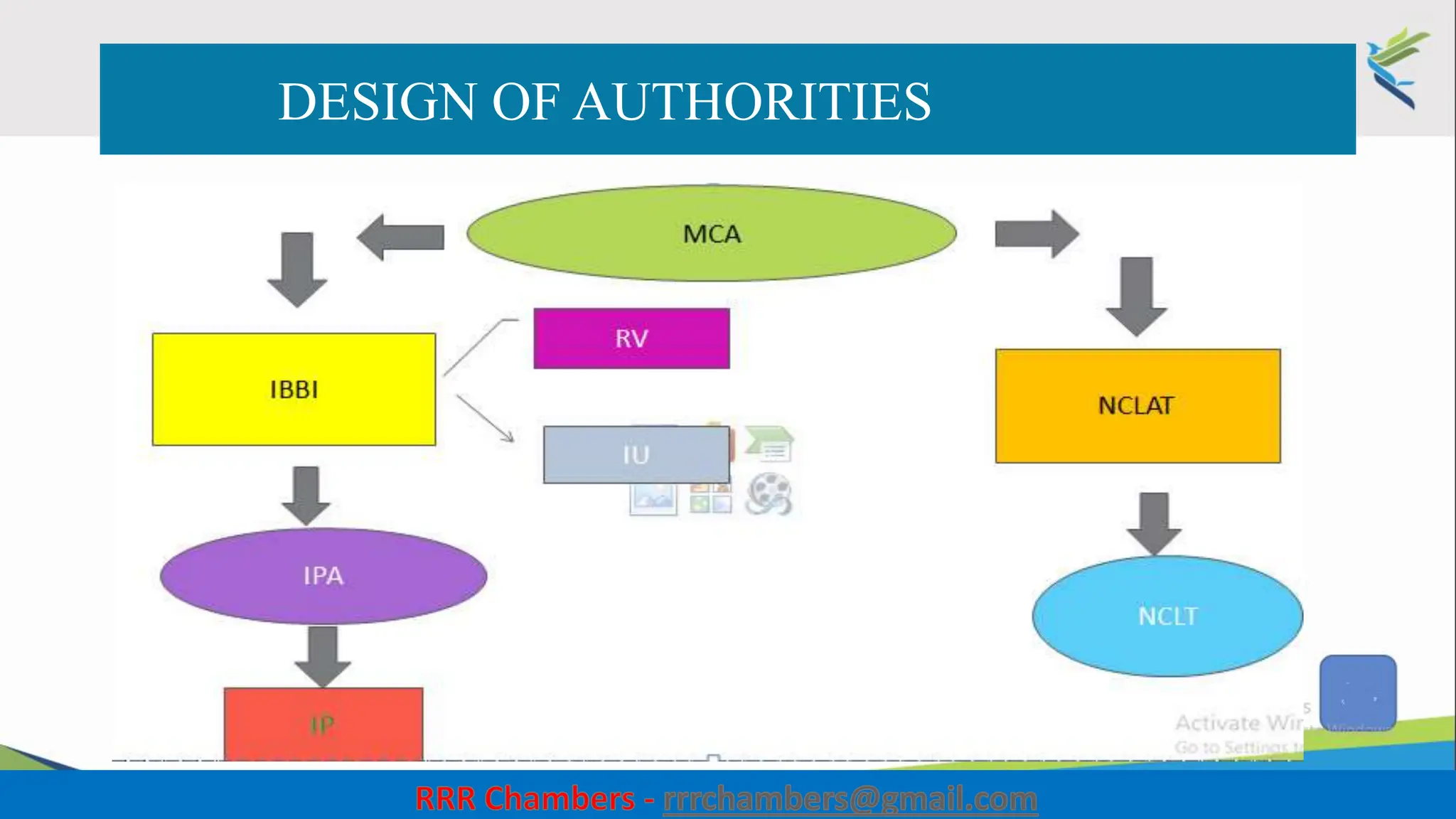
DESIGN OF AUTHORITIES
17
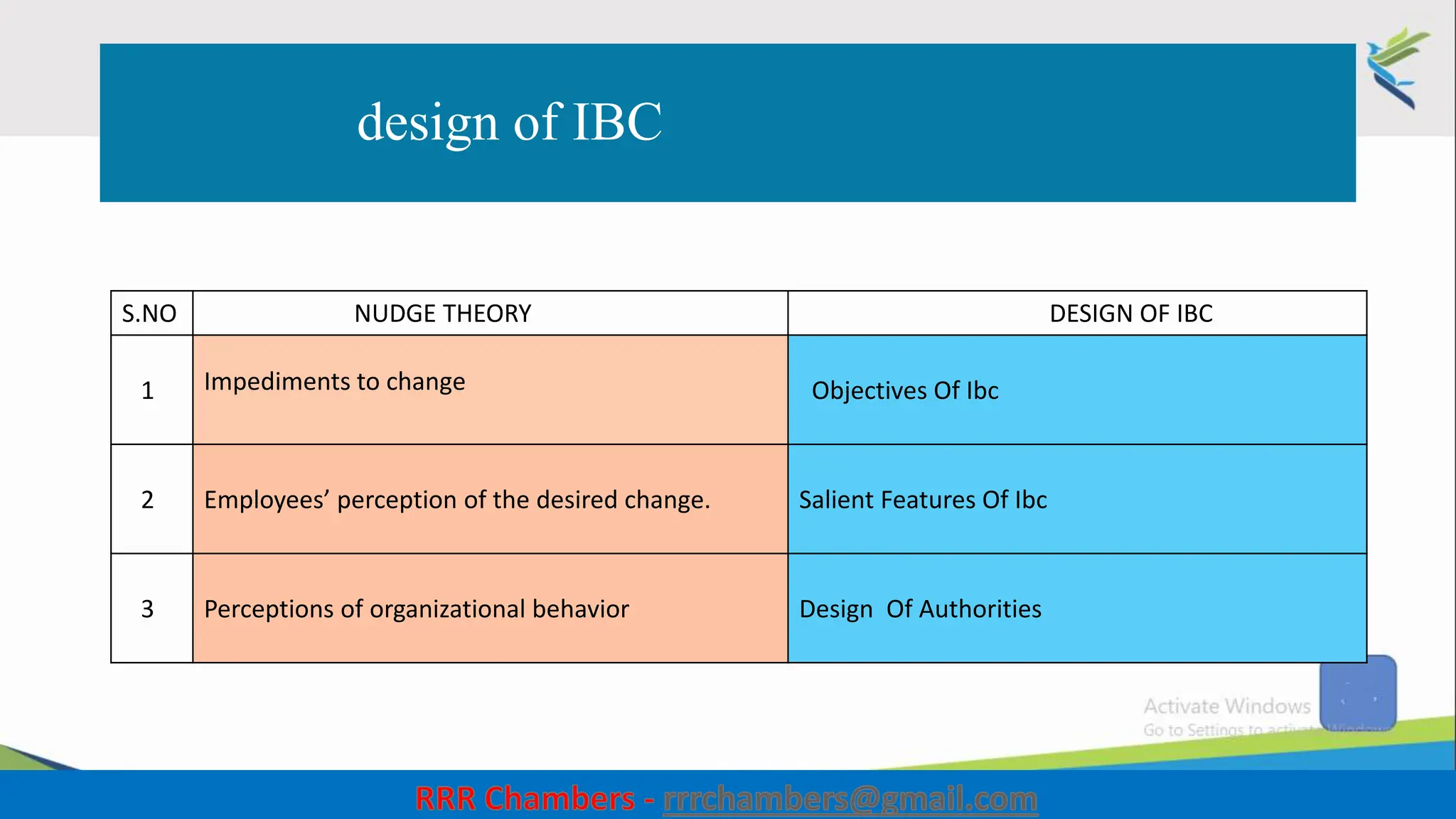
design of IBC
S.NO NUDGE THEORY DESIGN OF IBC
1 Impediments to change Objectives Of Ibc
2 Employees’ perception of the desired change. Salient Features Of Ibc
3 Perceptions of organizational behavior Design Of Authorities
18
CONDUCTIVE PROCESS
19
20
https://encrypted-tbn0.gstatic.com/images?q=tbn:ANd9GcRW44zOyj9HOF-EtKiEXxP_8mwExVzMTFJyAw&usqp=CAU
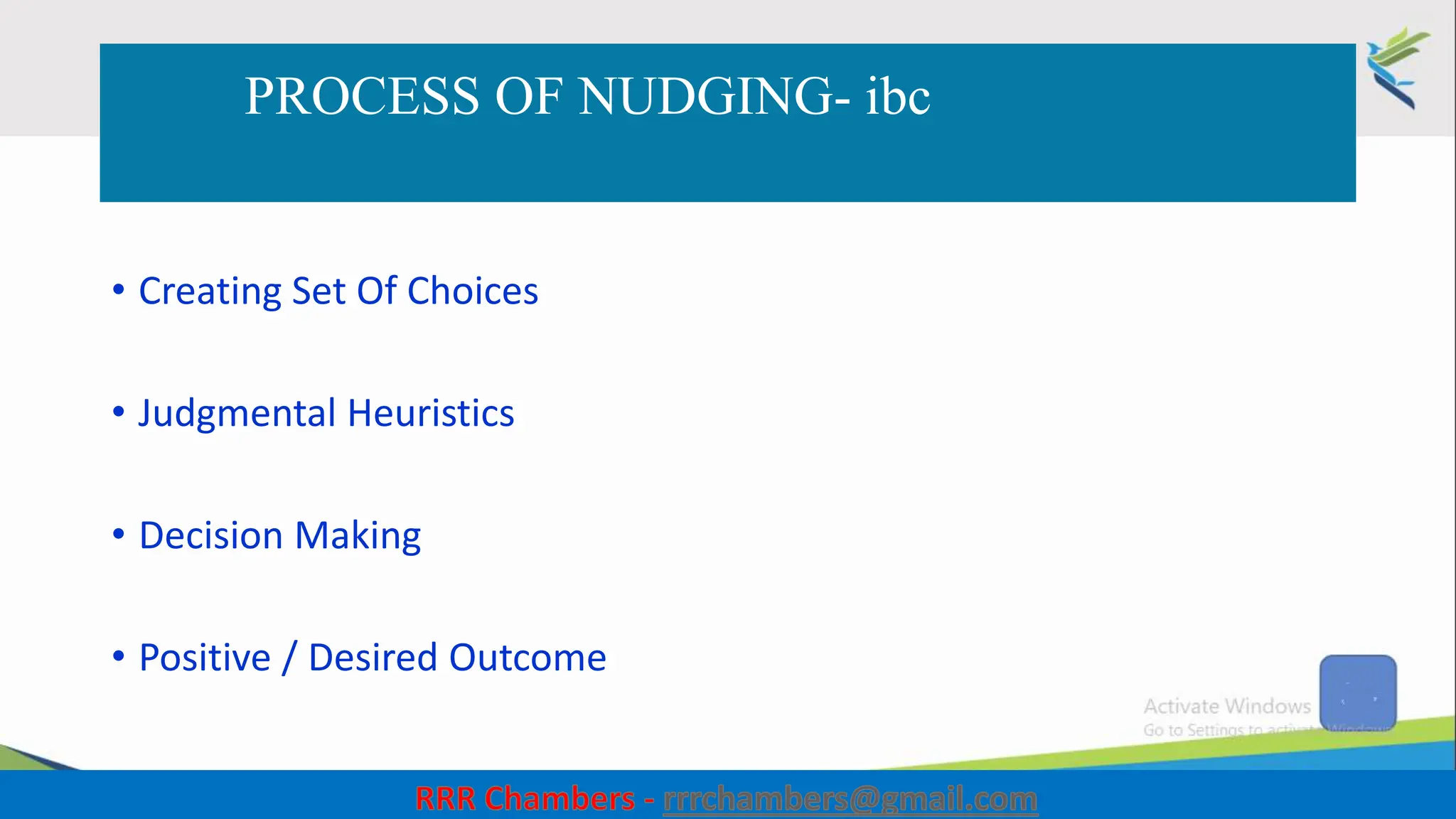
PROCESS OF NUDGING- ibc
• Creating Set Of Choices
• Judgmental Heuristics
• Decision Making
• Positive / Desired Outcome
21
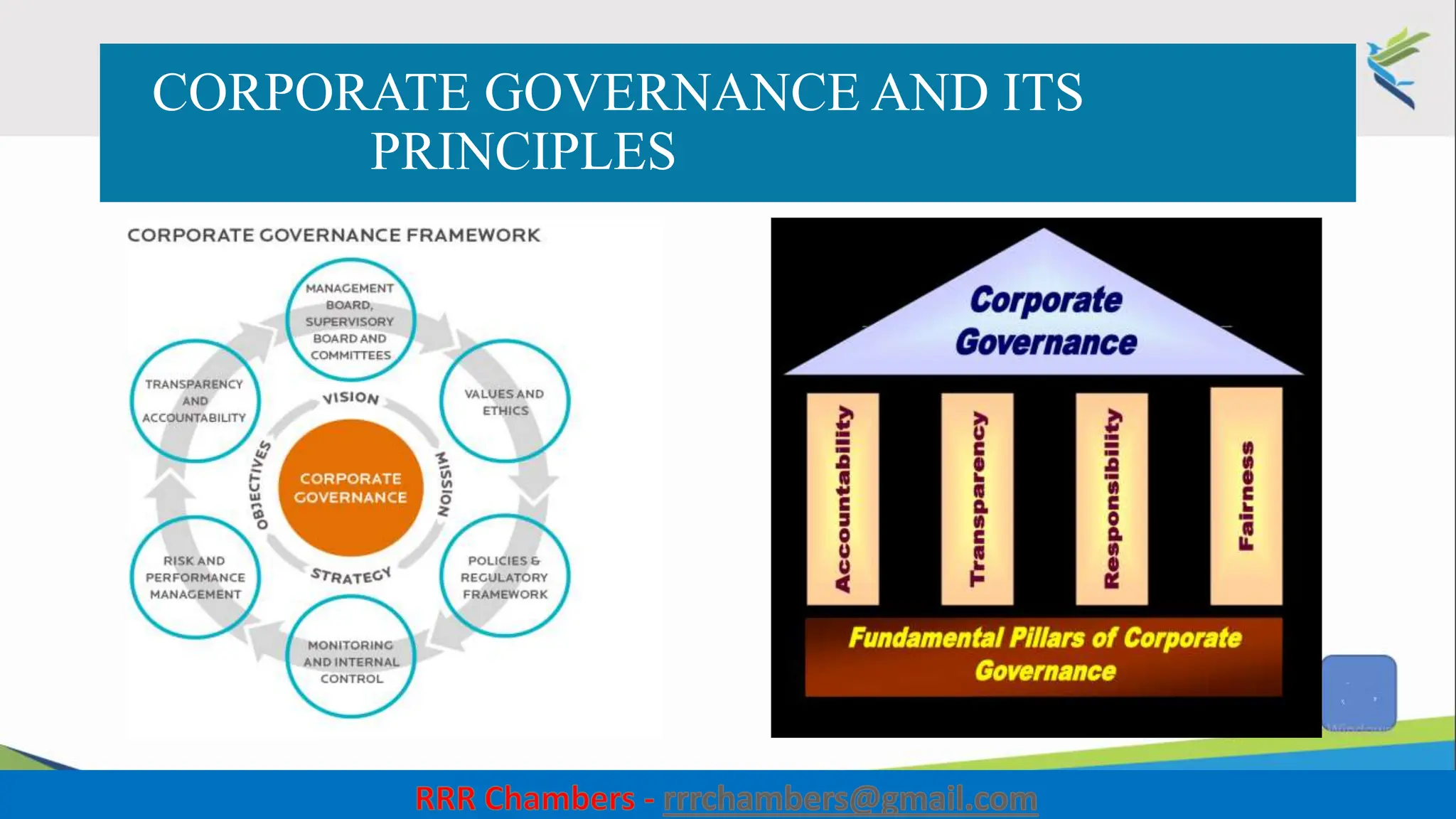
CORPORATE GOVERNANCE AND ITS
PRINCIPLES
22
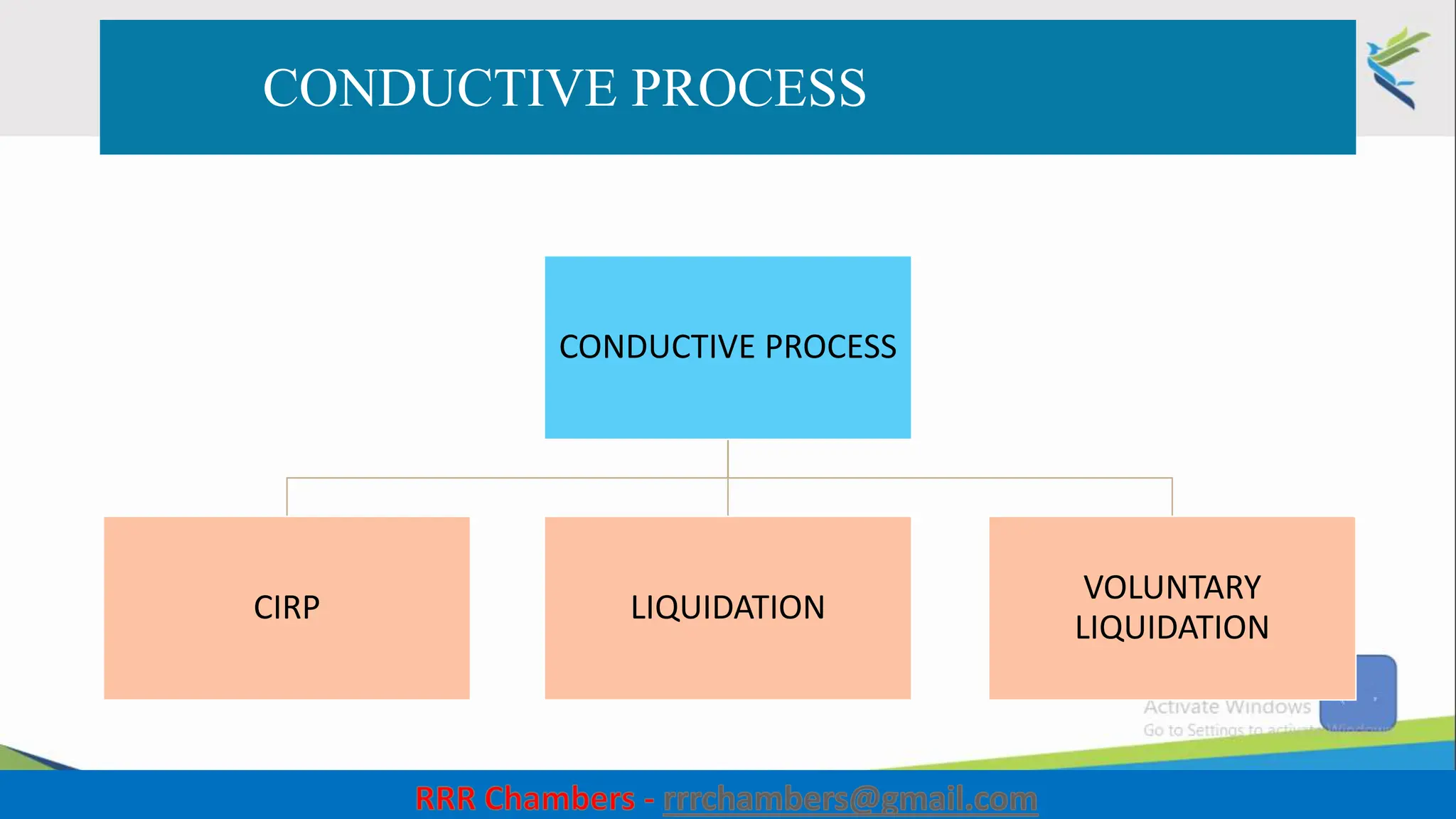
CONDUCTIVE PROCESS
CONDUCTIVE PROCESS
CIRP LIQUIDATION
VOLUNTARY
LIQUIDATION
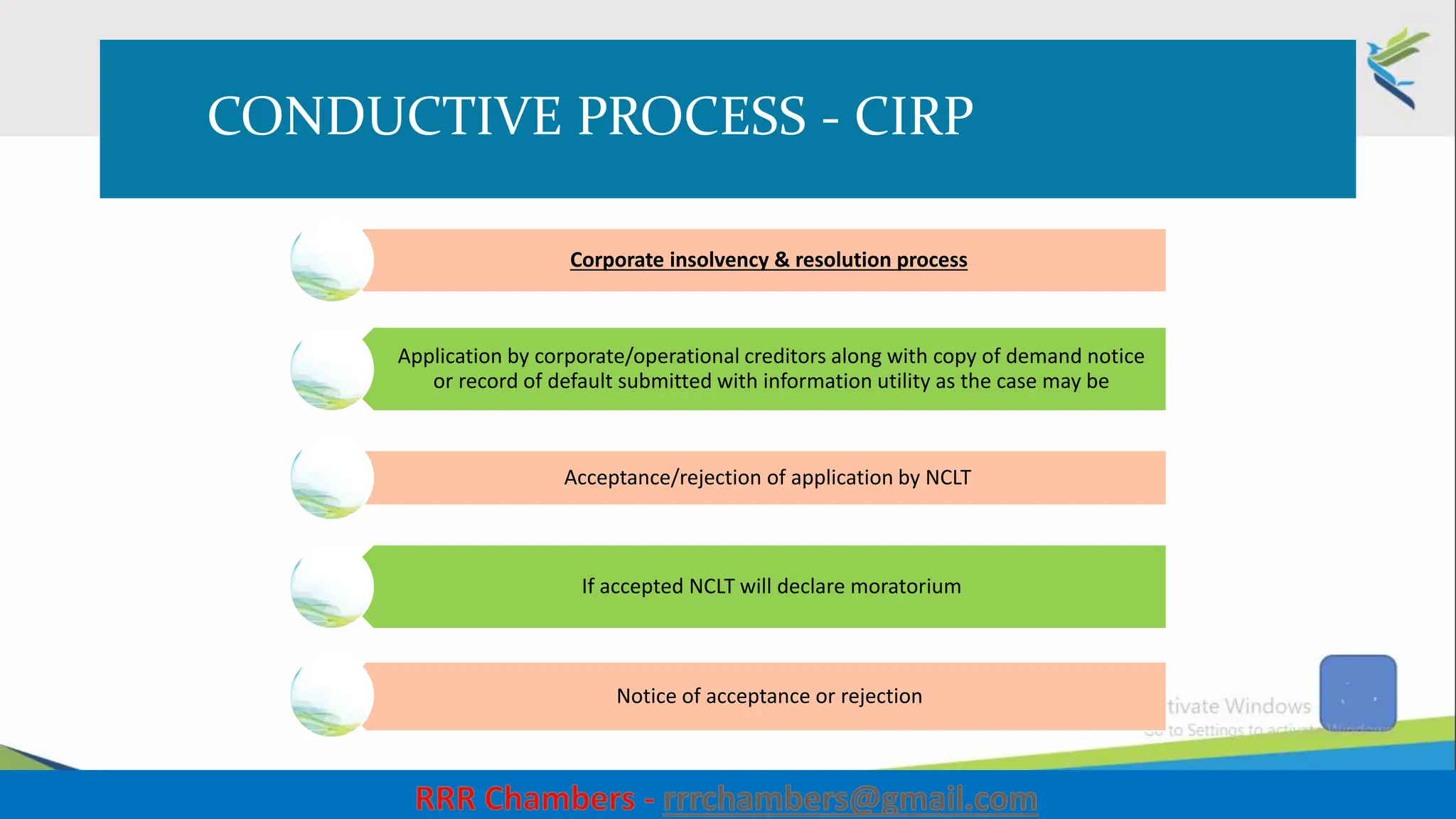
CONDUCTIVE PROCESS - CIRP
Corporate insolvency & resolution process
Application by corporate/operational creditors along with copy of demand notice
or record of default submitted with information utility as the case may be
Acceptance/rejection of application by NCLT
If accepted NCLT will declare moratorium
Notice of acceptance or rejection
24
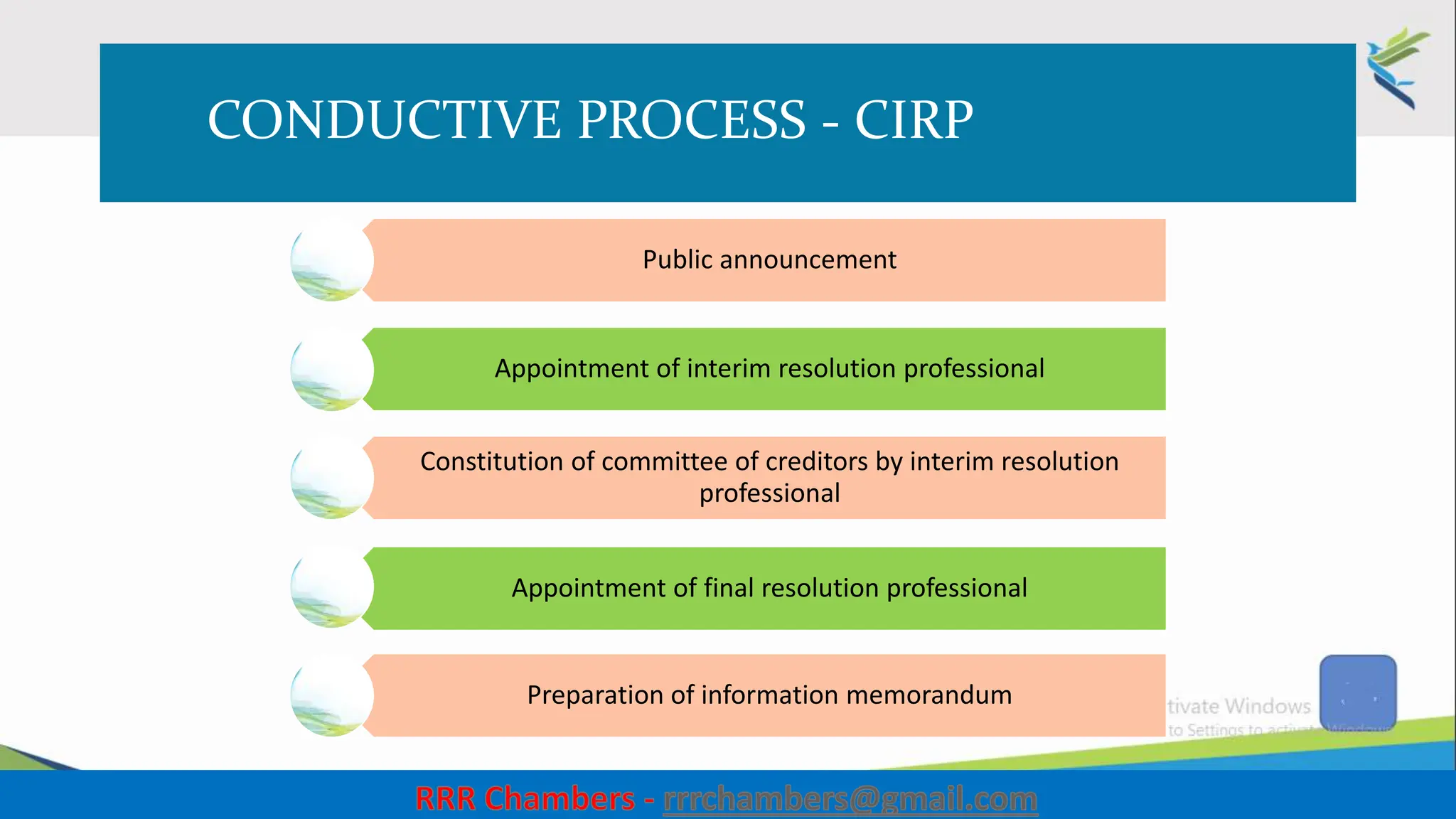
CONDUCTIVE PROCESS - CIRP
Public announcement
Appointment of interim resolution professional
Constitution of committee of creditors by interim resolution
professional
Appointment of final resolution professional
Preparation of information memorandum
25
CONDUCTIVE PROCESS - CIRP
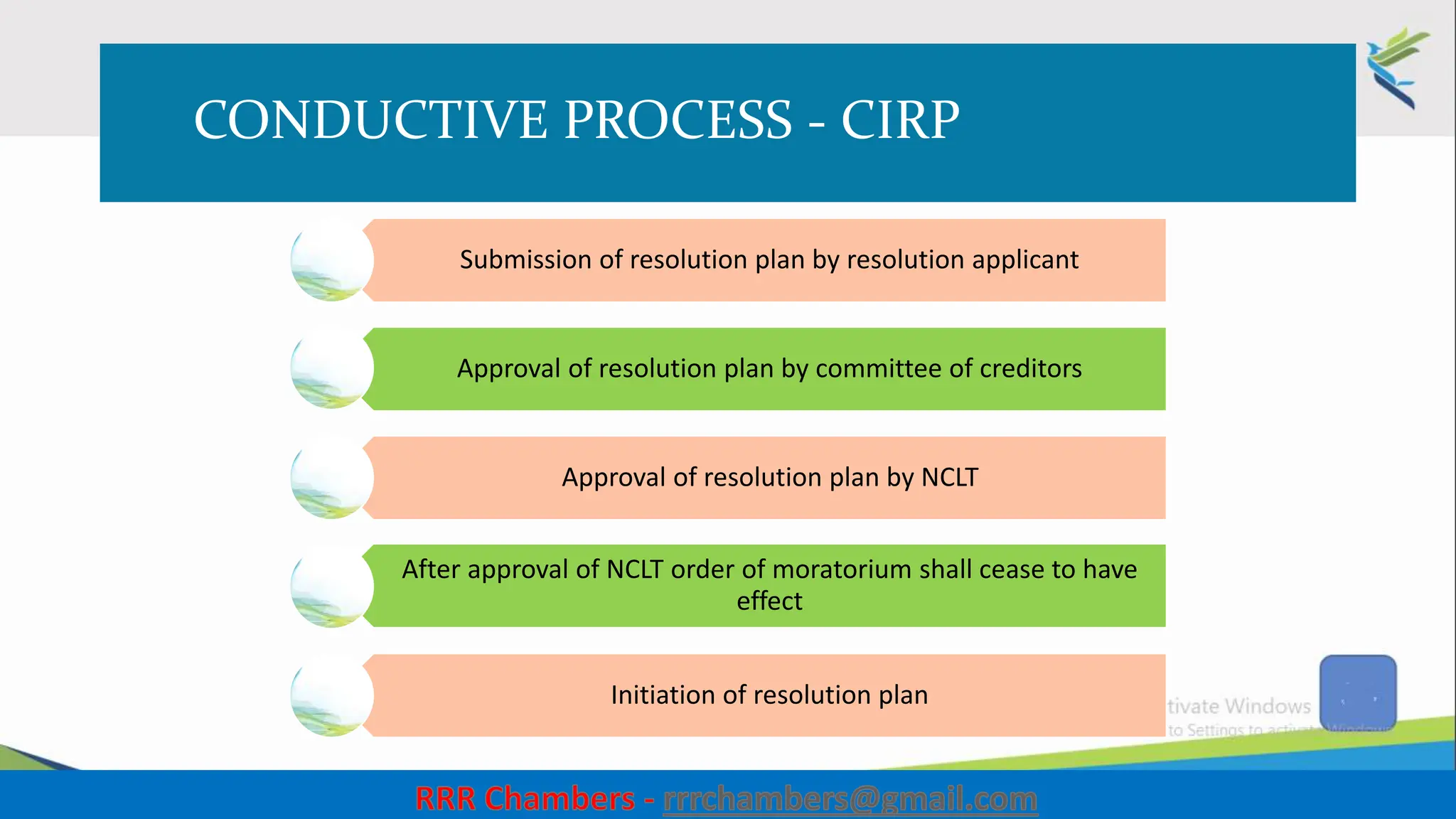
Submission of resolution plan by resolution applicant
Approval of resolution plan by committee of creditors
Approval of resolution plan by NCLT
After approval of NCLT order of moratorium shall cease to have
effect
Initiation of resolution plan
26
CONDUCTIVE PROCESS- LIQUIDATION
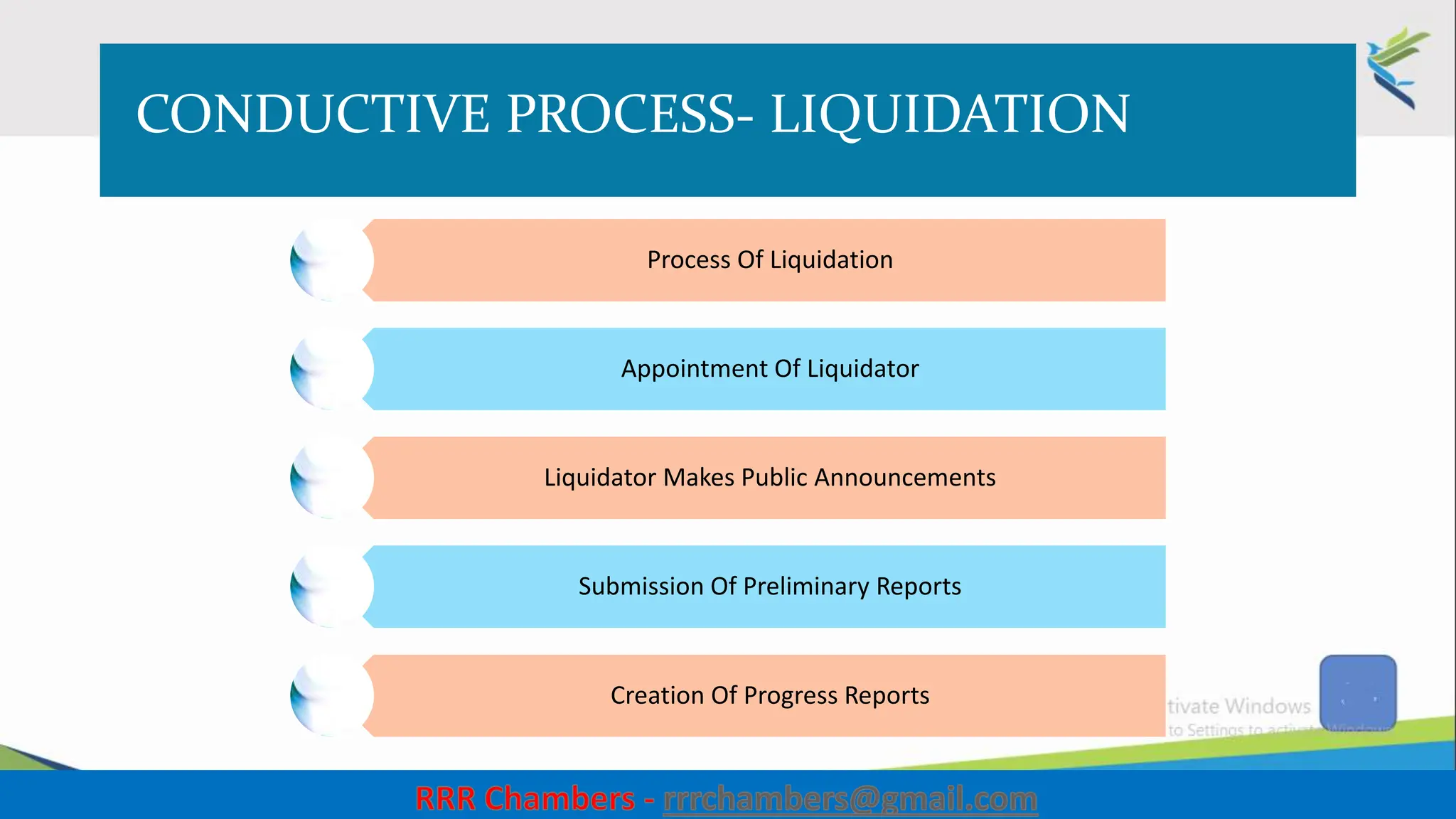
Process Of Liquidation
Appointment Of Liquidator
Liquidator Makes Public Announcements
Submission Of Preliminary Reports
Creation Of Progress Reports
27
CONDUCTIVE PROCESS- LIQUIDATION
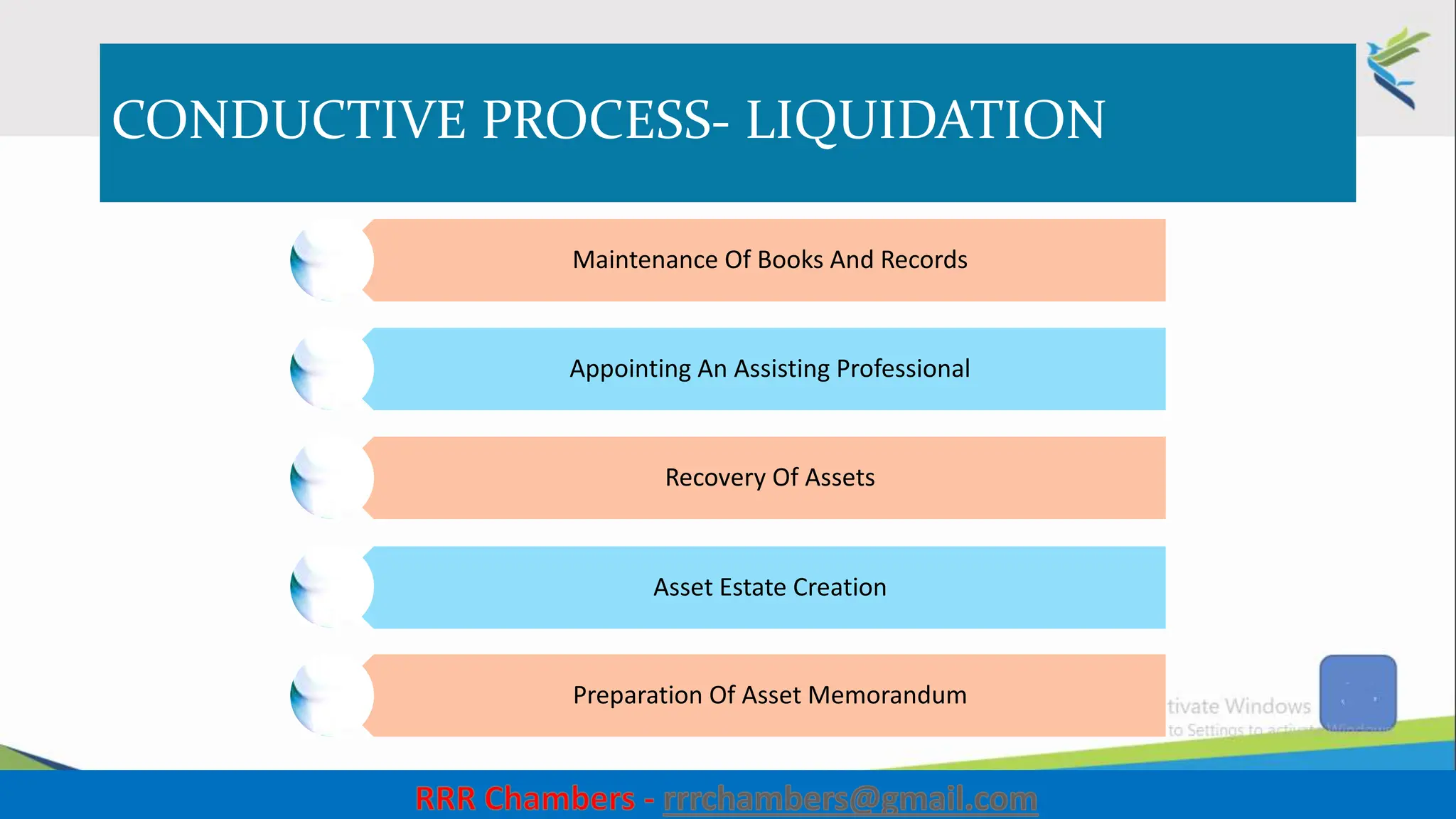
Maintenance Of Books And Records
Appointing An Assisting Professional
Recovery Of Assets
Asset Estate Creation
Preparation Of Asset Memorandum
28
CONDUCTIVE PROCESS- LIQUIDATION
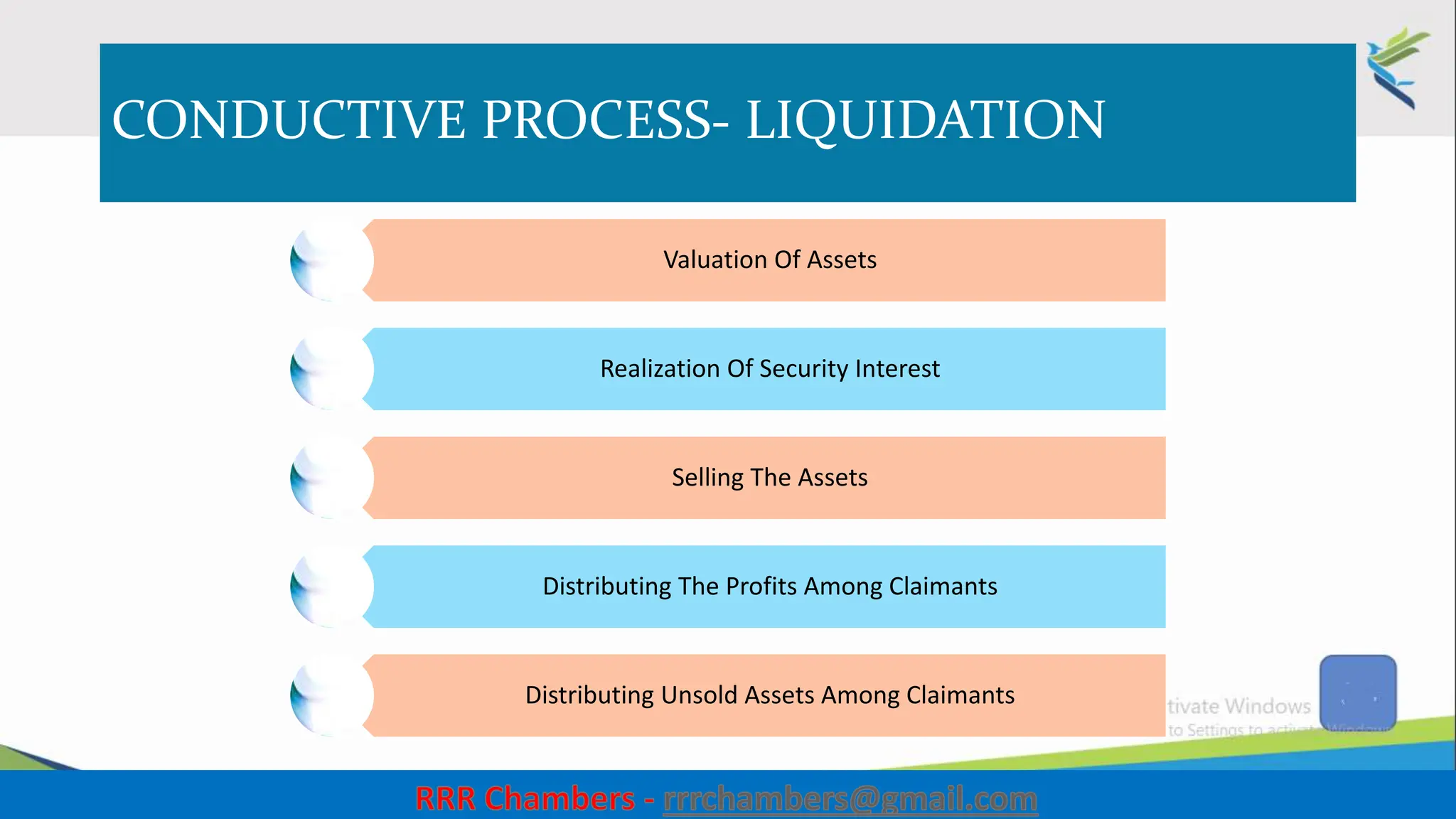
Valuation Of Assets
Realization Of Security Interest
Selling The Assets
Distributing The Profits Among Claimants
Distributing Unsold Assets Among Claimants
29
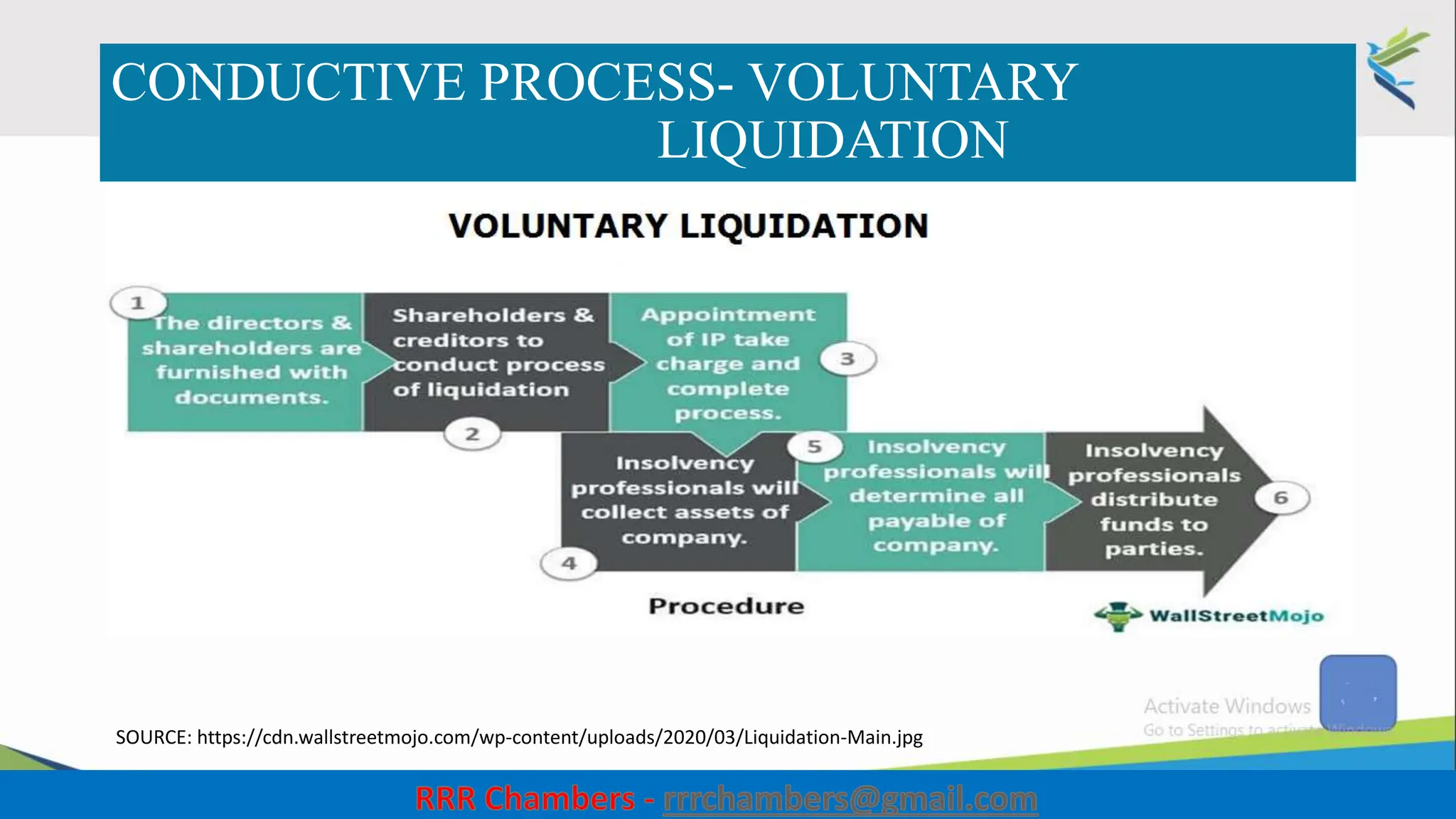
CONDUCTIVE PROCESS- VOLUNTARY
LIQUIDATION
30
SOURCE: https://cdn.wallstreetmojo.com/wp-content/uploads/2020/03/Liquidation-Main.jpg
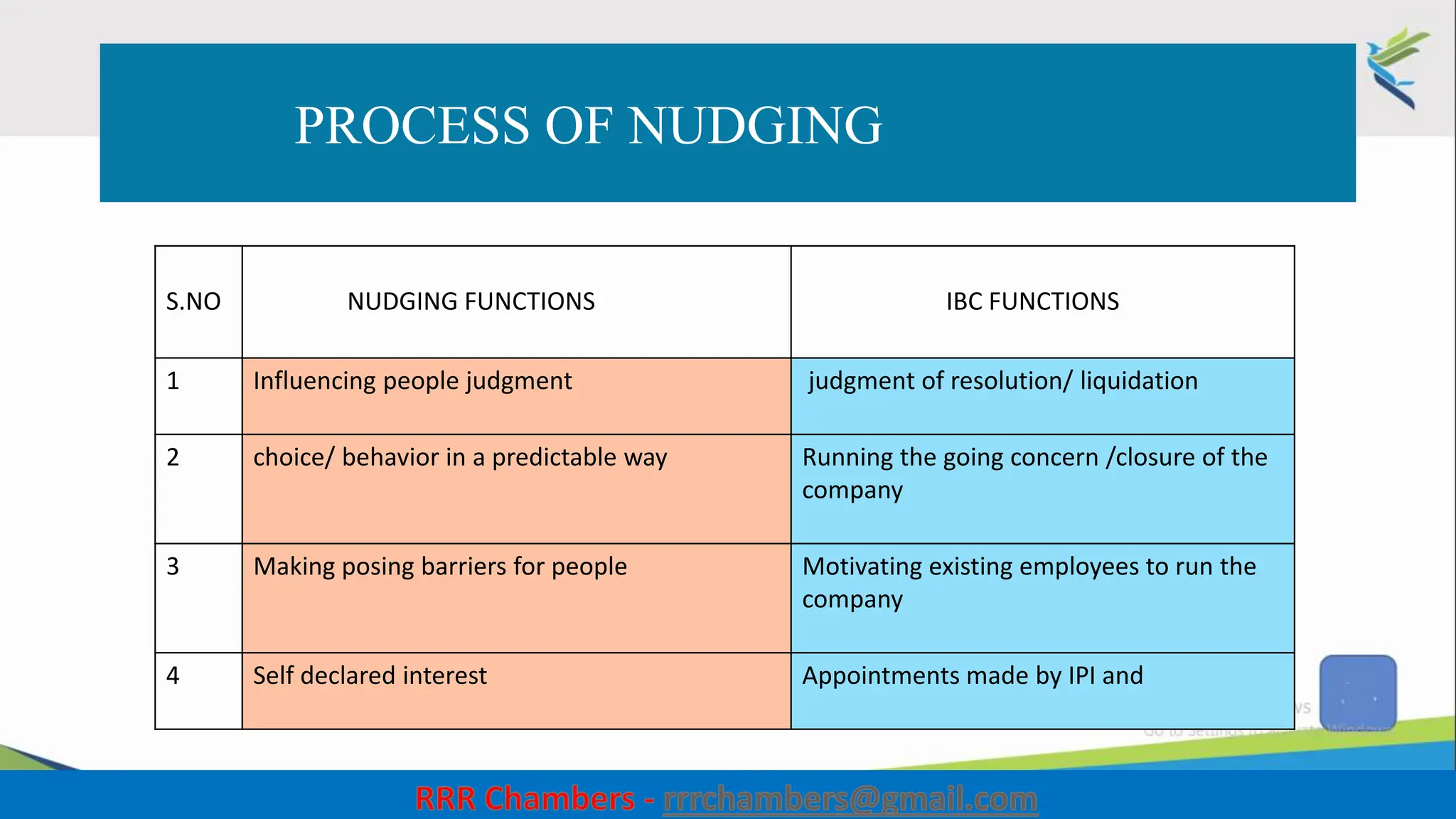
PROCESS OF NUDGING
S.NO NUDGING FUNCTIONS IBC FUNCTIONS
1 Influencing people judgment judgment of resolution/ liquidation
2 choice/ behavior in a predictable way Running the going concern /closure of the
company
3 Making posing barriers for people Motivating existing employees to run the
company
4 Self declared interest Appointments made by IPI and
31
PROTECTION OF INTEREST OF
STAKEHOLDERS
32
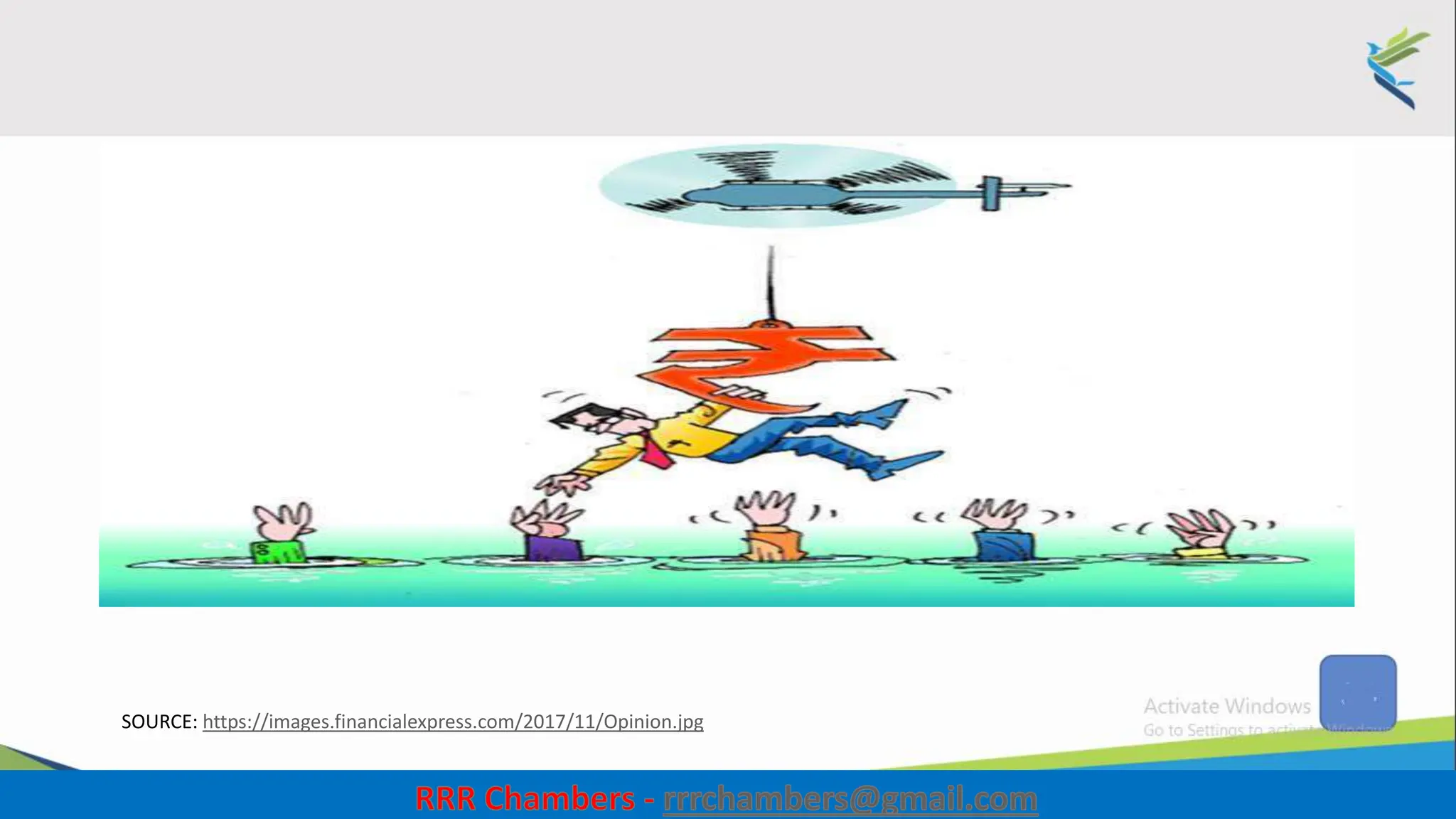
SOURCE: https://images.financialexpress.com/2017/11/Opinion.jpg
STEPS OF NUDGING FOR IMPLEMENTING
CHANGE - STAKEHOLDER ANALYSIS
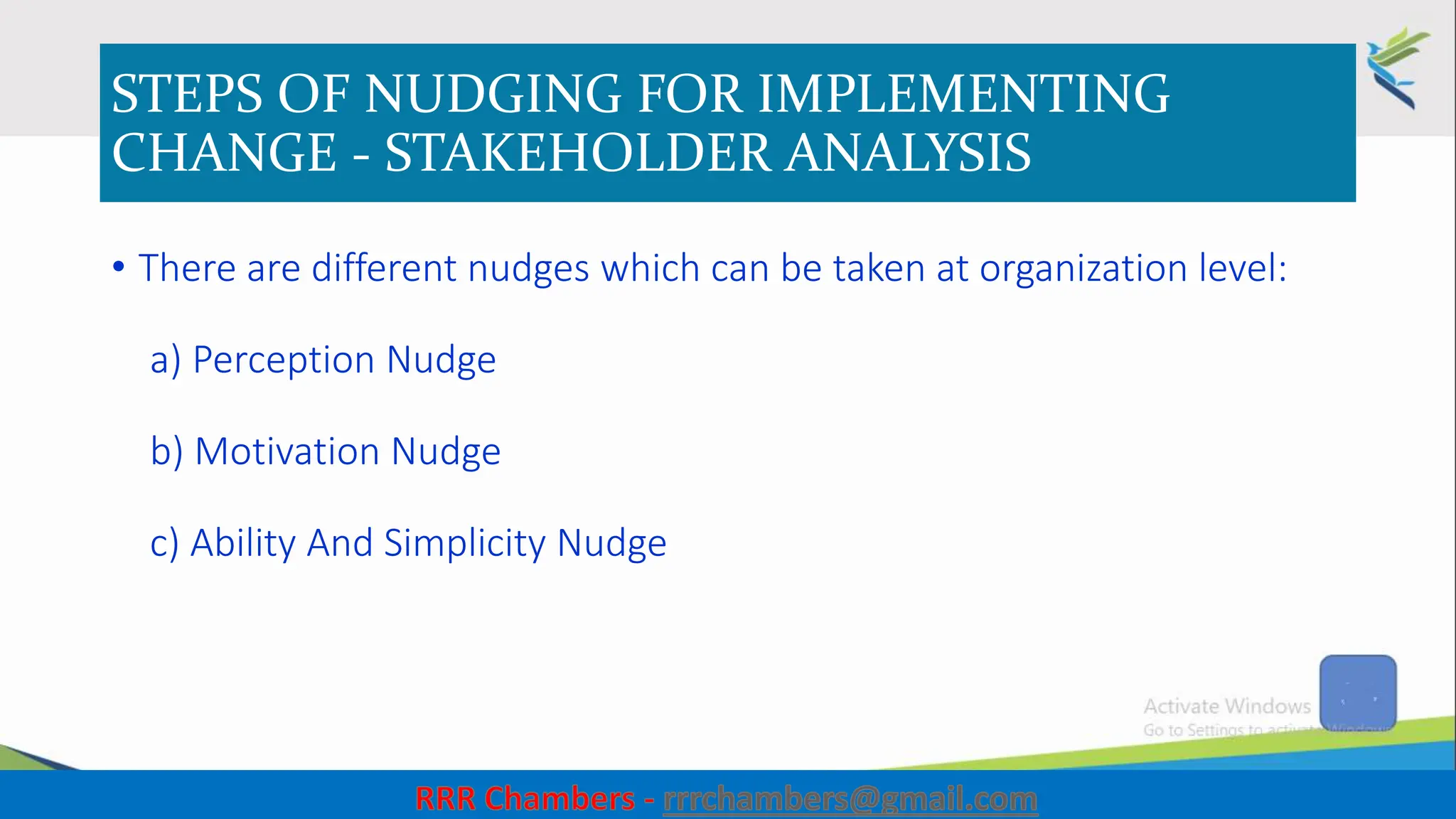
• There are different nudges which can be taken at organization level:
a) Perception Nudge
b) Motivation Nudge
c) Ability And Simplicity Nudge
34
STEPS OF NUDGING FOR IMPLEMENTING
CHANGE - STAKEHOLDER ANALYSIS
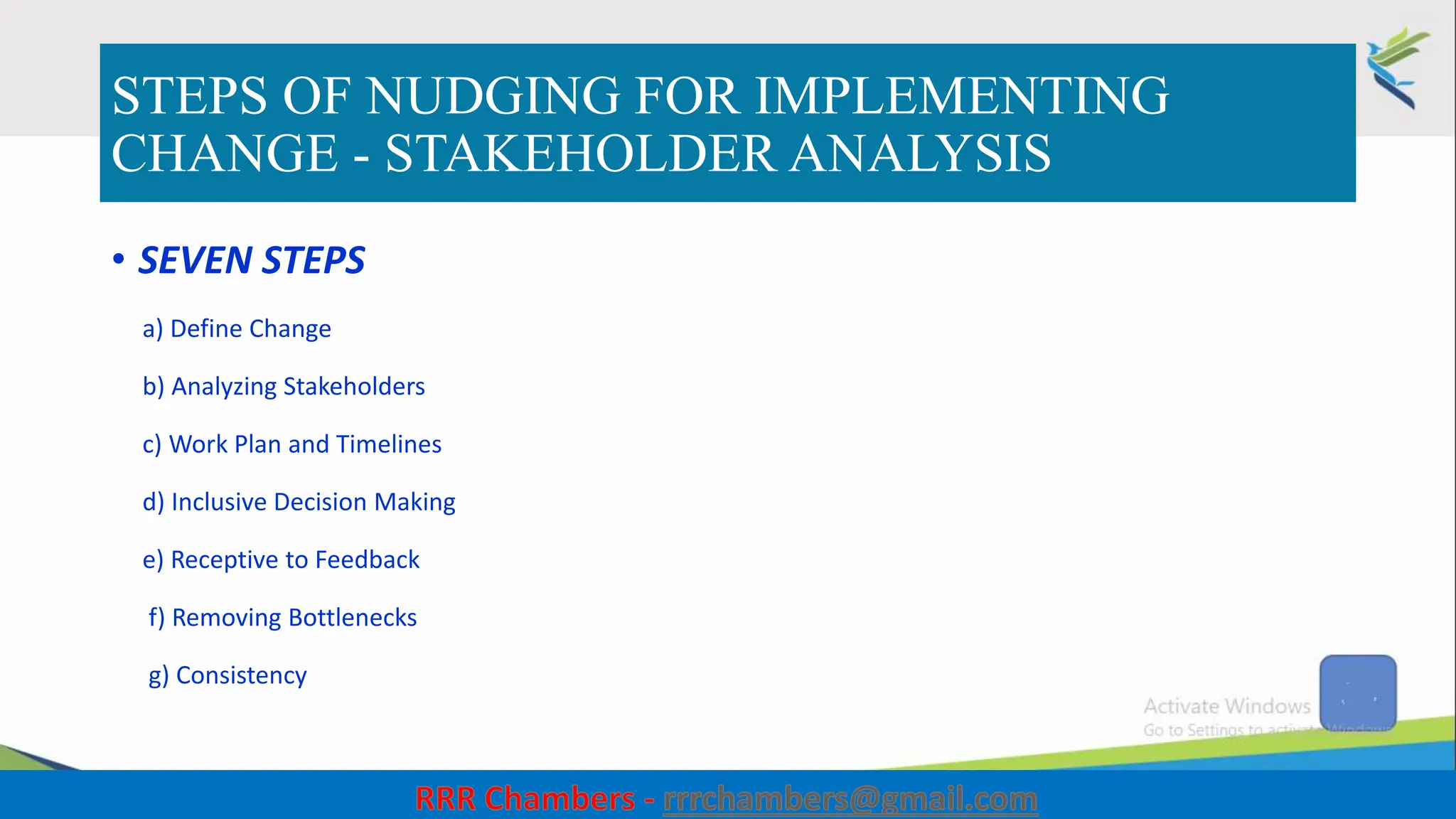
• SEVEN STEPS
a) Define Change
b) Analyzing Stakeholders
c) Work Plan and Timelines
d) Inclusive Decision Making
e) Receptive to Feedback
f) Removing Bottlenecks
g) Consistency
35
National Guidelines on Responsible
Business Conduct
36
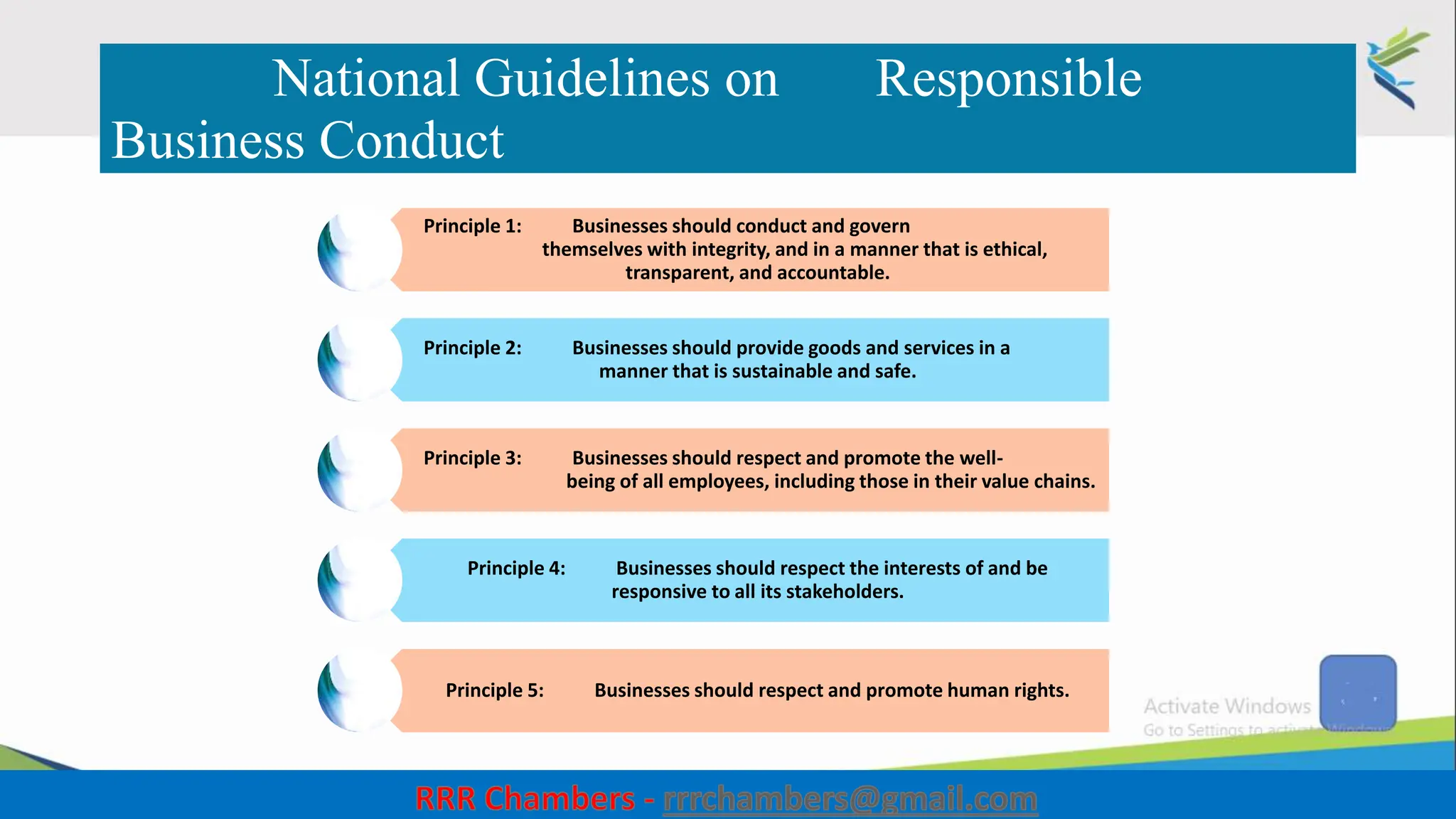
Principle 1: Businesses should conduct and govern
themselves with integrity, and in a manner that is ethical,
transparent, and accountable.
Principle 2: Businesses should provide goods and services in a
manner that is sustainable and safe.
Principle 3: Businesses should respect and promote the well-
being of all employees, including those in their value chains.
Principle 4: Businesses should respect the interests of and be
responsive to all its stakeholders.
Principle 5: Businesses should respect and promote human rights.
National Guidelines on Responsible
Business Conduct
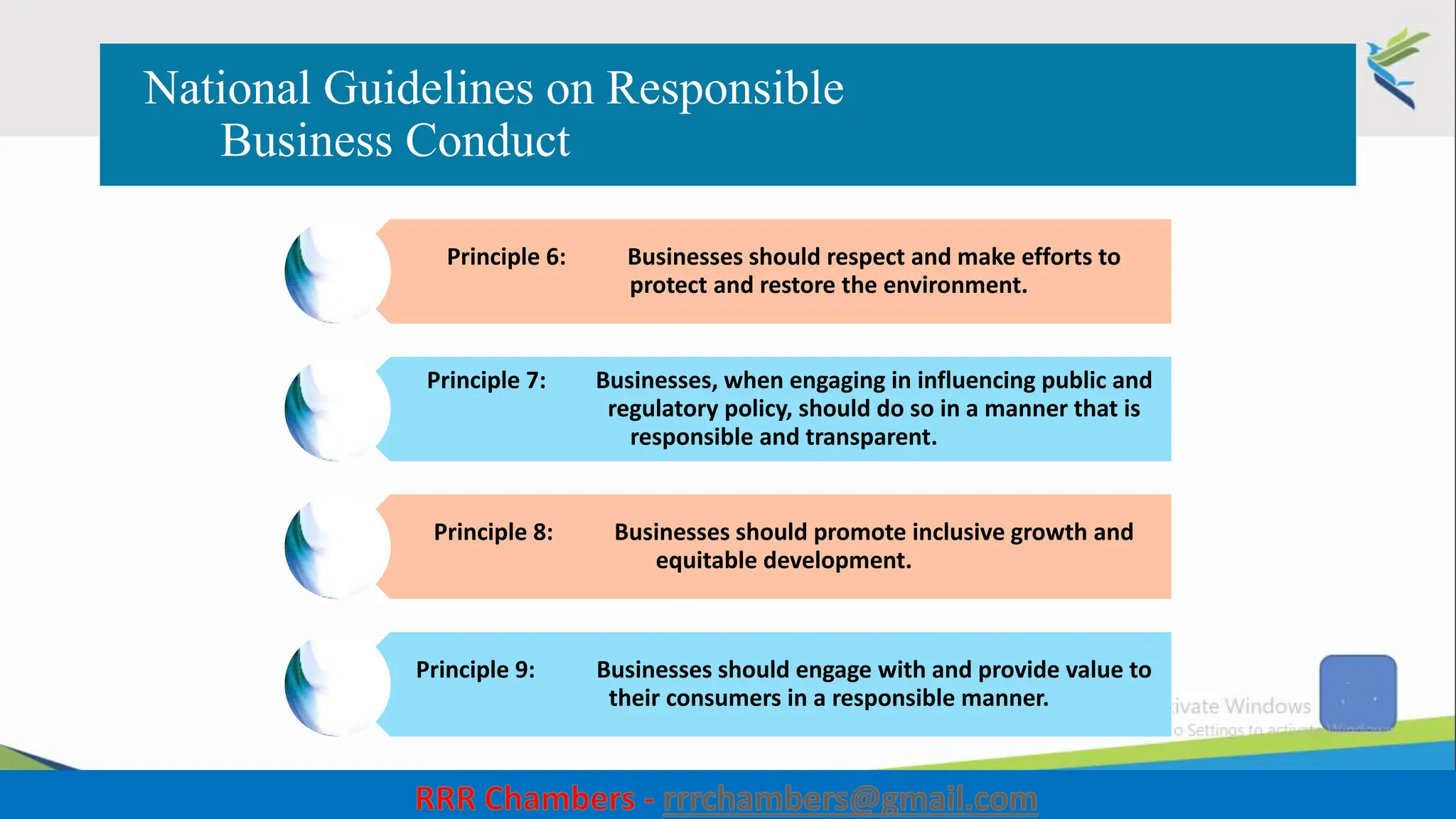
Principle 6: Businesses should respect and make efforts to
protect and restore the environment.
Principle 7: Businesses, when engaging in influencing public and
regulatory policy, should do so in a manner that is
responsible and transparent.
Principle 8: Businesses should promote inclusive growth and
equitable development.
Principle 9: Businesses should engage with and provide value to
their consumers in a responsible manner.
37
38
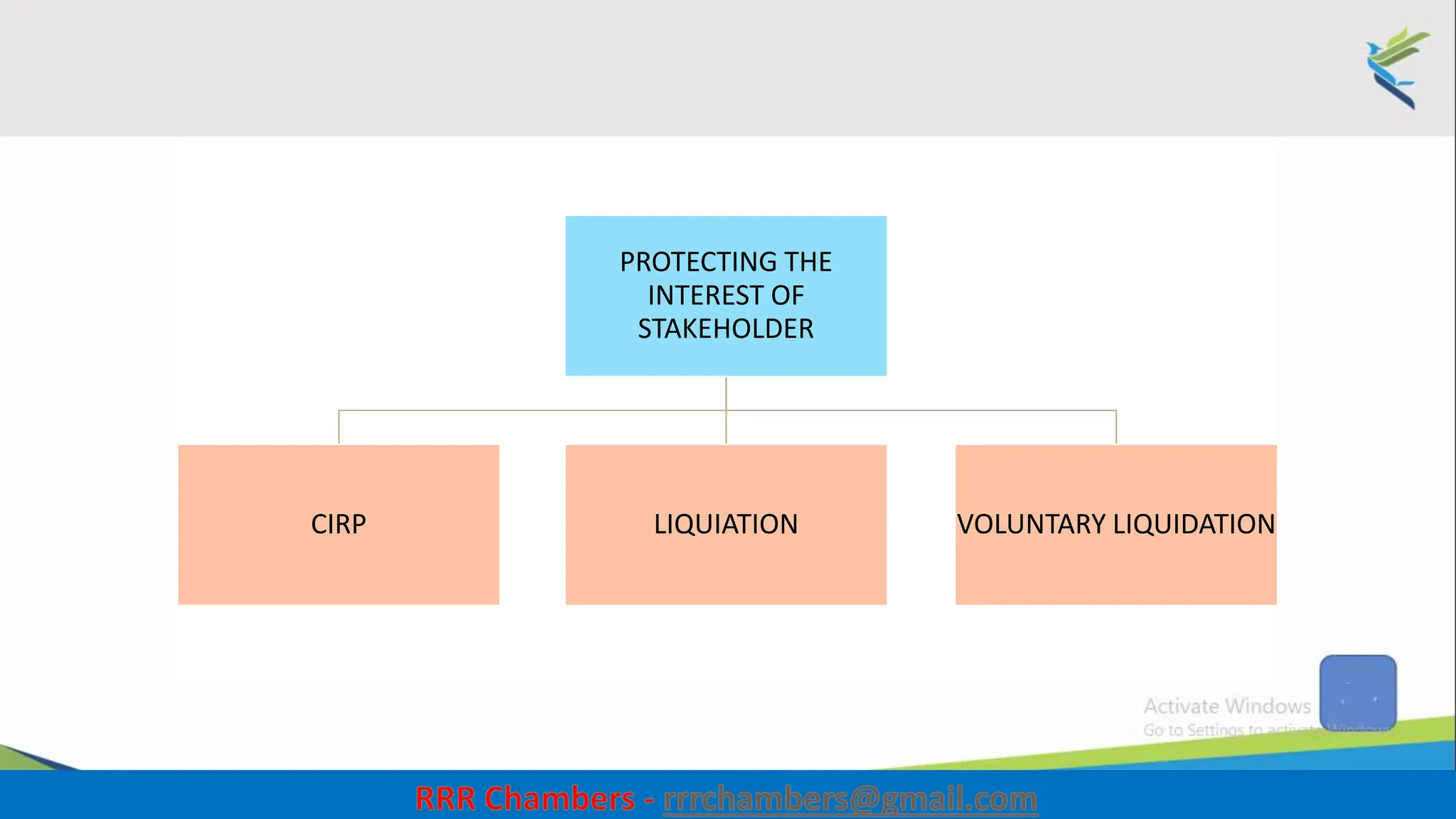
PROTECTING THE
INTEREST OF
STAKEHOLDER
CIRP LIQUIATION VOLUNTARY LIQUIDATION
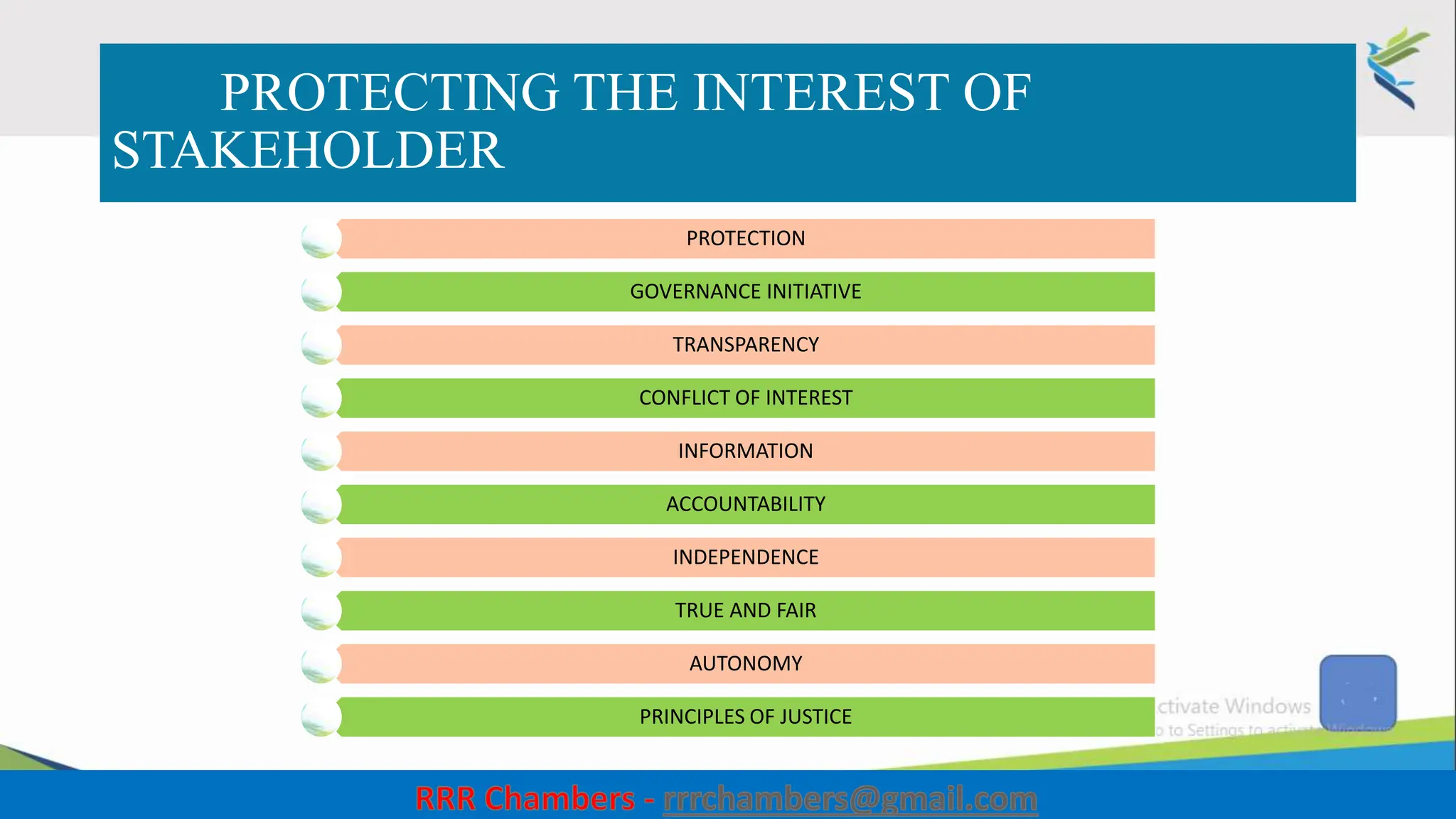
PROTECTING THE INTEREST OF
STAKEHOLDER
PROTECTION
GOVERNANCE INITIATIVE
TRANSPARENCY
CONFLICT OF INTEREST
INFORMATION
ACCOUNTABILITY
INDEPENDENCE
TRUE AND FAIR
AUTONOMY
PRINCIPLES OF JUSTICE
39
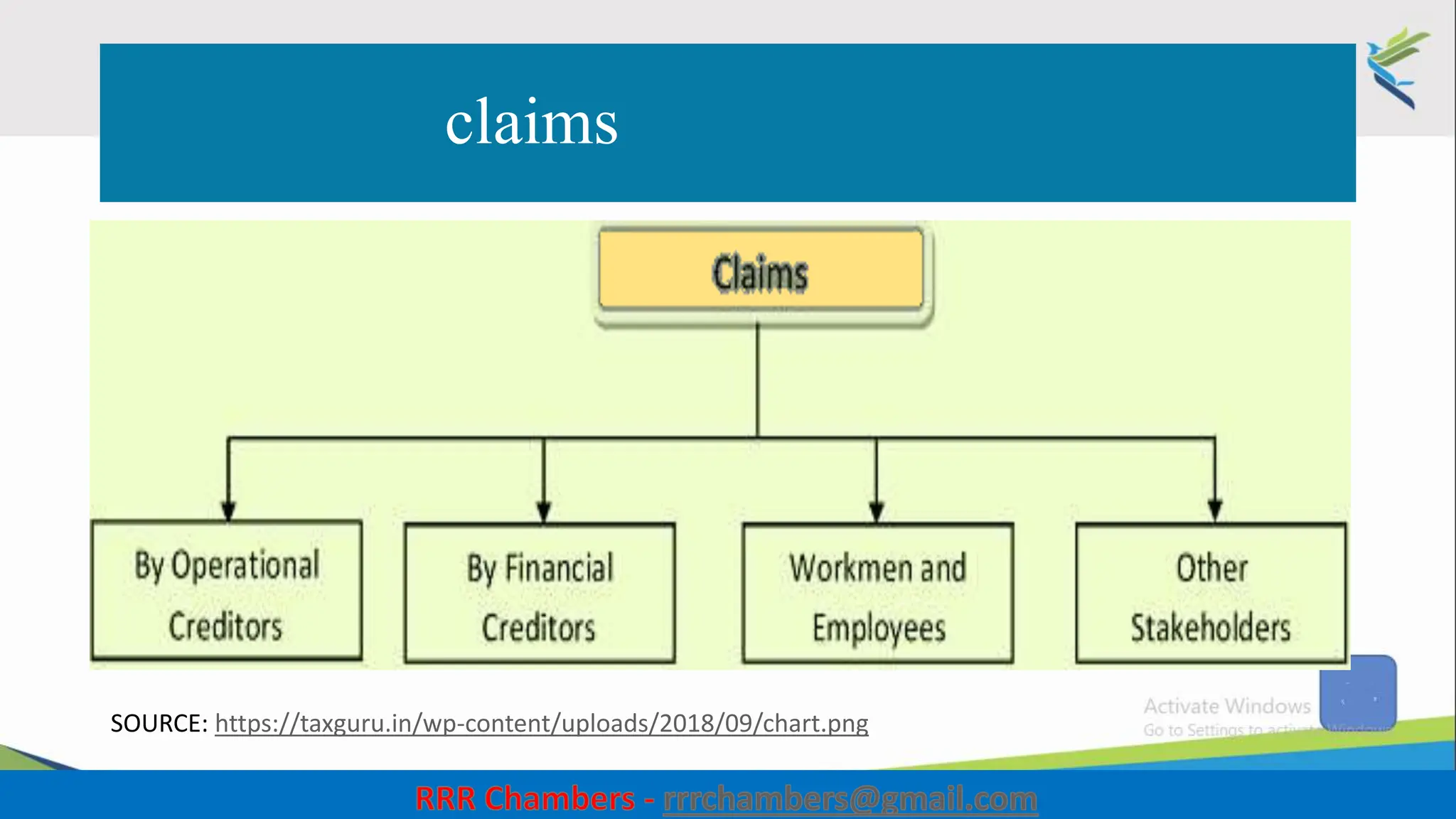
claims
SOURCE: https://taxguru.in/wp-content/uploads/2018/09/chart.png
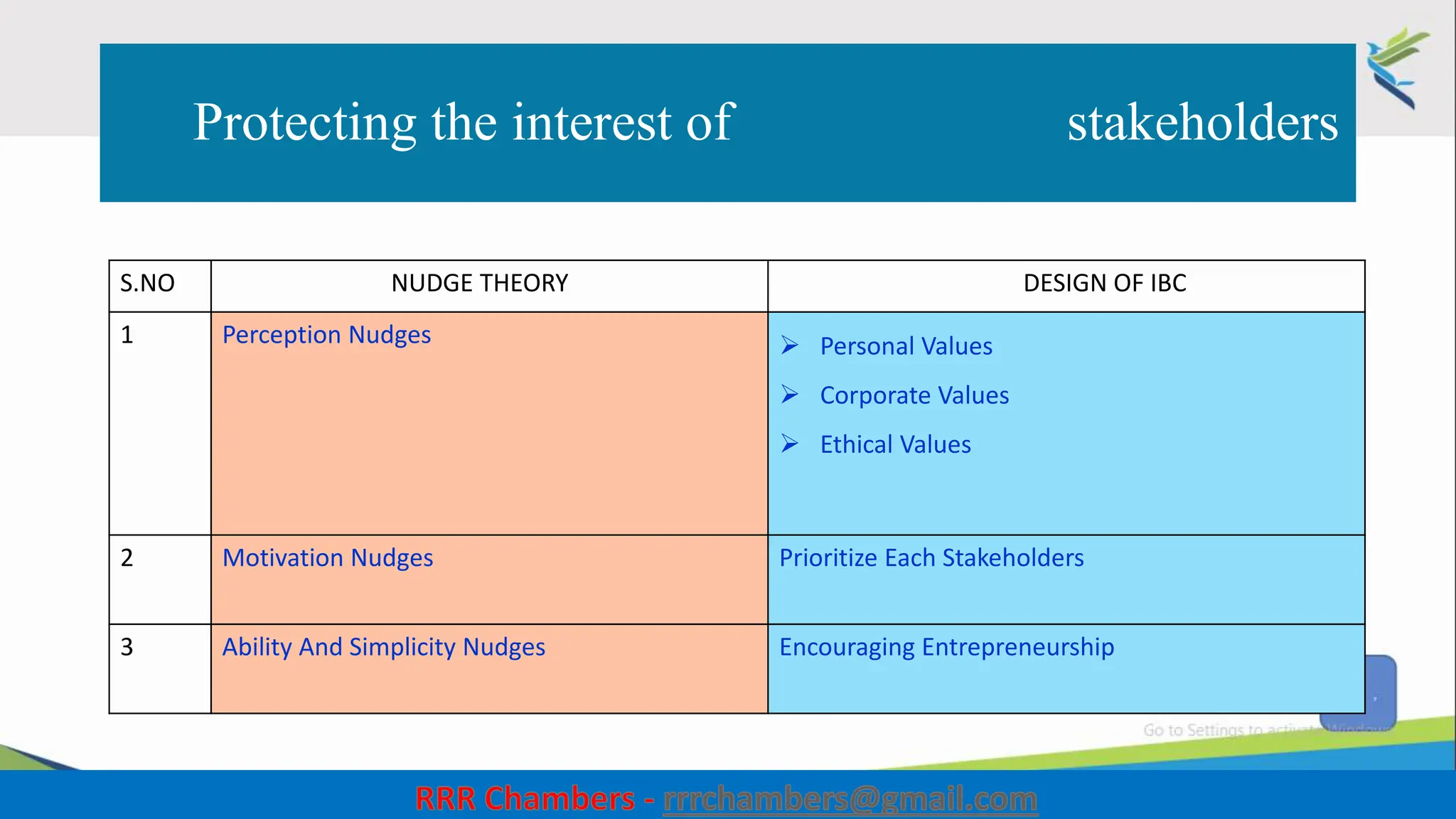
Protecting the interest of stakeholders
S.NO NUDGE THEORY DESIGN OF IBC
1 Perception Nudges  Personal Values
 Corporate Values
 Ethical Values
2 Motivation Nudges Prioritize Each Stakeholders
3 Ability And Simplicity Nudges Encouraging Entrepreneurship
41
“A CONDUCTIVE PROCESS IN PROTECTING
THE INTEREST OF STAKEHOLDERS"
42
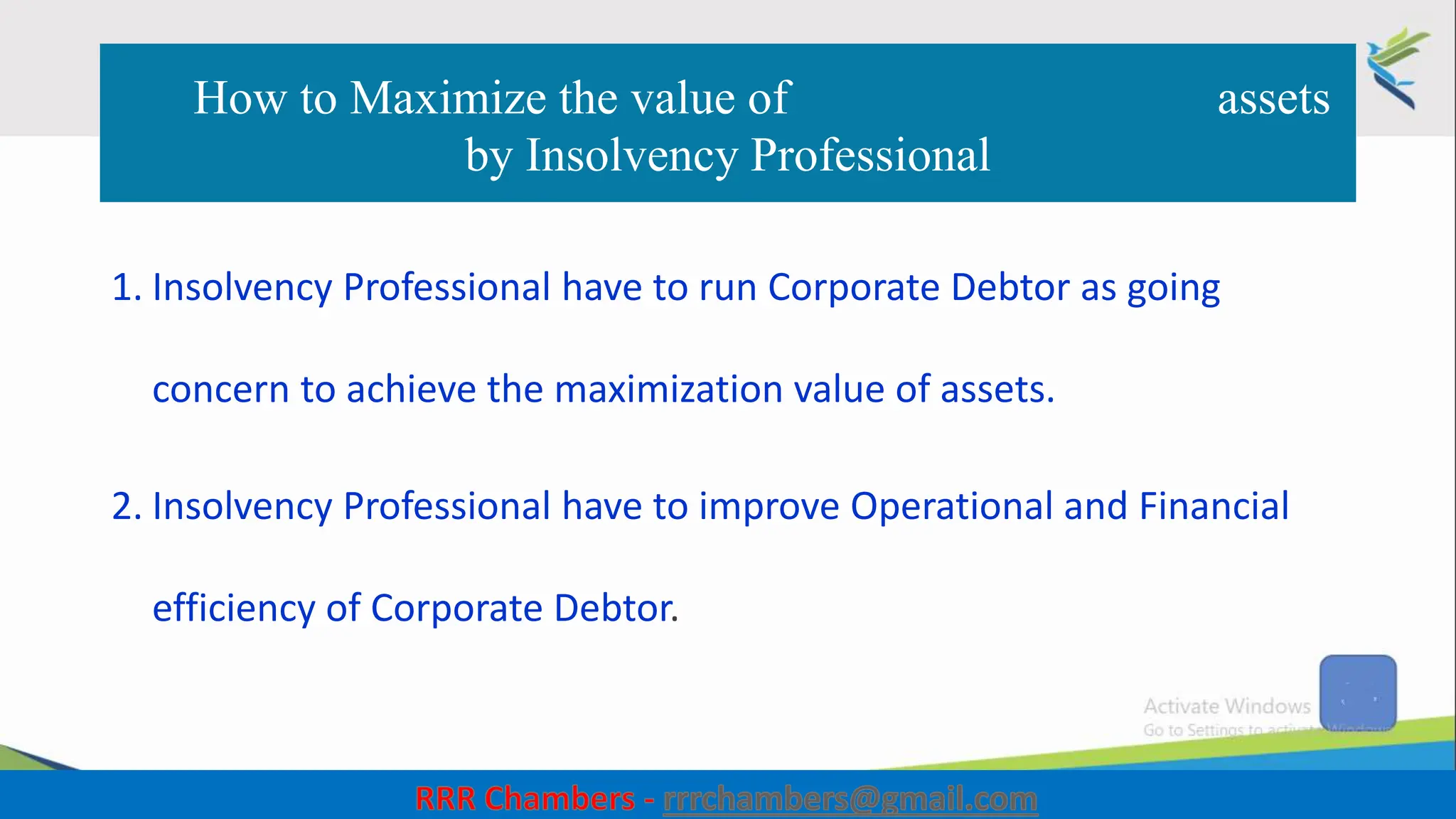
How to Maximize the value of assets
by Insolvency Professional
1. Insolvency Professional have to run Corporate Debtor as going
concern to achieve the maximization value of assets.
2. Insolvency Professional have to improve Operational and Financial
efficiency of Corporate Debtor.
43
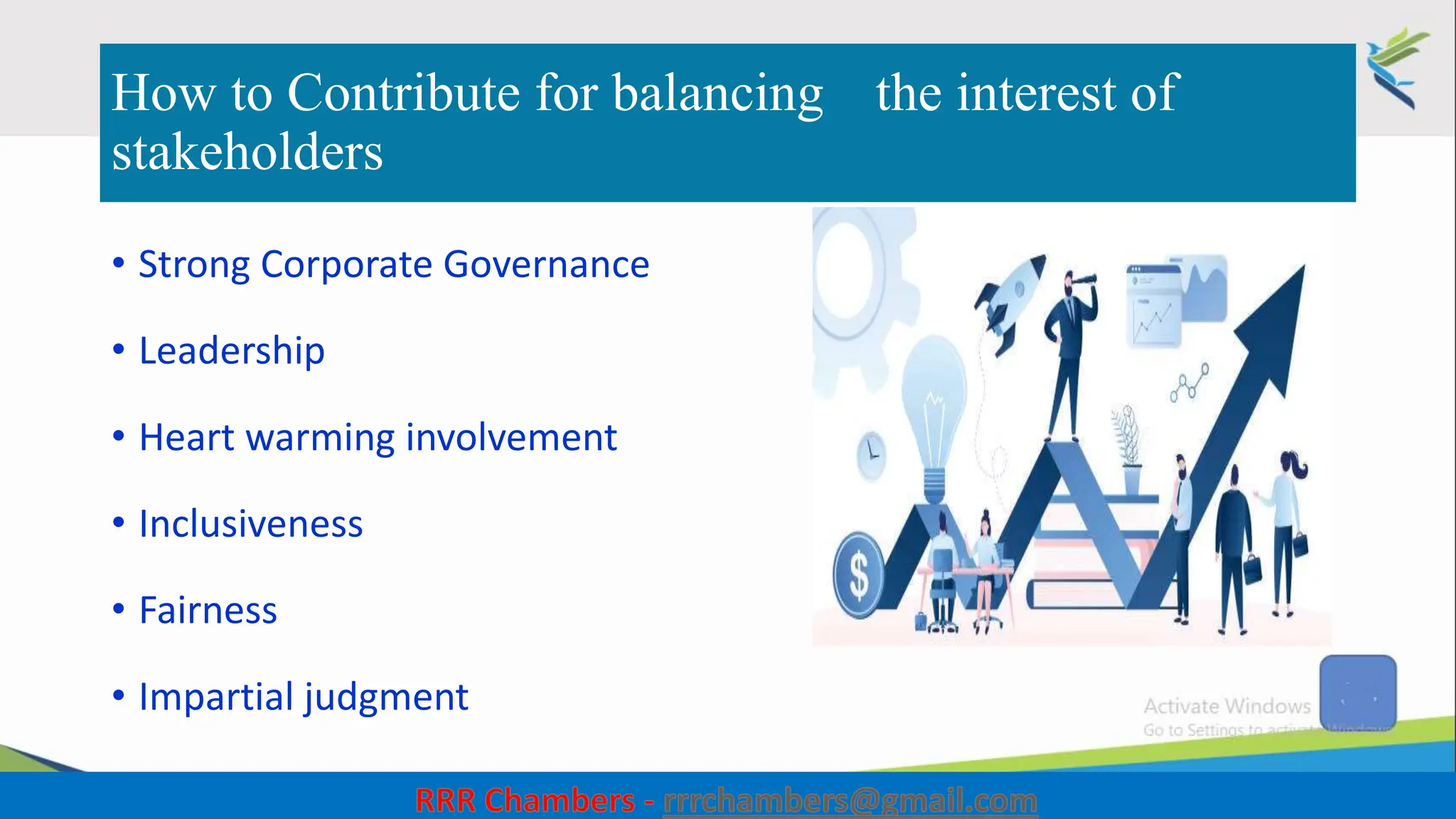
How to Contribute for balancing the interest of
stakeholders
• Strong Corporate Governance
• Leadership
• Heart warming involvement
• Inclusiveness
• Fairness
• Impartial judgment
44
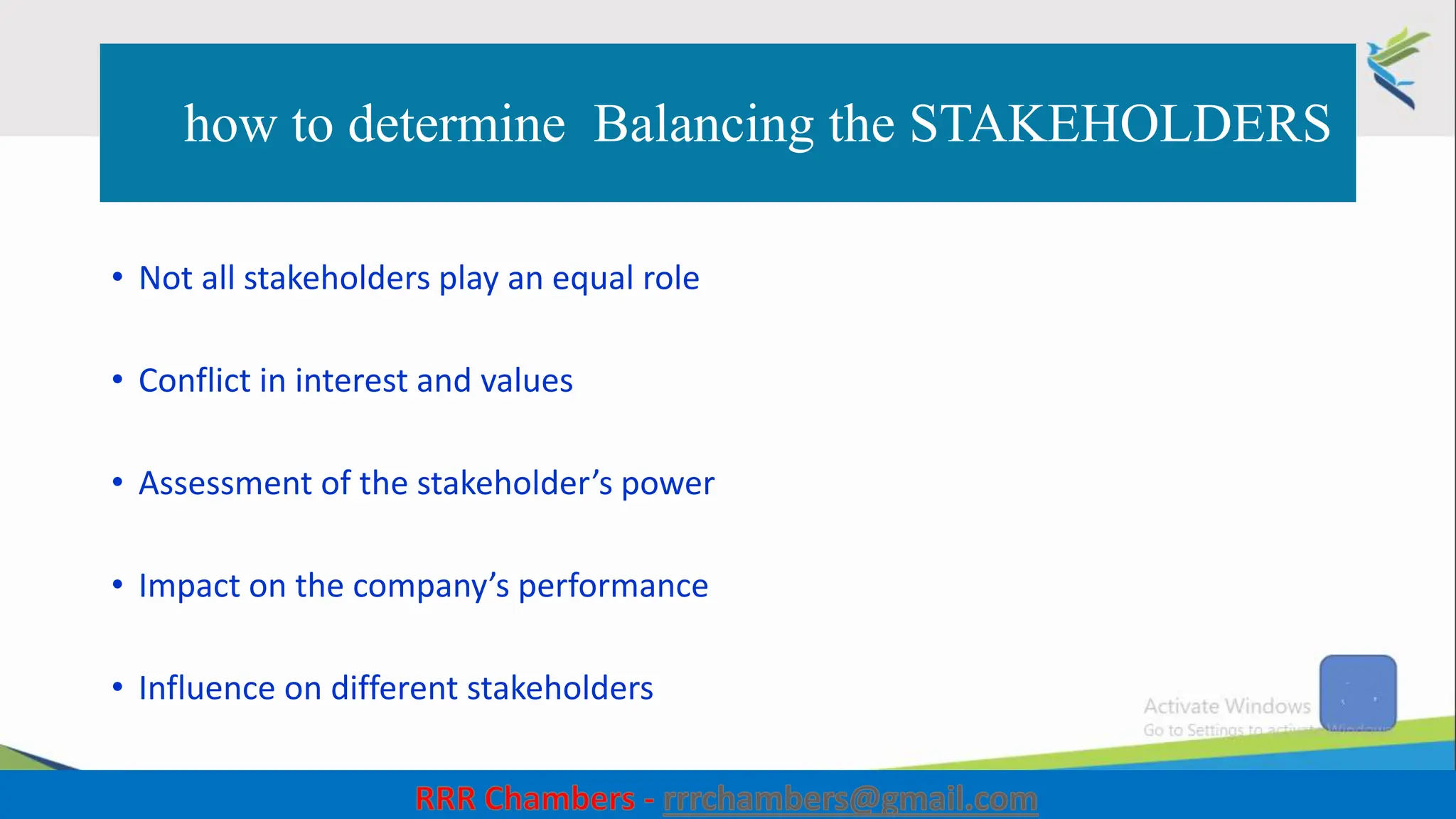
how to determine Balancing the STAKEHOLDERS
• Not all stakeholders play an equal role
• Conflict in interest and values
• Assessment of the stakeholder’s power
• Impact on the company’s performance
• Influence on different stakeholders
45
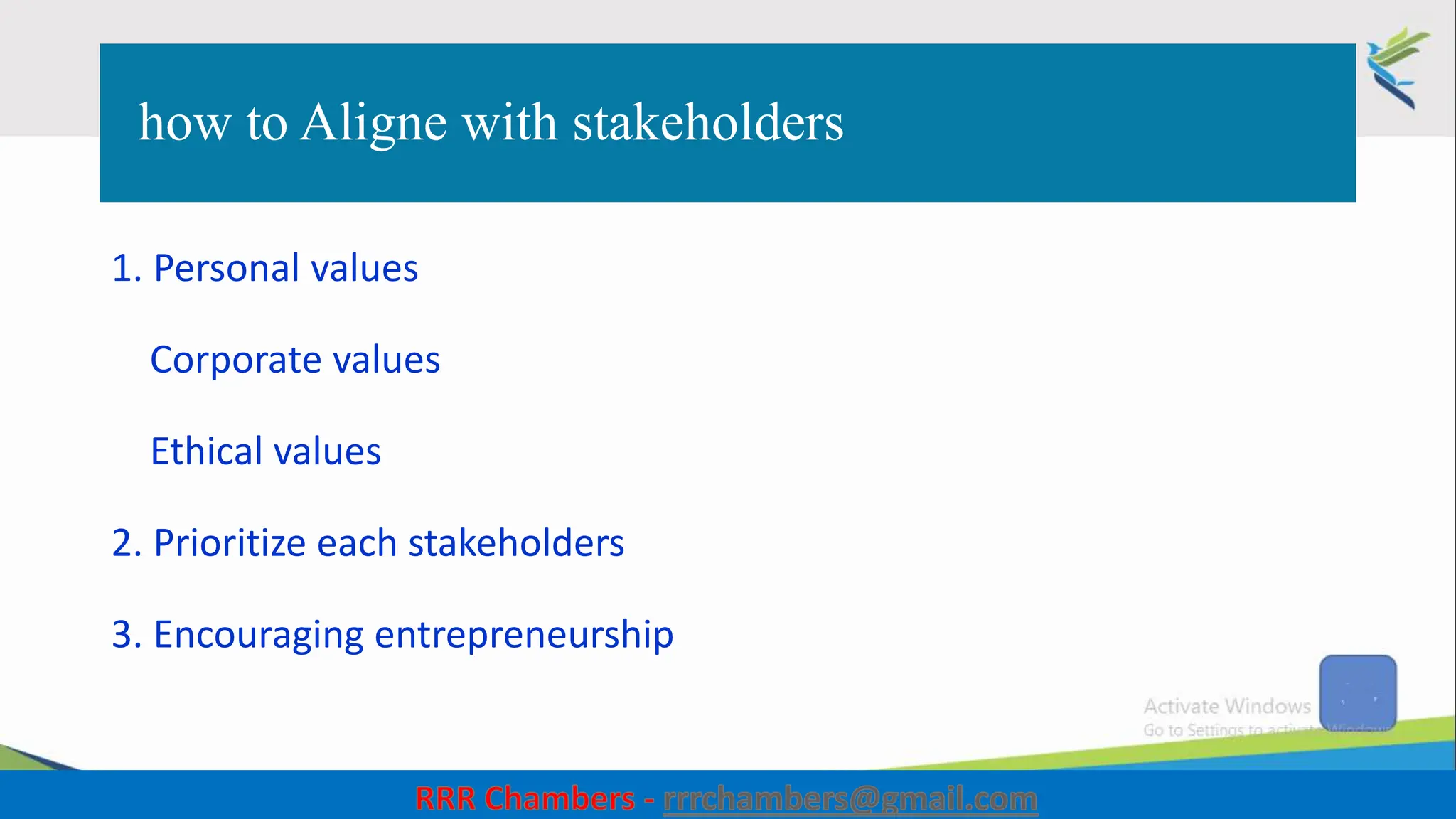
how to Aligne with stakeholders
1. Personal values
Corporate values
Ethical values
2. Prioritize each stakeholders
3. Encouraging entrepreneurship
46
Concluding remarks
47
Concluding remarks
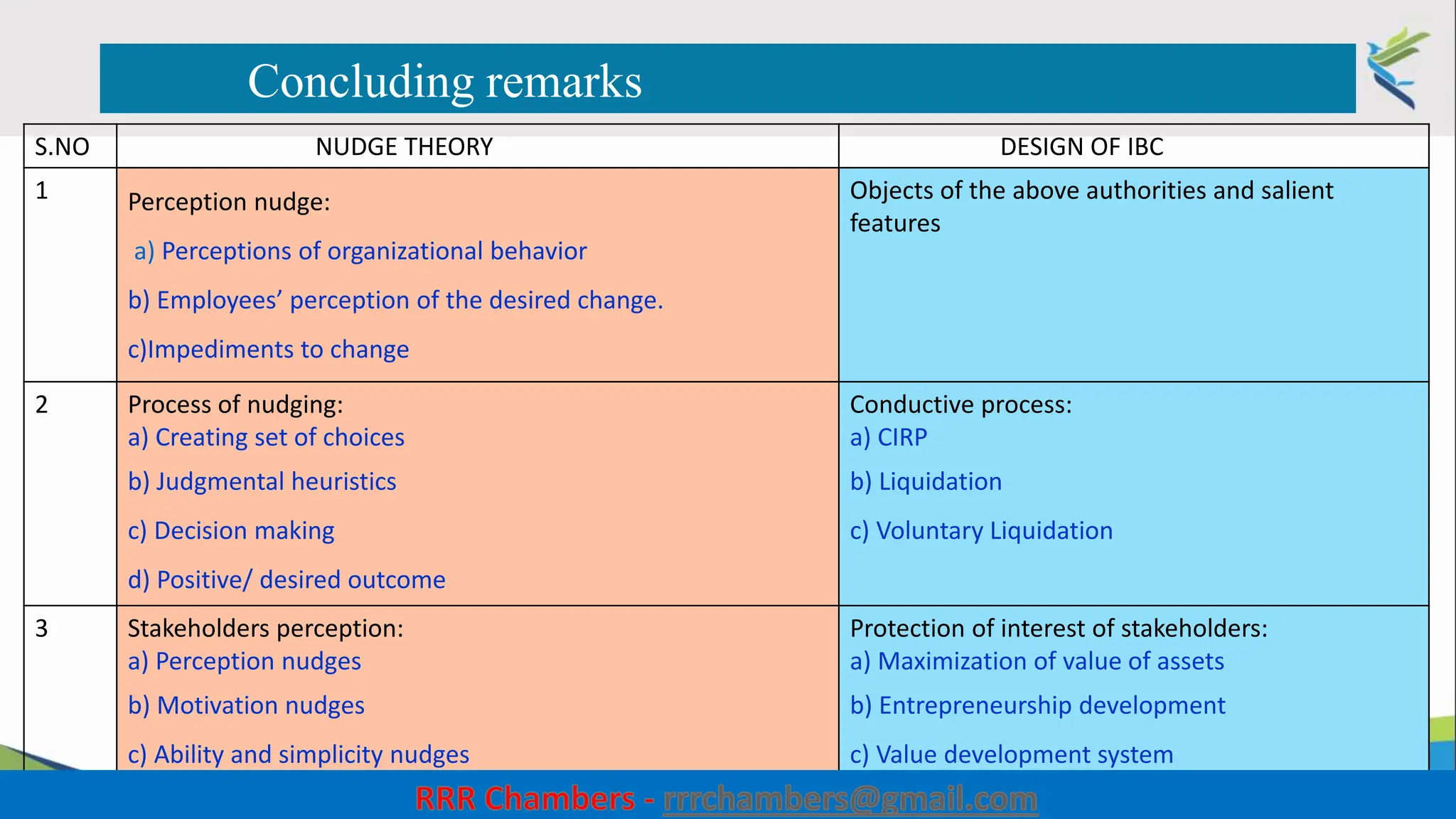
S.NO NUDGE THEORY DESIGN OF IBC
1 Perception nudge:
a) Perceptions of organizational behavior
b) Employees’ perception of the desired change.
c)Impediments to change
Objects of the above authorities and salient
features
2 Process of nudging:
a) Creating set of choices
b) Judgmental heuristics
c) Decision making
d) Positive/ desired outcome
Conductive process:
a) CIRP
b) Liquidation
c) Voluntary Liquidation
3 Stakeholders perception:
a) Perception nudges
b) Motivation nudges
c) Ability and simplicity nudges
Protection of interest of stakeholders:
a) Maximization of value of assets
b) Entrepreneurship development
c) Value development system
48
49

A DESIGN OF IBC - A CONDUCTIVE PROCESS IN PROTECTING THE INTEREST OF STAKEHOLDERS- PPT July 16 2021.pptx

  • 1.
    1 BY A DESIGN OFIBC - A CONDUCTIVE PROCESS IN PROTECTING THE INTEREST OF STAKEHOLDERS
  • 2.
    COVERAGE : A DESIGNOF IBC -A CONDUCTIVE PROCESS IN PROTECTING THE INTEREST OFSTAKEHOLDERS 1. NUDGING THEORY 2. DESIGN OF IBC 3. CONDUCTIVE PROCESS 4. PROTECTION OF INTEREST OF STAKEHOLDERS 5. Entrepreneurship development 2
  • 3.
  • 4.
    NUDGING THEORY PEREPTION •Perceptionnudges target the underlying perceptions of organizational behaviour to bring about a change in understanding, and therefore, a change in behaviour. 4
  • 5.
    Nudging theory • Influenceof Human Behaviour • Subtle Way to Enforce Change • Small Action Indirect Change In Behaviour • Influencing Choice Without Taking Power of Choice 5
  • 6.
    Nudging theory Different Nudges Perception Nudge Motivation Nudge Ability And Simplicity Nudge 6
  • 7.
    Nudging theory SEVEN STEPS 1)Define Change 2) Analysing Stakeholders 3) Work Plan and Timelines 4) Inclusive Decision Making 5) Receptive to Feedback 6) Removing Bottlenecks 7) Consistency 7
  • 8.
  • 9.
    Perception- change one tapwith multiple vessels.mp4 Codification of law Multiple objects Several features Various authorities 9
  • 10.
    PERCEPTION NUDGES •Impediments tochange •Employees’ perception of the desired change •Perceptions of organizational behavior 10
  • 11.
    DESIGN OF IBC OBJECTIVES •To consolidate and amend the laws relating to re-organization and insolvency resolution of corporate persons, partnership firms, and individuals. • To fix time periods for execution of the law in a time-bound settlement of insolvency (i.e. 180 days). • To maximize the value of assets of interested persons. • To promote entrepreneurship. • To increase the availability of credit. 11
  • 12.
    DESIGN OF IBC •To balance all stakeholder’s interest (including alteration). Balance to be done in the order of priority of payment of Government dues. • To establish an Insolvency and Bankruptcy Board of India (IBBI) as a regulatory body for insolvency and bankruptcy law. • To establish higher levels of debt financing across a wide variety of debt instruments. • To provide painless revival mechanism for entities. • To deal with cross-border insolvency. • To resolve India’s bad debt problem by creating a database of defaulters. 12
  • 13.
    SALIENT FEATURES OFIBC 13 SOURCE: https://www.insightsonindia.com/wp-content/uploads/2020/10/insolvency.png
  • 14.
    CONNECTED ACTS -INSOLVENCY 14 SOURCE:https://www.google.com/url?sa=i&url=http%3A%2F%2Fvinodkothari.com%2Fwp content%2Fuploads%2F2019%2F06%2FBooklet-IBC- Final.pdf&psig=AOvVaw0u0zzADMsAieXf4CV0Vd77&ust=1625741310323000&source=images&cd=vfe&ved=0CAoQjRxqFwoTCIjki8zk0PEC FQAAAAAdAAAAABAD
  • 15.
  • 16.
  • 17.
  • 18.
    design of IBC S.NONUDGE THEORY DESIGN OF IBC 1 Impediments to change Objectives Of Ibc 2 Employees’ perception of the desired change. Salient Features Of Ibc 3 Perceptions of organizational behavior Design Of Authorities 18
  • 19.
  • 20.
  • 21.
    PROCESS OF NUDGING-ibc • Creating Set Of Choices • Judgmental Heuristics • Decision Making • Positive / Desired Outcome 21
  • 22.
    CORPORATE GOVERNANCE ANDITS PRINCIPLES 22
  • 23.
    CONDUCTIVE PROCESS CONDUCTIVE PROCESS CIRPLIQUIDATION VOLUNTARY LIQUIDATION
  • 24.
    CONDUCTIVE PROCESS -CIRP Corporate insolvency & resolution process Application by corporate/operational creditors along with copy of demand notice or record of default submitted with information utility as the case may be Acceptance/rejection of application by NCLT If accepted NCLT will declare moratorium Notice of acceptance or rejection 24
  • 25.
    CONDUCTIVE PROCESS -CIRP Public announcement Appointment of interim resolution professional Constitution of committee of creditors by interim resolution professional Appointment of final resolution professional Preparation of information memorandum 25
  • 26.
    CONDUCTIVE PROCESS -CIRP Submission of resolution plan by resolution applicant Approval of resolution plan by committee of creditors Approval of resolution plan by NCLT After approval of NCLT order of moratorium shall cease to have effect Initiation of resolution plan 26
  • 27.
    CONDUCTIVE PROCESS- LIQUIDATION ProcessOf Liquidation Appointment Of Liquidator Liquidator Makes Public Announcements Submission Of Preliminary Reports Creation Of Progress Reports 27
  • 28.
    CONDUCTIVE PROCESS- LIQUIDATION MaintenanceOf Books And Records Appointing An Assisting Professional Recovery Of Assets Asset Estate Creation Preparation Of Asset Memorandum 28
  • 29.
    CONDUCTIVE PROCESS- LIQUIDATION ValuationOf Assets Realization Of Security Interest Selling The Assets Distributing The Profits Among Claimants Distributing Unsold Assets Among Claimants 29
  • 30.
    CONDUCTIVE PROCESS- VOLUNTARY LIQUIDATION 30 SOURCE:https://cdn.wallstreetmojo.com/wp-content/uploads/2020/03/Liquidation-Main.jpg
  • 31.
    PROCESS OF NUDGING S.NONUDGING FUNCTIONS IBC FUNCTIONS 1 Influencing people judgment judgment of resolution/ liquidation 2 choice/ behavior in a predictable way Running the going concern /closure of the company 3 Making posing barriers for people Motivating existing employees to run the company 4 Self declared interest Appointments made by IPI and 31
  • 32.
    PROTECTION OF INTERESTOF STAKEHOLDERS 32
  • 33.
  • 34.
    STEPS OF NUDGINGFOR IMPLEMENTING CHANGE - STAKEHOLDER ANALYSIS • There are different nudges which can be taken at organization level: a) Perception Nudge b) Motivation Nudge c) Ability And Simplicity Nudge 34
  • 35.
    STEPS OF NUDGINGFOR IMPLEMENTING CHANGE - STAKEHOLDER ANALYSIS • SEVEN STEPS a) Define Change b) Analyzing Stakeholders c) Work Plan and Timelines d) Inclusive Decision Making e) Receptive to Feedback f) Removing Bottlenecks g) Consistency 35
  • 36.
    National Guidelines onResponsible Business Conduct 36 Principle 1: Businesses should conduct and govern themselves with integrity, and in a manner that is ethical, transparent, and accountable. Principle 2: Businesses should provide goods and services in a manner that is sustainable and safe. Principle 3: Businesses should respect and promote the well- being of all employees, including those in their value chains. Principle 4: Businesses should respect the interests of and be responsive to all its stakeholders. Principle 5: Businesses should respect and promote human rights.
  • 37.
    National Guidelines onResponsible Business Conduct Principle 6: Businesses should respect and make efforts to protect and restore the environment. Principle 7: Businesses, when engaging in influencing public and regulatory policy, should do so in a manner that is responsible and transparent. Principle 8: Businesses should promote inclusive growth and equitable development. Principle 9: Businesses should engage with and provide value to their consumers in a responsible manner. 37
  • 38.
    38 PROTECTING THE INTEREST OF STAKEHOLDER CIRPLIQUIATION VOLUNTARY LIQUIDATION
  • 39.
    PROTECTING THE INTERESTOF STAKEHOLDER PROTECTION GOVERNANCE INITIATIVE TRANSPARENCY CONFLICT OF INTEREST INFORMATION ACCOUNTABILITY INDEPENDENCE TRUE AND FAIR AUTONOMY PRINCIPLES OF JUSTICE 39
  • 40.
  • 41.
    Protecting the interestof stakeholders S.NO NUDGE THEORY DESIGN OF IBC 1 Perception Nudges  Personal Values  Corporate Values  Ethical Values 2 Motivation Nudges Prioritize Each Stakeholders 3 Ability And Simplicity Nudges Encouraging Entrepreneurship 41
  • 42.
    “A CONDUCTIVE PROCESSIN PROTECTING THE INTEREST OF STAKEHOLDERS" 42
  • 43.
    How to Maximizethe value of assets by Insolvency Professional 1. Insolvency Professional have to run Corporate Debtor as going concern to achieve the maximization value of assets. 2. Insolvency Professional have to improve Operational and Financial efficiency of Corporate Debtor. 43
  • 44.
    How to Contributefor balancing the interest of stakeholders • Strong Corporate Governance • Leadership • Heart warming involvement • Inclusiveness • Fairness • Impartial judgment 44
  • 45.
    how to determineBalancing the STAKEHOLDERS • Not all stakeholders play an equal role • Conflict in interest and values • Assessment of the stakeholder’s power • Impact on the company’s performance • Influence on different stakeholders 45
  • 46.
    how to Alignewith stakeholders 1. Personal values Corporate values Ethical values 2. Prioritize each stakeholders 3. Encouraging entrepreneurship 46
  • 47.
  • 48.
    Concluding remarks S.NO NUDGETHEORY DESIGN OF IBC 1 Perception nudge: a) Perceptions of organizational behavior b) Employees’ perception of the desired change. c)Impediments to change Objects of the above authorities and salient features 2 Process of nudging: a) Creating set of choices b) Judgmental heuristics c) Decision making d) Positive/ desired outcome Conductive process: a) CIRP b) Liquidation c) Voluntary Liquidation 3 Stakeholders perception: a) Perception nudges b) Motivation nudges c) Ability and simplicity nudges Protection of interest of stakeholders: a) Maximization of value of assets b) Entrepreneurship development c) Value development system 48
  • 49.

Editor's Notes

  • #6 Nudge Theory explains how to influence human behaviour in a subtle way to enforce change. It is about taking small actions which indirectly human behaviour towards change. It calls for influencing choice without taking power of choice from individuals.
  • #32 A nudge is a function of (condition I) any attempt at influencing people’s judgment, choice or behavior in a predictable way (condition a) that is motivated because of cognitive boundaries, biases, routines, and habits in individual and social decision-making posing barriers for people to perform rationally in their own self-declared interests, and which (condition b) works by making use of those boundaries, biases, routines, and habits as integral parts of such attempts
  • #35 It is also necessary to have analysis of how change will be perceived by all stakeholders and how the expected change is going to affect all of these stakeholders. This analysis will provide with change leaders more clarity and better strategy to implement change
  • #36 In our study, the stakeholders’ different reaction to nudge was also explained by their age, and type and degree of prior knowledge on forest management. Metaphorical modification of policy text can influence stakeholder perceptions. Changing forest stakeholders’ perception of ecosystem services with linguistic nudging.
  • #46 1. Not all stakeholders play an equal role in an organization success. 2. It is important to understand where their values are also in conflict with each other as well as with the organization. 3.Organization who did not accurately assess the power of their stakeholders’ values risk being blindsided. 4.The forces of stakeholder values exist and will impact the company’s performance, regardless of whether or not you measure and act on their influences. 5.Therefore, to balance the influences from different stakeholders, it is important to align corporate values with key stakeholder groups
  • #47 If corporate values is not aligned with stakeholder values, you risk destroying important stakeholder relationships. Stakeholders expect companies to understand and abide by their personal values. Getting your organization into alignment with those values is important. Of course you can’t perfectly align all stakeholder values with corporate values, so your job is to prioritize each stakeholder group and determine which values are essential for alignment