Before leaving home…
 Check weather at destination
 Check State of Colorado road condition website:
  cotrip.org
 Check your favorite tv/radio station weather
  report
 Allow extra time for your commute
 Fully clean windshield, side and rear windows and
 headlight lenses
 Be sure your windshield washer reservoir is full
 Look at your tires: do they look low? Is a low tire
  dashlight illuminated?
 De-ice car doors
 Fully warm vehicle and defrost all windows
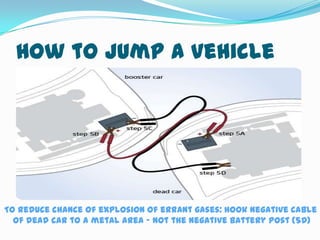
How to jump a vehicle


To reduce chance of explosion of errant gases: hook negative cable
  of dead car to a metal area – not the negative battery post (5D)
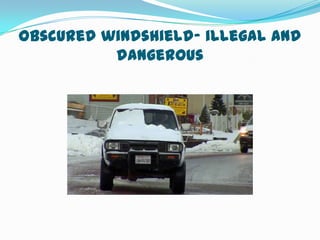
Obscured windshield- illegal and
          dangerous
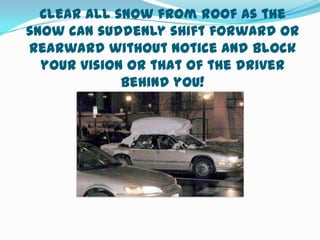
Clear all snow from roof as the
snow can suddenly shift forward or
rearward without notice and block
  your vision or that of the driver
             behind you!
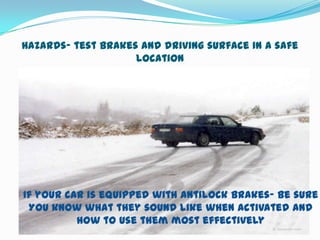
Hazards- test brakes and driving surface in a safe
                    location


If your car is equipped with antilock brakes- be sure
 You know what they sound like when activated and
          how to use them most effectively
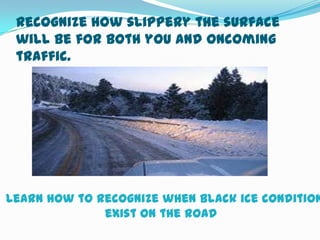
Recognize how slippery the surface
 will be for both you and oncoming
 traffic.


Learn how to recognize when black ice condition
              exist on the road
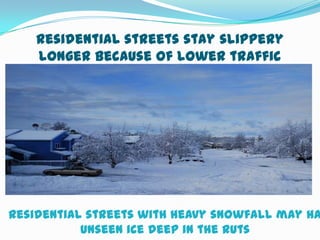
Residential streets stay slippery
    longer because of lower traffic


Residential streets with heavy snowfall may ha
           unseen ice deep in the ruts
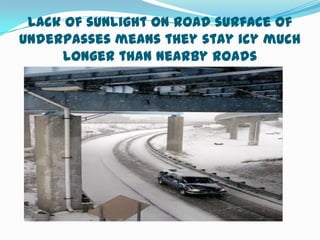
Lack of sunlight on road surface of
underpasses means they stay icy much
     longer than nearby roads
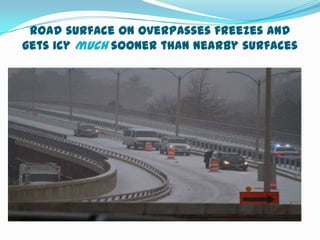
Road surface on overpasses freezes and
gets icy much sooner than nearby surfaces
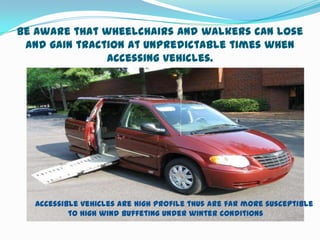
Be Aware that wheelchairs and walkers can lose
 and gain traction at unpredictable times when
               accessing vehicles.


  Accessible vehicles are high profile thus are far more susceptible
          to high wind buffeting under winter conditions
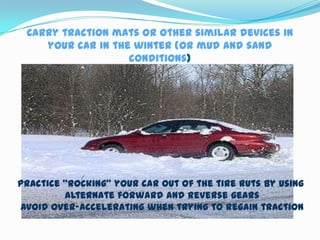
Carry traction mats or other similar devices in
    your car in the winter (or mud and sand
                   conditions)


Practice “rocking” your car out of the tire ruts by using
         alternate forward and reverse gears
Avoid over-accelerating when trying to regain traction
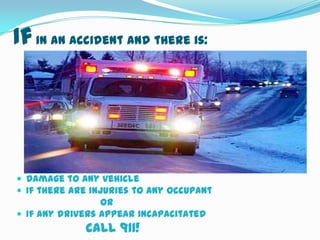
If in an accident and there is:


 Damage to any vehicle
 If there are injuries to any occupant
                 or
 If any drivers appear incapacitated
             CALL 911!
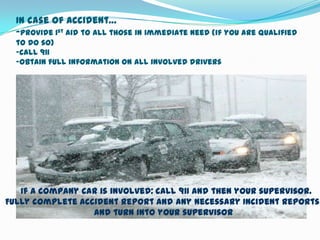
In case of accident…
  -provide 1st aid to all those in immediate need (if you are qualified
  to do so)
  -call 911
  -obtain full information on all involved drivers


   If a company car is involved: call 911 and then your supervisor.
Fully complete accident report and any necessary Incident Reports
                  and turn into your supervisor

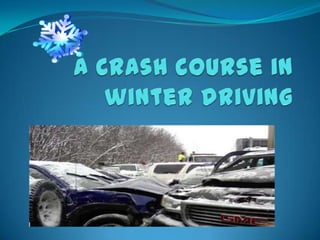
A Crash Course in Winter Driving

  • 2.
    Before leaving home… Check weather at destination  Check State of Colorado road condition website: cotrip.org  Check your favorite tv/radio station weather report  Allow extra time for your commute  Fully clean windshield, side and rear windows and headlight lenses  Be sure your windshield washer reservoir is full  Look at your tires: do they look low? Is a low tire dashlight illuminated?  De-ice car doors  Fully warm vehicle and defrost all windows
  • 3.
    How to jumpa vehicle To reduce chance of explosion of errant gases: hook negative cable of dead car to a metal area – not the negative battery post (5D)
  • 4.
  • 5.
    Clear all snowfrom roof as the snow can suddenly shift forward or rearward without notice and block your vision or that of the driver behind you!
  • 6.
    Hazards- test brakesand driving surface in a safe location If your car is equipped with antilock brakes- be sure You know what they sound like when activated and how to use them most effectively
  • 7.
    Recognize how slipperythe surface will be for both you and oncoming traffic. Learn how to recognize when black ice condition exist on the road
  • 8.
    Residential streets stayslippery longer because of lower traffic Residential streets with heavy snowfall may ha unseen ice deep in the ruts
  • 9.
    Lack of sunlighton road surface of underpasses means they stay icy much longer than nearby roads
  • 10.
    Road surface onoverpasses freezes and gets icy much sooner than nearby surfaces
  • 11.
    Be Aware thatwheelchairs and walkers can lose and gain traction at unpredictable times when accessing vehicles. Accessible vehicles are high profile thus are far more susceptible to high wind buffeting under winter conditions
  • 12.
    Carry traction matsor other similar devices in your car in the winter (or mud and sand conditions) Practice “rocking” your car out of the tire ruts by using alternate forward and reverse gears Avoid over-accelerating when trying to regain traction
  • 13.
    If in anaccident and there is:  Damage to any vehicle  If there are injuries to any occupant or  If any drivers appear incapacitated CALL 911!
  • 14.
    In case ofaccident… -provide 1st aid to all those in immediate need (if you are qualified to do so) -call 911 -obtain full information on all involved drivers If a company car is involved: call 911 and then your supervisor. Fully complete accident report and any necessary Incident Reports and turn into your supervisor