A CLINICAL PRACTICE CHANGE INTERVENTION TO
INCREASE DIETITIAN PROVISION OF ROUTINE
DEPRESSION SCREENING & APPROPRIATE REFERRAL
FOR PSYCHOSOCIAL SUPPORT IN HEAD AND NECK
CANCER PATIENTS
Kristen McCarter1, Luke Wolfenden2, Amanda Baker3, Ben
Britton3, Alison Beck3, Gregory Carter4, Judy Bauer5, Chris
Wratten6, Patrick McElduff7, Sean Halpin1
Kristen.McCarter@newcastle.edu.au
1 School of Psychology, University of Newcastle, NSW, Australia, 2308
2 School of Medicine & Public Health, The University of Newcastle, NSW, Australia, 2308
3 Centre for Translational Neuroscience and Mental Health, University of Newcastle, NSW, Australia, 2308
4 Department of Consultation-Liaison Psychiatry, Calvary Mater Newcastle Hospital, NSW, Australia, 2308
5 The School of Human Movement Studies, The University of Queensland, St Lucia, QLD, Australia, 4072
6 Department of Radiation Oncology, Calvary Mater Newcastle Hospital, NSW, Australia, 2308
7 Clinical Research Design IT and Statistical Support (CRεDITSS) Unit, University of Newcastle, NSW,
Australia, 2308
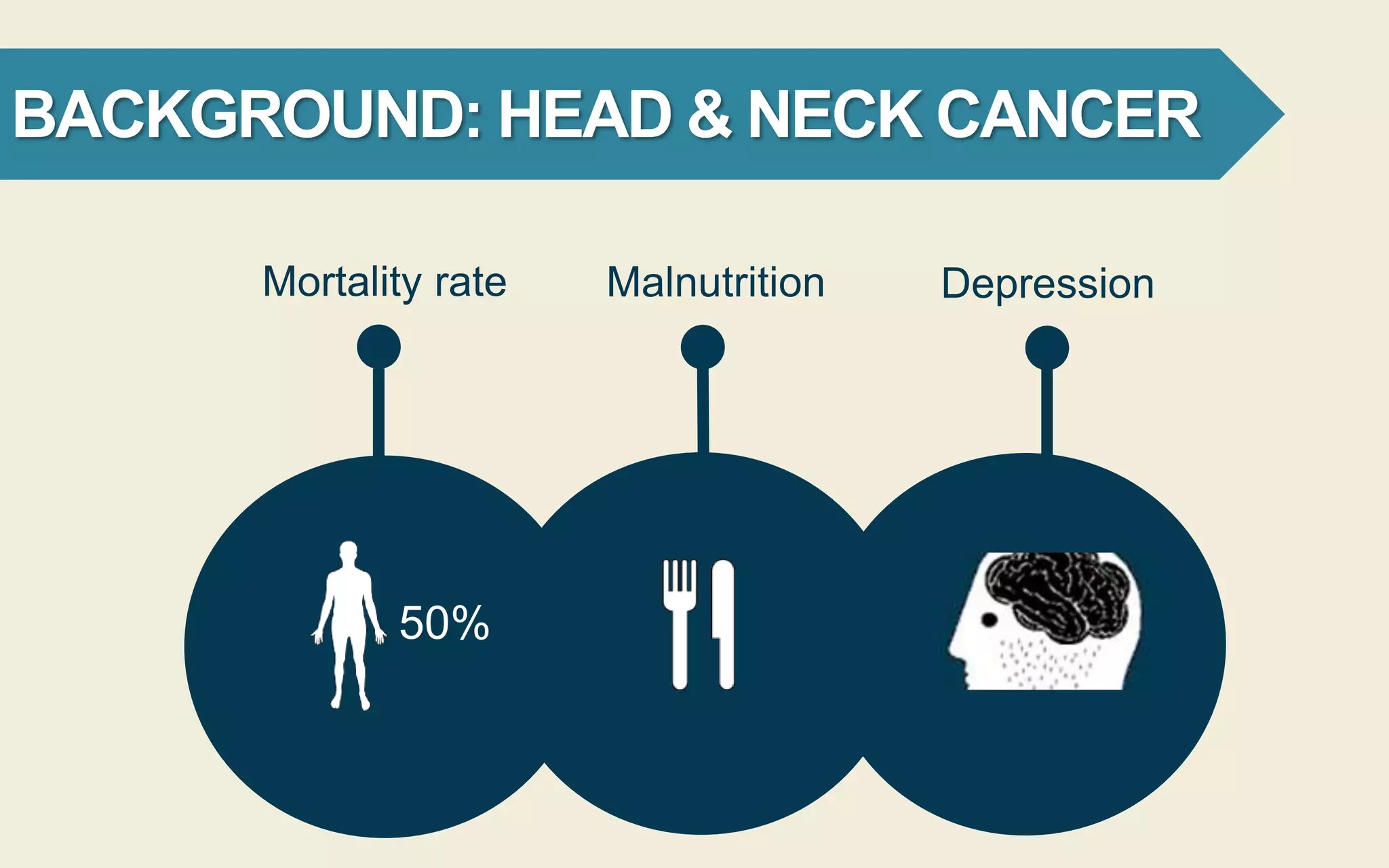
Mortality rate Malnutrition Depression
50%
BACKGROUND: HEAD & NECK CANCER
AIMS
Improve dietitian adherence to evidence
based clinical practice guidelines.
More specifically, increase dietitian routine
screening for depression & referral to
appropriate supports for head and neck
cancer patients.
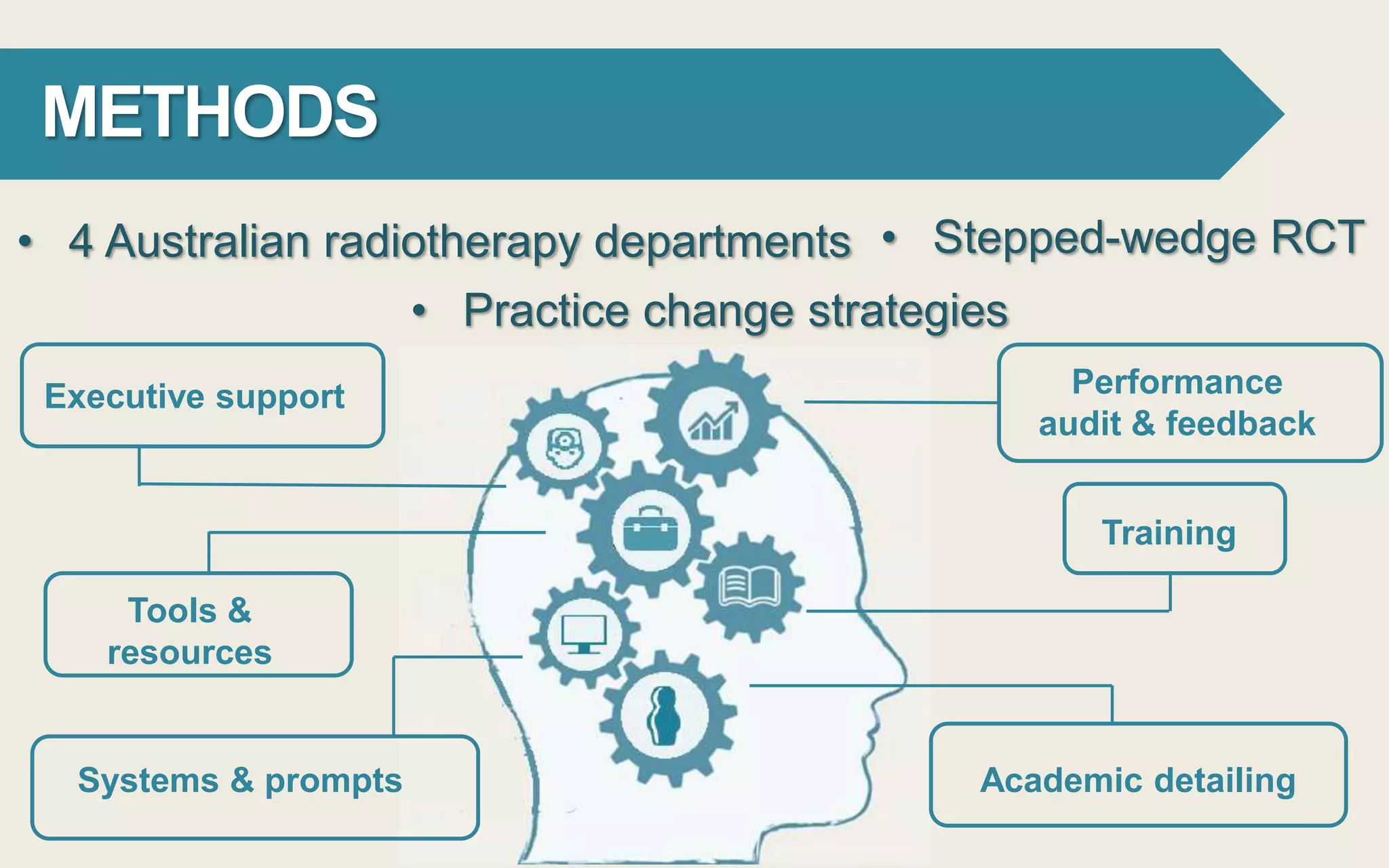
METHODS
• 4 Australian radiotherapy departments • Stepped-wedge RCT
• Practice change strategies
Performance
audit & feedback
Training
Executive support
Tools &
resources
Systems & prompts Academic detailing
• 0% (n=162) of patients screened for
psychosocial distress across all four sites
PRELIMINARY RESULTS
Control Period
Intervention Period
• Main outcome (depression screening & referral)
results available April 2016
• Intervention components have been well
received by the participating dietitians
IMPLICATIONS
• If effective, could serve as a
model for improving
implementation of
guidelines in other
outpatient clinics in
Australia & internationally
• Potential to improve clinical
management & health
outcomes of thousands of
HNC patients each year
Evidence
based
guidelines
Dietetic
care
Psychosocial
support for
HNC patients
THANKYOU
Kristen.McCarter@newcastle.edu.au

A clinical practice change intervention

  • 2.
    A CLINICAL PRACTICECHANGE INTERVENTION TO INCREASE DIETITIAN PROVISION OF ROUTINE DEPRESSION SCREENING & APPROPRIATE REFERRAL FOR PSYCHOSOCIAL SUPPORT IN HEAD AND NECK CANCER PATIENTS Kristen McCarter1, Luke Wolfenden2, Amanda Baker3, Ben Britton3, Alison Beck3, Gregory Carter4, Judy Bauer5, Chris Wratten6, Patrick McElduff7, Sean Halpin1 Kristen.McCarter@newcastle.edu.au 1 School of Psychology, University of Newcastle, NSW, Australia, 2308 2 School of Medicine & Public Health, The University of Newcastle, NSW, Australia, 2308 3 Centre for Translational Neuroscience and Mental Health, University of Newcastle, NSW, Australia, 2308 4 Department of Consultation-Liaison Psychiatry, Calvary Mater Newcastle Hospital, NSW, Australia, 2308 5 The School of Human Movement Studies, The University of Queensland, St Lucia, QLD, Australia, 4072 6 Department of Radiation Oncology, Calvary Mater Newcastle Hospital, NSW, Australia, 2308 7 Clinical Research Design IT and Statistical Support (CRεDITSS) Unit, University of Newcastle, NSW, Australia, 2308
  • 3.
    Mortality rate MalnutritionDepression 50% BACKGROUND: HEAD & NECK CANCER
  • 4.
    AIMS Improve dietitian adherenceto evidence based clinical practice guidelines. More specifically, increase dietitian routine screening for depression & referral to appropriate supports for head and neck cancer patients.
  • 5.
    METHODS • 4 Australianradiotherapy departments • Stepped-wedge RCT • Practice change strategies Performance audit & feedback Training Executive support Tools & resources Systems & prompts Academic detailing
  • 6.
    • 0% (n=162)of patients screened for psychosocial distress across all four sites PRELIMINARY RESULTS Control Period Intervention Period • Main outcome (depression screening & referral) results available April 2016 • Intervention components have been well received by the participating dietitians
  • 7.
    IMPLICATIONS • If effective,could serve as a model for improving implementation of guidelines in other outpatient clinics in Australia & internationally • Potential to improve clinical management & health outcomes of thousands of HNC patients each year Evidence based guidelines Dietetic care Psychosocial support for HNC patients
  • 8.