DR. SUMAN TALUKDER
 Leather tanning is the process of converting raw hides or
skins into leather.
 Hides and skins have the ability to absorb tannic acid and other
chemical substances that prevent them from decaying, make
them resistant to wetting, and keep them supple and durable.
The surface of hides and skins contains the hair and oil glands
and is known as the grain side. The flesh side of the hide or skin
is much thicker and softer.
 The three types of hides and skins most often used in leather
manufacture are from cattle, sheep and goat.
Tanning is essentially the reaction of collagen fibers in the
hide with tannins, chromium, alum, or other chemical
agents. The most common tanning agents used are trivalent
chromium and vegetable tannins extracted from specific tree
barks. Alum, syntans (man-made chemicals), formaldehyde,
glutaraldehyde, and heavy oils are other tanning agents.
Leather tanning
Tanning process
i. Warehousing and sorting:
In the raw material area the
skins are preserved in salt,
stored in controlled cool rooms
and before processing,
presorted for quality and
weight.
ii. Soaking: The skin is soaked to
remove dirt and salt.
iii. De-fleshing: During this
process tissue, flesh and fat
remnants are removed by a
roller mounted knife.
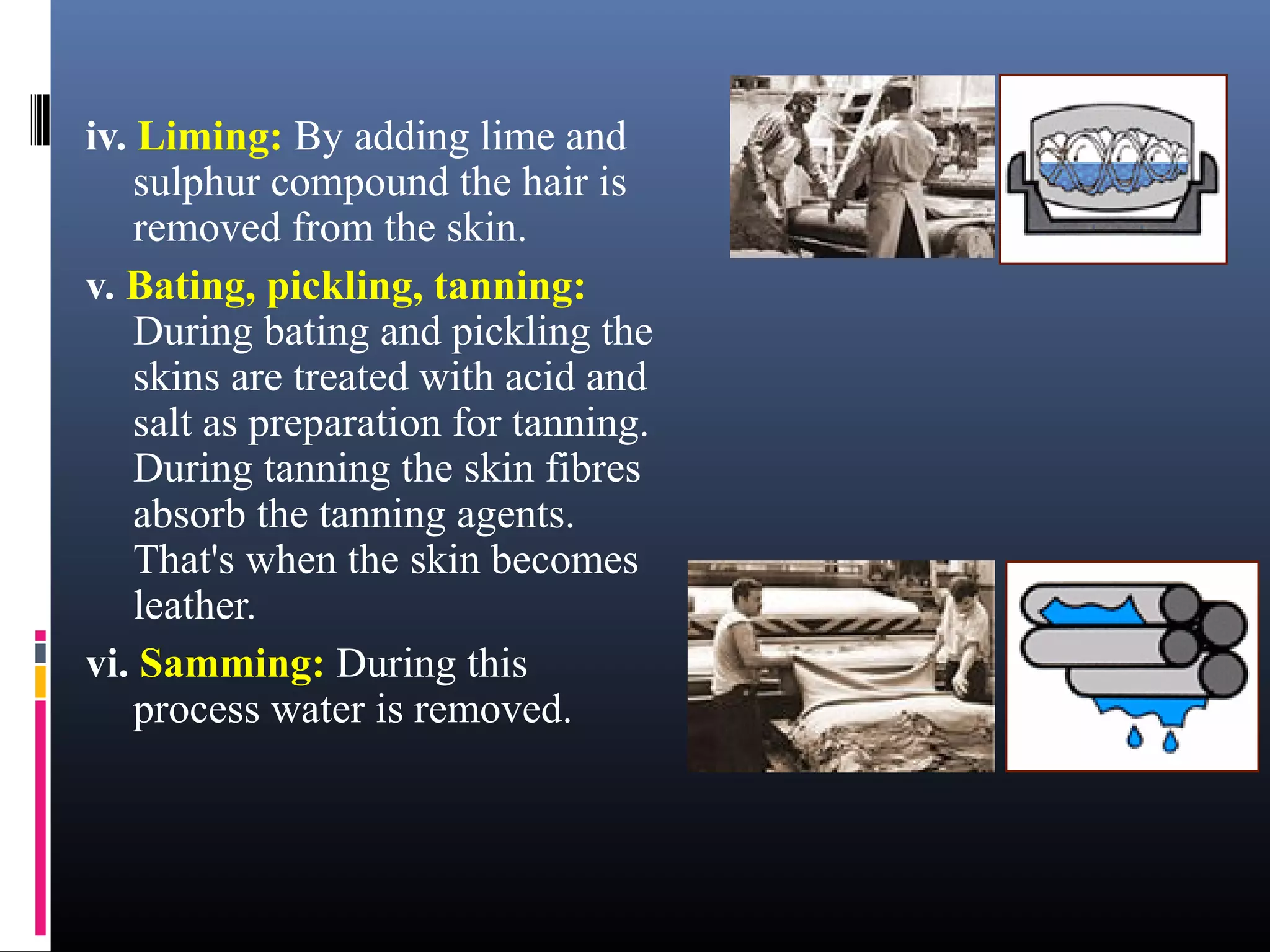
iv. Liming: By adding lime and
sulphur compound the hair is
removed from the skin.
v. Bating, pickling, tanning:
During bating and pickling the
skins are treated with acid and
salt as preparation for tanning.
During tanning the skin fibres
absorb the tanning agents.
That's when the skin becomes
leather.
vi. Samming: During this
process water is removed.
vii. Splitting: In order to achieve
an even specified thickness the
leather is reduced in substance.
The resulting split-leather can
than be processed further as
suede.
viii. Skiving: The grain leather is
brought to an even thickness.
Irregularities are removed
from the reverse side and the
leather is separated into color-
batches.
ix. Sorting: The leather is sorted
into various quality grades.
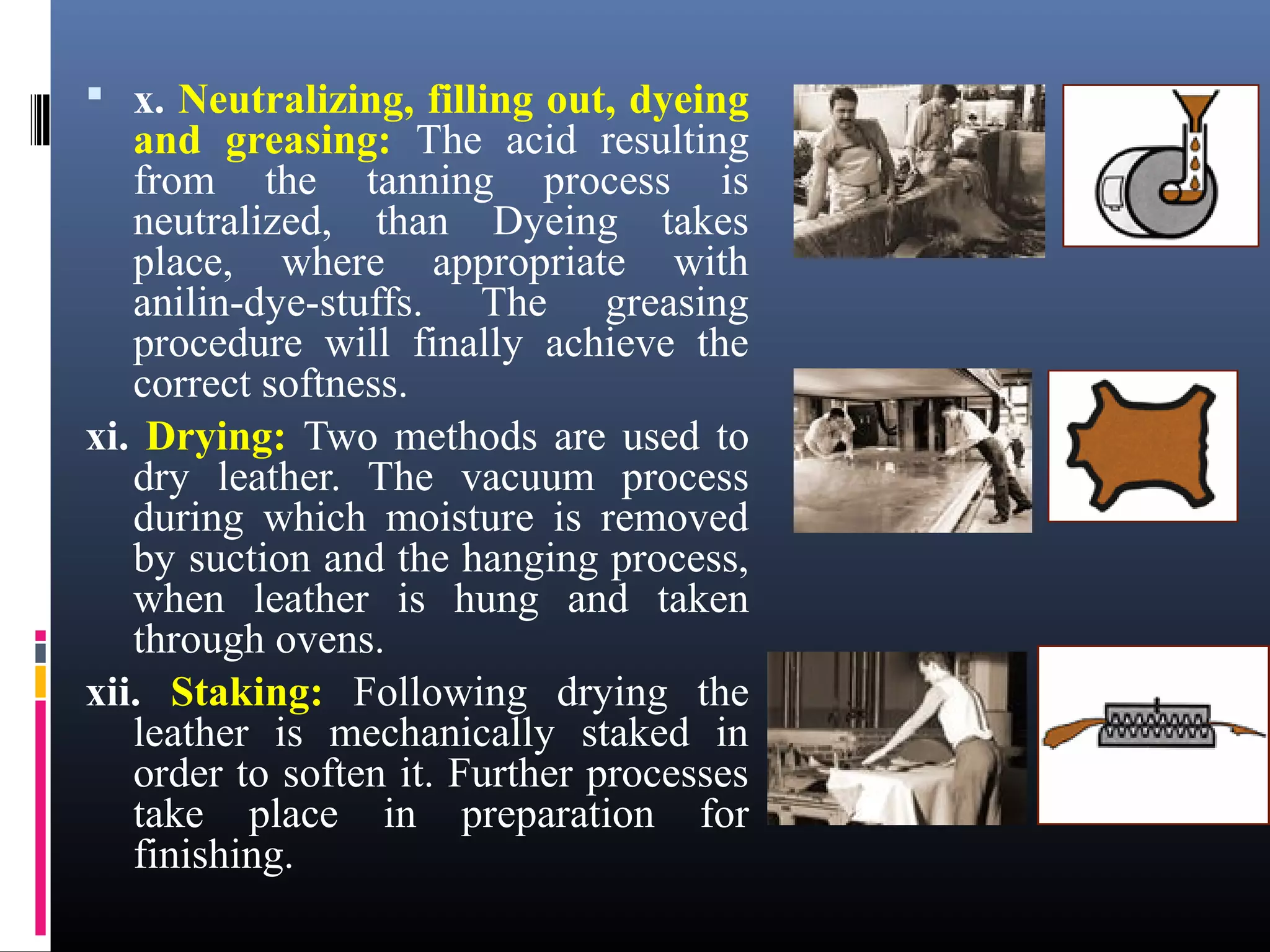
 x. Neutralizing, filling out, dyeing
and greasing: The acid resulting
from the tanning process is
neutralized, than Dyeing takes
place, where appropriate with
anilin-dye-stuffs. The greasing
procedure will finally achieve the
correct softness.
xi. Drying: Two methods are used to
dry leather. The vacuum process
during which moisture is removed
by suction and the hanging process,
when leather is hung and taken
through ovens.
xii. Staking: Following drying the
leather is mechanically staked in
order to soften it. Further processes
take place in preparation for
finishing.
xiii. Finishing: Here the leather is
given its final surface treatment
and look. Through processes of
base coat, coloring, embossing,
ironing the leather becomes,
depending on the demands of
fashion, matt or shiny, two-tone
or uni-colored, smooth or
grained. The art of finishing lies
in working in wafer-thin layers
without disturbing the natural
look of the leather and its
characteristics such as suppleness
and breathability.
Thank you

8. tanning of leather

  • 1.
  • 2.
     Leather tanningis the process of converting raw hides or skins into leather.  Hides and skins have the ability to absorb tannic acid and other chemical substances that prevent them from decaying, make them resistant to wetting, and keep them supple and durable. The surface of hides and skins contains the hair and oil glands and is known as the grain side. The flesh side of the hide or skin is much thicker and softer.  The three types of hides and skins most often used in leather manufacture are from cattle, sheep and goat. Tanning is essentially the reaction of collagen fibers in the hide with tannins, chromium, alum, or other chemical agents. The most common tanning agents used are trivalent chromium and vegetable tannins extracted from specific tree barks. Alum, syntans (man-made chemicals), formaldehyde, glutaraldehyde, and heavy oils are other tanning agents. Leather tanning
  • 3.
    Tanning process i. Warehousingand sorting: In the raw material area the skins are preserved in salt, stored in controlled cool rooms and before processing, presorted for quality and weight. ii. Soaking: The skin is soaked to remove dirt and salt. iii. De-fleshing: During this process tissue, flesh and fat remnants are removed by a roller mounted knife.
  • 4.
    iv. Liming: Byadding lime and sulphur compound the hair is removed from the skin. v. Bating, pickling, tanning: During bating and pickling the skins are treated with acid and salt as preparation for tanning. During tanning the skin fibres absorb the tanning agents. That's when the skin becomes leather. vi. Samming: During this process water is removed.
  • 5.
    vii. Splitting: Inorder to achieve an even specified thickness the leather is reduced in substance. The resulting split-leather can than be processed further as suede. viii. Skiving: The grain leather is brought to an even thickness. Irregularities are removed from the reverse side and the leather is separated into color- batches. ix. Sorting: The leather is sorted into various quality grades.
  • 6.
     x. Neutralizing,filling out, dyeing and greasing: The acid resulting from the tanning process is neutralized, than Dyeing takes place, where appropriate with anilin-dye-stuffs. The greasing procedure will finally achieve the correct softness. xi. Drying: Two methods are used to dry leather. The vacuum process during which moisture is removed by suction and the hanging process, when leather is hung and taken through ovens. xii. Staking: Following drying the leather is mechanically staked in order to soften it. Further processes take place in preparation for finishing.
  • 7.
    xiii. Finishing: Herethe leather is given its final surface treatment and look. Through processes of base coat, coloring, embossing, ironing the leather becomes, depending on the demands of fashion, matt or shiny, two-tone or uni-colored, smooth or grained. The art of finishing lies in working in wafer-thin layers without disturbing the natural look of the leather and its characteristics such as suppleness and breathability.
  • 8.