PRINCIPLES
BASIC
OF GRAPHIC
DESIGN
Presentation by DSOM
Graphic design is a vast field that
encompasses various principles to create
visually appealing and effective designs.
Here are the seven basic principles of
graphic design:
Presentation by DSOM
TABLE OF
PROPORTION UNITY
BALANCE HARMONY
CONTRAST EMPHASIS
RHYTHM
CONTENTS
01
Presentation by DSOM
7 Basic Principles Of Graphic Design
PROPORTION
A B
02
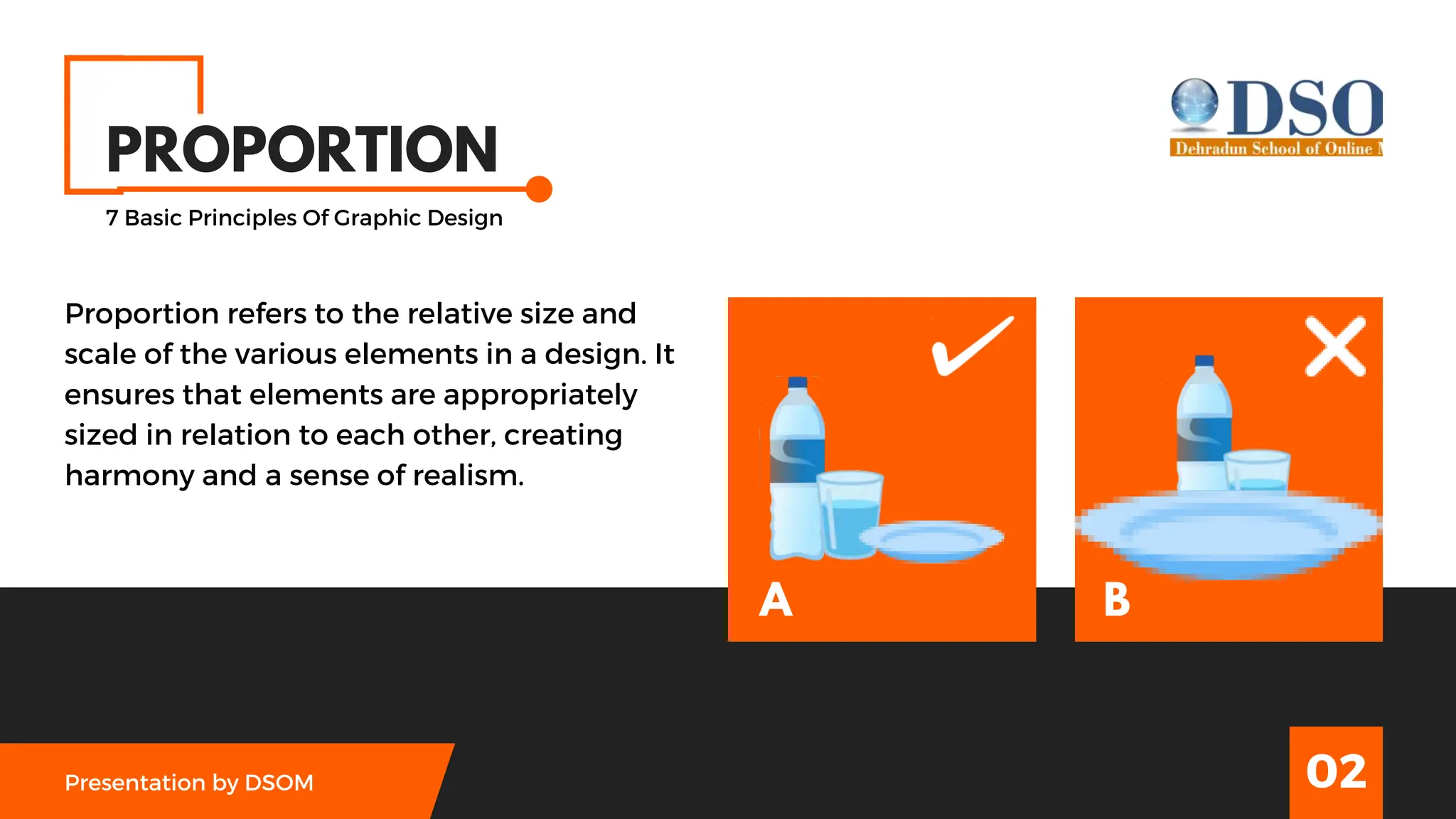
Proportion refers to the relative size and
scale of the various elements in a design. It
ensures that elements are appropriately
sized in relation to each other, creating
harmony and a sense of realism.
Presentation by DSOM
7 Basic Principles Of Graphic Design
BALANCE
A B
03
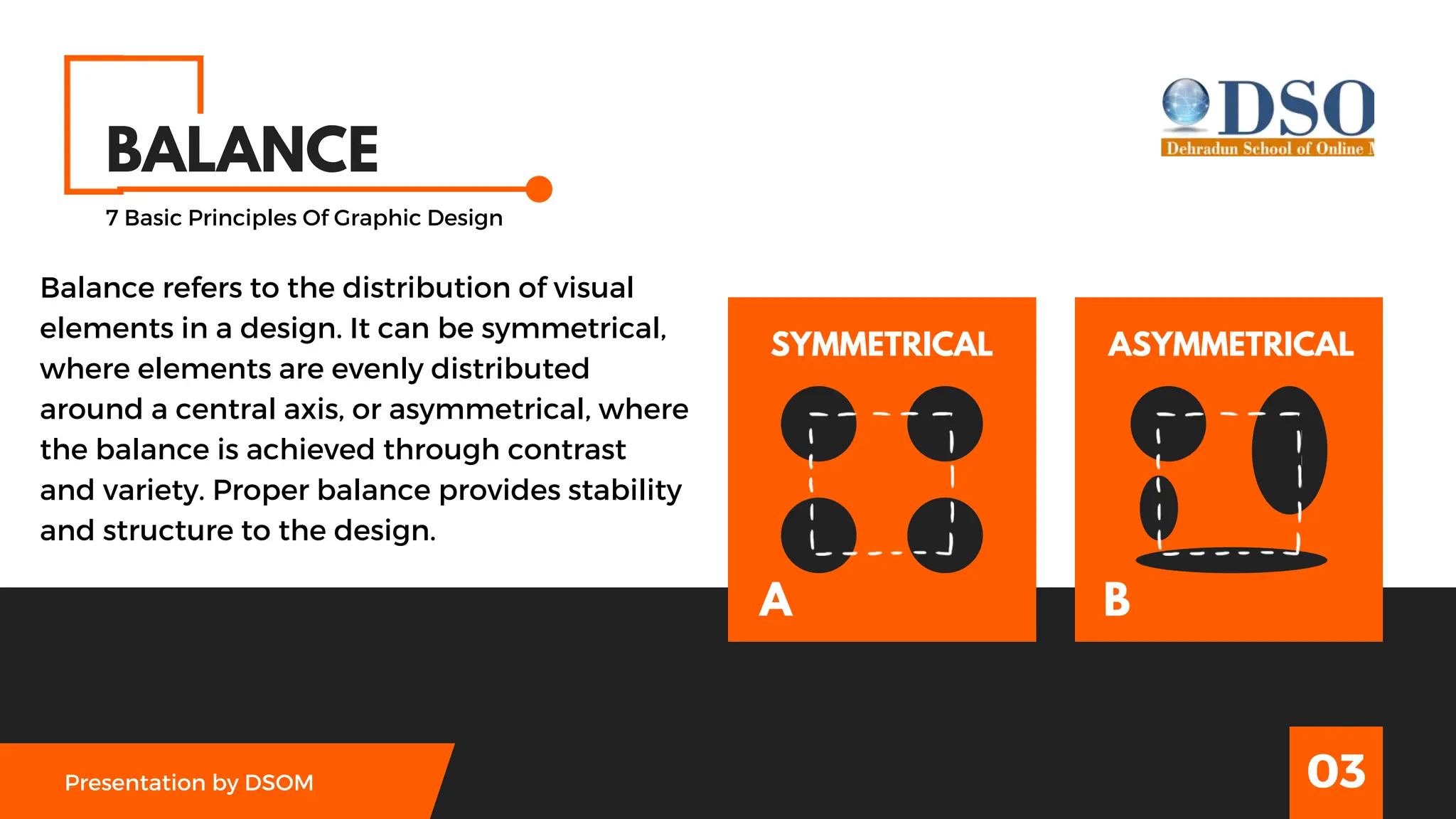
Balance refers to the distribution of visual
elements in a design. It can be symmetrical,
where elements are evenly distributed
around a central axis, or asymmetrical, where
the balance is achieved through contrast
and variety. Proper balance provides stability
and structure to the design.
SYMMETRICAL ASYMMETRICAL
Presentation by DSOM
7 Basic Principles Of Graphic Design
CONTRAST
A B
04
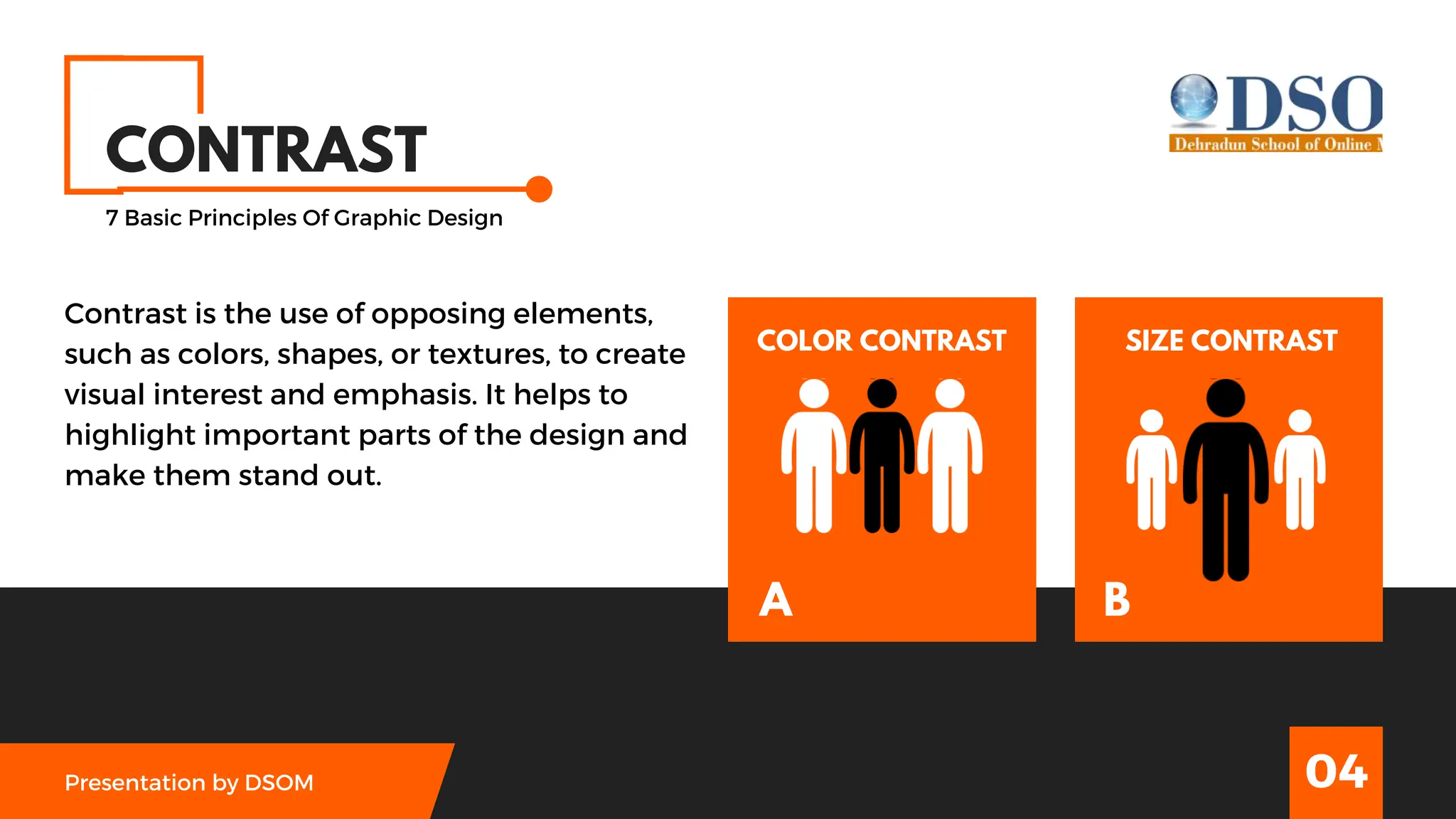
Contrast is the use of opposing elements,
such as colors, shapes, or textures, to create
visual interest and emphasis. It helps to
highlight important parts of the design and
make them stand out.
COLOR CONTRAST SIZE CONTRAST
Presentation by DSOM
7 Basic Principles Of Graphic Design
RHYTHM
A B
05
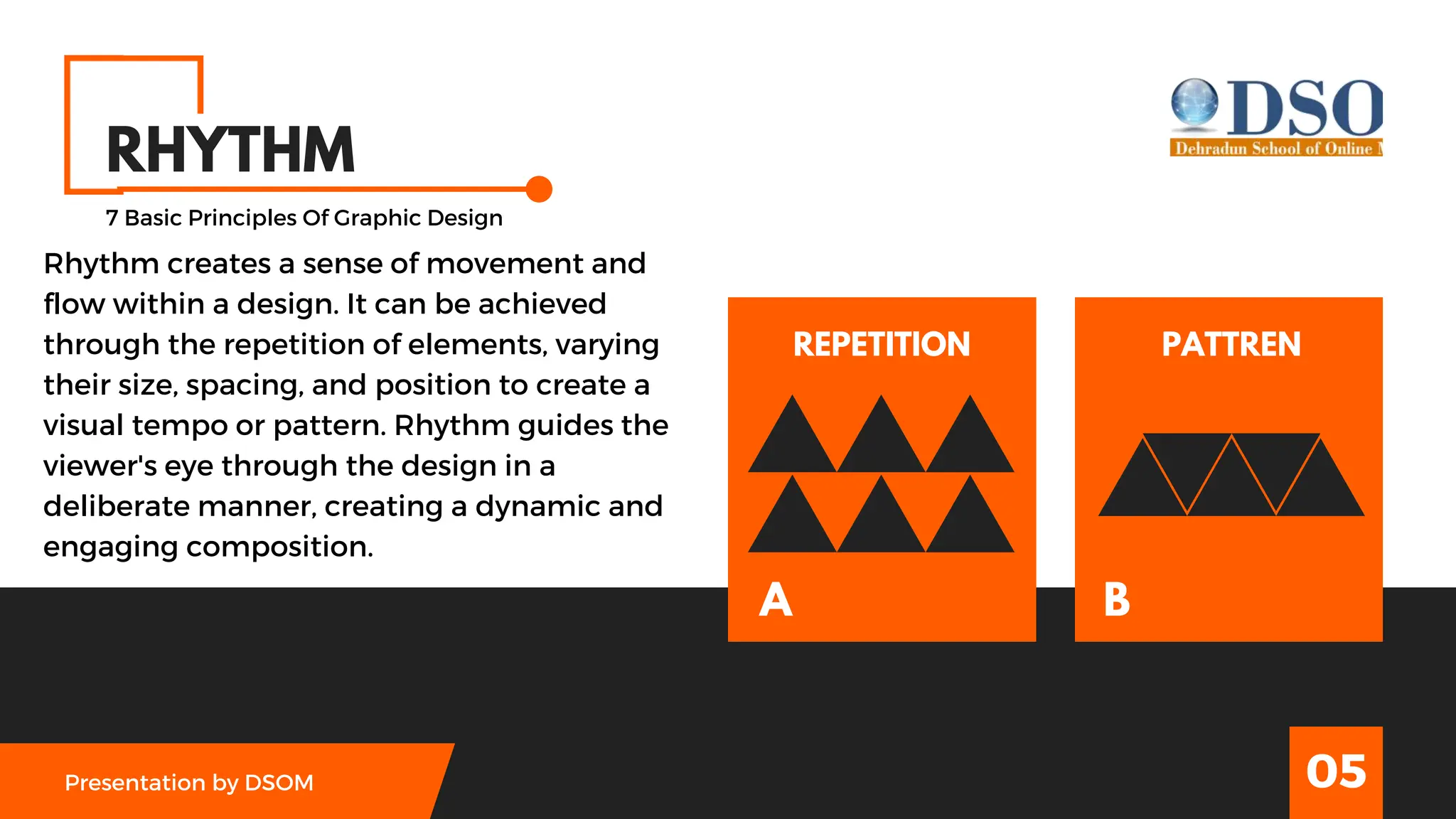
Rhythm creates a sense of movement and
flow within a design. It can be achieved
through the repetition of elements, varying
their size, spacing, and position to create a
visual tempo or pattern. Rhythm guides the
viewer's eye through the design in a
deliberate manner, creating a dynamic and
engaging composition.
REPETITION PATTREN
B
Presentation by DSOM
7 Basic Principles Of Graphic Design
UNITY
A
06
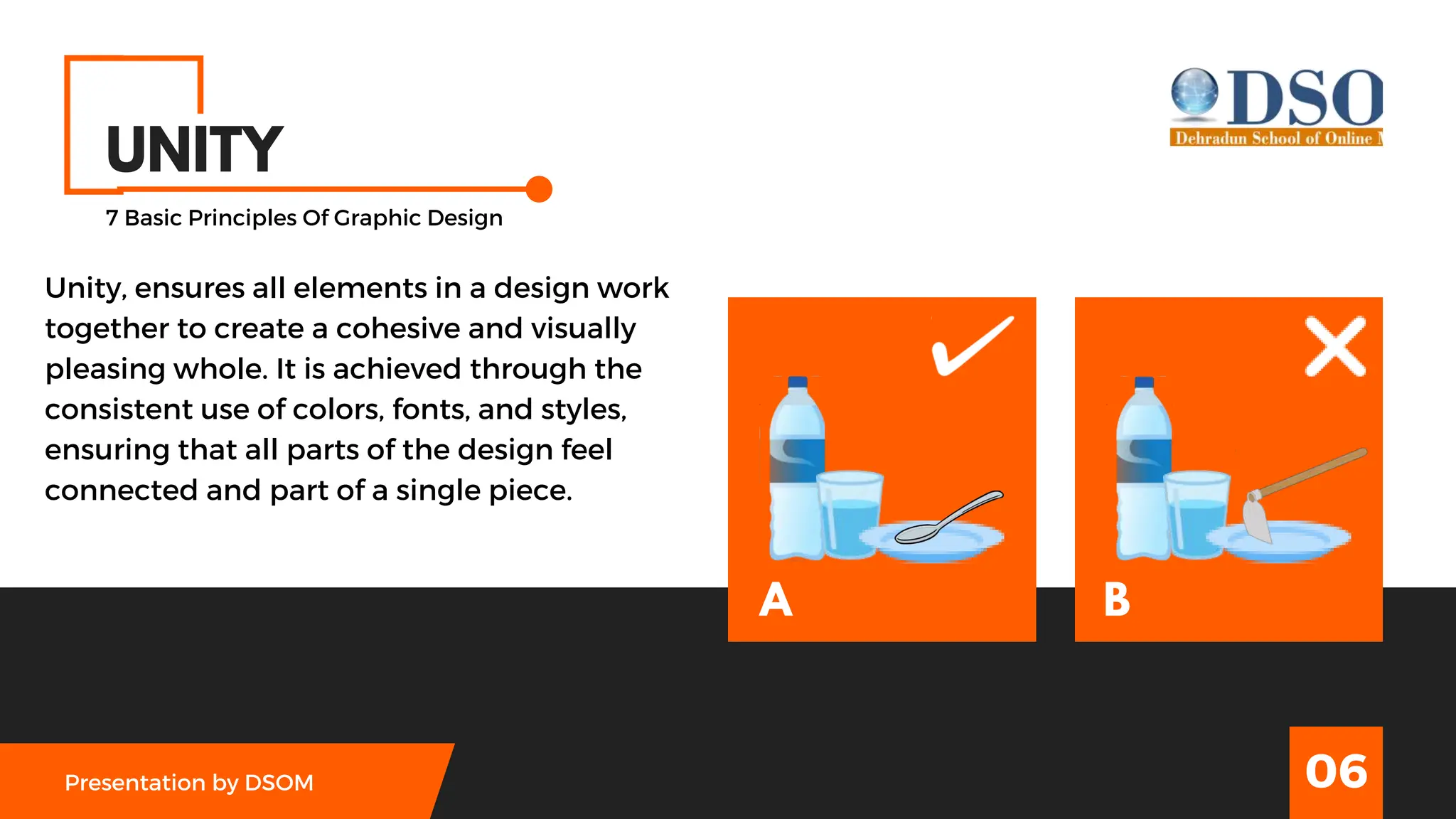
Unity, ensures all elements in a design work
together to create a cohesive and visually
pleasing whole. It is achieved through the
consistent use of colors, fonts, and styles,
ensuring that all parts of the design feel
connected and part of a single piece.
Presentation by DSOM
7 Basic Principles Of Graphic Design
HARMONY
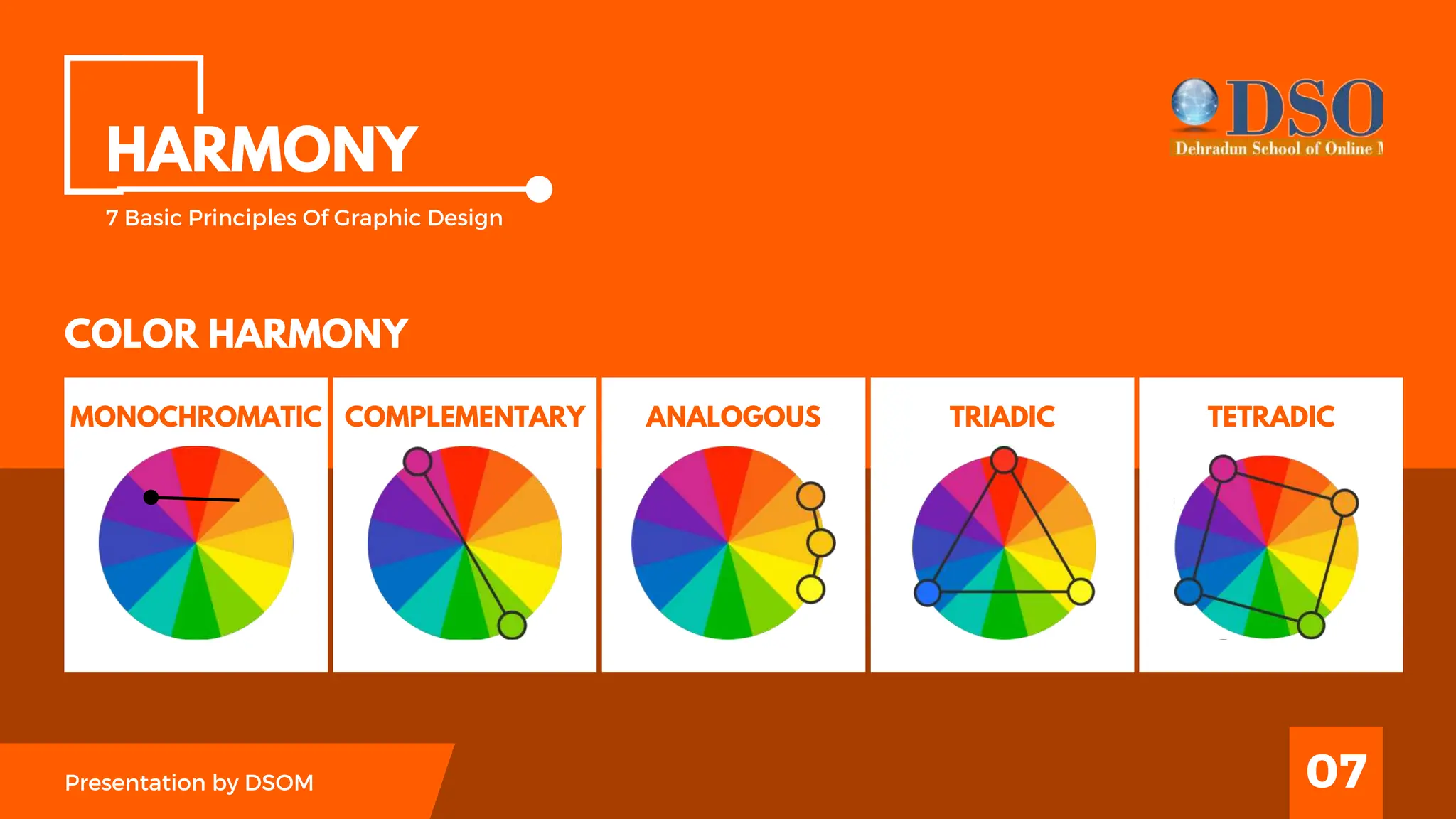
COLOR HARMONY
07
MONOCHROMATIC COMPLEMENTARY ANALOGOUS TRIADIC TETRADIC
Presentation by DSOM
7 Basic Principles Of Graphic Design
EMPHASIS
A B
08
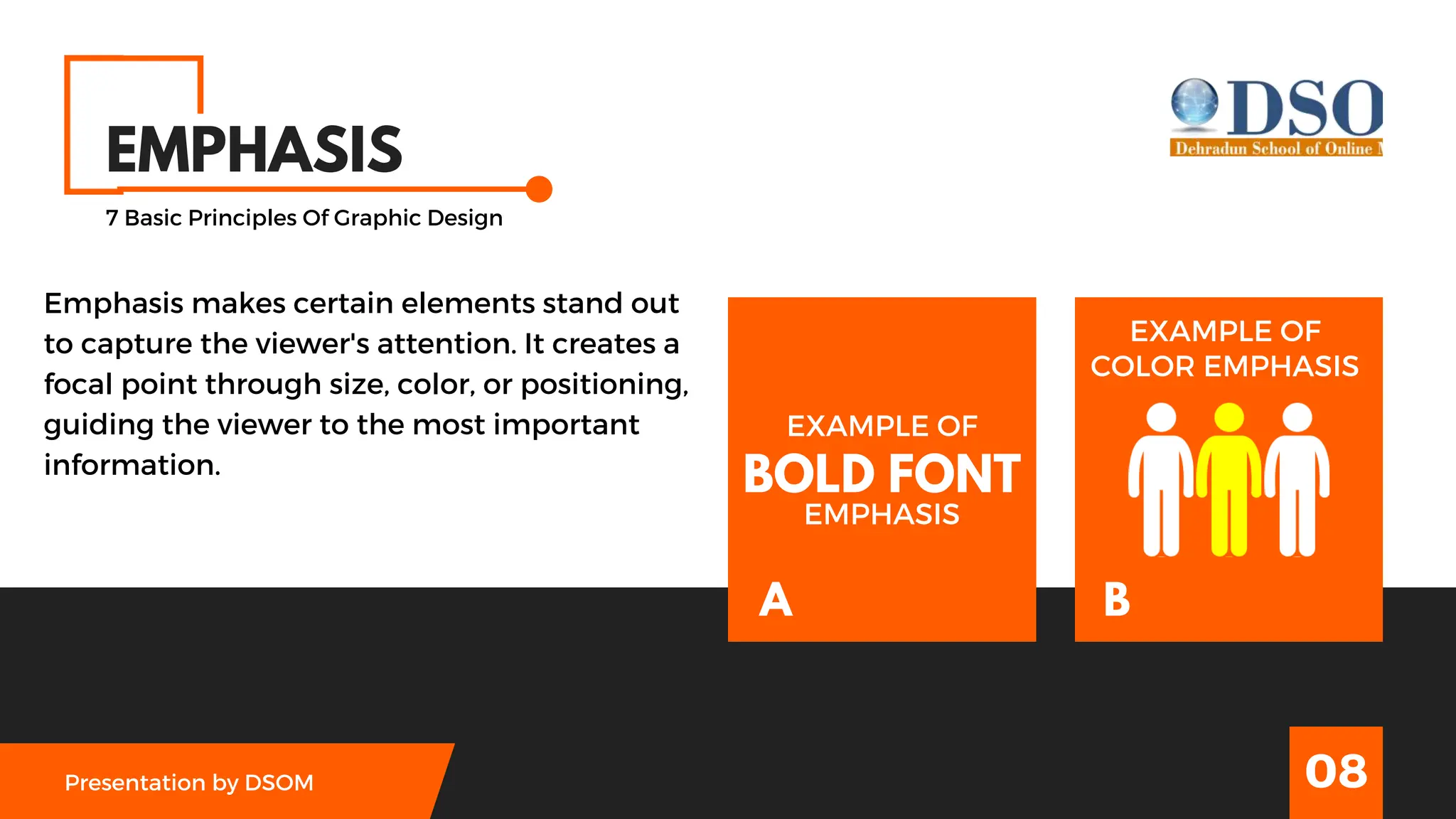
Emphasis makes certain elements stand out
to capture the viewer's attention. It creates a
focal point through size, color, or positioning,
guiding the viewer to the most important
information.
EXAMPLE OF
EXAMPLE OF
COLOR EMPHASIS
EMPHASIS
BOLD FONT
7PRINCIPLES
BASIC
OF GRAPHIC
DESIGN
9410102425
www.dsom.in
contact@dsom.in
Presentation by DSOM
THANK YOU
7 BASIC PRINCIPLES OF GRAPHIC DESIGN

7 Basic Principles Of Graphic Design - DSOM

  • 1.
    PRINCIPLES BASIC OF GRAPHIC DESIGN Presentation byDSOM Graphic design is a vast field that encompasses various principles to create visually appealing and effective designs. Here are the seven basic principles of graphic design:
  • 2.
    Presentation by DSOM TABLEOF PROPORTION UNITY BALANCE HARMONY CONTRAST EMPHASIS RHYTHM CONTENTS 01
  • 3.
    Presentation by DSOM 7Basic Principles Of Graphic Design PROPORTION A B 02 Proportion refers to the relative size and scale of the various elements in a design. It ensures that elements are appropriately sized in relation to each other, creating harmony and a sense of realism.
  • 4.
    Presentation by DSOM 7Basic Principles Of Graphic Design BALANCE A B 03 Balance refers to the distribution of visual elements in a design. It can be symmetrical, where elements are evenly distributed around a central axis, or asymmetrical, where the balance is achieved through contrast and variety. Proper balance provides stability and structure to the design. SYMMETRICAL ASYMMETRICAL
  • 5.
    Presentation by DSOM 7Basic Principles Of Graphic Design CONTRAST A B 04 Contrast is the use of opposing elements, such as colors, shapes, or textures, to create visual interest and emphasis. It helps to highlight important parts of the design and make them stand out. COLOR CONTRAST SIZE CONTRAST
  • 6.
    Presentation by DSOM 7Basic Principles Of Graphic Design RHYTHM A B 05 Rhythm creates a sense of movement and flow within a design. It can be achieved through the repetition of elements, varying their size, spacing, and position to create a visual tempo or pattern. Rhythm guides the viewer's eye through the design in a deliberate manner, creating a dynamic and engaging composition. REPETITION PATTREN
  • 7.
    B Presentation by DSOM 7Basic Principles Of Graphic Design UNITY A 06 Unity, ensures all elements in a design work together to create a cohesive and visually pleasing whole. It is achieved through the consistent use of colors, fonts, and styles, ensuring that all parts of the design feel connected and part of a single piece.
  • 8.
    Presentation by DSOM 7Basic Principles Of Graphic Design HARMONY COLOR HARMONY 07 MONOCHROMATIC COMPLEMENTARY ANALOGOUS TRIADIC TETRADIC
  • 9.
    Presentation by DSOM 7Basic Principles Of Graphic Design EMPHASIS A B 08 Emphasis makes certain elements stand out to capture the viewer's attention. It creates a focal point through size, color, or positioning, guiding the viewer to the most important information. EXAMPLE OF EXAMPLE OF COLOR EMPHASIS EMPHASIS BOLD FONT
  • 10.