APPLY SHAMPOO AND
CONDITIONER
Massage Techniques for Shampooing
The following massage
techniques should be carried
out using the pads of the fingers
or the palms of the hands.
Never use your nails as these
could scratch the client’s scalp
and cause and infection.
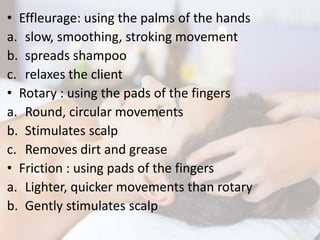
• Effleurage: using the palms of the hands
a. slow, smoothing, stroking movement
b. spreads shampoo
c. relaxes the client
• Rotary : using the pads of the fingers
a. Round, circular movements
b. Stimulates scalp
c. Removes dirt and grease
• Friction : using pads of the fingers
a. Lighter, quicker movements than rotary
b. Gently stimulates scalp
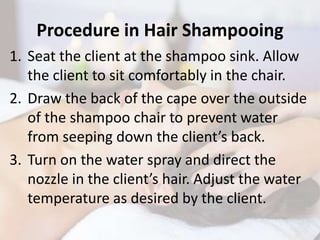
Procedure in Hair Shampooing
1. Seat the client at the shampoo sink. Allow
the client to sit comfortably in the chair.
2. Draw the back of the cape over the outside
of the shampoo chair to prevent water
from seeping down the client’s back.
3. Turn on the water spray and direct the
nozzle in the client’s hair. Adjust the water
temperature as desired by the client.
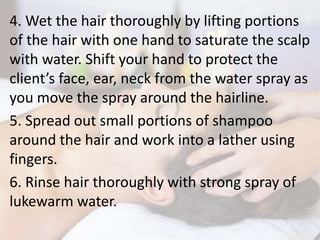
4. Wet the hair thoroughly by lifting portions
of the hair with one hand to saturate the scalp
with water. Shift your hand to protect the
client’s face, ear, neck from the water spray as
you move the spray around the hairline.
5. Spread out small portions of shampoo
around the hair and work into a lather using
fingers.
6. Rinse hair thoroughly with strong spray of
lukewarm water.
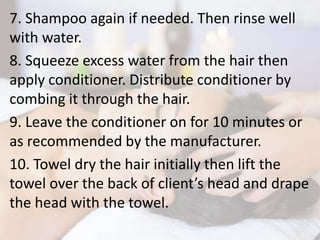
7. Shampoo again if needed. Then rinse well
with water.
8. Squeeze excess water from the hair then
apply conditioner. Distribute conditioner by
combing it through the hair.
9. Leave the conditioner on for 10 minutes or
as recommended by the manufacturer.
10. Towel dry the hair initially then lift the
towel over the back of client’s head and drape
the head with the towel.
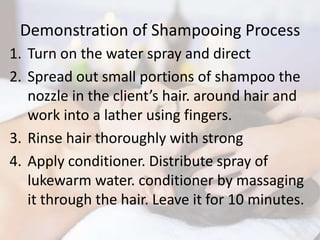
Demonstration of Shampooing Process
1. Turn on the water spray and direct
2. Spread out small portions of shampoo the
nozzle in the client’s hair. around hair and
work into a lather using fingers.
3. Rinse hair thoroughly with strong
4. Apply conditioner. Distribute spray of
lukewarm water. conditioner by massaging
it through the hair. Leave it for 10 minutes.
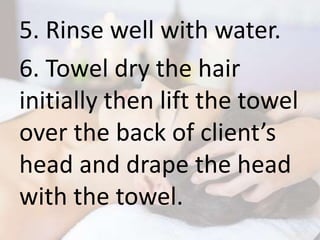
5. Rinse well with water.
6. Towel dry the hair
initially then lift the towel
over the back of client’s
head and drape the head
with the towel.
Sanitation Procedure After
Shampooing
1. Discard used materials. Place unused supplies in
their proper places.
2. Dispose soiled towels in hamper.
3. Remove hair from combs and brushes, disinfect
them for the required time.
4. Clean the shampoo bowl and remove any loose
hair.
5. Sanitize shampoo bowl after each client.
6. Disinfect your own hands with soap and warm
water.
Blow-dry Hair
Blow-drying is a method of drying
wet or damp hair while forming it
into a particular style or dressing:
thus, making the hair straighter or
curlier, fuller or flatter, or wavier or
flatter. The tools for blow-drying
include the combs, hair dyer or
blower and hair brushes.
3 Types of Blow-drying the hair
1. Blow waving Involves shaping hair
waves using directed heat from a hand
dryer using combs and a variety of open
vented, flat, and round (radial) brushes.
2. Scrunch Drying A technique which uses
the hands as the tools for manipulating
the roots and ends of the hair to
increase lift, body and overall
movement.
3. Natural drying Leaving hair to
dry by itself, achieved by using
soft styler or diffusers as an
attachment to hand dryer so
that the drying process is
speeded up and the overall
affects is assisted by some
manual manipulation.
Kinds of Blow-drying Brushes
1. Flat or paddle brushes – They are used to dry
and polish for sleek styles, but can also add
bounce. These are good for smooth finishes,
especially for Bob haircuts.
2. Vent brushes- The vented holes allow the air
flow from the hair dryer to pass through,
speeding up the drying process by heating
the hair, while the short filaments break up
the hair so that it lies as if fingers have been
drawn through it creating casual styles.
3. Rounded Brushes These are
used to produce a curl or wave
movement by slowly rotating the
hair around the brush while blow-
drying the hair. The smaller the
brush, the tighter the curl. They
are also good for adding bounce
and curl to the points of one-
length styles.
Procedure of Blow-drying the Hair
1. Select styling or finishing products and apply on
the client’s hair.
2. Section the hair into four and bring down a sub-
section in the nape where you are going to begin
blow-drying. Blow-dry the hair under to create
root lift.
3. After choosing the correct brush size begin to
blow dry the hair upwards. Make sure that the
airflow of the hairdryer is flowing over the hair in
the correct direction.
4. Work your way up toward the crown. Make sure
each section is completely dry and falls in the
desired direction.
5. Take a section of hair at, the sides and continue to
blow-dry the hair so that it blends in with the back
of the hair. Work your way toward the parting and
repeat the same on the opposite side.
6. Move to the top and front sections of the half,
constantly moving the hair dryer so that you will not
cause discomfort to the client.
7. The finished result should be completed with the
correct finishing products and the total look
confirmed with the client.
Enumeration
•Enumerate the 3 types of
Blow-drying hair.
•What are the different hair
brushes used in blow-
drying hair?
Look for a model.
Demonstrate shampooing,
and conditioning hair and
blow drying. Provide
implements and materials
and apply ergonomically
the procedure.
7. APPLY SHAMPOO AND CONDITIONER.pptx

7. APPLY SHAMPOO AND CONDITIONER.pptx

  • 1.
  • 2.
    Massage Techniques forShampooing The following massage techniques should be carried out using the pads of the fingers or the palms of the hands. Never use your nails as these could scratch the client’s scalp and cause and infection.
  • 3.
    • Effleurage: usingthe palms of the hands a. slow, smoothing, stroking movement b. spreads shampoo c. relaxes the client • Rotary : using the pads of the fingers a. Round, circular movements b. Stimulates scalp c. Removes dirt and grease • Friction : using pads of the fingers a. Lighter, quicker movements than rotary b. Gently stimulates scalp
  • 4.
    Procedure in HairShampooing 1. Seat the client at the shampoo sink. Allow the client to sit comfortably in the chair. 2. Draw the back of the cape over the outside of the shampoo chair to prevent water from seeping down the client’s back. 3. Turn on the water spray and direct the nozzle in the client’s hair. Adjust the water temperature as desired by the client.
  • 5.
    4. Wet thehair thoroughly by lifting portions of the hair with one hand to saturate the scalp with water. Shift your hand to protect the client’s face, ear, neck from the water spray as you move the spray around the hairline. 5. Spread out small portions of shampoo around the hair and work into a lather using fingers. 6. Rinse hair thoroughly with strong spray of lukewarm water.
  • 6.
    7. Shampoo againif needed. Then rinse well with water. 8. Squeeze excess water from the hair then apply conditioner. Distribute conditioner by combing it through the hair. 9. Leave the conditioner on for 10 minutes or as recommended by the manufacturer. 10. Towel dry the hair initially then lift the towel over the back of client’s head and drape the head with the towel.
  • 7.
    Demonstration of ShampooingProcess 1. Turn on the water spray and direct 2. Spread out small portions of shampoo the nozzle in the client’s hair. around hair and work into a lather using fingers. 3. Rinse hair thoroughly with strong 4. Apply conditioner. Distribute spray of lukewarm water. conditioner by massaging it through the hair. Leave it for 10 minutes.
  • 8.
    5. Rinse wellwith water. 6. Towel dry the hair initially then lift the towel over the back of client’s head and drape the head with the towel.
  • 9.
    Sanitation Procedure After Shampooing 1.Discard used materials. Place unused supplies in their proper places. 2. Dispose soiled towels in hamper. 3. Remove hair from combs and brushes, disinfect them for the required time. 4. Clean the shampoo bowl and remove any loose hair. 5. Sanitize shampoo bowl after each client. 6. Disinfect your own hands with soap and warm water.
  • 10.
    Blow-dry Hair Blow-drying isa method of drying wet or damp hair while forming it into a particular style or dressing: thus, making the hair straighter or curlier, fuller or flatter, or wavier or flatter. The tools for blow-drying include the combs, hair dyer or blower and hair brushes.
  • 11.
    3 Types ofBlow-drying the hair 1. Blow waving Involves shaping hair waves using directed heat from a hand dryer using combs and a variety of open vented, flat, and round (radial) brushes. 2. Scrunch Drying A technique which uses the hands as the tools for manipulating the roots and ends of the hair to increase lift, body and overall movement.
  • 12.
    3. Natural dryingLeaving hair to dry by itself, achieved by using soft styler or diffusers as an attachment to hand dryer so that the drying process is speeded up and the overall affects is assisted by some manual manipulation.
  • 13.
    Kinds of Blow-dryingBrushes 1. Flat or paddle brushes – They are used to dry and polish for sleek styles, but can also add bounce. These are good for smooth finishes, especially for Bob haircuts. 2. Vent brushes- The vented holes allow the air flow from the hair dryer to pass through, speeding up the drying process by heating the hair, while the short filaments break up the hair so that it lies as if fingers have been drawn through it creating casual styles.
  • 14.
    3. Rounded BrushesThese are used to produce a curl or wave movement by slowly rotating the hair around the brush while blow- drying the hair. The smaller the brush, the tighter the curl. They are also good for adding bounce and curl to the points of one- length styles.
  • 15.
    Procedure of Blow-dryingthe Hair 1. Select styling or finishing products and apply on the client’s hair. 2. Section the hair into four and bring down a sub- section in the nape where you are going to begin blow-drying. Blow-dry the hair under to create root lift. 3. After choosing the correct brush size begin to blow dry the hair upwards. Make sure that the airflow of the hairdryer is flowing over the hair in the correct direction.
  • 16.
    4. Work yourway up toward the crown. Make sure each section is completely dry and falls in the desired direction. 5. Take a section of hair at, the sides and continue to blow-dry the hair so that it blends in with the back of the hair. Work your way toward the parting and repeat the same on the opposite side. 6. Move to the top and front sections of the half, constantly moving the hair dryer so that you will not cause discomfort to the client. 7. The finished result should be completed with the correct finishing products and the total look confirmed with the client.
  • 17.
    Enumeration •Enumerate the 3types of Blow-drying hair. •What are the different hair brushes used in blow- drying hair?
  • 18.
    Look for amodel. Demonstrate shampooing, and conditioning hair and blow drying. Provide implements and materials and apply ergonomically the procedure.