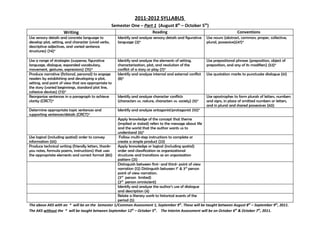
2011-2012 SYLLABUS
                                                     Semester One – Part 1 (August 8th – October 5th)
                     Writing                                                  Reading                                             Conventions
Use sensory details and concrete language to            Identify and analyze sensory details and figurative    Use nouns (abstract, common, proper, collective,
develop plot, setting, and character (vivid verbs,      language (3)*                                          plural, possessive)(47)*
descriptive adjectives, and varied sentence
structures) (74)*

Use a range of strategies (suspense, figurative         Identify and analyze the elements of setting,          Use prepositional phrases (preposition, object of
language, dialogue, expanded vocabulary,                characterization, plot, and resolution of the          preposition, and any of its modifiers) (53)*
movement, gestures, expressions) (75)*                  conflict of a story or play (7)*
Produce narrative (fictional, personal) to engage       Identify and analyze internal and external conflict    Use quotation marks to punctuate dialogue (61)
readers by establishing and developing a plot,          (8)*
setting, and point of view that are appropriate to
the story (varied beginnings, standard plot line,
cohesive devices) (73)*
Reorganize sentences in a paragraph to achieve          Identify and analyze character conflicts               Use apostrophes to form plurals of letters, numbers
clarity (CRCT)*                                         (characters vs. nature, characters vs. society) (9)*   and signs, in place of omitted numbers or letters,
                                                                                                               and in plural and shared possessives (60)
Determine appropriate topic sentences and               Identify and analyze antagonist/protagonist (10)*
supporting sentences/details (CRCT)*
                                                    Apply knowledge of the concept that theme
                                                    (implied or stated) refers to the message about life
                                                    and the world that the author wants us to
                                                    understand (6)*
Use logical (including spatial) order to convey      Follow multi-step instructions to complete or
information (65)                                    create a simple product (23)
Produce technical writing (friendly letters, thank- Apply knowledge or logical (including spatial)
you notes, formula poems, instructions) that uses   order and classification as organizational
the appropriate elements and correct format (80) structures and transitions as an organization
                                                    pattern (21)
                                                    Distinguish between first- and third- point of view
                                                    narration (12) Distinguish between 1st & 3rd person
                                                    point of view narration.
                                                    (3rd person limited)
                                                    (3rd person omniscient)
                                                    Identify and analyze the author’s use of dialogue
                                                    and description (4)
                                                    Relate a literary work to historical events of the
                                                    period (5)
The above AKS with an * will be on the Semester 1/Common Assessment 1, September 9th. These will be taught between August 8th – September 9th, 2011.
The AKS without the * will be taught between September 12th – October 5th. The Interim Assessment will be on October 6th & October 7th, 2011.

6th Grade LA Curr. Calendar

  • 1.
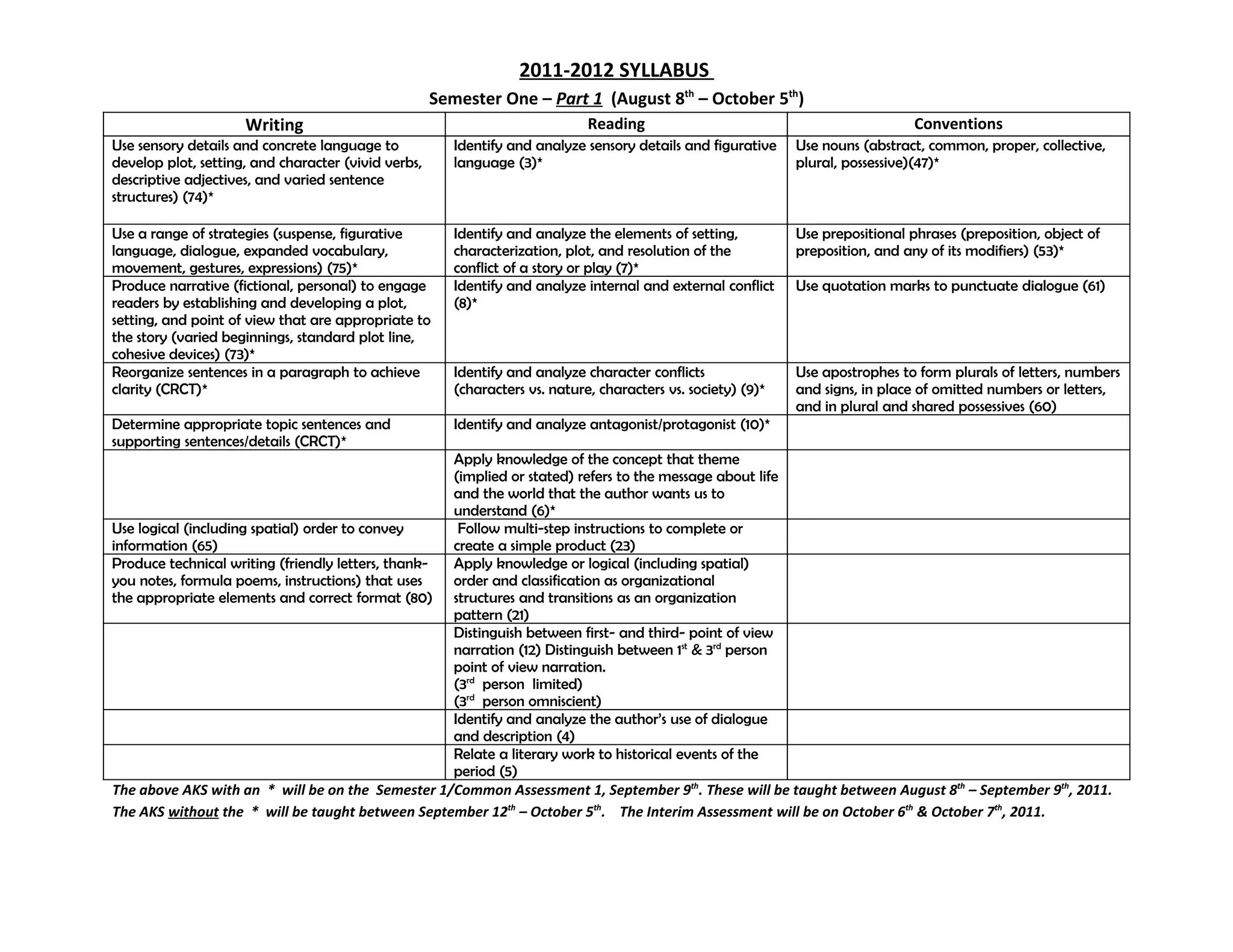
    2011-2012 SYLLABUS Semester One – Part 1 (August 8th – October 5th) Writing Reading Conventions Use sensory details and concrete language to Identify and analyze sensory details and figurative Use nouns (abstract, common, proper, collective, develop plot, setting, and character (vivid verbs, language (3)* plural, possessive)(47)* descriptive adjectives, and varied sentence structures) (74)* Use a range of strategies (suspense, figurative Identify and analyze the elements of setting, Use prepositional phrases (preposition, object of language, dialogue, expanded vocabulary, characterization, plot, and resolution of the preposition, and any of its modifiers) (53)* movement, gestures, expressions) (75)* conflict of a story or play (7)* Produce narrative (fictional, personal) to engage Identify and analyze internal and external conflict Use quotation marks to punctuate dialogue (61) readers by establishing and developing a plot, (8)* setting, and point of view that are appropriate to the story (varied beginnings, standard plot line, cohesive devices) (73)* Reorganize sentences in a paragraph to achieve Identify and analyze character conflicts Use apostrophes to form plurals of letters, numbers clarity (CRCT)* (characters vs. nature, characters vs. society) (9)* and signs, in place of omitted numbers or letters, and in plural and shared possessives (60) Determine appropriate topic sentences and Identify and analyze antagonist/protagonist (10)* supporting sentences/details (CRCT)* Apply knowledge of the concept that theme (implied or stated) refers to the message about life and the world that the author wants us to understand (6)* Use logical (including spatial) order to convey Follow multi-step instructions to complete or information (65) create a simple product (23) Produce technical writing (friendly letters, thank- Apply knowledge or logical (including spatial) you notes, formula poems, instructions) that uses order and classification as organizational the appropriate elements and correct format (80) structures and transitions as an organization pattern (21) Distinguish between first- and third- point of view narration (12) Distinguish between 1st & 3rd person point of view narration. (3rd person limited) (3rd person omniscient) Identify and analyze the author’s use of dialogue and description (4) Relate a literary work to historical events of the period (5) The above AKS with an * will be on the Semester 1/Common Assessment 1, September 9th. These will be taught between August 8th – September 9th, 2011. The AKS without the * will be taught between September 12th – October 5th. The Interim Assessment will be on October 6th & October 7th, 2011.