What is poetry? rhythm, style, mood, sound devices, haiku, limericks, rhyming, thoughts, emotions, similes, metaphors, personification, tone, shapes, colors, beat, pattern, movement, imagery, alliteration, hyperbole, punctuation, onomatopoeia, laughter, tears, an expression of art through words
Although poems can take many forms, they do have some elements in common. Figurative Language Sound Devices Mood Rhythm Style
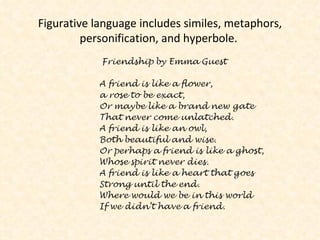
Figurative language includes similes, metaphors, personification, and hyperbole.
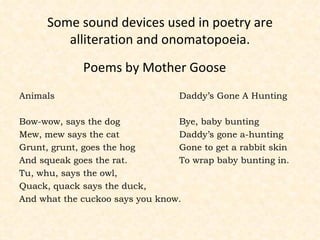
Some sound devices used in poetry are alliteration and onomatopoeia. Poems by Mother Goose Animals  Daddy’s Gone A Hunting Bow-wow, says the dog Bye, baby bunting Mew, mew says the cat Daddy’s gone a-hunting Grunt, grunt, goes the hog Gone to get a rabbit skin And squeak goes the rat. To wrap baby bunting in. Tu, whu, says the owl, Quack, quack says the duck, And what the cuckoo says you know.
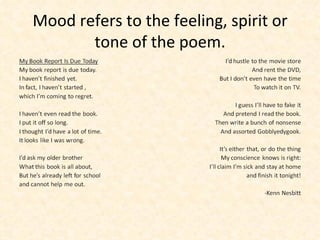
Mood refers to the feeling, spirit or tone of the poem.
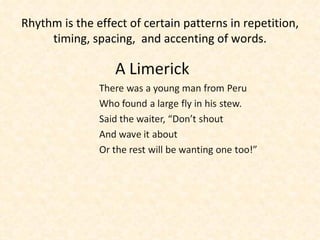
Rhythm is the effect of certain patterns in repetition, timing, spacing,  and accenting of words.
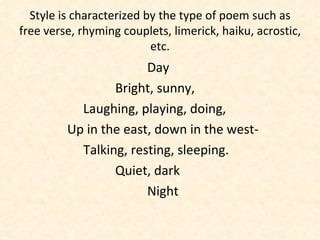
Style is characterized by the type of poem such as free verse, rhyming couplets, limerick, haiku, acrostic, etc. Day Bright, sunny, Laughing, playing, doing,   Up in the east, down in the west- Talking, resting, sleeping. Quiet, dark Night
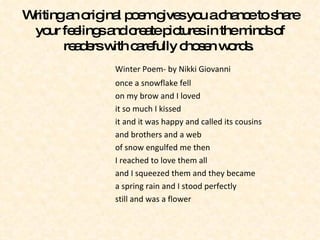
Writing an original poem gives you a chance to share your feelings and create pictures in the minds of readers with carefully chosen words.  Winter Poem- by Nikki Giovanni once a snowflake fell on my brow and I loved it so much I kissed it and it was happy and called its cousins and brothers and a web of snow engulfed me then I reached to love them all and I squeezed them and they became a spring rain and I stood perfectly still and was a flower
 
What is poetry?

What Is Poetry

  • 1.
    What is poetry?rhythm, style, mood, sound devices, haiku, limericks, rhyming, thoughts, emotions, similes, metaphors, personification, tone, shapes, colors, beat, pattern, movement, imagery, alliteration, hyperbole, punctuation, onomatopoeia, laughter, tears, an expression of art through words
  • 2.
    Although poems cantake many forms, they do have some elements in common. Figurative Language Sound Devices Mood Rhythm Style
  • 3.
    Figurative language includessimiles, metaphors, personification, and hyperbole.
  • 4.
    Some sound devicesused in poetry are alliteration and onomatopoeia. Poems by Mother Goose Animals Daddy’s Gone A Hunting Bow-wow, says the dog Bye, baby bunting Mew, mew says the cat Daddy’s gone a-hunting Grunt, grunt, goes the hog Gone to get a rabbit skin And squeak goes the rat. To wrap baby bunting in. Tu, whu, says the owl, Quack, quack says the duck, And what the cuckoo says you know.
  • 5.
    Mood refers tothe feeling, spirit or tone of the poem.
  • 6.
    Rhythm is theeffect of certain patterns in repetition, timing, spacing, and accenting of words.
  • 7.
    Style is characterizedby the type of poem such as free verse, rhyming couplets, limerick, haiku, acrostic, etc. Day Bright, sunny, Laughing, playing, doing, Up in the east, down in the west- Talking, resting, sleeping. Quiet, dark Night
  • 8.
    Writing an originalpoem gives you a chance to share your feelings and create pictures in the minds of readers with carefully chosen words. Winter Poem- by Nikki Giovanni once a snowflake fell on my brow and I loved it so much I kissed it and it was happy and called its cousins and brothers and a web of snow engulfed me then I reached to love them all and I squeezed them and they became a spring rain and I stood perfectly still and was a flower
  • 9.
  • 10.