9­17­12.notebook                                                 September 17, 2012


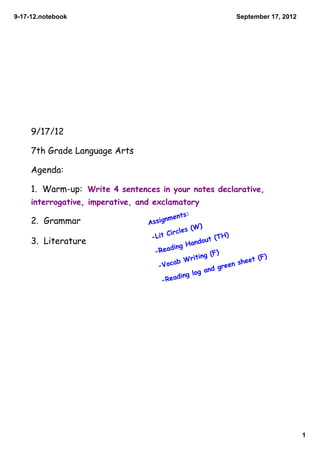
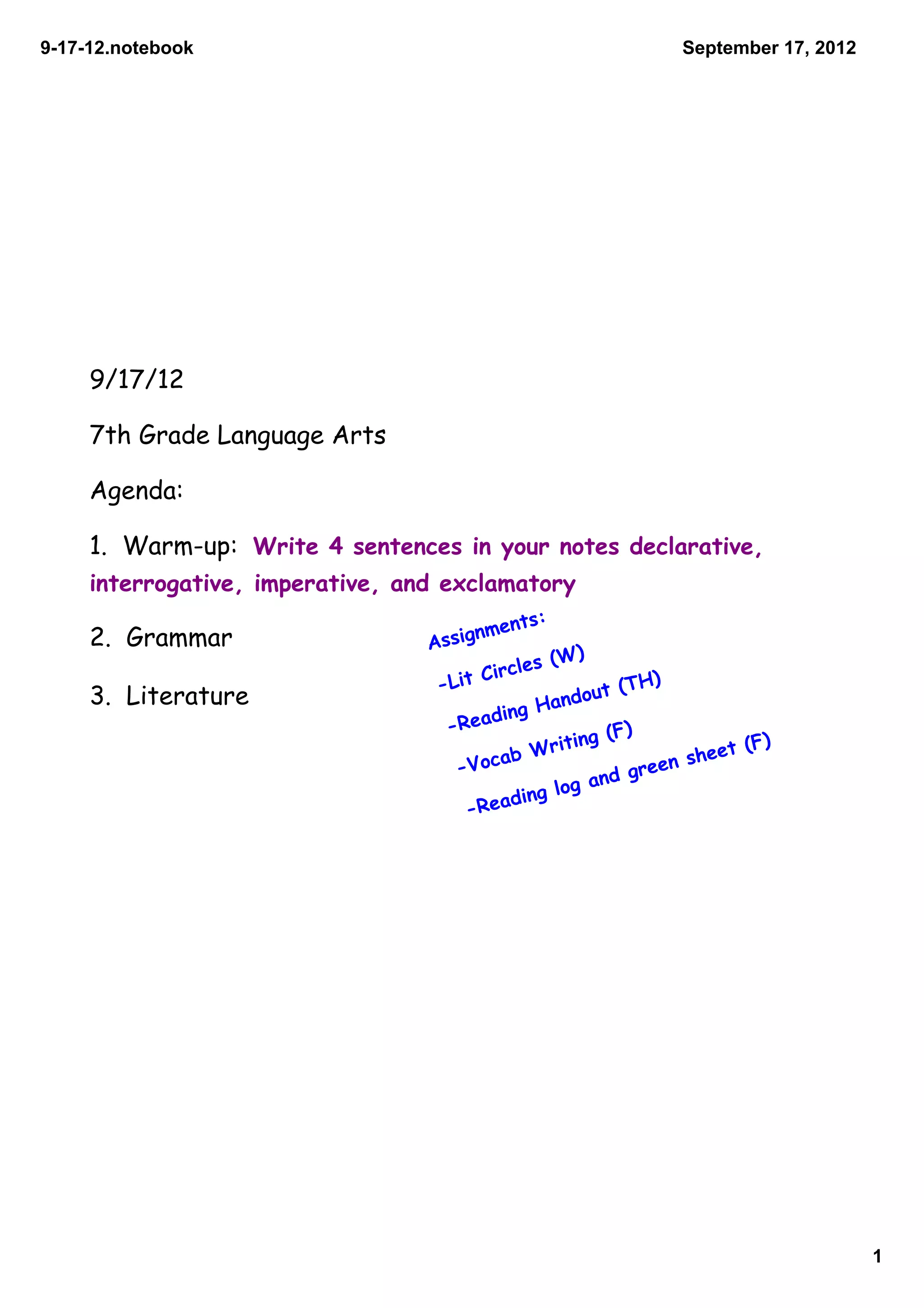
     9/17/12

     7th Grade Language Arts

     Agenda:

     1. Warm-up: Write 4 sentences in your notes declarative,
     interrogative, imperative, and exclamatory

                                        nments:
     2. Grammar                   Assig              )
                                               s (W
                                        Circle
                                   -Lit                  (TH)
     3. Literature                             Ha  ndout
                                         ding
                                    -Rea                   )
                                                    ing (F                  )
                                              Writ                    et (F
                                     -V ocab                 ee n she
                                                       nd gr
                                                  log a
                                           ding
                                      -Rea


                                                                                      1
9­17­12.notebook   September 17, 2012


                                        2
9­17­12.notebook                                                      September 17, 2012


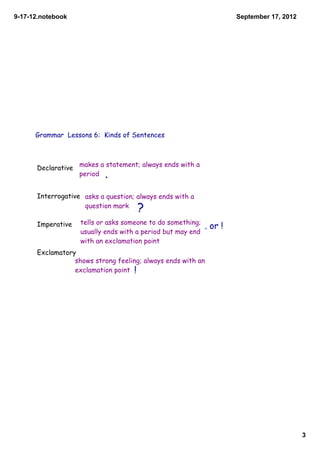
      Grammar Lessons 6: Kinds of Sentences


                    makes a statement; always ends with a
      Declarative
                    period .
      Interrogative asks a question; always ends with a
                    question mark
                                      ?
      Imperative    tells or asks someone to do something;
                                                             . or !
                    usually ends with a period but may end
                    with an exclamation point
      Exclamatory
                 shows strong feeling; always ends with an
                 exclamation point !


                                                                                           3
9­17­12.notebook                                                September 17, 2012


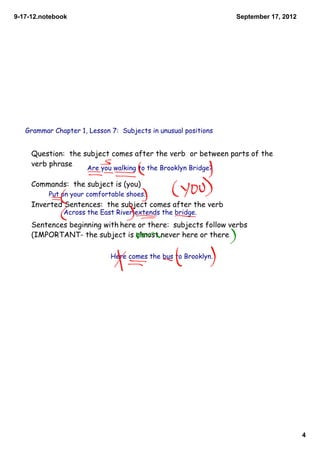
   Grammar Chapter 1, Lesson 7: Subjects in unusual positions


     Question: the subject comes after the verb or between parts of the
     verb phrase
                      Are you walking to the Brooklyn Bridge?

     Commands: the subject is (you)
          Put on your comfortable shoes.
     Inverted Sentences: the subject comes after the verb
              Across the East River extends the bridge.
     Sentences beginning with here or there: subjects follow verbs
     (IMPORTANT- the subject is almost never here or there

                             Here comes the bus to Brooklyn.


                                                                                     4
9­17­12.notebook                                                      September 17, 2012


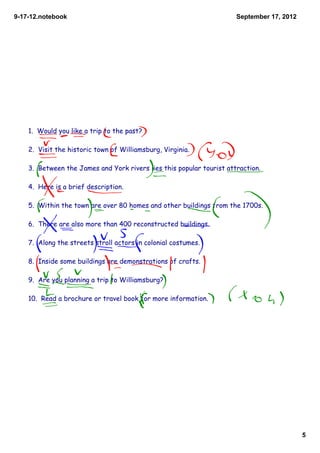
    1. Would you like a trip to the past?

    2. Visit the historic town of Williamsburg, Virginia.

    3. Between the James and York rivers lies this popular tourist attraction.

    4. Here is a brief description.

    5. Within the town are over 80 homes and other buildings from the 1700s.

    6. There are also more than 400 reconstructed buildings.

    7. Along the streets stroll actors in colonial costumes.

    8. Inside some buildings are demonstrations of crafts.

    9. Are you planning a trip to Williamsburg?

    10. Read a brochure or travel book for more information.


                                                                                           5
9­17­12.notebook                           September 17, 2012


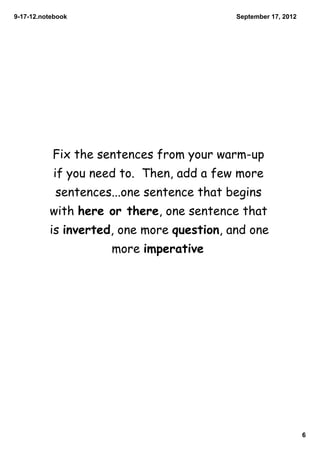
           Fix the sentences from your warm-up
           if you need to. Then, add a few more
            sentences...one sentence that begins
          with here or there, one sentence that
          is inverted, one more question, and one
                     more imperative


                                                                6
9­17­12.notebook                                       September 17, 2012


                   Reading Know-how
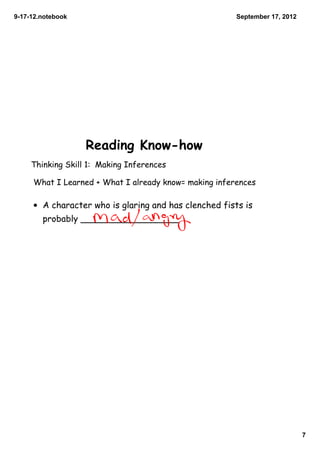
     Thinking Skill 1: Making Inferences

     What I Learned + What I already know= making inferences

     • A character who is glaring and has clenched fists is
        probably __________________


                                                                            7
9­17­12.notebook                                      September 17, 2012


                      Reading Know-how
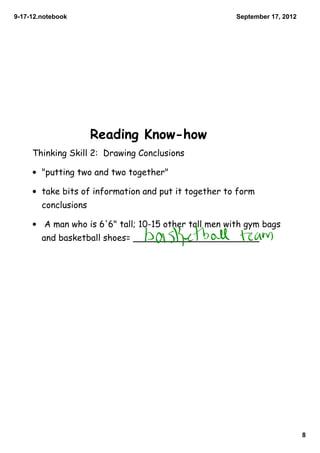
     Thinking Skill 2: Drawing Conclusions

     • "putting two and two together"

     • take bits of information and put it together to form
        conclusions

     • A man who is 6'6" tall; 10-15 other tall men with gym bags
        and basketball shoes= _______________________


                                                                           8
9­17­12.notebook                                           September 17, 2012


                     Reading Know-how
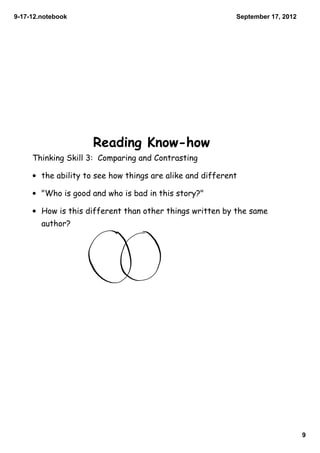
     Thinking Skill 3: Comparing and Contrasting

     • the ability to see how things are alike and different

     • "Who is good and who is bad in this story?"

     • How is this different than other things written by the same
        author?


                                                                                9
9­17­12.notebook                                       September 17, 2012


                    Reading Know-how
     Thinking Skill 4: Evaluating

     • apply what you know to make judgments about what you read

     • authors give the character traits and behaviors to create
       certain feelings and impressions

     • pay attention to these signals from an author


                                                                            10
9­17­12.notebook                                   September 17, 2012


          So, how do I do put all of these thinking skills
                               together?
      • stay focused while reading/concentrate

         > Keep your eyes on the ball

         > Active participation in sports

      • read actively

         > take notes

         > mark or highlight (use sticky notes)

         > ask questions

         > react and connect

         > predict

         > visualize

         > clarify
    • Find a place to read

    • Find time for reading


                                                                        11

7th grade 9 17-12

  • 1.
    9­17­12.notebook September 17, 2012 9/17/12 7th Grade Language Arts Agenda: 1. Warm-up: Write 4 sentences in your notes declarative, interrogative, imperative, and exclamatory nments: 2. Grammar Assig ) s (W Circle -Lit (TH) 3. Literature Ha ndout ding -Rea ) ing (F ) Writ et (F -V ocab ee n she nd gr log a ding -Rea 1
  • 2.
    9­17­12.notebook September 17, 2012 2
  • 3.
    9­17­12.notebook September 17, 2012 Grammar Lessons 6: Kinds of Sentences makes a statement; always ends with a Declarative period . Interrogative asks a question; always ends with a question mark ? Imperative tells or asks someone to do something; . or ! usually ends with a period but may end with an exclamation point Exclamatory shows strong feeling; always ends with an exclamation point ! 3
  • 4.
    9­17­12.notebook September 17, 2012 Grammar Chapter 1, Lesson 7: Subjects in unusual positions Question: the subject comes after the verb or between parts of the verb phrase Are you walking to the Brooklyn Bridge? Commands: the subject is (you) Put on your comfortable shoes. Inverted Sentences: the subject comes after the verb Across the East River extends the bridge. Sentences beginning with here or there: subjects follow verbs (IMPORTANT- the subject is almost never here or there Here comes the bus to Brooklyn. 4
  • 5.
    9­17­12.notebook September 17, 2012 1. Would you like a trip to the past? 2. Visit the historic town of Williamsburg, Virginia. 3. Between the James and York rivers lies this popular tourist attraction. 4. Here is a brief description. 5. Within the town are over 80 homes and other buildings from the 1700s. 6. There are also more than 400 reconstructed buildings. 7. Along the streets stroll actors in colonial costumes. 8. Inside some buildings are demonstrations of crafts. 9. Are you planning a trip to Williamsburg? 10. Read a brochure or travel book for more information. 5
  • 6.
    9­17­12.notebook September 17, 2012 Fix the sentences from your warm-up if you need to. Then, add a few more sentences...one sentence that begins with here or there, one sentence that is inverted, one more question, and one more imperative 6
  • 7.
    9­17­12.notebook September 17, 2012 Reading Know-how Thinking Skill 1: Making Inferences What I Learned + What I already know= making inferences • A character who is glaring and has clenched fists is probably __________________ 7
  • 8.
    9­17­12.notebook September 17, 2012 Reading Know-how Thinking Skill 2: Drawing Conclusions • "putting two and two together" • take bits of information and put it together to form conclusions • A man who is 6'6" tall; 10-15 other tall men with gym bags and basketball shoes= _______________________ 8
  • 9.
    9­17­12.notebook September 17, 2012 Reading Know-how Thinking Skill 3: Comparing and Contrasting • the ability to see how things are alike and different • "Who is good and who is bad in this story?" • How is this different than other things written by the same author? 9
  • 10.
    9­17­12.notebook September 17, 2012 Reading Know-how Thinking Skill 4: Evaluating • apply what you know to make judgments about what you read • authors give the character traits and behaviors to create certain feelings and impressions • pay attention to these signals from an author 10
  • 11.
    9­17­12.notebook September 17, 2012 So, how do I do put all of these thinking skills together? • stay focused while reading/concentrate > Keep your eyes on the ball > Active participation in sports • read actively > take notes > mark or highlight (use sticky notes) > ask questions > react and connect > predict > visualize > clarify • Find a place to read • Find time for reading 11