Utilization of the Social Vulnerability
Index for Family Health Teams’
analysis Brazil
Fabiana Brito Silva MPH
ACKNOWLEDGEMENTS
UNIVERSIDADE FEDERAL DO TRIÂNGULO MINEIRO (UFTM), BRAZIL
Dr. Sybelle Souza Castro Miranzi
ENGENHARIA DO CUIDADO, GEOTECH LTDA, BRAZIL.
Dr. Paulo Fleury
Dr. Rubens Pereira
VIRGINIA TECH COLLEGE OF AGRICULTURE AND LIFE SCIENCES, DEPARTMENT OF HUMAN NUTRITION, FOODS
AND EXERCISE (HNFE)
FRALIN CENTER FOR TRANSLATIONAL OBESITY RESEARCH
INTERDISCIPLINARY GRADUATE EDUCATION PROGRAM
Dr. Paul Estabrooks
Dr. Fabio Almeida
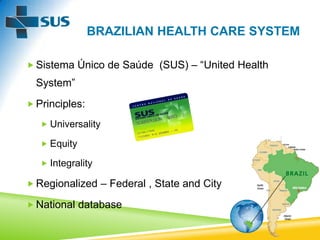
BRAZILIAN HEALTH CARE SYSTEM
 Sistema Único de Saúde (SUS) – “United Health
System”
 Principles:
 Universality
 Equity
 Integrality
 Regionalized – Federal , State and City
 National database
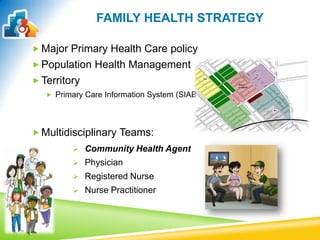
FAMILY HEALTH STRATEGY
 Community Health Agent
 Physician
 Registered Nurse
 Nurse Practitioner
 Major Primary Health Care policy
 Population Health Management
 Territory
 Primary Care Information System (SIAB)
 Multidisciplinary Teams:
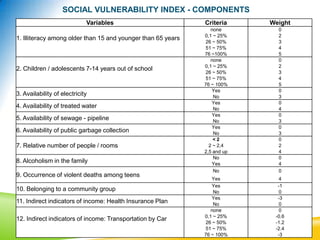
Variables Criteria Weight
1. Illiteracy among older than 15 and younger than 65 years
none 0
0,1 ~ 25% 2
26 ~ 50% 3
51 ~ 75% 4
76 ~100% 5
2. Children / adolescents 7-14 years out of school
none 0
0,1 ~ 25% 2
26 ~ 50% 3
51 ~ 75% 4
76 ~ 100% 5
3. Availability of electricity
Yes 0
No 3
4. Availability of treated water
Yes 0
No 4
5. Availability of sewage - pipeline
Yes 0
No 3
6. Availability of public garbage collection
Yes 0
No 3
7. Relative number of people / rooms
< 2 0
2 ~ 2,4 2
2,5 and up 4
8. Alcoholism in the family
No 0
Yes 4
9. Occurrence of violent deaths among teens
No 0
Yes 4
10. Belonging to a community group
Yes -1
No 0
11. Indirect indicators of income: Health Insurance Plan
Yes -3
No 0
12. Indirect indicators of income: Transportation by Car
none 0
0,1 ~ 25% -0.6
26 ~ 50% -1.2
51 ~ 75% -2.4
76 ~ 100% -3
SOCIAL VULNERABILITY INDEX - COMPONENTS
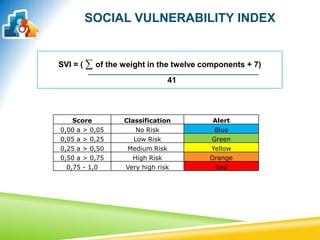
SOCIAL VULNERABILITY INDEX
SVI = ( ∑ of the weight in the twelve components + 7)
41
Score Classification Alert
0,00 a > 0,05 No Risk Blue
0,05 a > 0,25 Low Risk Green
0,25 a > 0,50 Medium Risk Yellow
0,50 a > 0,75 High Risk Orange
0,75 - 1,0 Very high risk Red
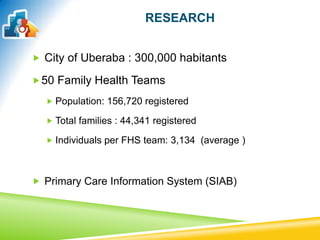
RESEARCH
 City of Uberaba : 300,000 habitants
50 Family Health Teams
 Population: 156,720 registered
 Total families : 44,341 registered
 Individuals per FHS team: 3,134 (average )
 Primary Care Information System (SIAB)
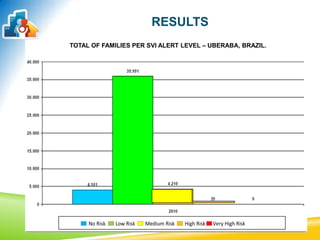
RESULTS
No Risk Low Risk Medium Risk High Risk Very High Risk
TOTAL OF FAMILIES PER SVI ALERT LEVEL – UBERABA, BRAZIL.
DISTRIBUTION OF REGRESSION COEFFICIENTS OF THE INDICATORS
Coeficientsa
Model Beta t
%
Variance
1. Illiteracy among older than 15 and younger than 65 years
0.35*** 2390.68 12%
2. Children / adolescents 7-14 years out of school
0,28*** 1891.11 8%
3. Availability of electricity 0.12*** 820,89 1%
4. Availability of treated water 0,30*** 1403.53 4%
5. Availability of sewage - pipeline 0.05*** 330,34 0%
6. Availability of public garbage collection 0,17*** 795.96 1%
7. Relative number of people / rooms 0.10*** 667,62 1%
8. Alcoholism in the family 0,14*** 957.48 2%
9. Occurrence of violent deaths among teens 0.14*** 959,98 2%
10. Belonging to a community group 0,12*** 824.18 1%
11. Indirect indicators of income: Health Insurance Plan 0.44*** 2960,78 18%
12. Indirect indicators of income: Transportation by Car
0.36*** 2419,89 12%
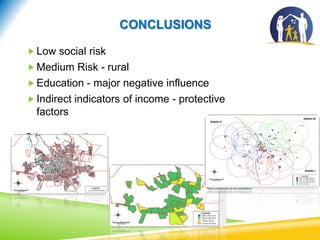
CONCLUSIONS
 Low social risk
 Medium Risk - rural
 Education - major negative influence
 Indirect indicators of income - protective
factors
Others directions:
COMMENTS, QUESTIONS?
Contact:
fabiana@vt.edu

Utilization of the Social Vulnerability Index for Family Health Teams’ Analysis, Brazil - Fabiana Silva

  • 1.
    Utilization of theSocial Vulnerability Index for Family Health Teams’ analysis Brazil Fabiana Brito Silva MPH
  • 2.
    ACKNOWLEDGEMENTS UNIVERSIDADE FEDERAL DOTRIÂNGULO MINEIRO (UFTM), BRAZIL Dr. Sybelle Souza Castro Miranzi ENGENHARIA DO CUIDADO, GEOTECH LTDA, BRAZIL. Dr. Paulo Fleury Dr. Rubens Pereira VIRGINIA TECH COLLEGE OF AGRICULTURE AND LIFE SCIENCES, DEPARTMENT OF HUMAN NUTRITION, FOODS AND EXERCISE (HNFE) FRALIN CENTER FOR TRANSLATIONAL OBESITY RESEARCH INTERDISCIPLINARY GRADUATE EDUCATION PROGRAM Dr. Paul Estabrooks Dr. Fabio Almeida
  • 3.
    BRAZILIAN HEALTH CARESYSTEM  Sistema Único de Saúde (SUS) – “United Health System”  Principles:  Universality  Equity  Integrality  Regionalized – Federal , State and City  National database
  • 4.
    FAMILY HEALTH STRATEGY Community Health Agent  Physician  Registered Nurse  Nurse Practitioner  Major Primary Health Care policy  Population Health Management  Territory  Primary Care Information System (SIAB)  Multidisciplinary Teams:
  • 5.
    Variables Criteria Weight 1.Illiteracy among older than 15 and younger than 65 years none 0 0,1 ~ 25% 2 26 ~ 50% 3 51 ~ 75% 4 76 ~100% 5 2. Children / adolescents 7-14 years out of school none 0 0,1 ~ 25% 2 26 ~ 50% 3 51 ~ 75% 4 76 ~ 100% 5 3. Availability of electricity Yes 0 No 3 4. Availability of treated water Yes 0 No 4 5. Availability of sewage - pipeline Yes 0 No 3 6. Availability of public garbage collection Yes 0 No 3 7. Relative number of people / rooms < 2 0 2 ~ 2,4 2 2,5 and up 4 8. Alcoholism in the family No 0 Yes 4 9. Occurrence of violent deaths among teens No 0 Yes 4 10. Belonging to a community group Yes -1 No 0 11. Indirect indicators of income: Health Insurance Plan Yes -3 No 0 12. Indirect indicators of income: Transportation by Car none 0 0,1 ~ 25% -0.6 26 ~ 50% -1.2 51 ~ 75% -2.4 76 ~ 100% -3 SOCIAL VULNERABILITY INDEX - COMPONENTS
  • 6.
    SOCIAL VULNERABILITY INDEX SVI= ( ∑ of the weight in the twelve components + 7) 41 Score Classification Alert 0,00 a > 0,05 No Risk Blue 0,05 a > 0,25 Low Risk Green 0,25 a > 0,50 Medium Risk Yellow 0,50 a > 0,75 High Risk Orange 0,75 - 1,0 Very high risk Red
  • 7.
    RESEARCH  City ofUberaba : 300,000 habitants 50 Family Health Teams  Population: 156,720 registered  Total families : 44,341 registered  Individuals per FHS team: 3,134 (average )  Primary Care Information System (SIAB)
  • 8.
    RESULTS No Risk LowRisk Medium Risk High Risk Very High Risk TOTAL OF FAMILIES PER SVI ALERT LEVEL – UBERABA, BRAZIL.
  • 9.
    DISTRIBUTION OF REGRESSIONCOEFFICIENTS OF THE INDICATORS Coeficientsa Model Beta t % Variance 1. Illiteracy among older than 15 and younger than 65 years 0.35*** 2390.68 12% 2. Children / adolescents 7-14 years out of school 0,28*** 1891.11 8% 3. Availability of electricity 0.12*** 820,89 1% 4. Availability of treated water 0,30*** 1403.53 4% 5. Availability of sewage - pipeline 0.05*** 330,34 0% 6. Availability of public garbage collection 0,17*** 795.96 1% 7. Relative number of people / rooms 0.10*** 667,62 1% 8. Alcoholism in the family 0,14*** 957.48 2% 9. Occurrence of violent deaths among teens 0.14*** 959,98 2% 10. Belonging to a community group 0,12*** 824.18 1% 11. Indirect indicators of income: Health Insurance Plan 0.44*** 2960,78 18% 12. Indirect indicators of income: Transportation by Car 0.36*** 2419,89 12%
  • 10.
    CONCLUSIONS  Low socialrisk  Medium Risk - rural  Education - major negative influence  Indirect indicators of income - protective factors Others directions:
  • 11.